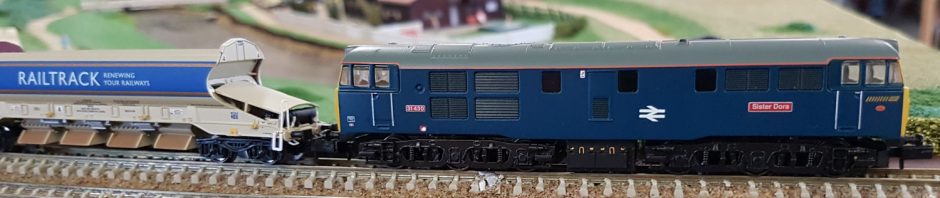
From a forum a long, long, way away…..

Might slow down those who don’t understand ‘fingerpoken’ or ‘12,000,000 microvolts’?
From a forum a long, long, way away…..
Might slow down those who don’t understand ‘fingerpoken’ or ‘12,000,000 microvolts’?
A massive 13 members turned out yesterday evening, even without the Cha(I)rman, who had gone missing. As the treasurer commented, ‘I didn’t know we had that many members!’
As for the trains, it was ‘Hallo Kitty’ time, as Paul’s latest bullet train had arrived. Lovely model, but not convinced about the colour?


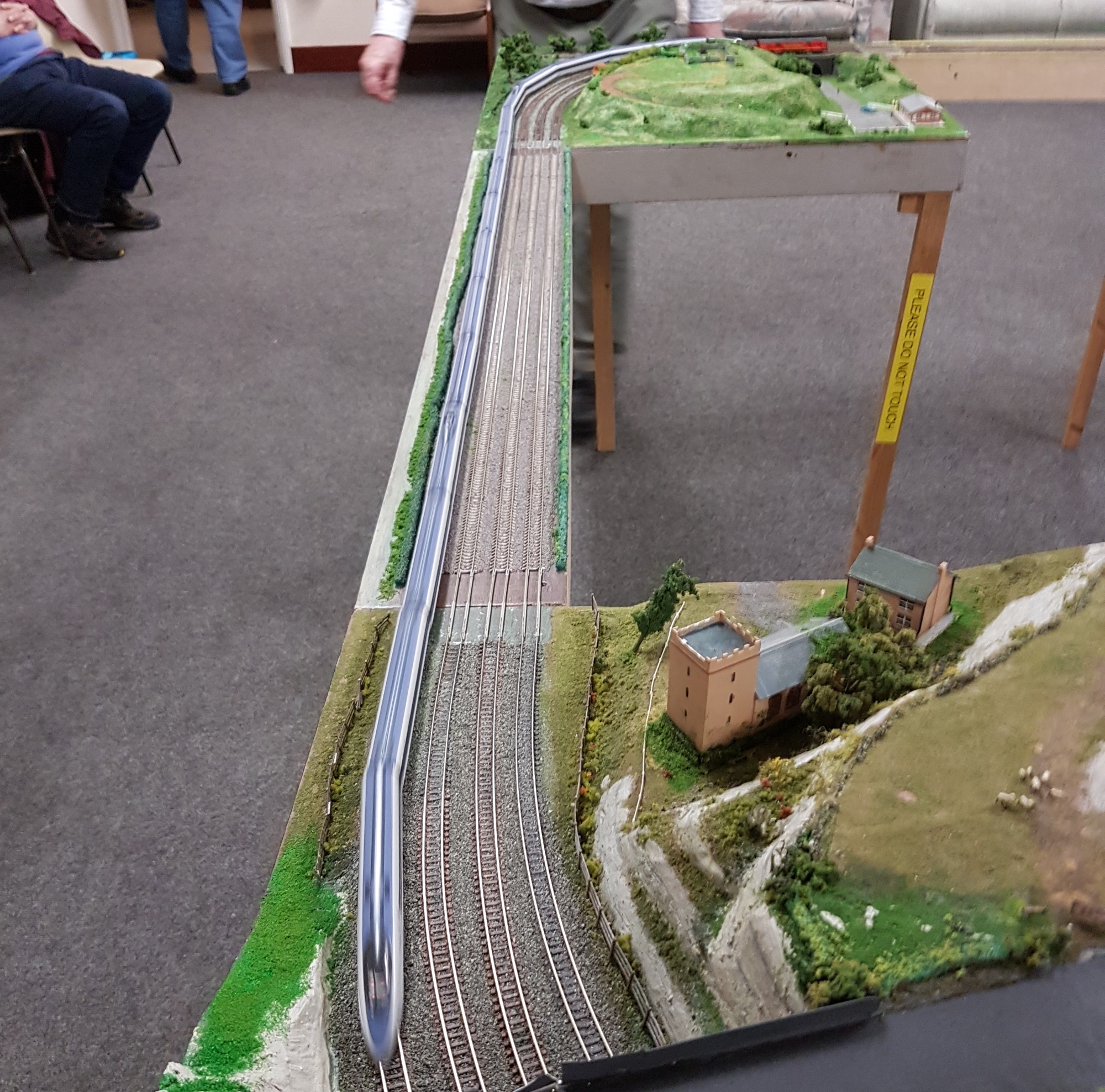
Business as usual with this full length bullet….
Phil’s Pannier on mail train duty….

Modern image from Neil, Martin and Paul…..


Martin’s box of tricks for tuning up (literally, as it has sound fitted) Neil’s Castle….

But there’s always time for a chat!

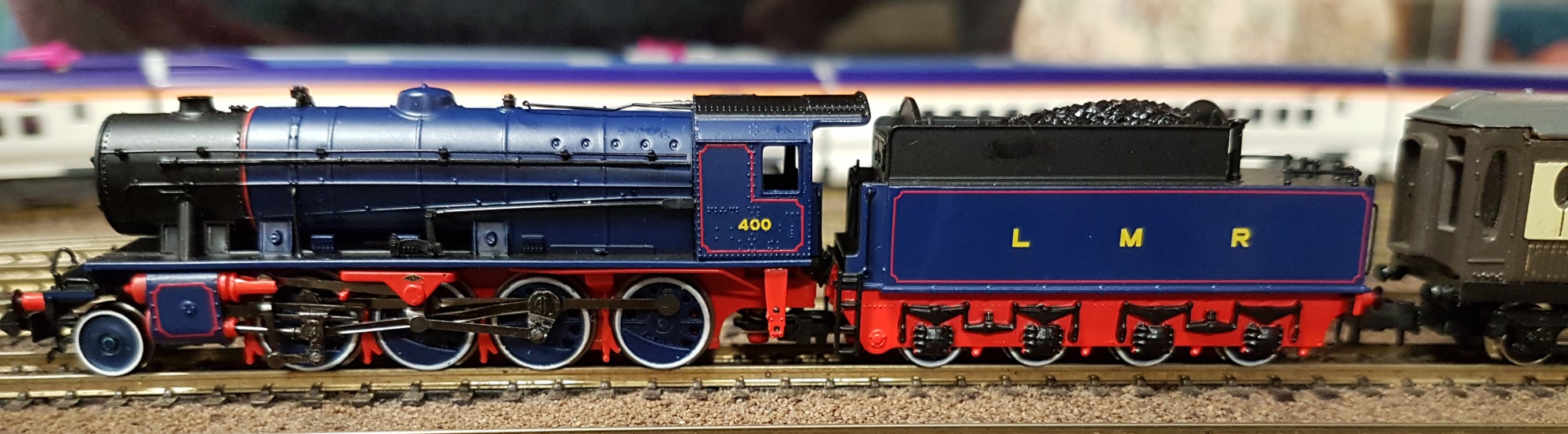
Peter’s fine WD 2-8-0, unusually pulling a train of Pullman cars!
And I just sat and watched the trains go by….
Recently I came across the site for Blacksmith Books, who publish a lot of Hong Kong and SE Asian books. I couldn’t resist this one:
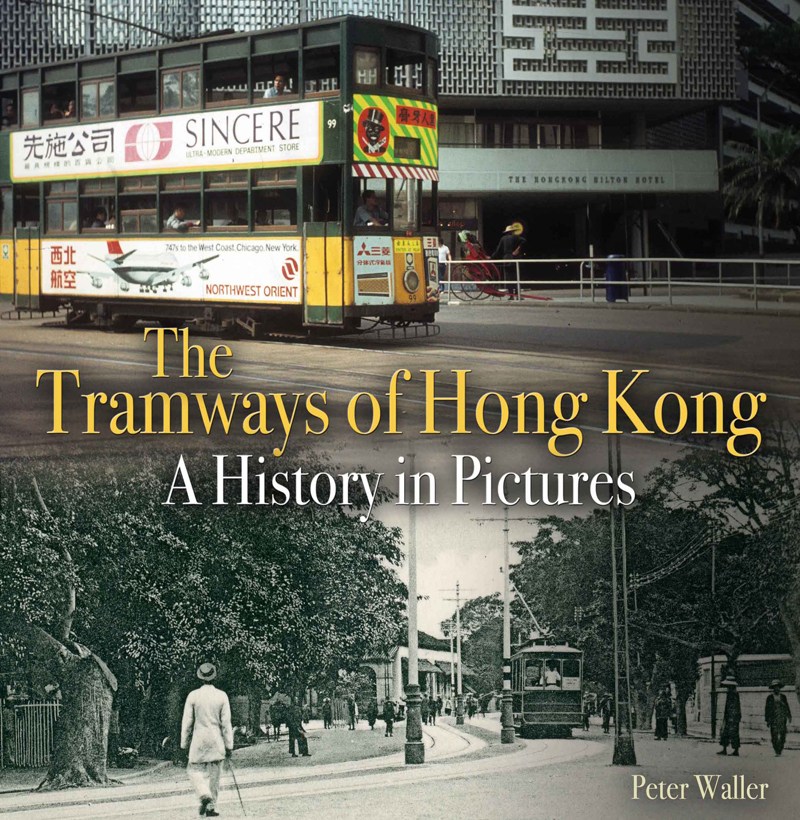
And the ‘blurb’:
For more than a century, trams have plied their trade along the northern coast of Hong Kong Island. During that time, they have witnessed the transformation of the local economy from a colonial backwater to the massive financial centre that is the modern city. The post-war years, from the 1960s onward, have seen the radical redevelopment of much of the area along streets such as Hennessy Road and Des Voeux Road, while the reclamation of land along the seafront has seen the tramway, which once skirted the shore, pushed further and further inland.
Today, Hong Kong trams still provide a vital public service, carrying vast numbers of passengers daily to and from their work or shops, and Hong Kong is one of the few places in the world where it is still possible to ride on the top deck of a double-deck tram. This album explores the history of the tramways of Hong Kong Island through the 20th century. Drawing upon a fascinating selection of photographs, most of which have never been published before, it traces the evolution of the streetscape over that period – giving readers a vivid reminder of a city that has been radically altered over the past half-century.
Thumbing through the book, I was delighted to see that a significant number of photographs dated from October 1981, when I was visiting HK for work for the first time – and Maxine was about to join me for a holiday. This really brought back memories – most of them good ones!
Here’s a typical page from the book:

And these photographs, from elsewhere on the internet, were also taken in autumn 1981.
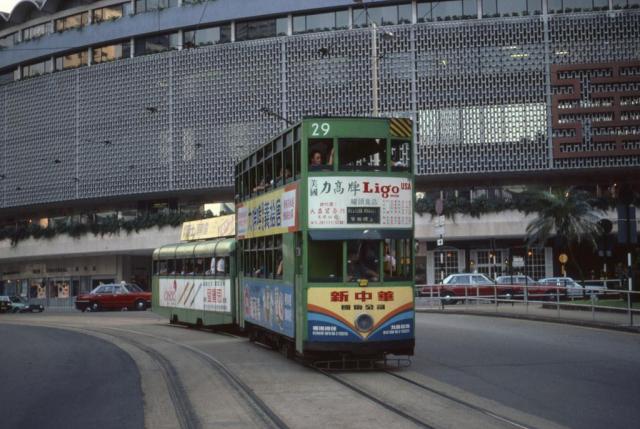

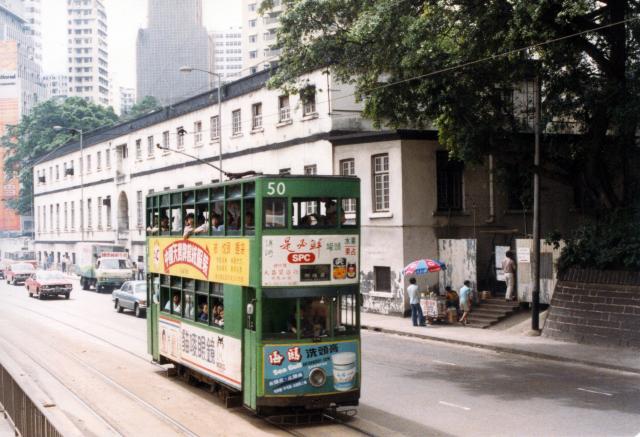

The other book I bought was the “Confessions of a Hong Kong Naturalist”. (Note: naturalist not naturist.) This brings back memories of the HK countryside and flora and fauna….
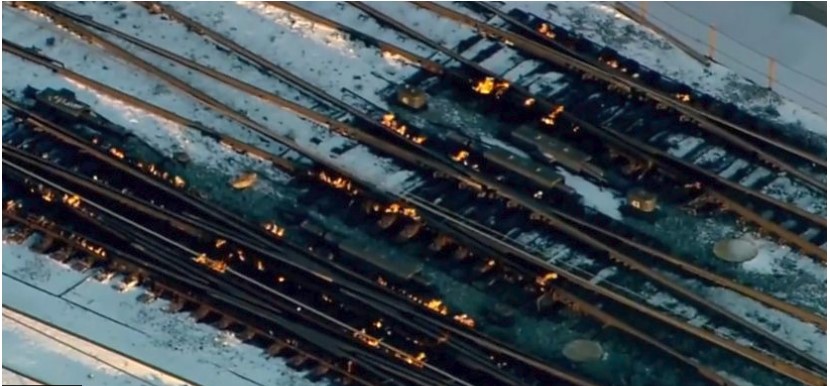
Spotted on NGF this week, as the Polar Vortex hits the USA (the other great headline was ‘Alligators freeze in lake’).
Polar vortex: Fire used to melt ice on Chicago train tracks
Flames from gas-fed heaters are melting away snow and ice at railway intersections in Chicago. It helps to keep the trains running with fewer delays. The US deadly cold snap has caused temperatures in the Illinois city to drop as low as -30C (-22F).
Comments on NGF included:
Nothing new. I can recall wandering round the West Coast Main Line with a hired garden weedkilling flame thrower, melting the ice and snow out of points. When we needed to re-grease them, point the flame at the can of grease to thaw it out, then we could grease the slide chairs. Gave the local Signal And Telegraph people palpitations we were going to burn through their cables! (We never did!)
Pretty standard stuff here, (well not on Vancouver Island.. we don’t get much snow). When I lived in Nova Scotia, the local yard in Dartmouth used a mobile jet engine to melt the ice
They tried the jet engine on UK track and on UK runways… It stripped the tarmac of the runways. It fired ballast at high speed an anything in the vicinity.
Still, if we can model sparking pantographs, surely we can model glowing points?
Last layout from the Southampton show – Spanker Lane, a Minories layout under construction in ‘N’. The show guide states that:
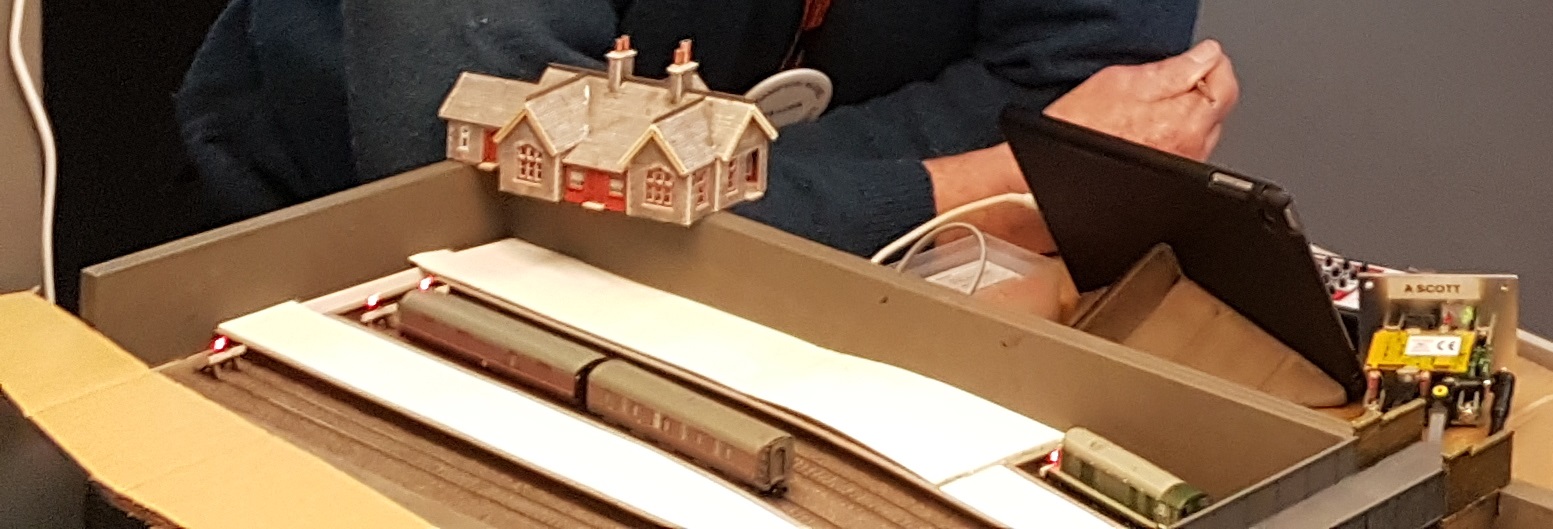
Spanker Lane is found in the north of England, where green DMU’s are the order of the day, although loco hauled trains can occasionally be seen. After passing alongside the canal exchange sidings and small goods yard trains arrive at Spanker Lane station.
The layout is a work in progress based upon ‘Minories’ by C. Freezer. However, the goods yard was never on the original plan. The layout is DCC controlled.
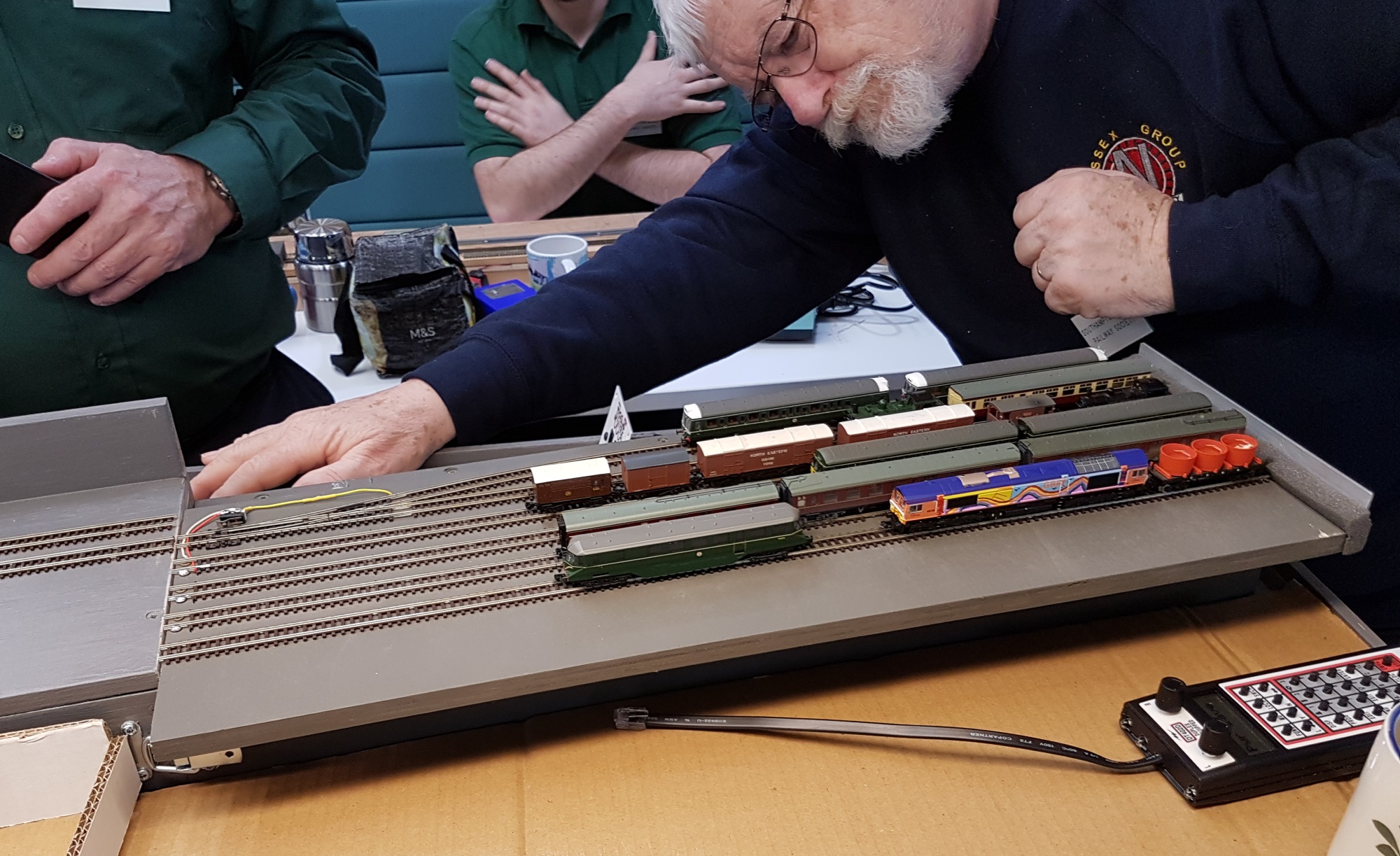
The layout is built on four 2′ long boards (platforms, pointwork, the added goods yard, and traverser. This is definitely an economy sized layout, with no more than a four coach train. It would be ideal for CJF’s original concept of small tank engines and short coaches. The station throat is classis Minories, with a pair of hinged boards, and scenic boards added to the front.
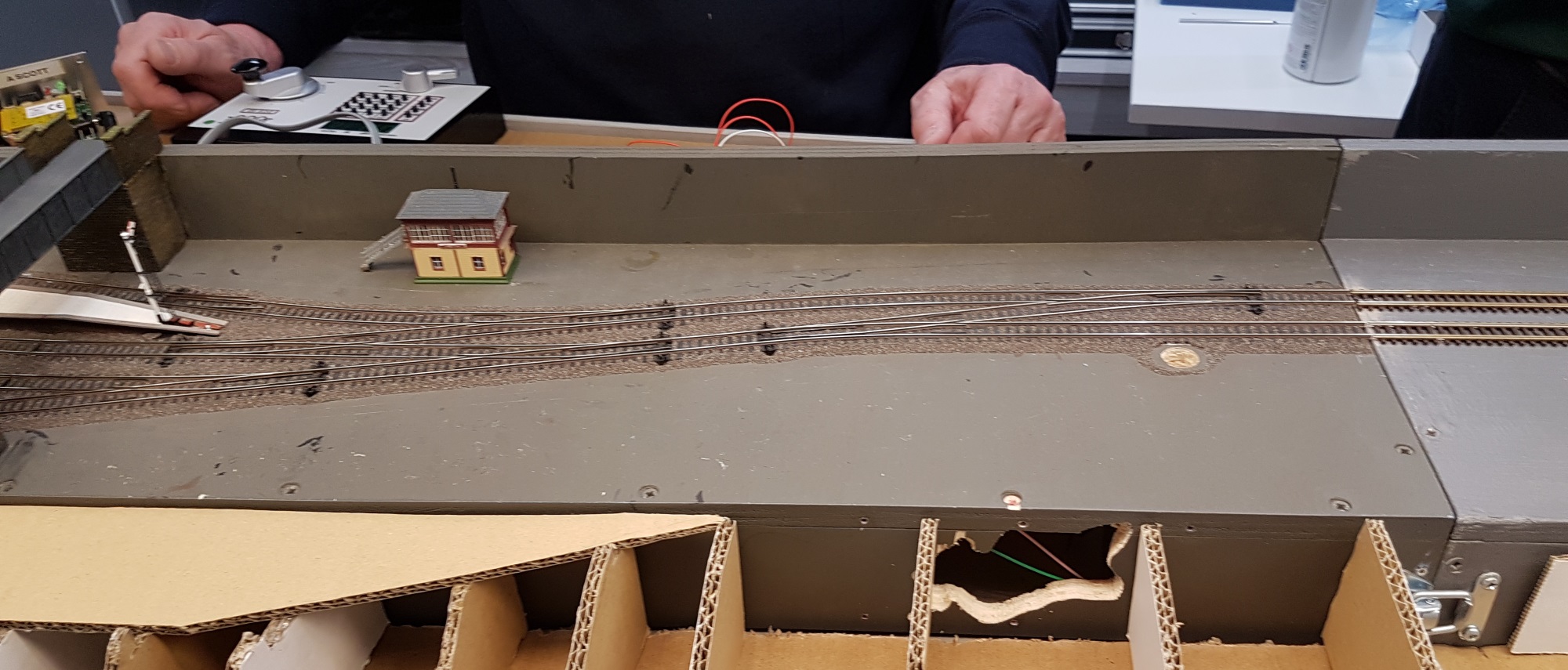
The short platforms….
And the traverser, operated by No. 1 calibrated eyeball (and lots of tea by the looks of it.) I liked the point on the traverser, increasing storage for a couple of short trains, whilst limiting the distance the traverser has to move.
A very satisfying little layout, and I hope to see the scenic version in due course.
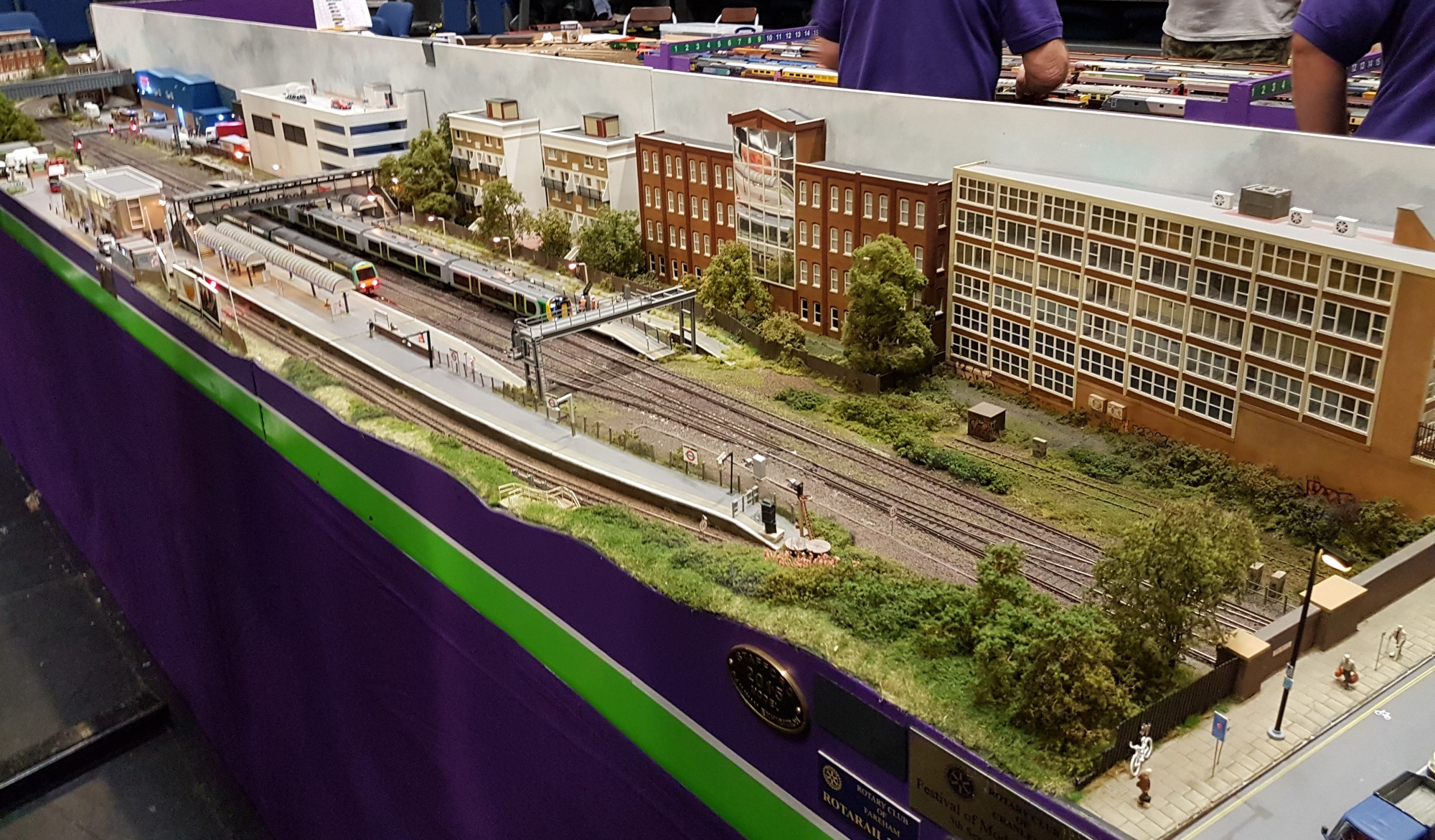
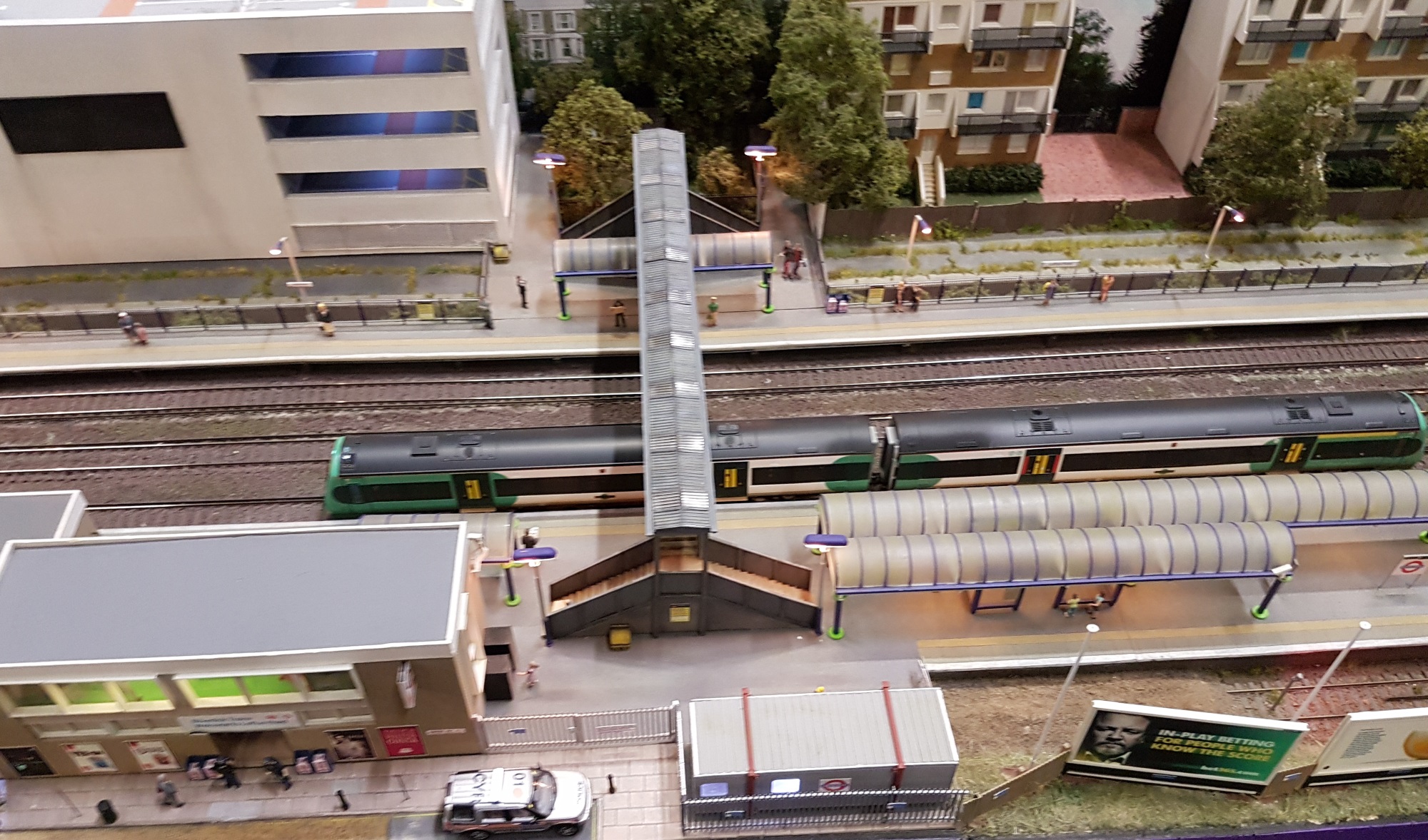
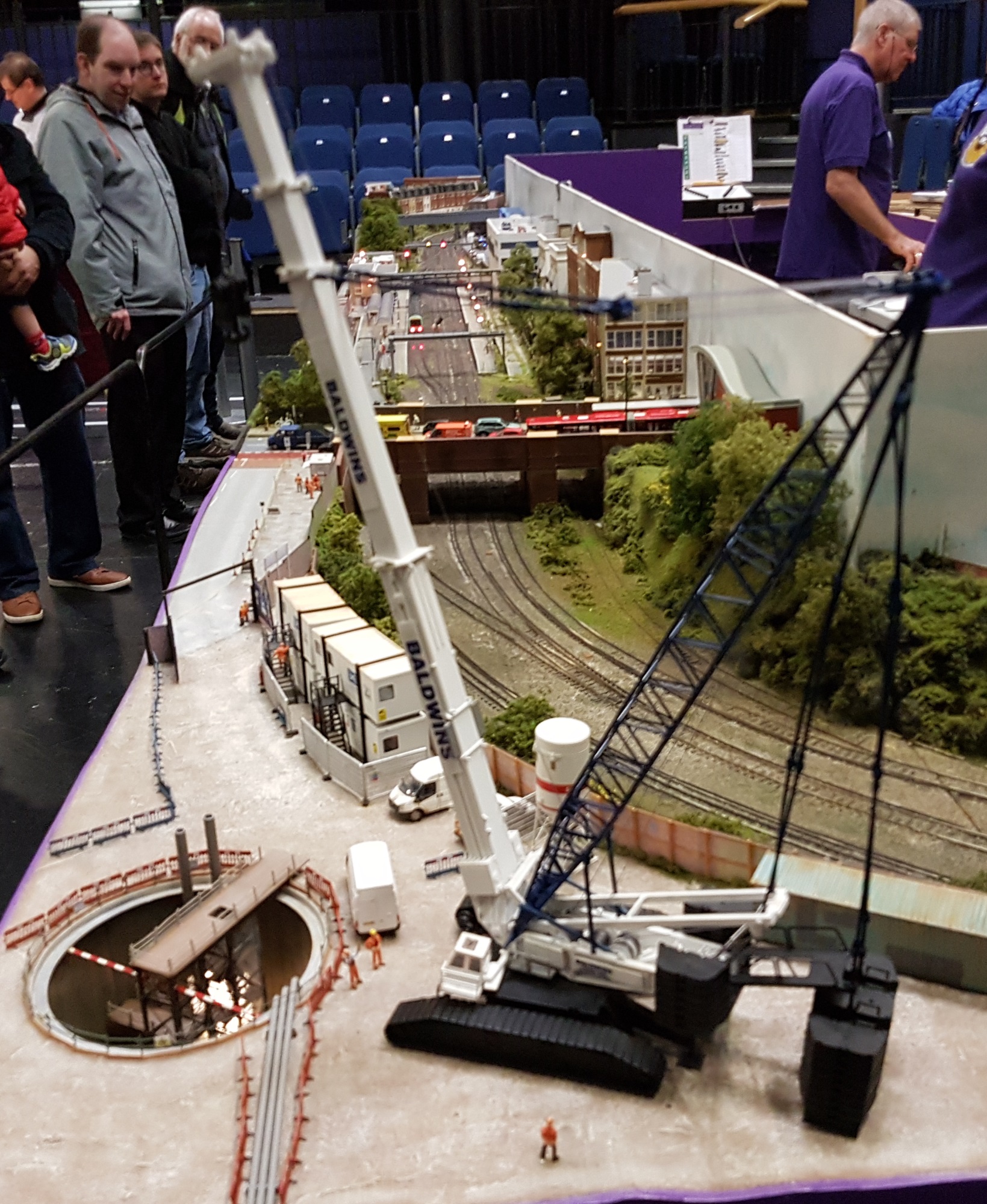
One of the highlights of the show was a chance to see Loftus Road in the flesh. This ‘OO’ layout is based on the West London Line around Kensington from the 1990’s to today. The West London Line carried, and carries, a wide variety of prototypes keeping the layout operation interesting, and between trains there are plenty of scenic cameos to examine.

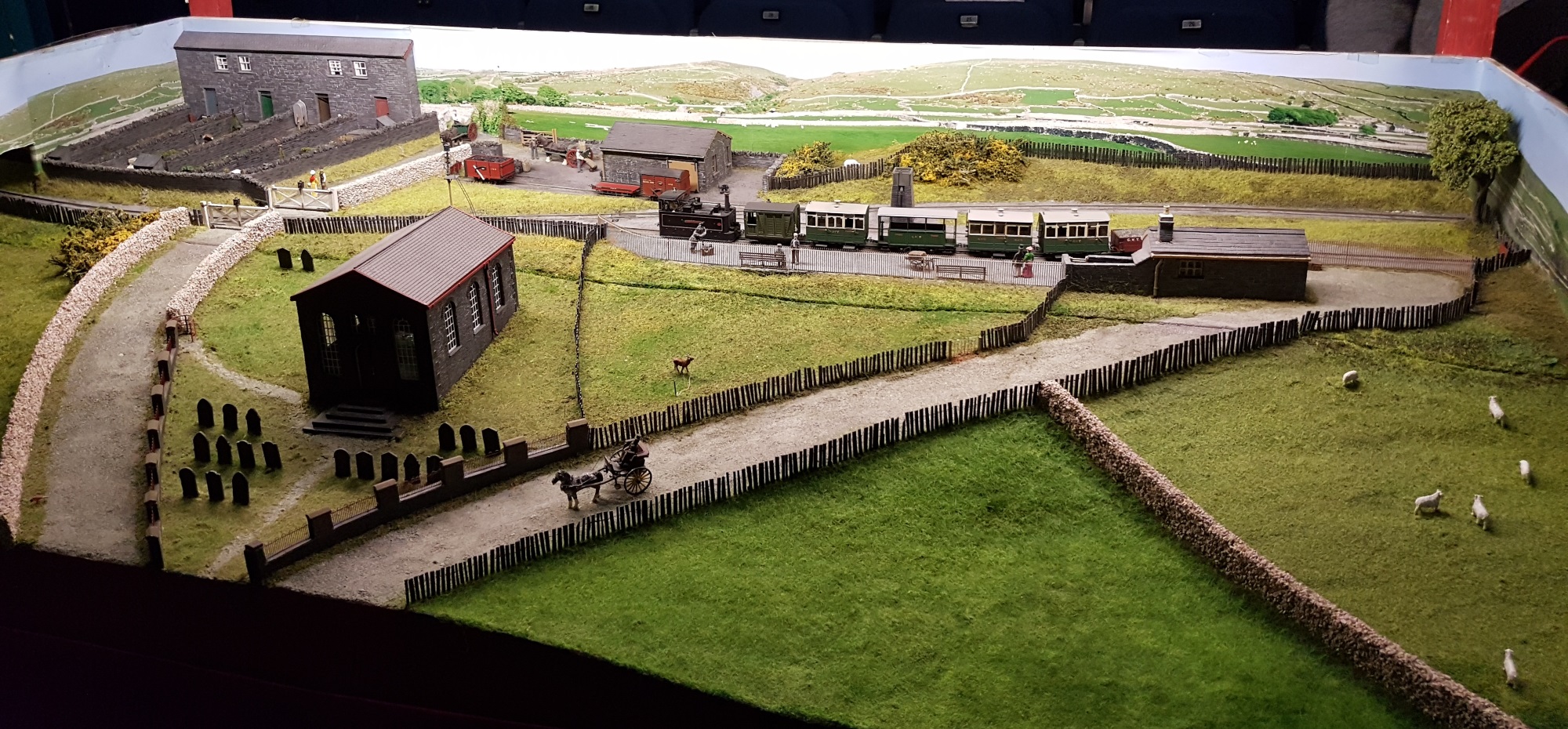
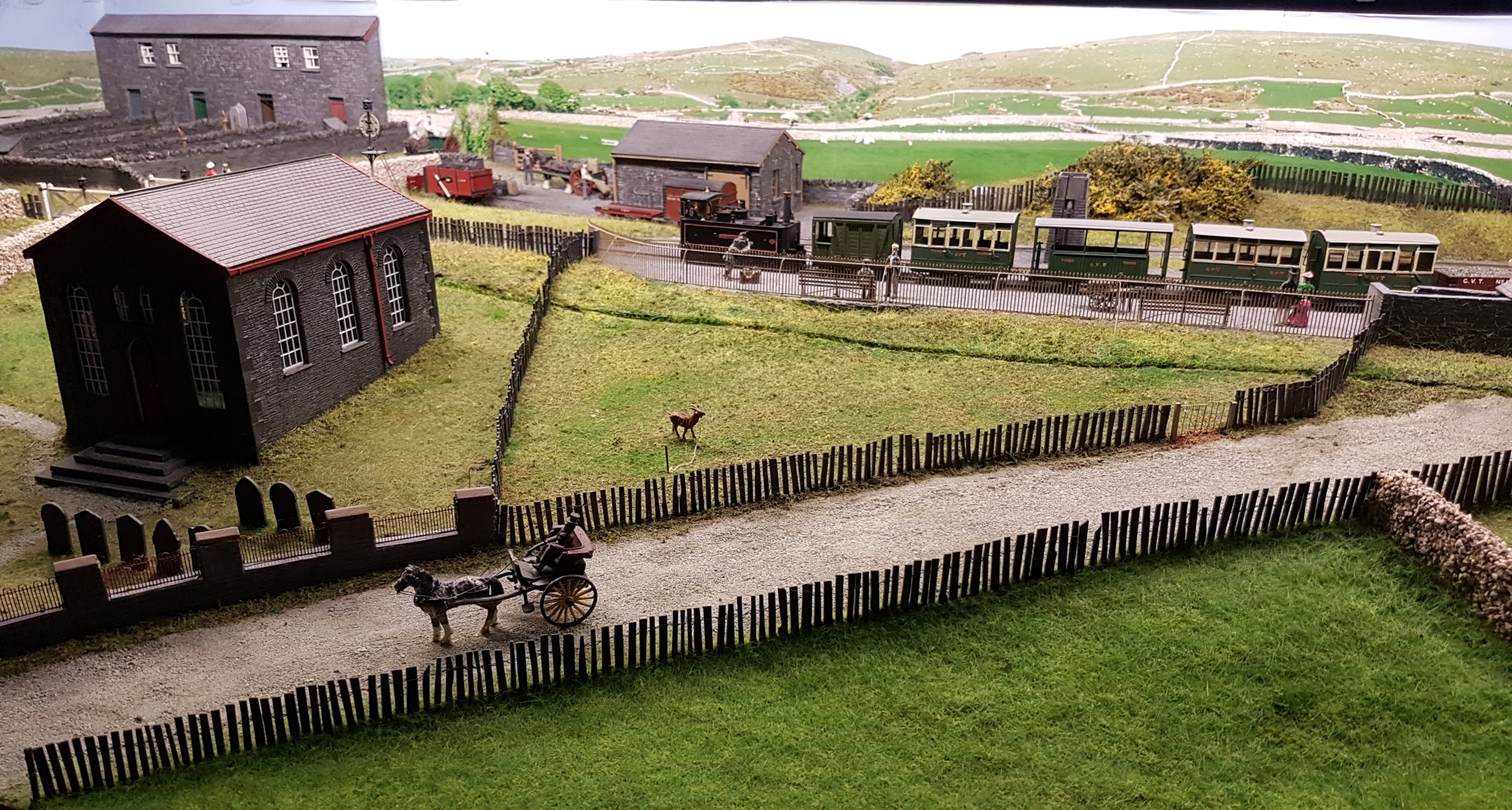
In contrast, Garreg Wen is a small ‘oo9’ layout set somewhere in Snowdonia. Most attractive modelling, again locating the layout in a real place and time.
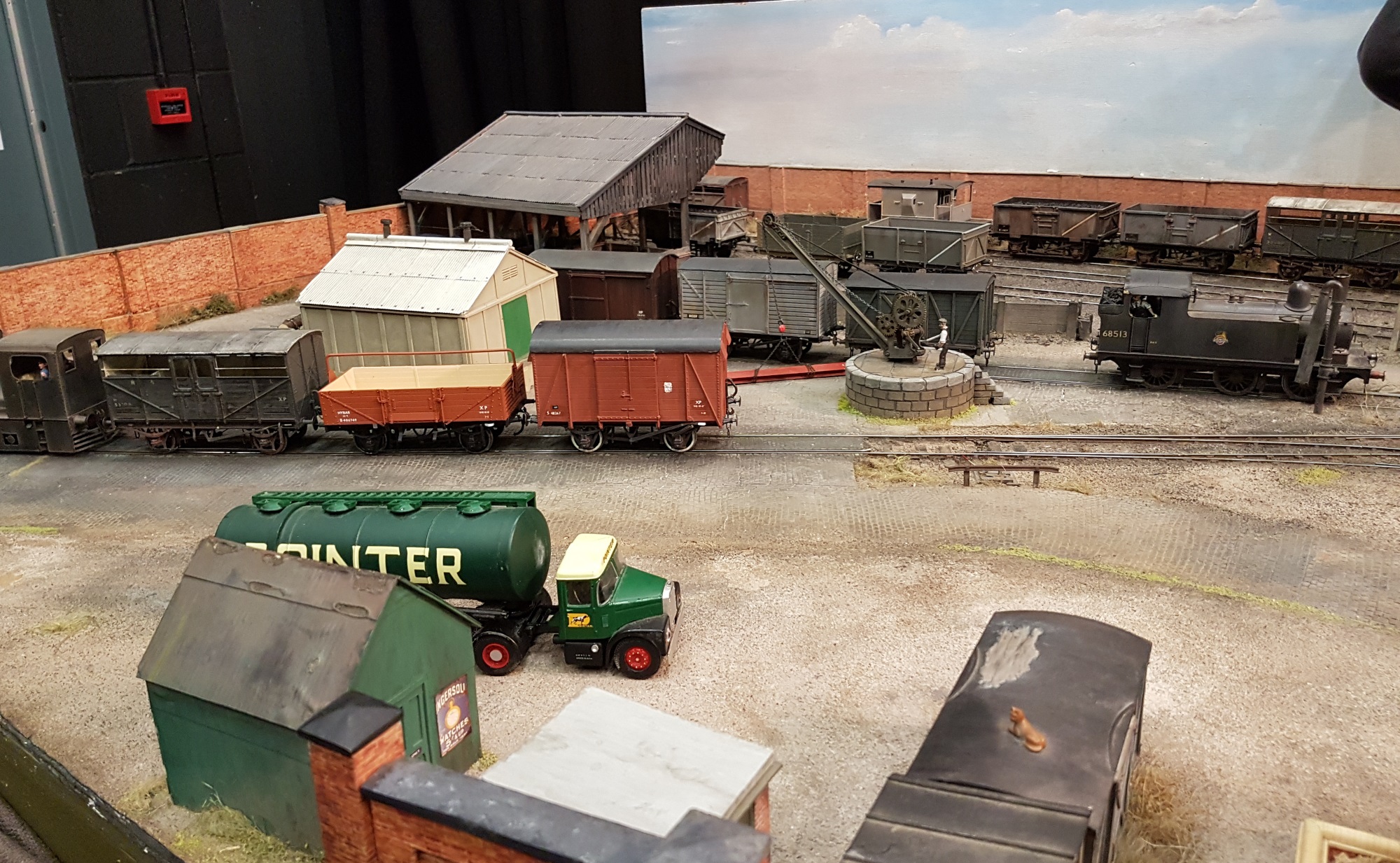
Always good to see Happisburgh Goods in ‘O’, the remnant of the larger Great Eastern terminus that did the rounds in the 1990’s. The name, in Broad Norfolk is, of course, pronounced Haysbro’.
The other layout I wanted to see at the show was St Ruth, a 2mm fine scale layout based o Penzance. The fact that it is 2mm is not the main attraction (although the fine trackwork helps), as the railway is framed by some excellent scenic work. Operation uses the full 24-hour timetable. I went back for a second look, but found that there was a real crush and I couldn’t get near the layout. It is that good!
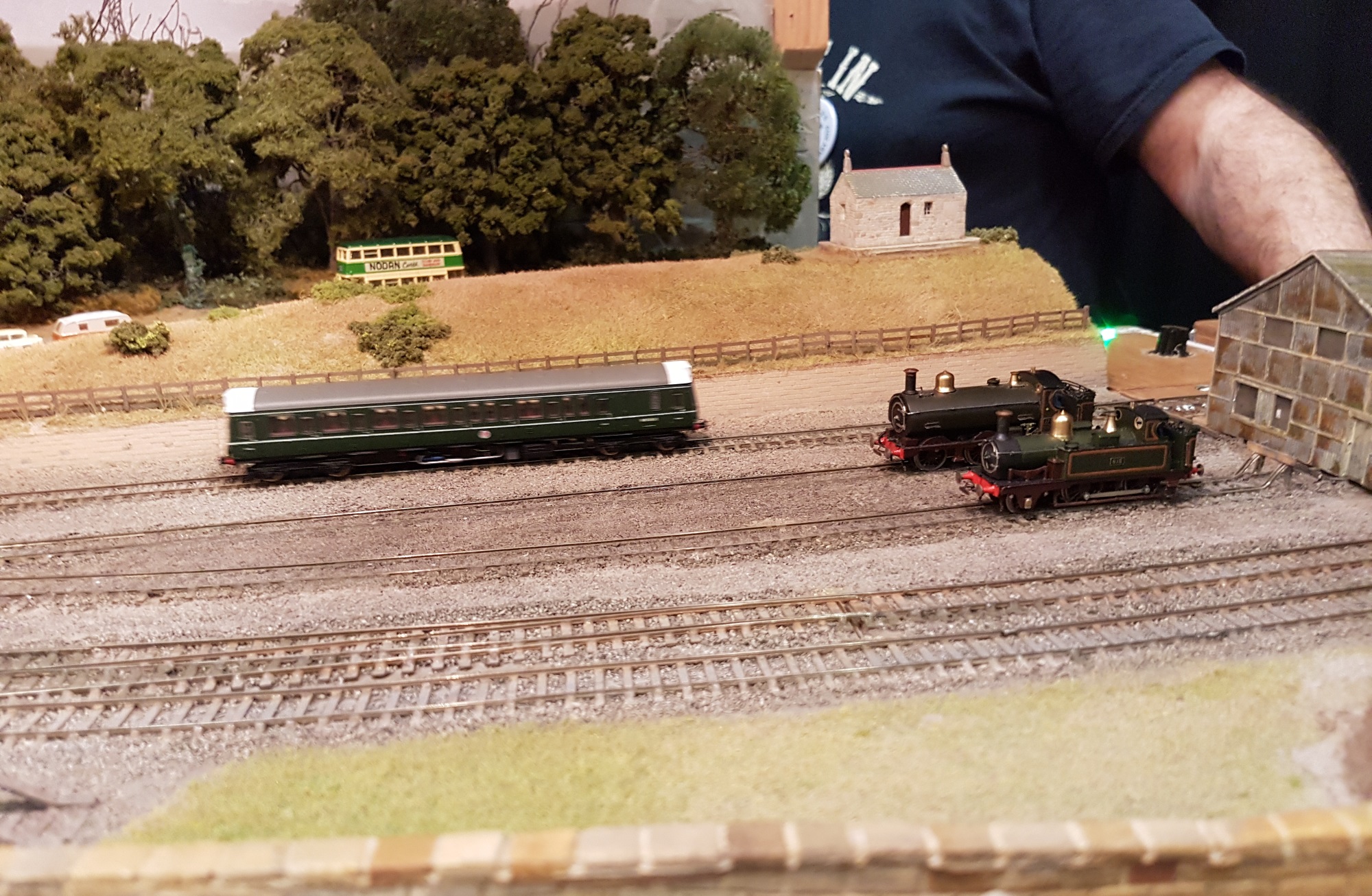
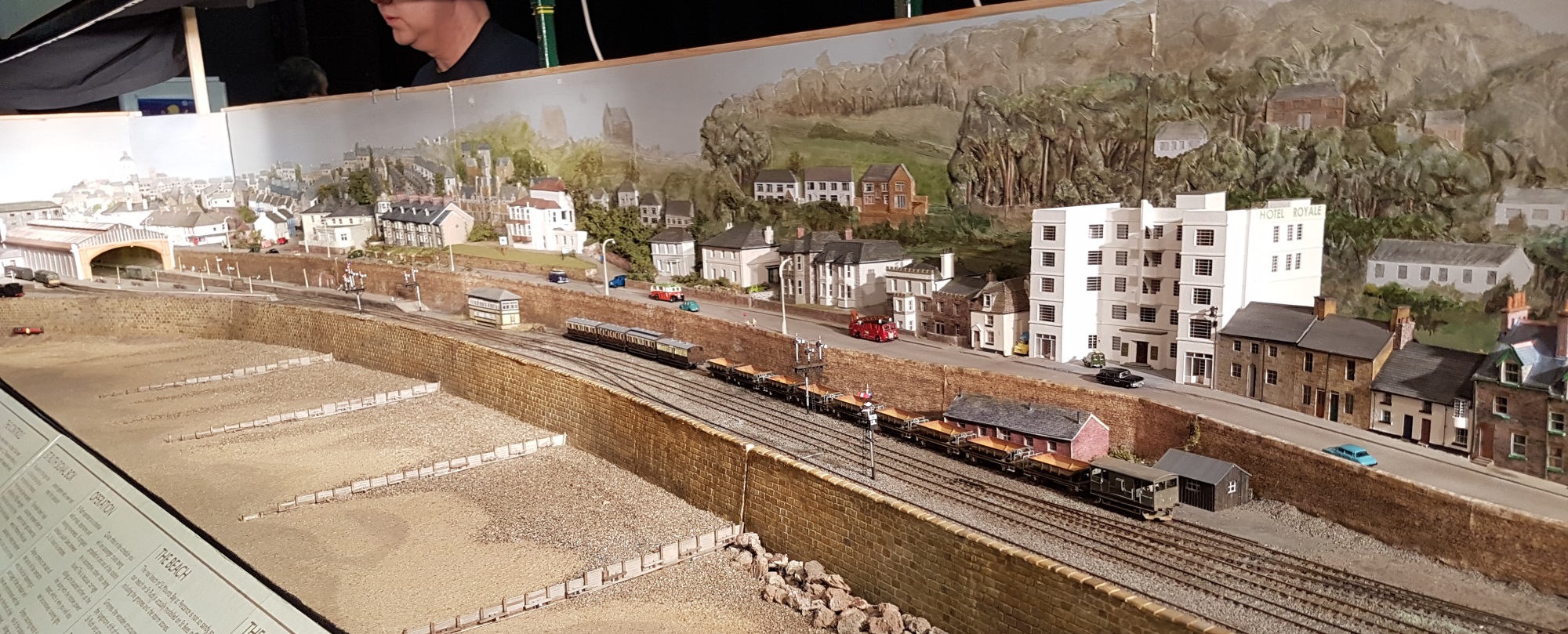


Ian Milroy was there with San Maria Gandia…
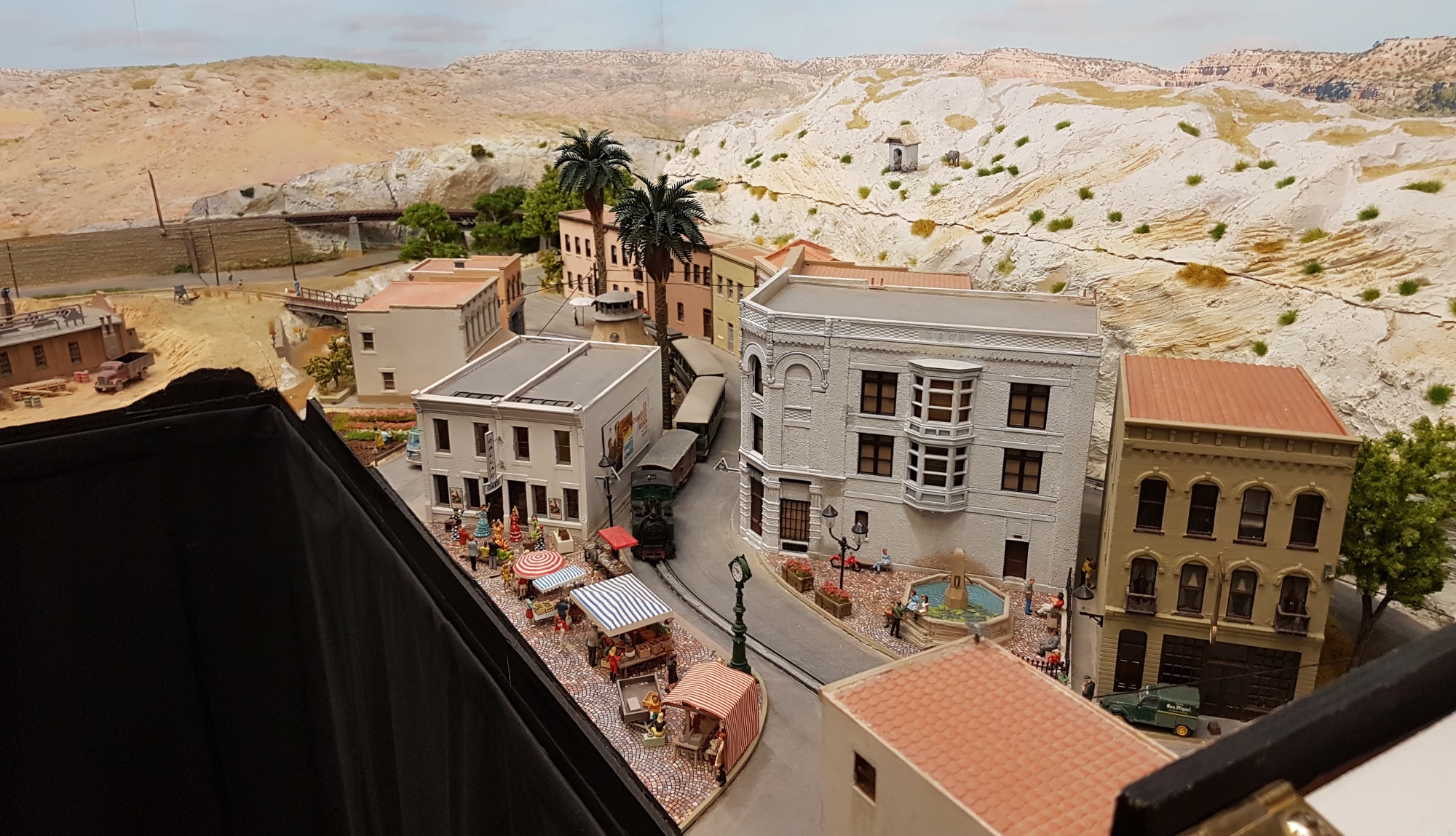
More old friends from the ESNG show in the form of City Basin Goods and Atlantic Road.
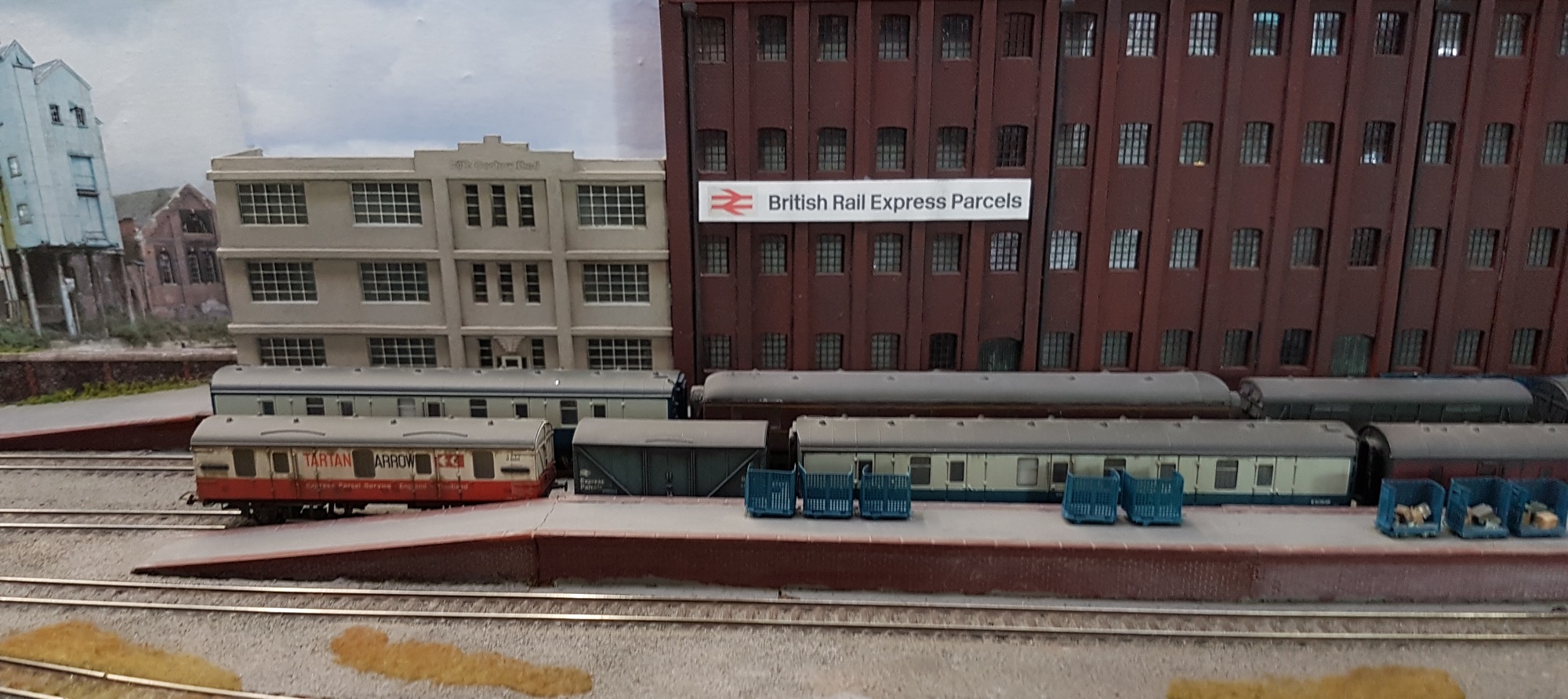
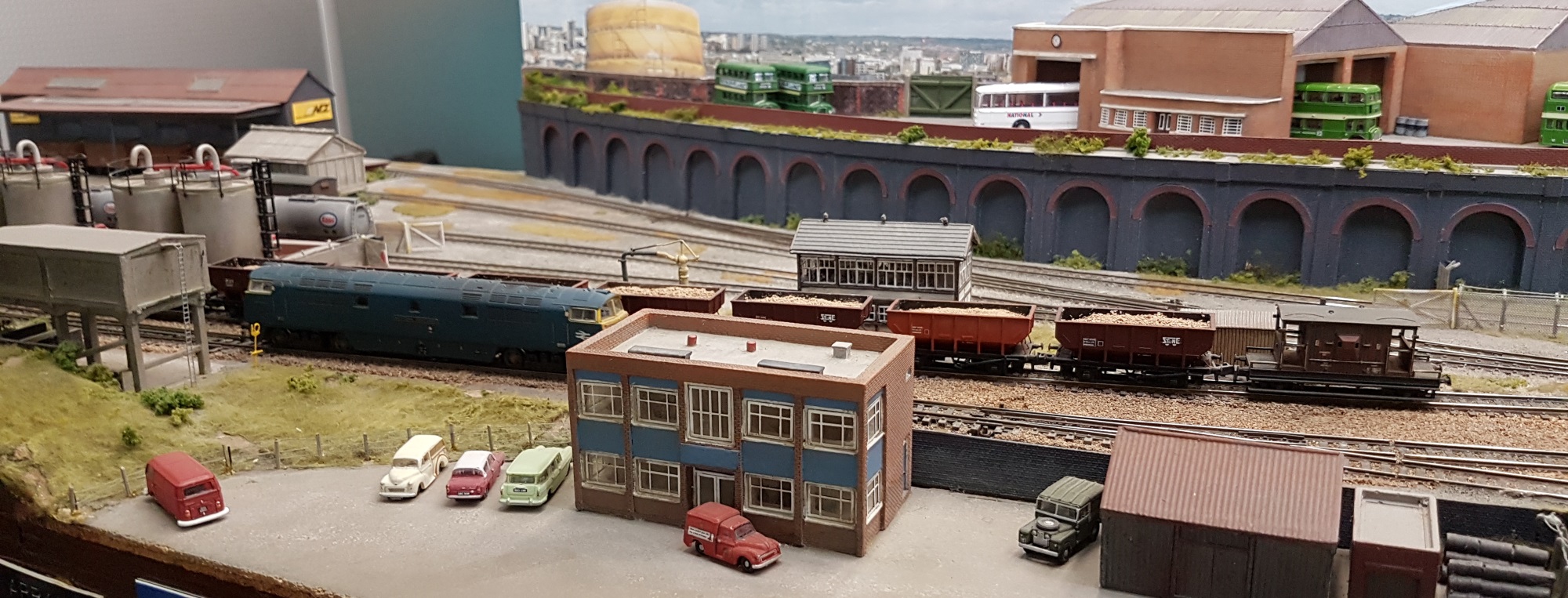
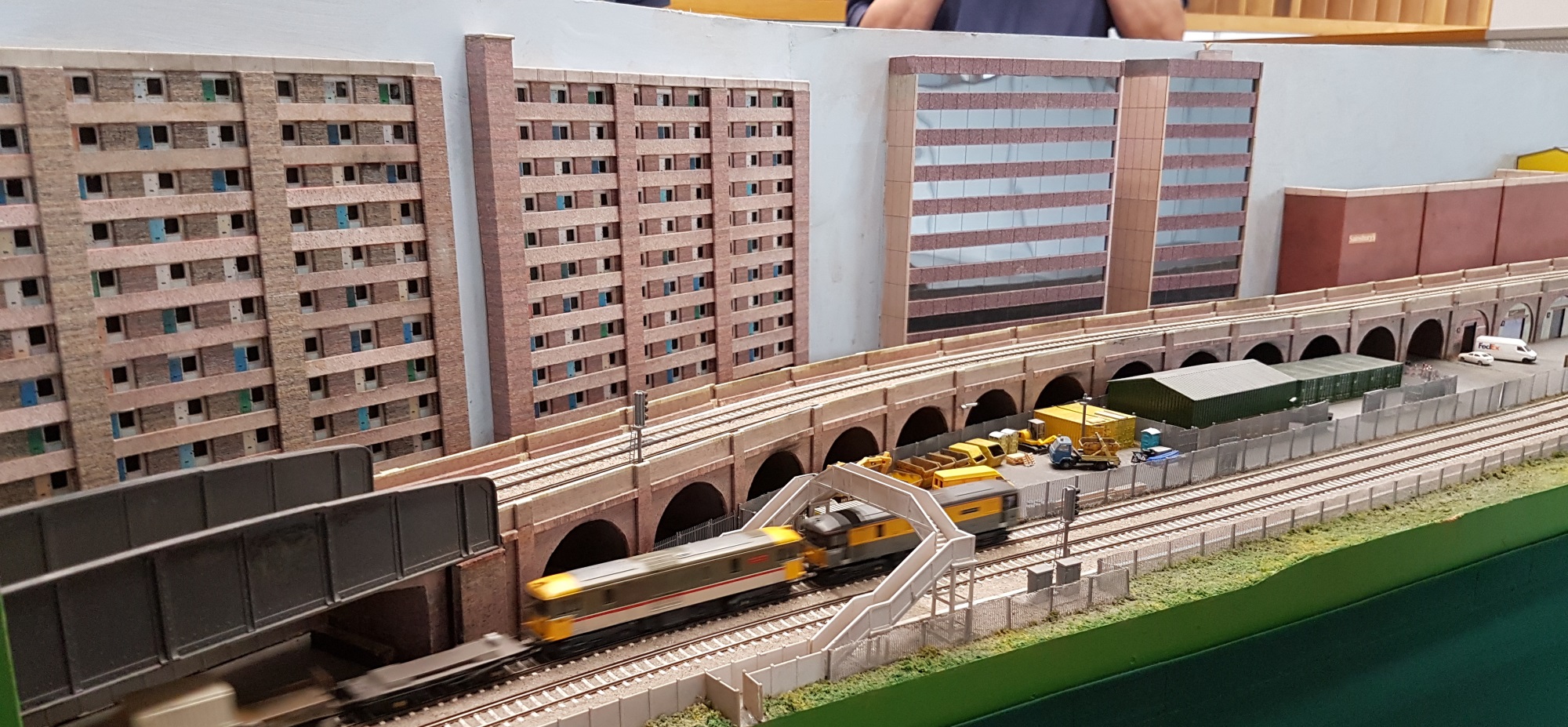
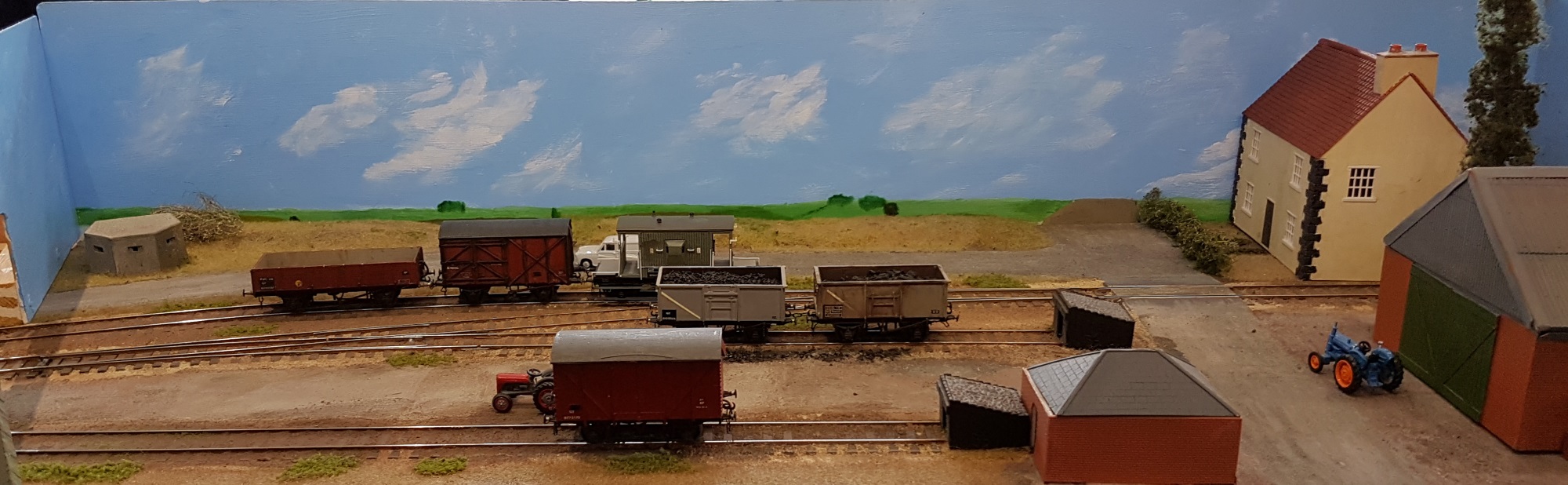
Friday Bridge is the Wisbech and Upwell in P4…
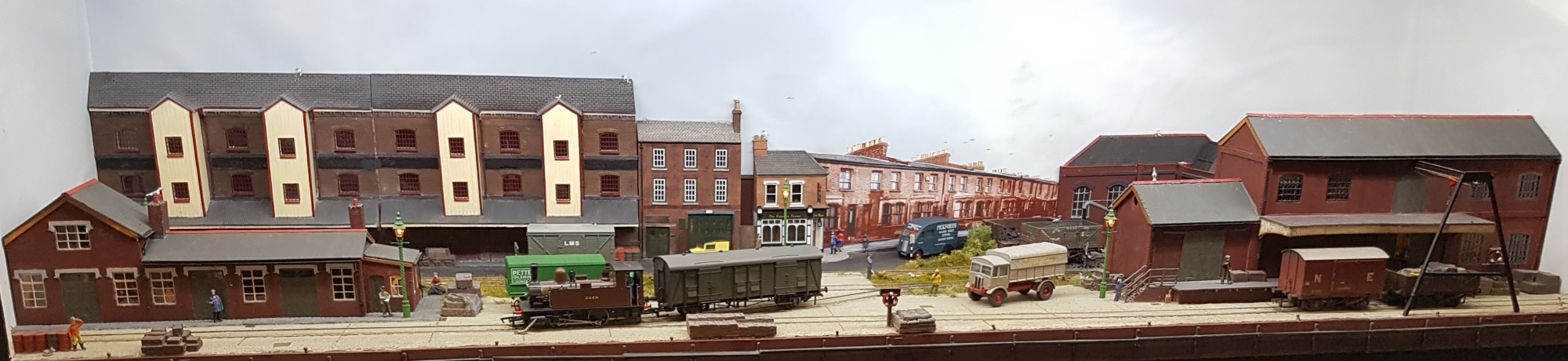
And last (except one layout to discuss next time) is Canute Road Quay, a minimum space ‘OO’ shunting layout somewhere in Southampton Docks, and hosting some large locomotives such as the Adams B4 and USA tanks.
It says a lot for the quality of the show that there were only a couple of layouts not featured here – and one I missed out, a fascinating narrow gauge quarry line with a working grab that loaded the wagons with sand.
A trip down to Eastleigh today for the excellent Southampton MRS exhibition. There were some excellent layouts on show, and plenty of trade, though I was a good boy and bought absolutely nothing. Derek came along with me and it was good to have some company for the 80 mile trip each way. This is definitely at the limits of my exhibition visiting!
I’ll do the usual pictorialsurvey of the layouts, but they will be as we looked at them, rather than by scale. We start with Stoke-by-Nayland, an attractive slice of ex-Great Eastern Railway in Suffolk, in P4. Very recognisable as Suffolk, and some added interest in that ‘Dingham’ automatic couplers are used. These are certainly one of the least conspicuous couplers available, a good balance between the robust and the invisible, but unfortunately they are only found in 4mm and larger scales.
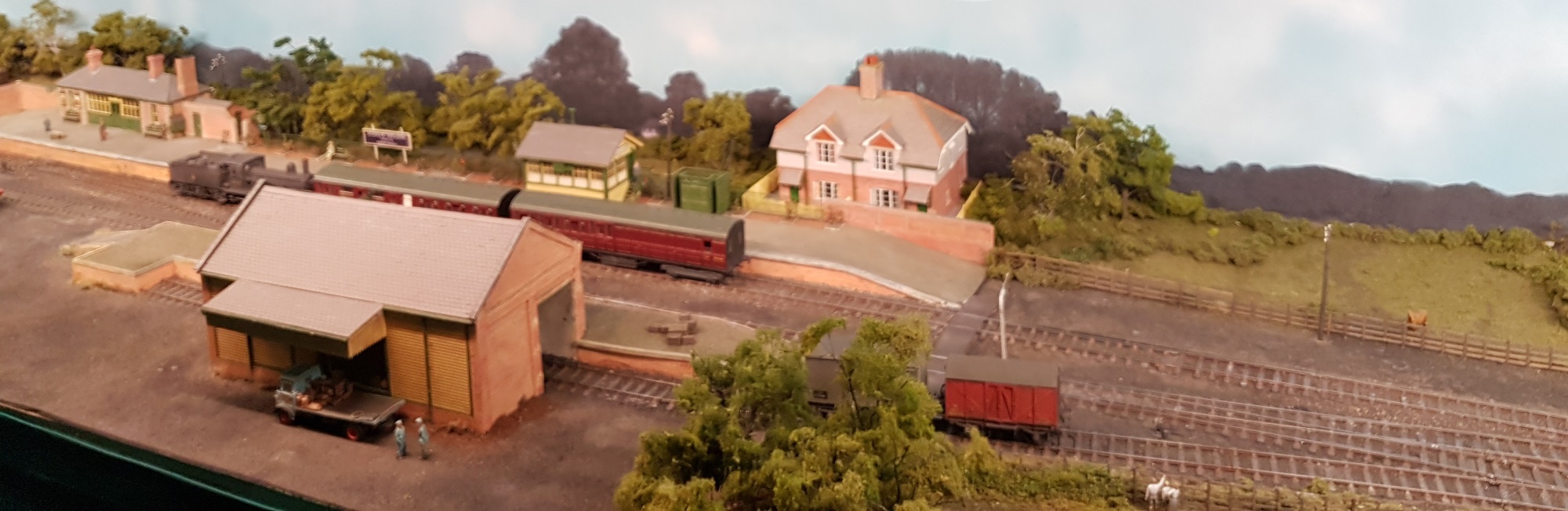
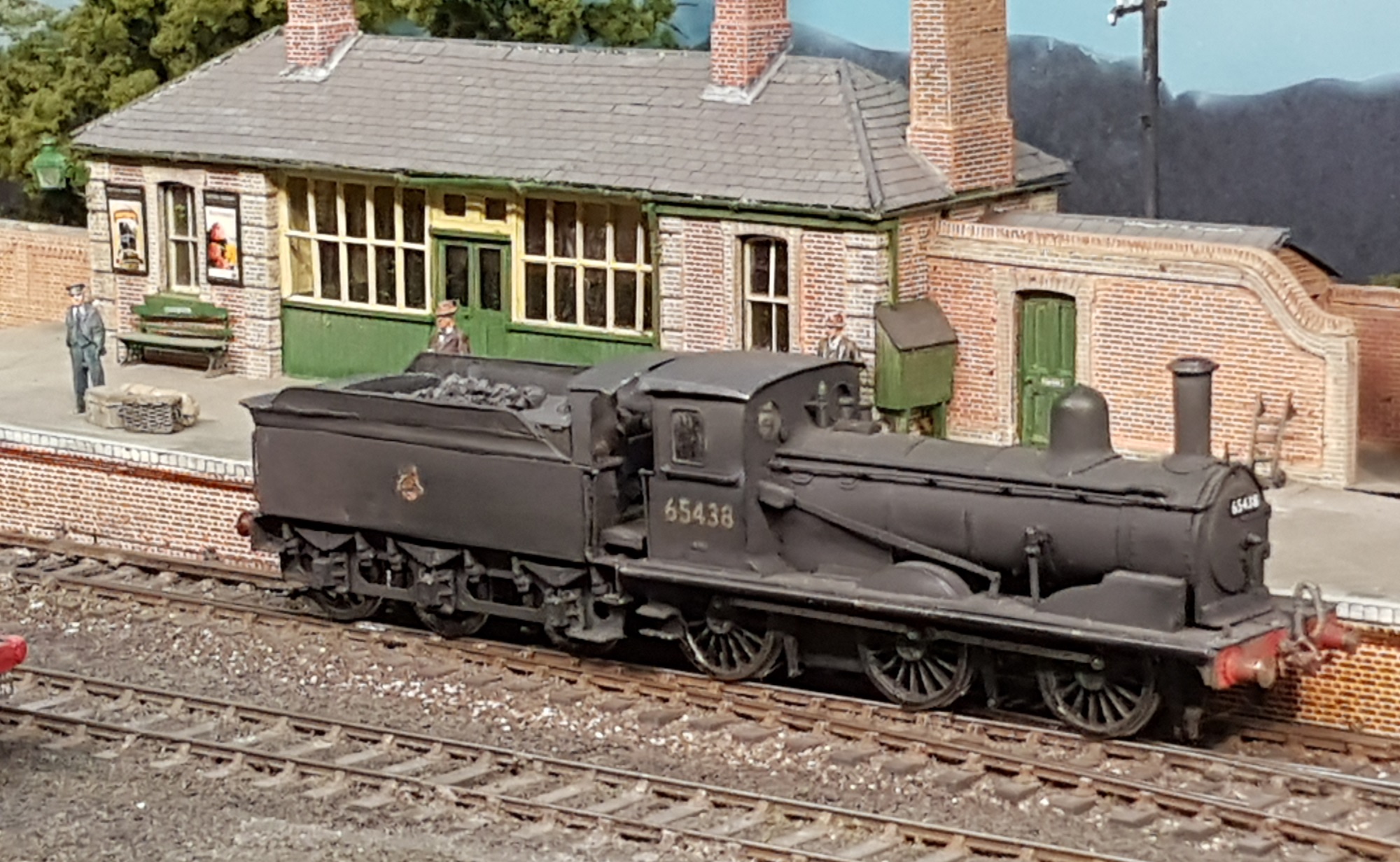
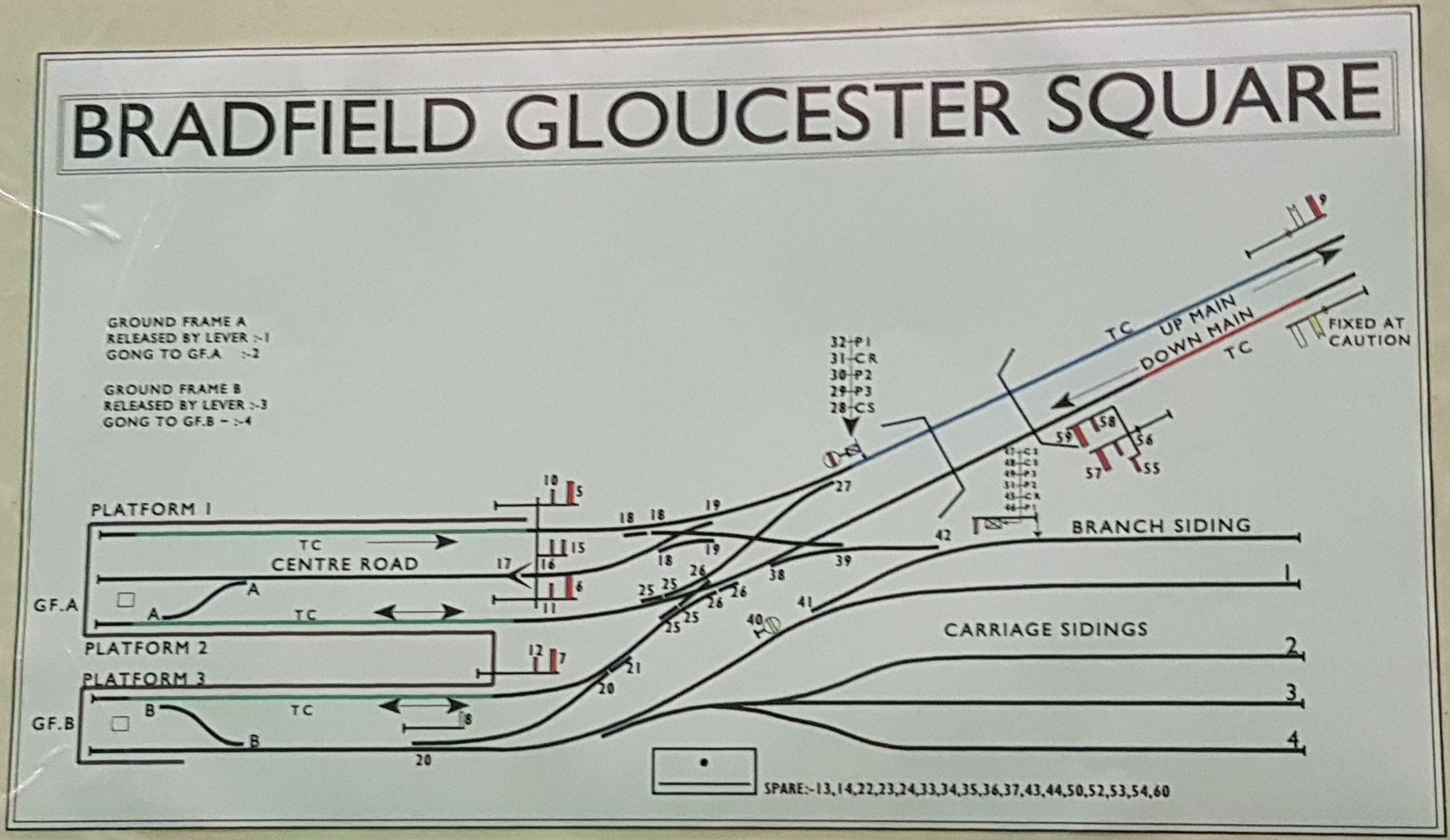
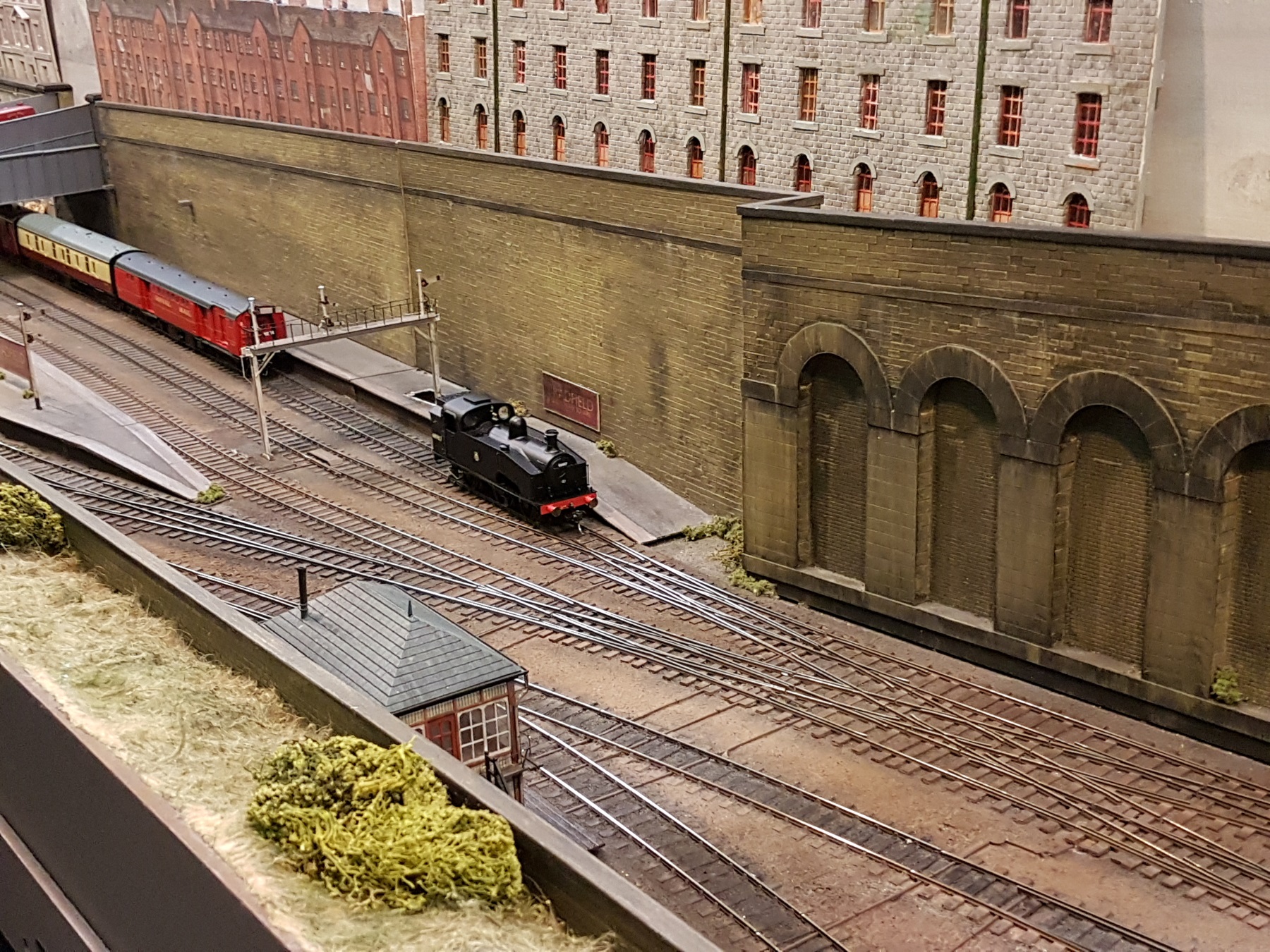
Next Bradfield Gloucester Square, in fine-scale ‘OO’. Excellent dirty and careworn scenery with a sort of ‘Minories plus’ layout and some attractive complex trackwork.
I’ve seen Addison Park, 3mm finescale (14.2mm gauge) before, but it’s always worth another look, as London Transport layouts are far from common. And I love the trolleybuses with full overhead wires.
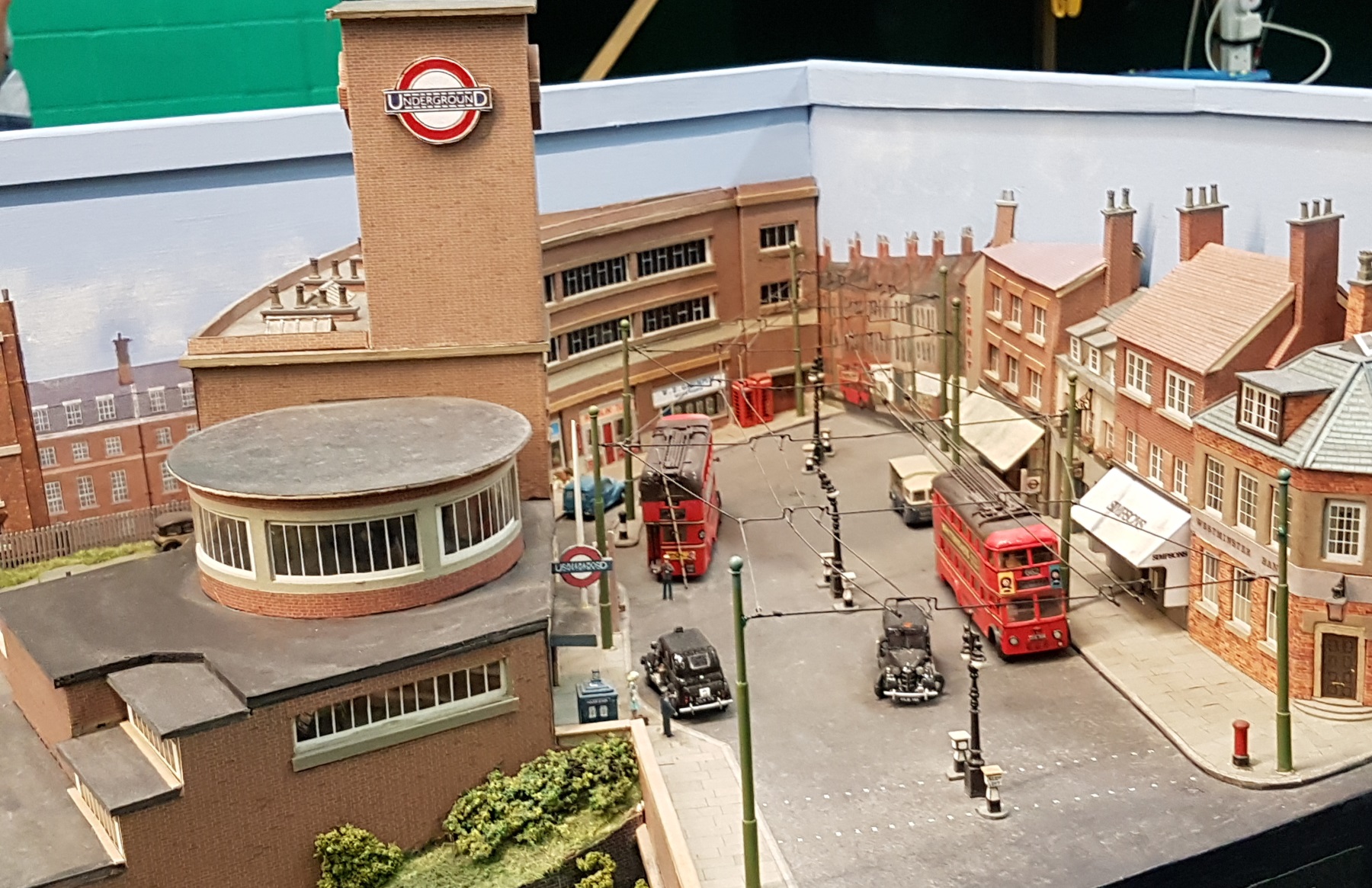
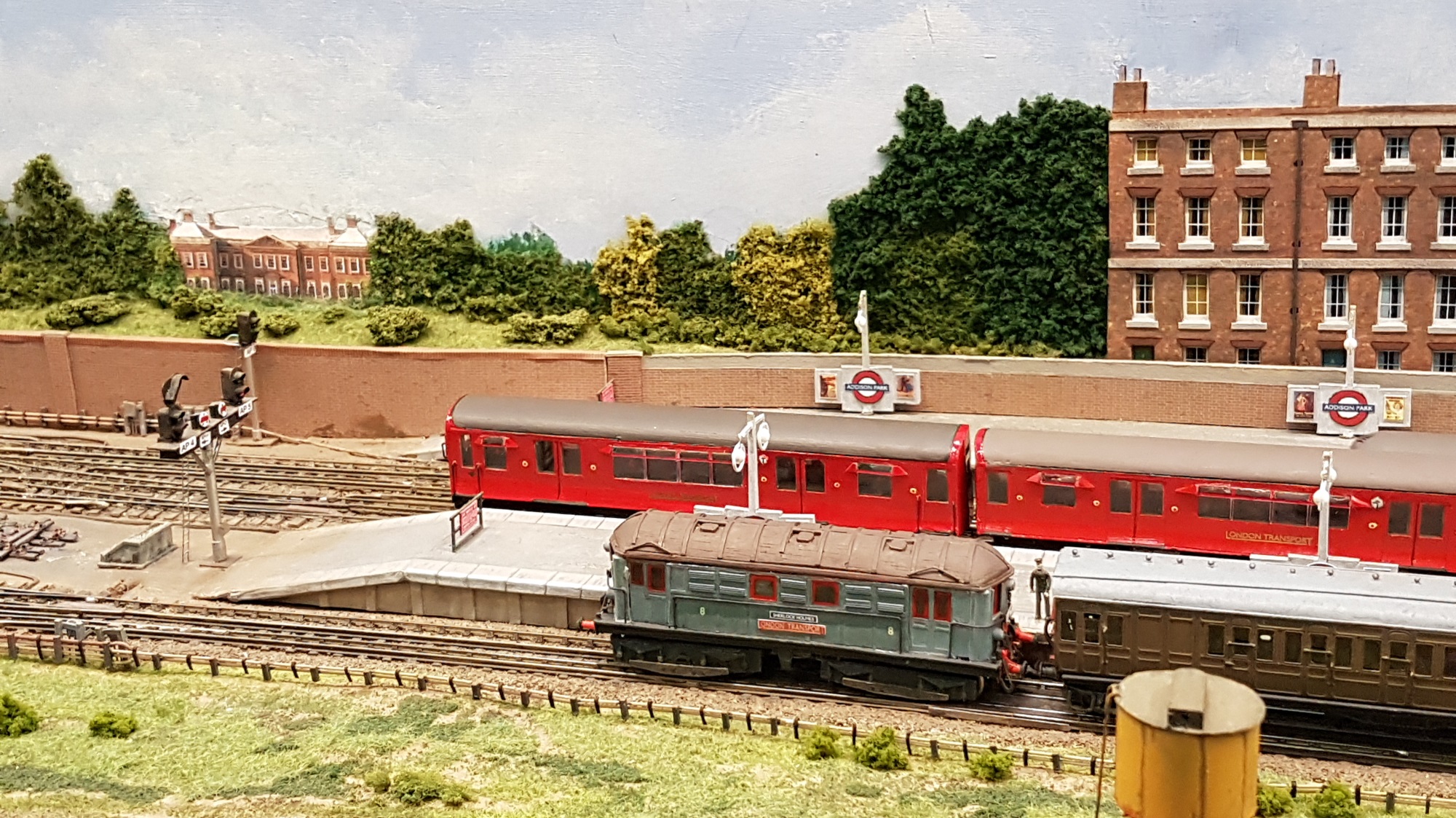
So to Courtmacsherry (4mm scale, 21mm gauge), a slice of southern Ireland. The layout notice sums it up better than I can put it….
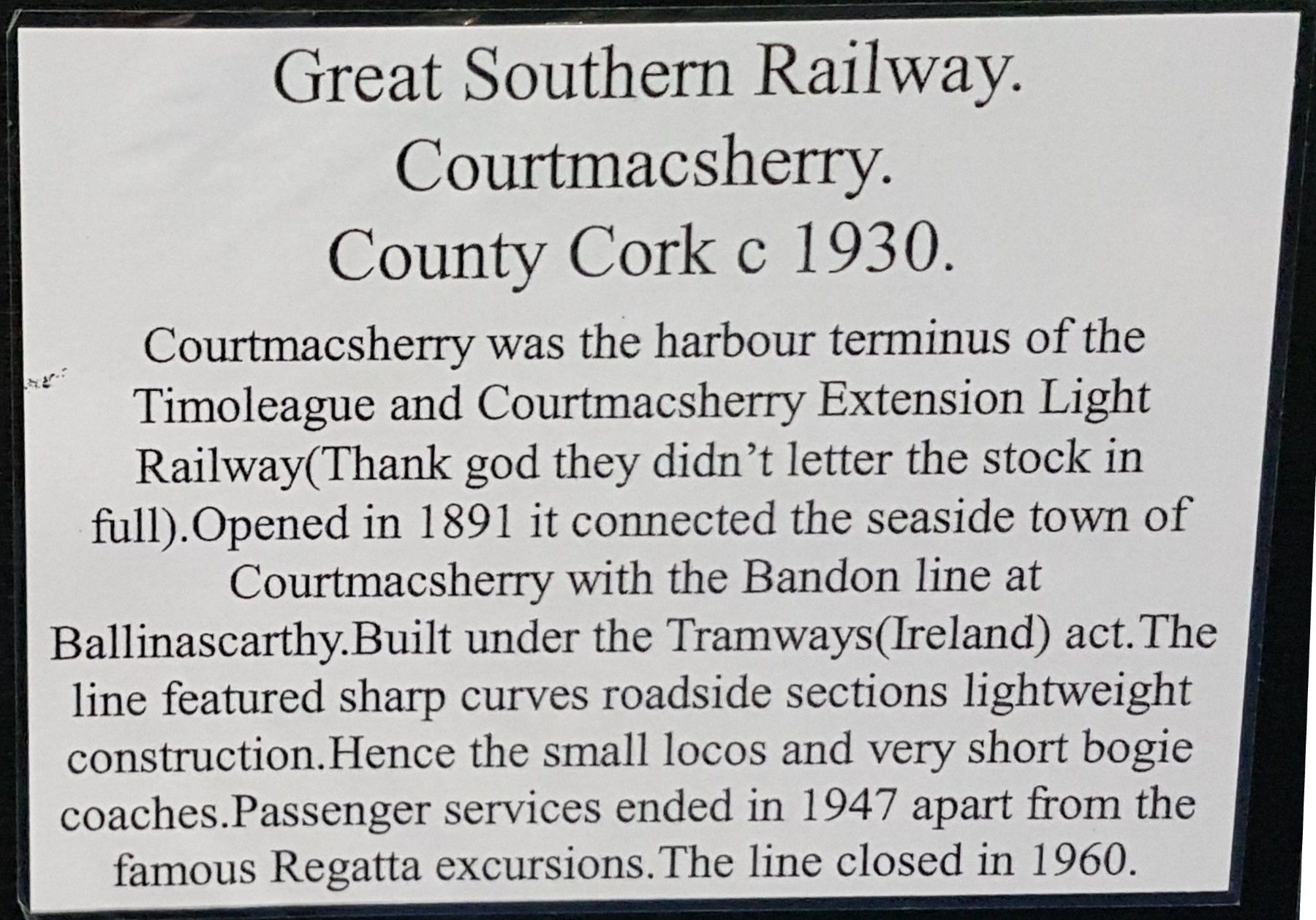
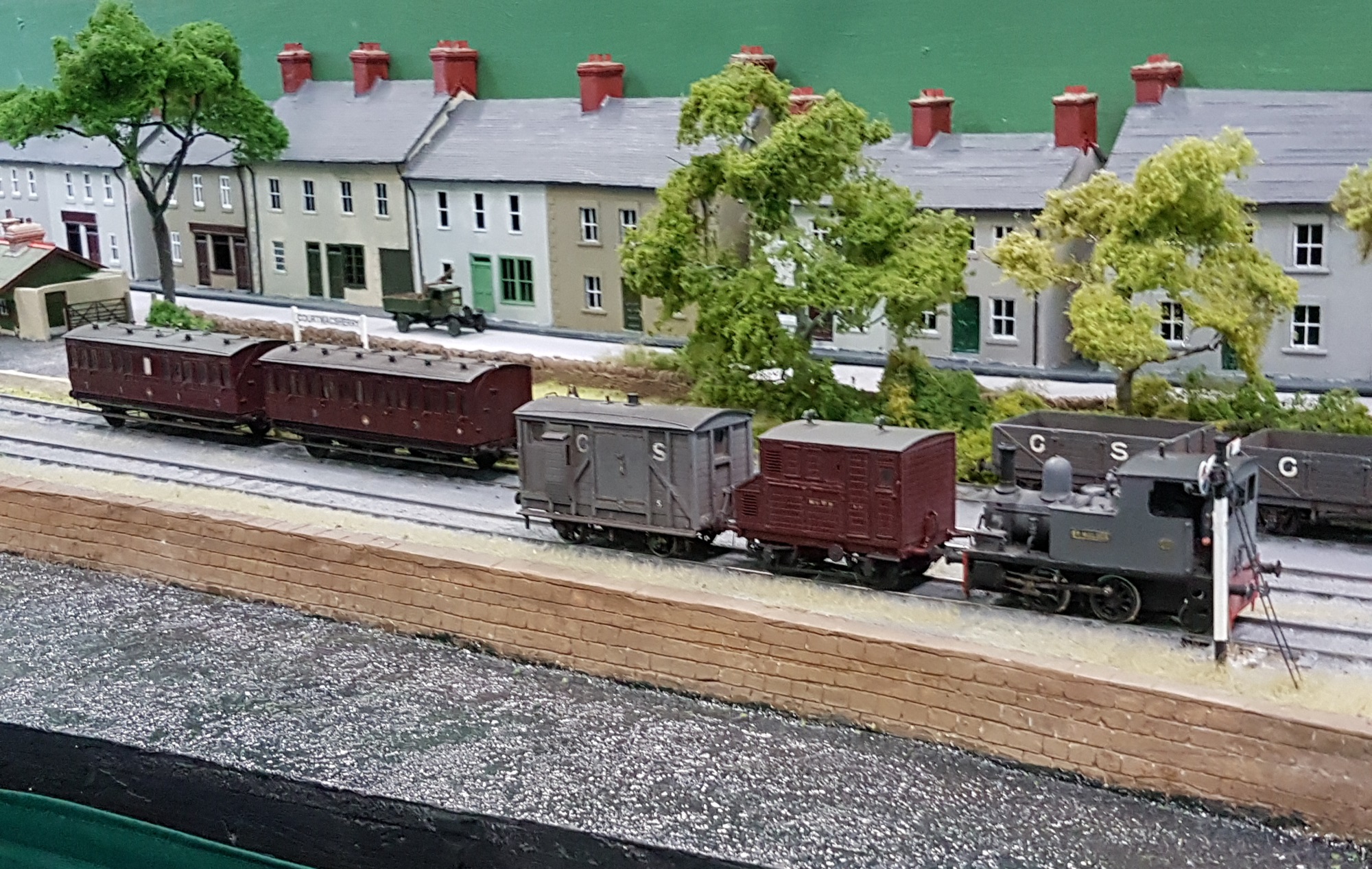
A delightful model, even without the strange light railway stock. I understand that the model is exact scale in its length, and the path of the railway can easily be traced today.
Fawley shows the line to the refinery when it was a light railway taken over by the Southern Railway, rather than the major industrial branch line of layer days. Shunting was being carried out by an Adams ‘Jubilee’ 0-4-2 locomotive, not as well known, but longer lived, than the LBSCR ‘Gladstone’ class of the same wheel arrangement.
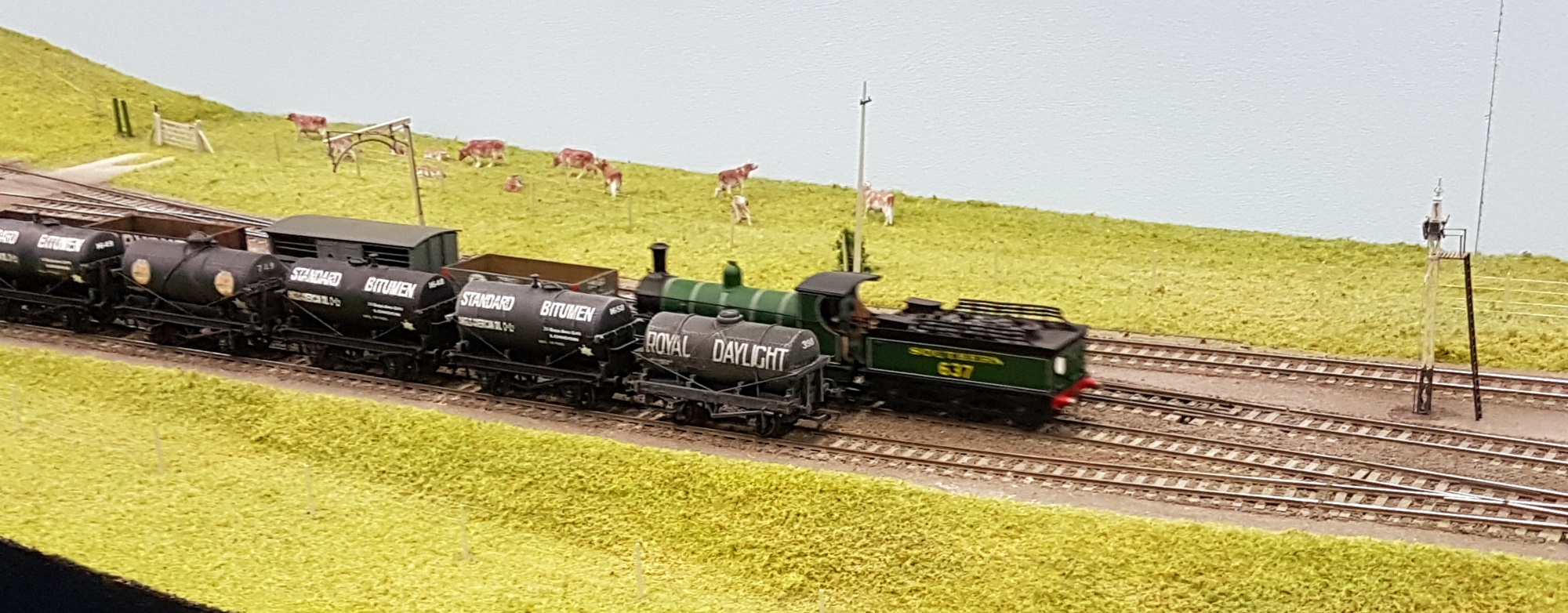
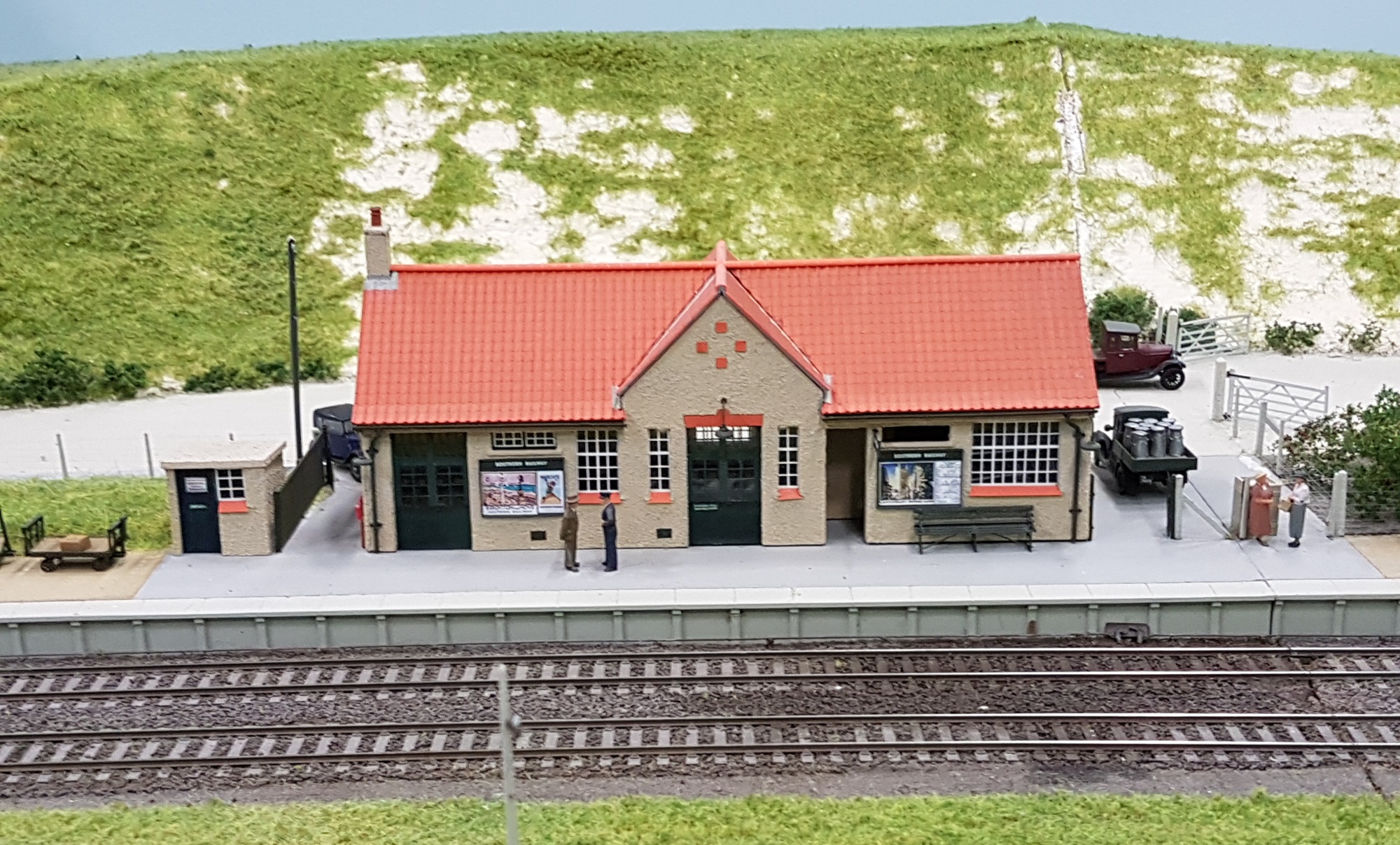
Bosun’s Wharf, in OO had some excellent ship modelling, and some interesting cameos – spot the stretcher case being carried to the ambulance!

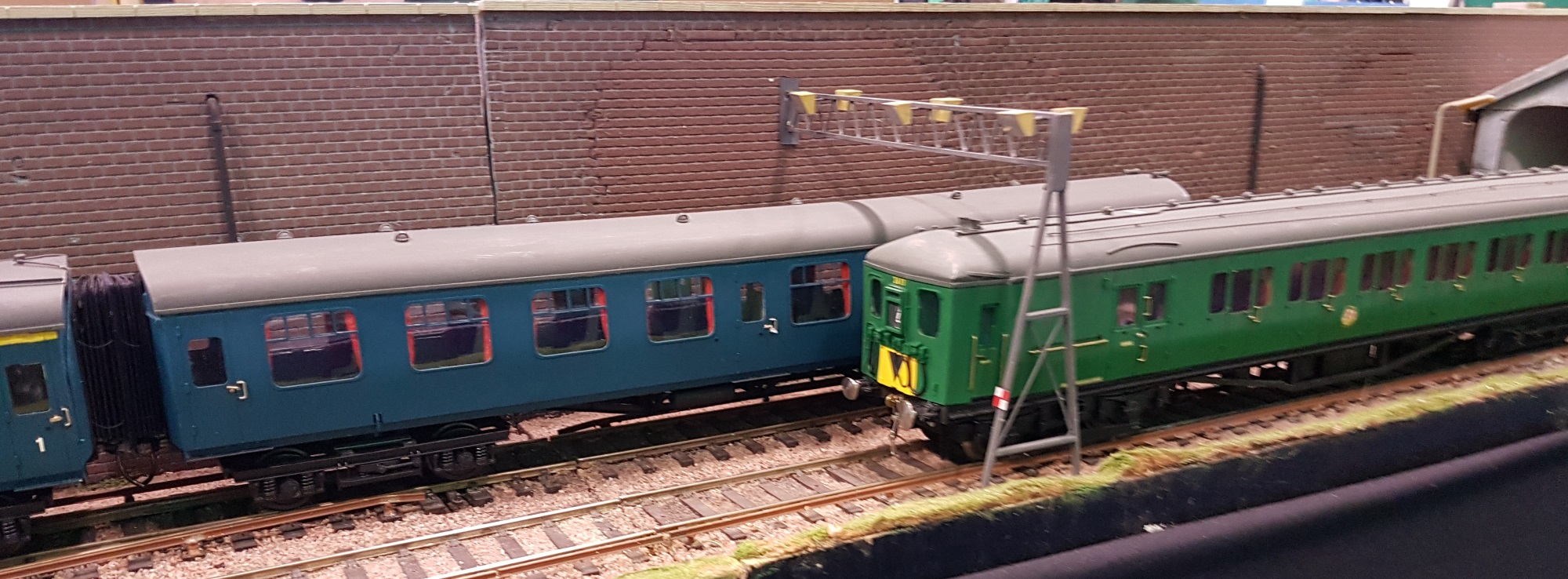
One of my favourites – Littleton in ‘O’, with Southern Region electrics to the fore.

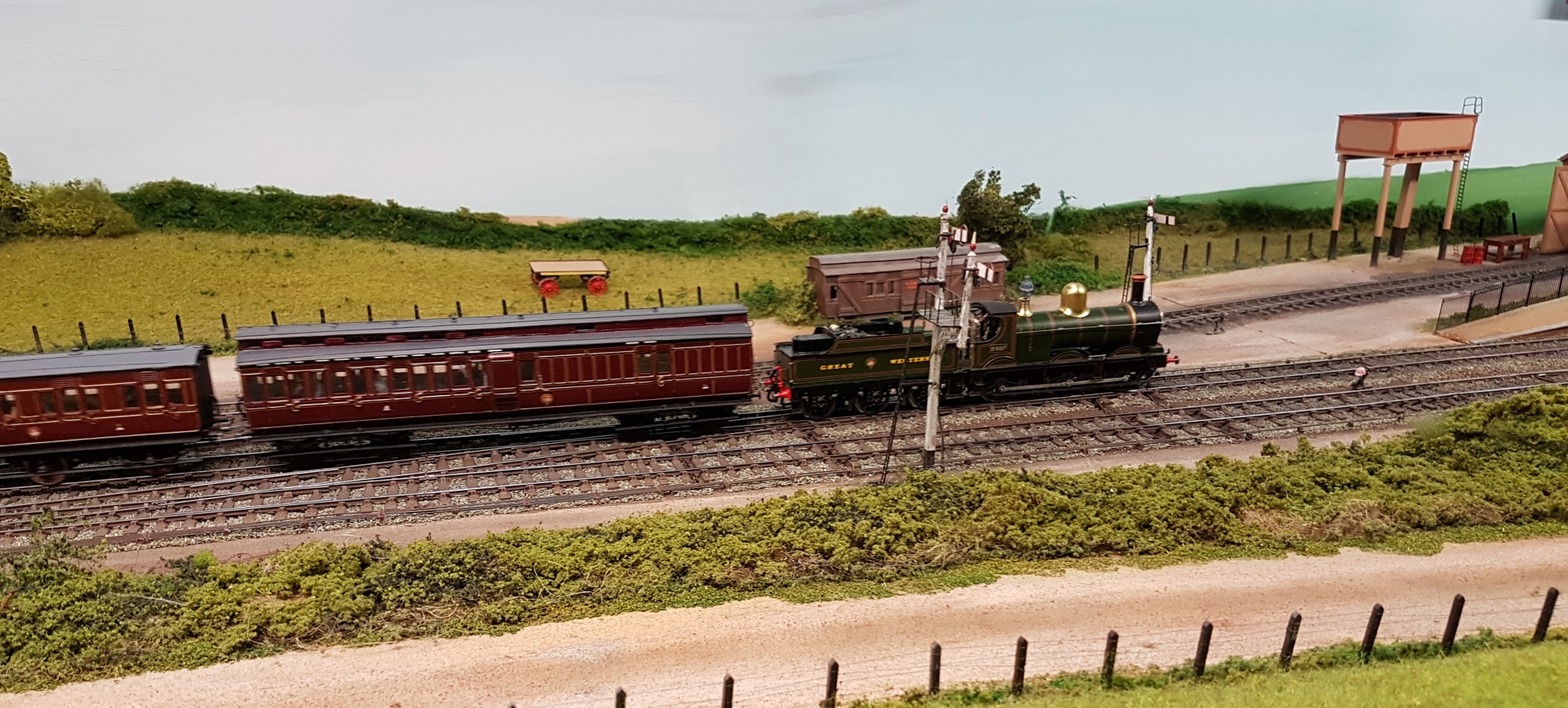
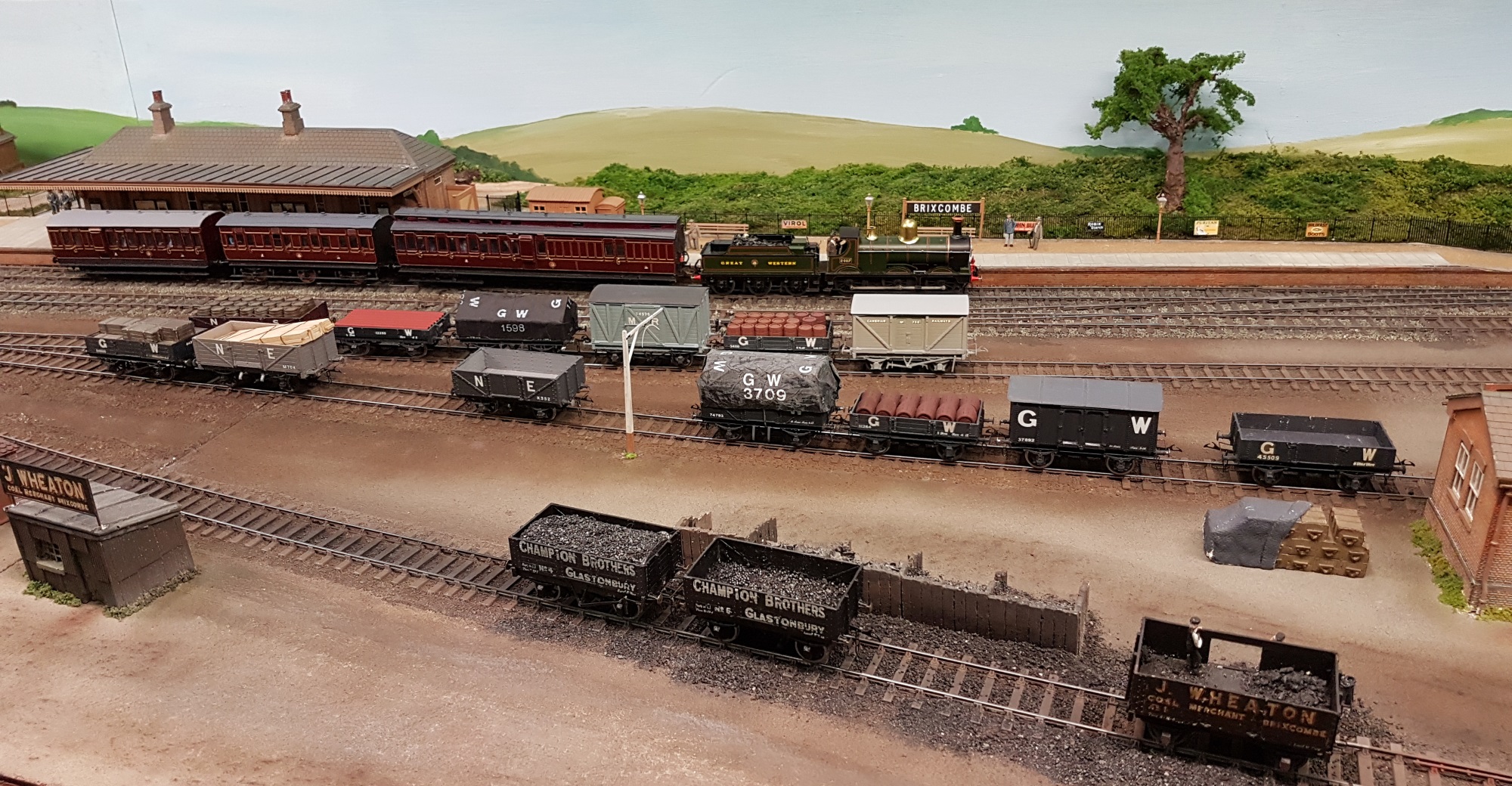
Brixcombe, in P4, was, in one way, the classic GWR branch line. However, this is not the typical GWR branch – maroon coaches, and open cabbed, brass domed pannier tanks. Have to say this is more interesting than the usual stereotype….
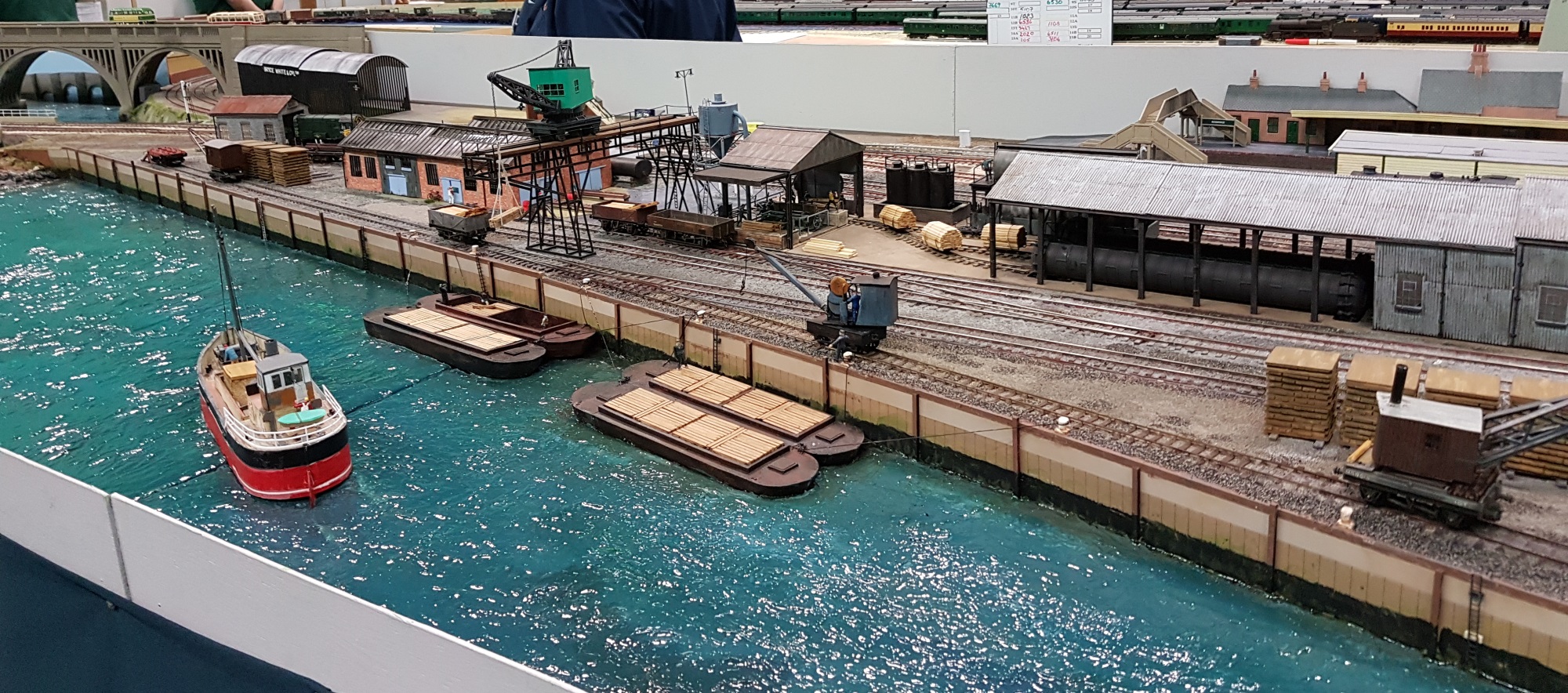
Redbridge Wharf, in ‘OO’ is a model of the coastal industrial area of this corner of Hampshire.
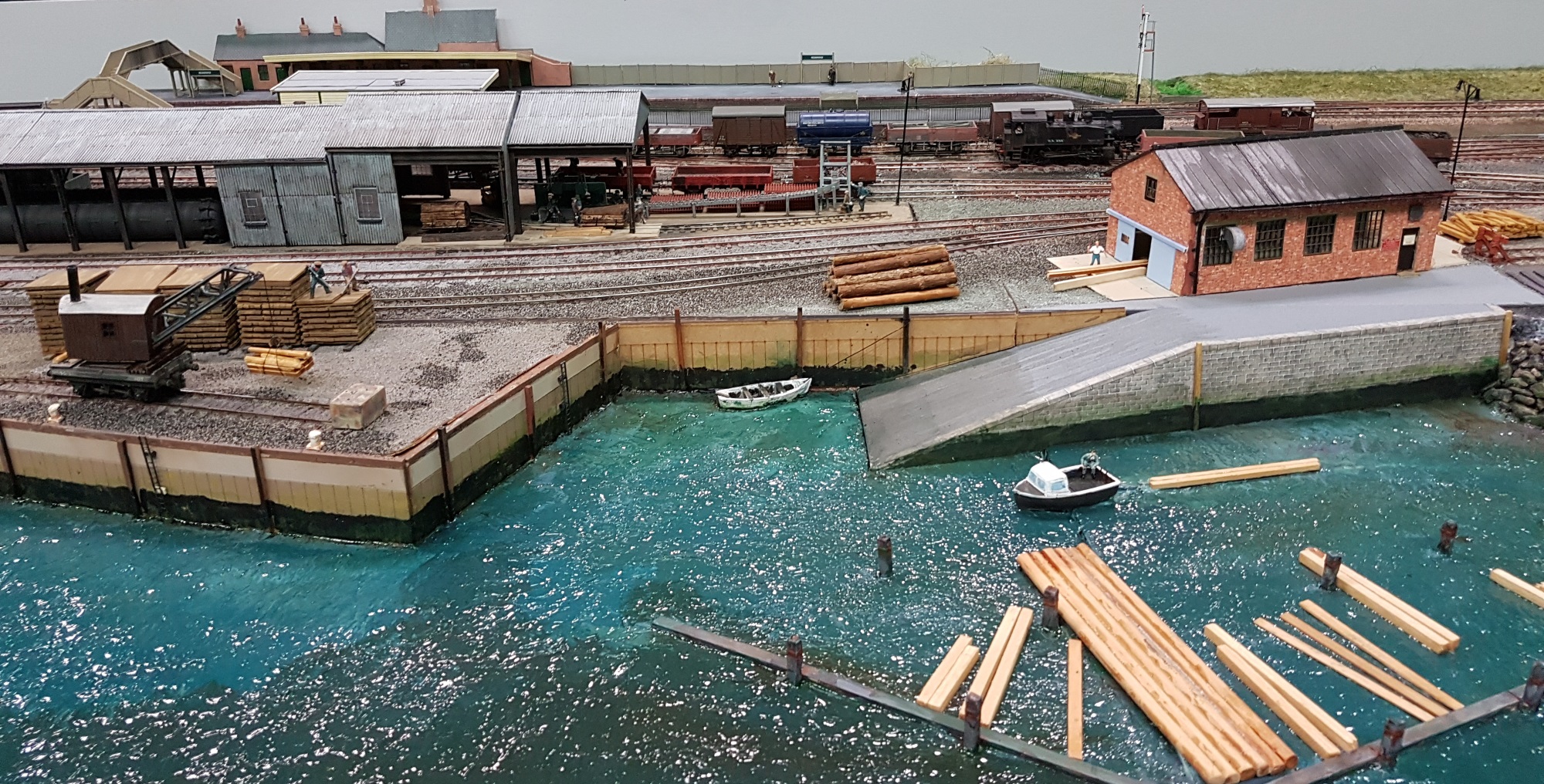
More layouts to follow next time….
No inspiration today – my brain resembles this incident on the Chicago elevated – or perhaps it is just an ESNG running night?
Nice bit of Health and Safety, though, especially the hard hat….

With apologies to Star Trek!
This video, hi-jacked from the 2mm Association site, is just one incredible bit of model making. And I’m not (for once) talking about the fine scale. Shunting using a tractor – whatever next – working horses!!!!?!!!!
Shunting Tractor at Yeovil Town.
For many years, Laurie Adams has been constructing a model of Yeovil Town. Some of the sidings are impractical and off-limits for locomotives, and shunting was undertaken by a modified tractor. So, never short of wanting a challenge, Laurie set out to make a tractor work to perform the shunting operations.
The video below is about 20 minutes long and explains the construction and shows the operation of this amazing vehicle.
It would be very easy to get depressed by this level of skill, and take up knitting (apart from the fact that I’d be no good at it). So I’m impressed and inspired. Hope you are too?
Eleven members present on Wednesday, and it was good to see the Cha(I)rman, having risked the early milk round the following day, and especially Ian, having been out of circulation for a while.
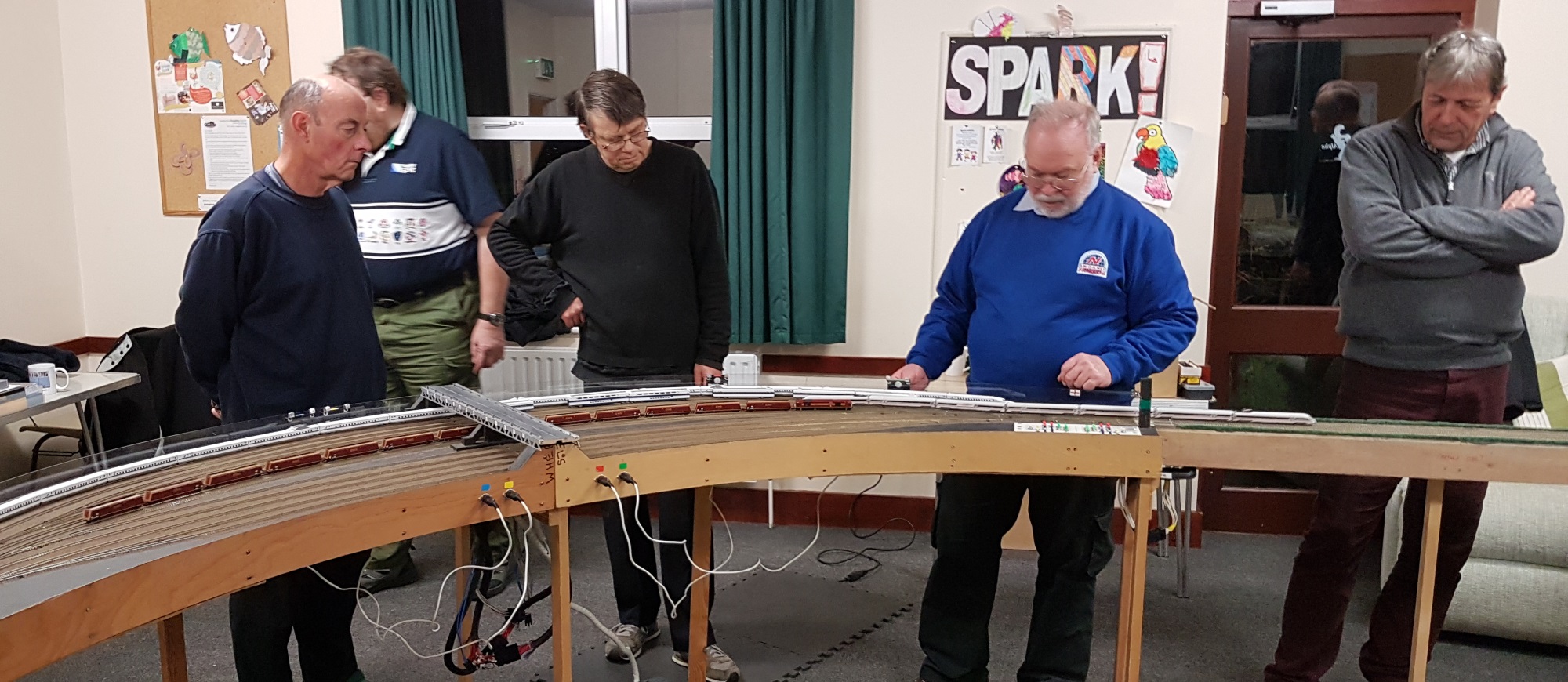
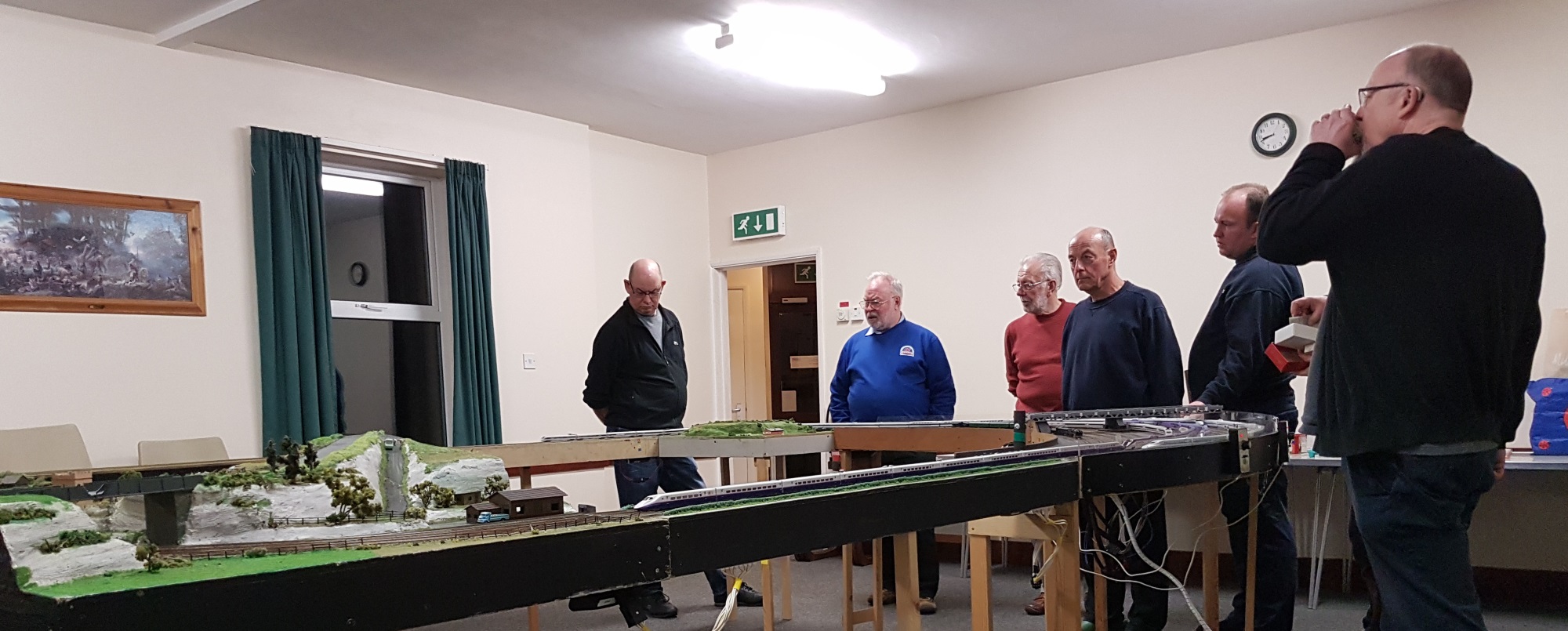
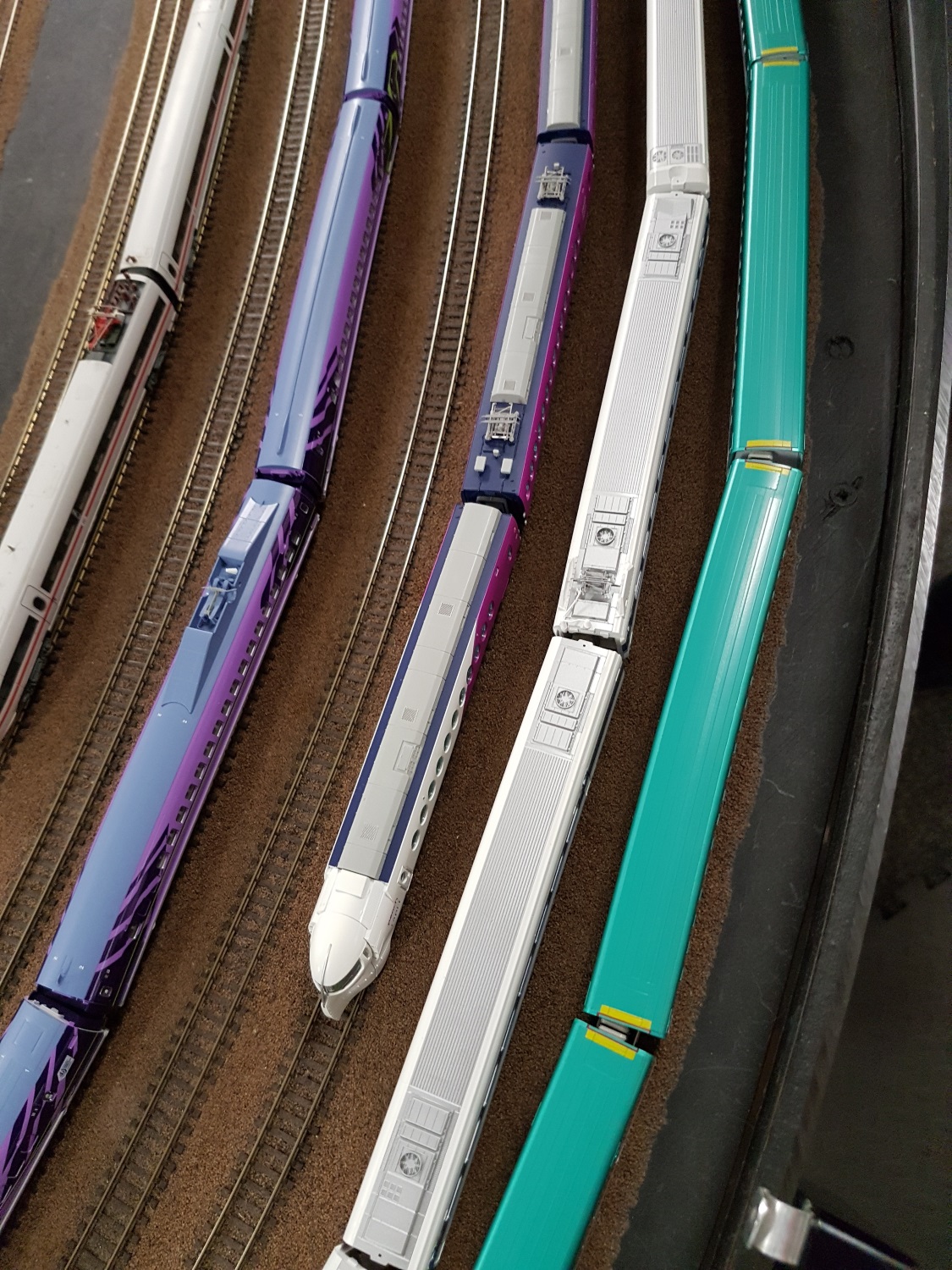
Sunday was goods train evening. Wednesday was passenger, especially multiple unit, night. Paul had a technicolour selection of bullet trains on display.
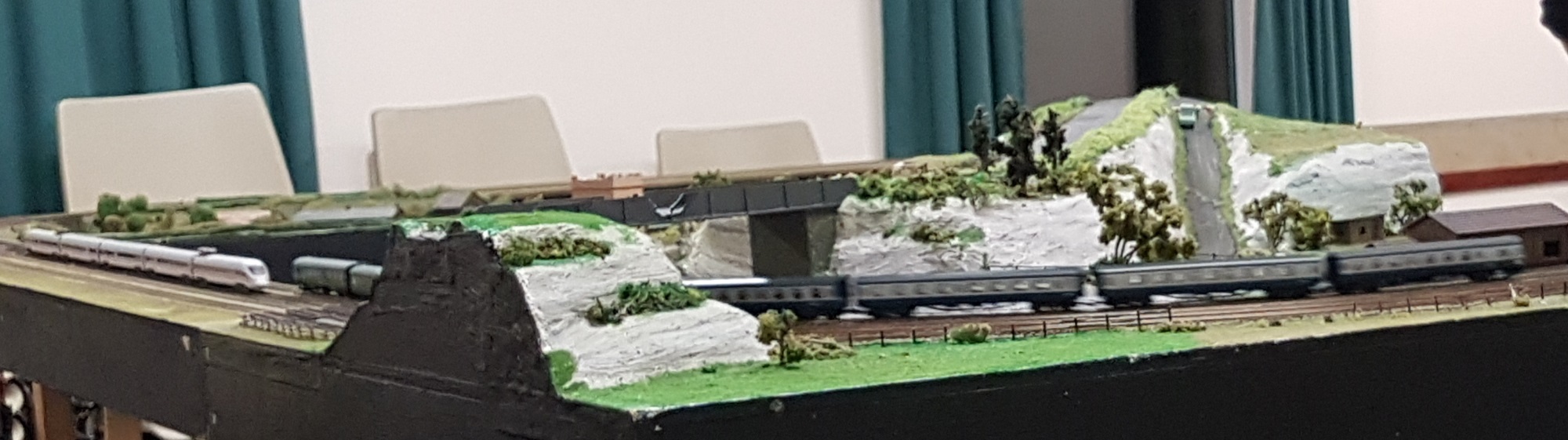
An 8-CEP races a European ICE….
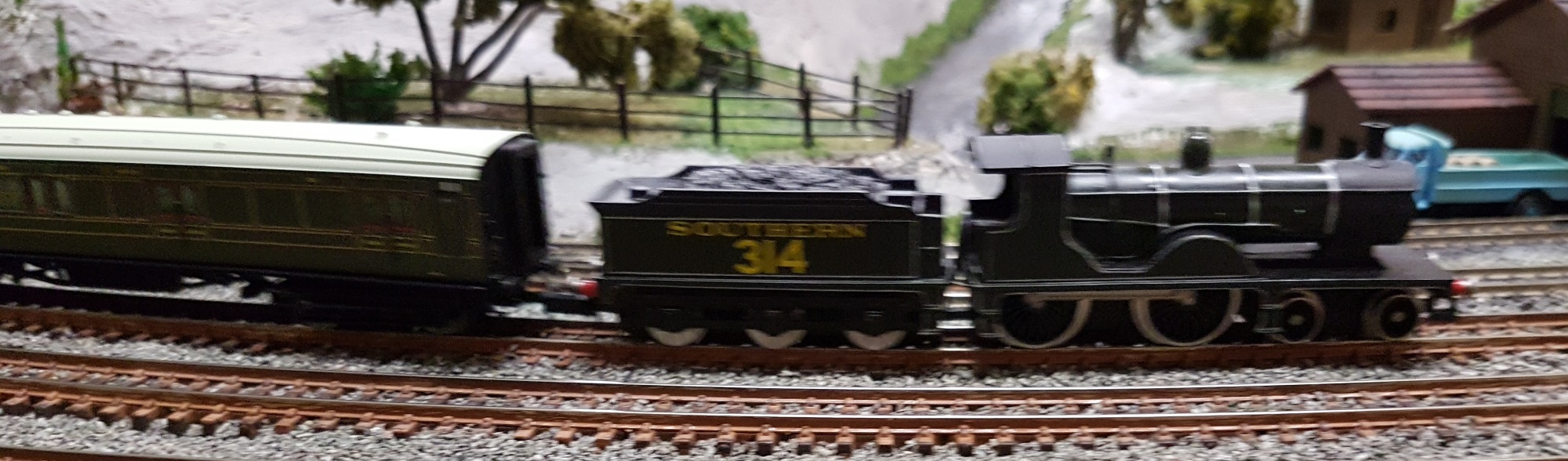
A little bit of history with a T9….
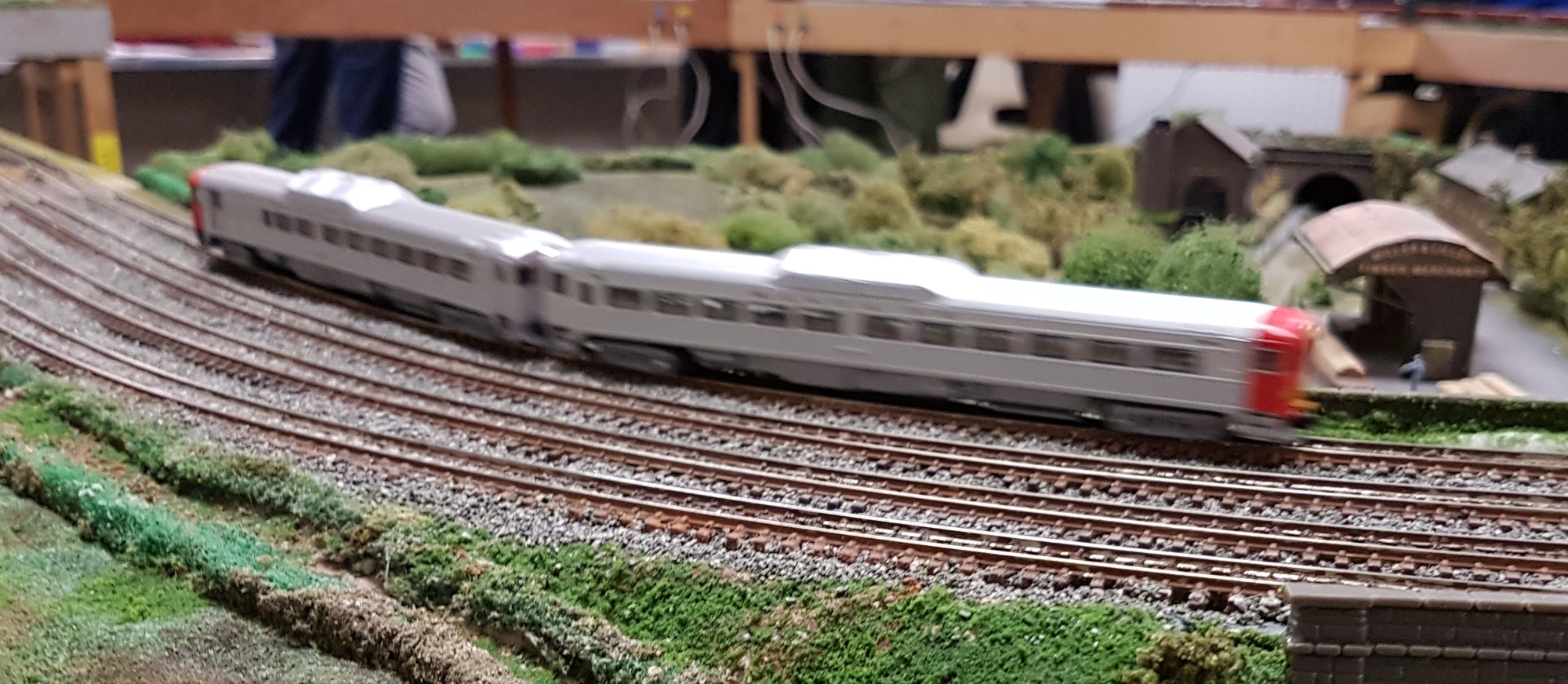
Budd railcars….
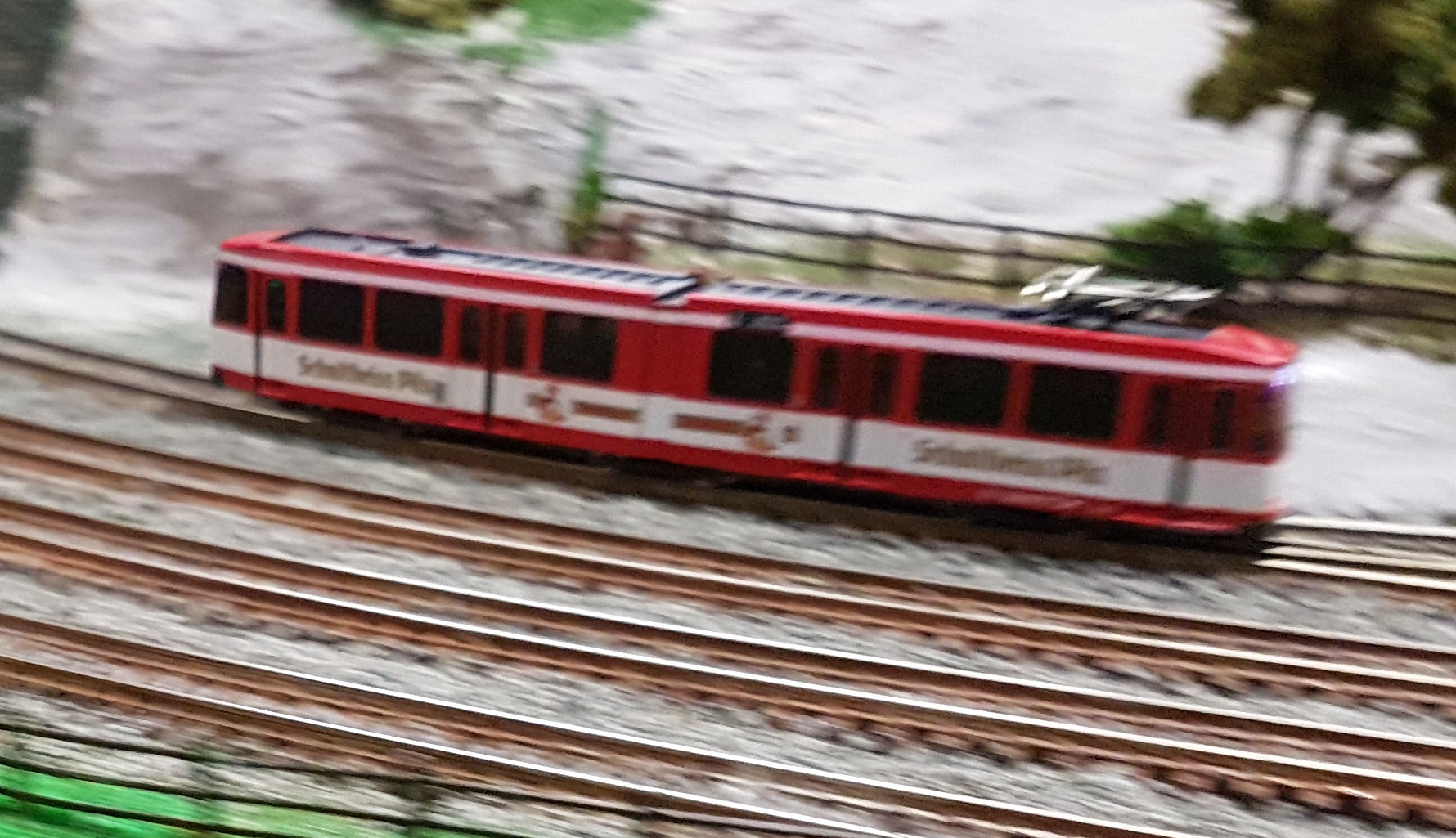
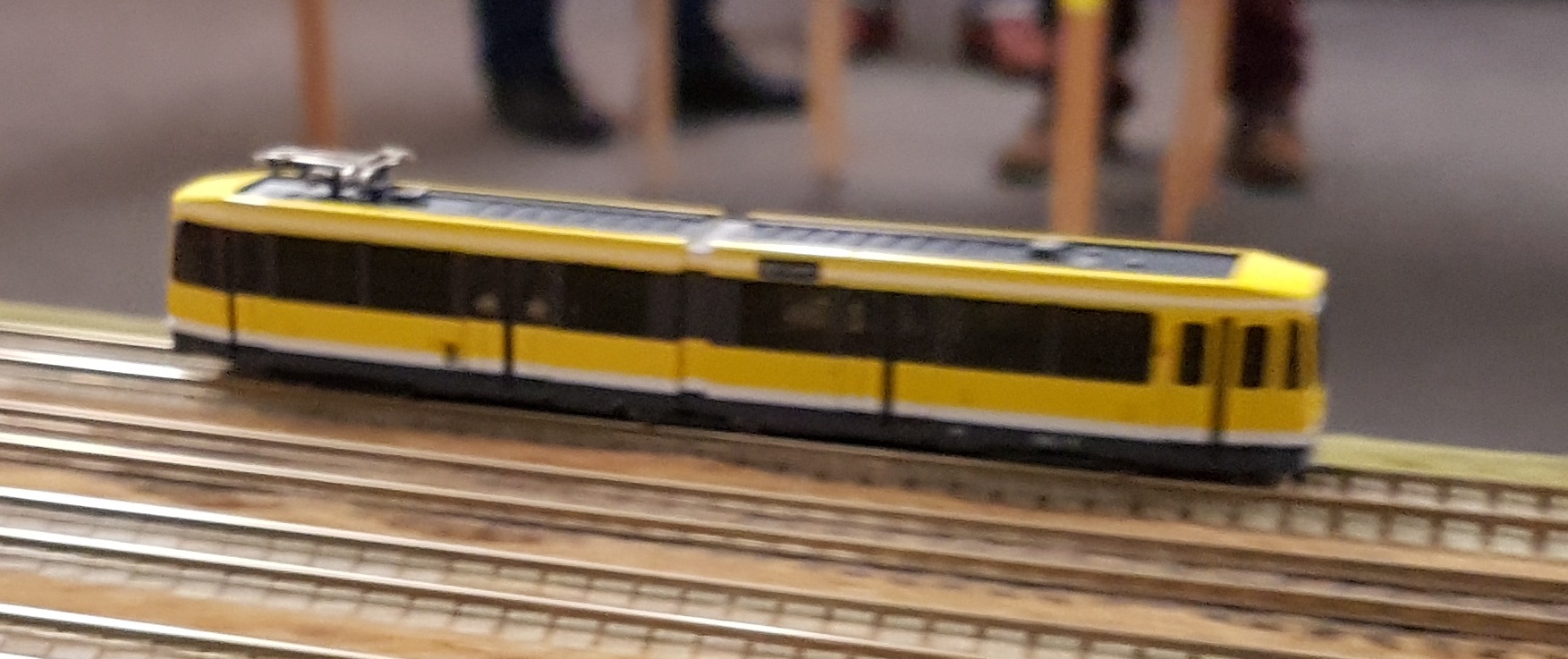
Technicolour trams….
But there was a little bit of goods stock present. Modern coal….

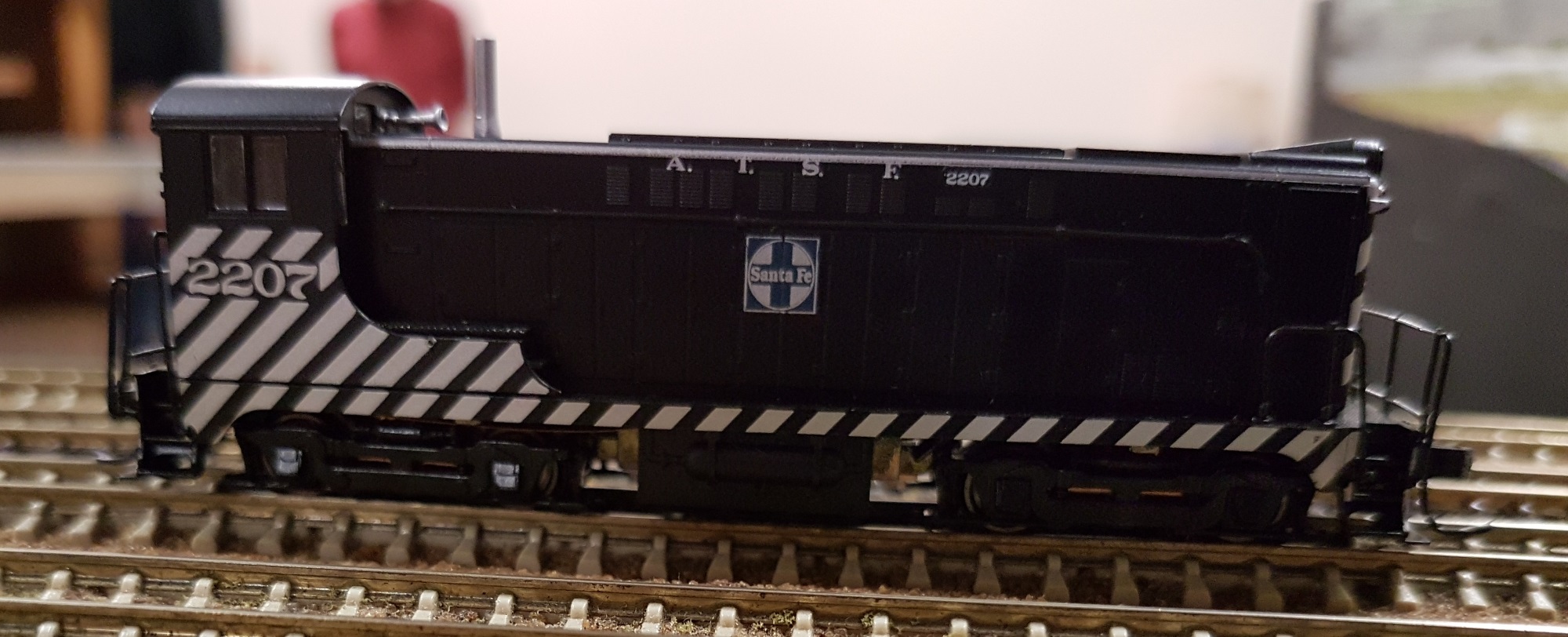
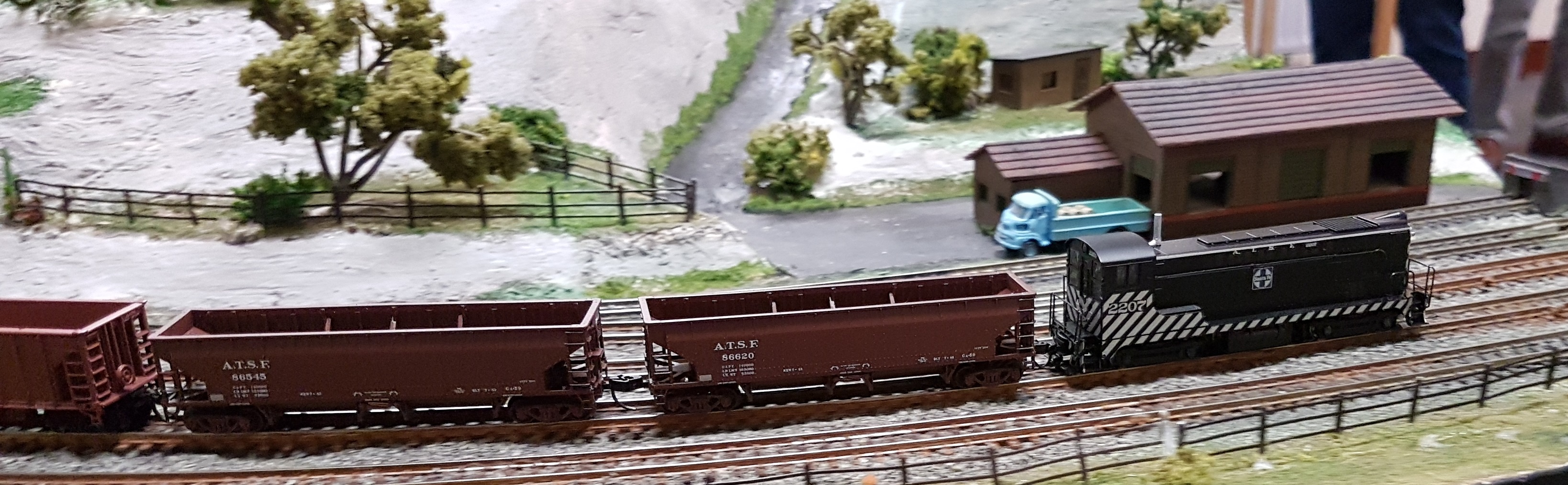
And a Santa Fe works train….
 | Allan Dawes on On my workbench – module… |
| “Stuttgart 202… on Stuttgart 2025 – 4… | |
 | Jonathan Caswell on Stuttgart 2025 – 4… |
 | Chuckster on Brockenhurst show 2025 |
 | snitchthebudgie on Potpourri #1130 |
 esngblog