London Underground: 150 fascinating Tube facts

Or how to bore your travelling companion on the bus during a tube strike.  These are taken from the Daily Telegraph.  Here are my top 30 (or so), avoiding a very long post!

1. There is only one Tube station which does not have any letters of the word ‘mackerel’ in it: St John’s Wood.

2. The average speed on the Underground is 20.5 miles per hour including station stops.

6. Many tube stations were used as air-raid shelters during the Second World War, but the Central Line was even converted into a fighter aircraft factory that stretched for over two miles, with its own railway system. Its existence remained an official secret until the 1980s.

9. Only 45 per cent of the Underground is actually in tunnels.

12. Aldgate Station, on the Circle and Metropolitan Lines, is built on a massive plague pit, where more than 1,000 bodies are buried.

17. The London Underground manages about 10 per cent of all green spaces in London.

18. Wildlife observed on the Tube network includes woodpeckers, deer, sparrowhawk, bats, grass snakes, great crested newts, slow worms.

19. Over 47 million litres water are pumped from the Tube each day, enough to fill a standard leisure centre swimming pool (25 metres x 10 metres) every quarter of an hour.

44. The tunnels beneath the City curve significantly because they follow its medieval street plan.

45. The Central line introduced the first flat fare when it opened at the turn of the 20th century. The tuppence fare lasted until the end of June 1907 when a threepenny fare was introduced for longer journeys.

52. Sting and Paul McCartney are both rumoured to have busked on the Underground in disguise.

55. The Jubilee Line is the only one to connect with all the other Underground Lines.

60. An estimated half a million mice live in the Underground system.

64.There are only two tube station names that contain all five vowels: Mansion House, and South Ealing.

68. In January 2005, in an attempt to alleviate a problem with loitering young people, the London Underground announced it would play classical music at problem stations.

69. The Underground has the oldest section of underground railway in the world, which opened in 1863.

72. During the Second World War, part of the Piccadilly line (Holborn – Aldwych branch), was closed and British Museum treasures were stored in the empty spaces.

74. The first Tube tunnel was opened in 1880, running from the Tower of London to Bermondsey.

91. A spiral escalator was installed in 1907 at Holloway Road station, but linear escalators were favoured for the rest of the network. A small section of the spiral escalator is in the Acton depot.

97. The coffin of Dr. Thomas Barnardo was carried in funeral cortege on an underground train in 1905, one of only two occasions this is known to have happened.

103. According to a 2002 study air quality on the Underground was 73 times worse than at street level, with 20 minutes on the Northern Line having “the same effect as smoking a cigarette”.

113. King’s Cross St Pancras tube station is served by more Underground lines than any other station on the network.

126. The River Westbourne was funnelled above a platform on Sloane Square in a large iron pipe suspended from girders. It remains in place today.

128. There is a mosquito named after the Tube – the London Underground mosquito, which was found in the London Underground. It was notable for its assault of Londoners sleeping in the Underground during the Blitz.

134. In cockney rhyming slang, the London Underground is known as the Oxo (Cube/ Tube).

144. A fragrance known as Madeleine was trialled at St. James Park, Euston, and Piccadilly stations in 2001, intended to make the Tube more pleasant. It was stopped within days after complaints from people saying they felt ill.

147. A 2011 study suggested 30 per cent of passengers take longer routes due to the out-of-scale distances on the Tube map.
Posted in Inspiration, Out and about, Prototype, Weird and wonderful | Tagged , , , | Leave a comment

ESNG PlayDay – 12 July 2015

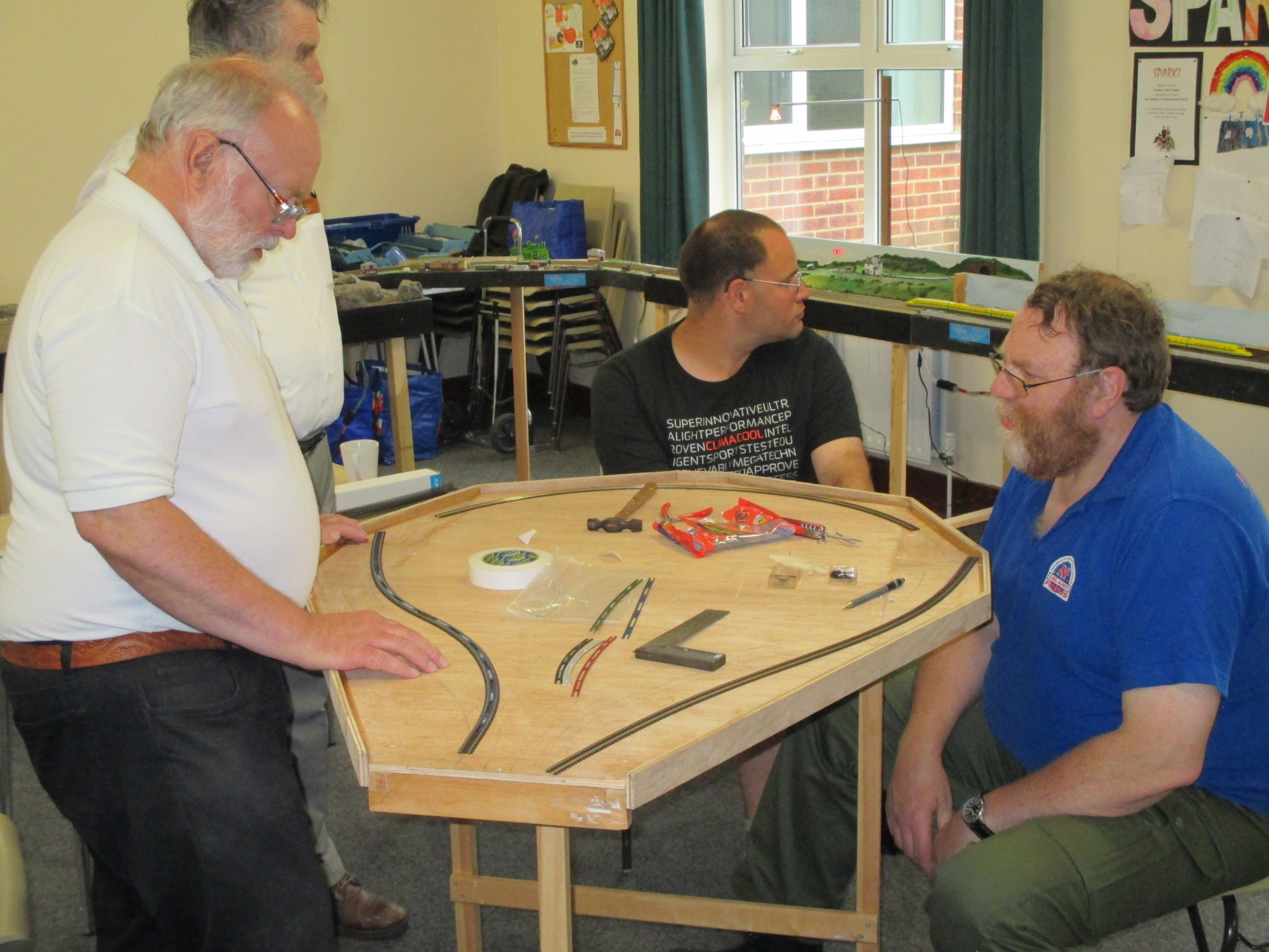
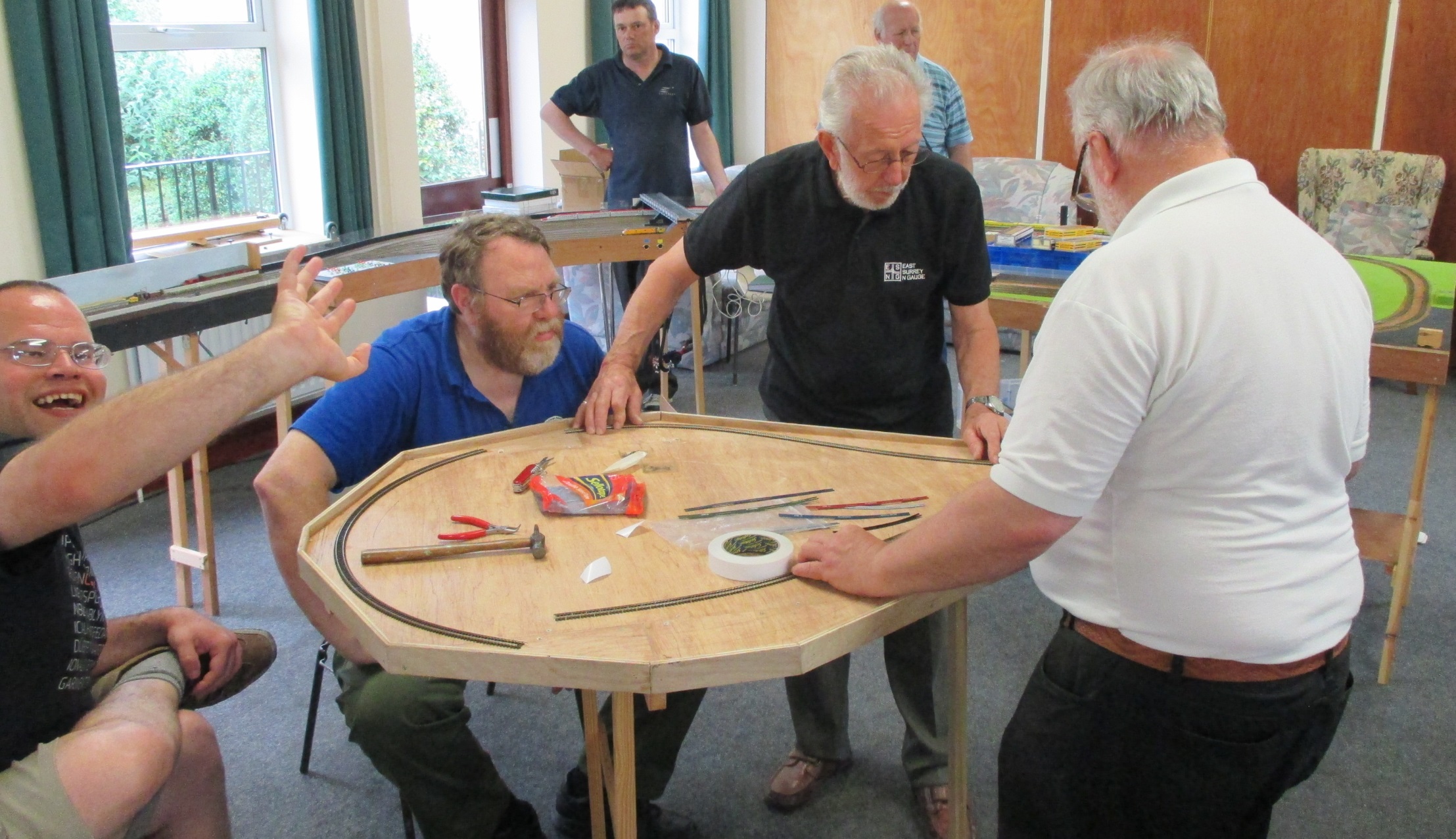
July’s PlayDay was a successful afternoon.  We had 10 punters in attendance, including a pleasant surprise in Sean.  Sean had been able to leave work early from driving trains on Southern due to a convenient replacement bus service.  (What, don’t they get you to drive the buses as well?)  The only negative was Mr Atfield’s bad back, that slowed down the building work that we got done.

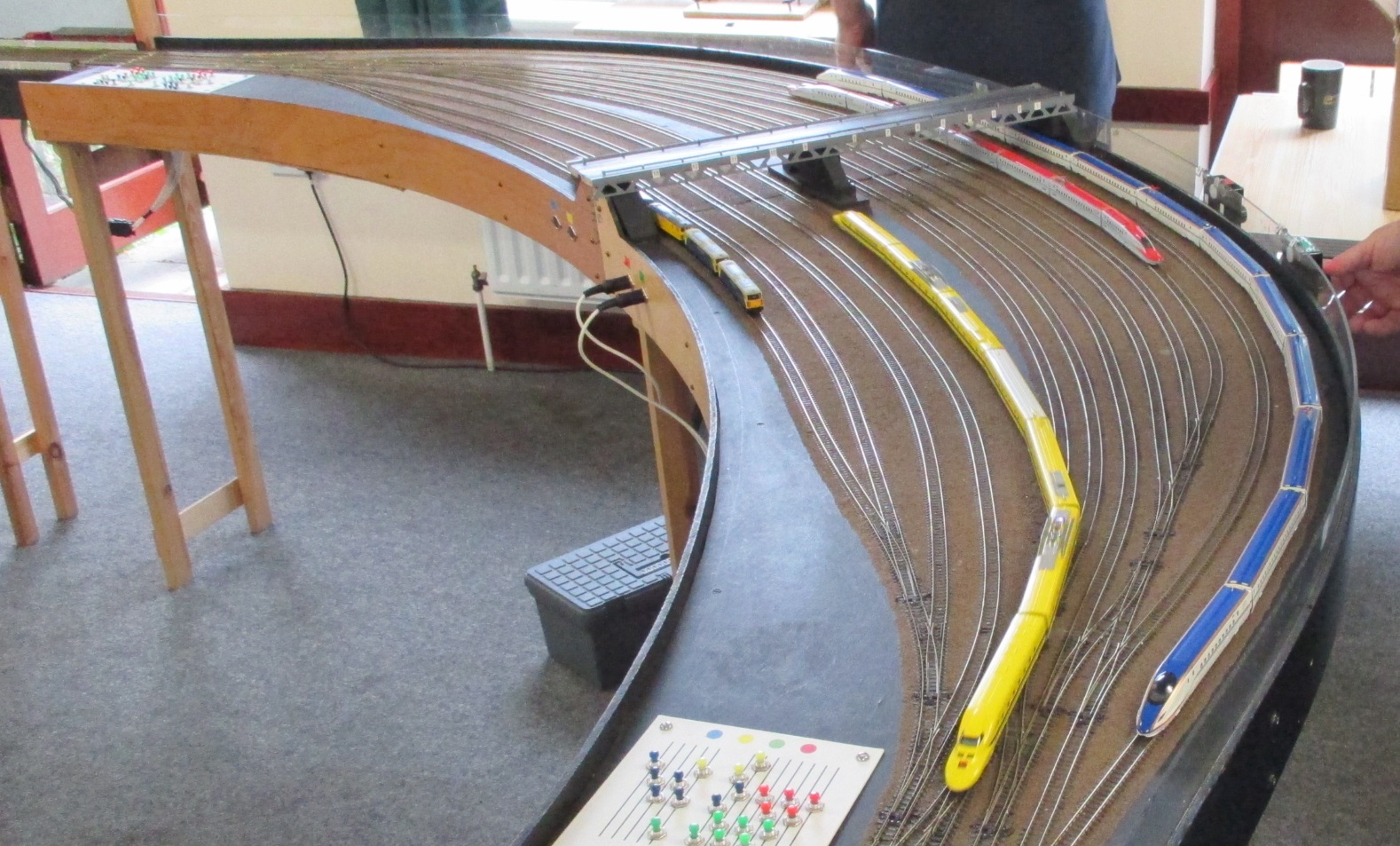
Construction was by committee, as we started track laying on a new N-mod end loop, to be used in Stuttgart this year, and any time we want an end to end layout at home.  Surprisingly, this worked very well, and there were no fist fights over track laying technique.  All good ideas were taken on board by the committee and firmly rejected.  Just like RailTrack, really.  But here’s the photographic evidence….

1_loop 2_loop

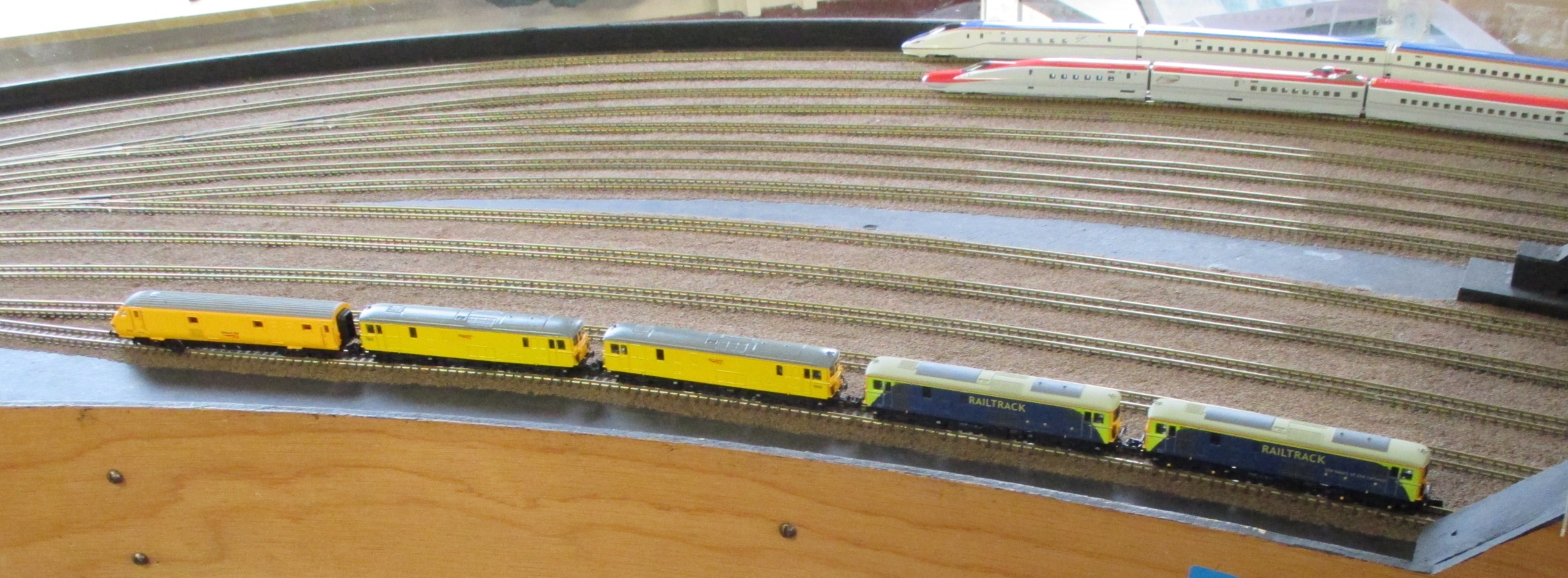
On the circuit, we put together an end-to-end circuit, with Derek’s ‘banjo’ at one end and Allan’s ‘Bowler’s End’ at the other.  This does reduce the number of trains running to two, but did also leave room in the middle for the working party.  A variety of trains were on view, including this interesting line of Class 73s…..

3_73s

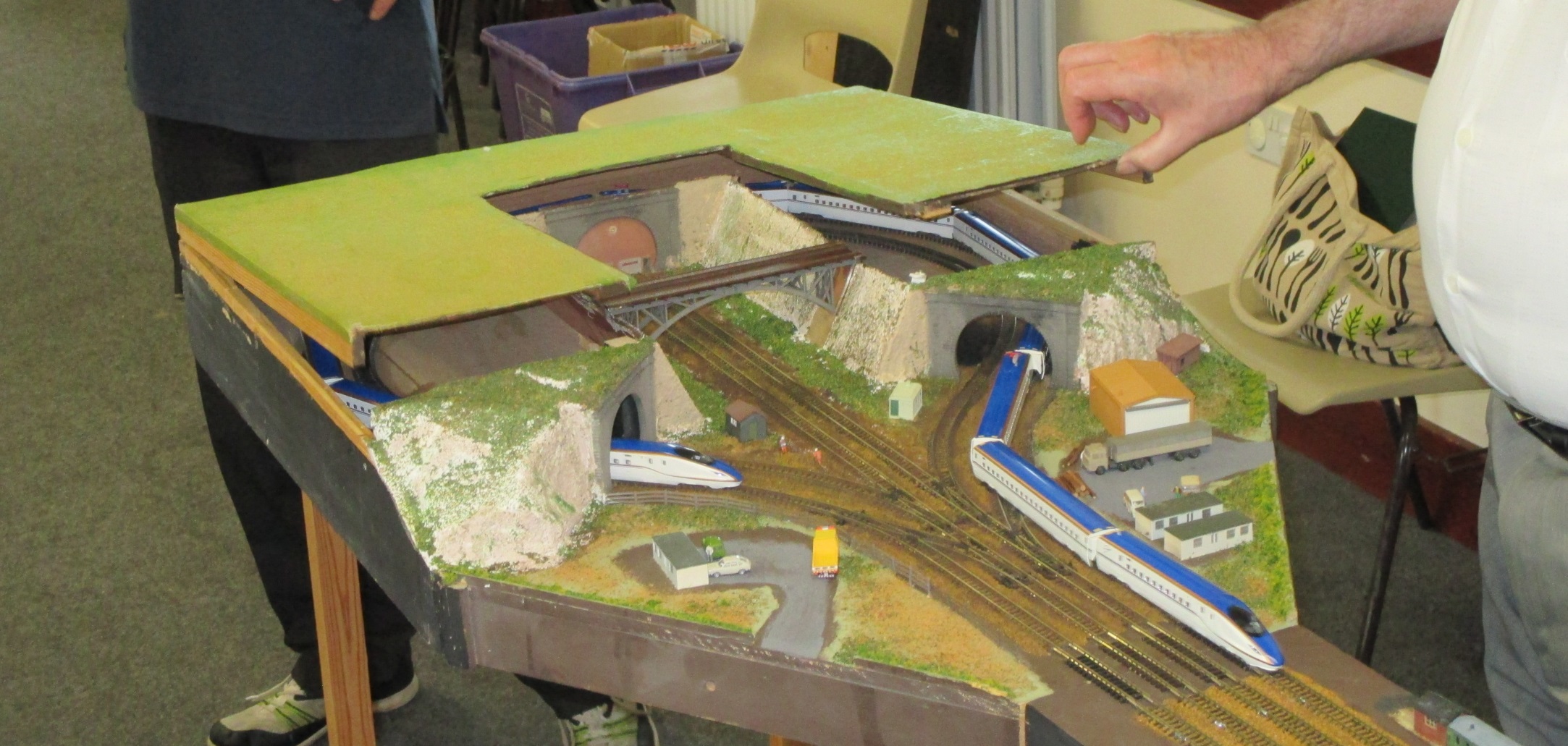
However, most of the afternoon was dedicated to Japanese Bullet trains, as Paul had brought a selection of his collection, and Graham had a new luminous yellow unit.  Unfortunately, not all units coped with the tight curves at both ends of the layout.  Surprisingly, it was the Kato units that didn’t like the bends, as Kato stock normally runs over anything.  There was also a minor issue with the units with very long ‘snouts’ catching the tunnel mouth on Derek’s banjo.  Still we had a few running successfully….

4_bullet 5_bullet 6_bullet 7_bullet

Phil’s just checking this one doesn’t get lost in the banjo….

8_tunnel

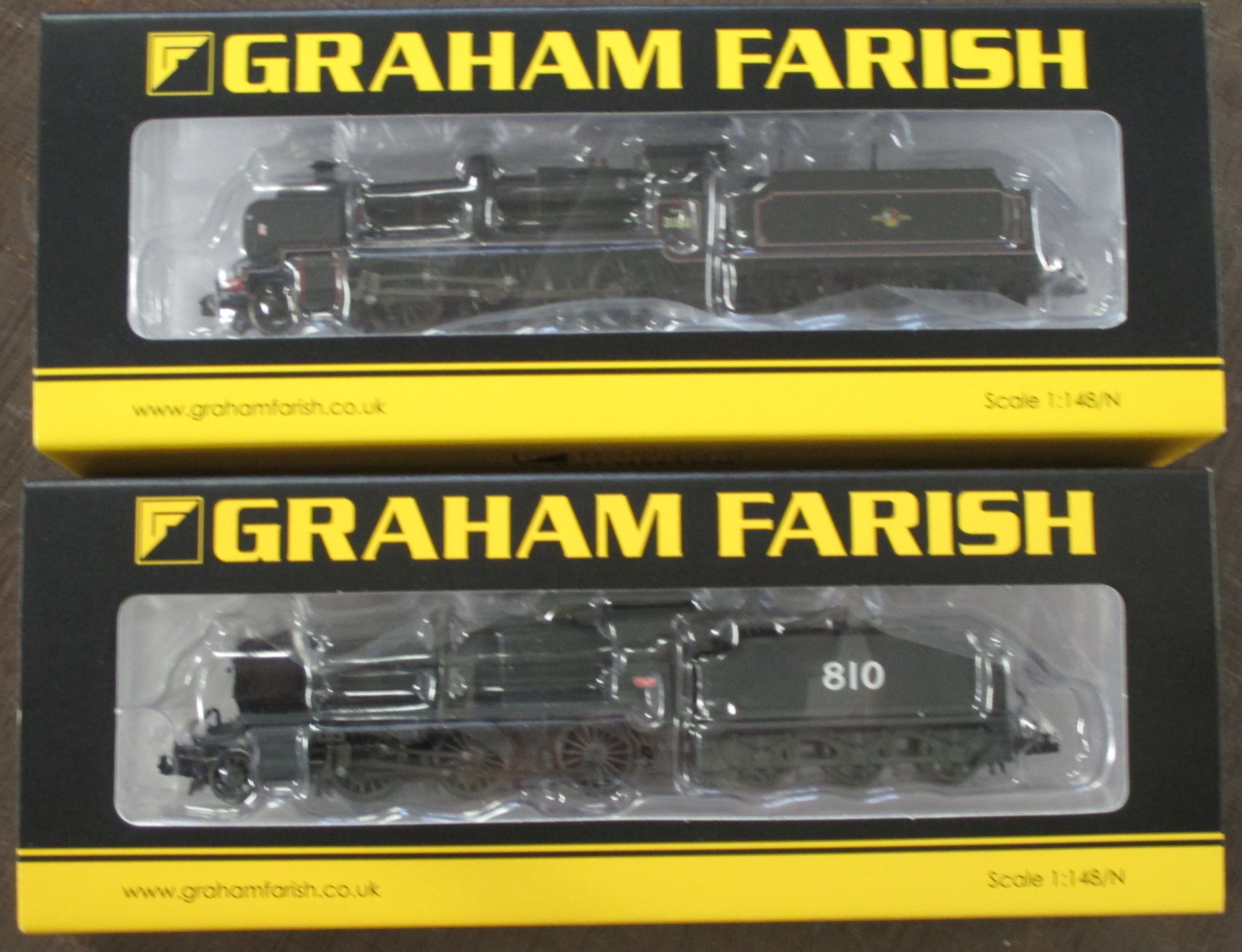
We also had the pleasure of seeing the new Farish Southern N class 2-6-0 in action.  Lovely model, perhaps only spoilt by the large hexagonal heads to the coupling rod fixings.  I was so impressed that I gave in and went home and ordered one.  Now to wait for the Farish Birdcage coaches or the Dapol Maunsells in BR green to pull behind it…..

9_Ns

And of course the meeting finished with an excellent curry!

Posted in ESNG, ESNG meetings | Tagged , , , | 1 Comment

Long and winding road – the shed

In the mid-sixties, I was in need of the larger back bedroom in our 1930’s 3-bedroom semi, so my father invested in a SHED.  This 9′ x 8′ empire was carefully built by my father, saturated with wood preservative, insulated and lined.  The roofing felt had an added corrugated plastic layer.  This careful construction meant that the shed was still in good condition when my parents moved house over 15 years later.  Power was strung from the kitchen and garage, so one could flick a switch and pre-warm the shed with an electric convector.

Three generations of layout lived in the shed.  The first was another continuous layout, really just another ‘big station opposite small station’ design, much as we had indoors.  The next introduced a junction and a terminus in front of storage loops.  The third was the most satisfying and had most progress.  The continuous run was abandoned in favour of a simple U-shaped terminus to fiddle yard layout.  The terminus was modelled after a number of smallish Southern Railway stations.  Most track was hand-built, with some PCB sleepered Marcway points.  Ballast was in place and some basic scenery as well.  It was never finished, but it was the first ‘real’ railway I had helped build.

Through my teens and university years, my father and I were members of the Beckenham and West Wickham club.  In fact my father remained a member well into his retirement and contributed a number of models to their fine-scale ‘O’ gauge layout at that time.  I’ve posted the picture below before, but it is well worth posting again.  A typical early 70’s exhibition, with the club’s semi-coarse standard ‘O’ gauge line on display.  My father is in the middle back, and my signal box, hiding the working lever frame is middle front.  Lots of lovely Southern ‘O’ gauge (plus a couple of re-motored ‘Big-Big Train’ Hymeks).  A model railway show, so ties had to be worn (except my dad) and smoking was allowed not only in the hall, but also during operations!

BWWExpo

The BWWMRC gave me my first introduction to 2mm modelling.  In a room next to the large club library lurked what my father called, ‘The Mechanical Mice’.  2mm fine-scale modelling progressed at a slow pace.  If my memory is correct, we either had a piece of the famed Inversnecky and Drambuie Railway, or a close copy of it.  I recall the station terminus that fitted in a violin case, and the lighthouse scene next to it.  Most of this pioneering model railway can now be seen in York Railway Museum.

inversneckyfrombuffers

For those familiar with the names Willis and Cox in the context of the 2mm Association, I remember these worthy gentlemen working on the layout, together with a small American gentleman, probably called Len Fidkin, who built amazing trestles and buildings.

Then in 1973, it was off to university, and a whole set of new ideas (to say nothing of beer) opened up.  That will be for next time!

Posted in Inspiration, Jon's layout ramblings, Weird and wonderful | Tagged , , | 1 Comment

Off my trolley – North Shore in ‘N’ gauge

I recently came across David Milburn’s layout on the web.  His layout is unusual in that it:

  • Is traction, a model of the North Shore (CNS&M) interurban out of Chicago.
  • Is in ‘N’ gauge.
  • Is British.

It’s also very, very, good, and it combines UK modelling techniques and values with a US interurban prototype.  If only I could make something almost as good….

He has developed 3-D printed models of the prototypes on display.  If you fancy a go at making one, they are available on Shapeways at the Boxcar Models shop.

Enjoy these YouTube links, together with a couple of the prototype station modelled.

(Links from the Yahoo Nscaletraction forum and YouTube).

Posted in Inspiration, Layout design, Prototype, Traction | Tagged , , , | Leave a comment

Long and winding road – beginnings

A while back, I posted some photos of some of my old kit and scratch built models.  Those posts didn’t include the path that I took to get from there to here.  I was thinking about this in the context of where to go next in the hobby, so it’s good to put it all down.

Like many of my generation, my interest in models started on the floor with Hornby clockwork ‘O’ gauge.  I remember a green 0-4-0 passenger engine and tender and two 4-wheeled carmine and cream BR coaches and a circle of track got me going.  My father understood real railways so a black 0-4-0 tank engine, and some goods stock followed, with some points and extra track.

I quickly developed an early appreciated the benefits of the ‘shelf layout’.  If I laid out a circular layout, I had to put it away at tea time.  If I built a straight shunting layout down one wall, it could stay there for weeks.  No brainer!  Shunting with Hornby clockwork was less than ideal, but I had hours of fun with these models.

Age 1o my father and I started out in OO.  A little 6′ x 4′ layout in the spare bedroom, using 2-rail Hornby Dublo stock but the newly released Peco Streamline track and points.  My first locomotive was O8 diesel shunter.  Still an excellent model, 50 years later.  My father didn’t really understand why I chose this model.  Perhaps it was the influence of Thomas the Tank Engine, and ‘Diesel’ in those stories.  The O8 was followed by a BR standard 2-6-4T (another lovely model that still looks good today).

Next came a larger 7′ x 5′ layout, that was not as satisfying as the smaller oval.  We considered moving the layout into the third bedroom / boxroom – it would have been about 6′ x 6′ – perfect now in ‘N’ but I think my mother may have put her foot down.  The 7′ x 5′ layout was replaced by an L-shaped terminus to fiddle yard layout, although only one leg of the L got built.  I was still able to have a lot of fun, using the three engine shed roads as my fiddle yard.

I added one more Hornby ‘locomotive’ to the roster – the 2-EPB electric unit.  No doubt I made this choice as I saw 2- and 4-EPB’s every day on the local commuter lines.  The trailer car proved very useful, in later days, as a push-pull driving carriage with a small steam locomotive.  This is one model I wish I still had – I recently saw one on Ebay selling for £800.  However, this was a collectors item – my Hornby models were well used, slightly battered, and in the case of some goods wagons, repainted in pre-nationalisation liveries.

A feature of these years was visits to ‘Hobbytime’ in West Wickham.  This was the classic Aladdin’s cave of a model shop, and the further you got back into it the more interesting the kits and bits and pieces got.  My father referred to the owner as ‘dog-face’ (I can, I think, reveal this as all parties are safely deceased) – unfair, but I suspect he’s passed his sense of humour to his son.  However, said gentlemen was a source of generally good advice, and through him we discovered Romford wheels, copper clad live-frog points, Wills kits and other essentials of the hobby at that time.

I’m sorry there are no photographs of these early efforts.  In the 1960’s there were no digital cameras, and money was short enough to think before using and developing film.  But that’s enough for today – next time, we’ll recall the ‘shed’ era…..


Posted in Inspiration, Jon's layout ramblings, Weird and wonderful | Tagged , , | 10 Comments

Obituary – Ian Allan

I spotted this obituary in the Daily Telegraph.  In the UK and for those of my generation, Ian Allan was synonymous with train spotting books and quality transport books.  Certainly in my teens and early twenties, Ian Allen was THE transport publisher – we don’t often think how lucky we are today with so many excellent and often very specialised books.  I had plenty of both.  I got rid of my spotters guides – perhaps I shouldn’t, but all they showed was that I was too young to see much steam in day-to-day service.  I have still got some of my early Ian Allan photo albums, including my first, ‘Southern Steam’.

Reading this obituary, I learnt a lot about the man, including….

Ian Allan, who has died the day before his 93rd birthday, triggered the post-war explosion of trainspotting as a British pastime by publishing the first booklet of engine numbers in 1942 and starting a club which had 230,000 members by the time steam gave way to diesel. He diversified the business to embrace magazines, bookshops, a travel agency, a Masonic publisher, a printing business, organic garden supplies, commercial property and car dealerships…..

At 15 Ian lost a leg following a camping accident during exercises with the OTC, and this seemed to limit his career opportunities. Already a railway enthusiast (and regular visitor to the signal box at Christ’s Hospital station), he left school when war broke out to join the Southern’s staff at Waterloo. He helped to produce the company’s magazine and handle enquiries from the public – and increasingly from enthusiasts…..

Allan was 20, and a 15s-a-week clerk with the Southern Railway, when he published the ABC of Southern Railway Locomotives in response to calls from enthusiasts for information. Management declined to publish it, but allowed Allan to do so at his own risk.

The first 2,000 copies of the shilling booklet sold out in days. Further ABCs on the Great Western, LNER and LMS railways, and London buses, trams and trolleybuses, went like hot cakes, friends and neighbours helping to distribute them.

It had not occurred to Allan that “bagging” the locomotives he listed would take off as a hobby. But within weeks, knots of schoolboys armed with his booklet appeared at the end of station platforms, and in 1943 he and his colleague (and future wife) Mollie Franklin launched the Ian Allan Loco-spotters’ Club….

Spotters had to sign a pledge “not to interfere with railway working or trespass on railway property” on pain of expulsion from the club. In the deferential post-war years it was largely adhered to – though unruly scenes on Preston station in 1951 led to spotters being banned there. By 1964, however, Allan was lamenting that “mods and rockers” had infiltrated the club.

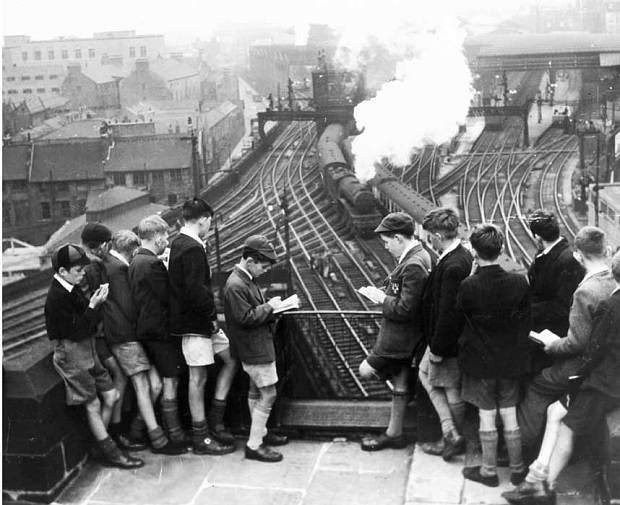
Finally, the article included this delightful picture of trainspotting, 1950 style.  It’s also an interesting socially commentary.  Look at the school uniforms.  All urchins are in uniform, and a number of schools seem to be represented.  Not so many years later, they’d all be kicking lumps out of each other, and all the caps would be thrown on the track.  A good time in some ways – but how many of these kids were living near the poverty line, with an outside toilet and a weekly bath in a tin tub?

Allan1_3359395b

Trainspotters at Newcastle Station, August 1950 (SSPL/NMeM/Daily Herald Archive)


Posted in Inspiration, Layout design, Prototype, Weird and wonderful | Tagged , , , | 1 Comment

AGM and wrong kind of sun?

The ESNG AGM occurred yesterday.  A good turnout of members, and all business was concluded with no heckling and very few snores.  It’s not that the committee object to being pelted with fruit, but prefer the members to take it out the can first….

The time came for committee elections, and s ever the room went very silent and as motionless as an auction for a lost Da Vinci drawing.  Followed by a forest of hands as the committee agreed to stand again…..  Plus ça change….

Plans for Stuttgart were further advanced as Duncan brought along a new van, that although it is small, when added to Allan’s truck, will probably carry all we need for this year’s show.  It’s the N-club anniversary year, and a lot of clubs will be attending, so we will probably take a smaller layout than in previous years.  However, the resulting N-club modular layout is intended to be larger than ever before and possibly the largest in the world (possibly excepting Texas, as they are always biggest).


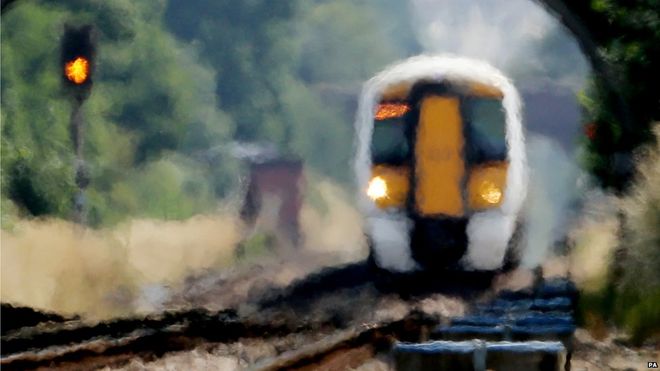
Last Monday First Great Western tweeted that:

“There will be no direct services from Paddington to Bourne End/Henley tomorrow due to hot weather.”

That prompted some incredulous responses on twitter. So, have our railways been defeated by the weather again? BBC transport correspondent, Richard Westcott said:

“We need to put that announcement into context.  It means a very small number of trains from Paddington won’t run direct as the points will be taken out of use to avoid them failing and causing disruption to the whole Western route. This is six trains out of several hundred that FGW operate each day.”

For the modeller, perhaps this is an excuse for the non-working point motor, and changing train services and timetable to suit?

I know that like model railways, the real thing is at risk from extreme temperatures and expansion of the rails.  Nevertheless, surely this must be classified as…..

Wrong kind of sun????

(For non-UK readers, a standing joke has been the railways blaming winter cancellations on the “wrong kind of snow”.  I believe this is the powdery kind that blows into nooks, crannies and bits of rail infrastructure that promptly stop working.)

And the BBC get into the discussion, blaming continuously welded rails.

_83973279_pa-17077467

Posted in ESNG, ESNG meetings, Out and about, Weird and wonderful | Tagged , , , | Leave a comment

A charming Japanese story – and an idea for the AGM

Can you resist the newspaper headline:

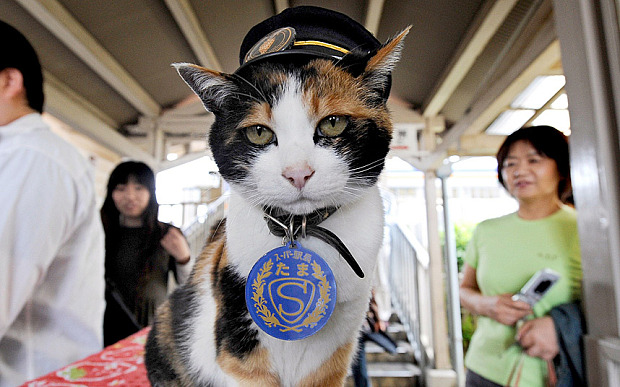
“Cat stationmaster Tama mourned in Japan and elevated as goddess”

This turned out to be a charming story of Japanese culture and a railway success story:

The calico cat was appointed stationmaster at the Kishi station in western Japan in 2007 and died early last week. Now she has been mourned by company officials.

Tama the stationmaster, Japan’s feline star of a struggling local railway, was mourned by company officials and fans and elevated into a goddess at a funeral on Sunday.

The calico cat was appointed stationmaster at the Kishi station in western Japan in 2007. Donning her custom-made stationmaster’s cap, Tama quietly sat at the ticket gate welcoming and seeing off passengers. The cat quickly attracted tourists and became world-famous, contributing to the railway company and local economy…..

Wakayama Electric Railway president Mitsunobu Kojima thanked the cat for her achievement, and said Tama will be enshrined at a nearby cat shrine next month.Before Tama’s arrival, the local Kishigawa Line was near-bankrupt; and the station was unmanned as it had lost its last staff.

Mr Kojima said appointing Tama as stationmaster was initially an excuse to keep the cat at the station.  “But she was really doing her job,” he said…..

During her tenure, Tama had contributed an estimated 1.1 billion yen (£5.65 million) to the local economy, Mr Kojima said….

The cat had climbed the corporate ladder from stationmaster to “ultra-stationmaster” and vice president of the company before receiving the additional title Sunday of “honourable eternal stationmaster”.Tama will be succeeded by another calico cat, Nitama, now an apprentice stationmaster.

japan-station-cat_3357178b

Read it all in the Daily Telegraph here.

However, apart from the obvious modelling opportunity for our Japanese modellers, could this be the way forward for ESNG?  Watch out Allan – perhaps I’ll nominate our budgie for ESNG chairman at tonight’s AGM – and wait for the people and millions to pour in.  Even millions of yen would be OK.  However, I’m not going to set out the relative merits of the candidates – I may lose one, if not two, old friends.  I’d only comment that the budgie can’t make such a good cup of tea…..

snitchpost

Posted in ESNG, ESNG meetings, Inspiration, Out and about | Tagged , , , | 1 Comment

“This is not logical, but it is often true.”

According to Spock, anyway.  The Chairman sent me this picture, culled from Facebook. untitled “Set the phasers to stun!”

Posted in Inspiration, Out and about, Weird and wonderful | Tagged , , , | Leave a comment

A good ‘believe it or not’ scenic feature?

Anyone can model a car crash or lots of emergency services on their layout.  However, this would really stretch the viewers belief.

Giant circular saw blade hits car on Chongqing-Guizhou Expressway in China

From the Daily Telegraph:

Last Wednesday, Mr Xiang was driving along the Chongqing-Guizhou Expressway in central China when he noticed a giant circular saw spinning at speed towards his windscreen.

The 5ft cutting blade collided with the car bonnet, ripping through its metal engine as Mr Xiang, whose first name has not been revealed, frantically wrestled the wheel of the swerving vehicle. Miraculously, the bouncing blade missed the driver, wedging itself 50cm deep into the front of his JMC truck.  Mr Xiang defied the odds by walking away from the crash with barely a scratch on him.”I heard a ‘bang’ and then I saw all the white smoke in front of me. I almost lost control of my car,” Mr Xiang told local reporters the day after the incident, still visibly shaken up by the encounter.

Remember the vehicle is left-hand drive!  The article concludes:

Road injuries are the third-leading cause of death in China, ahead of cancers, according to a global study in The Lancet medical journal from 2013.

I’m not surprised!

Posted in Inspiration, Layout design, Prototype, Weird and wonderful | Tagged , , , | Leave a comment