Panelled coaches

Here’s an excellent idea for making panelled coach sides in small scales. I recall the tedious ‘fun’ I had marking out sides in my ‘OO’ and ‘EM’ days.  This method may work well with the ‘craft cutter’ approach to cutting out panelling. I’ll follow up with a post on this, not wanting to steal the thunder of an excellent piece of modelling…..

Nick Salzman's avatarYeoton Wharf

I needed some early LSWR 4 wheel coaches to run on the ‘narrow’ gauge part of the layout. There are no kits available so it was down to scratch-building. I decided to build them in plasticard but use computer labels for the panelling. I initially scanned the plans from a book on LSWR coaches and reduced the scale to 3mm. I then printed out the sides and ends on an A4 label. This was then stuck to 20 thou plasticard and the panelling was cut round and peeled off and windows with drop-lights as necessary were cut out.

DSC_1647

The body was then put together and the chassis made using etched W irons and Mansell wheels. The roof was made to fit after painting and the fitting of the glazing. The completed coach is shown below.

DSC_1649

The thickness of the panelling is just right and the labels cut very neatly providing…

View original post 98 more words

Posted in Hints and tips, Inspiration | Tagged , , | Leave a comment

Only one owner, never ralleyed or raced….

There seem to be a lot of good railway items in the news recently – so here’s another, from the Daily Telegraph.  Not quite ‘N’ gauge, but a lovely piece of machinery, combining good points from both European and American design.

Calling all train buffs with a spare £800,000

The SNCF 141R 568 is up for sale at just over £800,000. The train is one of two 141R engines in working order, and helped rebuild France after the Second World War

A SNCF 141R 568 train
During its 24 years of service with SNCF, locomotive 568 clocked up nearly 900,000 miles

The Swiss-based owners of 141R 568 have decided they can no longer justify keeping the 136-ton locomotive and tender, and have put it on the market, hoping to find a steam buff with money to spare and a rather large sidings in which to park it.

Andrew Cook, the chairman of William Cook Holdings, owners of Swiss Classic Train , which is selling the 568, said: “It’s a fantastic buy for anyone with that sort of money. It really is a wonderful machine with so many gadgets and it is one of the last of its kind. It also has a great history.”

Indeed, behind this particular engine lies an intriguing story of how the United States helped the French railways get back on their feet after the Second World War.  Six years of occupation and war had reduced much of the rolling stock and engines owned by SNCF, the French national railway system, to ruin and there was a desperate need for a large fleet of new engines to aid the post-war recovery effort.

With French industry so badly damaged, SNCF looked to the US, which was already providing aid to rebuild western Europe as part of the Marshall Plan, and a team of SNCF engineers crossed the Atlantic to agree specifications.  Mr Cook said: “What emerged was the 141R class. It was based on an existing American Mikado design but substantially modified for European use. These [trains] were an immediate success because of their rugged construction, low maintenance and immense power.”

Both coal and oil-burning versions were produced and it took four American locomotive builders to fulfil the orders, with locomotive plants in Lima, Ohio and Philadelphia, Pennsylvania, along with one in Montreal, Canada, working flat out. By 1948, the fleet was complete – although 12 ended up at the bottom of the Atlantic when the ship carrying them sank.

Six decades on from when their exploits helped rebuild France, only six 141R engines remain in working order, with two of them, the 568 and the oil-fired 1244, owned by the Mikado Association, operating in Switzerland.

During its 24 years of service with SNCF, locomotive 568 clocked up nearly 900,000 miles.  It was initially based at Belfort where, among other routes, it worked the line to the Swiss frontier station of Delle; hauled heavy car sleeper expresses on the first leg of their journey as far as Amiens; and serviced the coal and steel centre of Sarreguemines, in Lorraine, until the early Seventies.

In later life, 568 found its way to the historic French junction of Capdenac, in the southern Auvergne, where it was going to be used to pull tourist trains. But the project failed and in 2006 the engine and tender were moved to Schaffhausen, north of Zurich, where they were lovingly restored by Swiss Classic Train. The 568 was then used as a tourist train.  The 568’s tender [i.e. the carriage]is a former French “Postes” mail carriage, complete with the bunk beds used by postal workers in between sorting shifts, a mess room and a workshop.

There is, however, just one hitch to any British owner’s dreams of firing up the boiler, blowing the whistle and heading down the track.  Unfortunately, 141R 568 is too wide to be used on most British railway lines, which have less space on either side of the track on corners than Continental railways. In Britain, it could run only on short stretches of “heritage” track.

That might be just as well. When running under steam, loco 568 needs 11 tons of coal for a journey of 250 miles. At a cost of £350 per ton just to refuel, that makes it a rather pricey train set.  The problem was it was so expensive to run,” admitted Mr Cook. “But if you have the money, or just want to put it on display, it really is a wonderful machine.”
Posted in Out and about, Prototype | Tagged , , , | 2 Comments

ESNG meeting – 5th June 2014

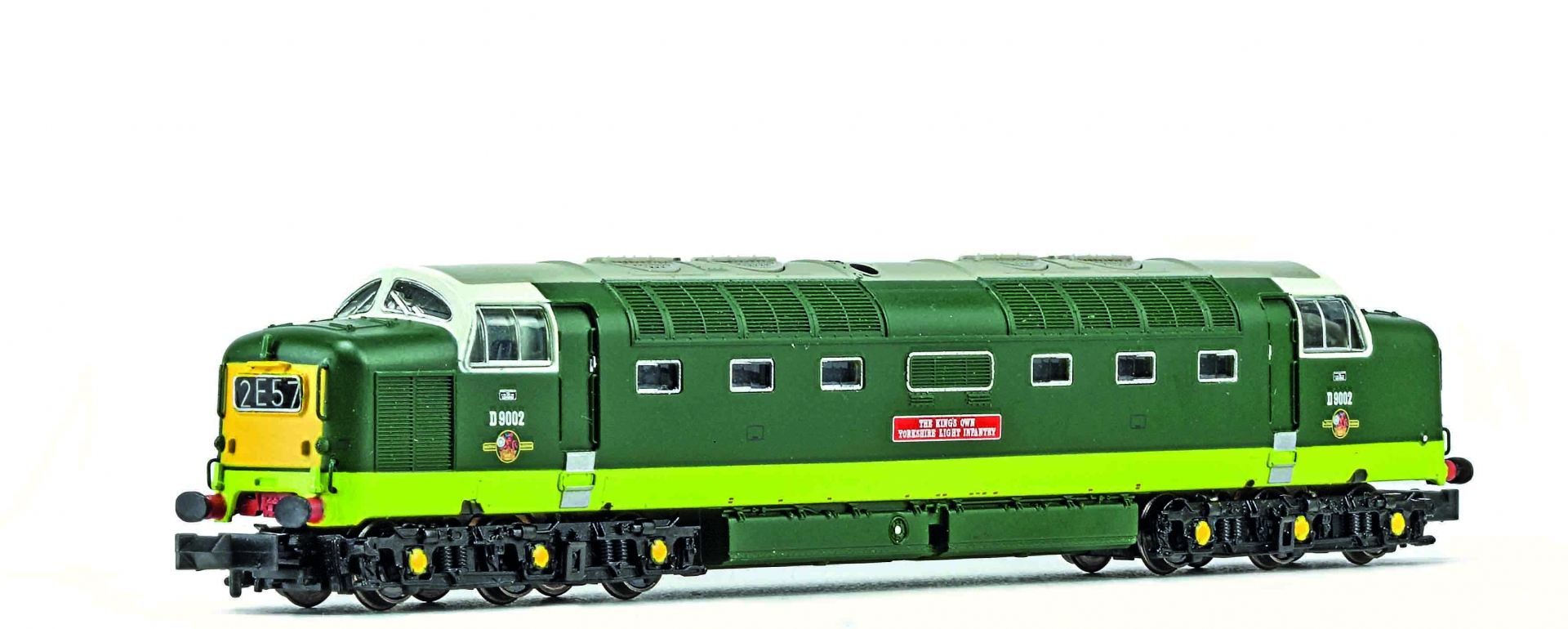
Not much to report on this meeting.  A good turnout and an interesting variety of trains running.  Pick of the bunch was the new Bachmann ‘Deltic’.  They have retooled this already good model into something special.  The end curves on diesels are always tricky to get right, even with 3-D scanning and suchlike.  This model just right.  I understand that the wheels are slightly undersized, to keep the body low on the bogies.  Looking at the model, this looks a worthwhile compromise, as it looks low and mean, just like the prototype.  As a teenager, I spend some happy hours at Kings Cross station spotting Deltics.  They were in British Rail blue, but made even corporate blue look good.

gallery_22012_3233_749275

My model should arrive today in the post – I have chosen the version with the early all green ends.  I suppose I shall have to buy some coaches for it to pull…

Apart from the Deltic, Ted was running a Norfolk and Western SD70 plus a long train of Coalporters.  All Kato, and thus running impeccably.   And Paul had one of the longest Japanese goods trains I have ever seen.  It was nearly catching up with its own tail.  Derek was running another Terrier, dwarfed (just like the real thing) but two coaches.

And get well soon to Cha(I)rman Allan, who is suffering from a nasty abscess on the neck.

Posted in ESNG, ESNG meetings | Tagged , , , | Leave a comment

Is our hobby art?

A blog post I was reading recently asked the following question:

Is our hobby a creative art form?

And added a quote from John Updike:

“Any activity becomes creative when the doer cares about doing it right or better”

I was mulling this over, and it occurred to me that the quote doesn’t really support the question.  As far as Updike is concerned, ANY activity can be creative.  By this definition, it certainly is creative for some people to sleep, drink (a lot), walk the dog, or hoover the carpet.

There is no doubt that our hobby is creative.  But is it art?  Well, perhaps the bar is set very low….  From the news this week:

British artist Tracey Emin wasn’t the first to spend a week in bed after a bad breakup.

But she could be the first to sell that bed — with its vodka bottles, cigarette butts, pregnancy tests and pantyhose — for upwards of £1 million when the installation that first premiered in 1999 goes on sale through Christie’s auction house later this year.

If that’s art, what isn’t.  Buy a book on art theory from Amazon, and you may find that:

In today’s art world many strange, even shocking, things qualify as art. In this book, Cynthia Freeland explains why innovation and controversy are valued in the arts, weaving together philosophy and art theory with many fascinating examples.

She discusses blood, beauty, culture, money, museums, sex, and politics, clarifying contemporary and historical accounts of the nature, function, and interpretation of the arts. Freeland also propels us into the future by surveying cutting-edge web sites, along with the latest research on the brain’s role in perceiving art.

This clear, provocative book engages with the big debates surrounding our responses to art and is an invaluable introduction to anyone interested in thinking about art.

The more I read about it, the less I want my hobby to be art!  But surely, by any definition, model railways must be art.  An effective piece of artwork fuels the imagination, and takes you to a different place.  How true that is of a well built model railway.  Our imagination takes us to a different place and a different time, and generates a response.  It may be appreciation of the scenic work that frames the trains.  It may be excitement at the trains in the landscape.  There may be an element of awe and wonder at the skills involved in making it all work.

“She discusses blood, beauty, culture, money, museums, sex, and politics”.  Well, we do blood (see two posts ago).  We definitely do beauty.  Culture, yes, as our model railways offer a social history of a selected time and place.  Money, that disappears fast enough, the price of model trains these days.  Museums, yes, too, each model railway is a museum exhibit in itself.

Politics – just you go to any model railway club AGM!

And sex – well I’m just not going there.

So, ladies and gentlemen, what is our conclusion – YES, model railways are art!


Posted in Inspiration, Layout design, Weird and wonderful | Tagged , , , | 3 Comments

The 1980s time-warp of the London-Scotland sleeper train

Inspiration still not good for blog posts.  Perhaps this (slightly edited) article from the BBC web site might inspire a purchase of some Farish ‘N’ gauge sleeper coaches – or for those who have them some detailing of the interiors with Bond girls and oil workers?

Across Europe, sleeper trains seem more and more of a quaint anachronism, but the UK is overhauling an old and famous overnight route.  The overnight sleepers running between London and Scotland, are about to get a much needed facelift.

The Scottish Government announced this week it is jointly funding a £100m investment in new trains that promise a four-class service with a bar and bistro, sleeping pods, private cabins with beds, desks, wi-fi – even showers. Michelin-star chef Albert Roux is doing the catering.  UK firm Serco, which runs the Ghan and Indian Pacific trains in Australia, has been awarded the sleeper contract. The current trains haemorrhage public money and the sleepers were almost scrapped altogether when the railways were privatised in the mid-1990s.

An outcry from an eclectic mix of peers, landowners, walkers and train buffs kicked off a high-profile campaign. The slogan “The Deerstalker Express” was born and the trains became so popular passengers had to book months in advance. Red-faced civil servants gave up and safeguarded the trains for a further 18 years.  Despite being badly marketed and suffering from cramped 30-year-old trains, the sleepers have retained a loyal, almost cult following. For anyone who has travelled on them on a regular basis – me included – it’s not difficult to see why they are held in such affection.

The experience of being rocked to sleep as the train speeds through the Home Counties to wake up to the vast wilderness of Rannoch moor is pleasantly disorientating.

Sun rises over Rannoch Moor

The sun rises over Rannoch Moor

Even the train’s staff find the experience exhilarating. Driver Robert Buchanan recalls getting a knock on his locomotive cab door as the sun rose over the West Highlands to find the Duke of Gloucester, plus his two black Labradors, asking if he might be allowed to come up for a ride.  “It’s the most enviable job,” he says. “Everybody wants to drive the Scottish sleeper.”

Certainly the atmosphere aboard the train is about as far removed from the 08:24 commuter train from Basingstoke to Waterloo as you can get. Passengers mingle in the lounge car – a curious mix of captains of industry, politicians, academics, landowners, hikers and train buffs. Most are regulars – many on first name terms with the crew.

The surroundings are replete with 1980s style furnishings. The lounge cars are the only coaches in Britain with loose seats of aluminium-tube design, looking like something out of a discotheque. The walls are carpeted and the spotlights subdued, all adding to the rather obscure time-warp sensation.

Caledonian sleeper train interior

Caledonian Sleeper, lounge

The stewards tend to passengers’ every whim with a dog-eared cardboard menu that consists of tins of Baxters soup, “haggis, neeps and tatties” or a standard-issue pre-packed bacon roll – all heated up in the “pantry” microwave.

What the food lacks in culinary finesse is made up for at the bar. By the time the train reaches Crewe, passengers are often pretty merry – discretion thrown to the wind. Wily journalists can regularly find out more about what is going on in the corridors of power between London and Crewe than during a whole week at Westminster.

Caledonian sleeper train

A sleeper steward told me a story once that, had it not been in the first person, I would have sworn was apocryphal.  In the lounge car, after several drams, a female passenger became acquainted with a male oil worker. Sleeping in adjacent coaches that night, she eventually sneaked down the corridor.

But unbeknown to either of them, the train split in the small hours of the morning and she woke to find herself admiring the view of the North Sea near Aberdeen as her clothes and belongings pulled into Crianlarich, 100 miles to the west.  The steward recalls having to think on his feet when questioned by her irate husband. Waiting on the platform he was baffled as to how the train had somehow managed to lose one of its passengers.

Sleeper berths are an acquired taste – regular travel is required to acclimatise and get a good night’s sleep.  Single, standard passengers often end up sharing their twin berths with snoring strangers of the same sex.  On the Glasgow train it’s not uncommon for the train to be drunk dry.  The Edinburgh train tends to have a more sober atmosphere, full of academics and business people.

Fund manager Tom Wright is a regular passenger. He uses it for convenience as it departs after the last flight and arrives before the first one lands the following morning. “I don’t mind taking the sleeper but facilities even in first class are worse than the second class journeys between Bangkok and Chang Mai I took 25 years ago,” he says.  “Hotels in London are now so expensive that if they upgraded it to be even half as comfortable as a hotel then they might do quite well.”  Barrister William Frain-Bell agrees: “Turning it into something akin to the Orient Express Pullman is great news as long as the fares don’t rocket.”

From Russia with Love

Aboard the Orient Express with James Bond: Daniela Bianchi in From Russia With Love

The beds are compact. If you are taller than 5ft 10in or have a waist greater than 34in they can be a challenge. Turn once too often and you will end up in a heap on the floor.  But Britain’s sleepers with their narrow bunks and stained, chipped enamel wash basins have one benefit over their European counterparts. Most berths are either solo or with twin beds.  In France, the basic sleeping carriages are made up of very cramped couchettes, reminiscent of a cheap youth hostel, where six strangers stretch out in very close proximity.  Not surprisingly, with the advent of an extended high-speed network on the continent and the relentless rise of low-cost airlines, the European sleepers are on the wane.  The Paris to Madrid service, which ran for over a century, was scrapped last year with little fanfare.

Britain can be said to be bucking the trend. The key to success will be price – both to the passenger and taxpayer.  As a regular sleeper passenger myself, I can’t help feeling that it would be great if it could be made to work. Perhaps this new “hotel on wheels” is to be the catalyst for the future shape of Britain’s railways.

Posted in Inspiration, Out and about, Prototype | Tagged , , | Leave a comment

Physics Room 101

Bit short of original ideas this week…. But I recall discussing the relative safety of our hobby a while back. Just to redress the balance, here’s evidence of the damage a baseboard L-girder can inflict on the unwary!

Simon's avatarThe Erratic and Wandering Journey

Well, it has been a while since I posted, but I have had little to say – I hope I have done it eloquently.

Anyway, I have been assembling L-girders, cutting sub road-bed, and generally making noise playing with power tools. More will come along soon enough, once glue has dried and my ideas have been proven.

Today, however, was an opportunity for a (not so) gentle reminder of basic physics, involving an over-hanging L-girder rigidly if indirectly fixed to the wall as the immovable object, my body as the irresistable force*, and my forehead as the active participant in the lesson.

head

I’ll say this: as we’ll as being simple, quick and effective, L-girders are very robust…

* Someone, somewhere, must find it so…

View original post

Posted in Out and about, Weird and wonderful | Tagged , , , | Leave a comment

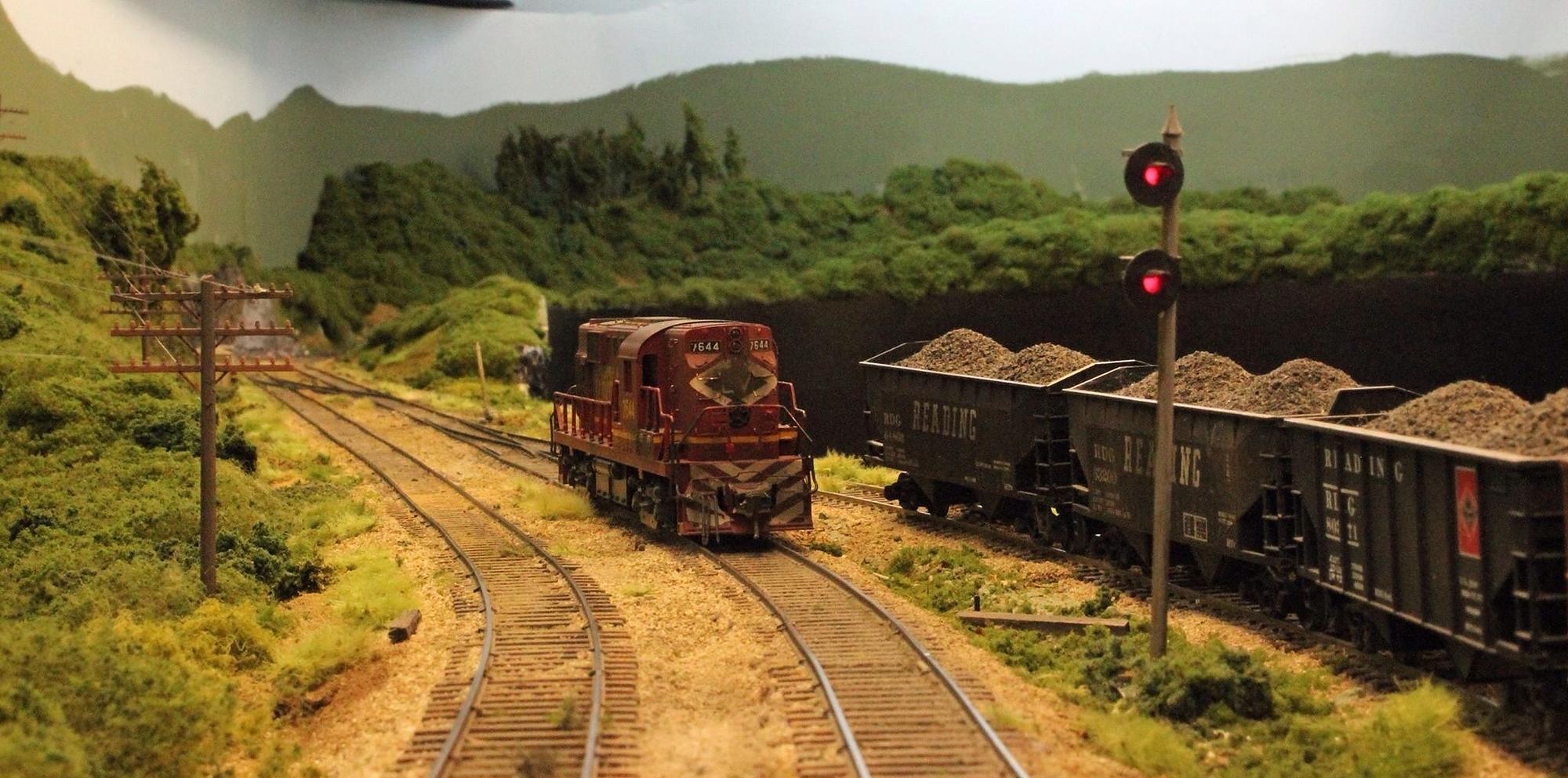
LVRR – Lehigh Gorge

Nice photo posted on the Model Railroad Hobbyist site (quick plug – this e-magazine is nearly all North American, but is free, high-quality and downloadable on any tablet or computer to keep).  Not sure of the photographer, but it’s a simple, realistic scene – and it’s good to see the Lehigh valley modelled.

image_73

Posted in Inspiration, Layout design | Tagged , , | Leave a comment

Quelle dommage!!

Funny how posts always seem to come, like the proverbial buses, close together after a long delay.  So here’s another prototype item, this time from the BBC web site.

The French train operator SNCF has discovered that 2,000 new trains it ordered at a cost of 15bn euros ($20.5bn; £12.1bn) are too wide for many regional platforms.

The BBC’s Christian Fraser in Paris says that it is an embarrassing blunder that has so far cost the rail operator over 50m euros ($68.4m; £40.6m).  Our correspondent says that the cost is likely to rise even further.

Construction work has already started to reconfigure station platforms.  The work will allow new trains room to pass through. But officials say that there are still 1,000 platforms to be adjusted.

The blunder has cost the rail operator a substantial sum of money.  The error seems to have happened because the national rail operator RFF gave the wrong dimensions to train company SNCF.

Our correspondent says that they measured platforms built less than 30 years ago, overlooking the fact that many of France’s regional platforms were built more than 50 years ago when trains were a little slimmer.

The platform edges are too close to the tracks in some stations which means the trains cannot get in, officials say.  A spokesman for the RFF confirmed they had “discovered the problem a bit late”.

Transport Minister Frederic Cuvillier blamed an “absurd rail system” for the problems.  “When you separate the rail operator from the train company,” he said, “this is what happens.”

The new SNCF Regiolis Regional Express Train (TER) during its presentation at the Vaugirard railway station in Paris (April 2014)

Mind you, we have the same problem on Raysden and one of the N-mod corners….

Posted in Out and about, Prototype, Weird and wonderful | Tagged , , | 1 Comment

Thameslink franchise

From the Daily Telegraph web-site, 23 May….

A joint business between UK transport company Go-Ahead Group and Keolis of France has been handed a seven year contract to run what will be Britain’s biggest railway franchise in a bitter blow to FirstGroup, which currently runs some of the services covered by the new agreement.

The complex new Thameslink contract, which will carry 273m passengers a year, combines several sets of rail services in one. It is expected to generate revenues from passengers of £12.4bn.

These include the current Thameslink services connecting Bedford with central London, Gatwick Airport and Brighton; Great Northern services from London King’s Cross to Cambridge; and Southern services from London to the south coast.

FirstGroup is currently the operator of both Thameslink and Great Northern services while Southern is run by Govia, a joint business between Go-Ahead and Keolis. Go-Ahead owns 65pc of Govia.

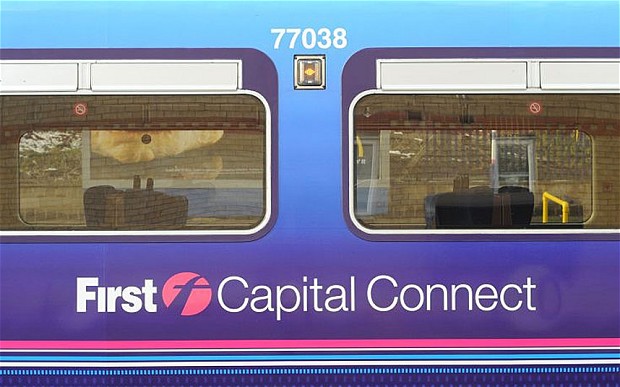
I’m not that concerned about the quality of service, but please, please can they get rid of that foul ‘Barbie’ livery.  Trains should NOT be purple and pink (though it has to be said that it looks better on a model than on the real thing!)

FCC_2919749b

Posted in Out and about, Prototype | Tagged , | Leave a comment

ESNG meeting – 21 May 2014

A ‘normal’ club meeting – if there is such a thing and if the members qualify as ‘normal’.  That reminds me of doctor’s abbreviations for patients.  One of the better (and repeatable) ones was NFN or ‘normal for Norfolk’.  ‘Nuff said.

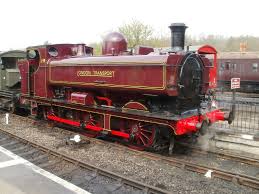
We got a small circuit running, and Derek was running his tiny Crampton and Der Adler sets.  Unusually I actually brought some trains down to run.  First a pair of Kato Central of New Jersey RDC-1 Budd railcars.  Then came the UK tank engine cavalcade – Two LBSCR Terriers, ‘Earlswood’ and the Isle of Wight ‘Freshwater’ in Southern green, then a GWR pannier tank as sold on to London Transport for maintenance work on the overground sections of London Underground.  This is probably the only GWR steam loco you could interest me in – it looks far better in LT red than GWR green (heresy they cry!)

images (4) 2s-007-005-london-transport-pannier-l97-maroon-out-of-stock-5195-p[ekm]288x150[ekm]

Derek also had ‘Earlswood’ running, but direct from the distillery pulling a Caledonian four-wheeled coach.  It was also good to see Duncan’s colleague Roy, who brought a German tank engine for repair.  A little fettling got it going at the third attempt!

Posted in ESNG, ESNG meetings | Tagged , , , | 1 Comment