Time for the Uckfield show weekend. Once again a very good show. A good number of layouts that were new to me, no dross at all, and a wide range of prototypes and scales. For me, Uckfield is an essential visit – much better than many of the larger shows, as the standard of layouts and modelling is so much higher.
Plus one must add that it’s a pretty drive across Ashdown Forest to Uckfield, and that the Civic Centre cafe does an excellent breakfast or bacon roll. This year I had another bonus of good company – Allan picked up Mr Apps and myself on the way south, and we met up with Simon there.
The show was a little larger this year, taking a couple of rooms upstairs in the building. This allowed for a little more trade and some modelling demonstrations. It seems a good move, providing they still make a profit. So on to the layouts, presented more or less in the order I visited them.
Blackmoor, by Ian Lampkin is a new OO9 model of this station on the old Lynton & Barnstable Railway, in Southern days. One of my favourite lines – I build some L&B stock in my teenage years, that didn’t work very well. There wasn’t the trade support now seen from Peco and Heljan. I love the photo backscene of the real backdrop to the station.
Abergynolwyn, by Tim Tincknell, models the end of the Talyllyn Railway in its early years. It is to a scale of 5.5mm/ft, on 12mm track. This combination was popular before N gauge and OO9 became reliable and easier to model. I recall GEM producing a wide range of whitemetal kits for the line. It’s good to see this use of the scale (though I suspect people have been using it all along, but not showing their layouts at exhibitions.) A simple track plan and accurately contoured scenery captures the rather basic nature of the line and is very good to view.
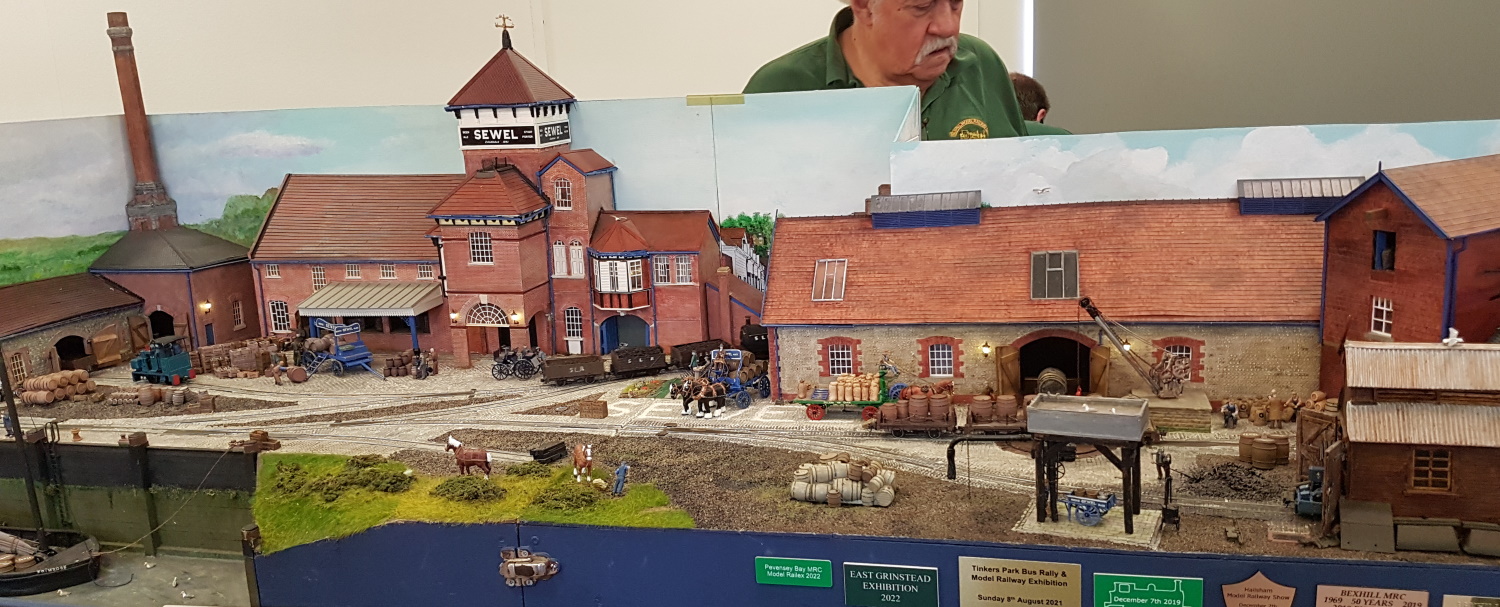
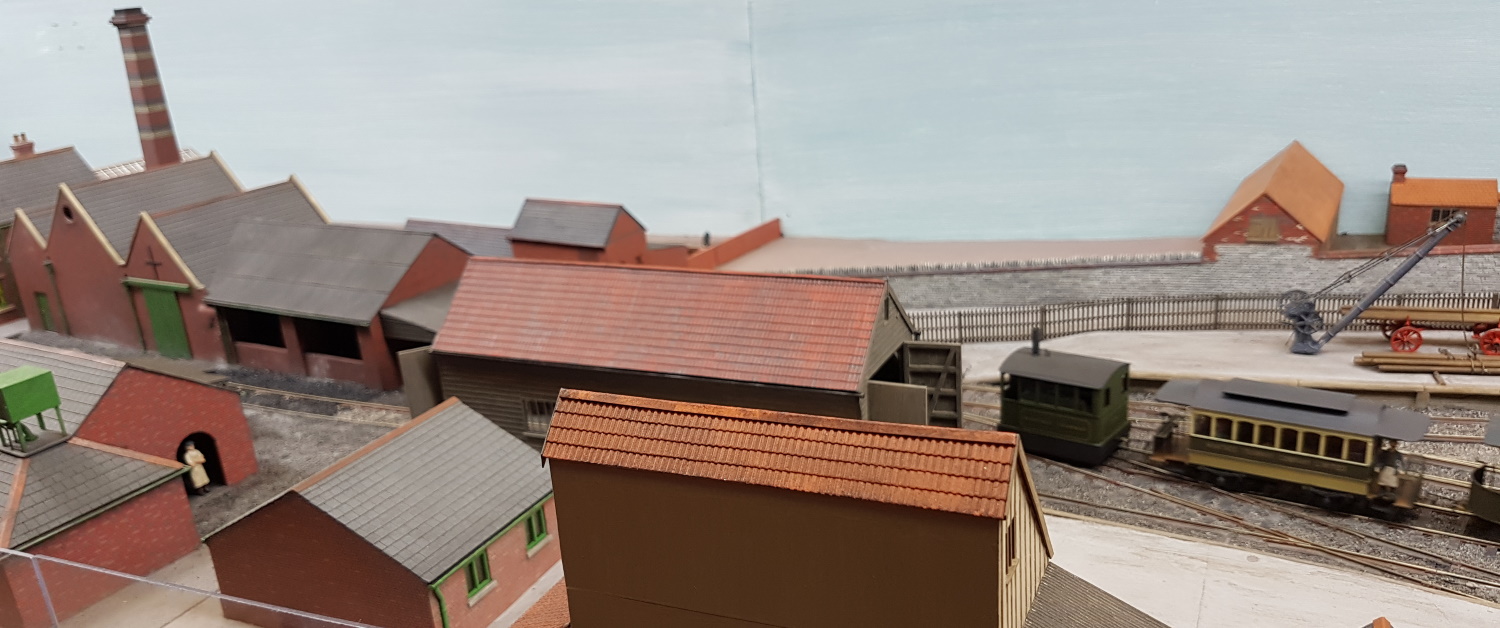
Sewel is another narrow gauge layout, this time in the larger scale of O-16.5. It models a ficticious narrow gauge line serving a brewery, that has a passing resemblance to Harveys in Lewes.
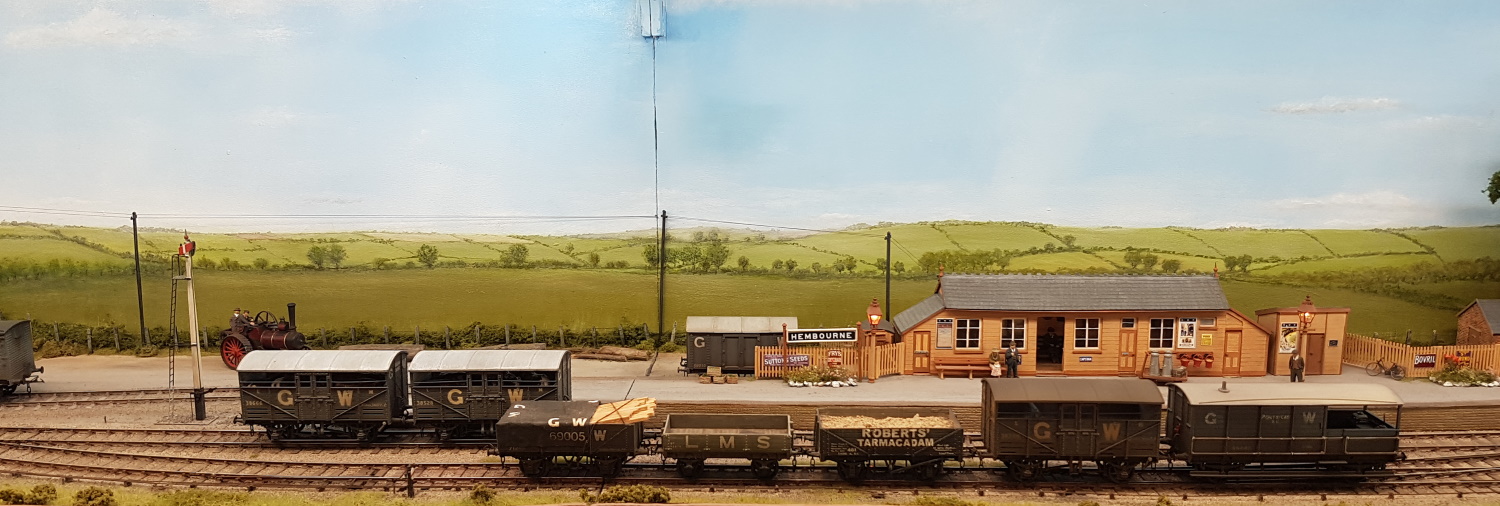
And into the main hall. Drws-y-Nant is Nigel Ashton’s new 2mm finescale layout. A follow-up to his Llangerisech (a terminus), this through station is closely based on a GWR station between Bala and Dolgellau. The layout still needs a few details, but it’s already good to look at. Notable are the working road vehicles and level crossing gates, and also the strange piece of pointwork at one end of the station – it’s an offset scissor crossing (so I’m told.) Also of interest is the baseboard construction. The boards themselves rest on long folding beams supported by trestles. The beams are adjustable in height by a clever wedge system. A hint of all this can be seen in one of the photos below.
Next door, Jerry & Kim Clifford were representing the 2mm Association, and showing off Bath Shed, part of his 2mm home layout. There were some fine scratch built locos on show.

In contrast, the rather larger Cox Lumber Company modelled American logging railways in On30. The detail on the structures, with individual roof shingles and suchlike was impressive. To me, it avoided the rather ‘twee’ appearance of some US narrow gauge layouts.

N gauge was represented by John Wilshaw’s Upton Lacey, somewhere in the Cotswolds in BR days. I’d seen this layout a few years ago, still under construction, and it’s made a lot of progress. I liked the scratch built station building – an impressive building for a significant terminus.
One of my show favourites was Peter Goss’ Copper Wort in OO. It represents the brewing industry in Burton-on-Trent in its heyday of the early 1900’s. I love the hexagonal shape, the complex industrial trackwork, lots of little tank engines, the weathered goods stock and all that detail (mainly barrels.)
More next time.




























 esngblog