Old Oak Common 111 #1

Last Saturday, I visited ‘Old Oak Common 111’ that celebrated 111 years of the west London depot – once home to GWR steam locomotives – ahead of the demolition of part of the existing facility. It marked the introduction of electric trains from London Paddington and Intercity Express Programme trains in place of High Speed Trains.  The event website said that:

During the depot’s 111-year history, the depot and its dedicated, highly skilled staff have maintained everything from steam era Kings and Castles, to the diesel-powered Westerns and Warships. In 1976 the depot was the maintenance hub in the Western region for the newly introduced High Speed Trains, the iconic trains which changed the face of Intercity travel in the UK.

While the HST fleet still operates today it is soon to be replaced after over 40 years of service by the Hitachi Intercity Express Train, which will provide another step change in passenger experience.

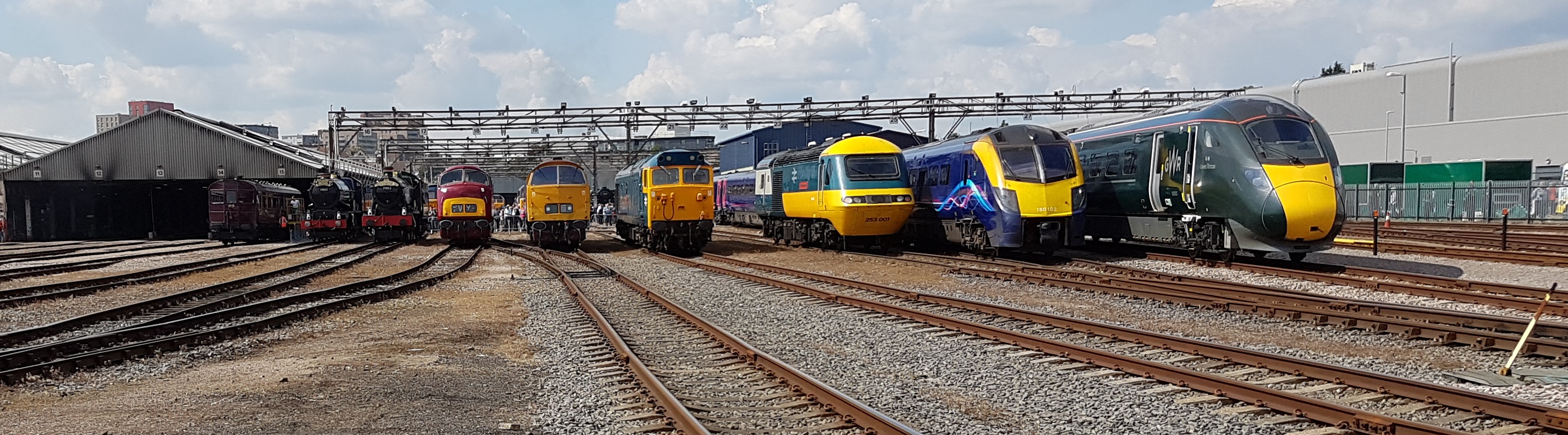
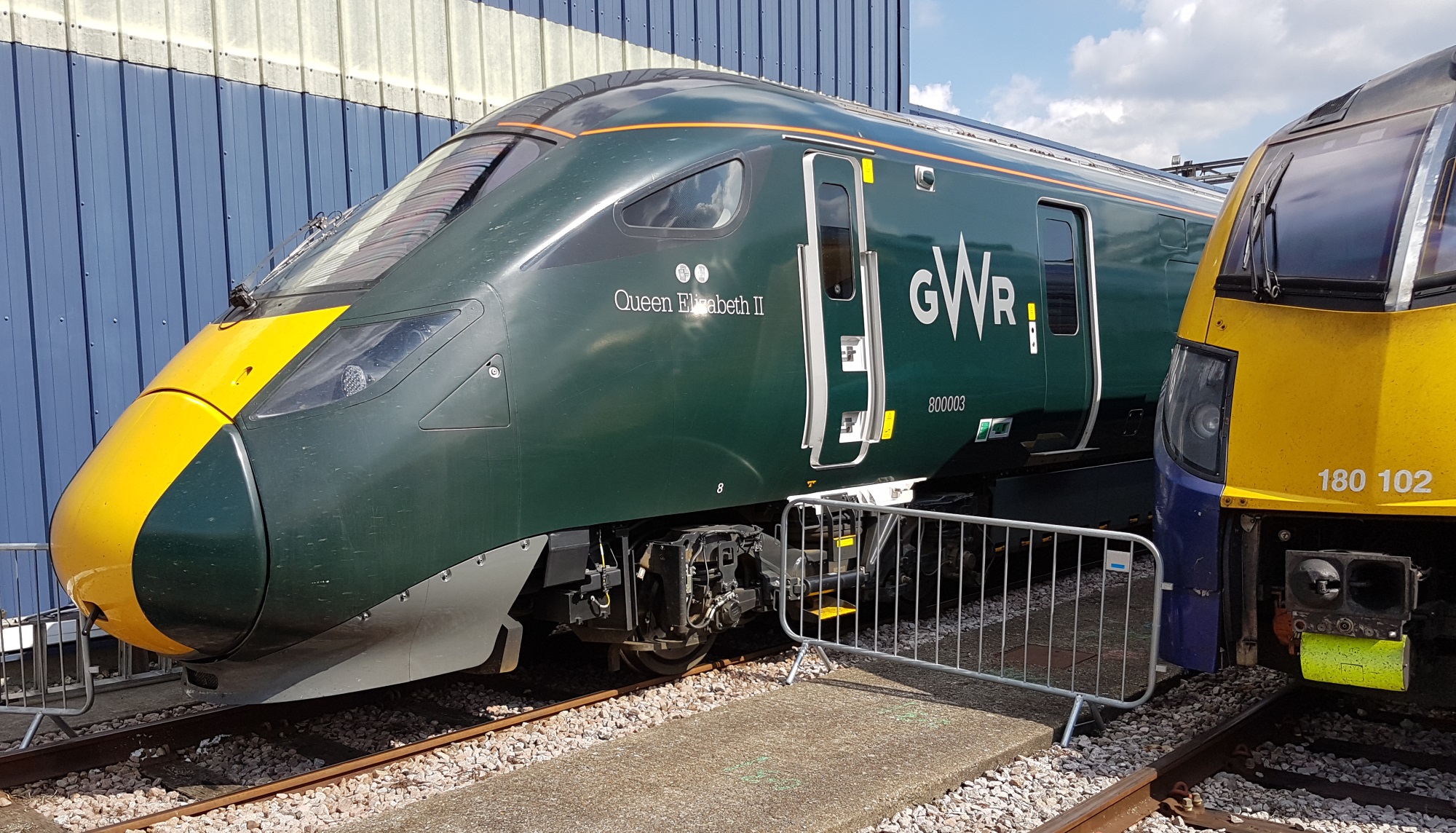
I had visited Old Oak Common, frighteningly, 50 years ago, when it was full of Warships, Westerns, Class 47’s and the odd Hymek.  It was good to go back.  The line up below sums up travel on the Great Western lines.  From left to right, we have GWR steam railmotor No. 93, a King Class 4-6-0, a Manor Class 4-6-0, a Warship diesel hydraulic B0-Bo, a Western diesel hydraulic Co-Co, a Class 50 Co-Co, a HST power car (in original livery), a more modern Class 180 ‘Adelante’ DMU, and the new Hitachi EMU for GWR service.
Entering the depot, the first thing we saw was ‘Evening Star’, the Class 66 in a livery imitating the last steam locomotive built for British Railways.  It looked very smart, and I almost regretted not buying the N-gauge version – but it really isn’t my period.

I have always liked single unit railcars, like this Class 121, that would have worked in the Thames Valley.  The Class 121 is Britain’s longest serving DMU, operating in passenger service for 57 years until 2017.

A beautifully restored Hymek mixed-traffic diesel-hydraulic locomotive, in its very attractive original livery.

The Class 14 was designed for shunting and short trip workings, but was short-lived as the goods traffic it was designed for disappeared off Britain’s railways.

A definite highlight was the seven Class 50 locomotives on display.  Built at the end of steam in Britain, they were designed for the non-electrified sections of the West Coast main line, but ended their lives running on western rails.  Here are six of them, carrying most of the liveries seen over the 50 years of their existence.

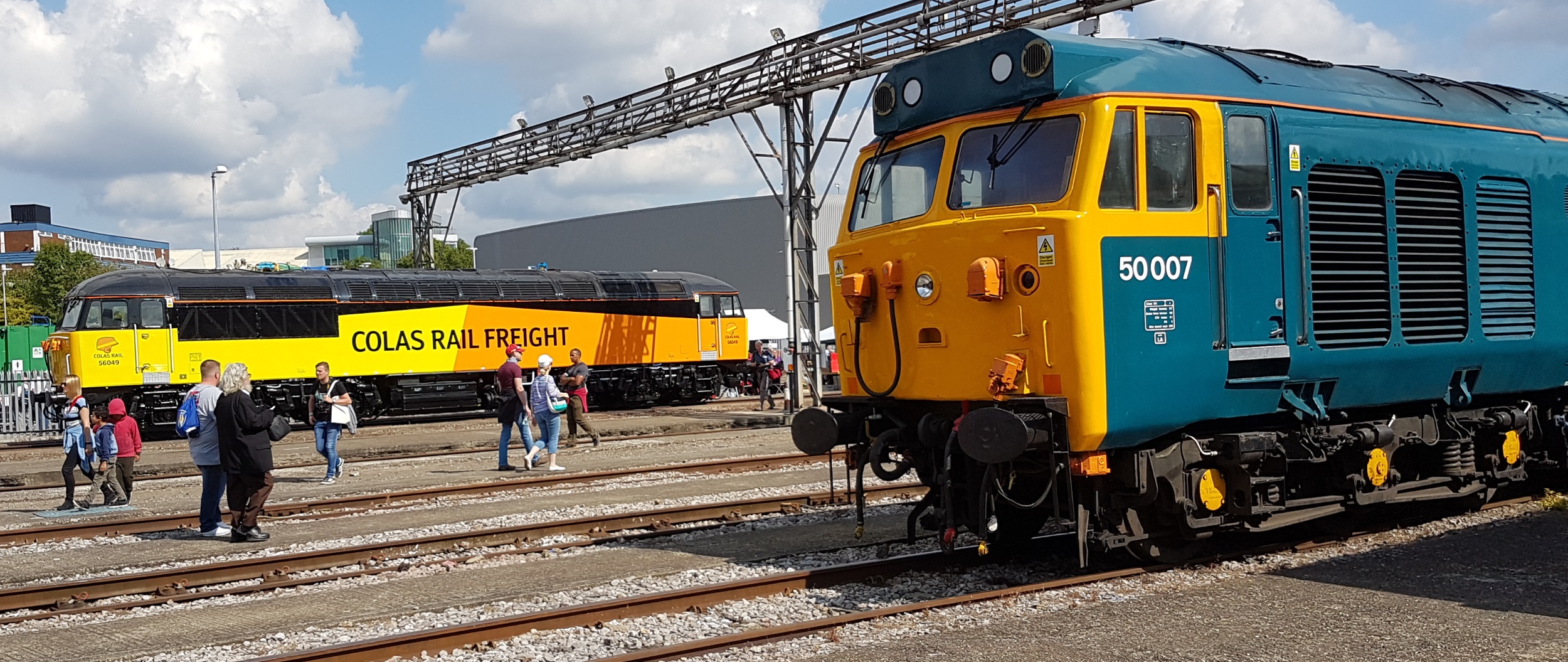
A contrast of rail blue with a ‘high visibility’ Colas Class 56.
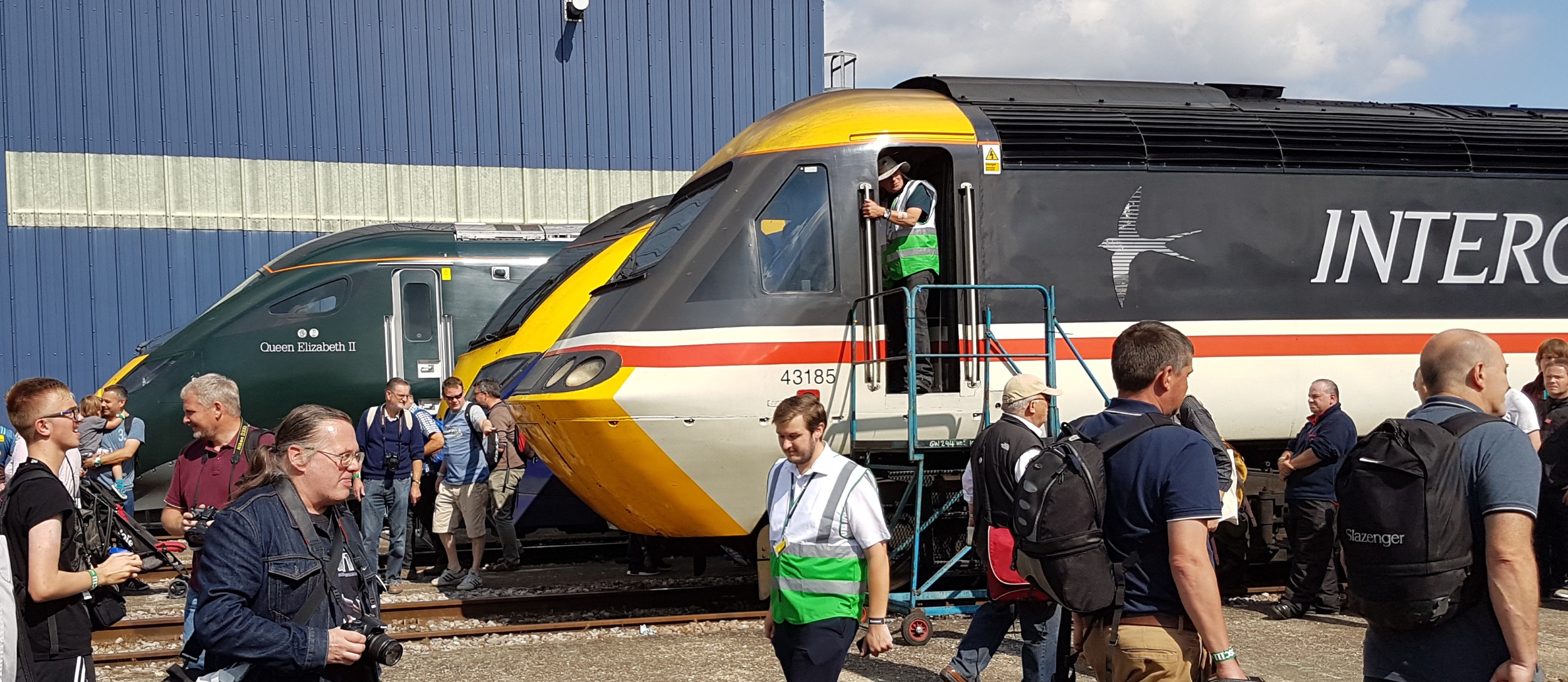
This HST power car carried the later ‘Swallow’ Intercity livery.
The HST power car (in original livery), and Class 180 ‘Adelante’ DMU.
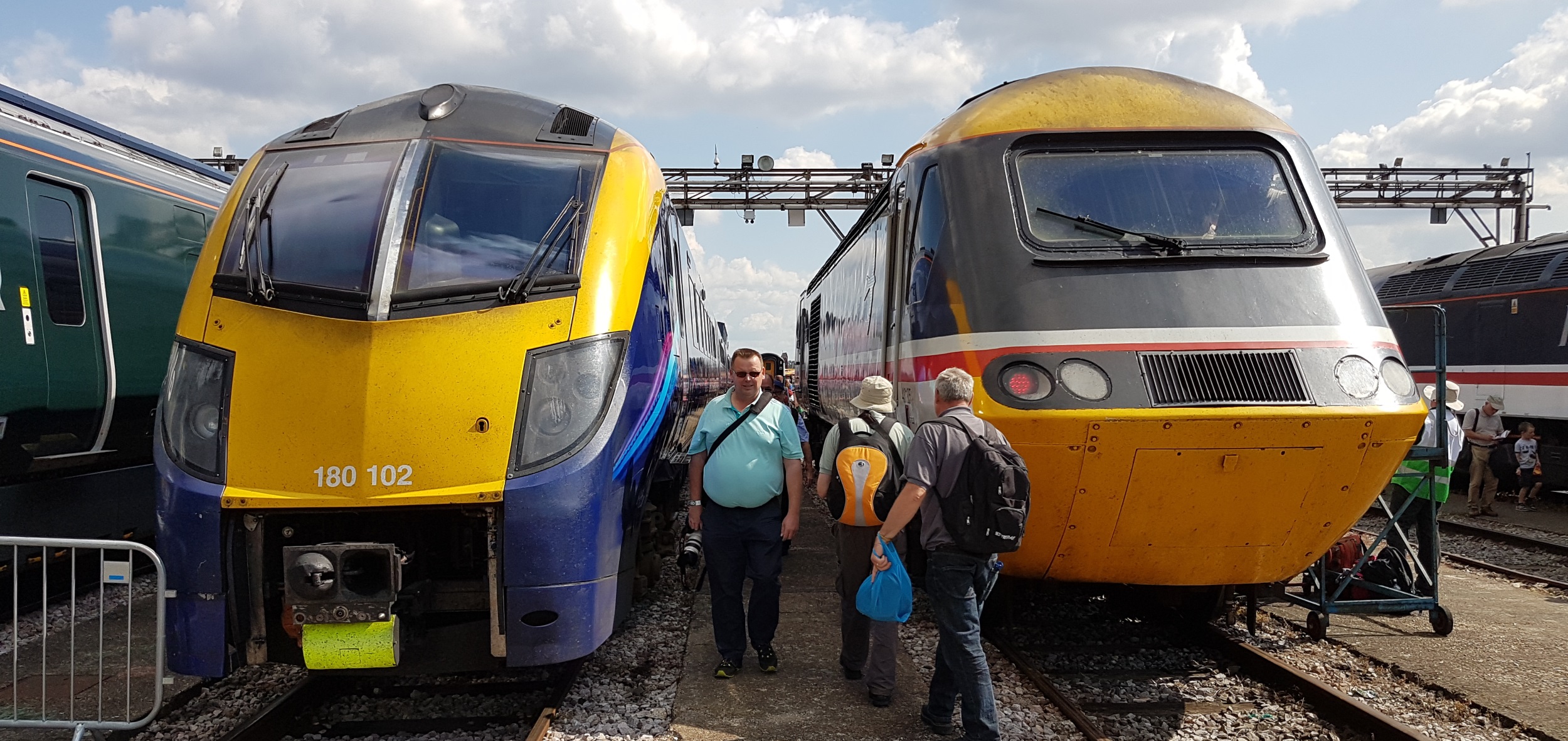
The Class 180 ‘Adelante’ DMU and the new Hitachi EMU.
Inside the heavy repair shop was this HST prototype power car.

And various bits of locomotives….

Outside was another HST power car, celebrating Old Oak Common as a centre for HST maintenance.

Next post, the steam locomotives on display, plus the other exhibits.
Posted in Exhibitions, Inspiration, Out and about, Prototype | Tagged , , , | 3 Comments

Jon’s modules – Clubhouse additions

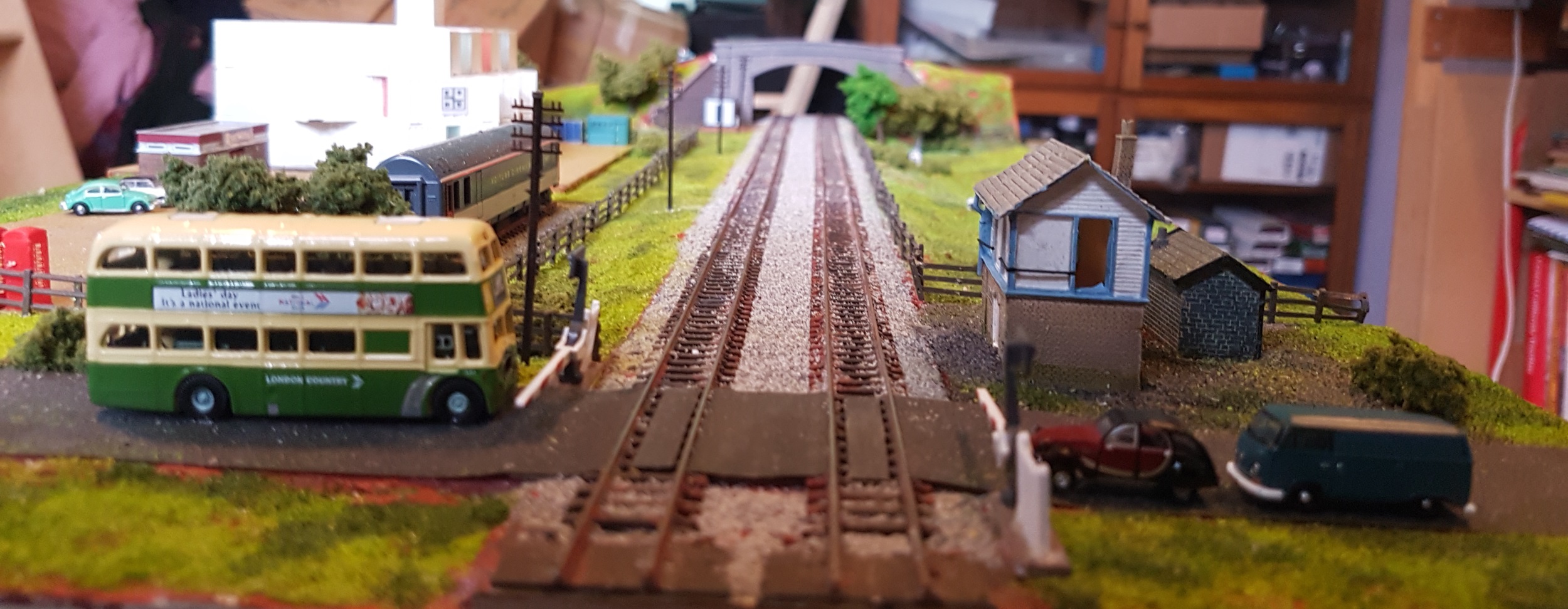
Before continuing with my new module, I took time to complete the ‘Clubhouse’ module.  I’d bought some Oxford vehicles in the NGS sale, and some figures elsewhere.  Some of these have been added to the module to bring it to life.

I just need to add a lamppost or two, and some guard rails to the road bridge approaches to stop the mods on scooters from falling off.  But this will do for now!  And I won’t get into the loft for the next few days, as my daughter is on 4am shift at Gatwick.  She’ll no doubt be sleeping during the day and won’t welcome elephantine footsteps and sawing and filing just above her head….

Posted in Jon's layout ramblings, Layout design, N Club International | Tagged , , , | Leave a comment

Links – Modules down under +The Flying Scotsman

A couple of links to start the month…..


N Scale Modellers, Australia, have an on-line magazine that is free to read and download.  Fun to have a browse, not only to see the Australian models, but also to see a down-under interpretation of railways elsewhere in the world, including the UK.  There’s some good modelling and good ideas to investigate here.

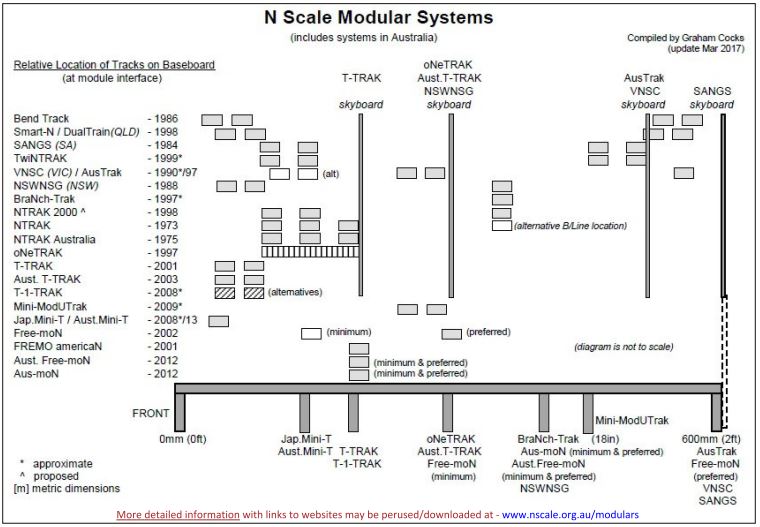
And the latest issue celebrates 20 years of the ‘AusTrak’ modular system.  Another variation on all the modular variations worldwide.  There’s a good review of alternative modular systems, although a bit dated.  Here’s a graphic showing some possible systems:

The magazine says that:

To date there have been 536 AusTrak manuals sold Australia wide, and over 2800 people have accessed the downloadable version. There are at least four model railway clubs with AusTrak modules either completed or under construction, and the interest in Austrak continues to grow.

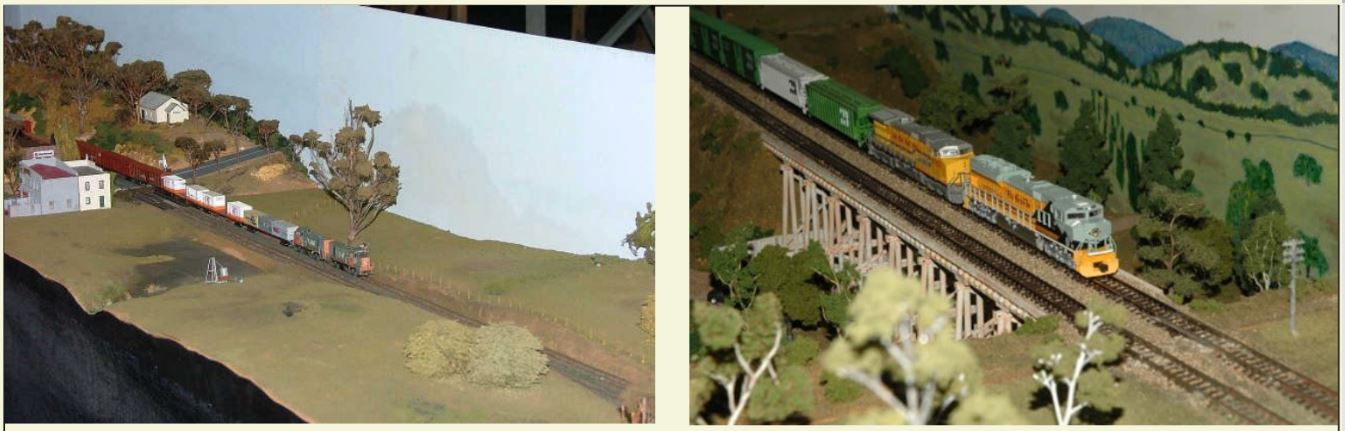
It seems that in Australia, as the UK, the room (and time) for model railways continues to decrease, and interest in modular systems thus increases.  There are some good photographs of Austrak modules included.


Although I get a little frustrated at the continual articles on the Flying Scotsman, this one from the Daily Telegraph is a good read, with a focus on driving and firing it…..

Photo: Charlotte Graham-Guzelian

Posted in Hints and tips, Layout design, N Club International, Out and about | Tagged , , , | Leave a comment

Jon’s modules – Gapmasters

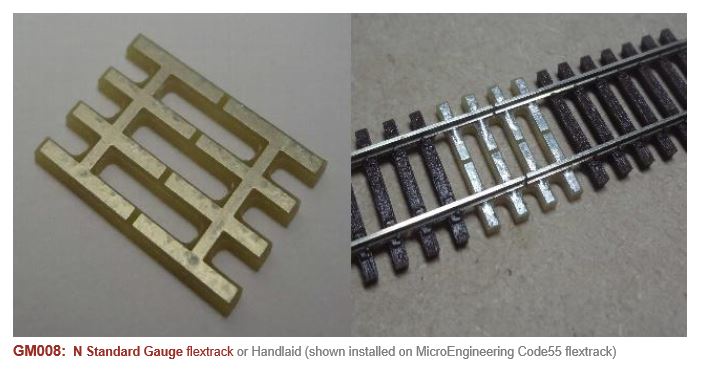
A few months ago (well actually 15 months), I posted about the ‘Gapmaster’ range of etched PCB sleeper sections, pre-tinned to solder the track to.  The original post is here.  I got hold of some of these neat fittings from the USA.

Tidying up the track on my new module gave a chance to use a few of these sections.

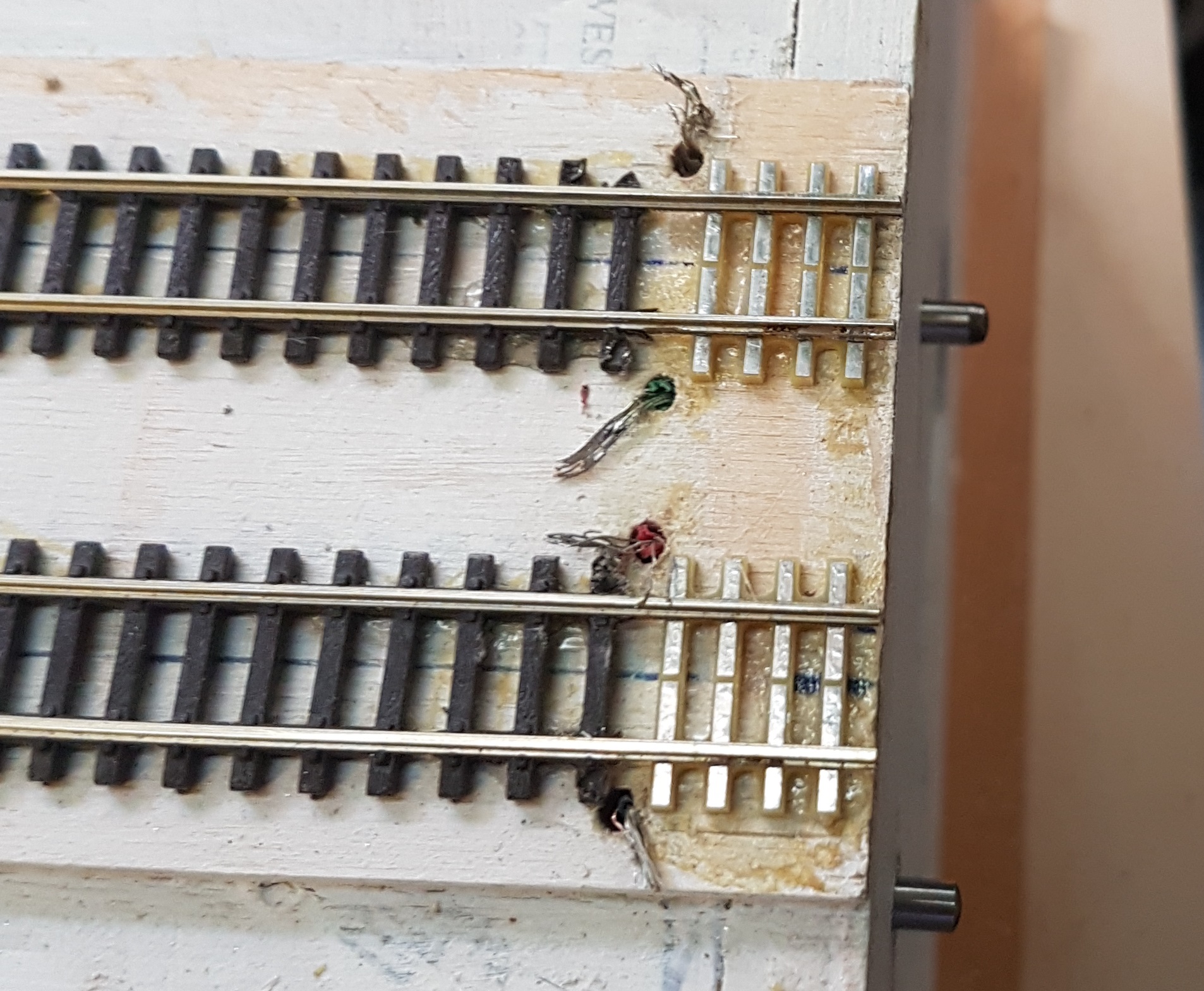
So here’s the end of my new N-club scenic module.  I lifted the track and relayed it, replacing the solid PCB board with Gapmasters.  I found that the Peco code 55 rail had to be reduced in height a little – perhaps half the ‘foot’ of the rail that makes code 80 look like code 55.  No doubt the Gapmasters are designed for Atlas or MicroEngineering track.  This took a few minutes with a largish file, and a touch of flux and solder made a solid end joint.  The rather nasty looking wiring is still to be resoldered (or replaced).  I’m very pleased with the end result, that gives a good looking but robust joint between baseboards.  The sleeper spacing is too close for the UK, but this is hardly noticeable at the end of a board – and the adjoining Peco track is wrong as well….

And with ballasting beckoning, how about one of these (HT RMWeb)…..

Posted in Jon's layout ramblings, Layout design, N Club International | Tagged , , , | 2 Comments

How do we describe our hobby?

Some good thoughts from “The Erratic and Wandering Journey.”

I think the starting point [to explaining model railways] would be to embrace the sheer range of interests and abilities encompassed by this most democratic of hobbies, from the 2 year old pushing a wooden train around the floor, to the determined retiree recreating yesteryear from scratch in his annex, from members of royalty right through to the poorest using the simplest of raw materials and tools to craft buildings from scrap paper and card, so that when he has a bit more money and can afford to buy some trains or more tools, he has a setting for his railway.

And then some honesty. Yes, there are those who just play trains with a train set, and if that helps them relax, to get away from the stresses and strains of everyday life, then so what? But there are also those, like Gordon Gravett and Trevor Nunn as two personal examples, who build it all with the minimum of ready-made components and then – and here’s the best bit – they share the results of their endeavours at public shows, and their techniques via the model press and to anybody who asks. The rest of us fall somewhere between these extremes – both of these gentlemen have created artwork for photo-etching, and patterns for casting, so even when they use such components, they at least are building from scratch. When it comes to building models of locomotives, Trevor buys in the motor and the gears, and that’s it.

Everything in this picture other than the wagon wheel is made by Trevor. Even repeat items were cast from his own patterns, or etched from his own artwork. And the engine has working inside valve gear (Joy’s, just to complicate matters!)

When asked why, I simply say that ultimately I don’t know, but I like trains and building models provides an outlet for my creative side which is completely different from, and free from the demands of, using my brain and computers when working for a living.

Related to this, my brother brought to my attention a LinkedIn* posting by Guy Kawasaki, “How never to fail“. The crux of this was that there are two outcomes to ventures, which most classify as “success” and “failure”. Guy suggests that there is success, and an opportunity to learn, “the opposite of success is not failure, it’s learning”.

Well, excuse me but this is hardly news! Any good railway modeller got to be good by having a go at new techniques and learning from mistakes, by treating success and failure as the imposters Kipling so described. Who would not want to employ someone like that?

And that really is worth presenting to the world.

*If you are unaware of LinkedIn, it has been described to me as “like FaceBook for grownups”.

I especially like the call, “To embrace the sheer range of interests and abilities encompassed by this most democratic of hobbies.”  We all need to remind ourselves occasionally that we are all different, and take something different from this wonderful hobby.  There is no “right” or “wrong” way to do things – after all, Rule 1 applies.  Most of our critique of other’s layouts reflects our own perspective on the hobby – however strange that might be!

Posted in Inspiration, Layout design, Operation | Tagged , , | Leave a comment

Odd modelling ideas #2030

For the climate conscious (and it would make a cool model)…..

Rail Energy Storage Harnesses the Power of Gravity All the Livelong Day

A California startup is repurposing trains and rail cars to help renewable energy utilities compete with fossil fuels.

What goes up must come down. This principle applies to most things in our current gravitational setup — college tuition being a conspicuous exception — and it could provide a significant boost to green energy initiatives, too.

A California-based company called Advanced Rail Energy Storage (ARES) is using the power of gravity to help renewable energy utilities compete with coal and gas. The idea is to help solve the perennial problem of energy storage. Because wind and solar installations can’t always generate energy on demand — sometimes it’s cloudy and the air is still — green utilities need a reliable method of storing surplus energy.

There are several ways to do this using high-tech industrial batteries, flywheels, or hydroelectric facilities, but these approaches tend to be expensive and complicated.
ARES’s solution? Run some old trains up and down a hill.

Read all about it here.  I suspect you need more space for this than we have in the UK – even Lickey or Shap may be problematical stopping the train at the bottom of the incline.  But it would be a very simple conversion of some old US stock to confound the average punter at a show…..

Posted in Hints and tips, Inspiration, Out and about, Weird and wonderful | Tagged , , , | Leave a comment

Jon’s modules – Mojo come, Mojo go….

The modelling mojo comes and goes!  I’ve had a bit of free time over the last few weeks, and I should have been starting my new module for Stuttgart.  I was going to use a Watlhers art-décor rail bridge, as below, for a small scenic module, but somehow, the idea didn’t really excite.

And I should have been getting on with my modular layout, illustrated below, but as one does, I seem to have decided that I don’t like what I’ve built.  Somehow, the track layout looks far better on the plan below, than it does in the flesh.  It just seems too big for what it is, although it is probably well below scale size.  In fact, the right hand module has already been rebuilt to become the N-Club ‘clubhouse’ scenic module.

I had been impressed with this little switching layout (actually O gauge) that appeared in Model Railway Hobbyist.  The simple track layout looks good to operate (and is, if the article is anything to go by.)

So, decision time.  I’ll drop one module from the plan.  I can keep the trackwork on the left hand module, with an added headshunt, but relay the right hand board.  This layout feels more manageable, will provide a pleasant hour or two’s switching, and will actually fit into an alcove in the loft, making better use of room.  And it can still be joined to a larger N-Club system.  Mojo sorted!

And the spare 800mm module can form the basis for my Stuttgart module.  A purchase from DM models in Germany got me a Faller iron foundry within 3 days (quicker than within the UK), and I’ll be putting together a scenic industrial board.  Although the building is German in origin, it’s generic enough to represent an American or UK structure.  I’ve already started work on this board – mojo again sorted!


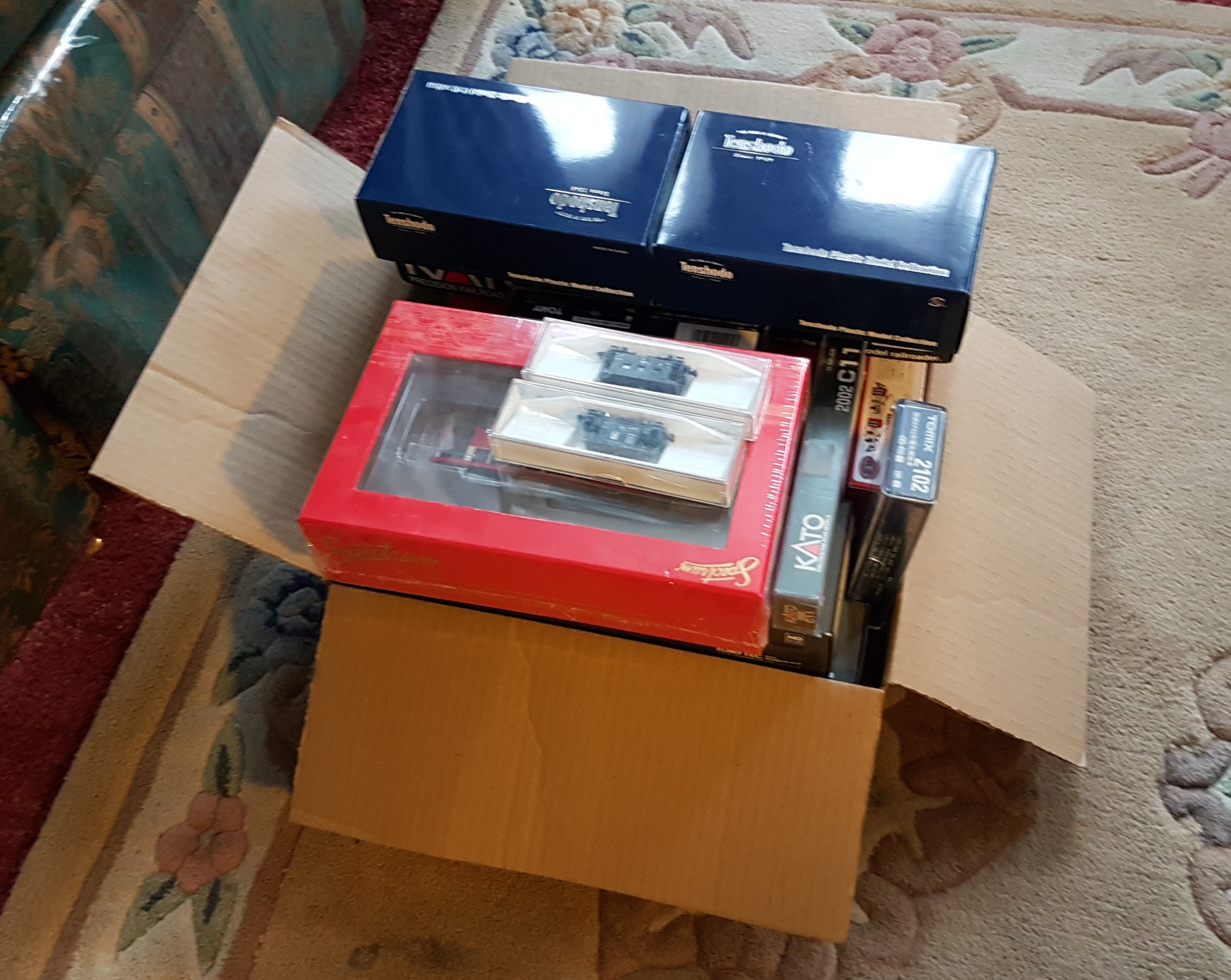
And on a different note, I was having a sort out of my railway cupboards, and came across a quantity of HO equipment, purchased on the off-chance I’d build a small HO line one day.  This hasn’t happened, so I though it was time to sell, with a few of the trams and other N-gauge Japanese stock from Kuritu that I didn’t want.

A list emailed to Hatton’s produced a sensible offer within 24 hours, and a pre-paid parcel label.  I packaged it all up, and sent it off, and am awaiting the money to arrive in my account.  No doubt I could have earned more by selling it on FleaBay, but when they had taken their cut, plus the hassle and risk of selling individually, I was pleased and impressed by Hatton’s service.

Posted in Jon's layout ramblings, Layout design, N Club International | Tagged , , , | Leave a comment

Don’t delay, start today

Some good insights from Steve Flint, writing in the latest Railway Modeller editorial…

There are three categories of model railway enthusiast.  The first is the person who has a specific layout project on the go….  The second is the collector….  The third is the person who, one day, is going to build a layout….

Not that there is anything fundamentally wrong with any of these three modeller categories, although the first two types are possibly more fulfilled than the third one…..

But – and it’s a but that’s getting bigger – the dynamics of modern living are steadily eroding that potential start date [for type three] for many modellers.

For instance, the government has just announced another increase in the state pension qualifying age, pushing many younger people’s retirement date further into the future.  Then there is the housing situation in the UK, this can mean that the ‘spare’ bedroom – for decades and ideal place for a layout – remains occupied by grown up children who can’t get on the housing ladder themselves.  Likewise, those consigned to renting a home, find the lack of any long term security of tenure discourages any ambitions of a permanently housed railway layout.

We cannot solve those problems alone, so we have to work around them, and several contributors in this issue show different ways in which the hobby can be enjoyed without spacious ‘domestic’ resources. ….a rummage around the second-hand stalls (and) shows how, with a bit of ingenuity, old generic coaches can be transformed into plausible models. … two portable mini-layout schemes….. and an unbelievable ultra-compact Gauge 1 layout….

Be wary, then of banking on a future start date for that big project, for it may be further away than you think.  Start today with something small, and begin immediately to reap the rewards of this fabulous hobby.

I can identify with some of this.  We’ve got one (of three) children still at home, and if we downsize, where does the railway go?  I also think the article could be followed up with one on the problems faced by model railway clubs – we equally have a problem with the high cost of club rooms!

Posted in Hints and tips, Inspiration, Layout design | Tagged , , | 1 Comment

ESNG meeting – 16 August 2017

‘Low Wednesday’ today – only 4 members by 8pm, so no trains, but a pleasant time chatting and we still went home after 9pm.


Talk included a lot on trains in Japan, and a little on trains in North Korea.  So in lieu of anything else to report, here’s a fun video from the BBC.  It could make a good novelty model with an automatic shuttle….

The Seoul train that goes to the border and back

The DMZ dividing the two Koreas is the most militarised border in the world, but just inside it there is a little used train station. Come take one of the world’s weirdest train journeys with Steve Evans.

http://www.bbc.co.uk/news/av/world-40631452/the-seoul-train-that-goes-to-the-border-and-back


And some preservation TPO action, from the Great Central and Didcot – interestingly the links came from my NMRA newsletter from the States!

Posted in ESNG, ESNG meetings | Tagged , , , | 1 Comment

All good holidays come to an end!

Final pictures from Ron and Allan, though some more may follow when I catch up with them….

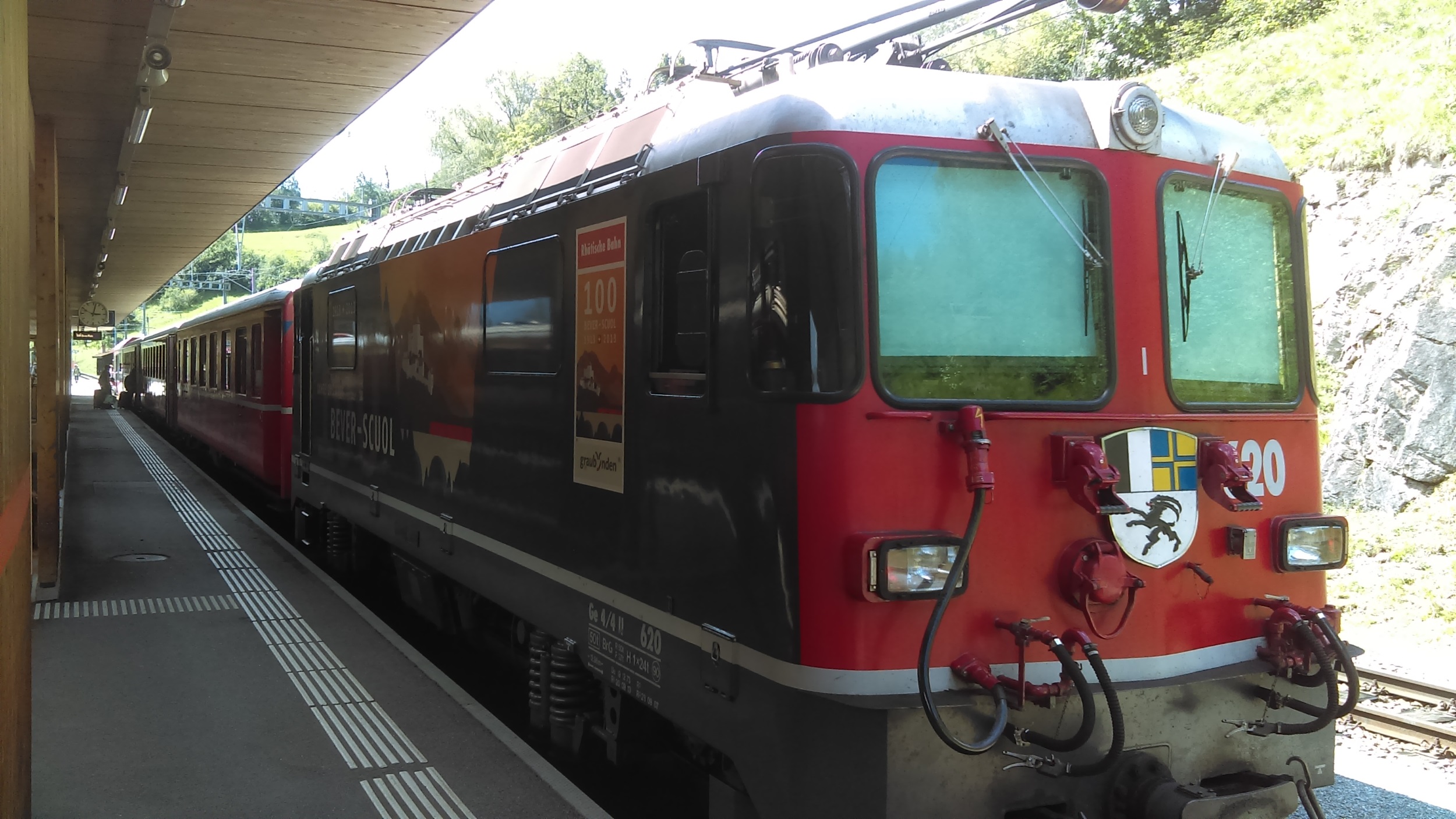
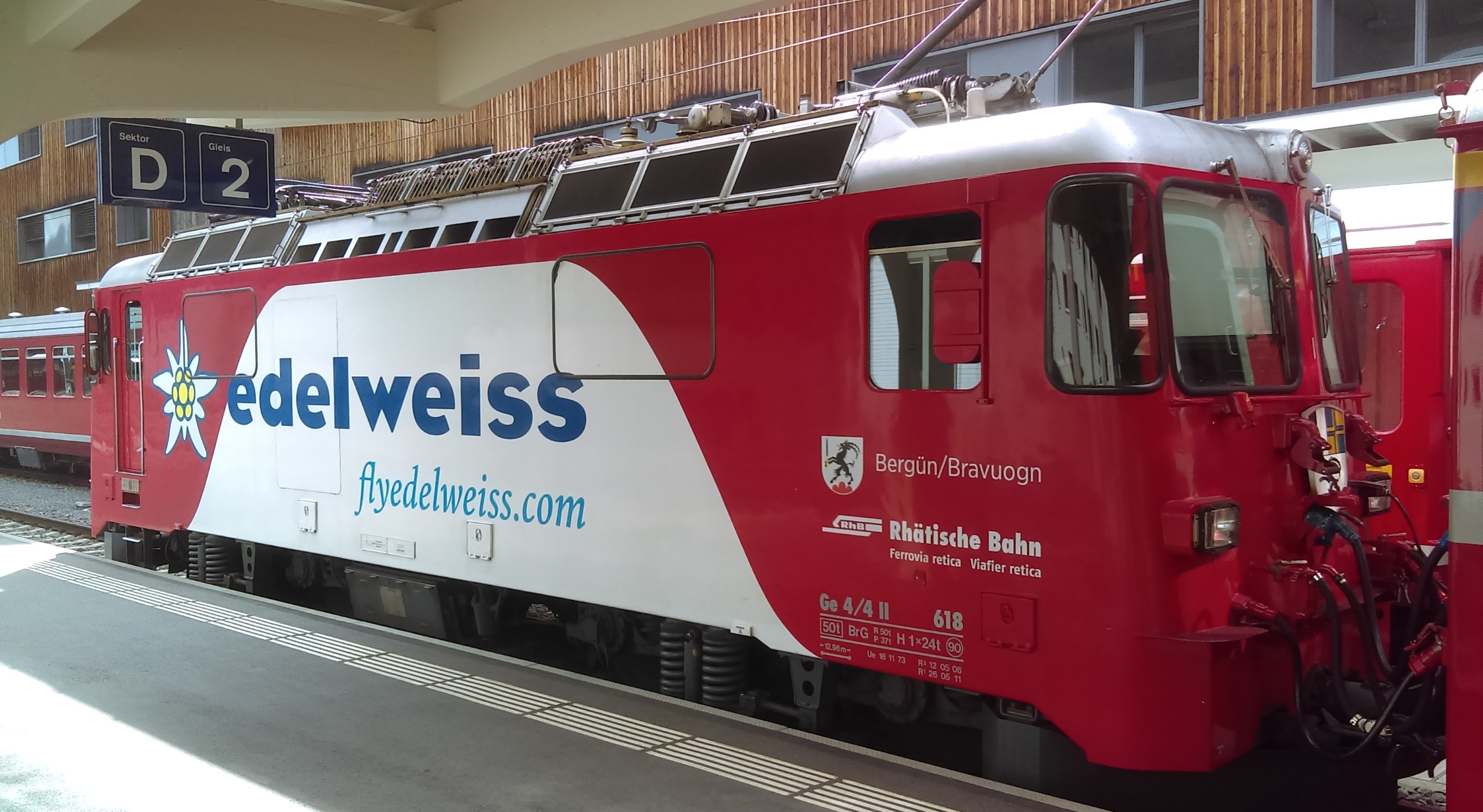
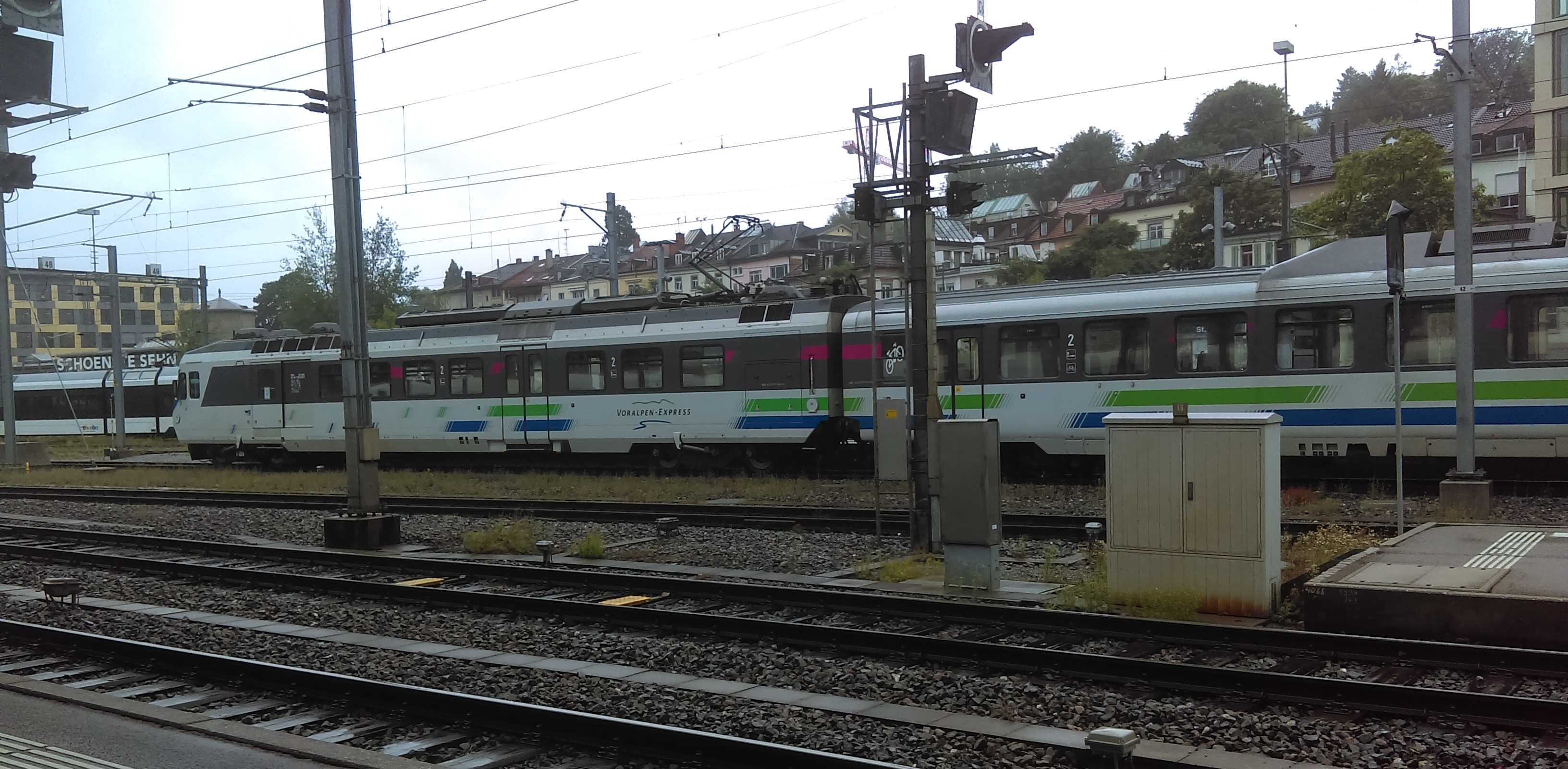
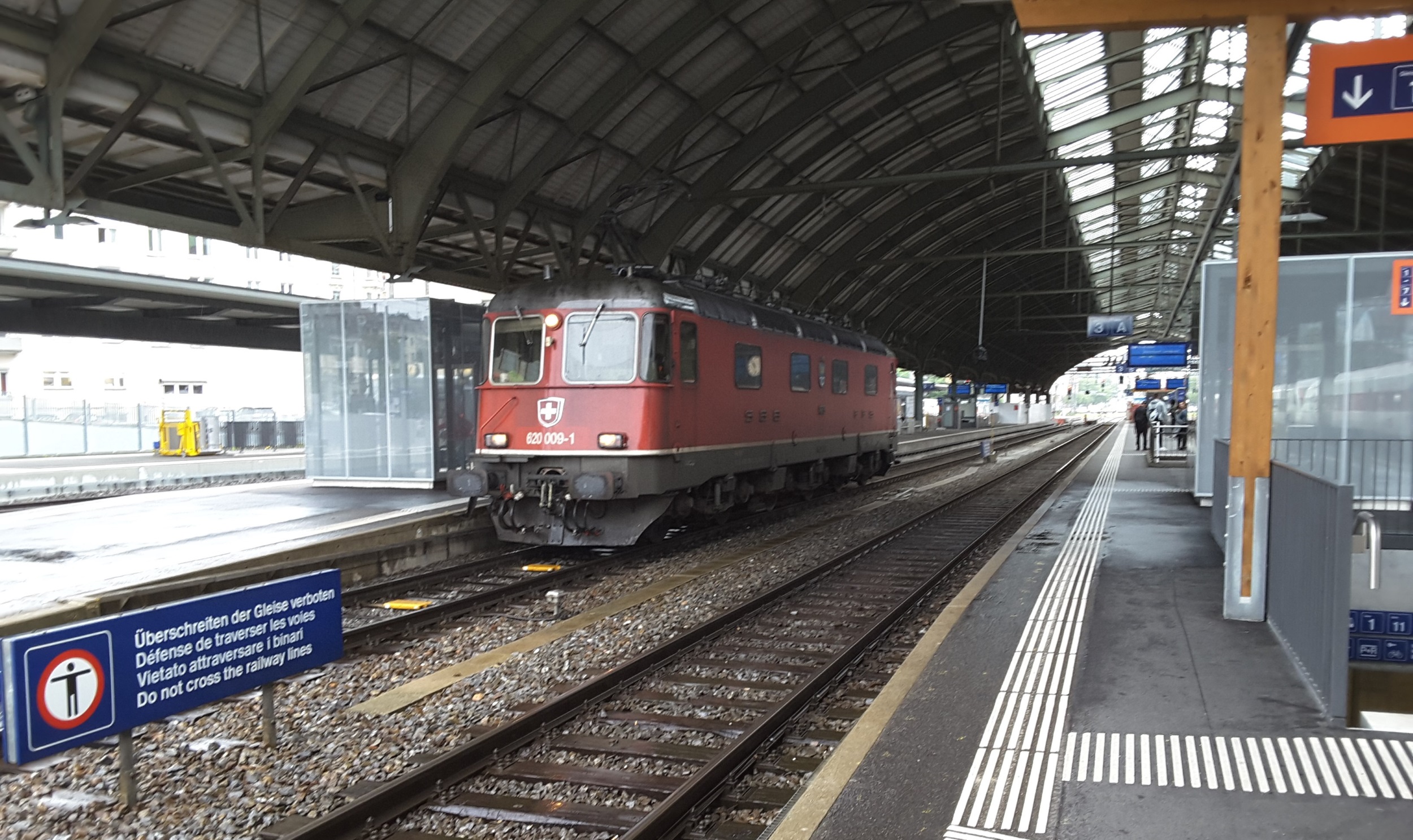
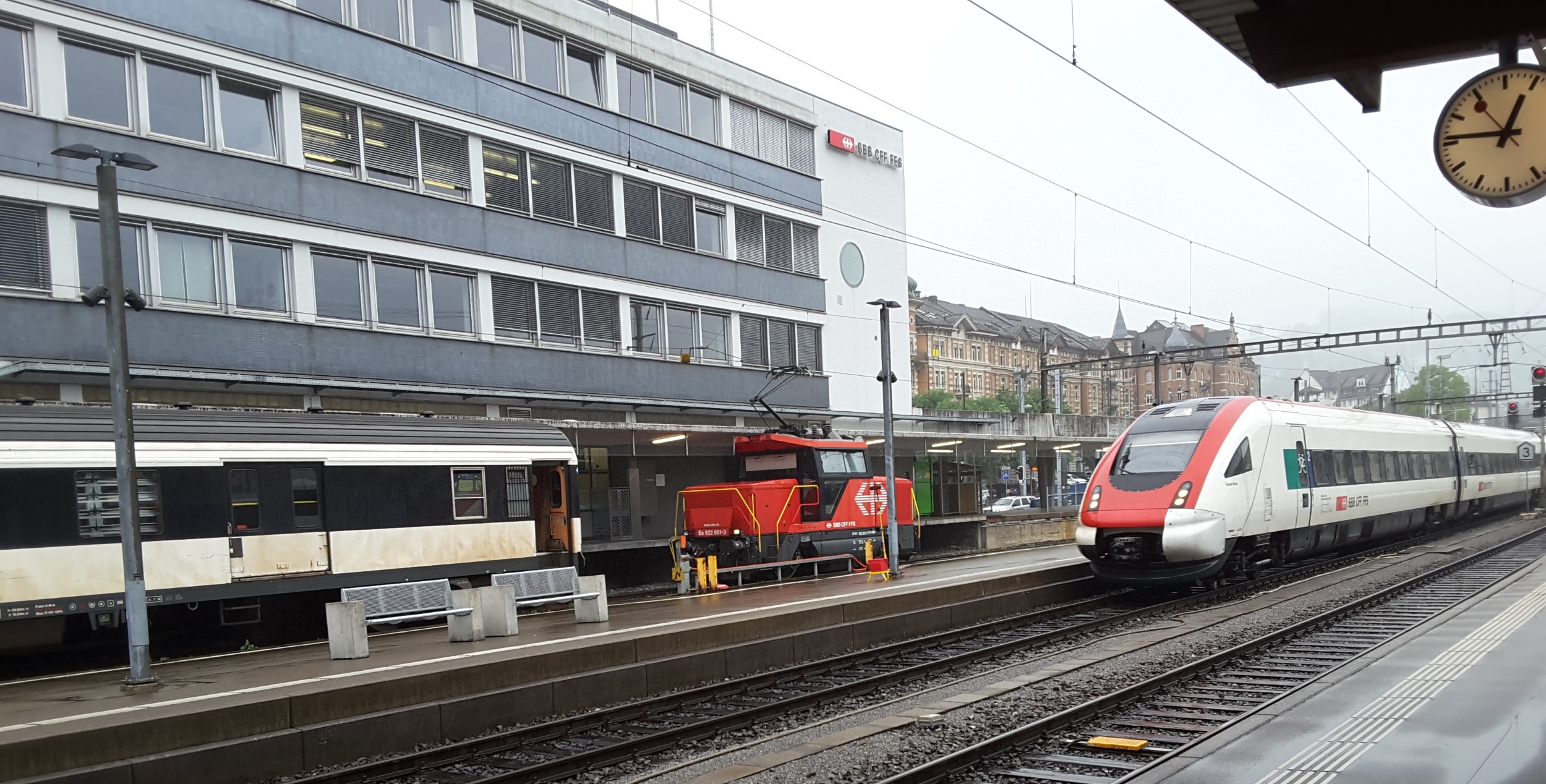
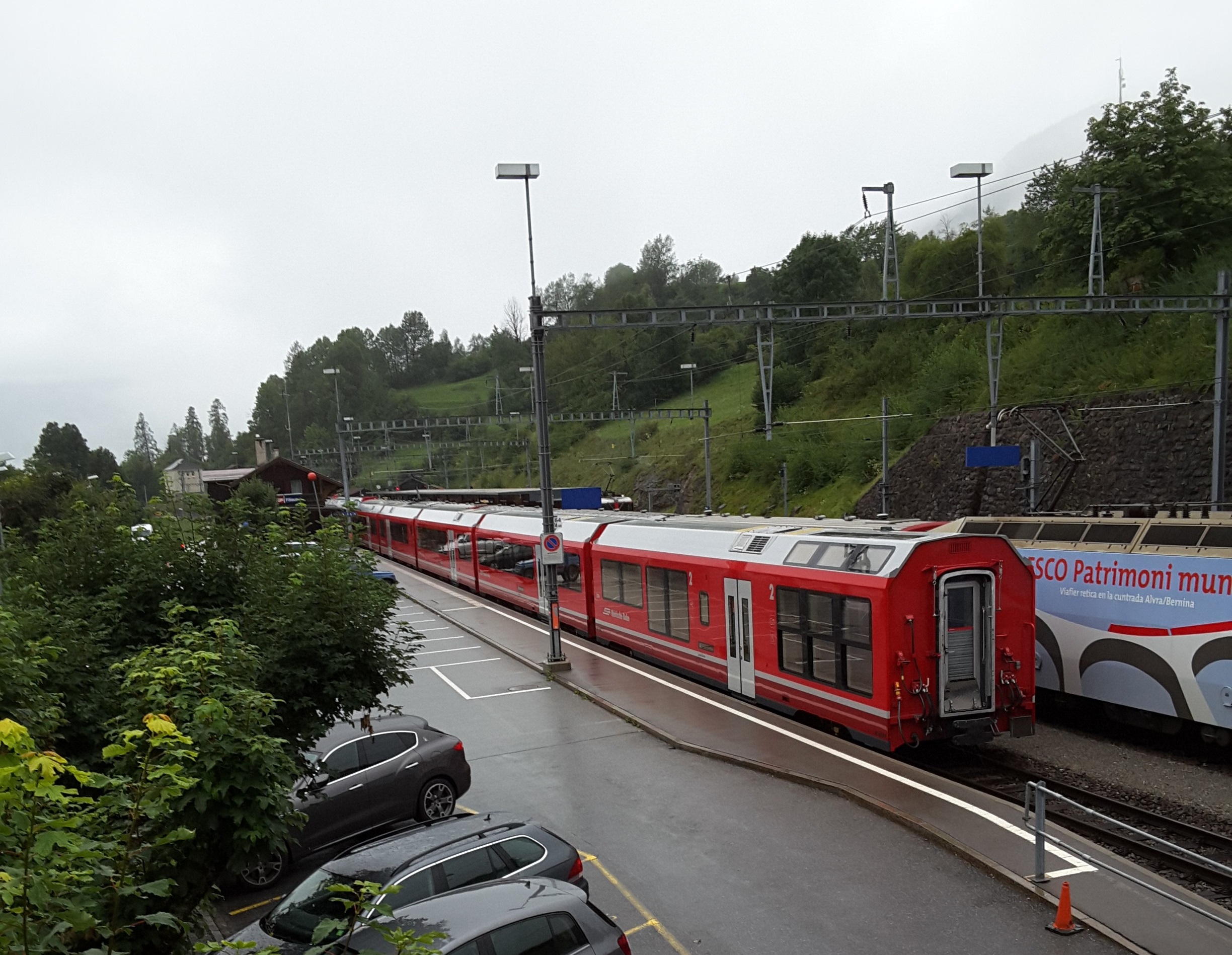
Day 11 Vitzna to Filisur; I’ve Been collecting advertising photos of the Rhb class GE4/4.  And Day 12 visit to St. Gallen.

Friday: Views of Arosa and the trains involved in the 5pm crossing at Filisur.

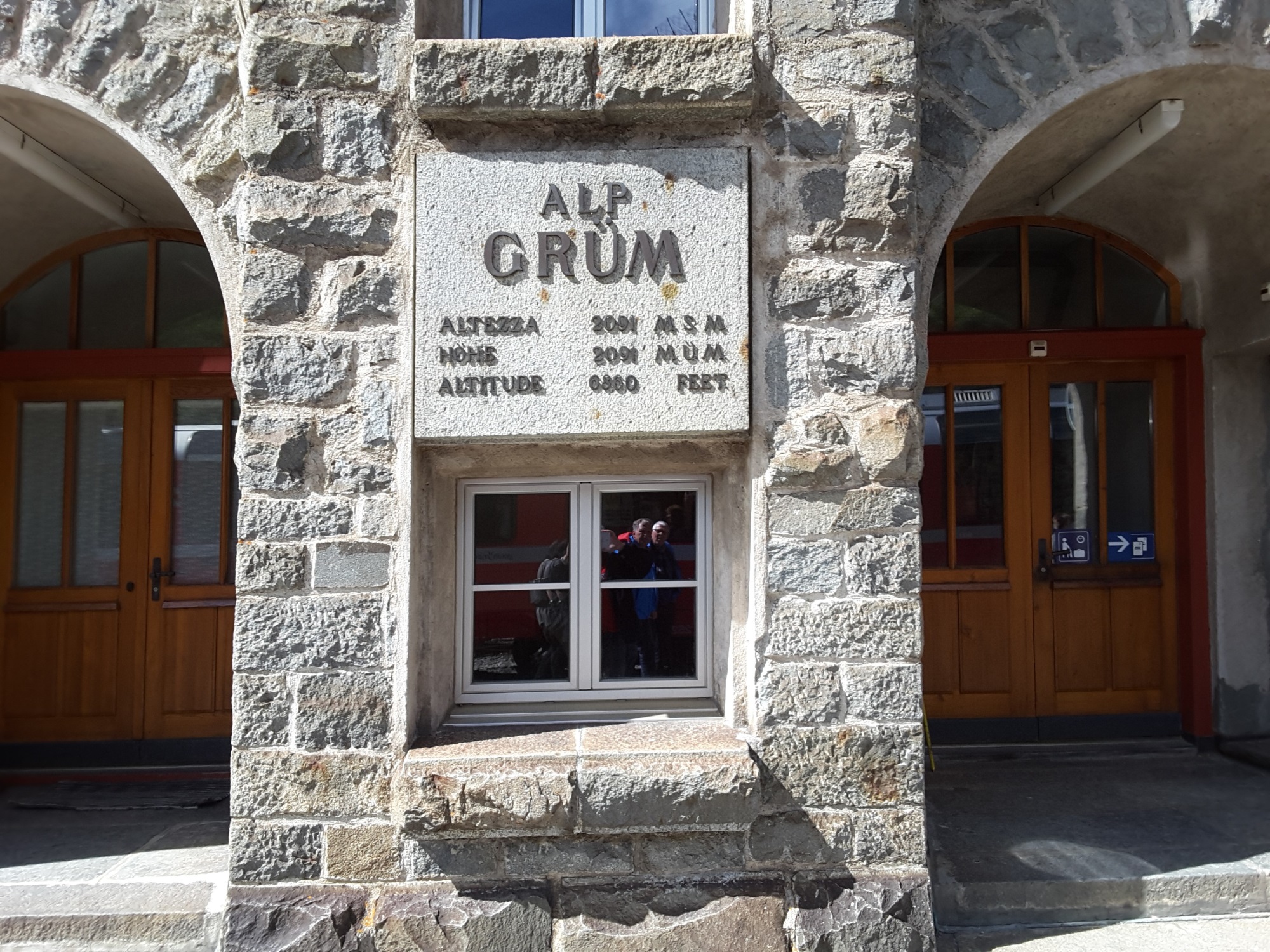
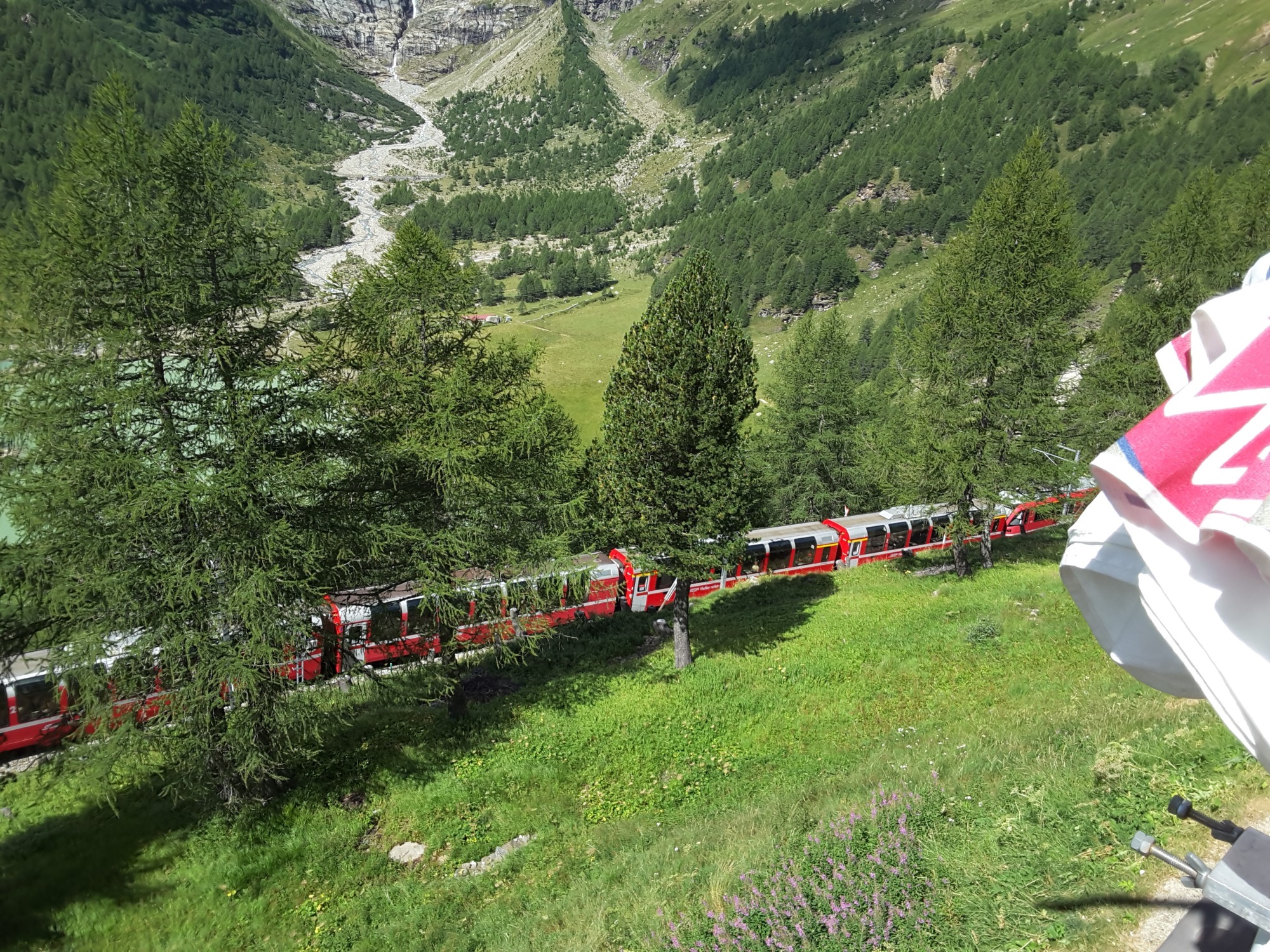
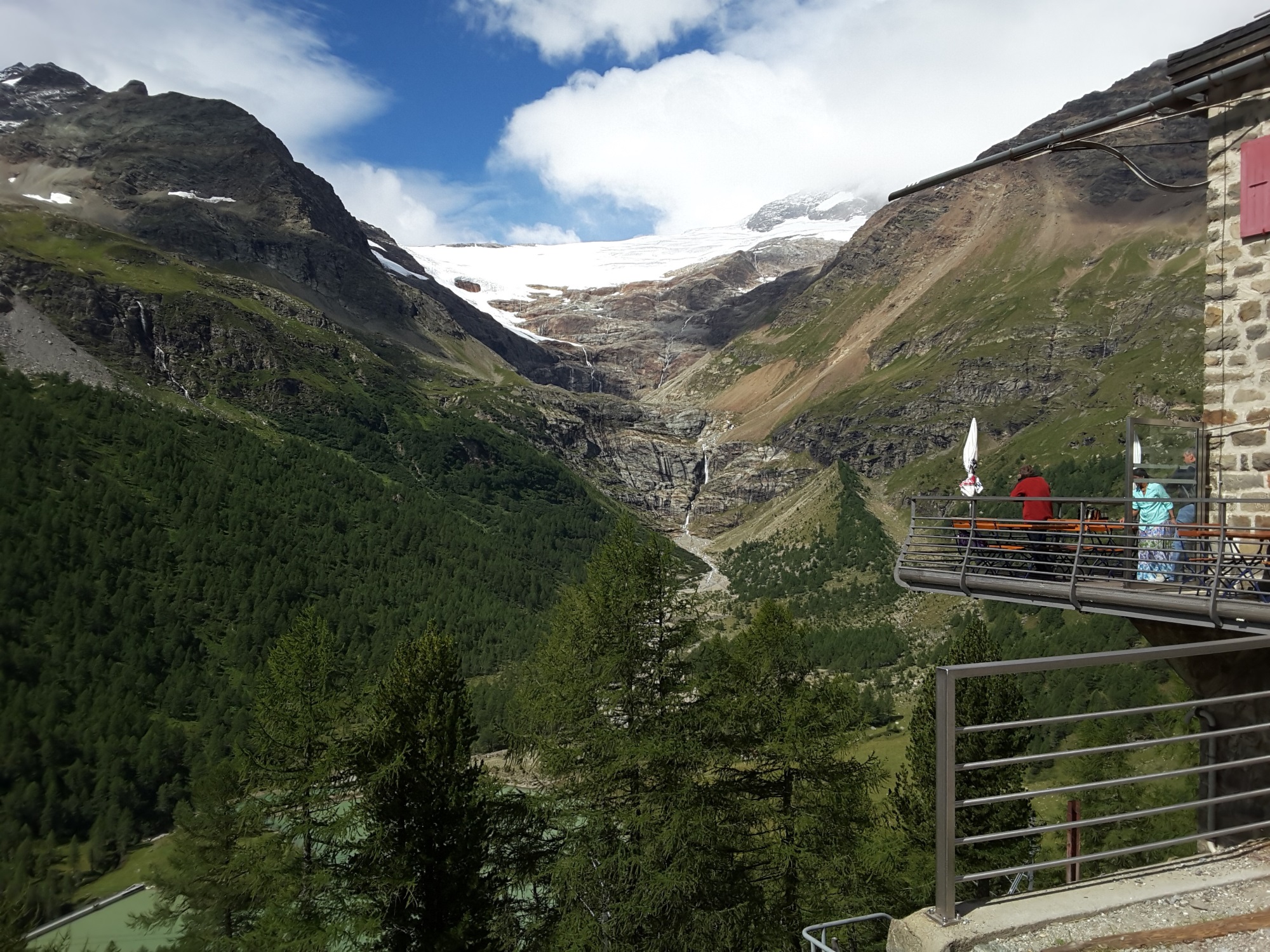
Saturday: Went up to Alp Grum, where these were taken. Please note I managed to capture Allan in one. Coming back we hit problems and Sat on a train just outside Vereina Tunnel for hour and a half “due to technical problems “

Our last night out here; heading home tomorrow 😞😞😞. Take care and see you soon.

The missing chairman


Posted in ESNG, Out and about, Prototype | Tagged , , , | Leave a comment