Back to Berlin – again – 3

Today, more trains, and planes.

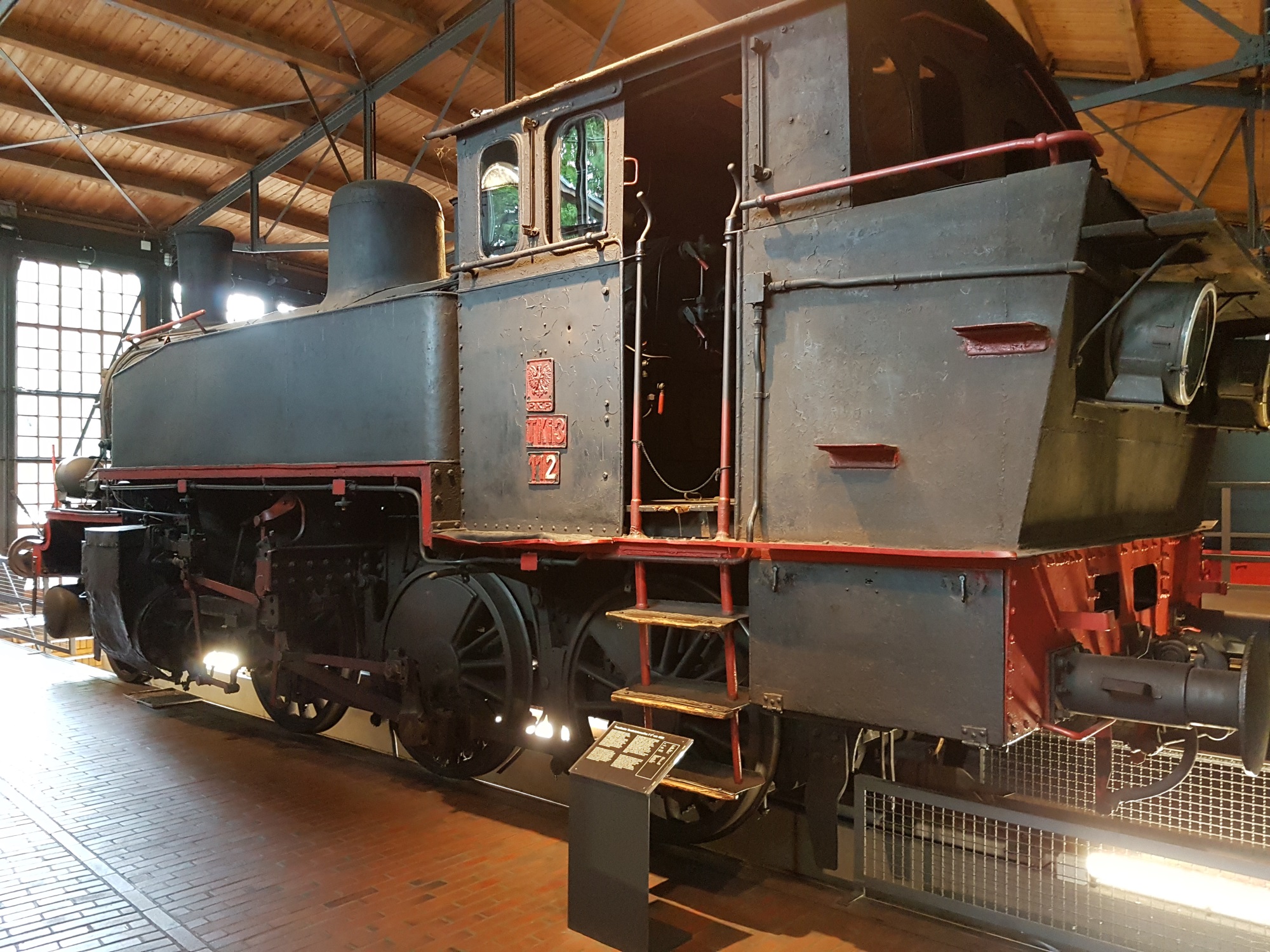
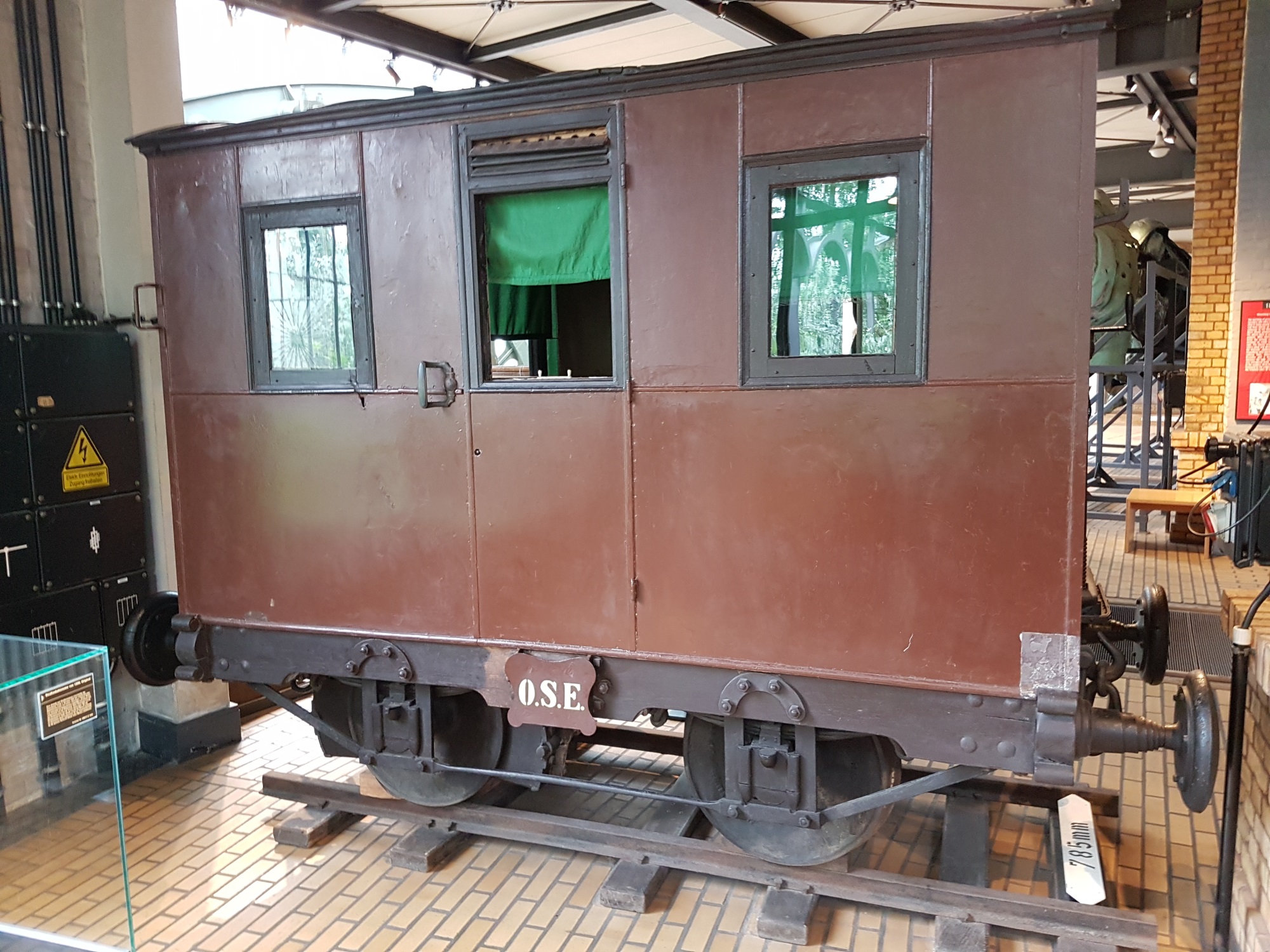
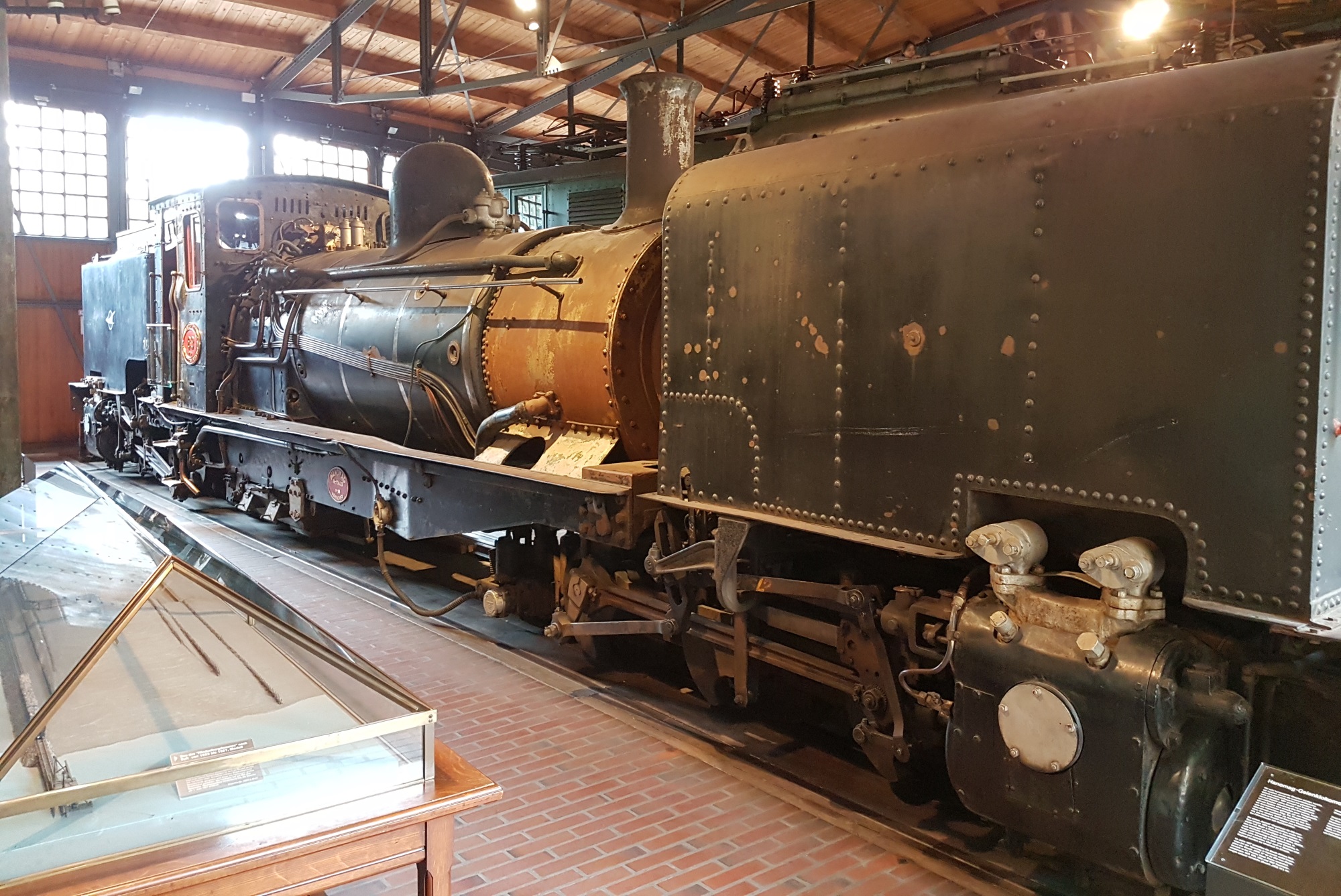
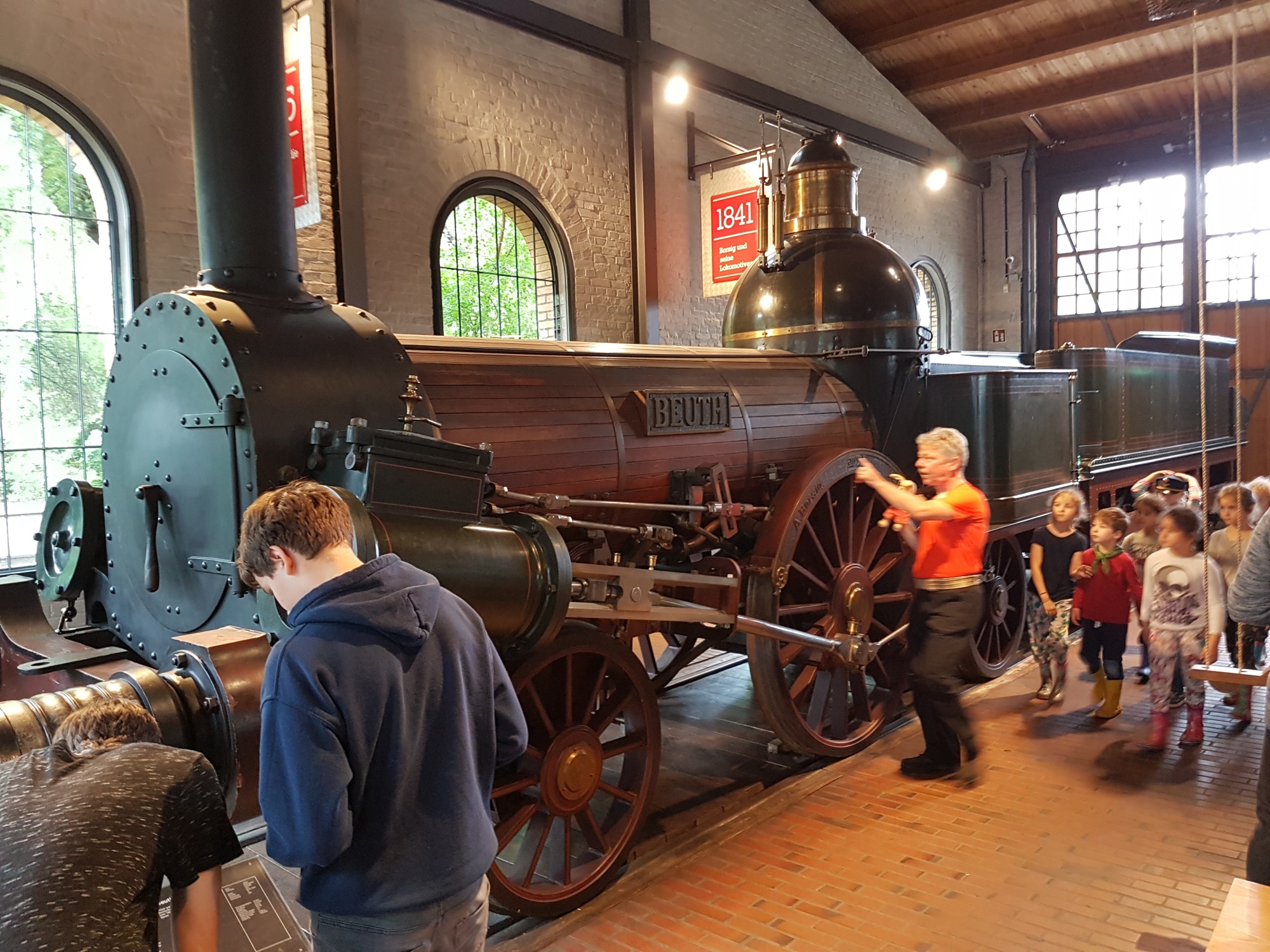
There were a number of narrow gauge locomotives on display, including a couple of rack locomotives.  Gauges varied from 600mm to 1435mm.
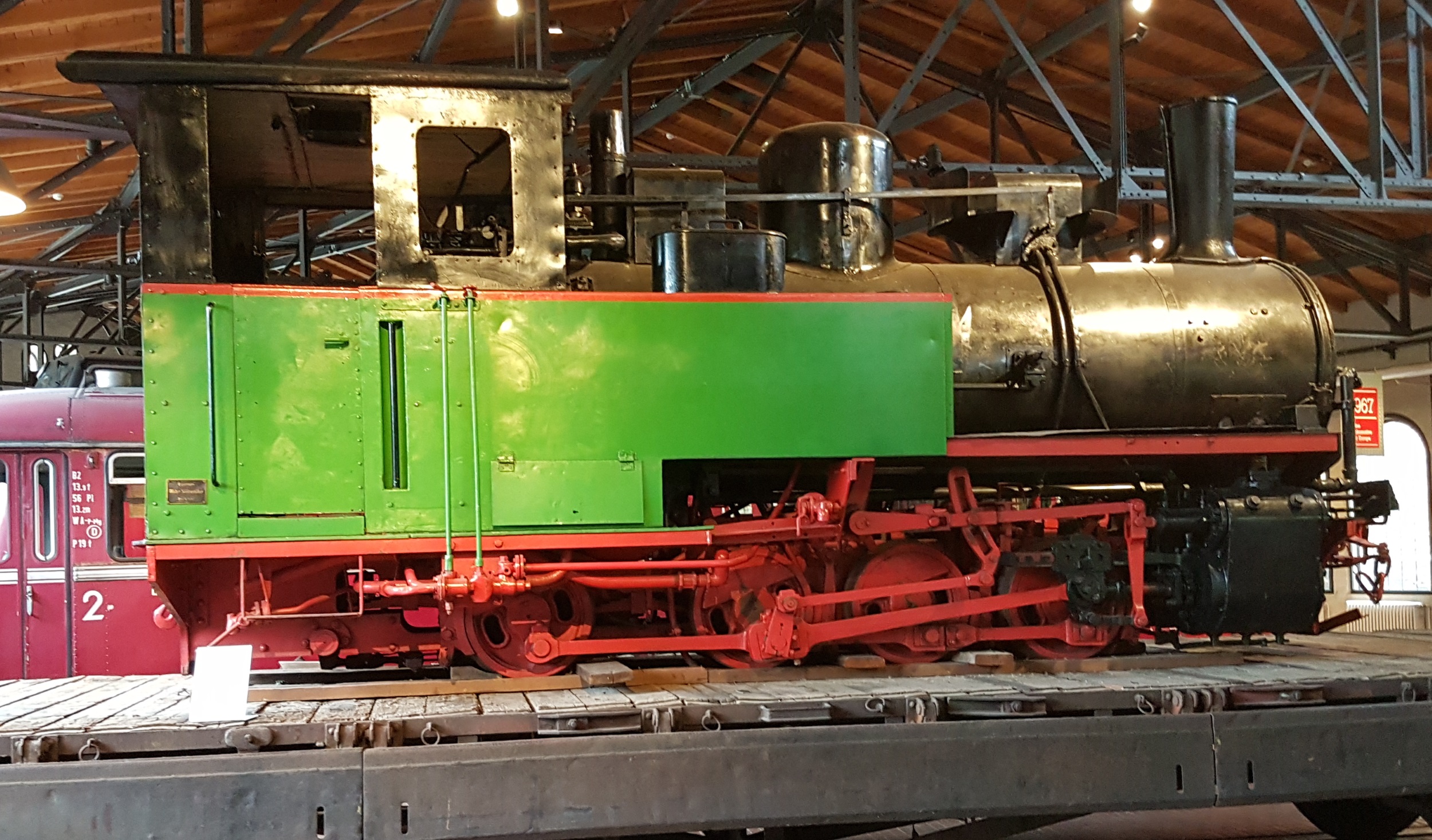
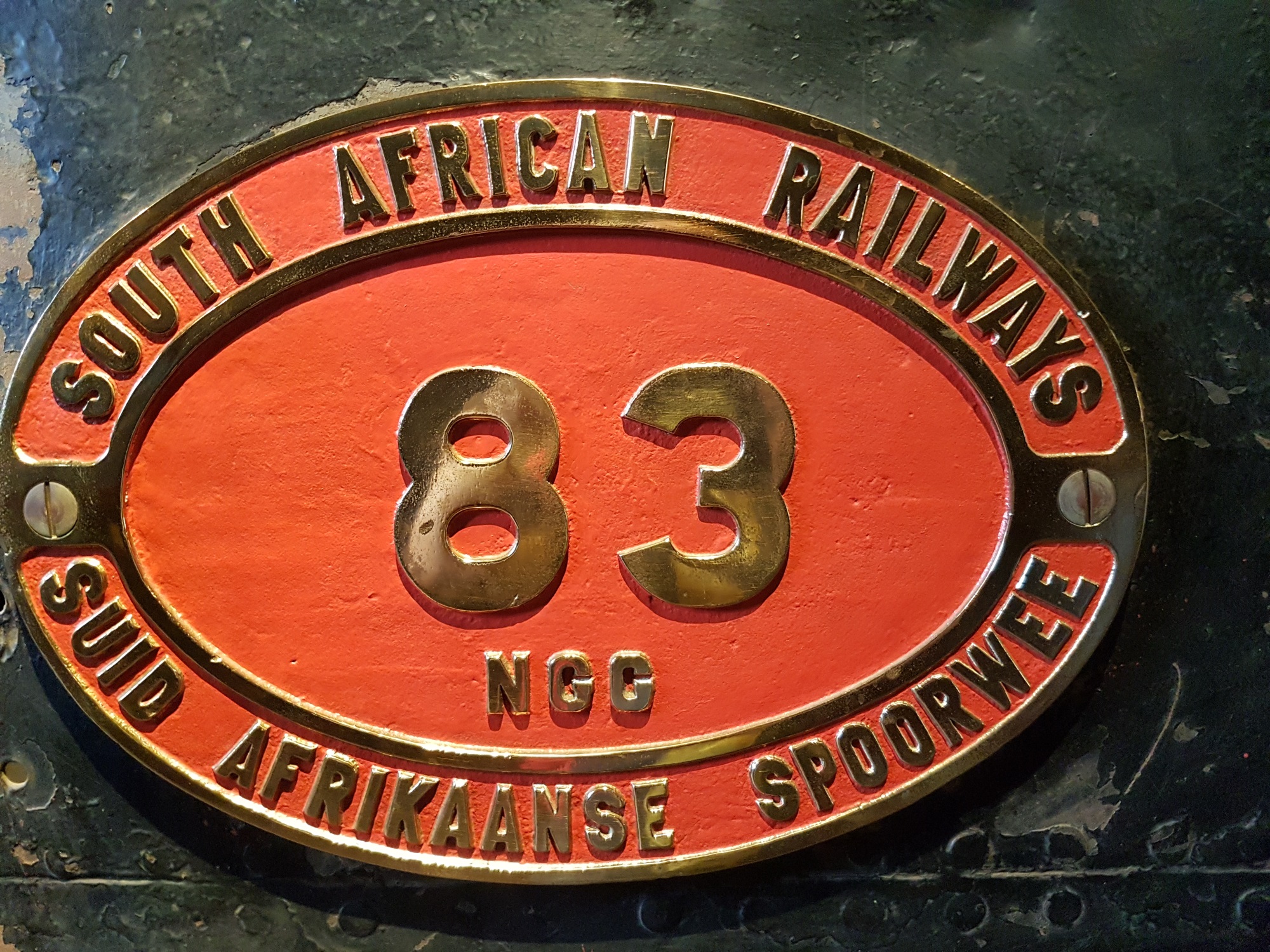
And this South African Garrett, built by Krupp (hence its display here) was a contrast to the other small locomotives.
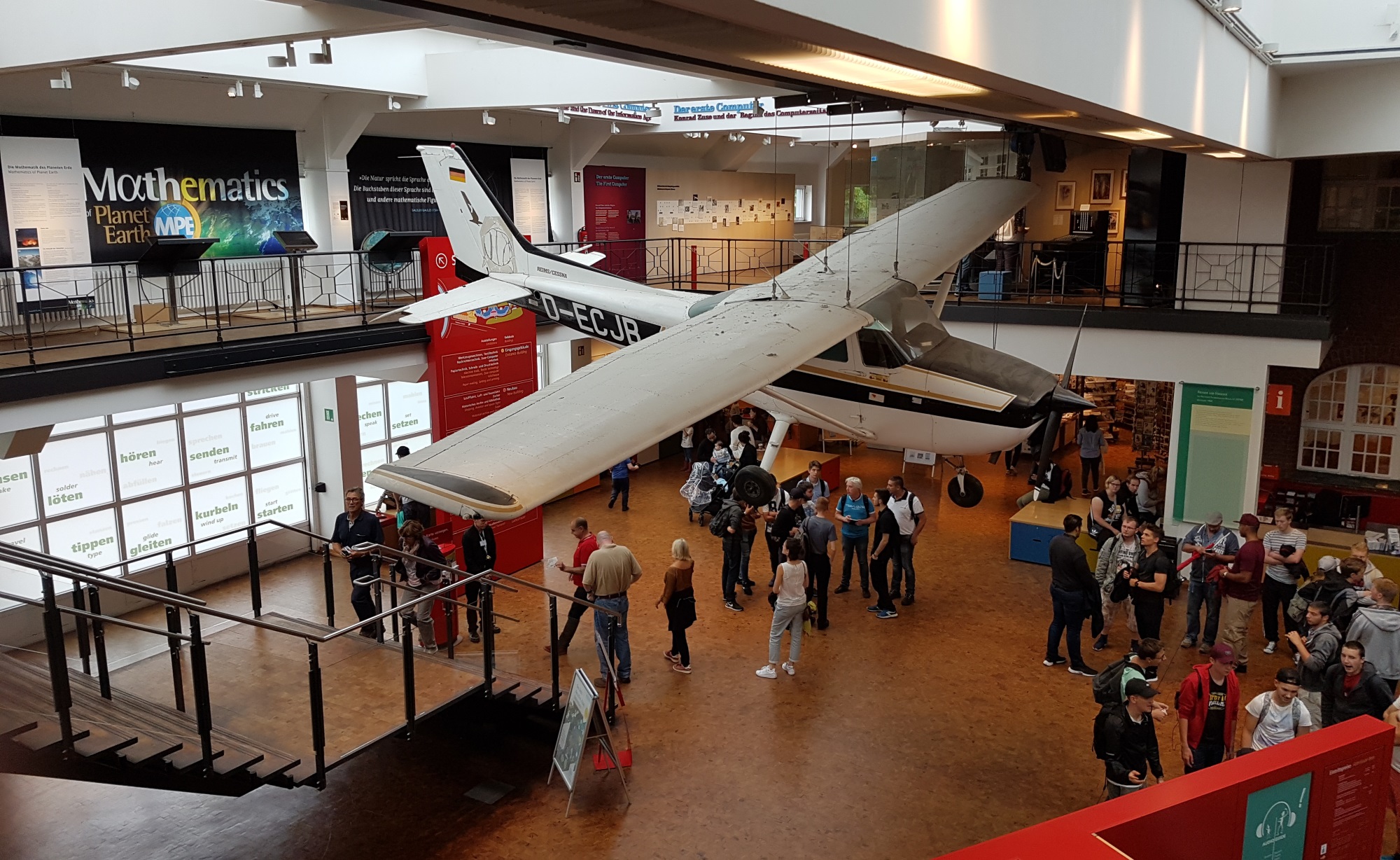
Entering the museum, you see this Cessna suspended from the foyer ceiling….
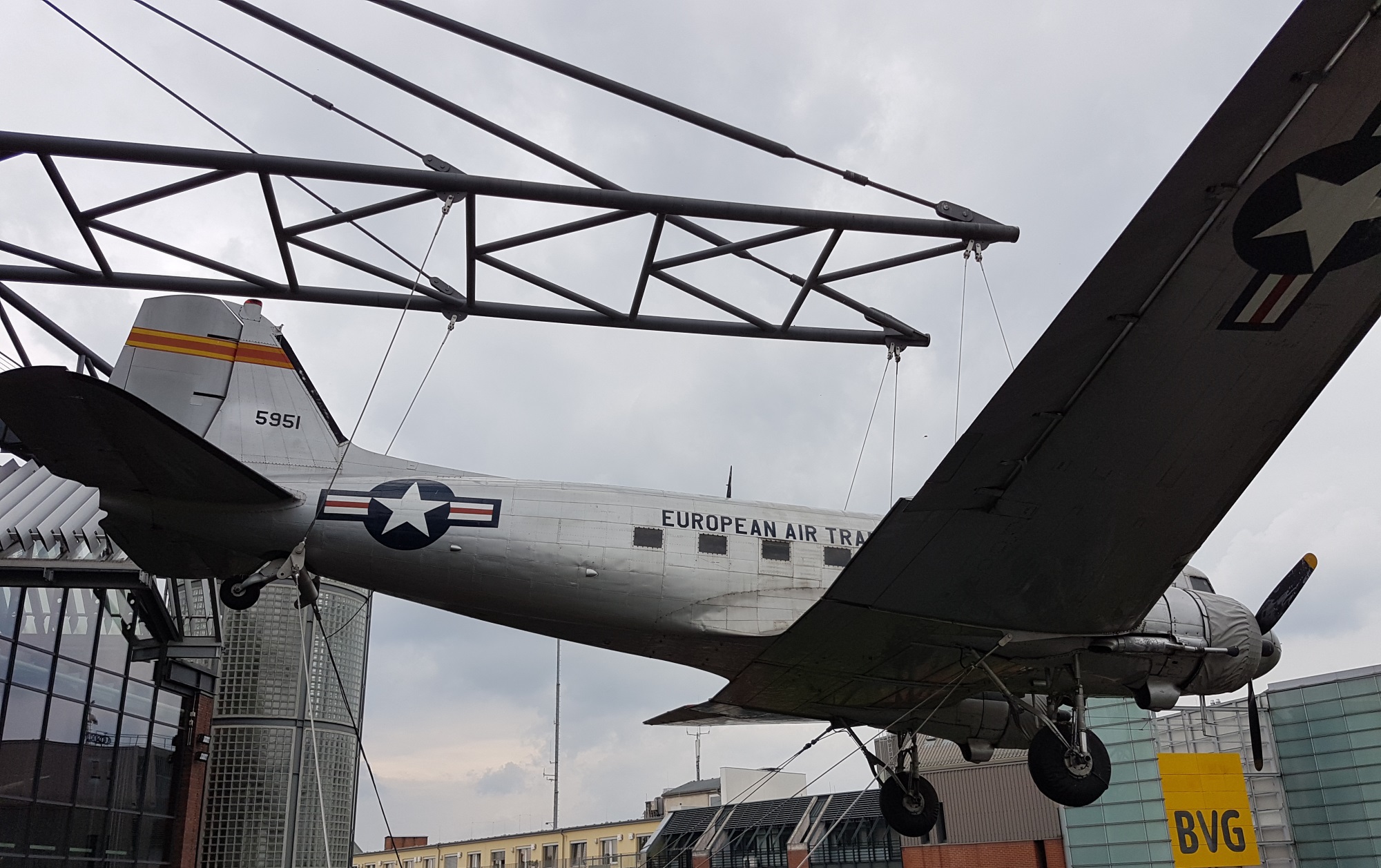
Whilst approaching it, this DC-3 Dakota is seen on the roof of the building.
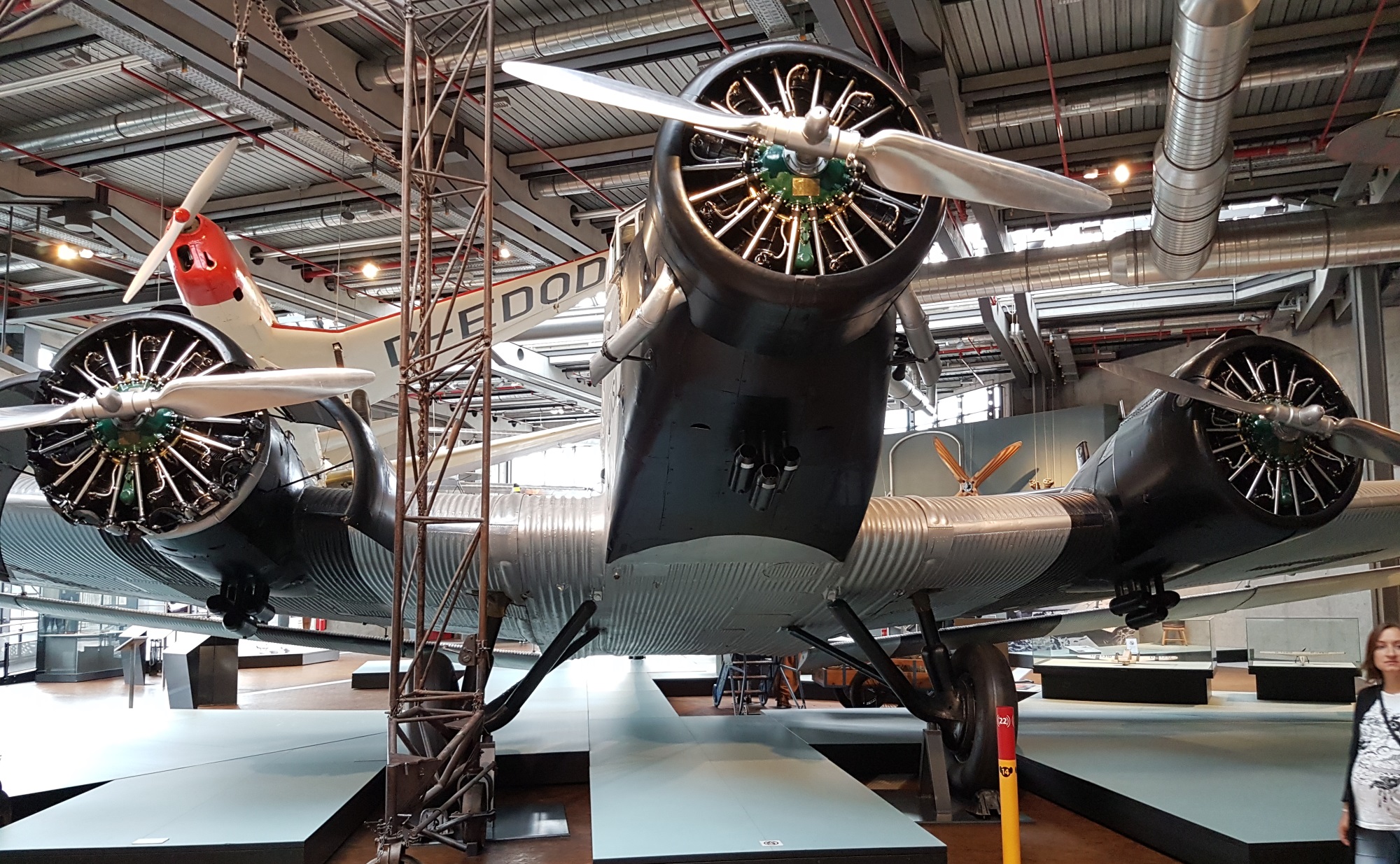
At the top of the new museum building, there is an interesting collection of aircraft, again rather packed in and difficult to photograph.  It is perhaps revealing that I knew most of the aircraft types, but had little idea about the German trains….

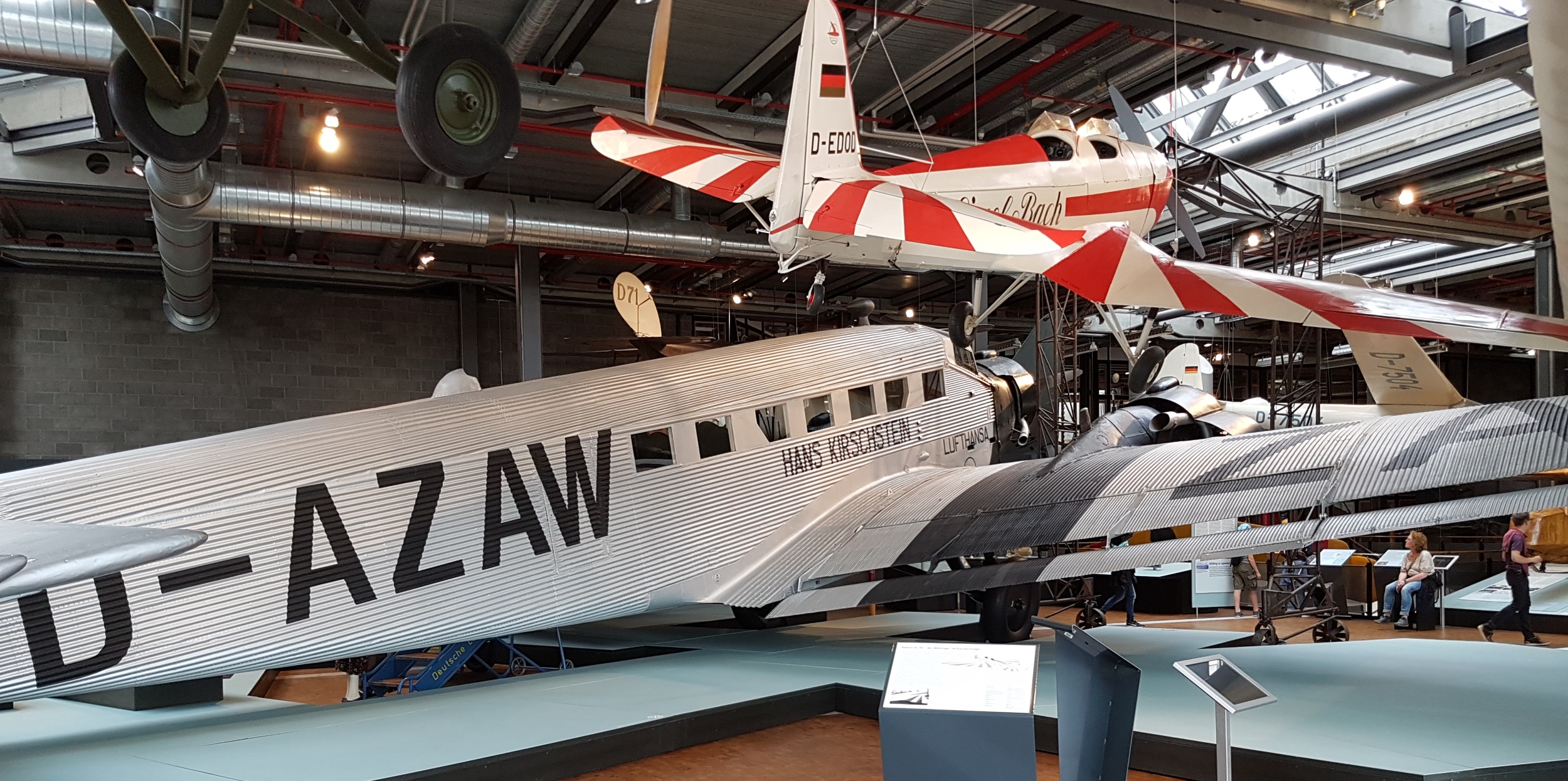
The Junkers Ju 52 Trimotor is a wonderful plane, with its distinctive corrugated aluminium fuselage.  A dated design, but reliable, and still used in WW2.
The Messerschmitt Bf 109 is unmistakable, and the backbone of the German air force fighters between 1937 and 1945.  Nearly 34,000 were build, and several upgrades meant they were a match for all Allied fighter aircraft.
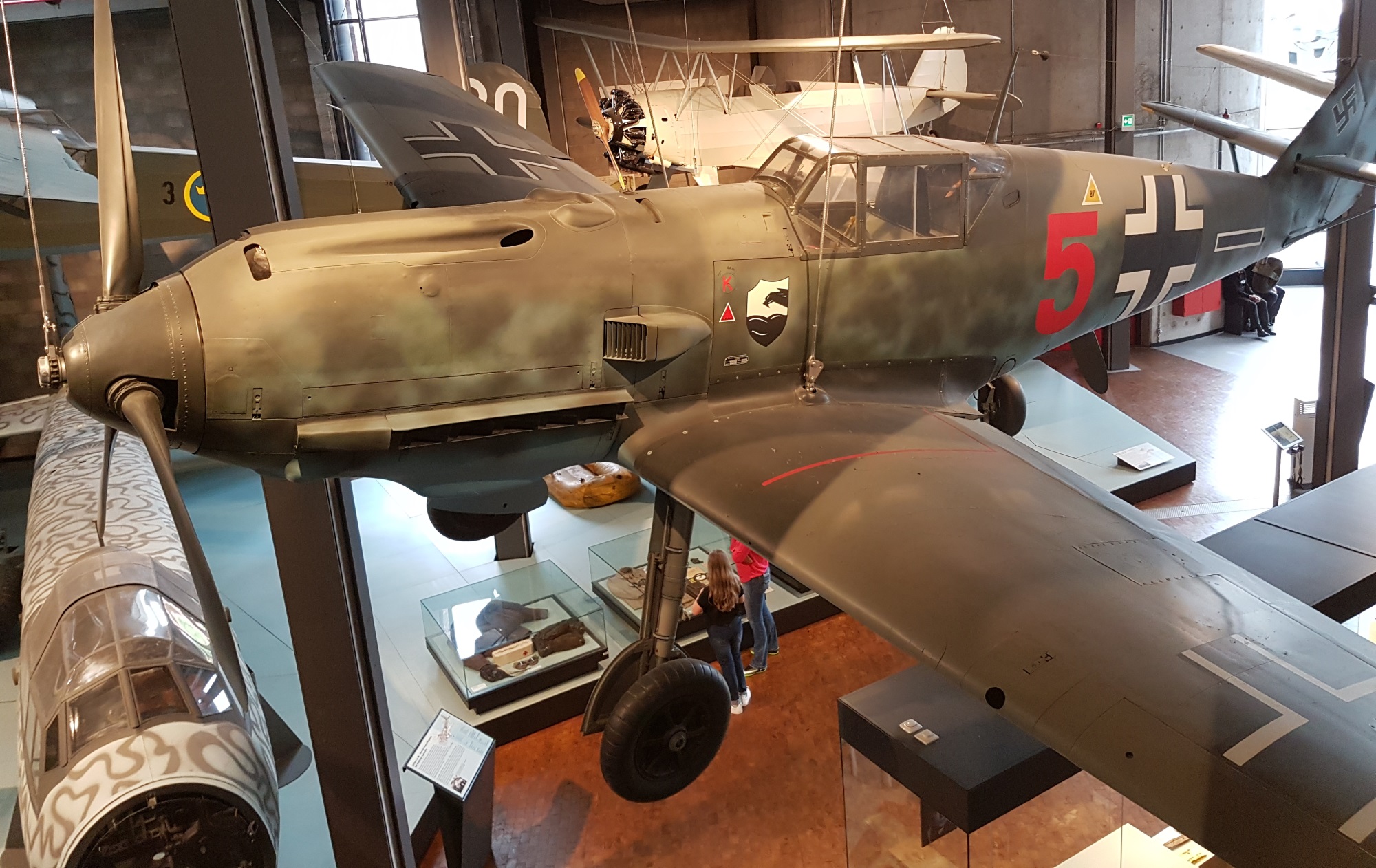
And the Messerschmitt Bf 11o also served with distinction.  Once outclassed as a heavy, long-range fighter, it became an effective night fighter and ground attack aircraft.
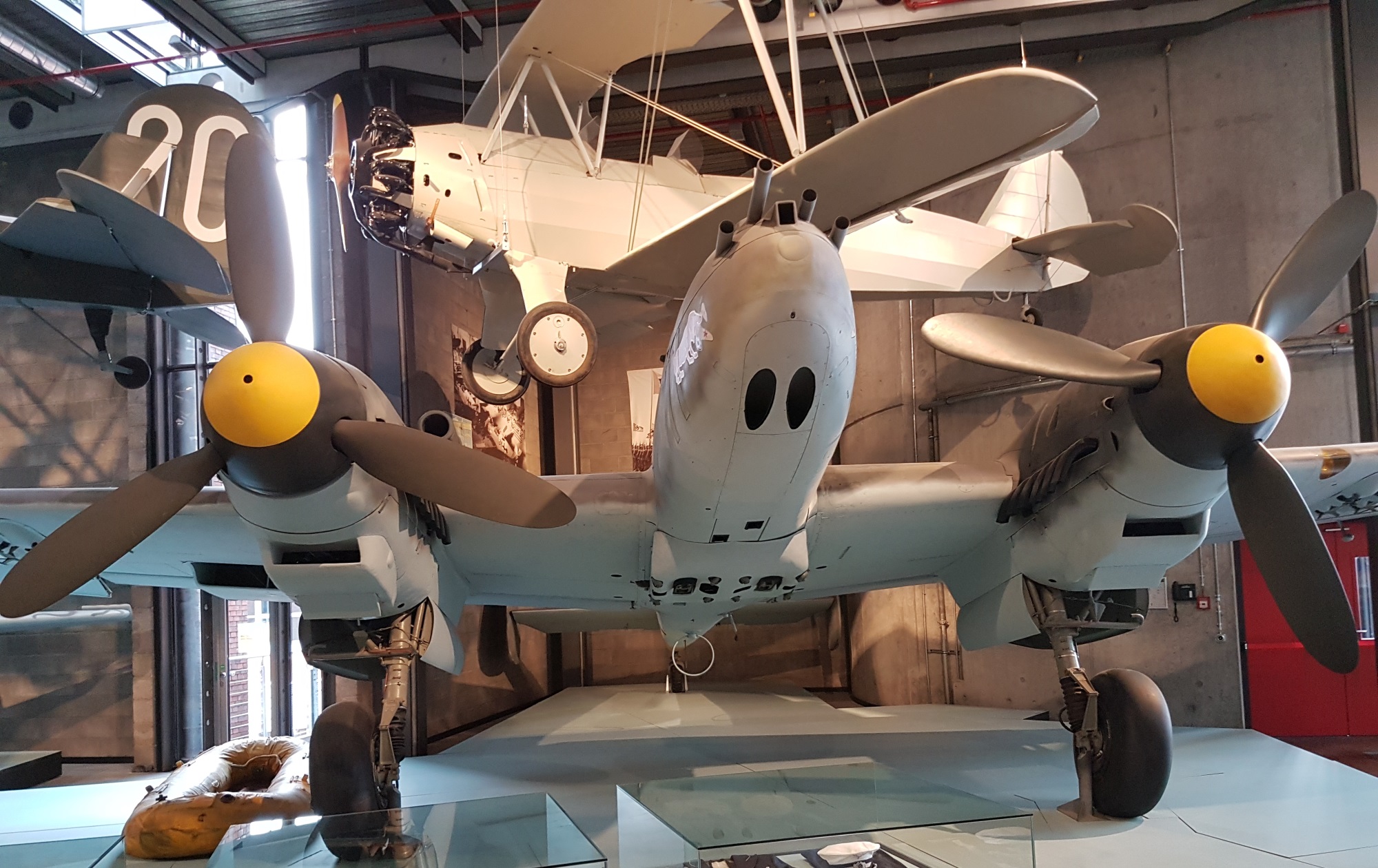
Less well known was the Arado Ar 79, built in the 1930s, and designed as an aerobatic two-seat trainer and touring aircraft.
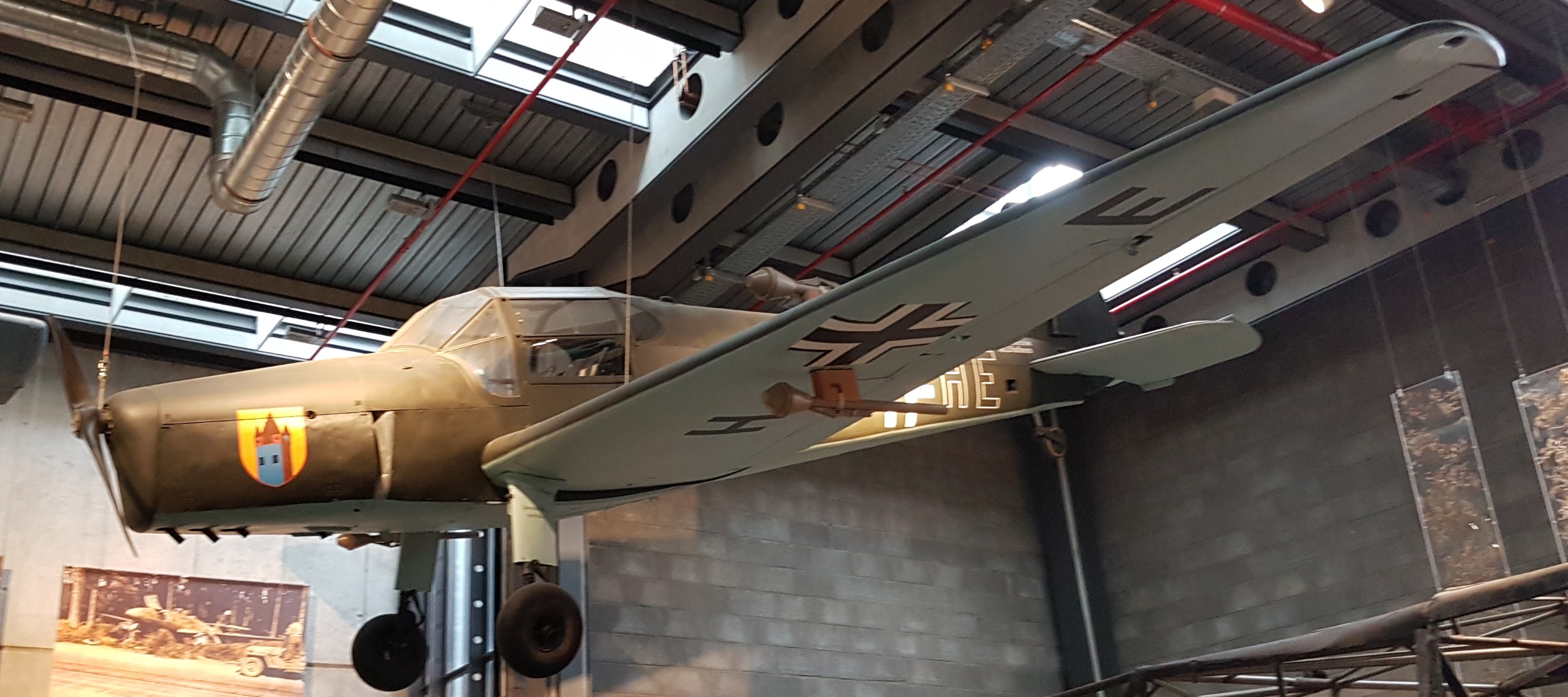
The Fieseler Fi 156 Storch was a small German liaison aircraft built by Fieseler before and during World War II. Production continued in other countries into the 1950s for the private market. It remains famous for its excellent STOL performance, much as the British equivalent, the Westland Lysander.  Like the Lysander, the Storch had a very low landing speed and often appeared to land vertically, or even backwards, in strong winds from directly ahead.
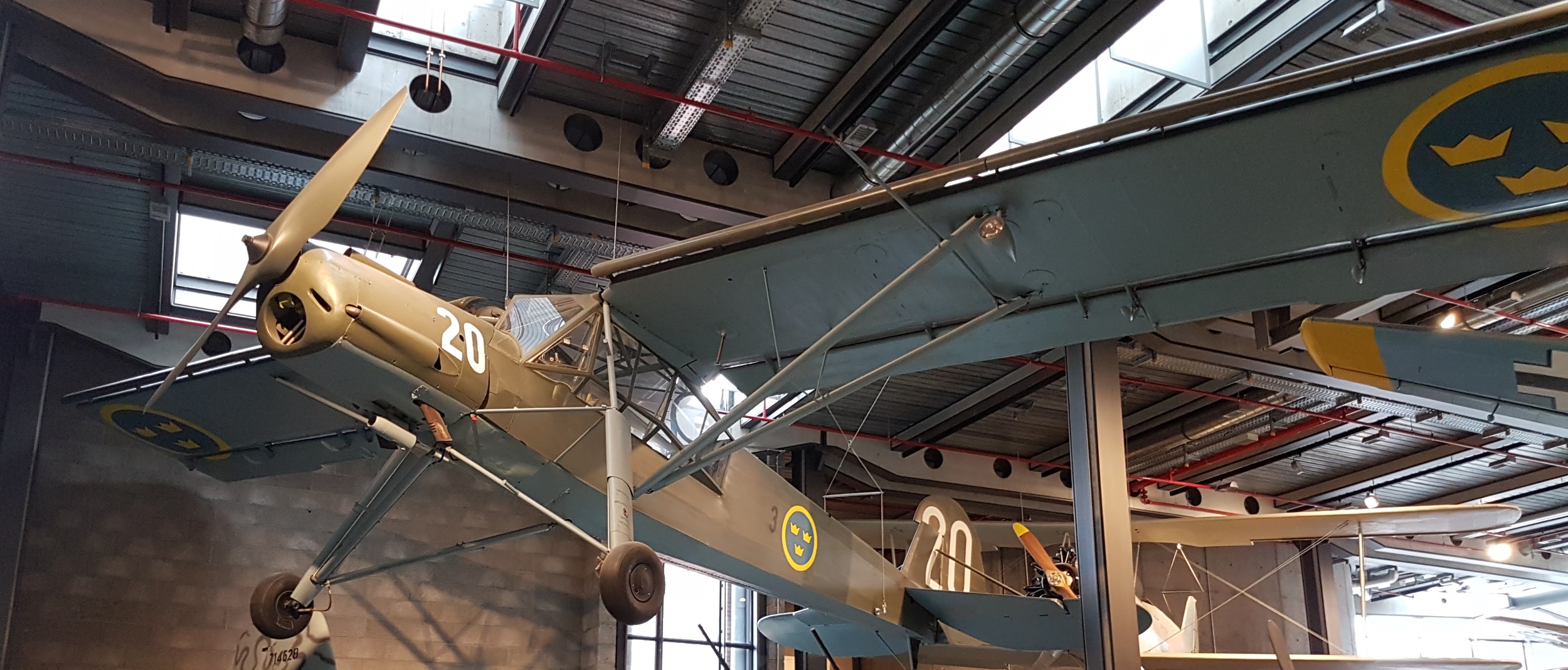
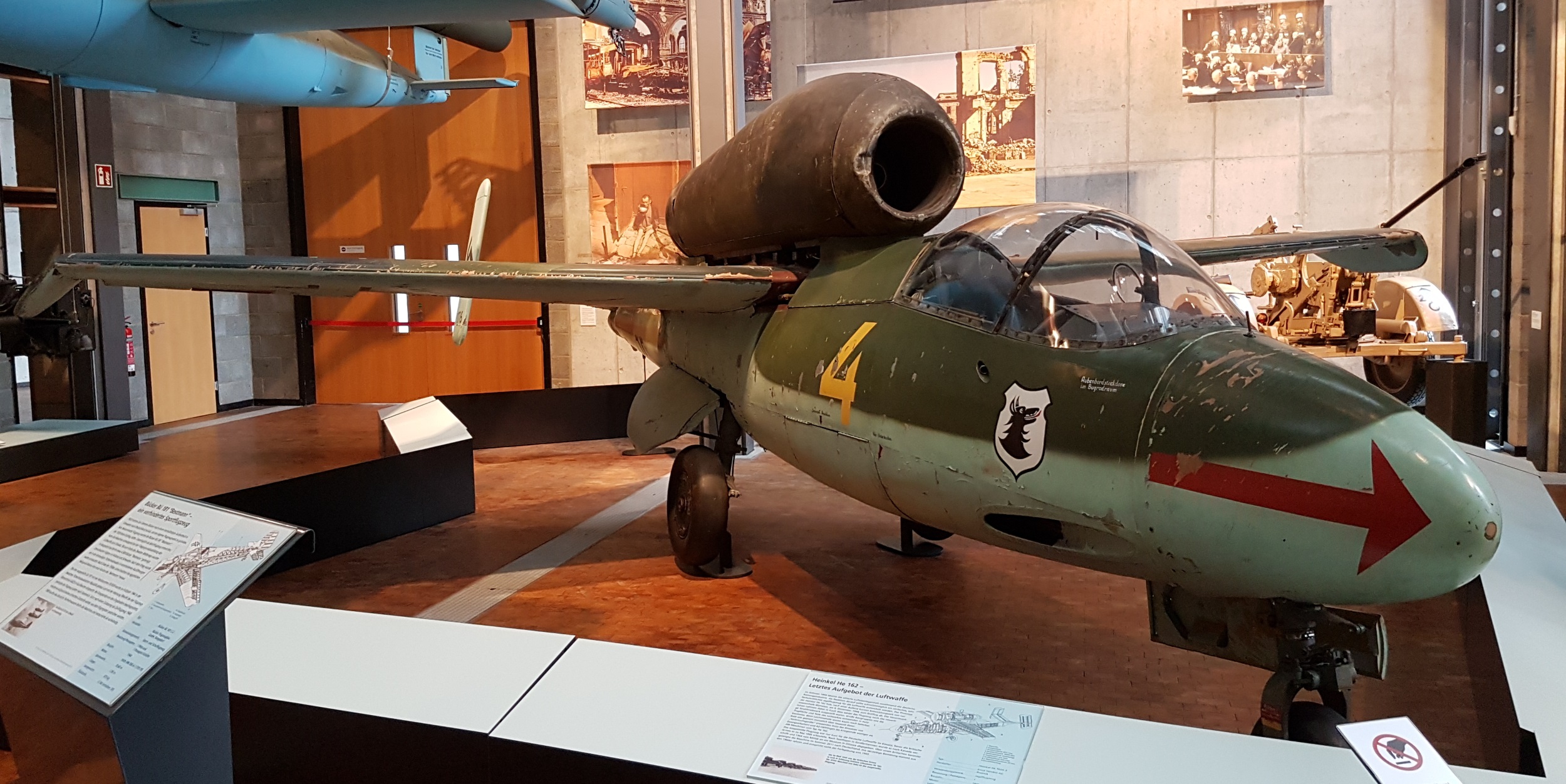
The Heinkel He 162 Volksjäger was a simple, mainly wooden, jet fighter built late in the war.  The design was intrinsically sound; problems came from shortage of materials and poor standards of construction.  A V1 flying bomb is displayed to its left.
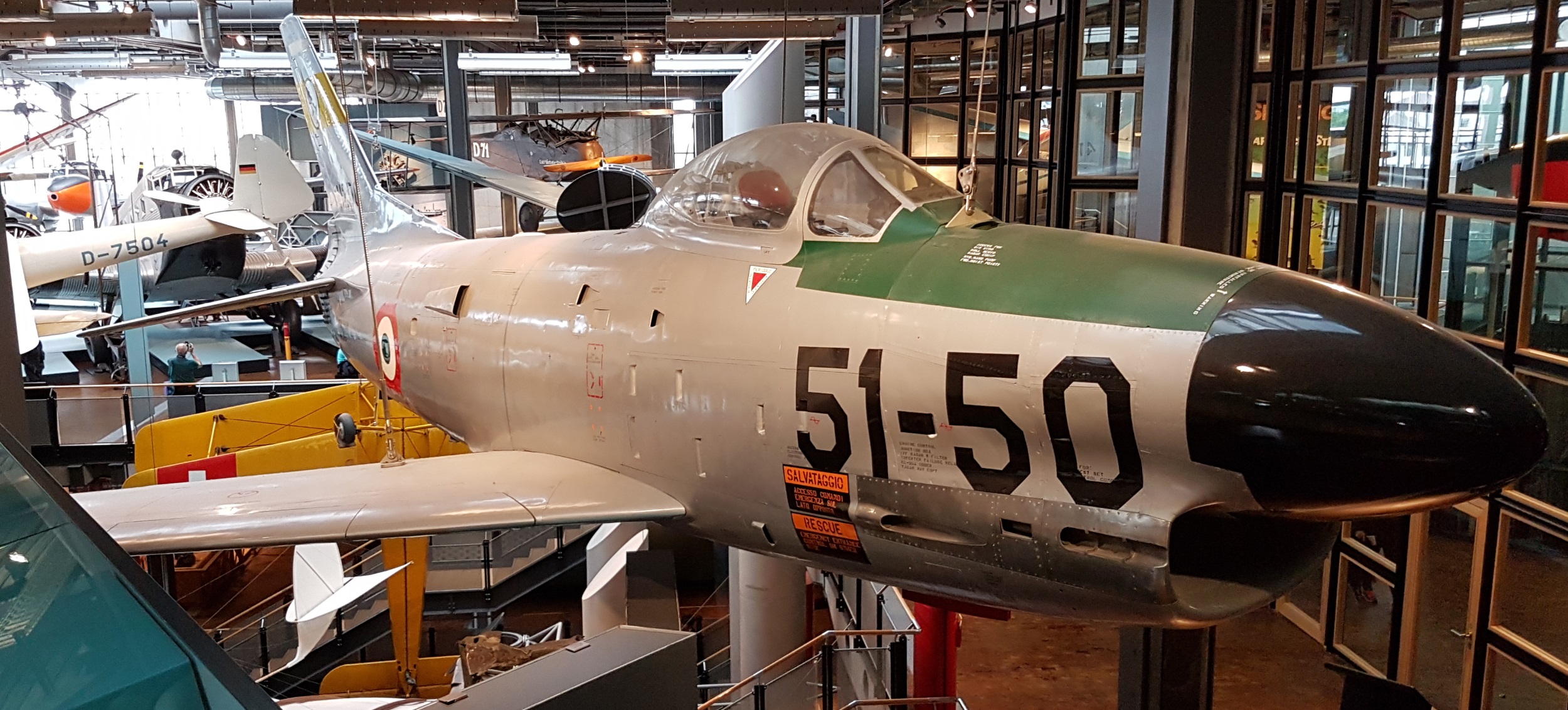
Finally, two more modern, Cold War jets, a F-86 Sabre….
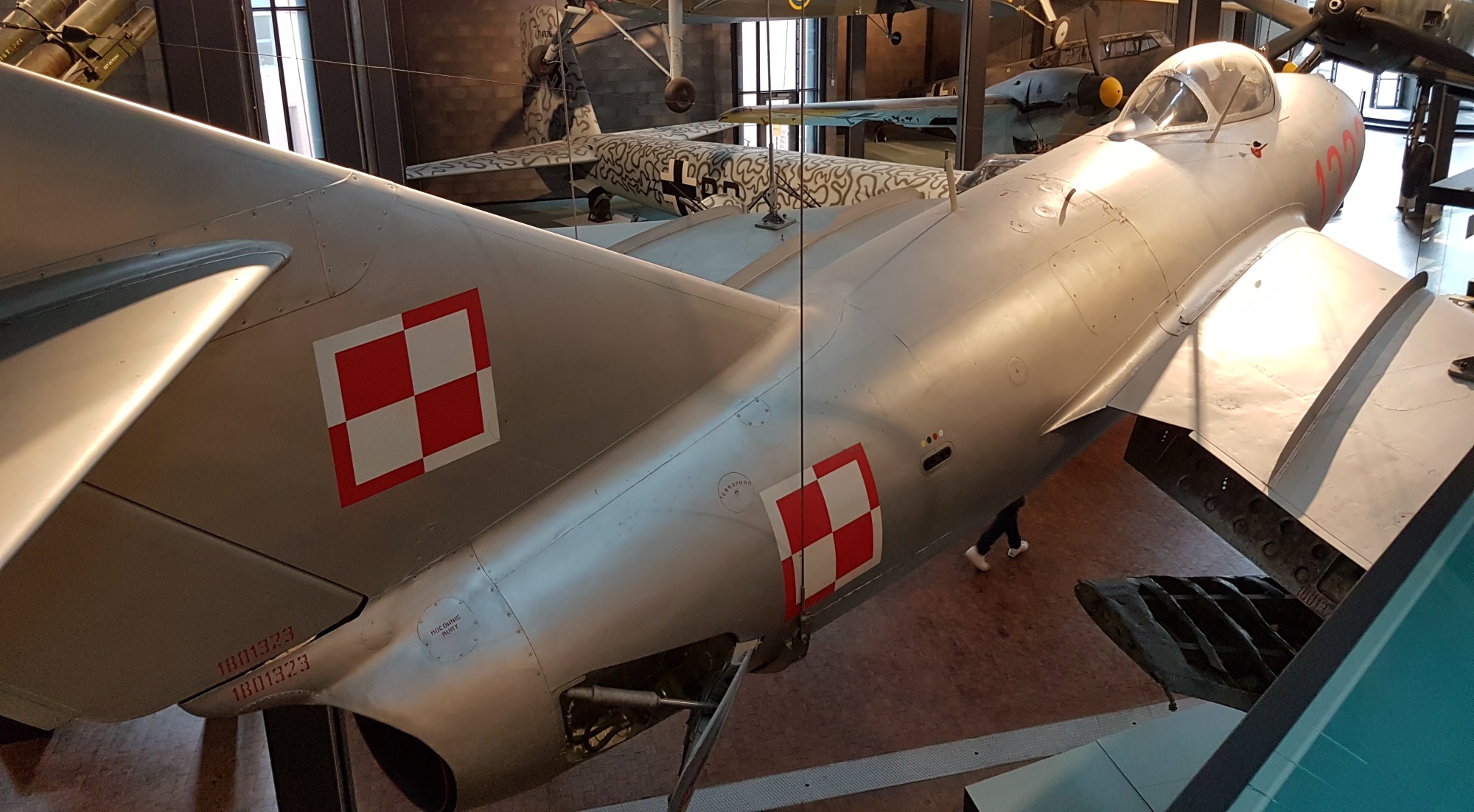
And a Mig 15.  These two jets met over Korea, and it is thought that they were equally matched – any advantages came from the pilot, rather than the plane.
Posted in Inspiration, Out and about, Prototype | Tagged , , , | Leave a comment

Back to Berlin – again – 2

So to the railway exhibits proper.  A lot of them were packed into the roundhouses, and were difficult to photograph well.  But I’ve included a selection of shots below.  We start with one of the first locomotives to run in Germany – British built, of course!

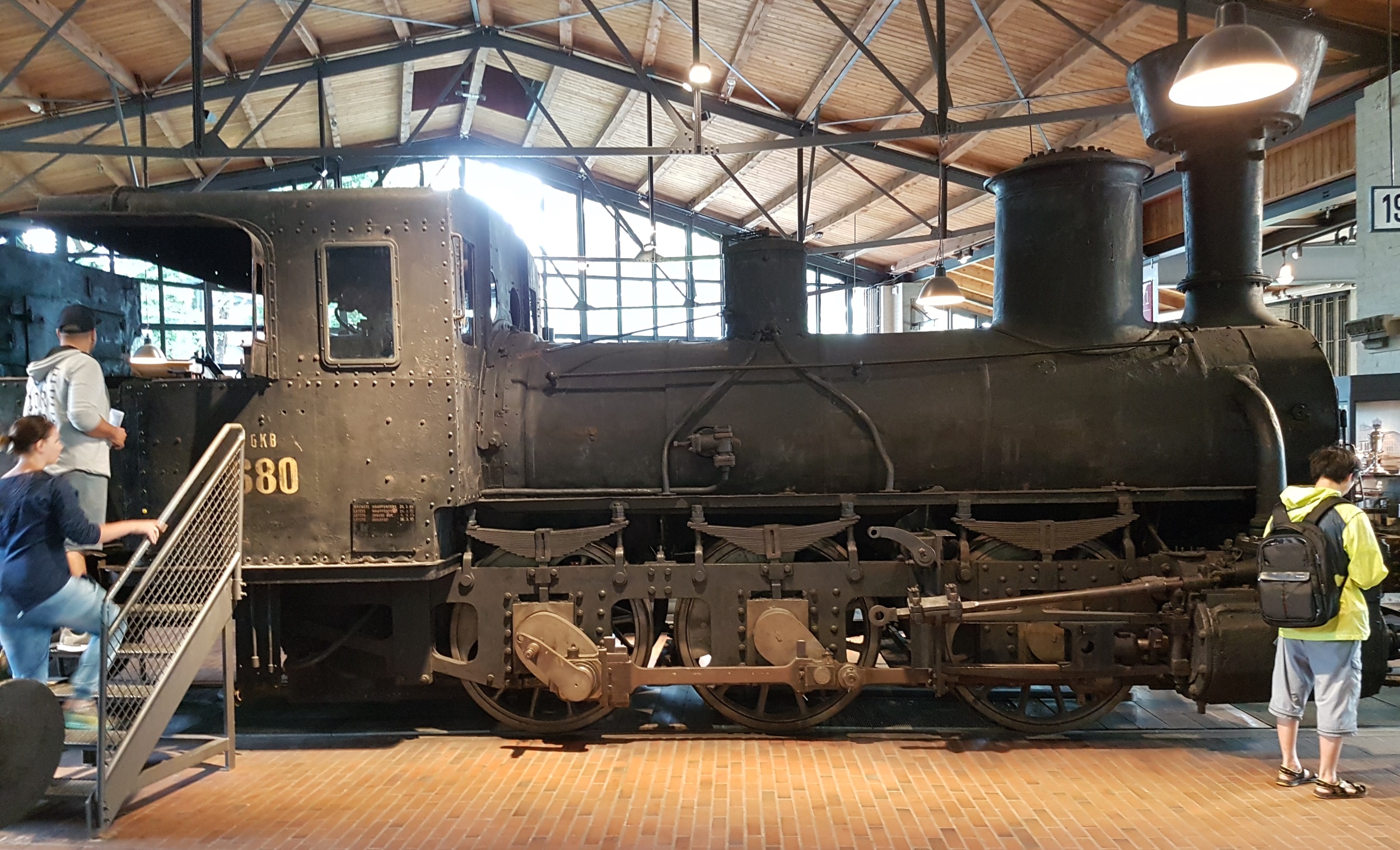
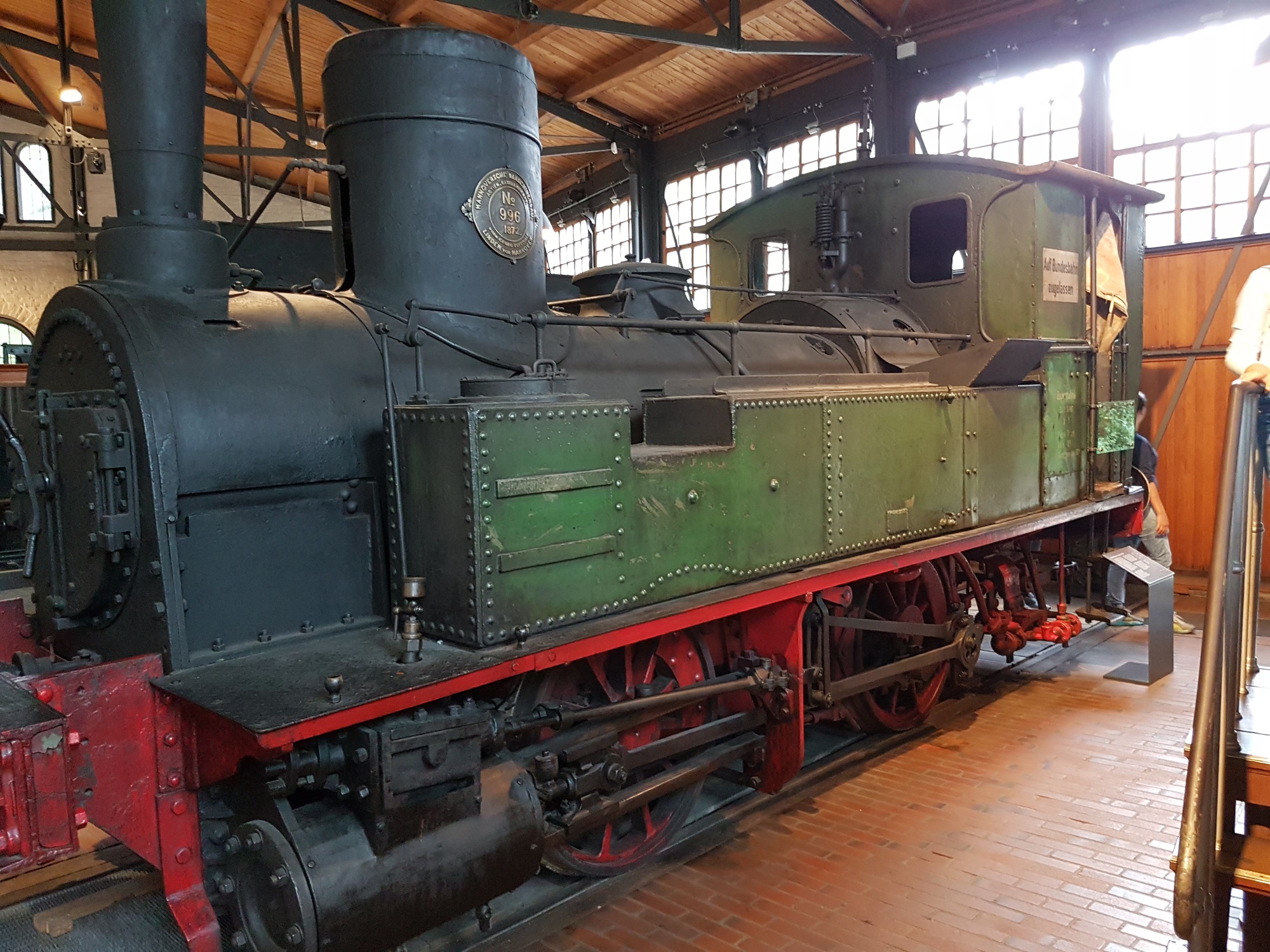
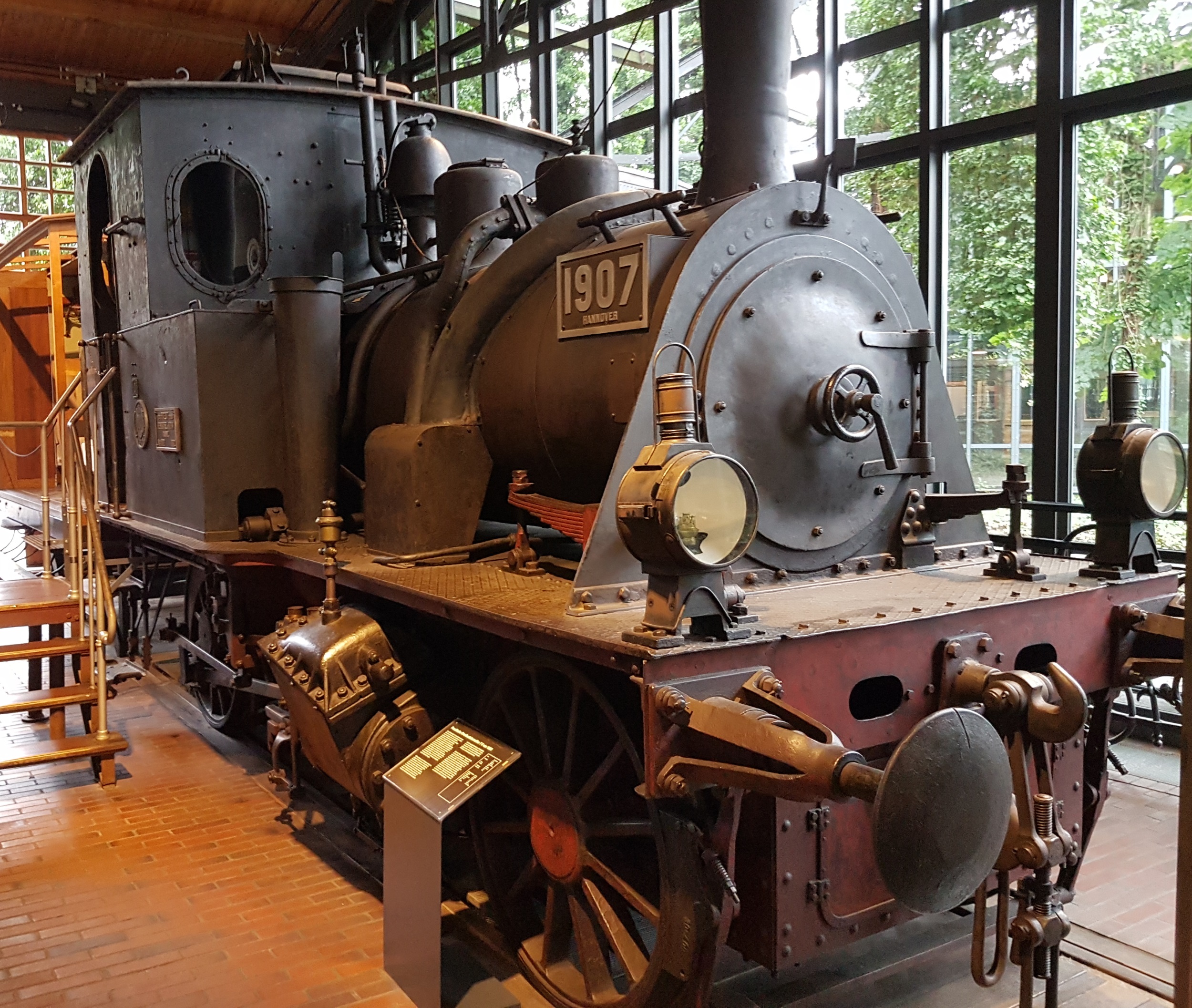
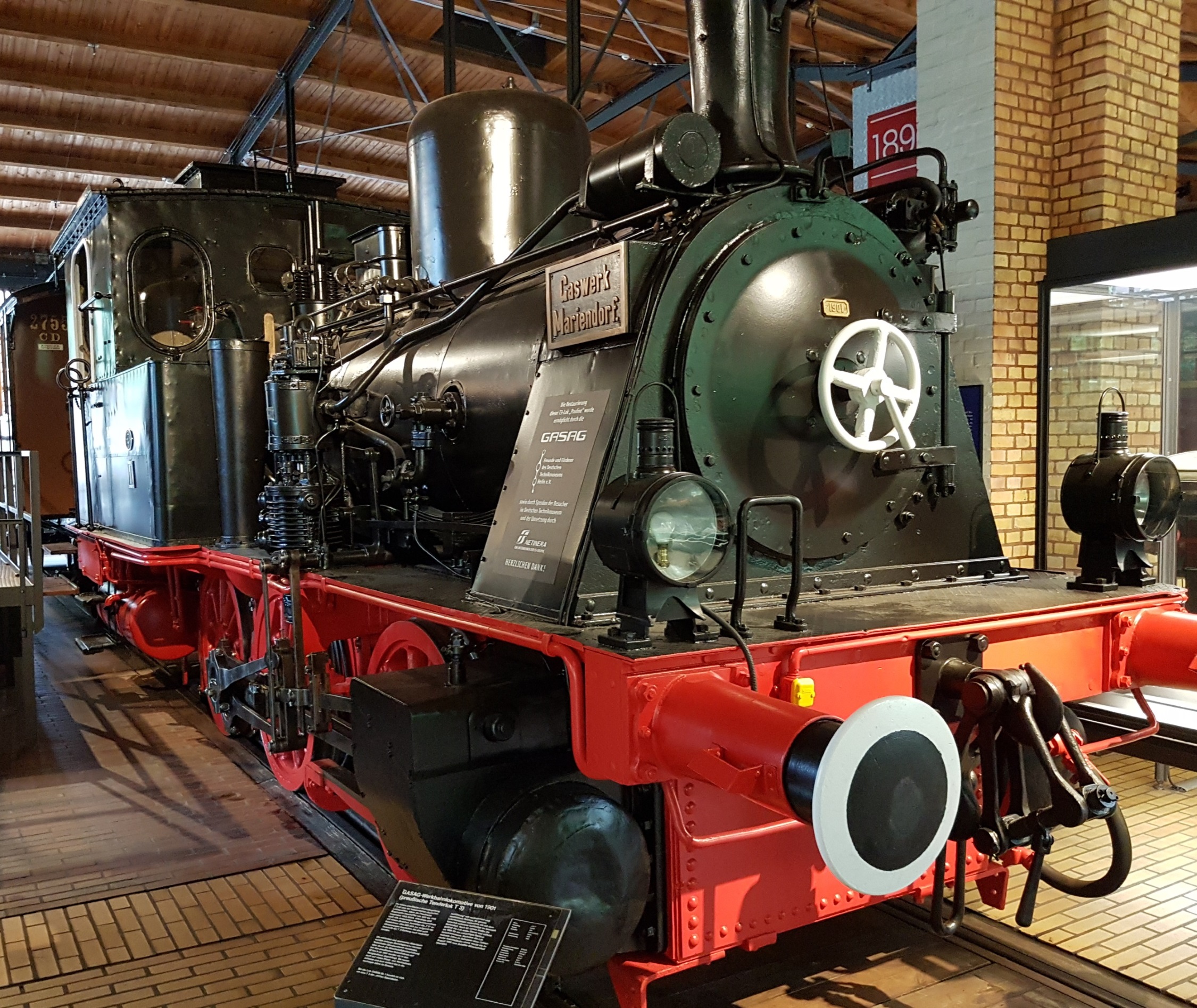
There was a good collection of small late-19th and early-20th century locomotives, most of them being small shunting locos.  But some very attractive designs.

And here we have the latest rolling stock for South-West Trains…..

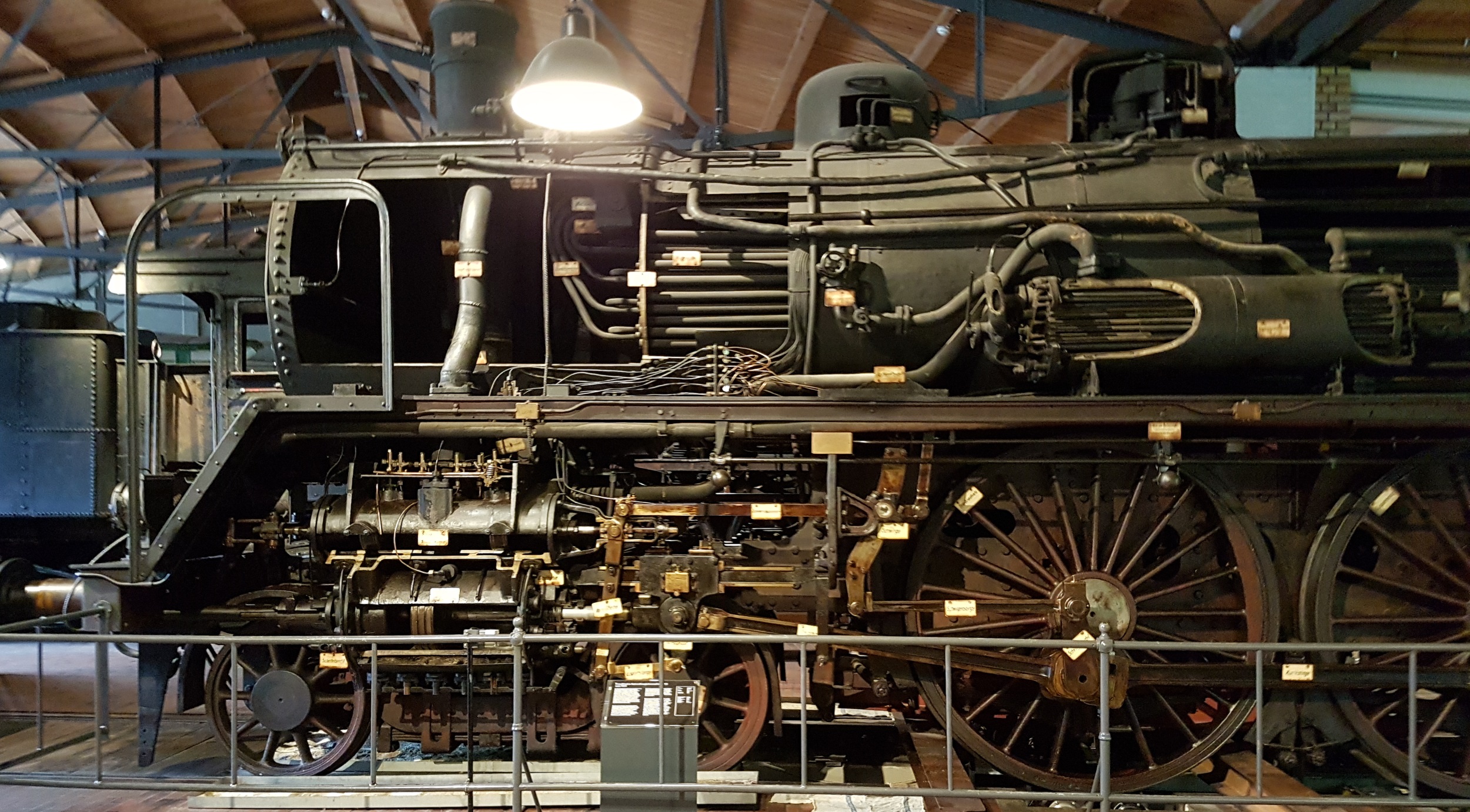
Moving onto larger, more modern locomotives, there was an excellent cut-away Pacific…

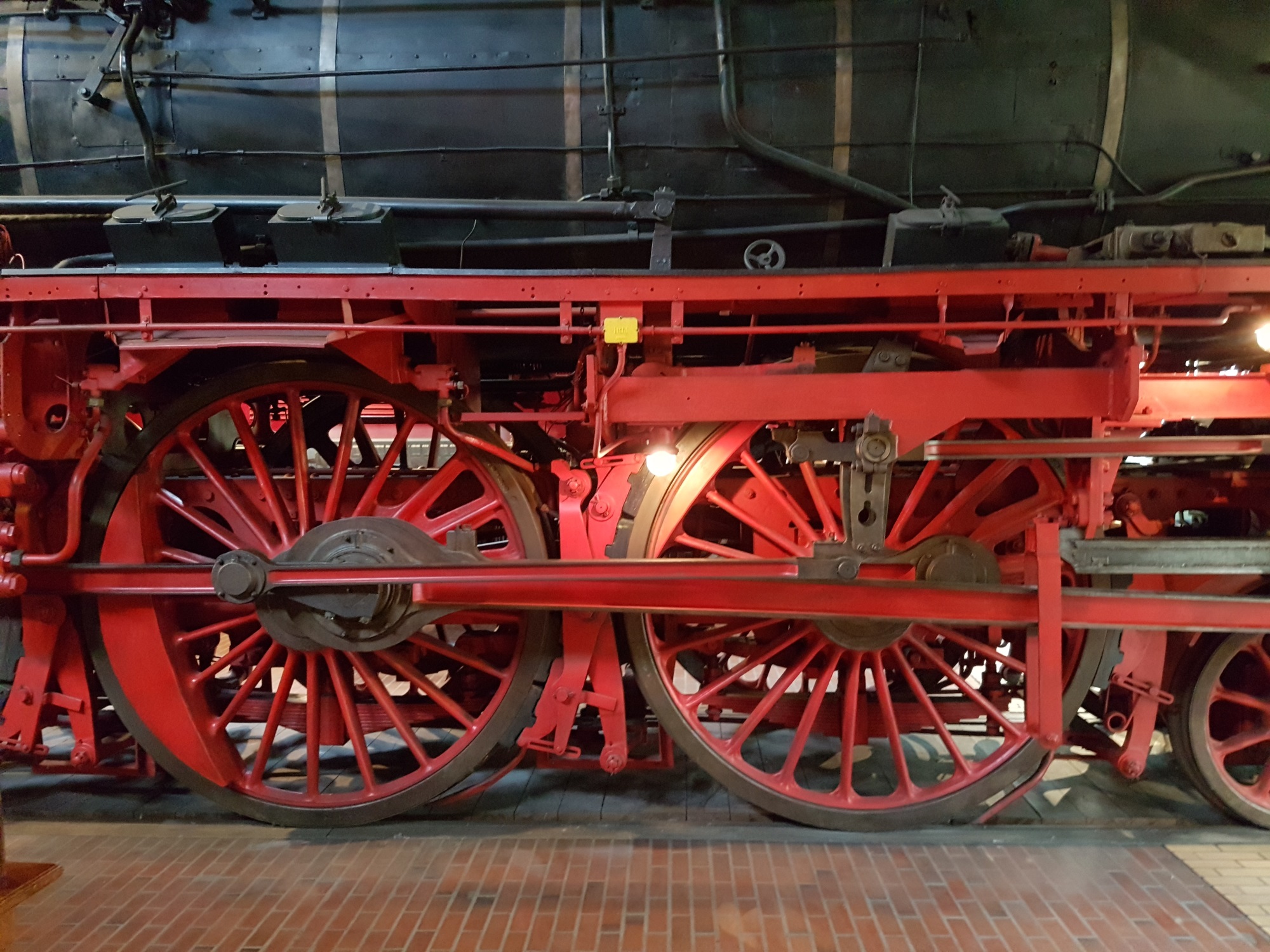
And another Pacific showing the classic black with red motion DB livery.  There was also the ubiquitous  2-10-0 there, but it was badly placed for photos.

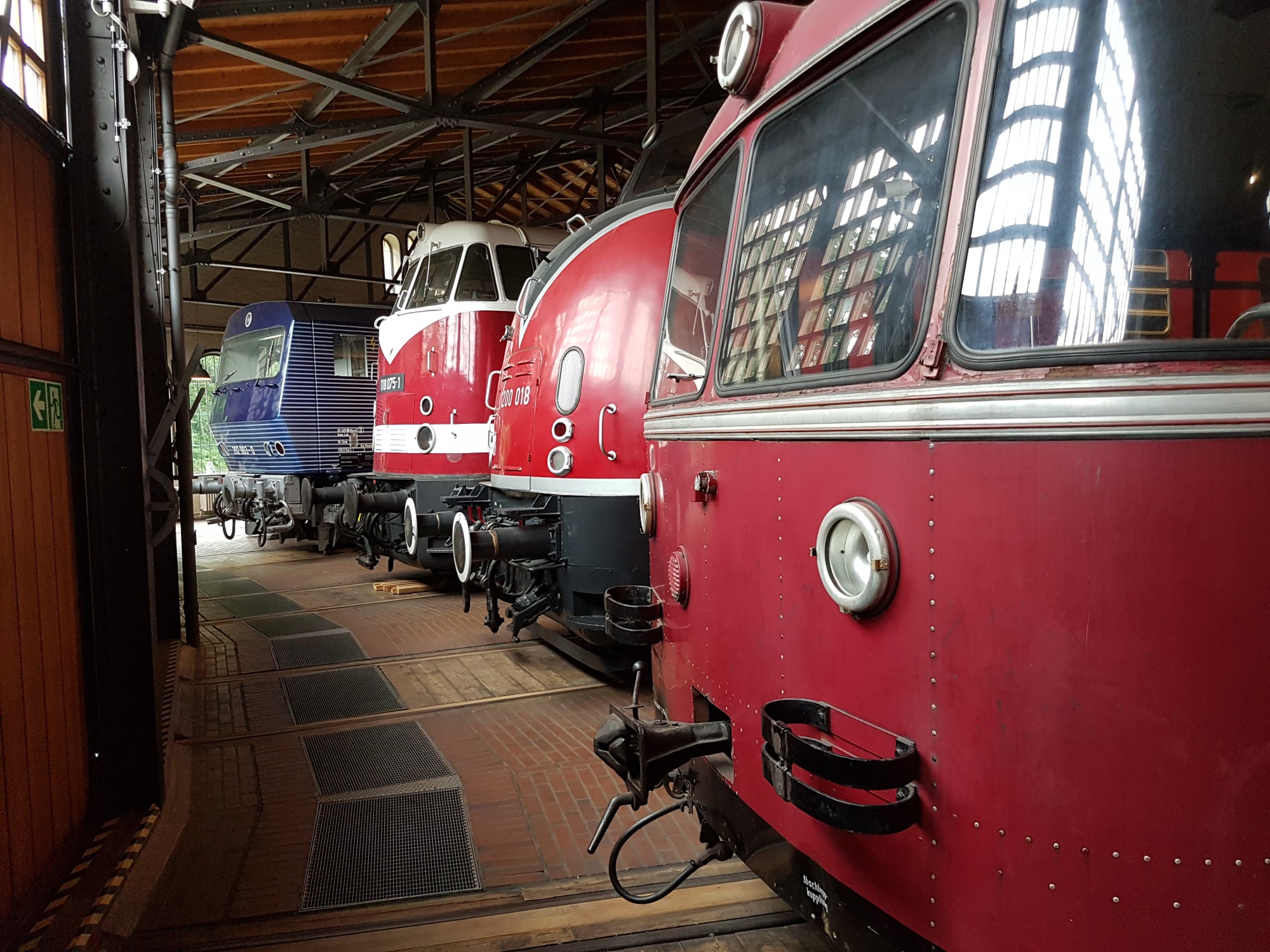
A diesel line-up, with a railcar and a V200 in the foreground…..

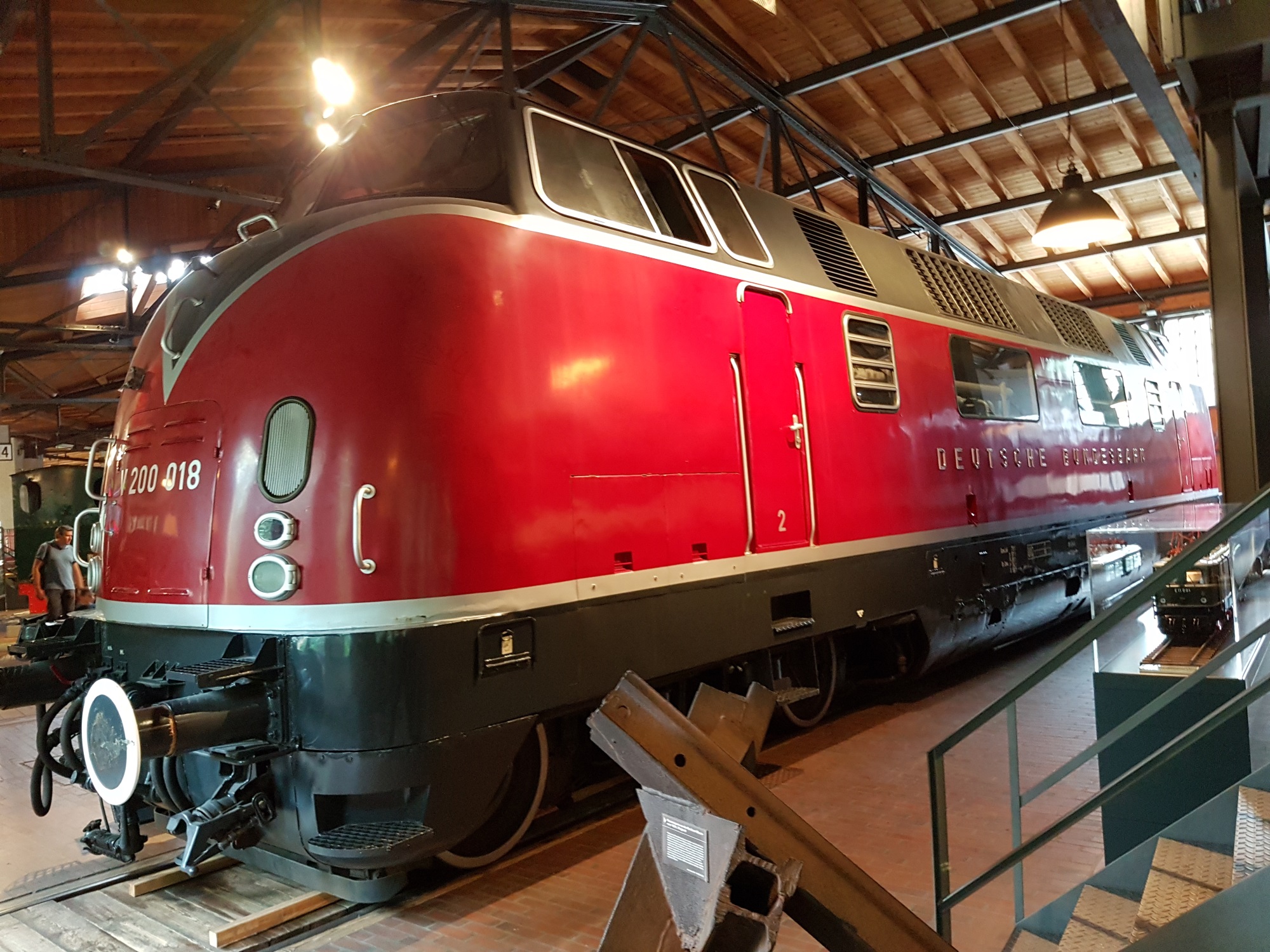
The V200 was, of course, the basis of the BR diesel-hydraulic ‘Warship’ class.  There is a distinct family likeness in the styling.

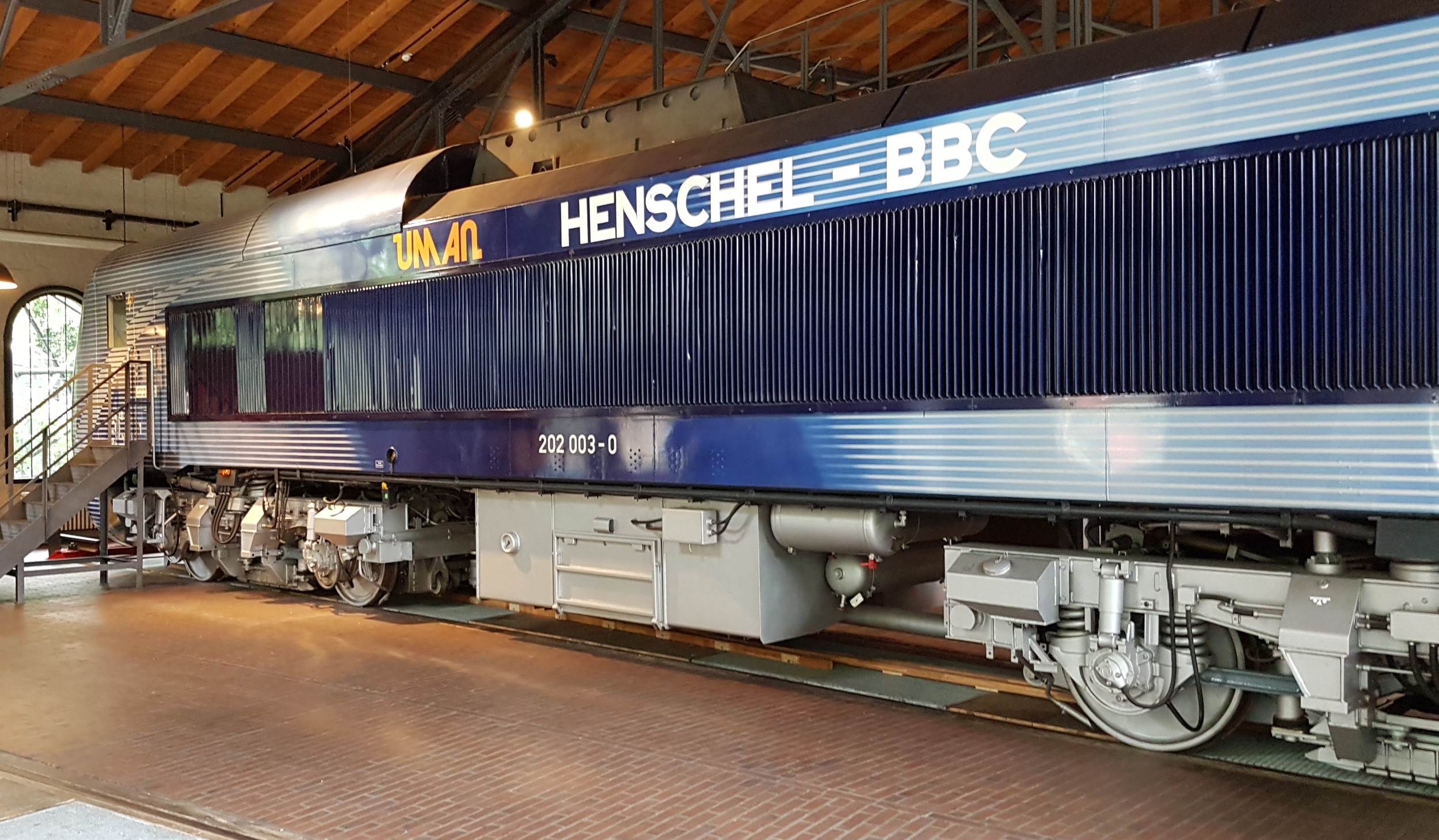
Wikipedia tells me that this is an experimental DB Class 202, representing a major milestone in the German locomotive development, since in these locomotives three phase asynchronous electric traction was first applied in a mainline diesel-electric locomotive.

All I know is that the livery made my eyes go funny….

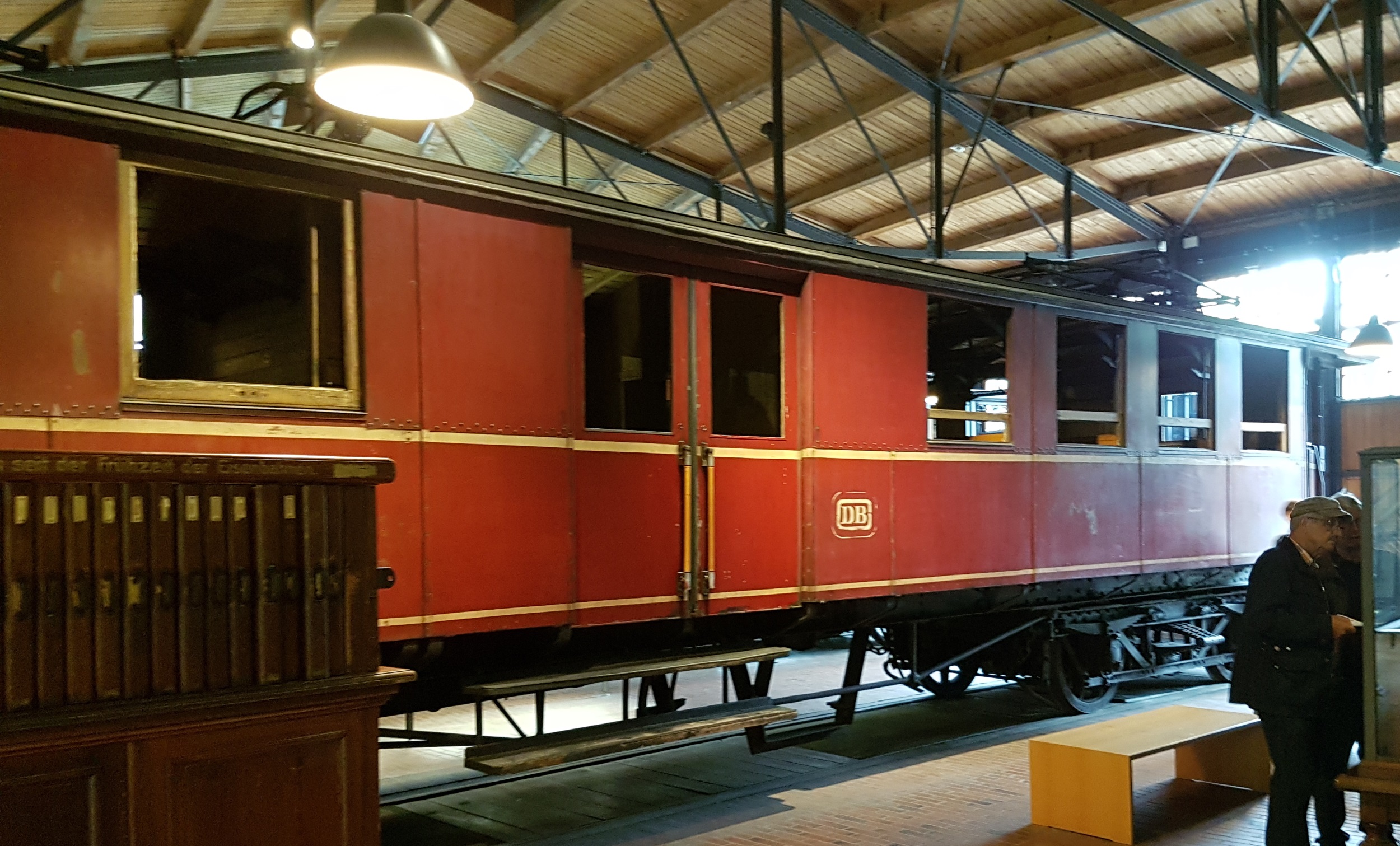
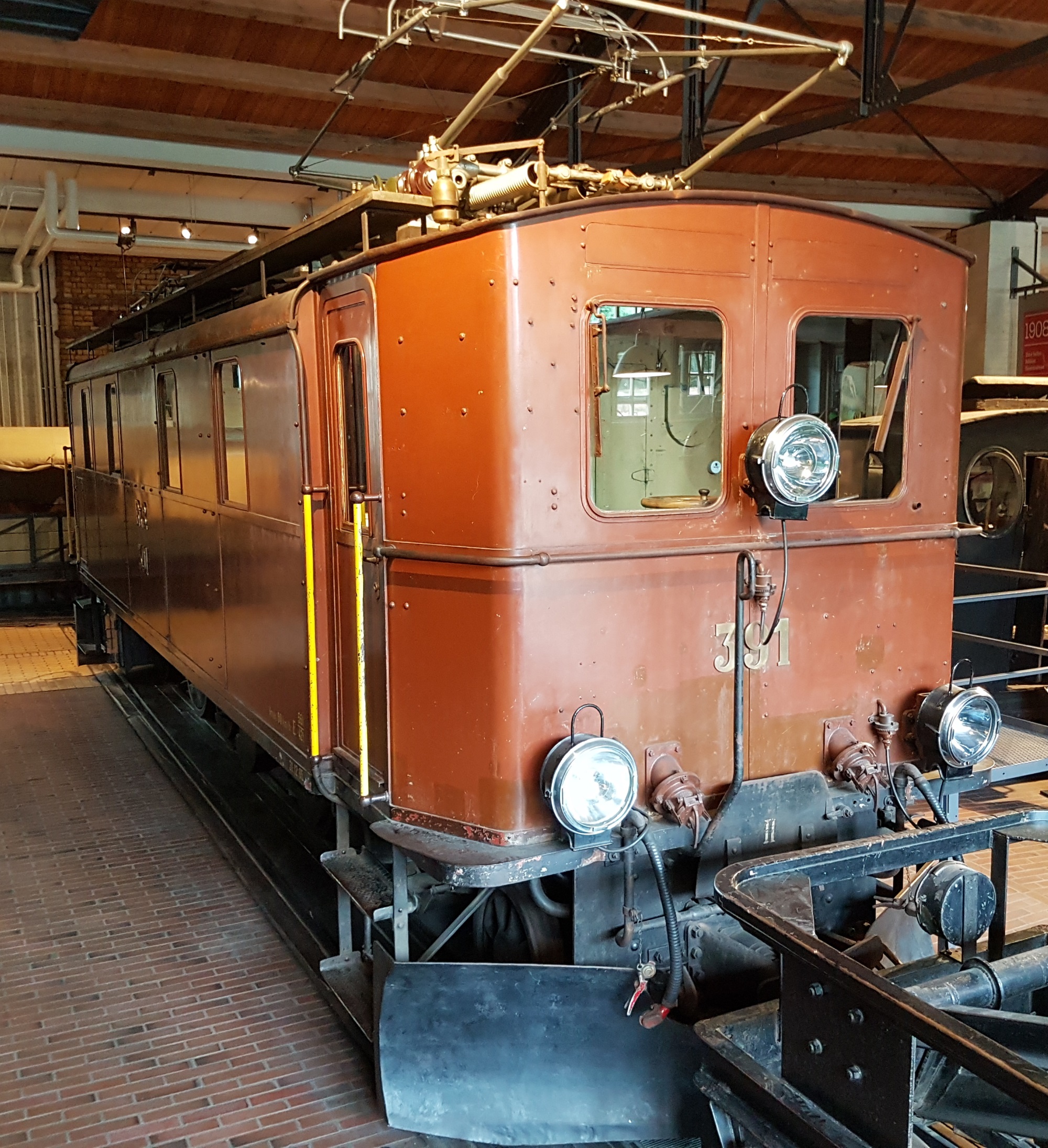
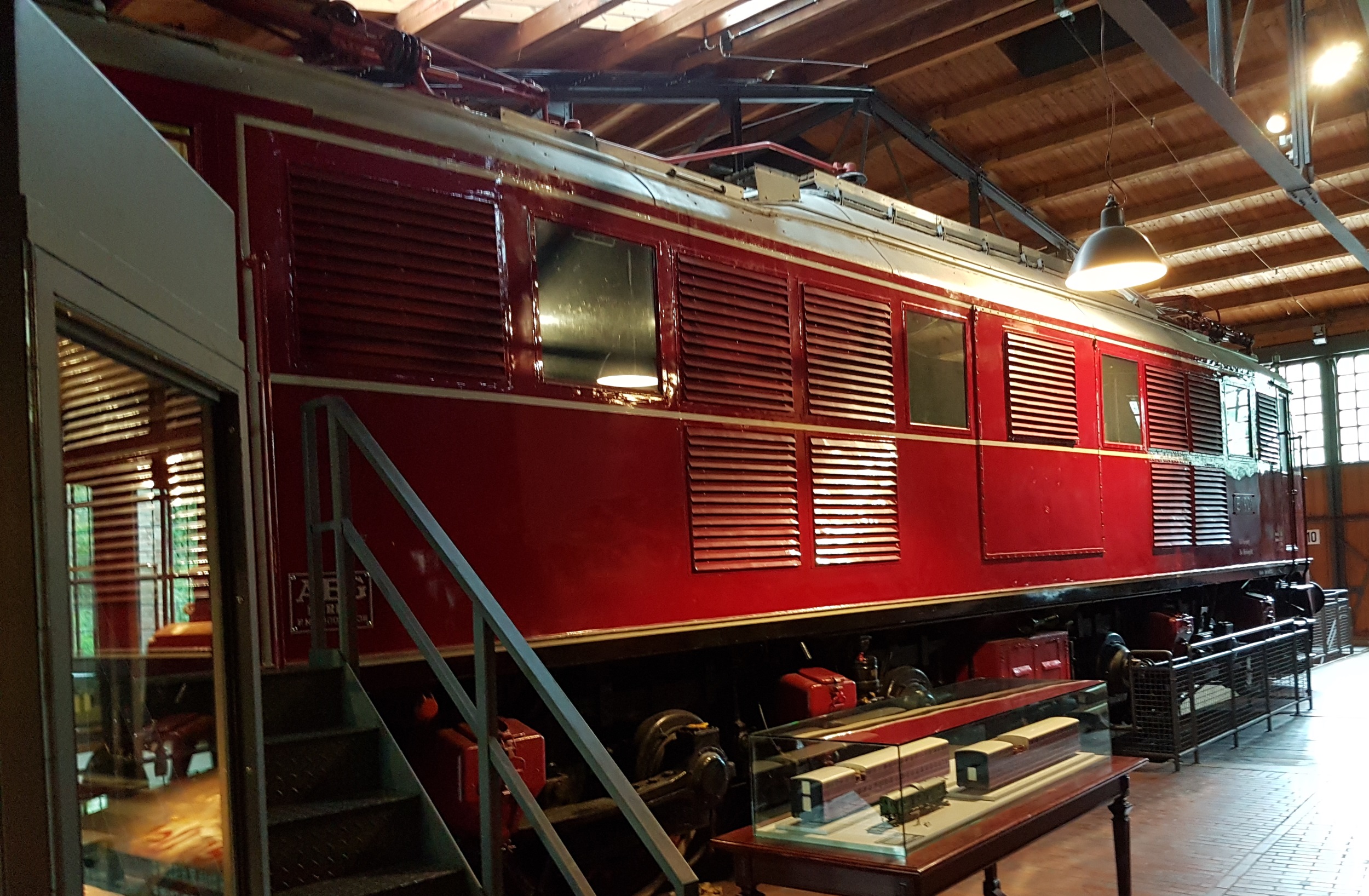
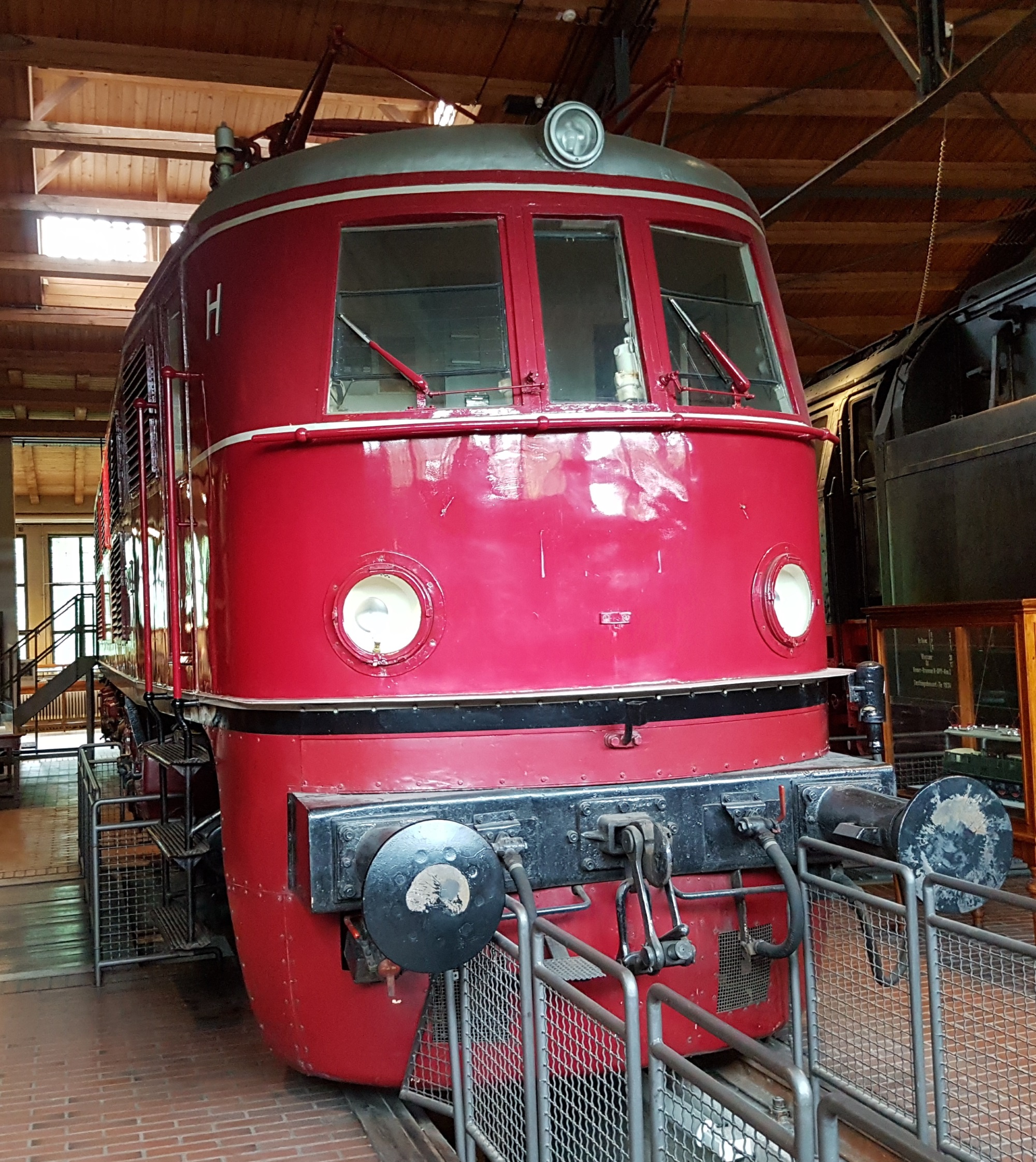
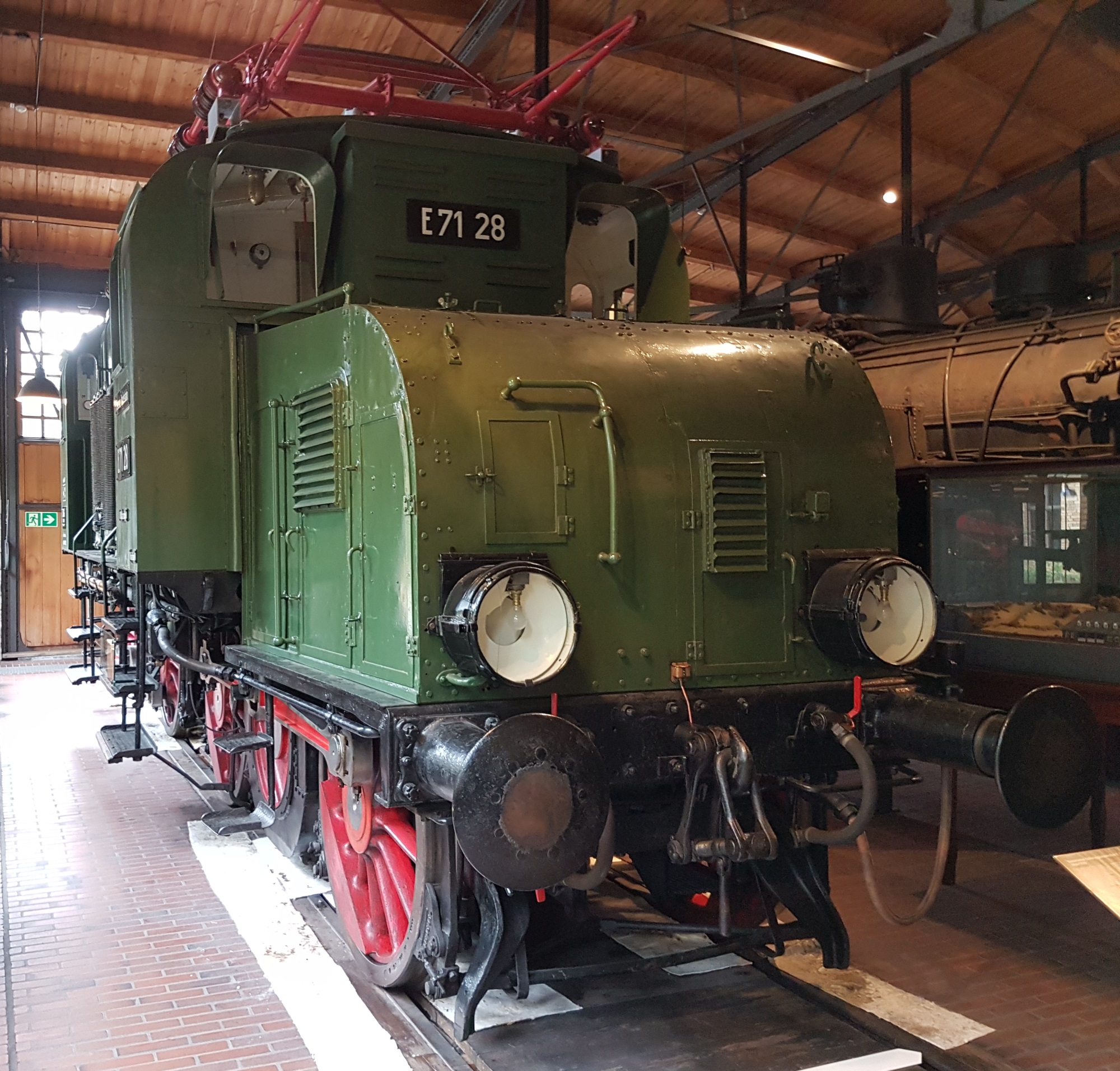
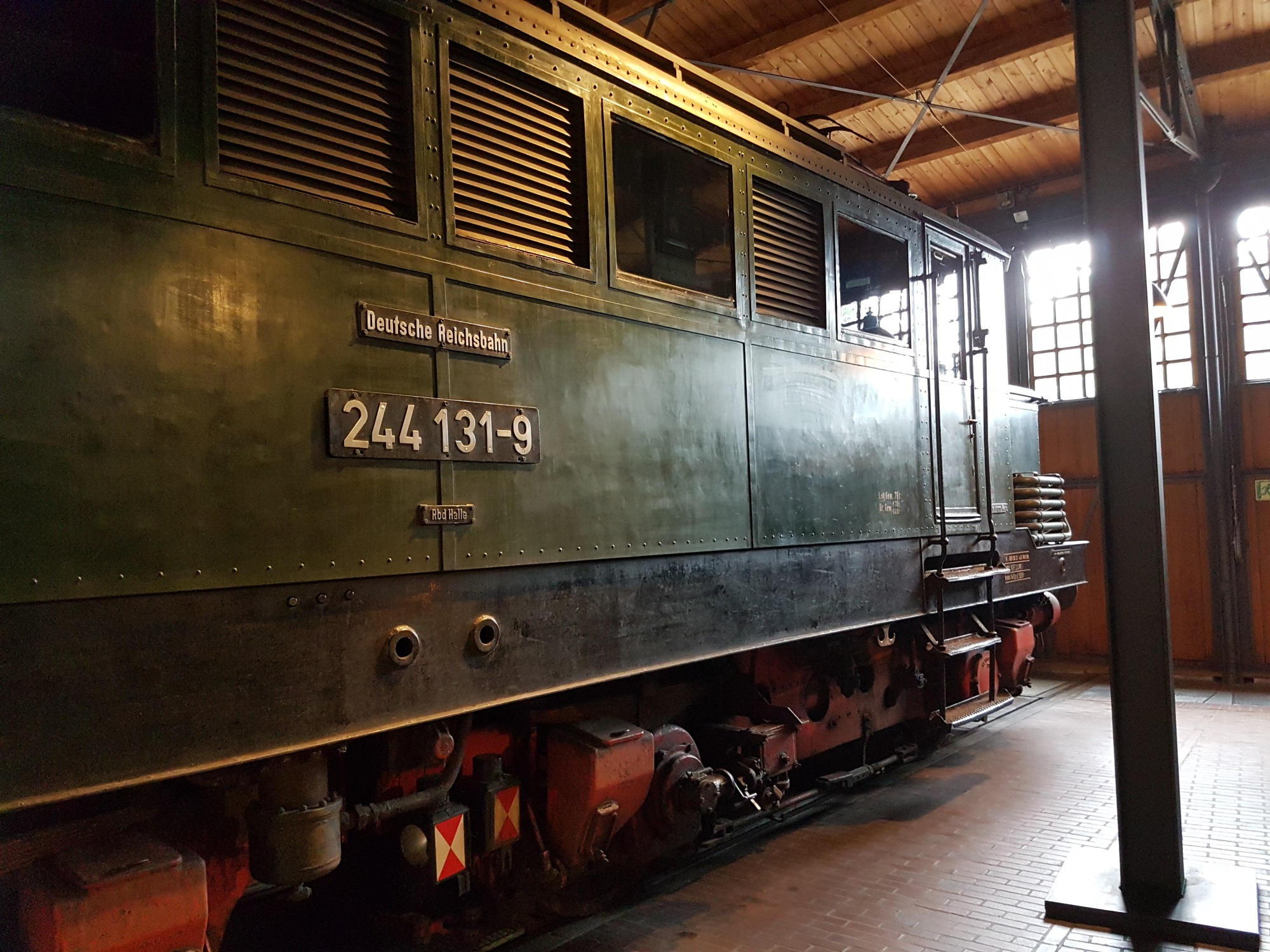
The rest of my photos are of vintage electric locomotives.  I do very much like the early EMU in the first photograph.

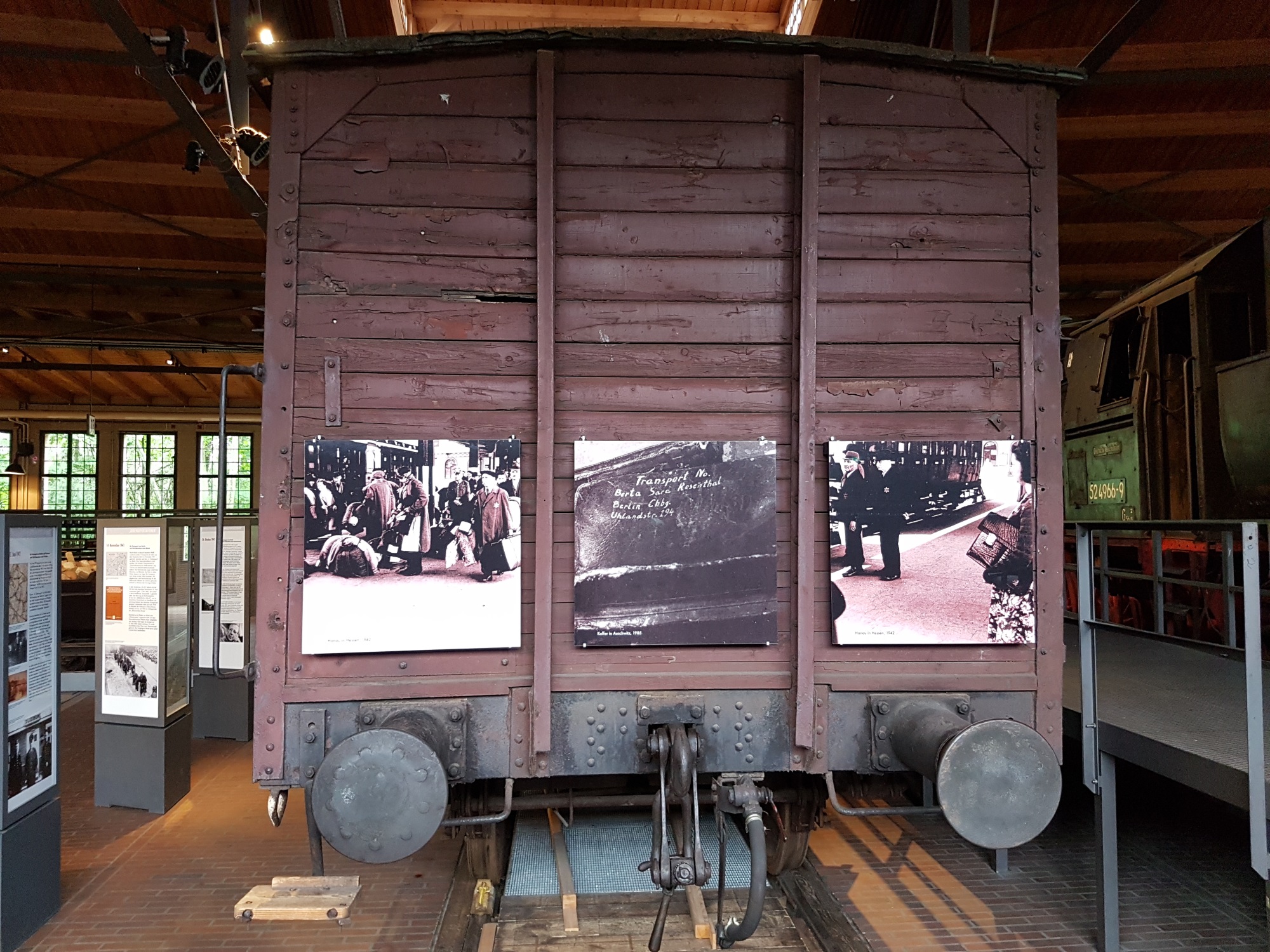
Finally, today, I do admire the openness of the Germans about the Holocaust.  The wagon below, typical of those used to transport the Jewish people – and others – to the concentration camps was exhibited with a full set of boards describing what had happened.

Posted in Inspiration, Out and about, Prototype | Tagged , , , | Leave a comment

Back to Berlin – again – 1

At the end of June Maxine and I headed off for our annual visit to Berlin to see our eldest.  For once, I got the travel arrangements right.  Berlin was hit by torrential rain for much of the day, and the U-bahn was closed in places, as shown briefly below.

As we were arriving late, I pre-booked a car into town.  Amazingly, EasyJet arrived in Berlin on time (many flights were running late that evening) and having run from airport terminal to car in the downpour, we were whisked into town in comfort.  The weather progressively improved over the weekend, drying up on the Monday in time to sit on a bench in the sun outside the airport, whilst waiting for the return flight.

On the Friday, I had romantically suggested to Maxine that we celebrate our 38th wedding anniversary with a trip to the Berlin Technology Museum (and the trains.)  Perhaps one reason we are still together is that she agreed….

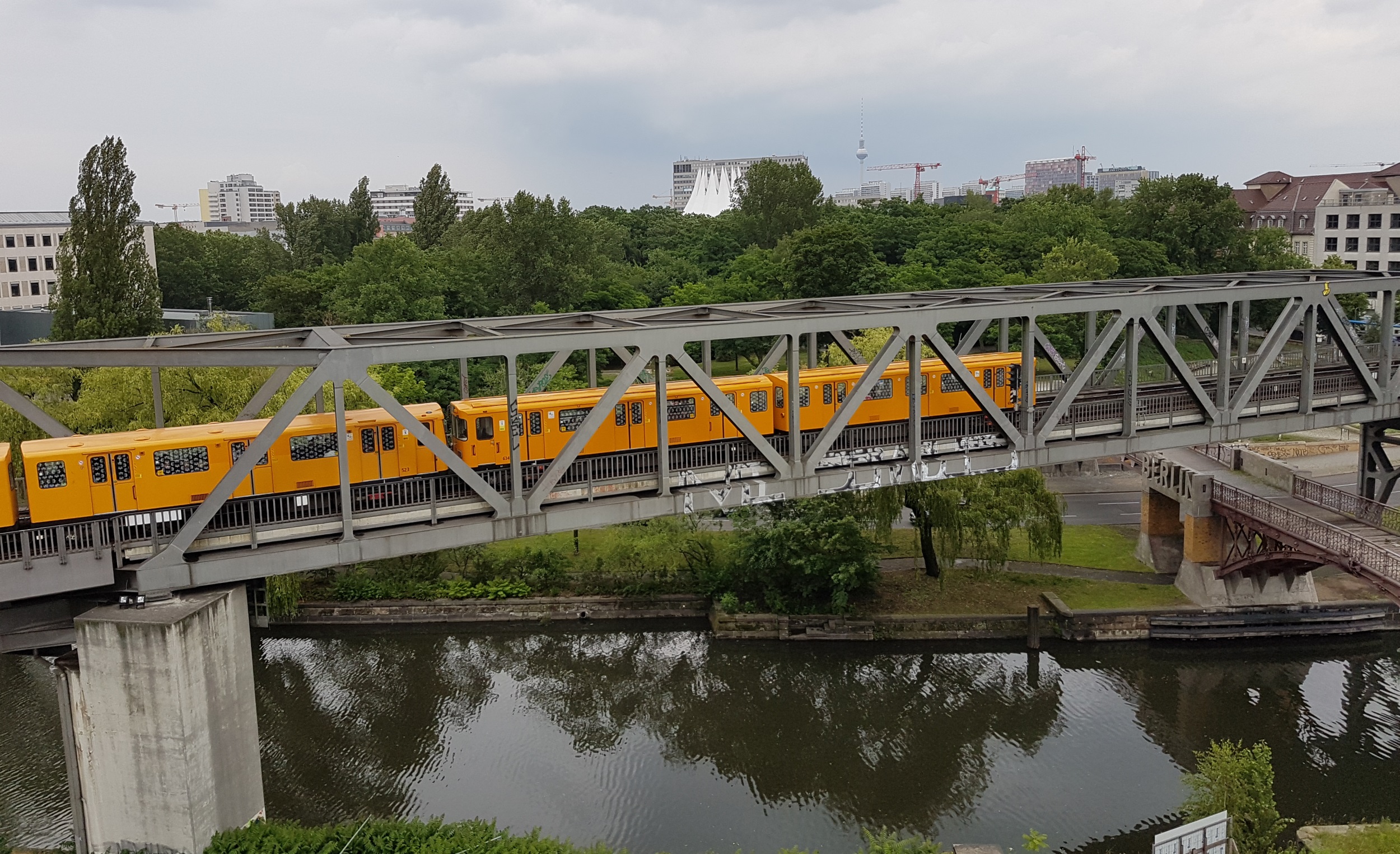
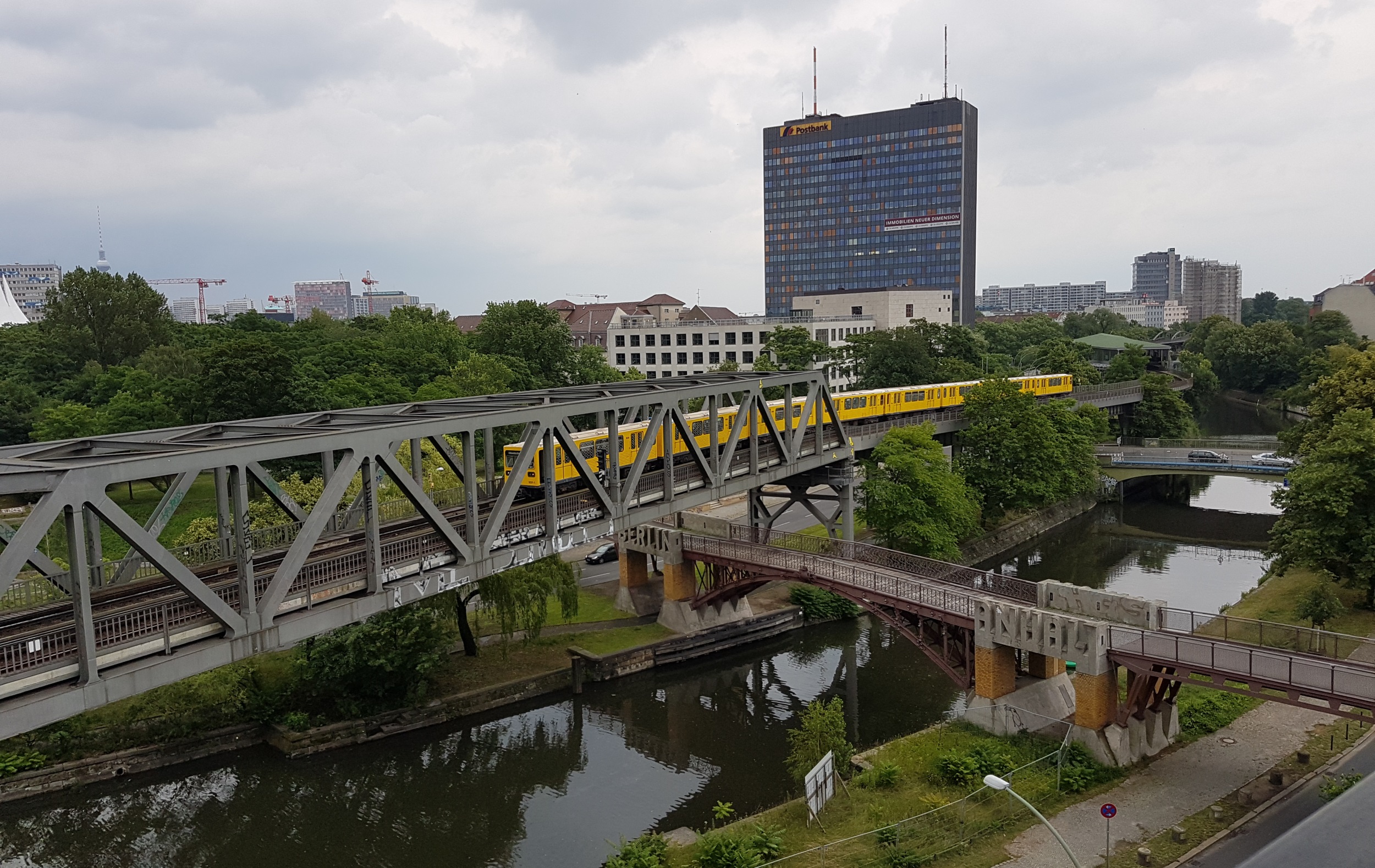
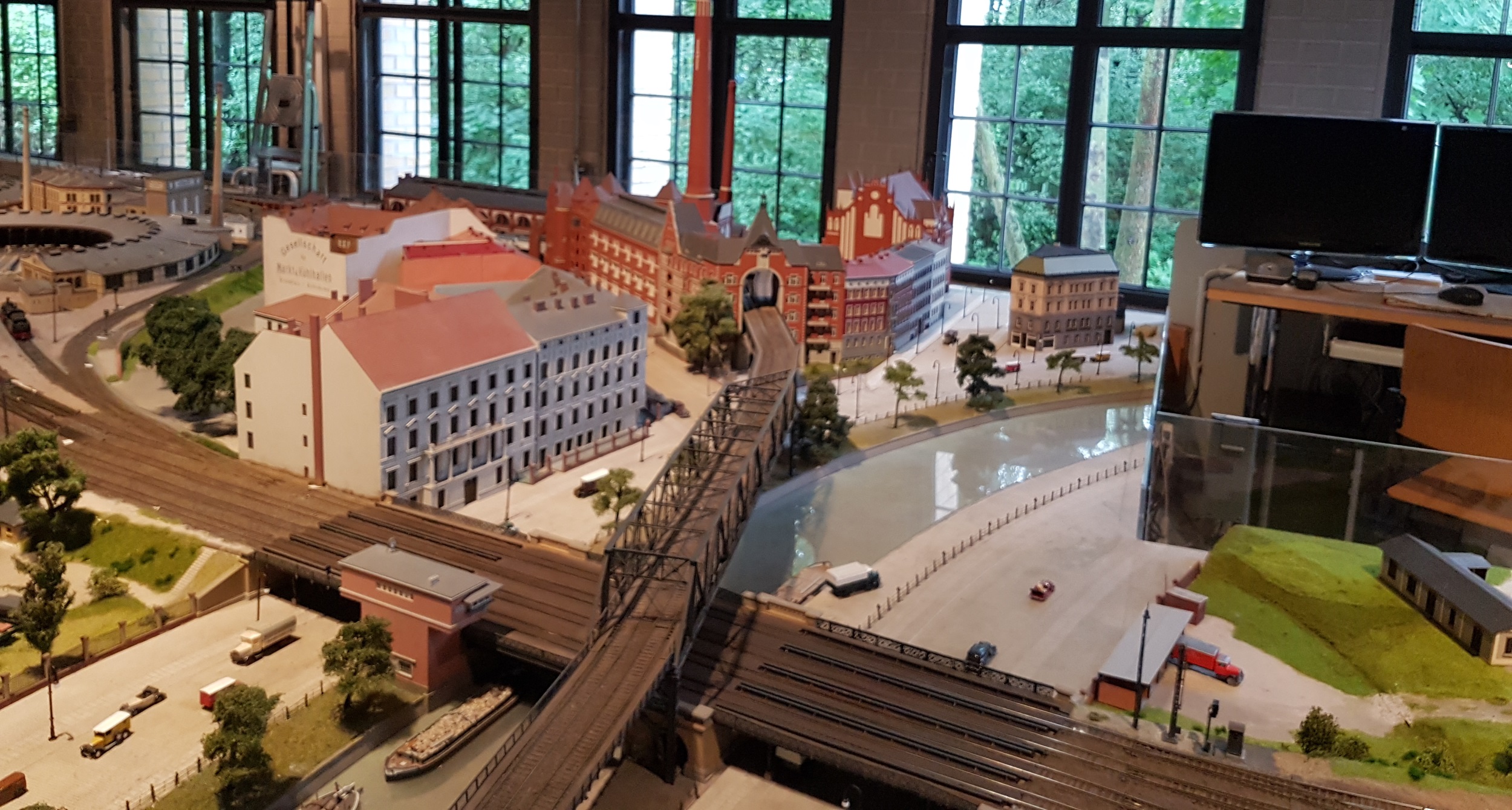
So it was off on the U-bahn U9 line.  Outside the museum was the nearby U1 line.  The combination of elevated yellow trains and the canal is most photogenic, with some interesting bridge work.
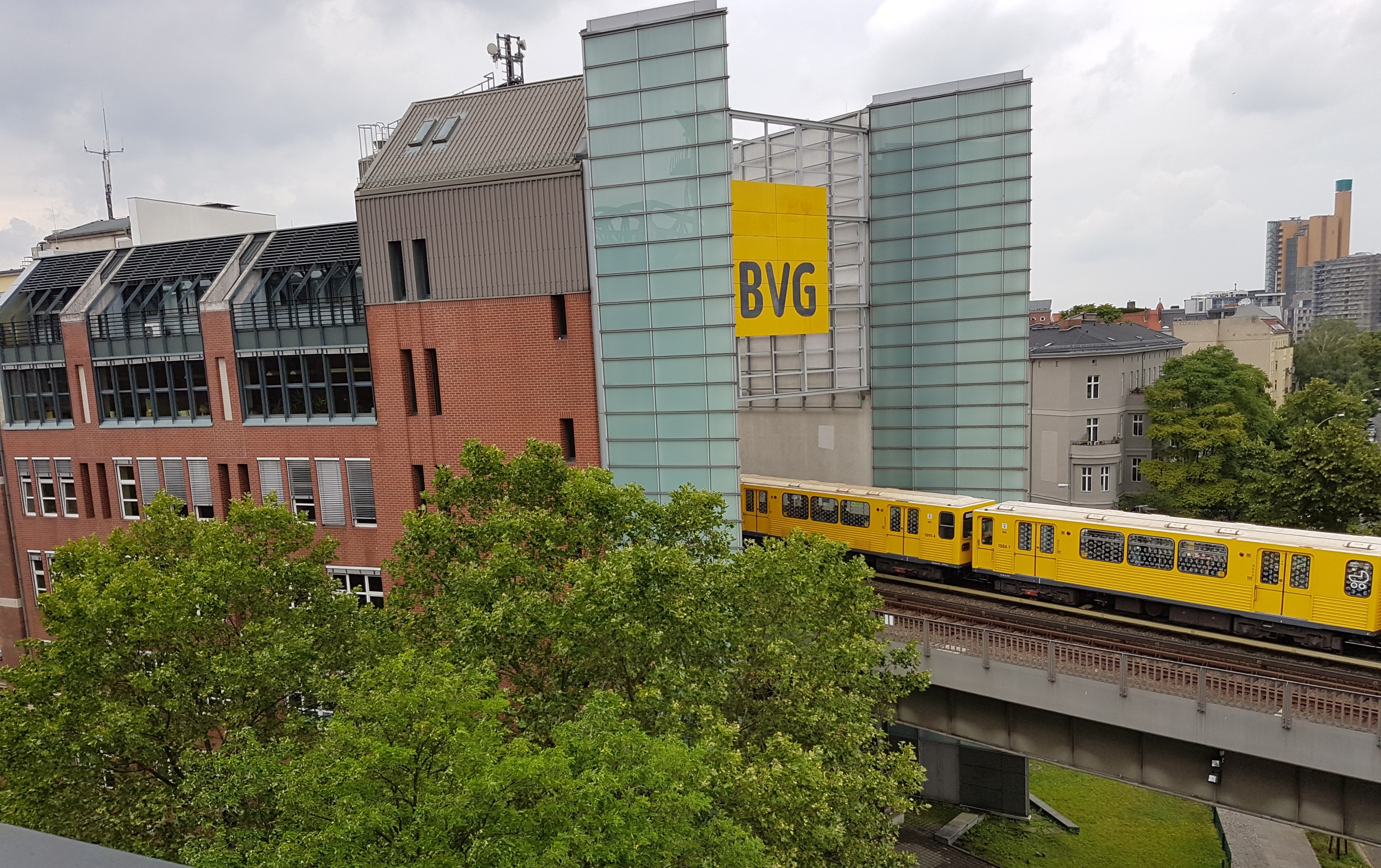
And the line disappears through the middle of this building.

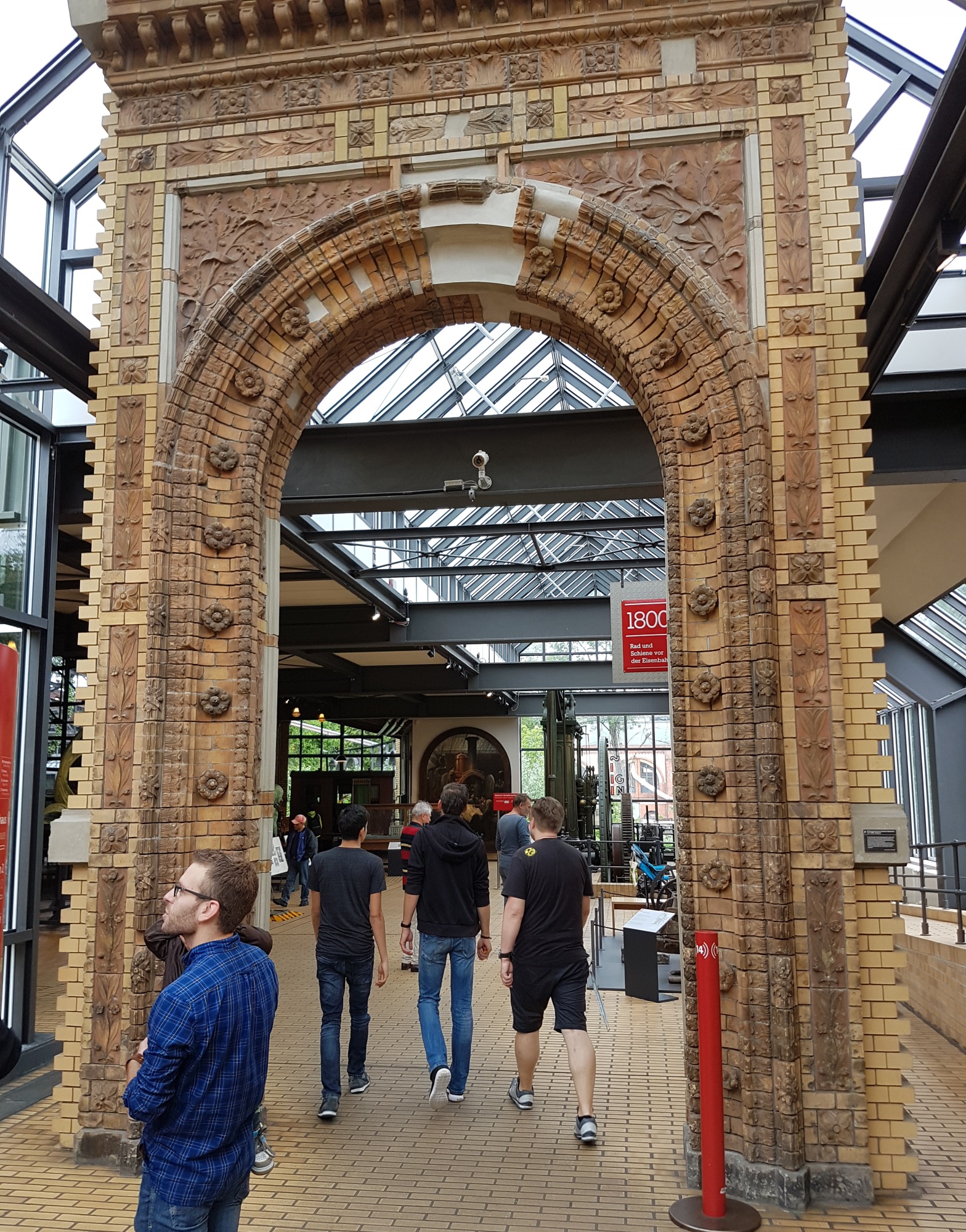
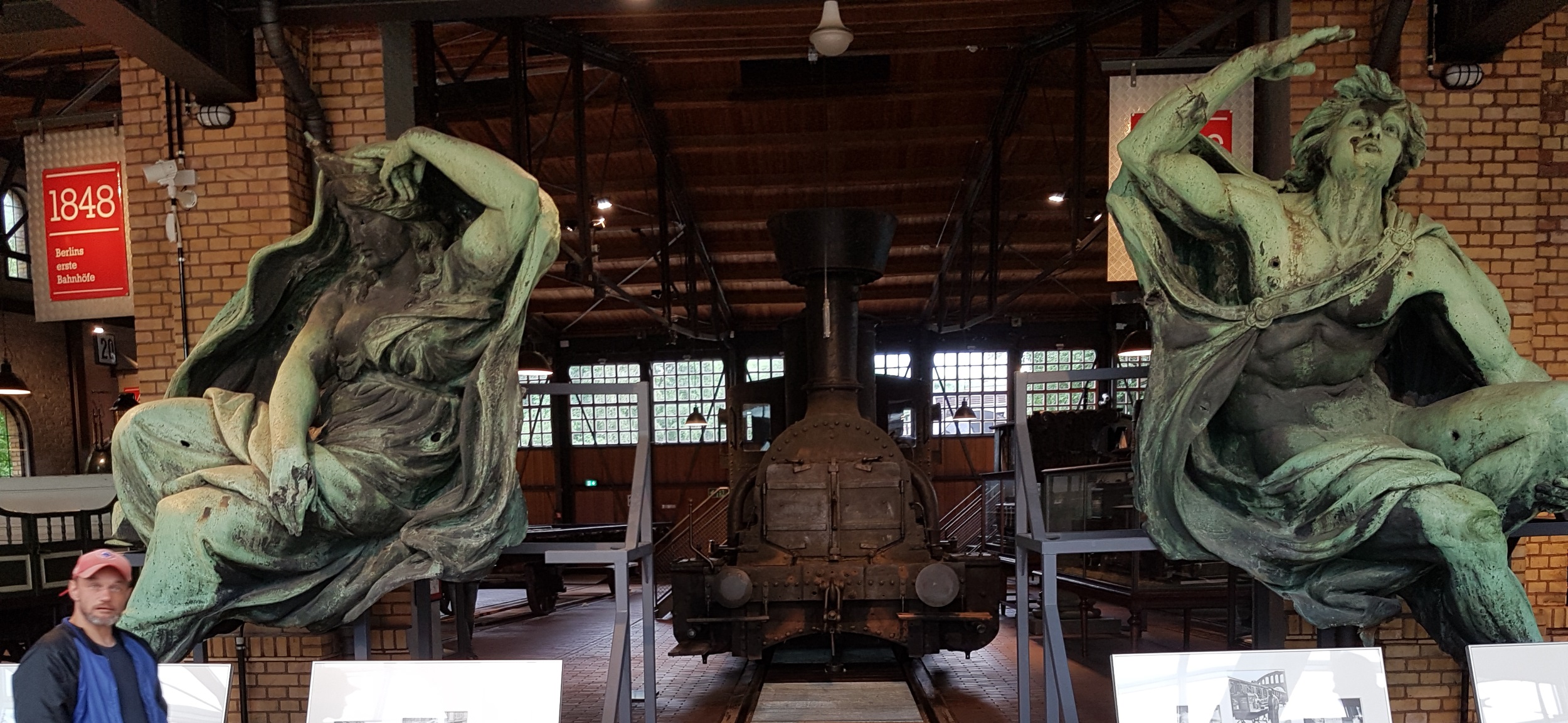
Inside the museum, the entrance to the railway section is through the entrance to the old royal station that was once nearby.

And between these classic beauties.  Another modelling challenge for your station?  Perhaps using a set of Noch’s slightly less dubious ‘HO’ figures?

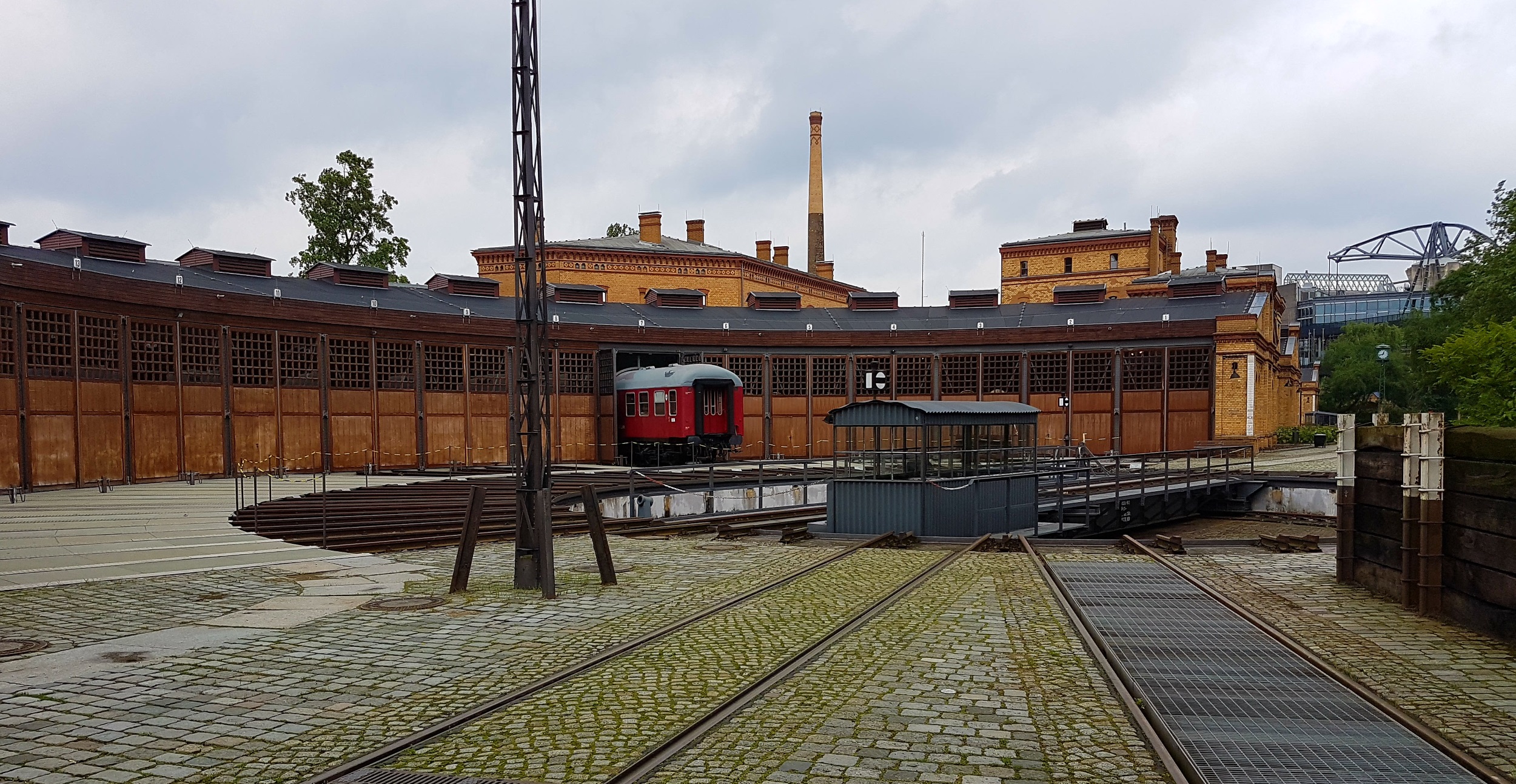
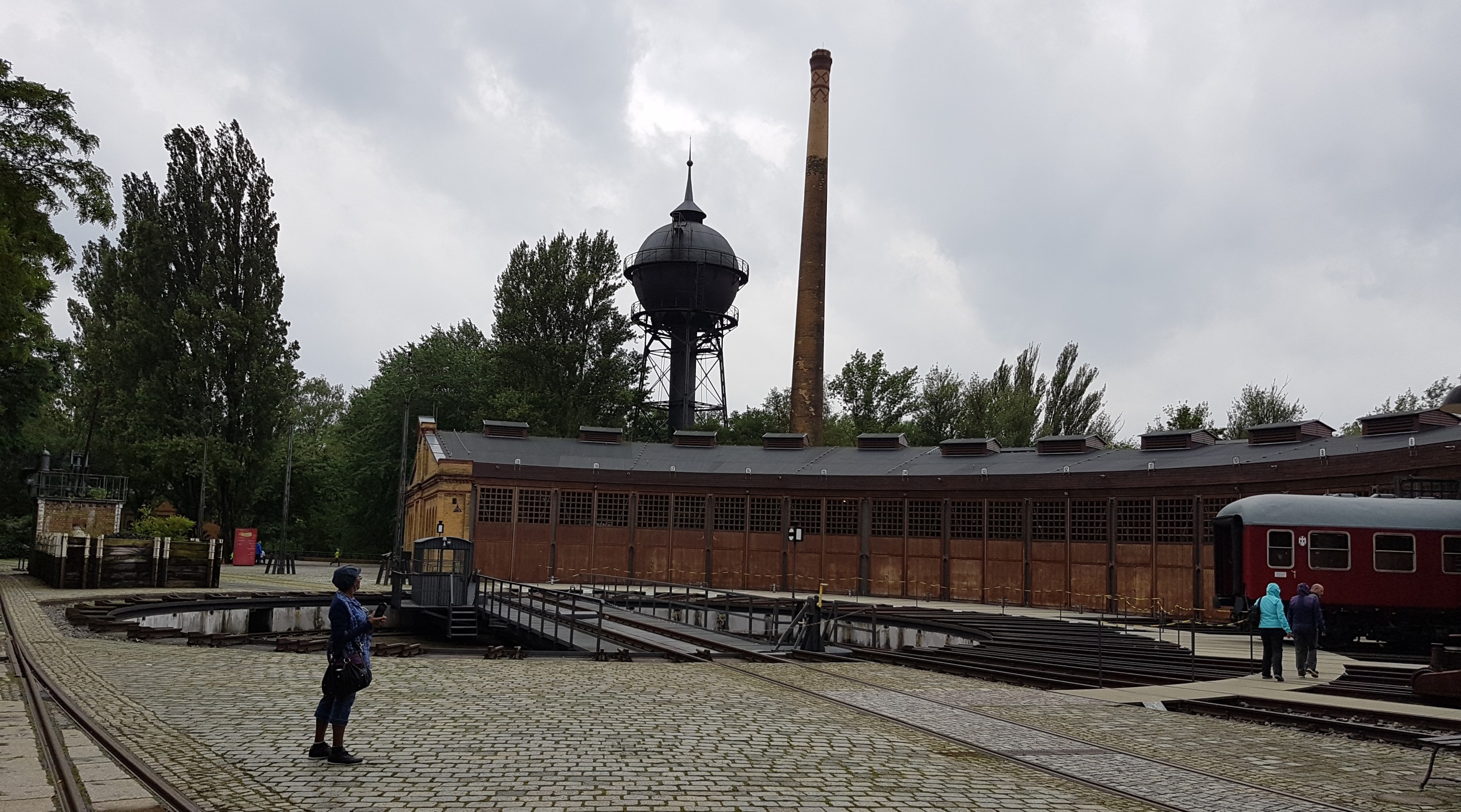
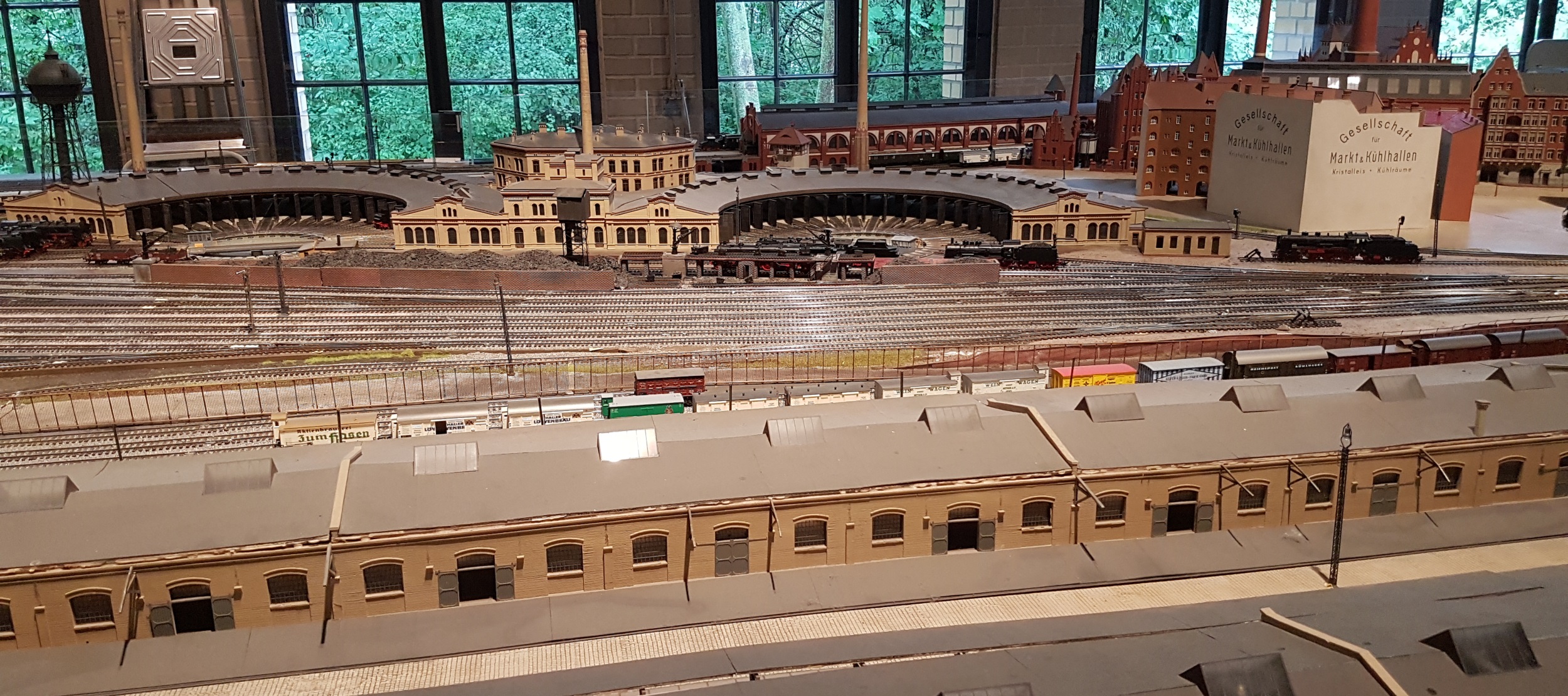
The railway exhibits are in a pair of roundhouses – worth seeing in their own right, with the turntable, water cranes and coal stage preserved outside.  I was able to tell Allan that I had visited ERIC!

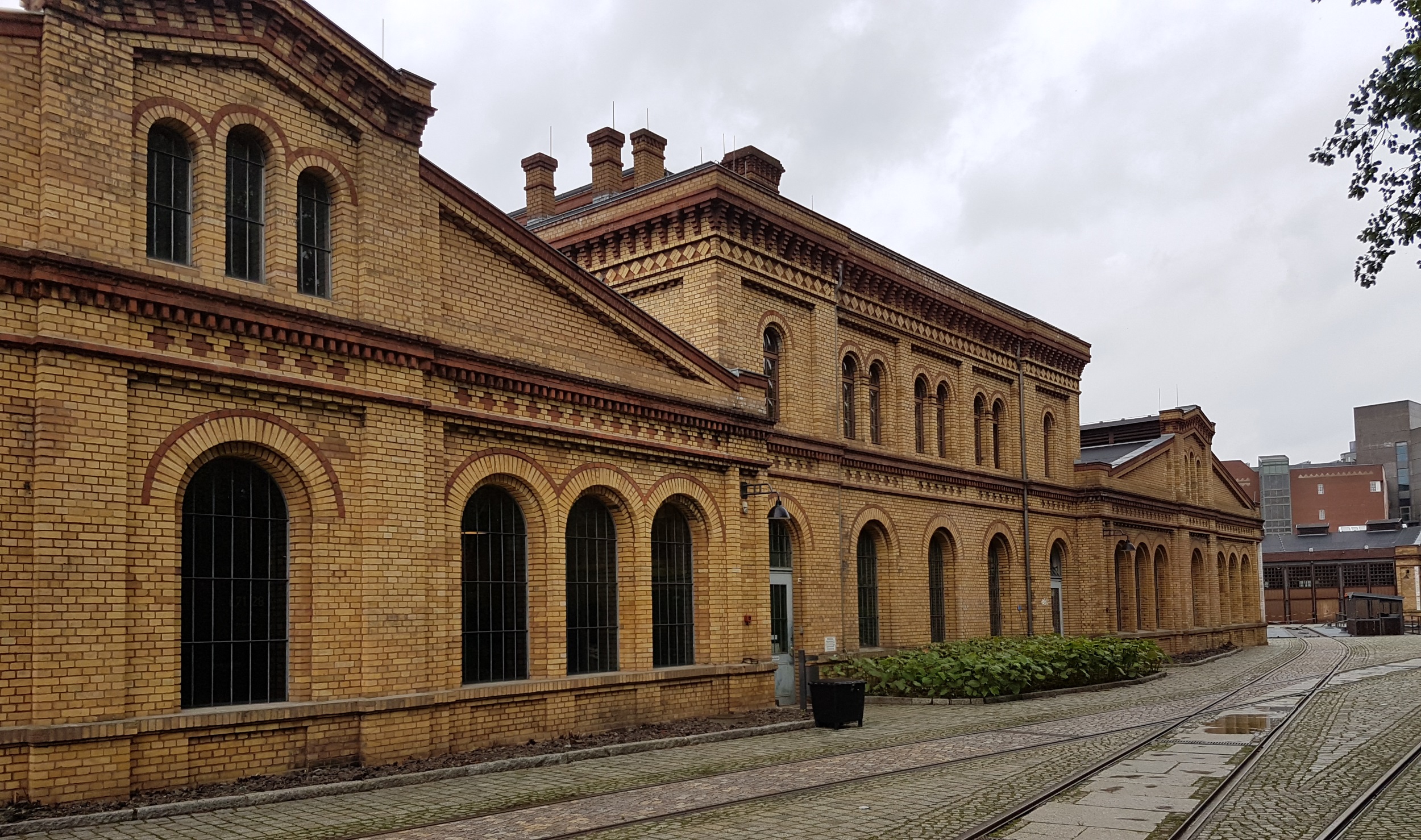
Between the two roundhouses is this administration building.  Railway brick buildings seem to be most attractive designs, wherever they come from.  Neat, symmetrical, and with good brickwork and interesting details.

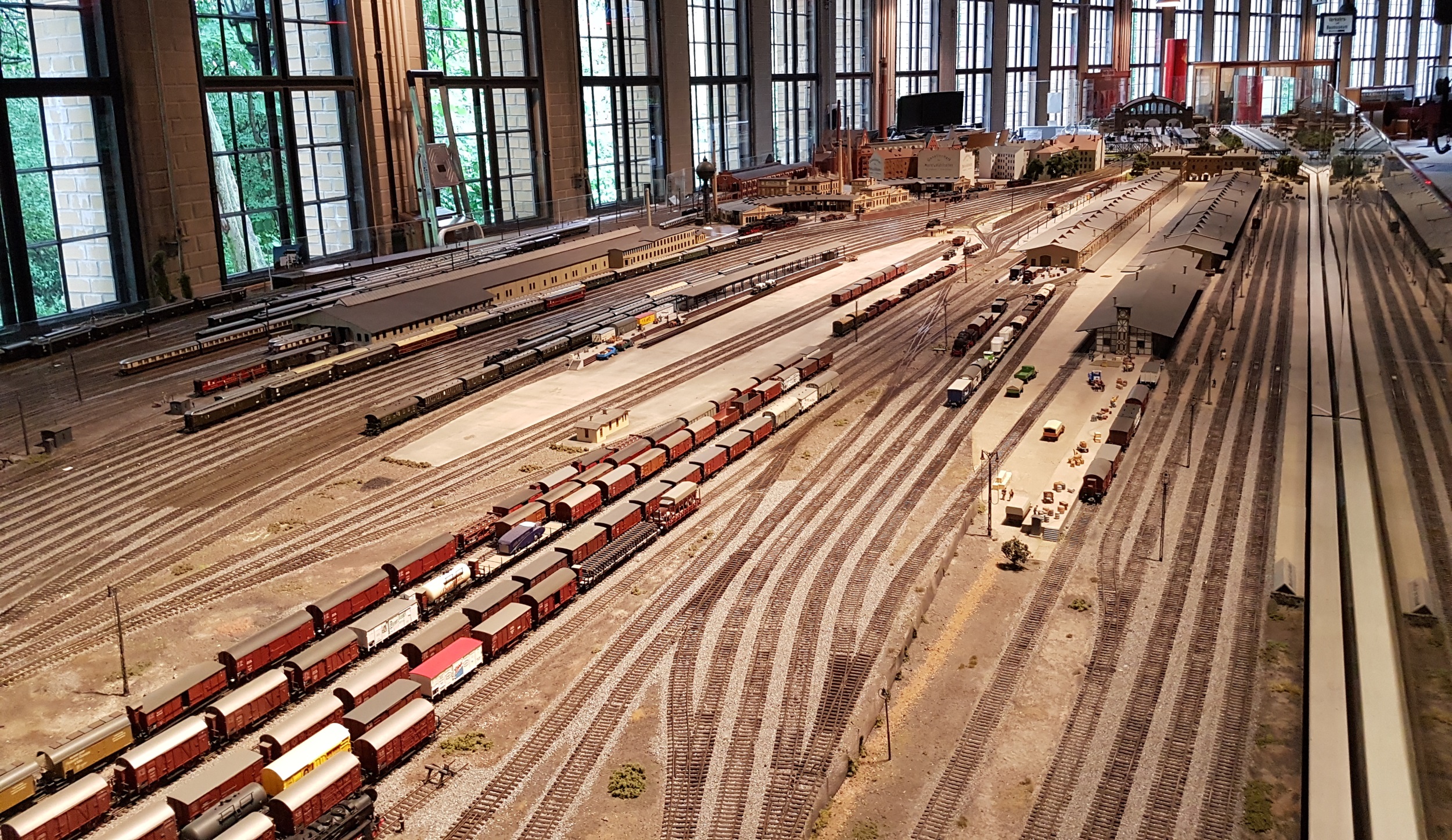
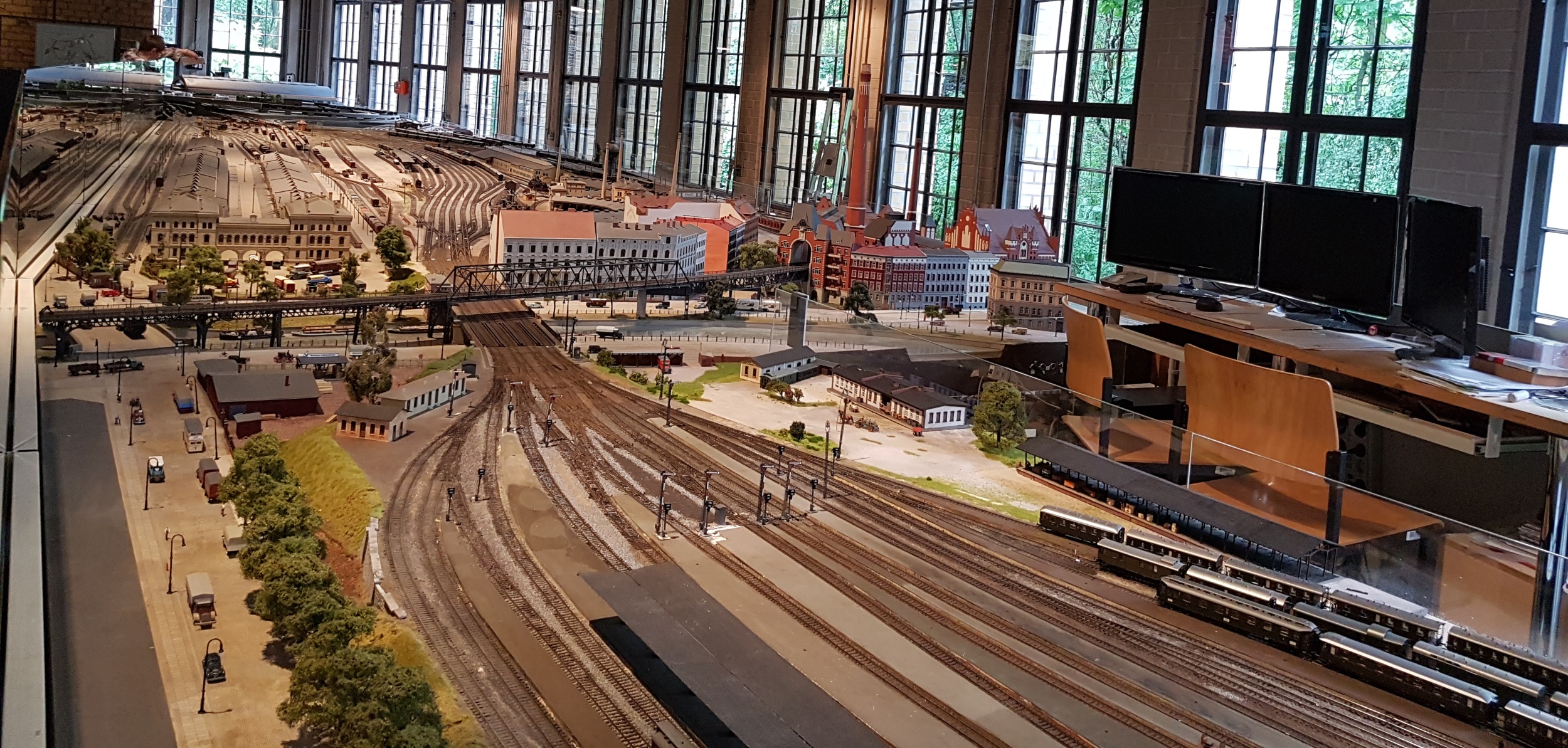
Inside, there is a large ‘HO’ model railway.  It wasn’t operating when we visited, but seems to have computer (DCC?) control, and there are extensive storage return loops to the left of this photograph.

Closer examination showed this layout to be a fine model of the museum location in pre-war days.  Below, we see the two roundhouses and the offices.  The long building in the foreground was the goods shed, and is still part of the museum.  The main lines and sidings between have now been greened to become an attractive wild garden and woodland.

Here we see where the U-bahn goes through the building, although only parts of the original building remains – perhaps as a result of wartime bombing?  The main lines crossing the canal have all gone, and been replaced by the footbridge seen in the U-bahn pictures above.

All this station area has been redeveloped.

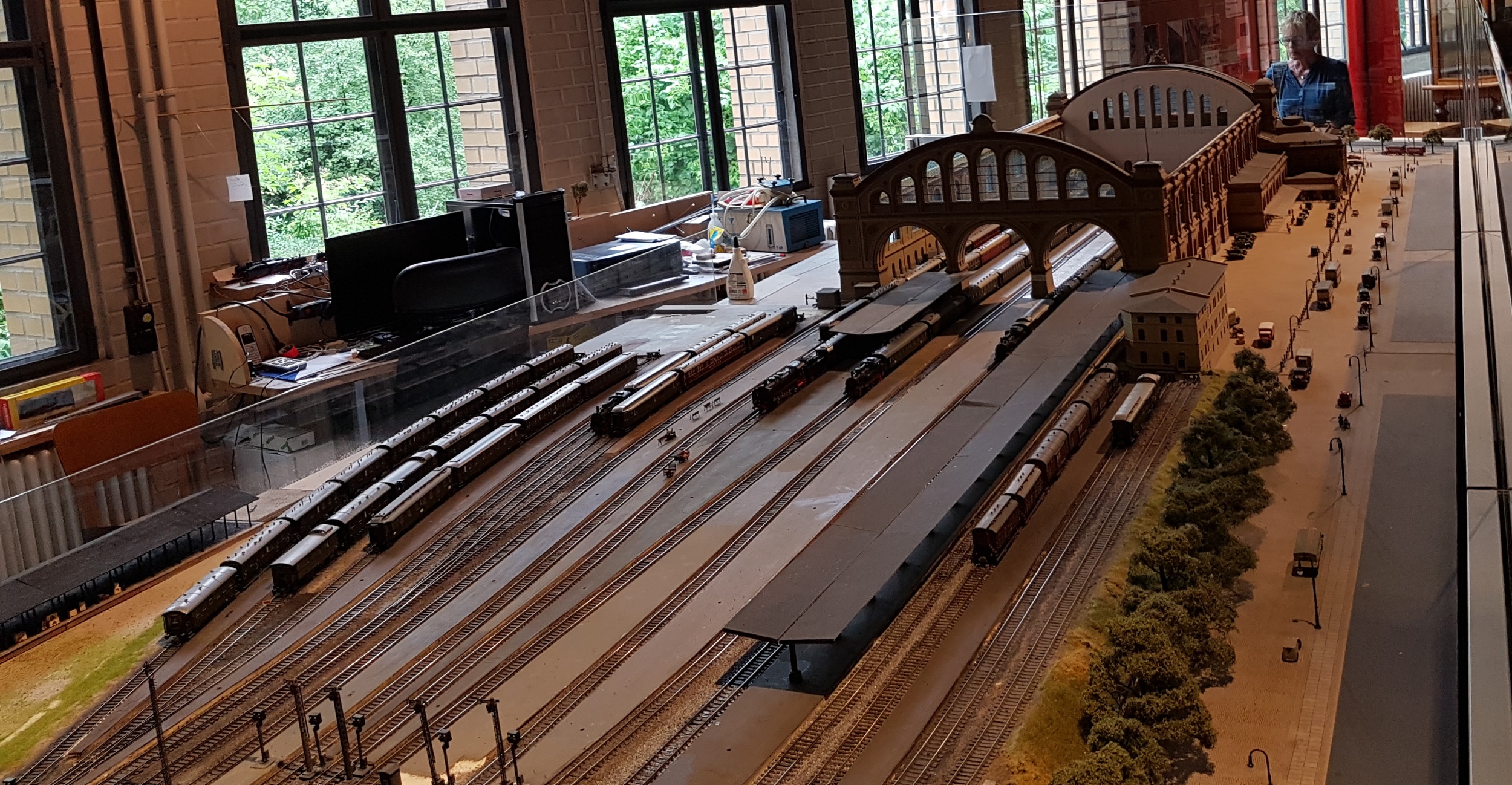
And a view down the layout shows the operator’s position to the right, and the storage loops in the distance.

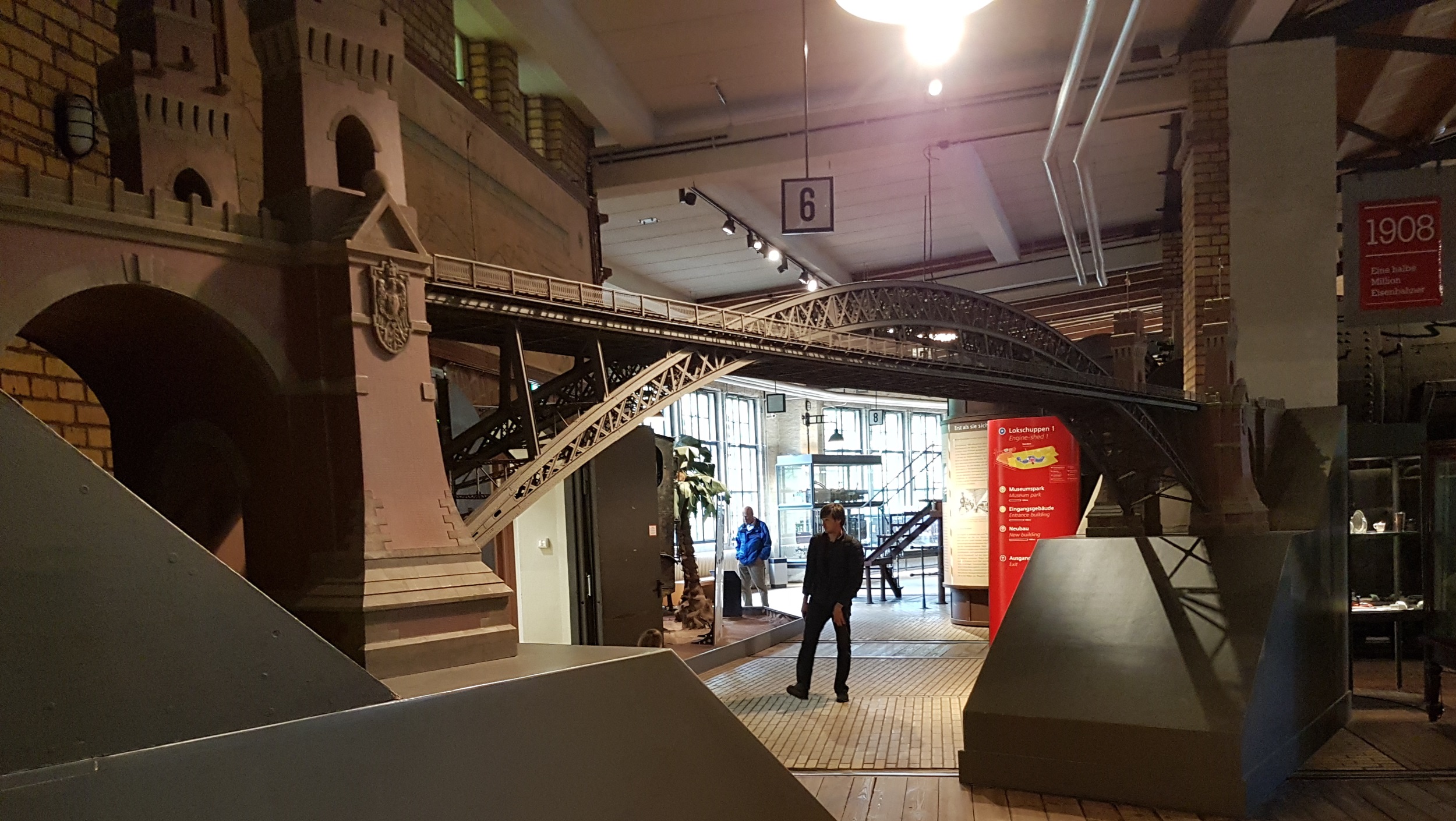
And finally for today, a fine model of a cross-border rail bridge.  Perhaps this would be more interesting for the Stuttgart N-club meet, to replace the helix???

Next post, we’ll look at the trains themselves.

Posted in Inspiration, Out and about, Prototype | Tagged , , , | Leave a comment

ESNG meetings – AGM and PlayDay, July 2017

Well, the ESNG AGM went off very well.  11 hardy souls tolerated an evening without running trains, and we had some excellent discussion as to how to take things forward.  Unfortunately the Cha(I)rman was missing, due to the yet another milk round starting in the early hours.

Of course, there were no takers to stand for the committee, so the same old team are carrying on.  But thank you to Dave, who agreed to look after our bookings for external exhibitions.  And there was an embarrassing proposal to carry forward last year’s action points as so few had been actioned.  Thank you Simon – but it was a good idea.

I’m looking forward to running trains again on Sunday….


Sunday came, and we had a pleasant afternoon running trains.  Only six members turned up, but that gave a relaxed feel to the time, and we could run as many (or as few) trains as we wanted.  It was another lovely day outside, and we made the most of it by opening all the hall doors and windows to let the breeze through the hall.

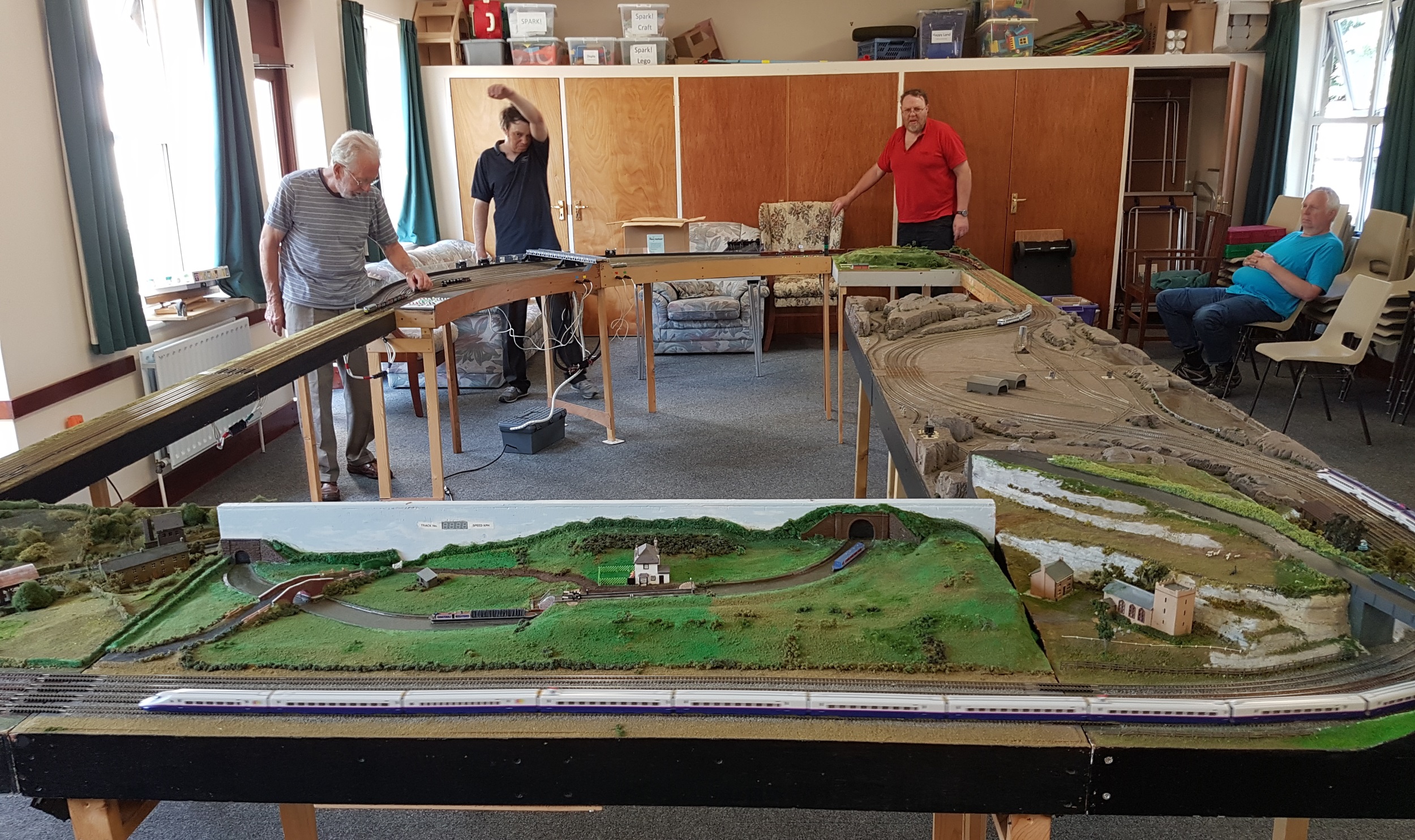
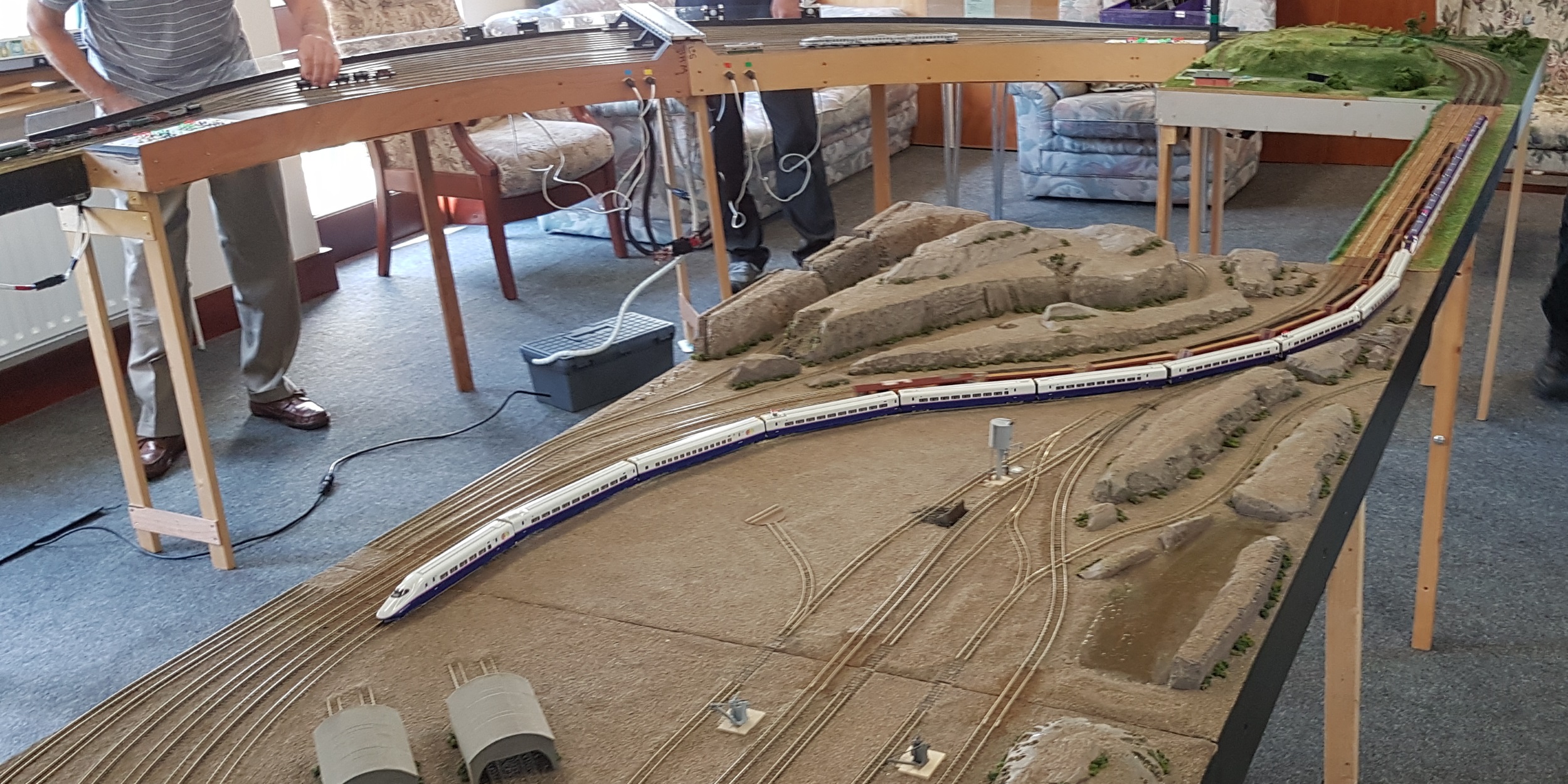
We soon had a good size circuit set up….

Paul had the usual variety of Japanese bullet trains….

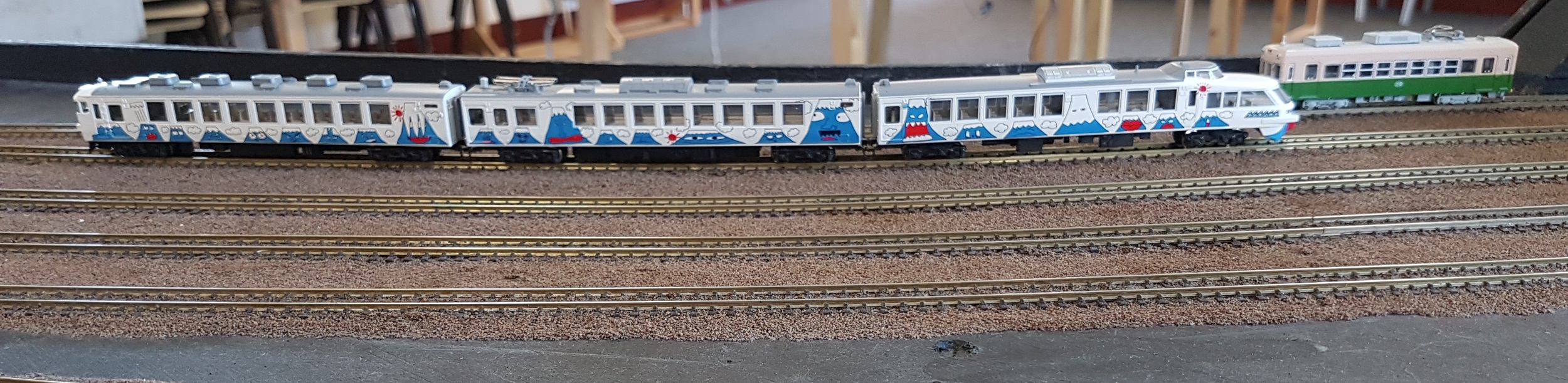
I also had a Japanese day, with a tram and multiple unit….

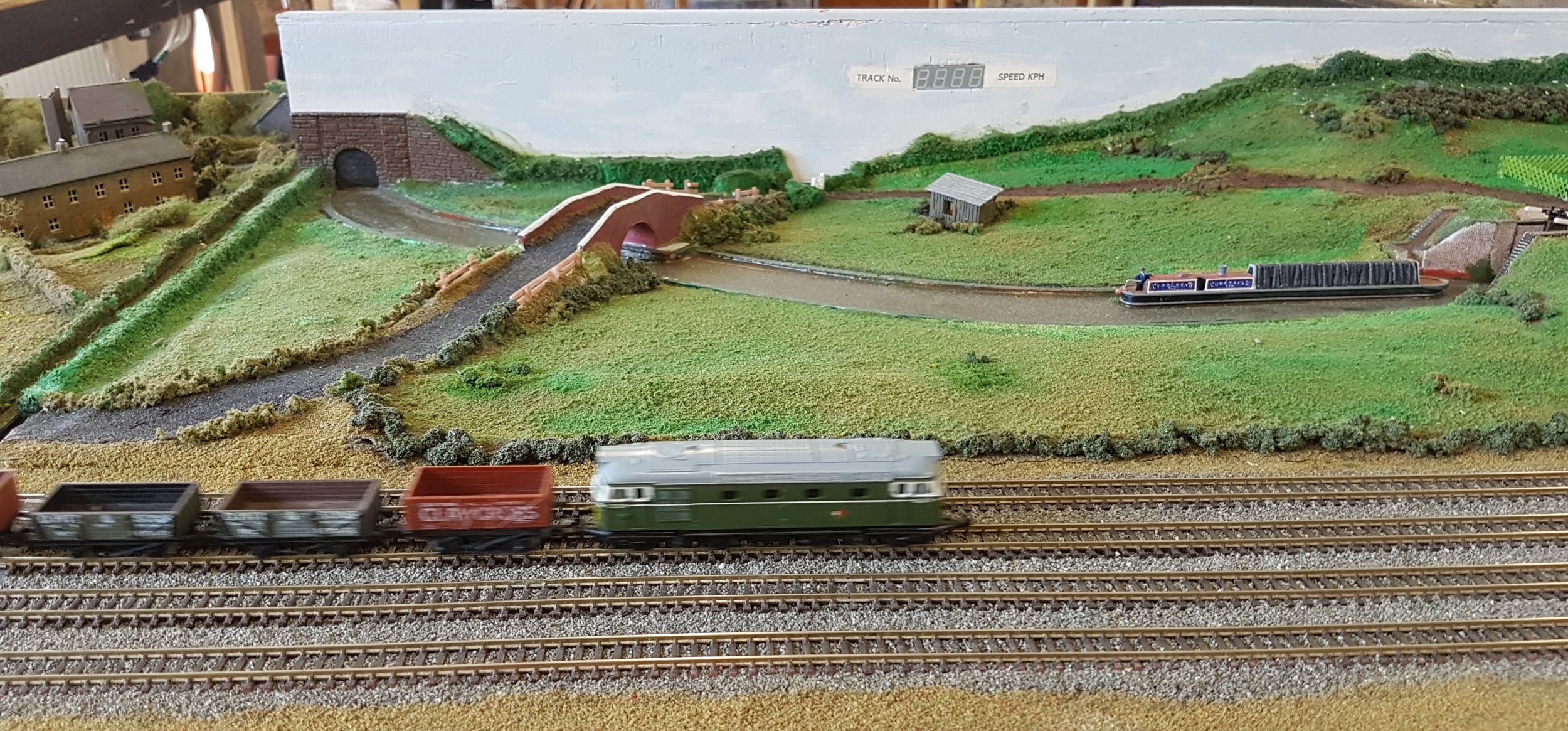
Whilst Derek’s goods train bumbled along for much of the afternoon, occasionally shedding a wagon or two…

But unfortunately no curry.  I was a bit under the weather, and Allan had another 2am milk round!

Posted in ESNG, ESNG meetings | Tagged , , , | Leave a comment

ESNG at the Bluebell – 4

Our final post from the Bluebell Railway, again looks at the ‘big’ trains, and my two favourite locomotives from our visit.

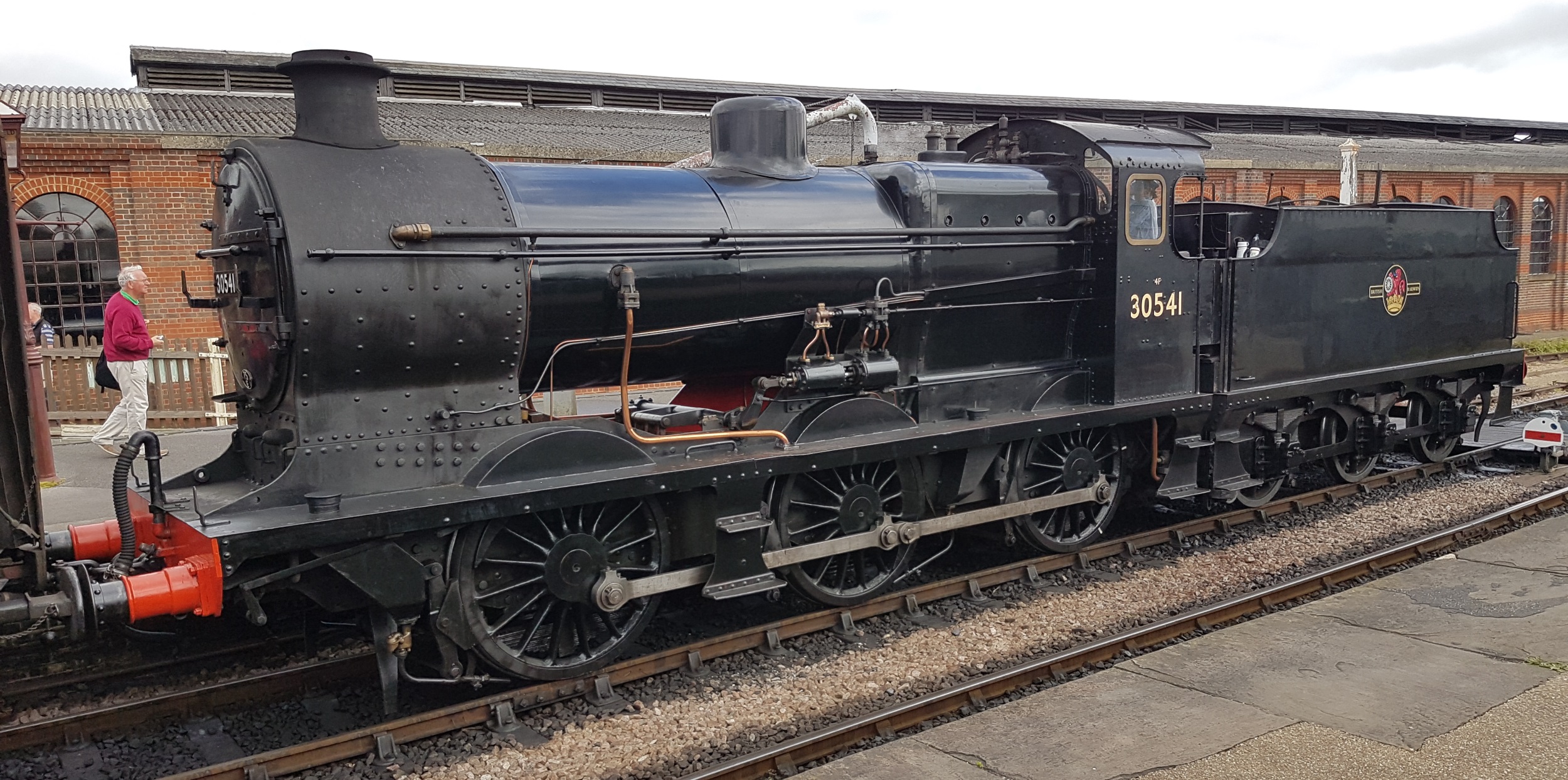
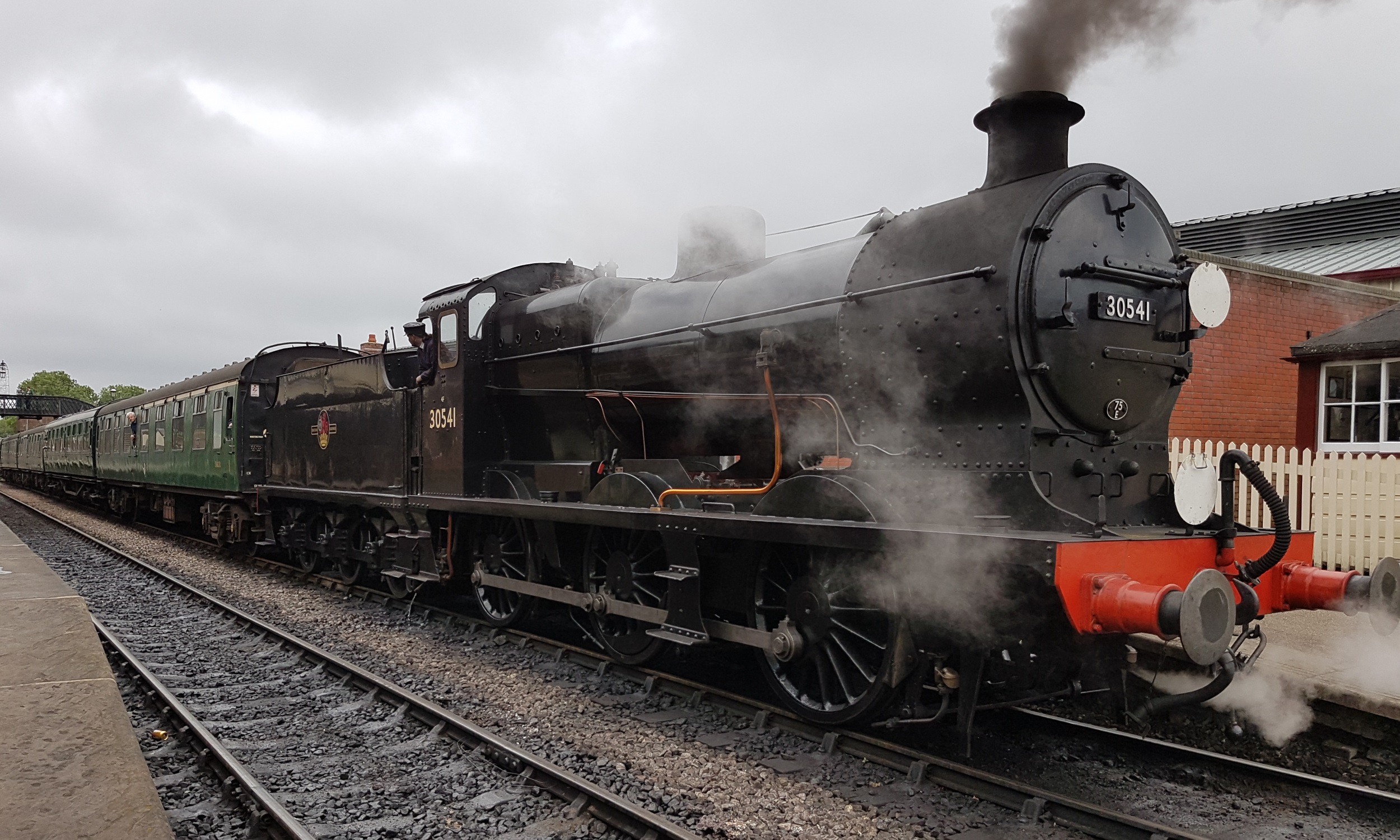
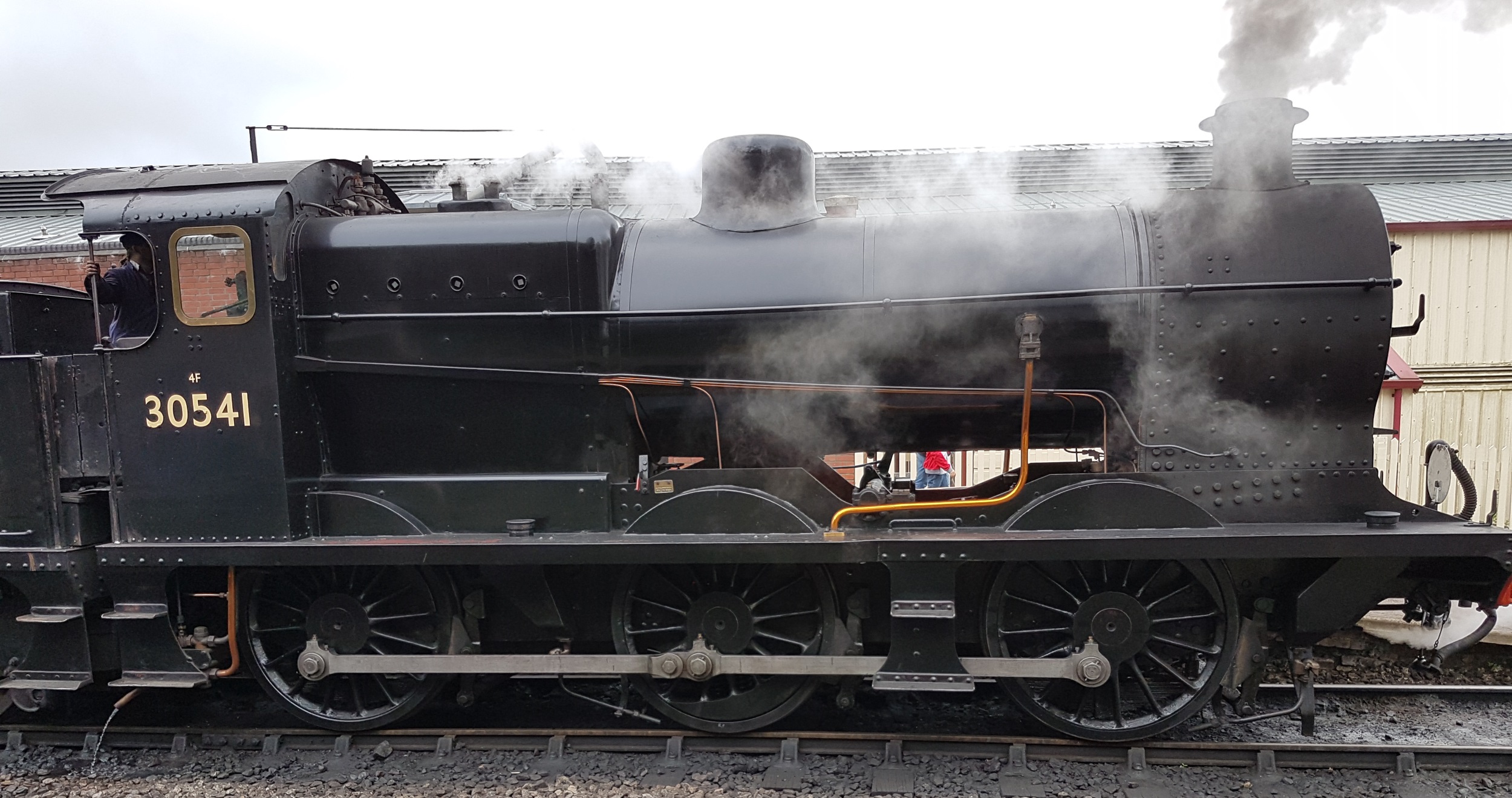
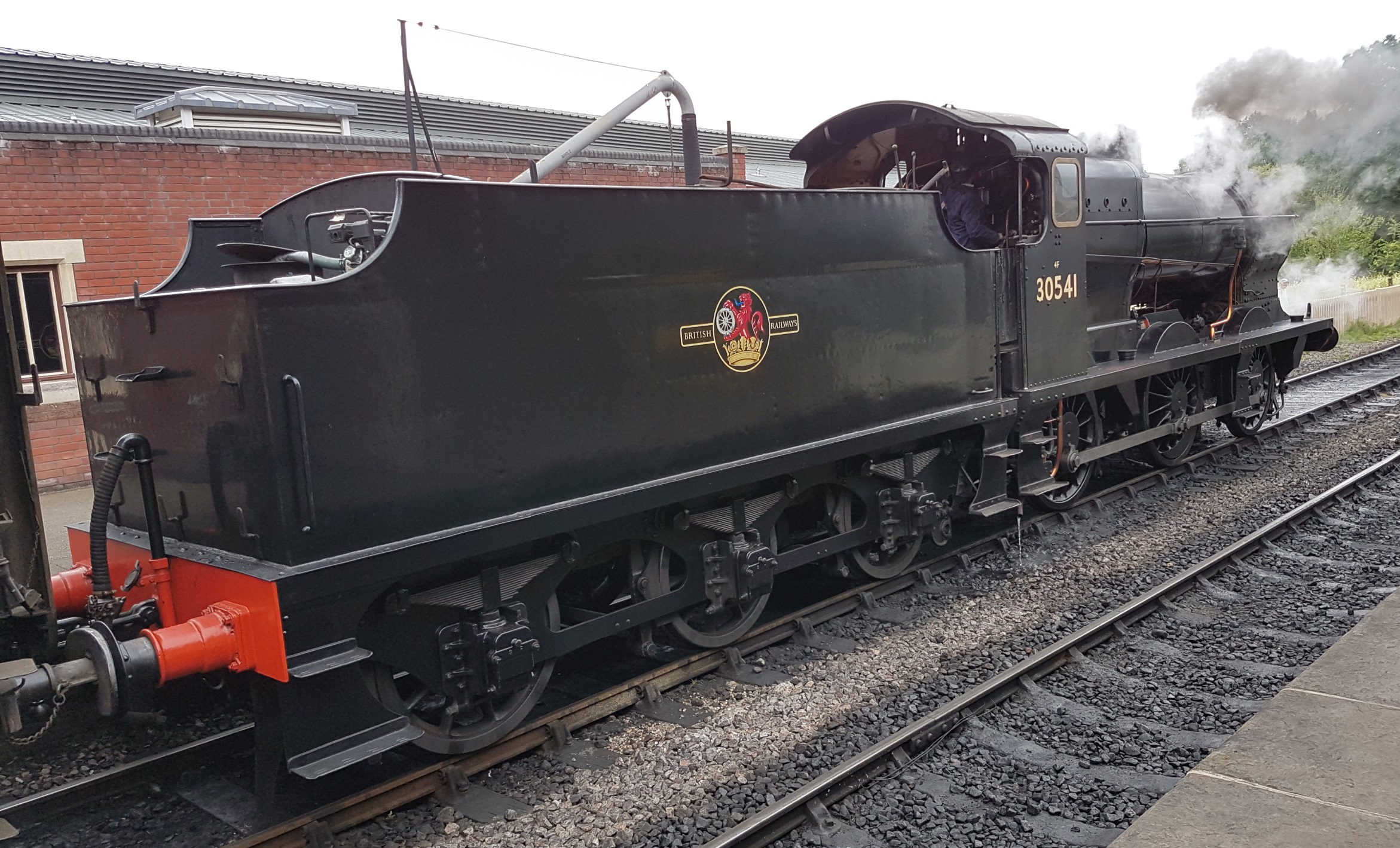
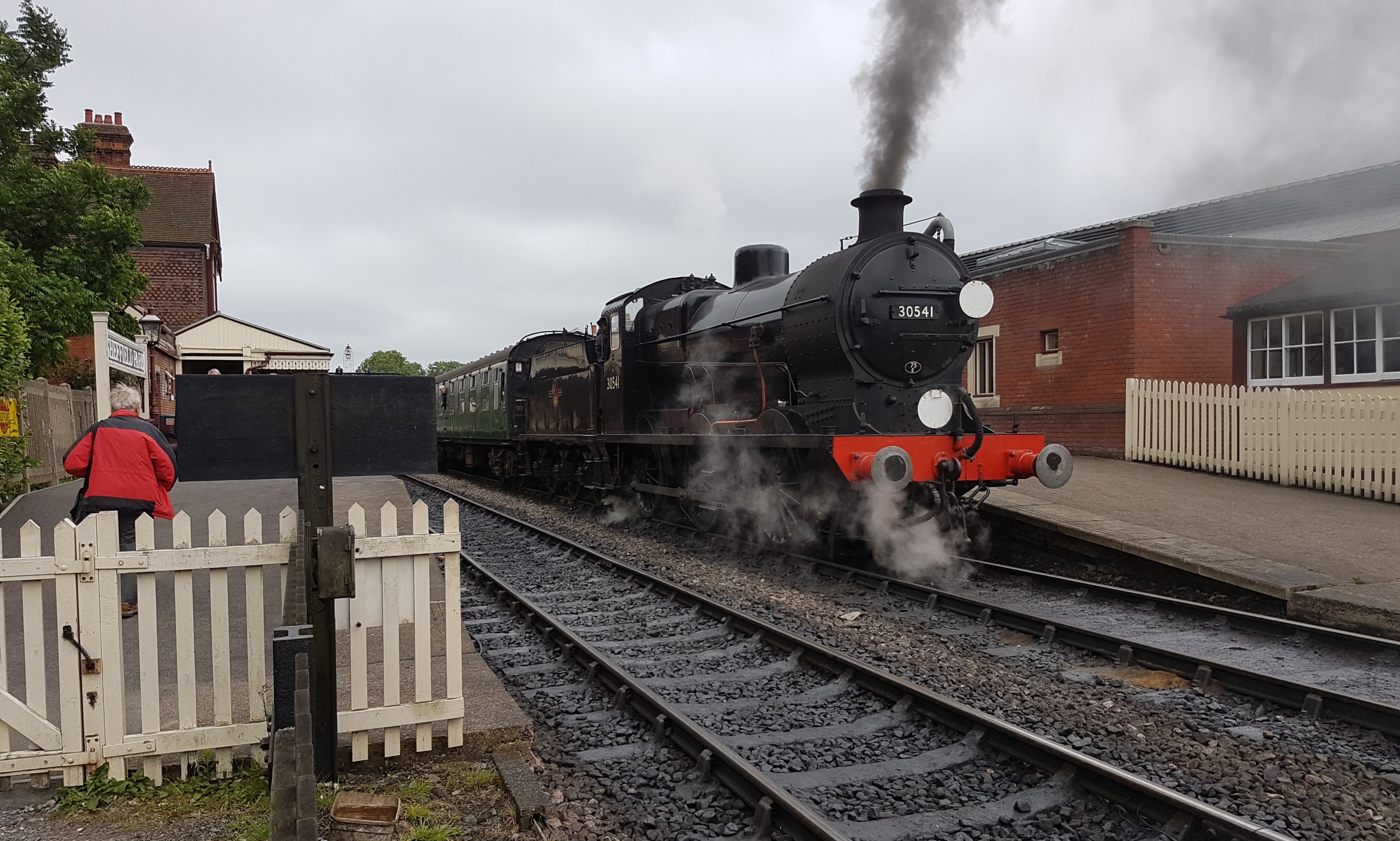
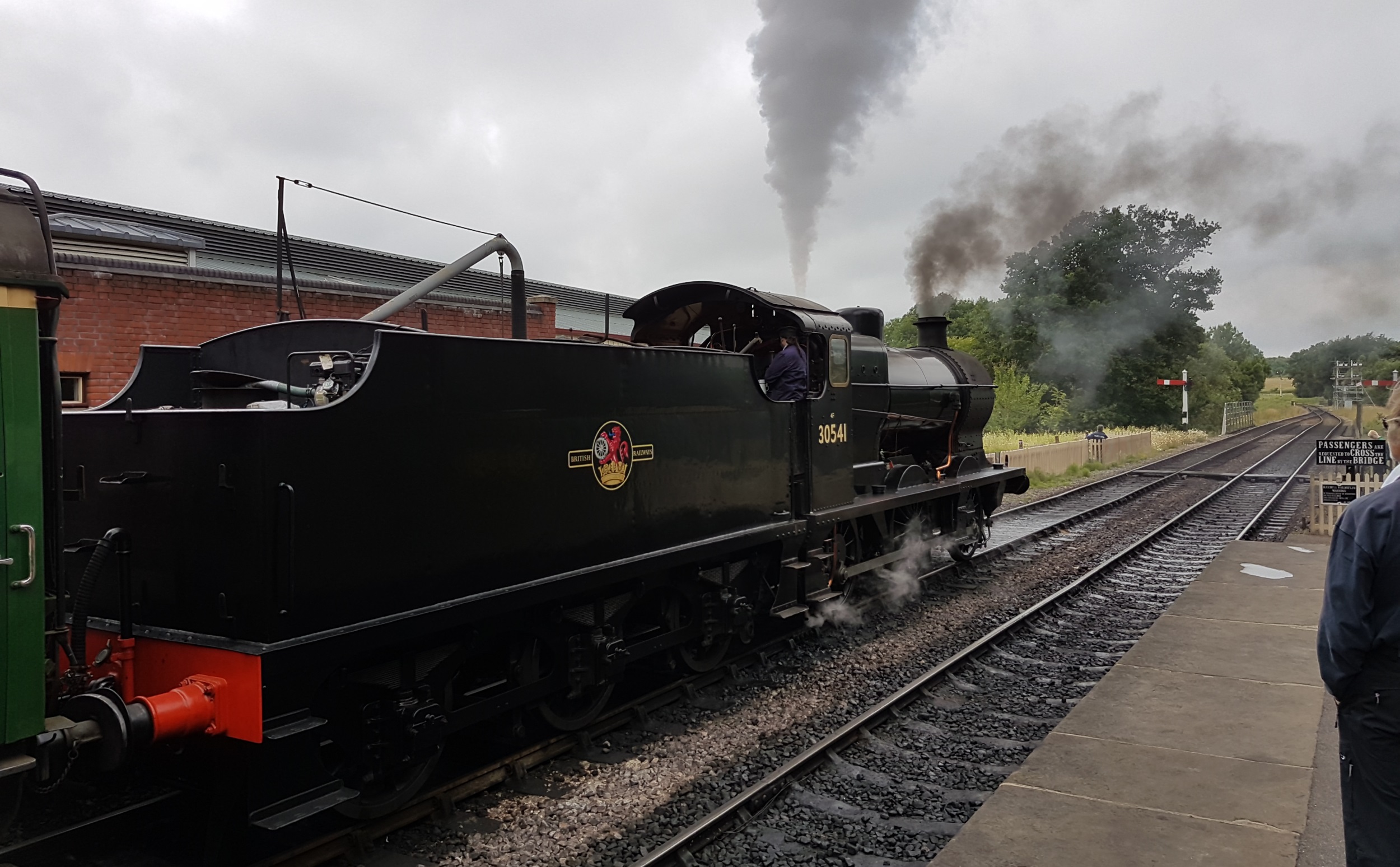
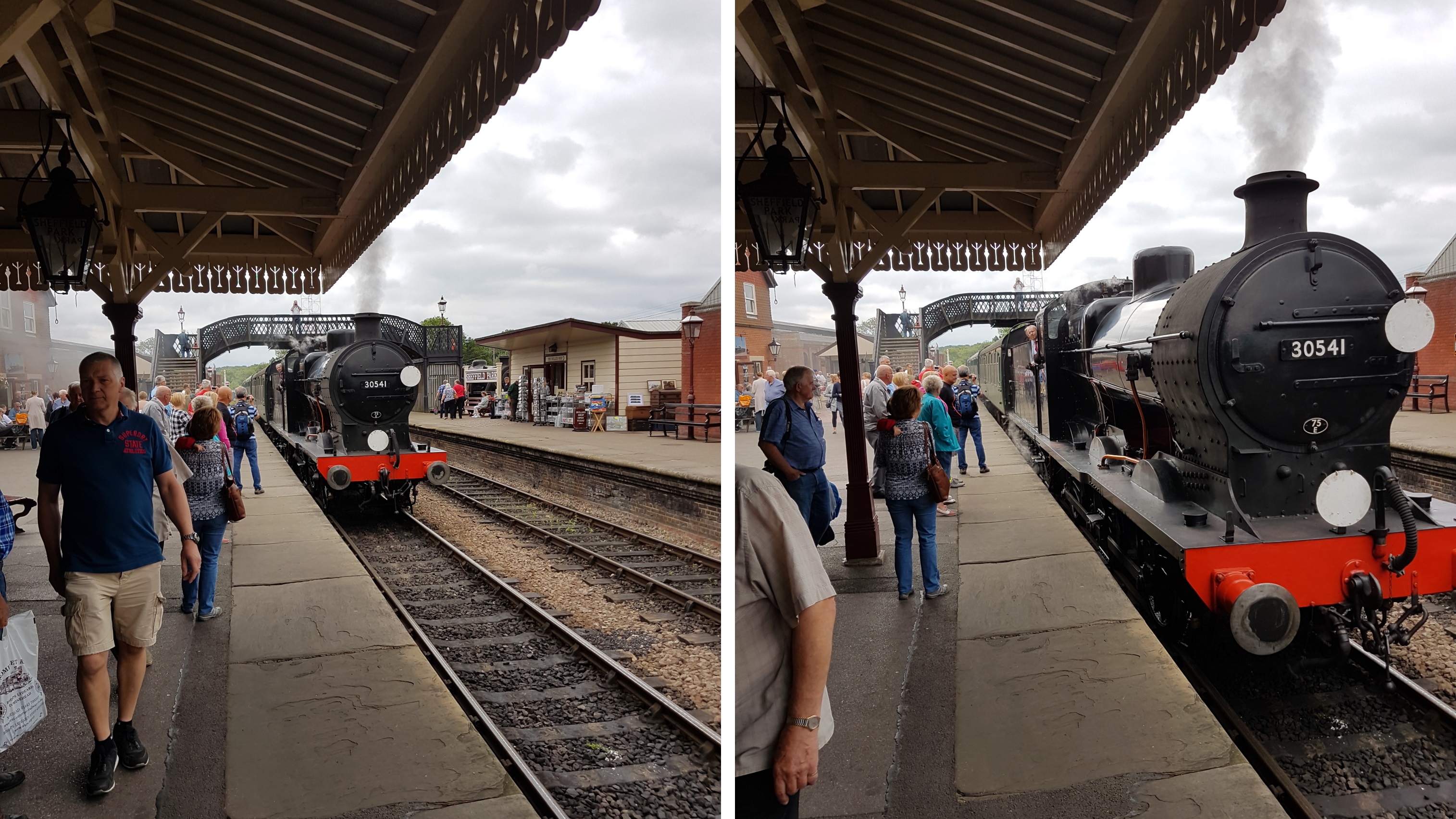
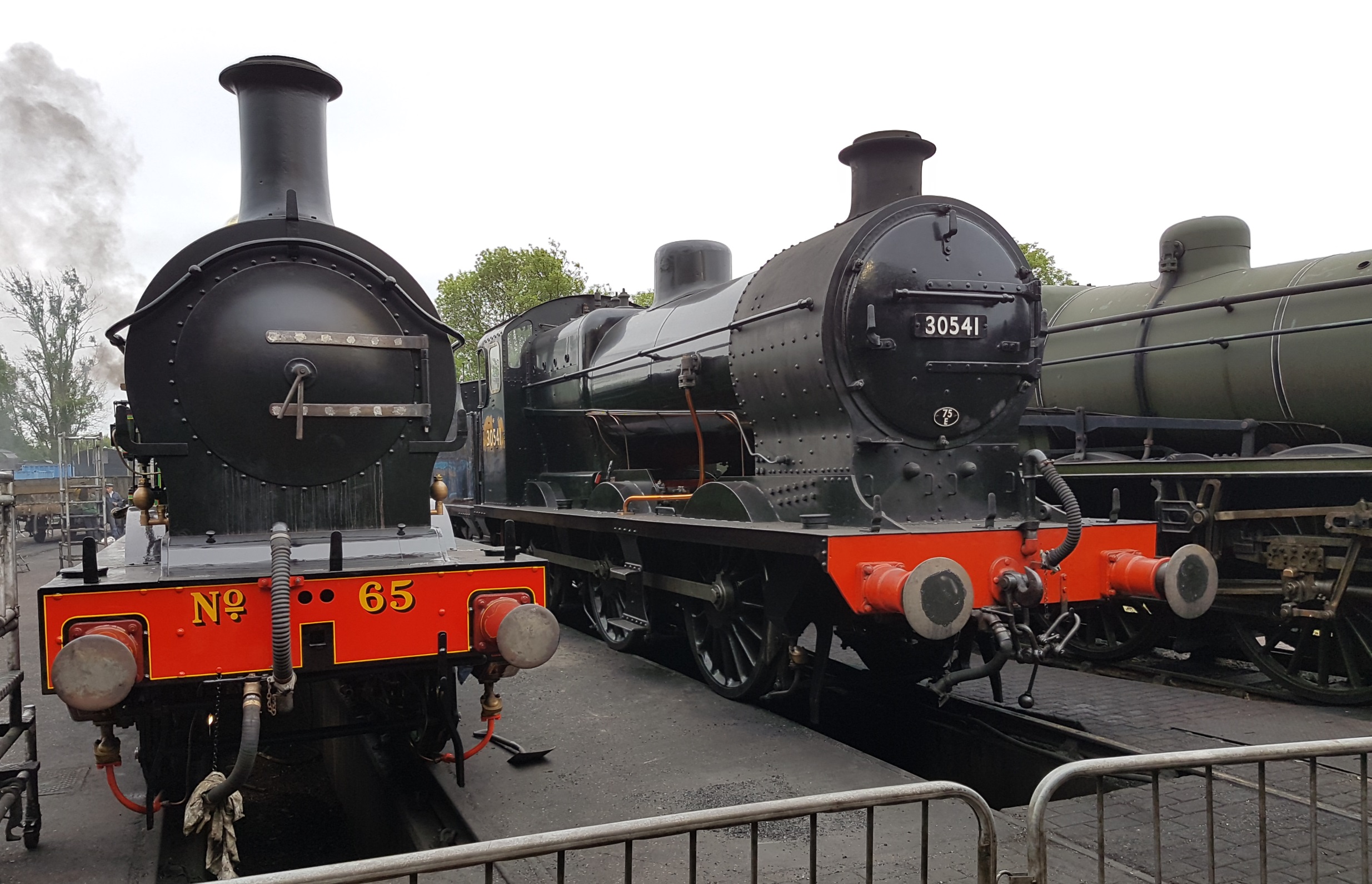
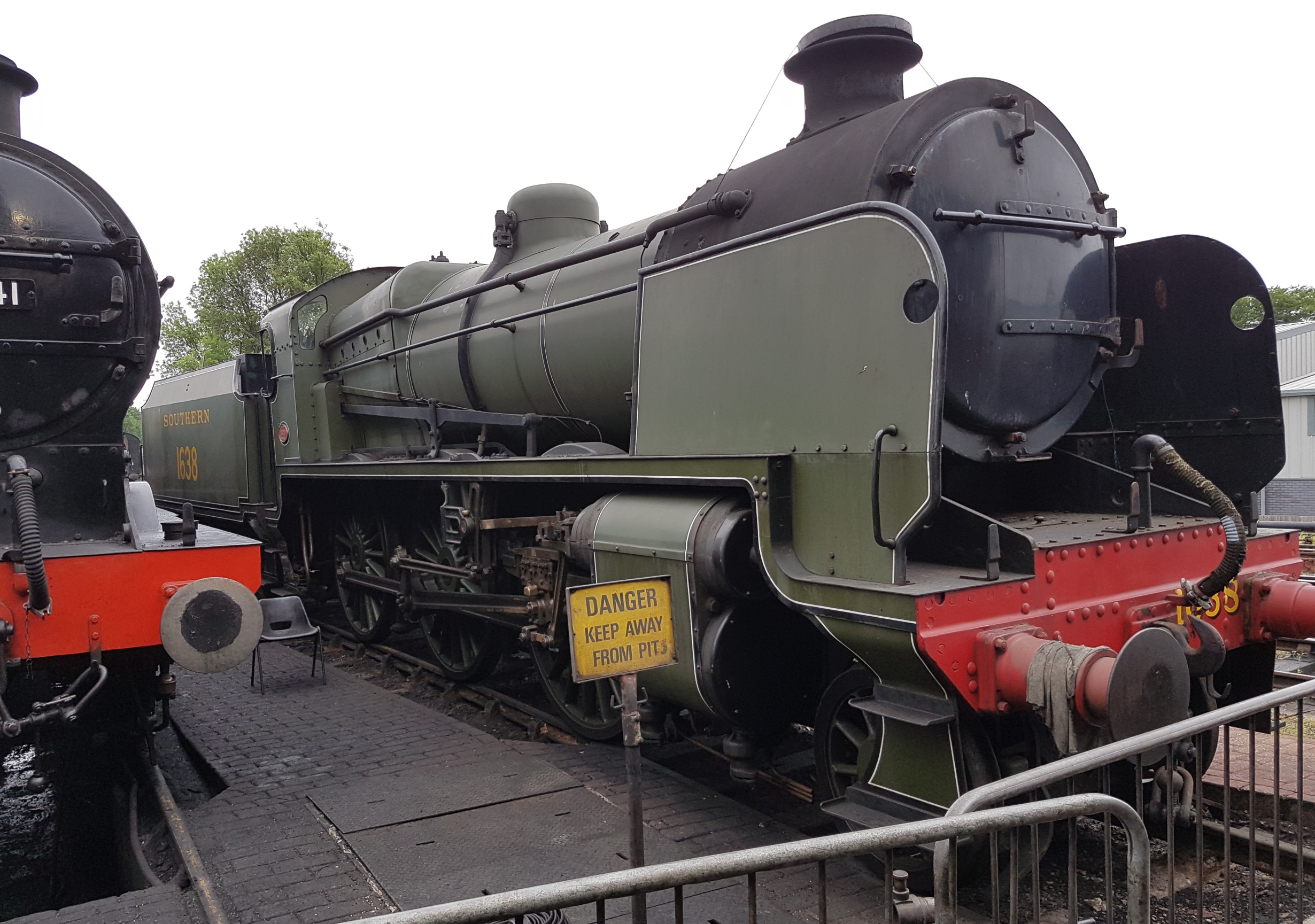
Firstly, I was delighted to see the Southern Railway ‘Q’ 0-6-0 in steam and even better, it hauled us both ways between Sheffield Park and Horsted Keynes.  Designed by Maunsell in the late 1930’s, it was a slightly dated, but absolutely typical, freight and mixed-traffic 0-6-0 design.  All British Railways had similar locomotives from the early years of the century.

I’m a fan of the Q, as I had an ‘OO’ version, built from a Wills Finecast kit when I was a teenager.  Like the Bluebell, it appeared both in Southern green and in British Railways black.  It’s a very neat locomotive, and I’m wondering how easy it would be to convert the Farish LMS 4F to a Q.  My ‘OO’ version ran on a Triang ‘Jinty’ chassis, that has the same wheelbase as the 4F.  In fact, I wonder why no-one made a kit to do just that.

So, unashamedly here are most of my photos from the weekend, showing the engine from all angles, and hoping they might inspire a model or two.

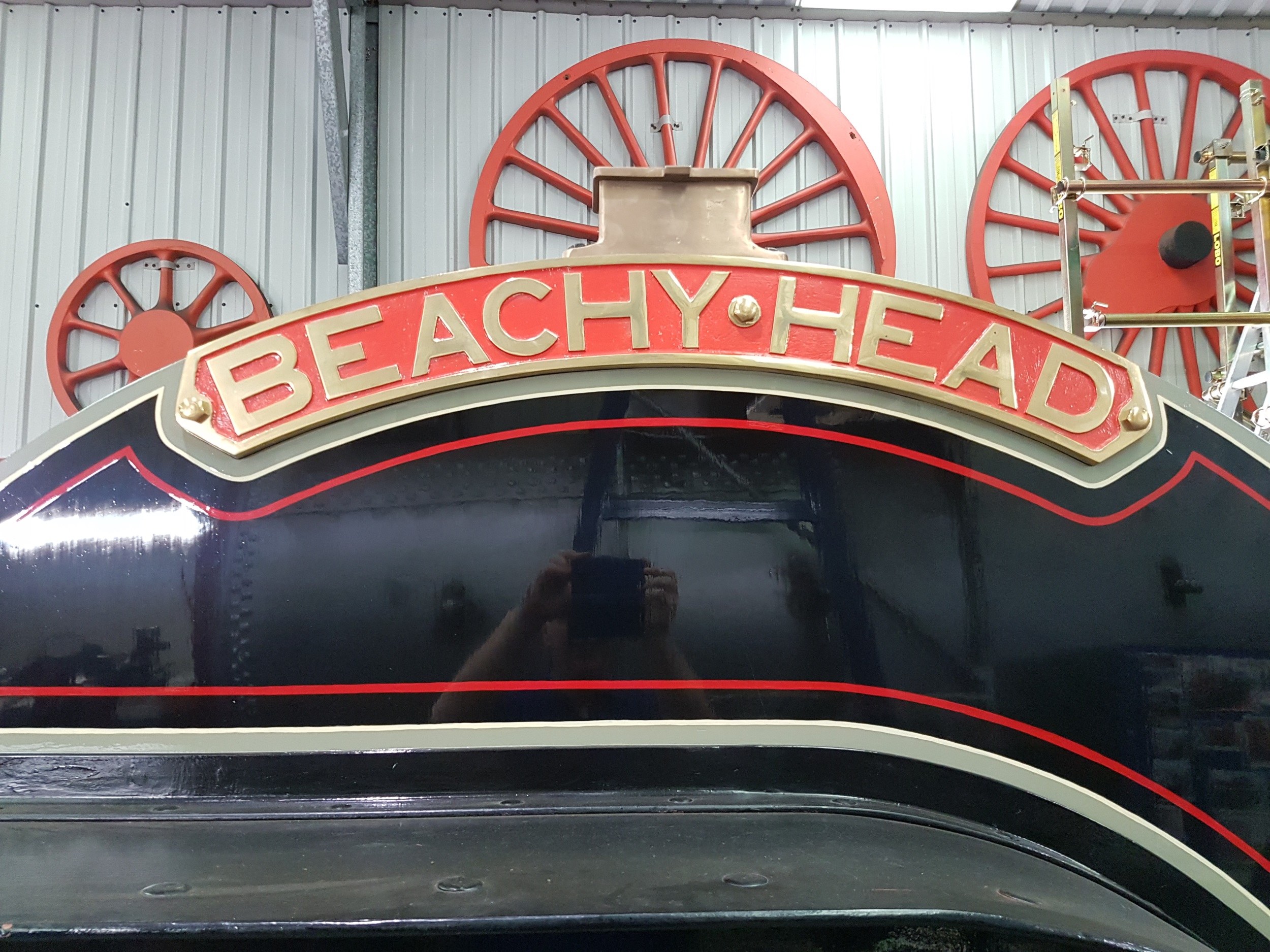
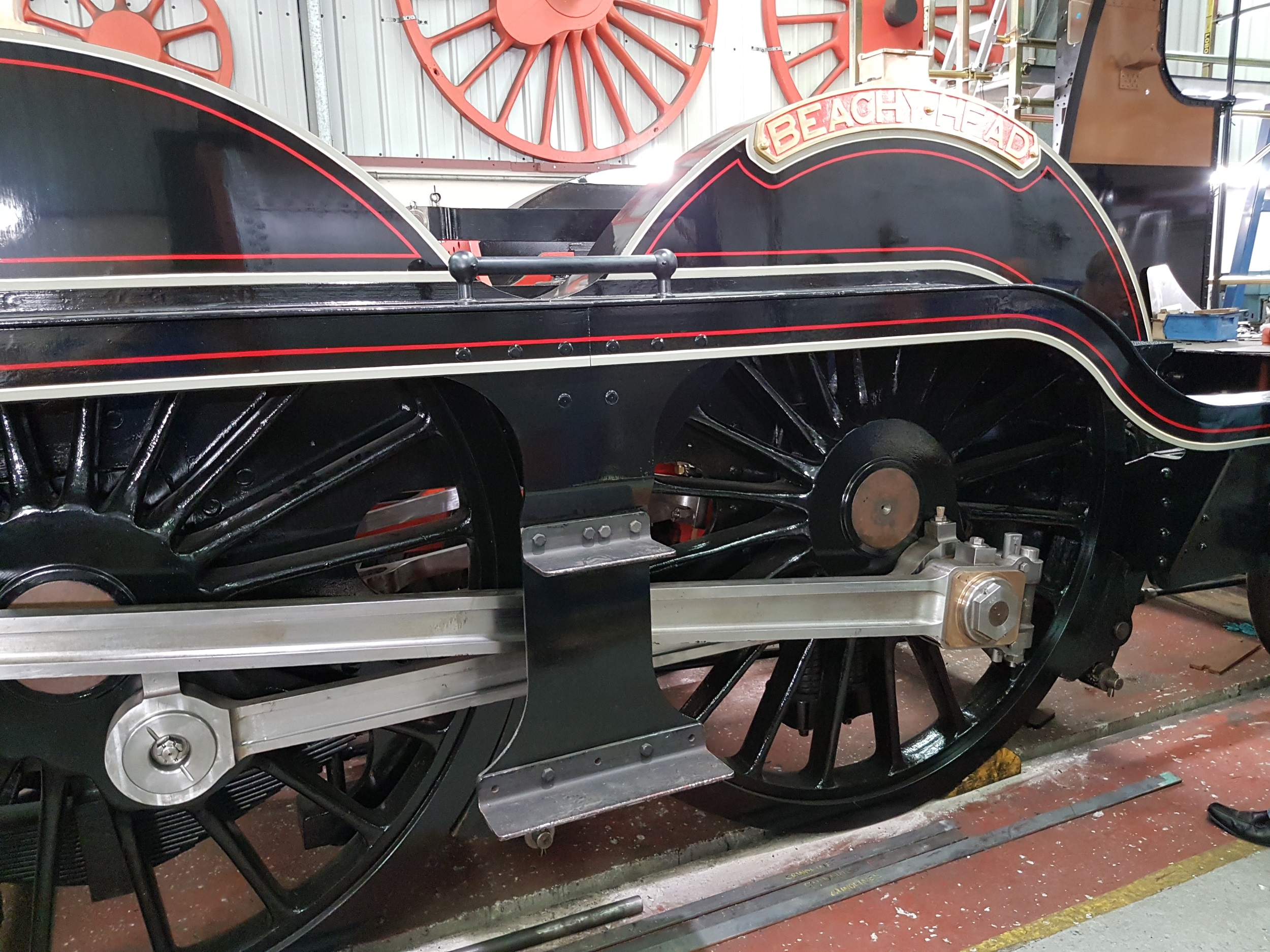
The second highlight was a visit to the ‘Atlantic Shed’, where a team of enthusiasts are building a Marsh Atlantic from scratch.  We have seen the results of this with ‘Tornado’ heading main line specials, but it seems a little odd to start building a scrapped locomotive again – and there are a number of projects in progress.

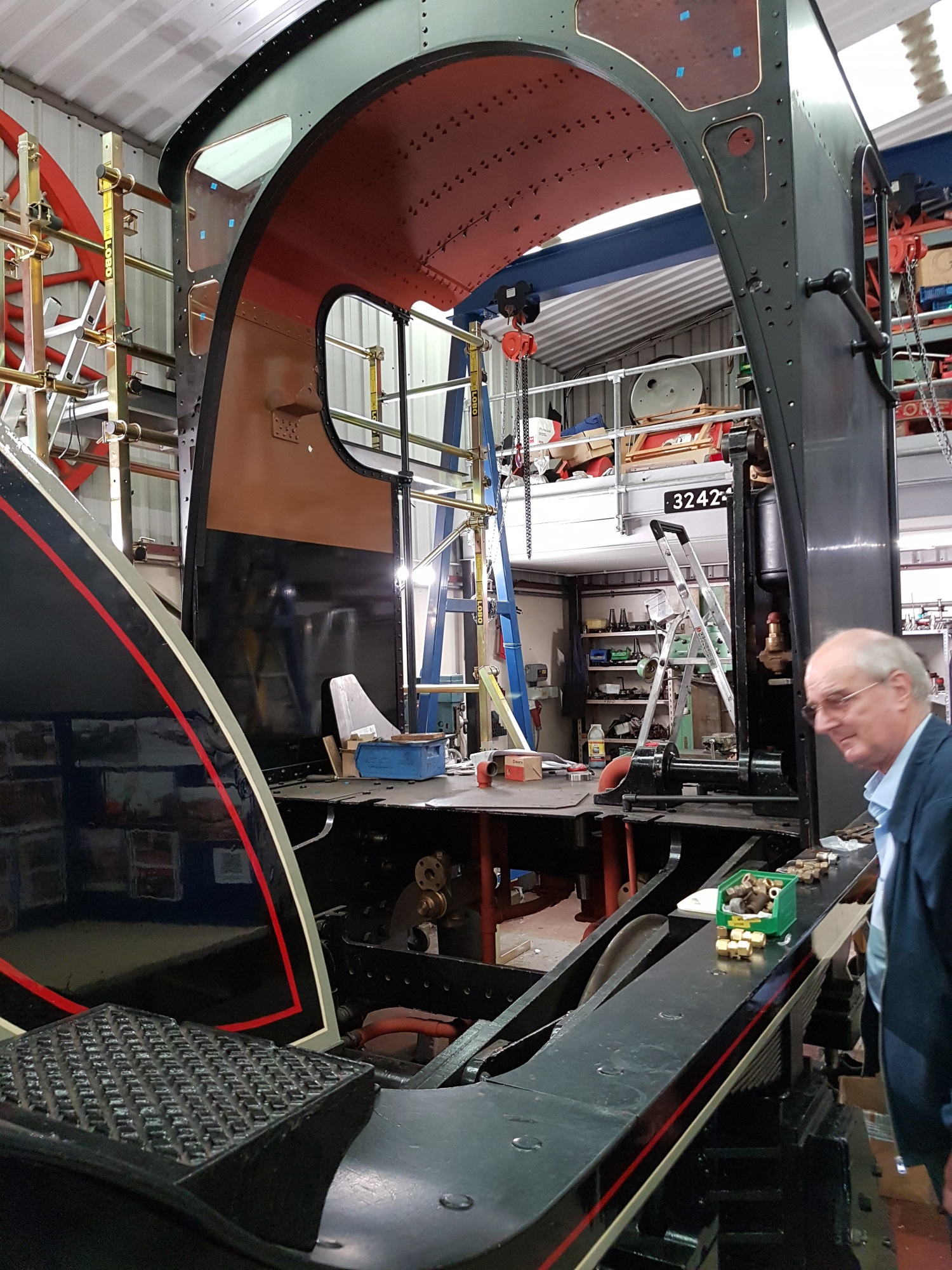
But the Atlantic could be something special!  It’s take 10 years to get to the state below, with the frames, wheels, motion and footplate complete, and the cab in part.  The boiler is also in the shed, ‘borrowed’ from another loco, I think.

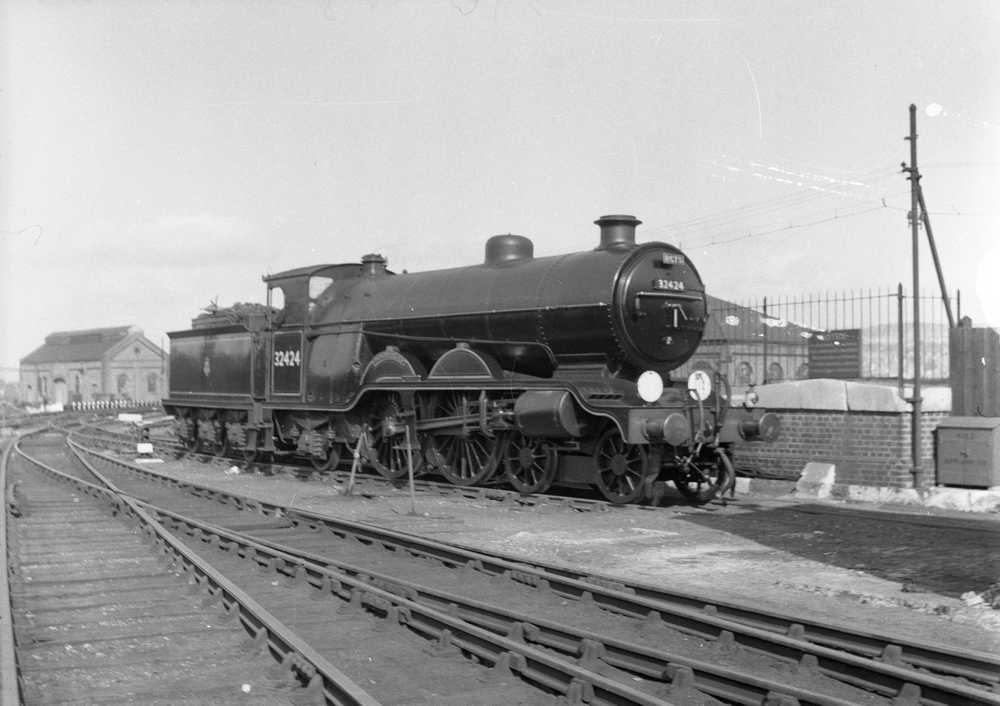
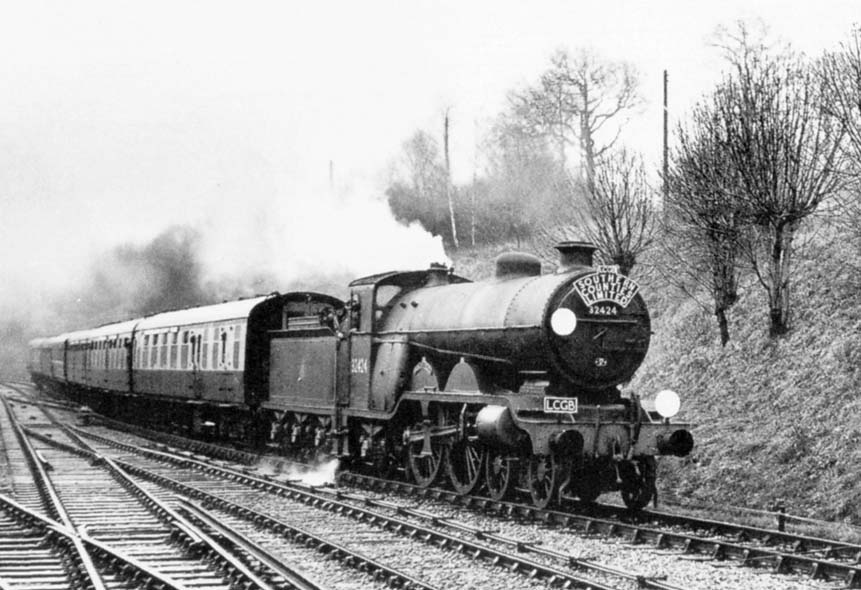
And here are two shots of ‘Beachy Head’ in British Railways days, the second one taken on the Bluebell before it’s original closure.


And here’s 20 minutes of the whole weekend, prototype and model, that appeared on YouTube.  ESNG appears, briefly, at around the 19 minute mark.

Posted in ESNG, Exhibitions | Tagged , , , | 2 Comments

ESNG at the Bluebell – 3

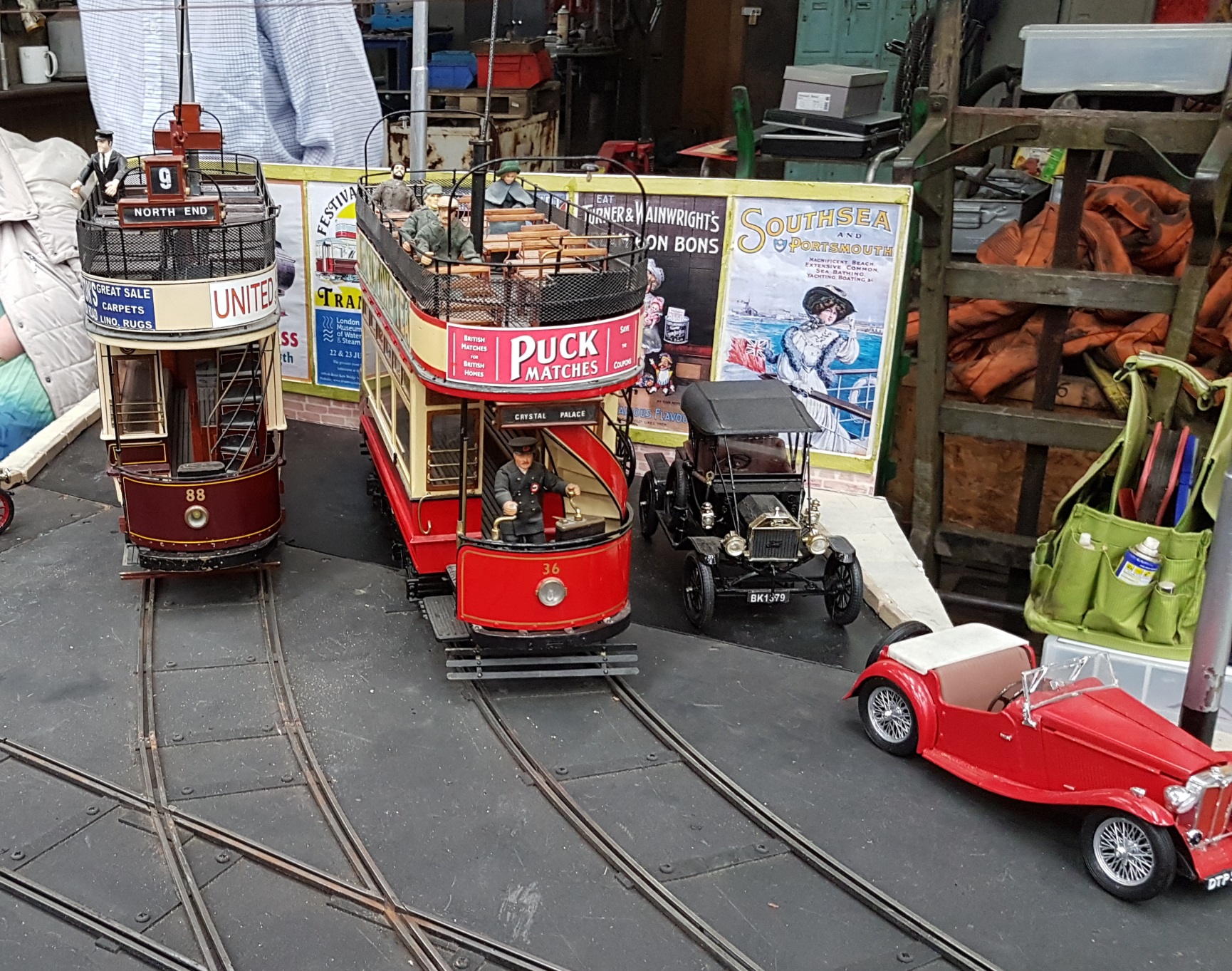
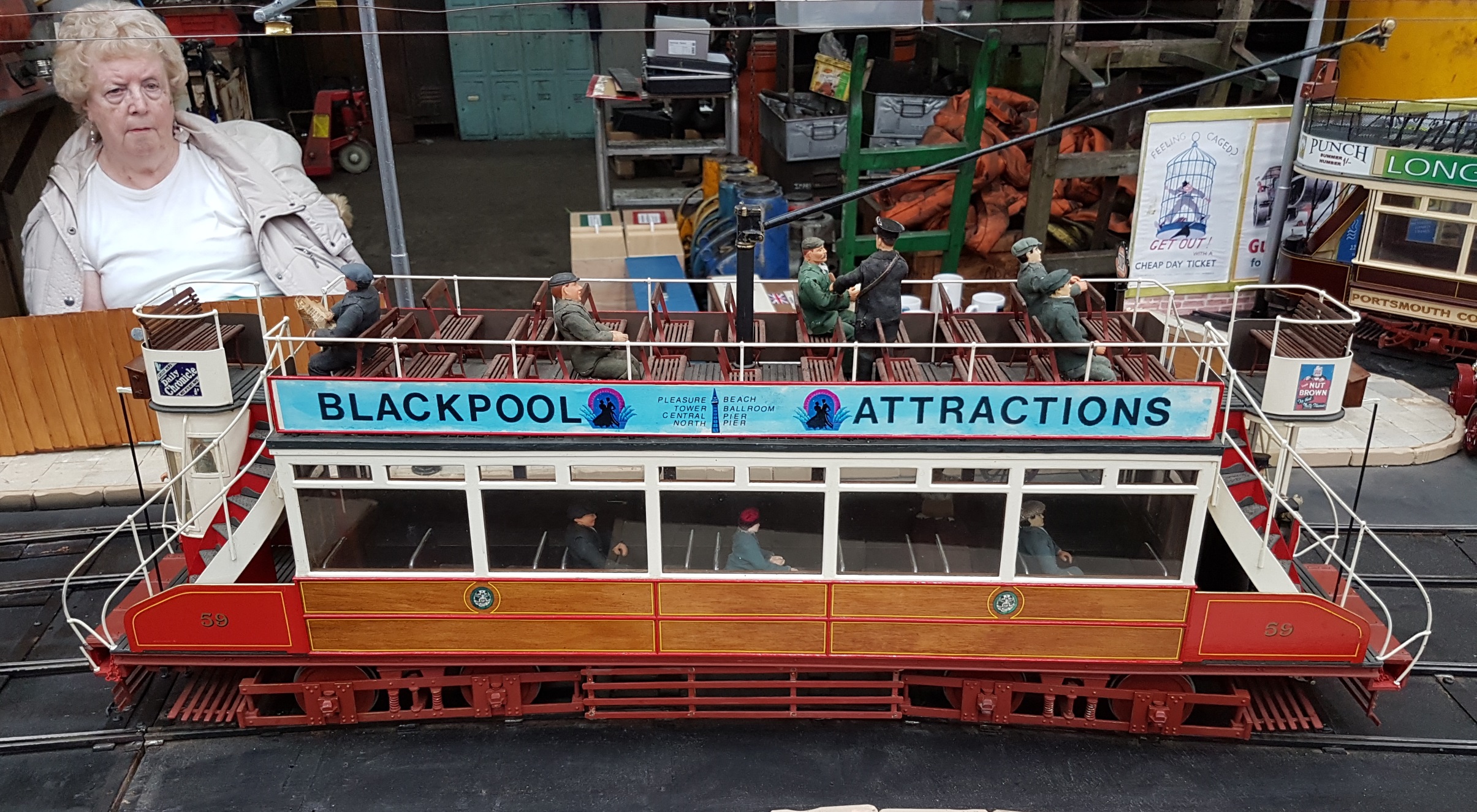
Today, we’ll have a look at some of the other models on display.  Opposite us in the locomotive works, and making an interesting contrast with ERIC the International Tramway Museum, was a 3/4″ tramway layout.  All British trams, picking up juice from the overhead, and everything scratch built.  A tempting size and prototype, but this is really model engineering, although the tram bodies are relatively simple to construct at this large scale from wood, card and plastic.

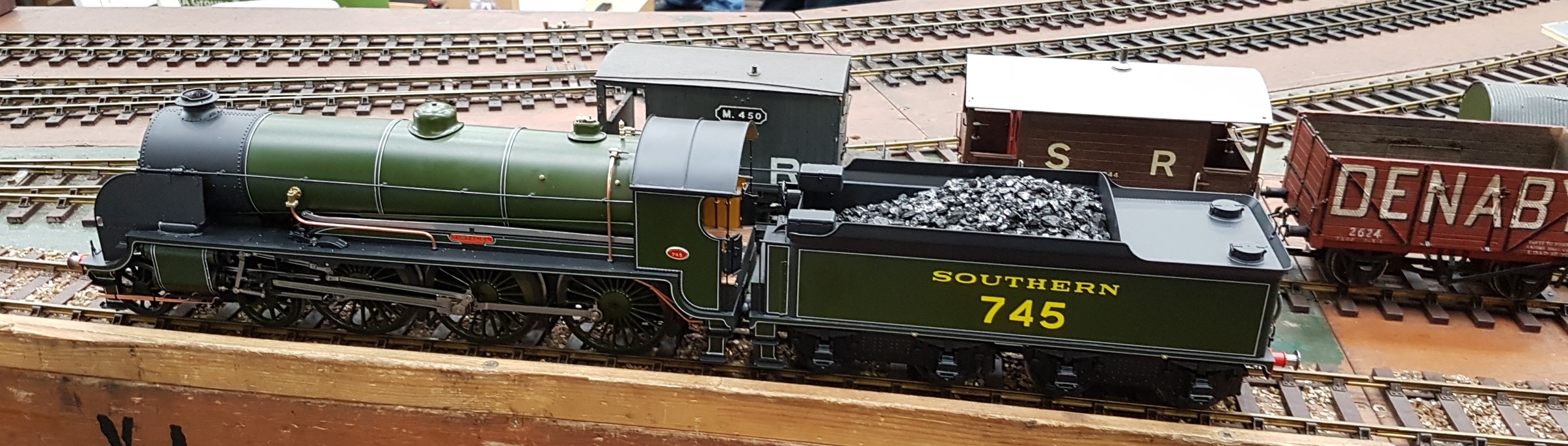
To our right was another large scale layout, in Gauge 1 (1omm to a foot in the UK), and mostly live steam.  Together with the trams, this was a constant distraction from watching our own, rather tiny trains.

A lovely Southern Railway ‘King Arthur’.  Why doesn’t someone make an ‘N’ model of one of these, rather than all those boring GWR 4-6-0’s?

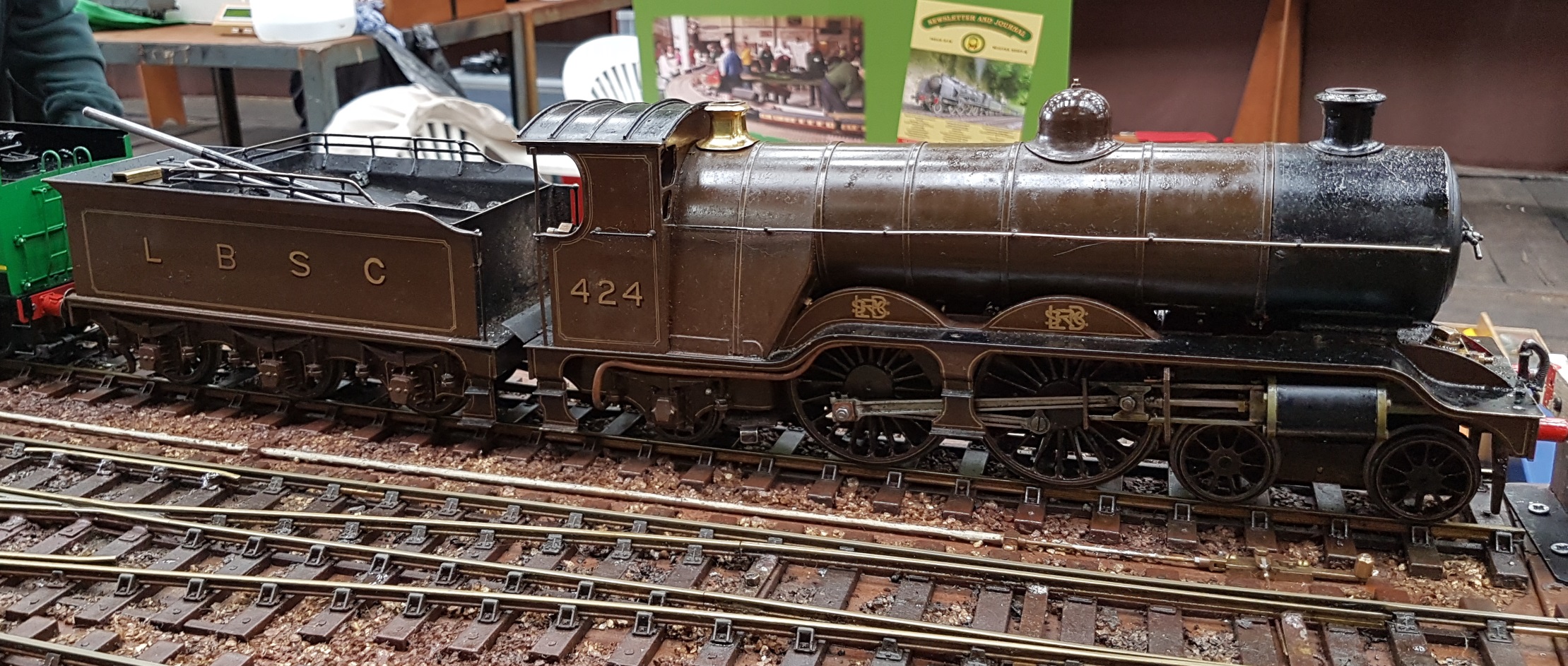
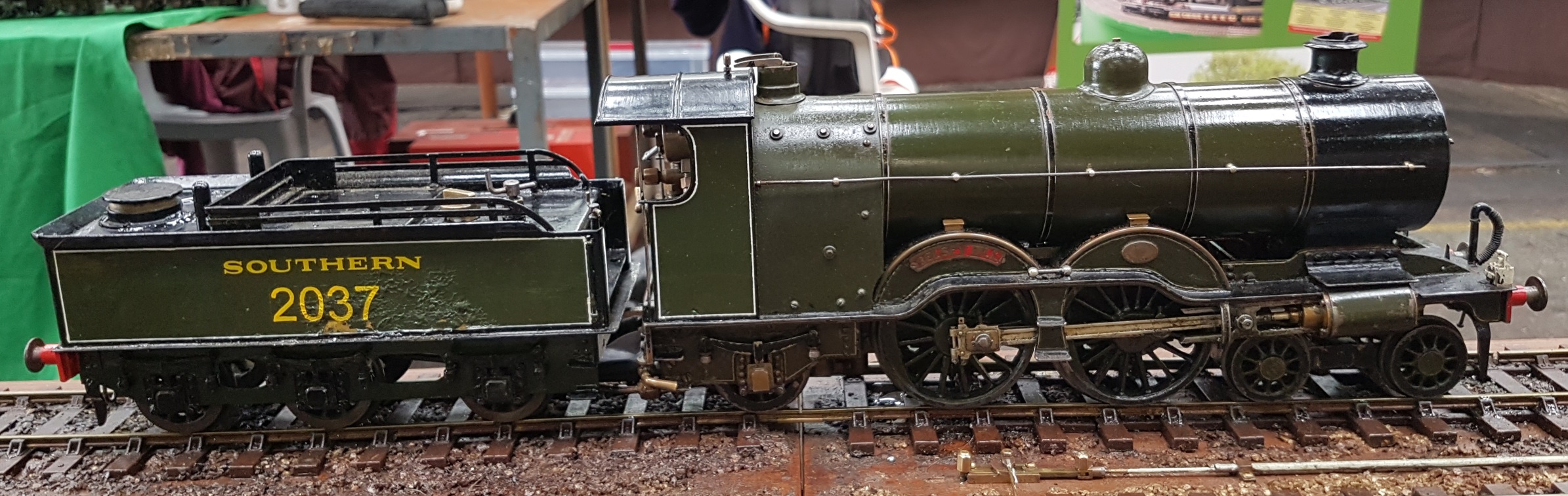
Two LBSCR Marsh Atlantic 4-4-2’s, one in later LBSCR umber and the other in Southern olive green.  Two more beautiful locomotives, but difficult to model in small scales as the driving wheels are very close together.  To model one, you either have to have smaller wheels, with the correct diameter over the over-scale flanges, or ease the coupled wheelbase a tad.  The Southern version is looking a little worse for wear and needs repainting, but I was told that the model is 60 years old!  It is still running well, though there is a lot of slop in the full Stephenson valve gear between the frames.

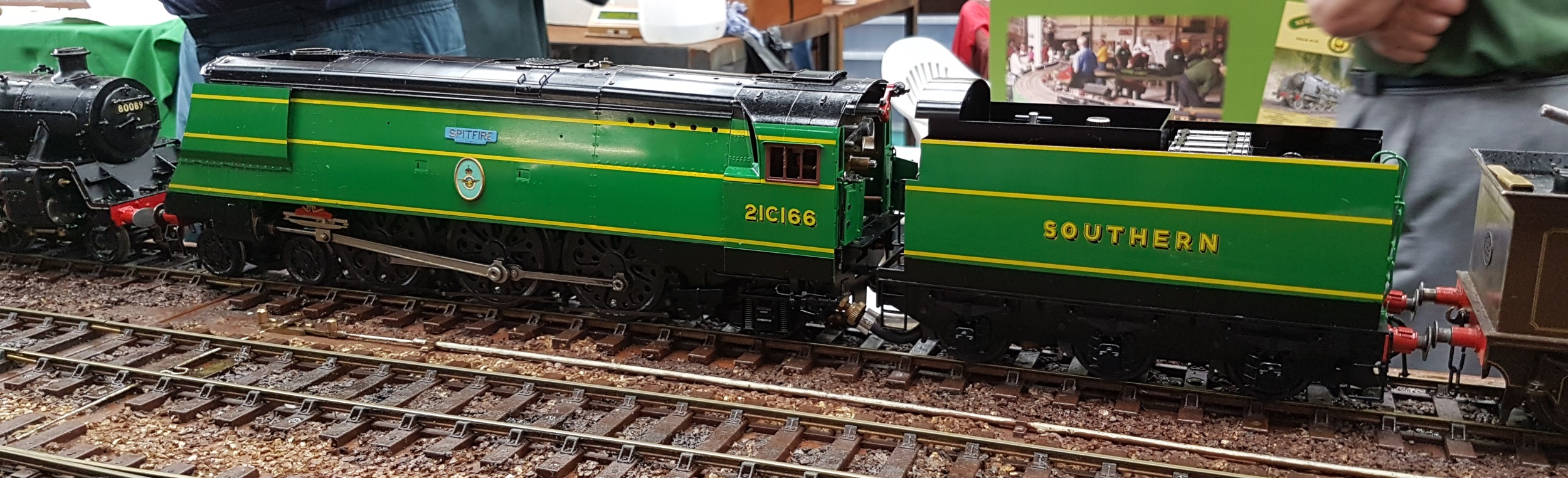
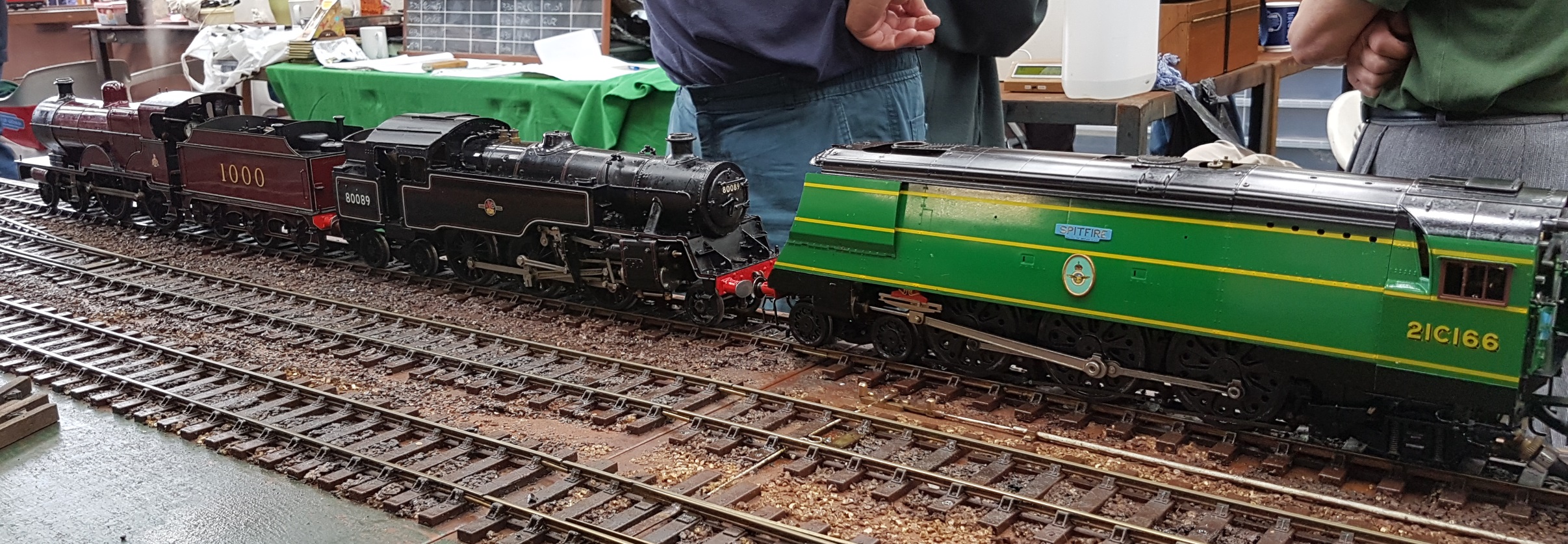
And parked up waiting to run again are ‘Battle of Britain’ Pacific, ‘Spitfire’, a British Railways Standard 2-6-4T and a Midland Railway compound 4-4-0.

At the other end of the works, we found Darrel Birch, an ex-ESNG member and his layout ‘Berry Town.’  I quickly booked him for next year’s show!

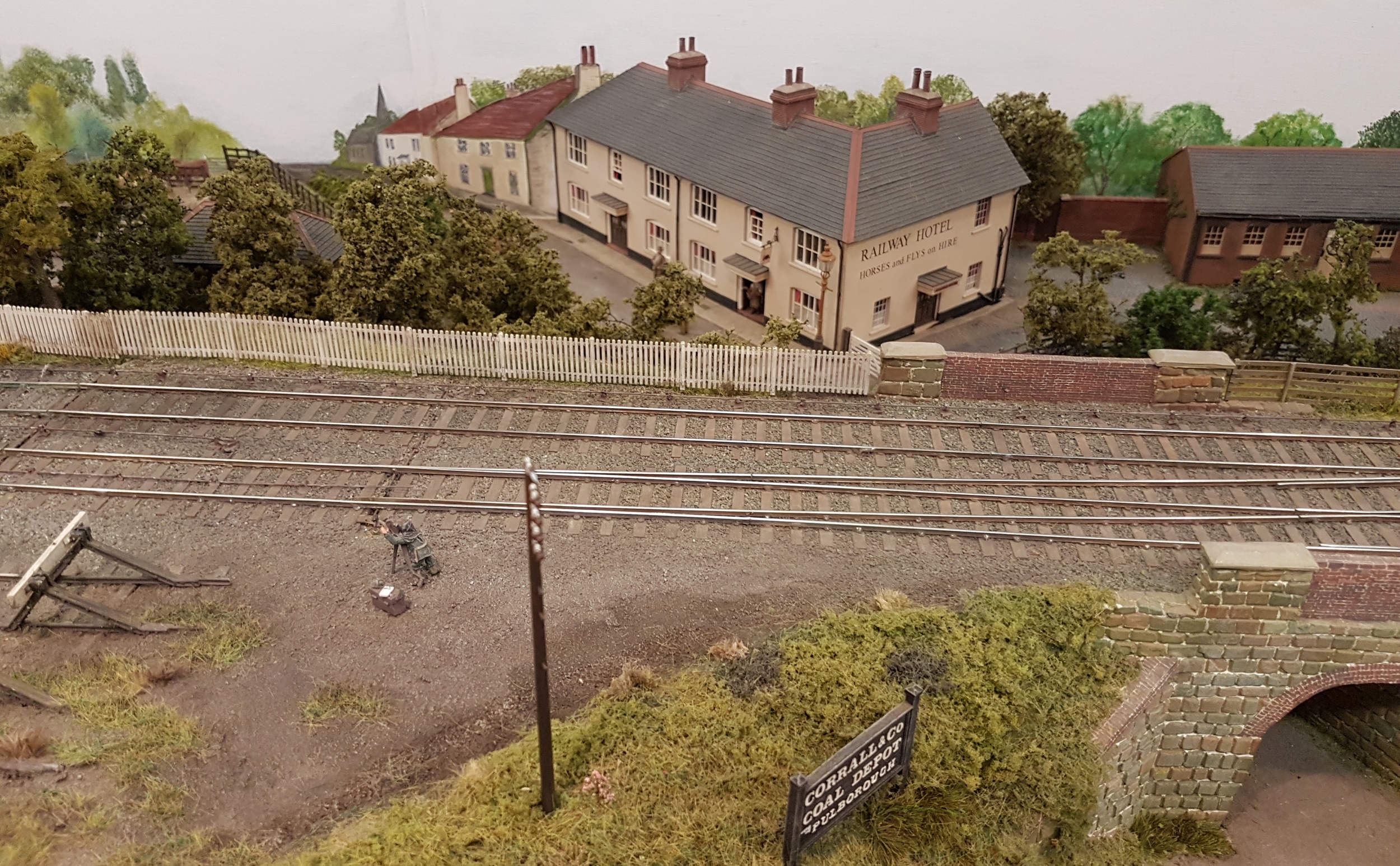
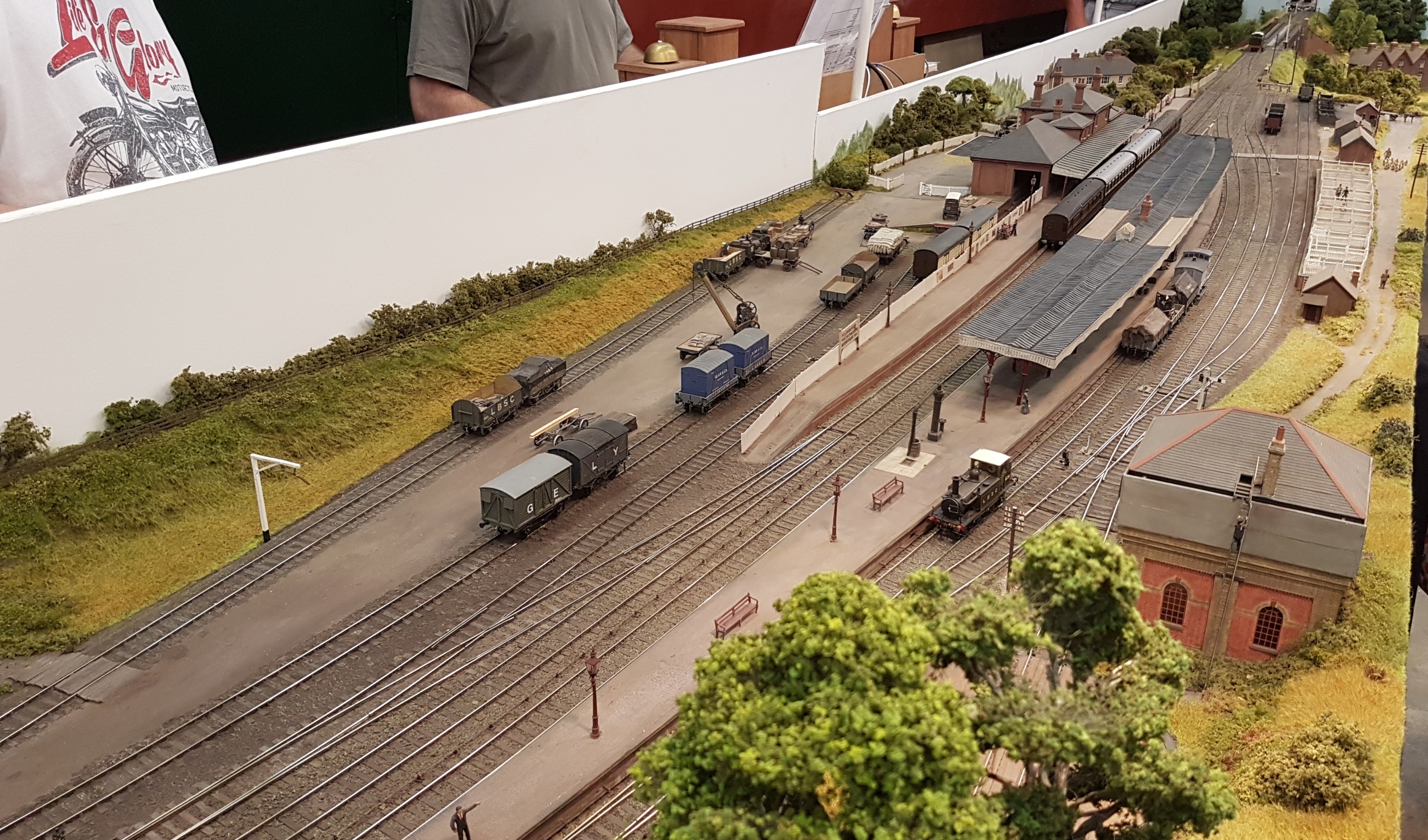
Allan and I took a train up to Horsted Keynes, to see the exhibits there.  Pick of these was ‘Pulborough’, a lovely 4mm fine-scale layout modelling the station in the years before the grouping last century.  Lots of kit and scratch built models, and some well observed scenery.  The umber livery isn’t as exciting as Stroudley’s Improved Engine Green, but it looks very smart, and I’m sure it’s a lot, lot, easier to line out the models.

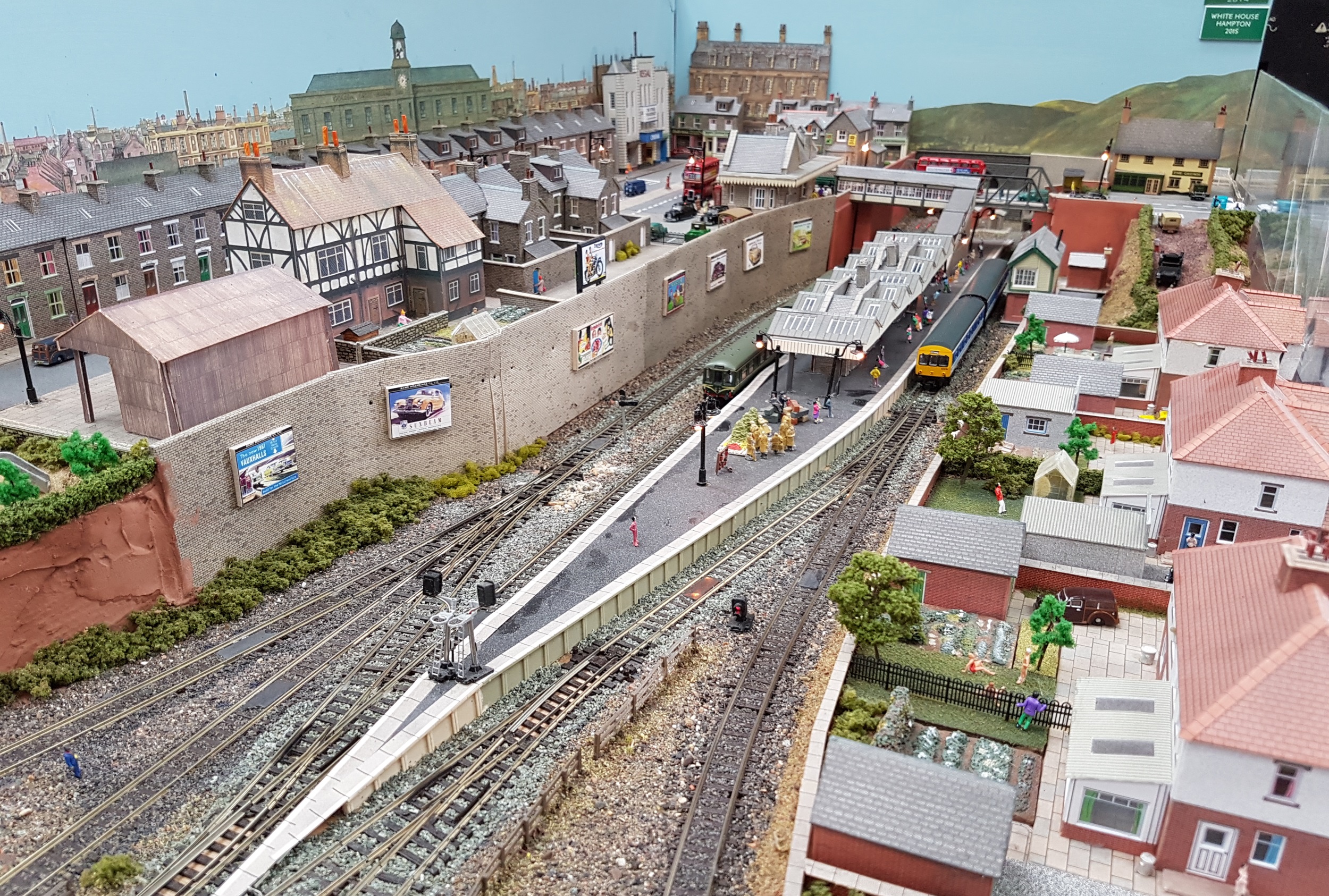
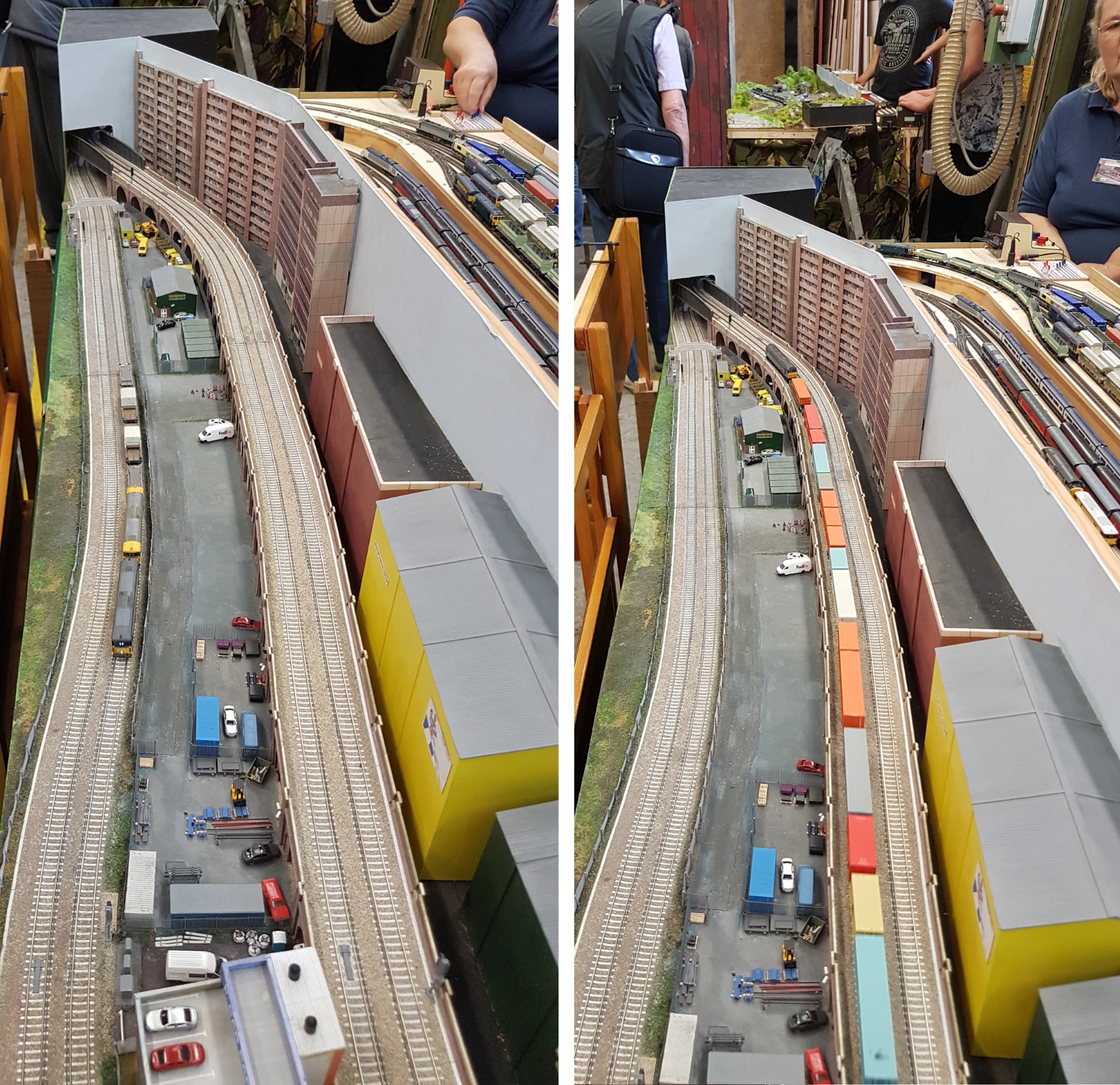
And finally, it was good to see ‘Atlantic Road’ again.  I didn’t manage to take a picture with trains on at our own show, so here’s a train on each level.  A very satisfying layout, especially as I lived a couple of miles away from here for 10 years.

Next post, the final one from the Bluebell, will be my favourite prototype engines from the weekend.

Posted in ESNG, Exhibitions | Tagged , , , | Leave a comment

ESNG at the Bluebell – 2

Today, a few shots of the trains around Sheffield Park.  There were just so many locomotives to admire – some in steam, some awaiting maintenance, and some, like the Schools Class 4-4-0, in pieces.

Just outside the locomotive works was a line of Southern locomotives of various vintages.

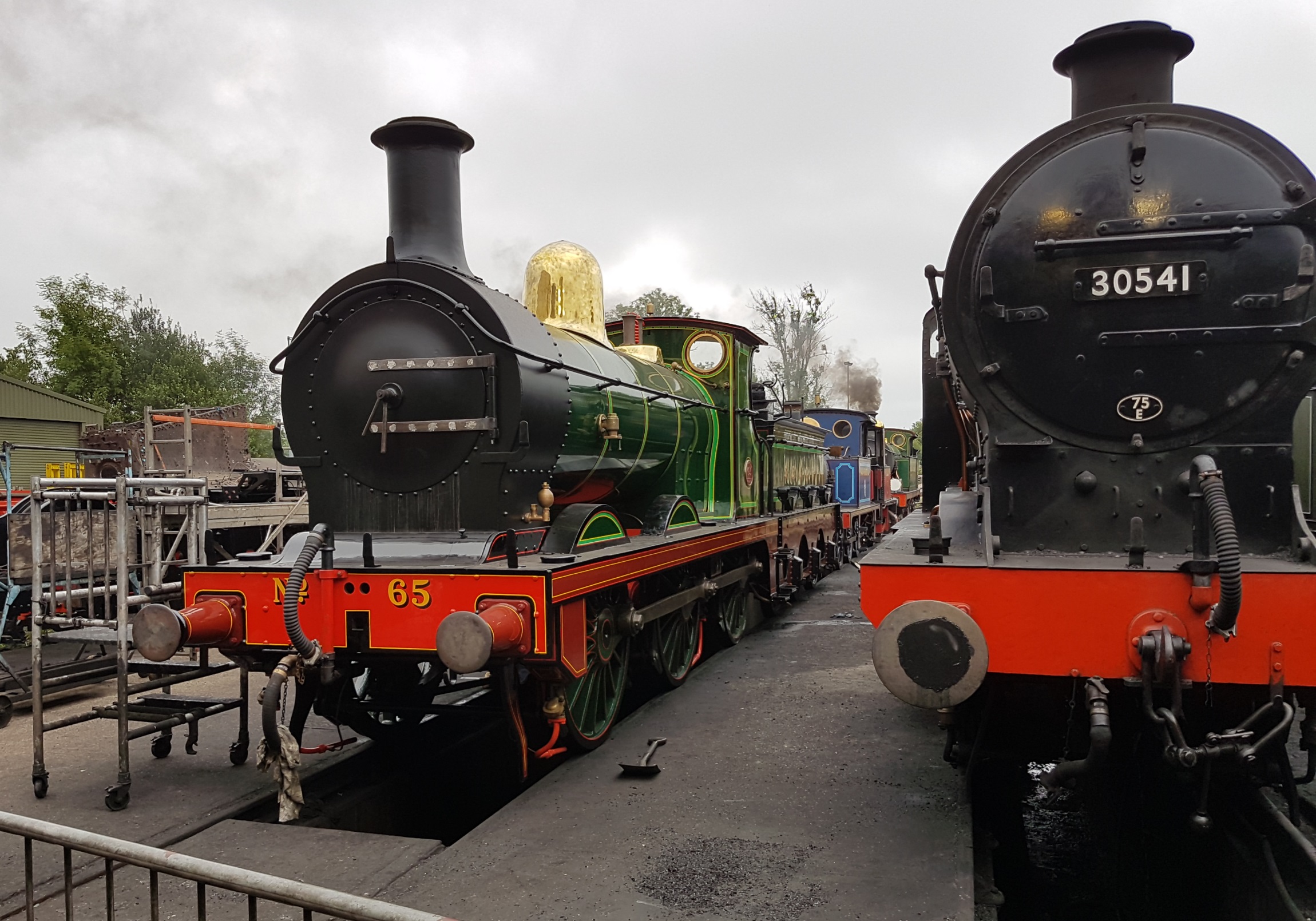
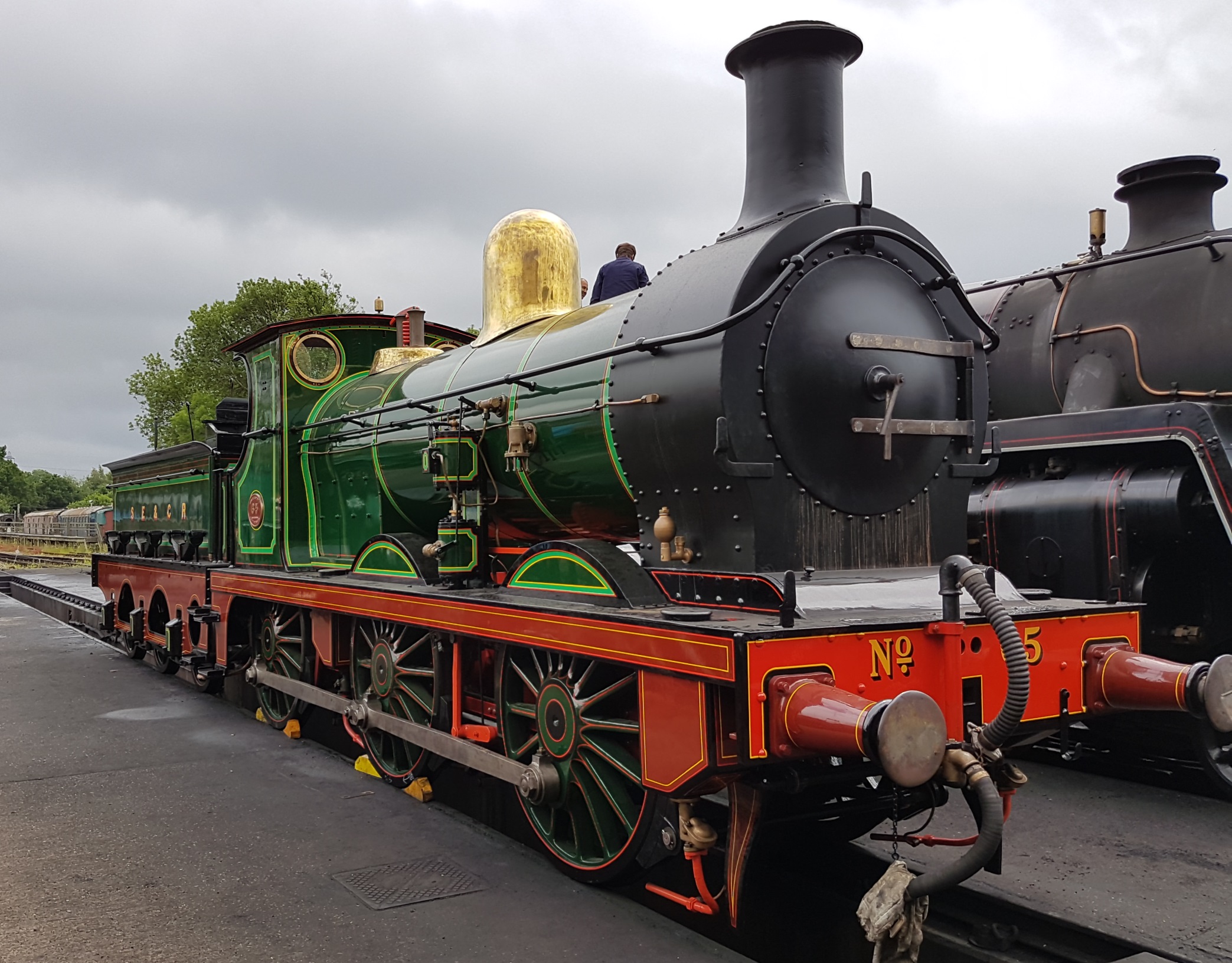
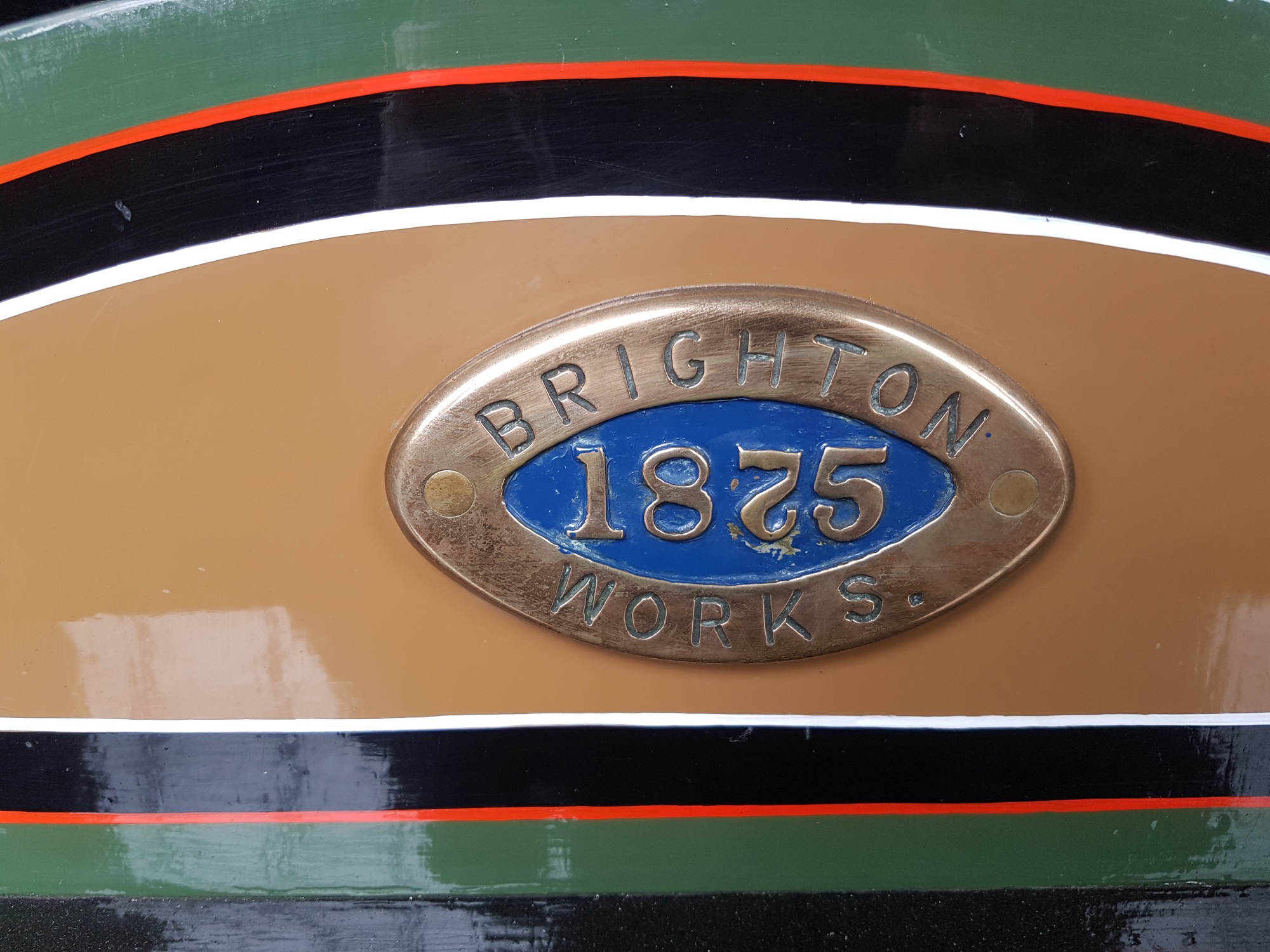
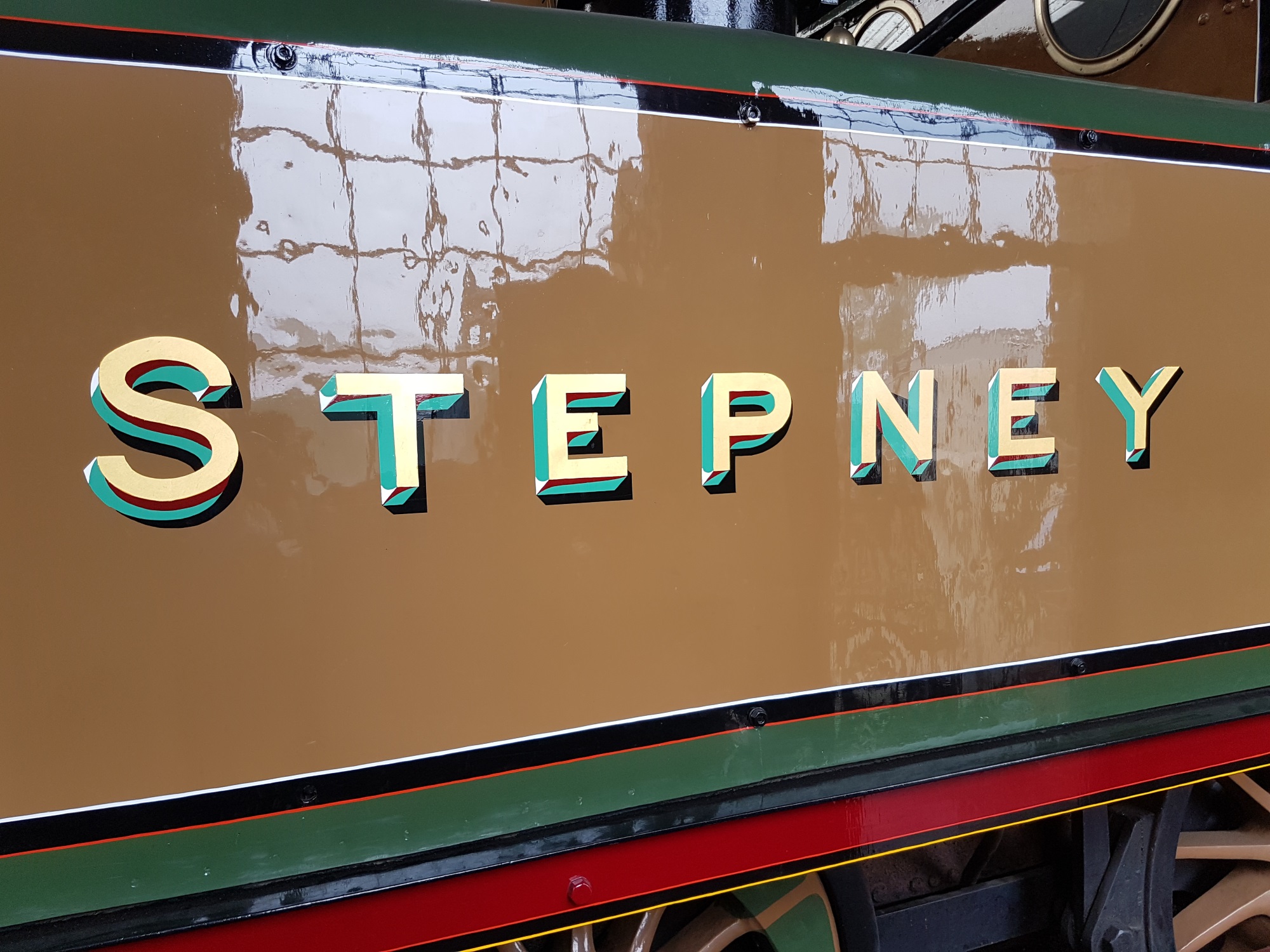
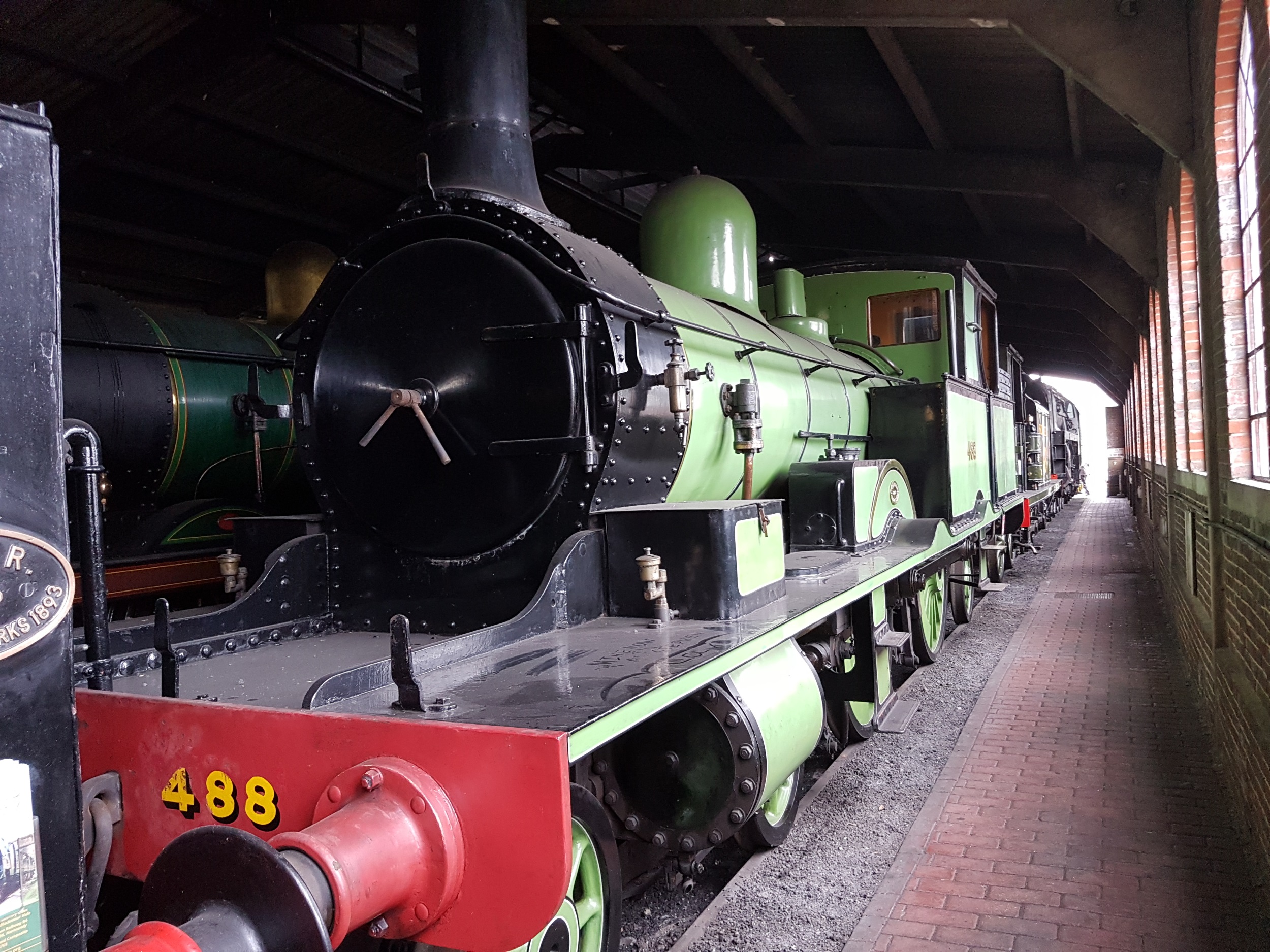
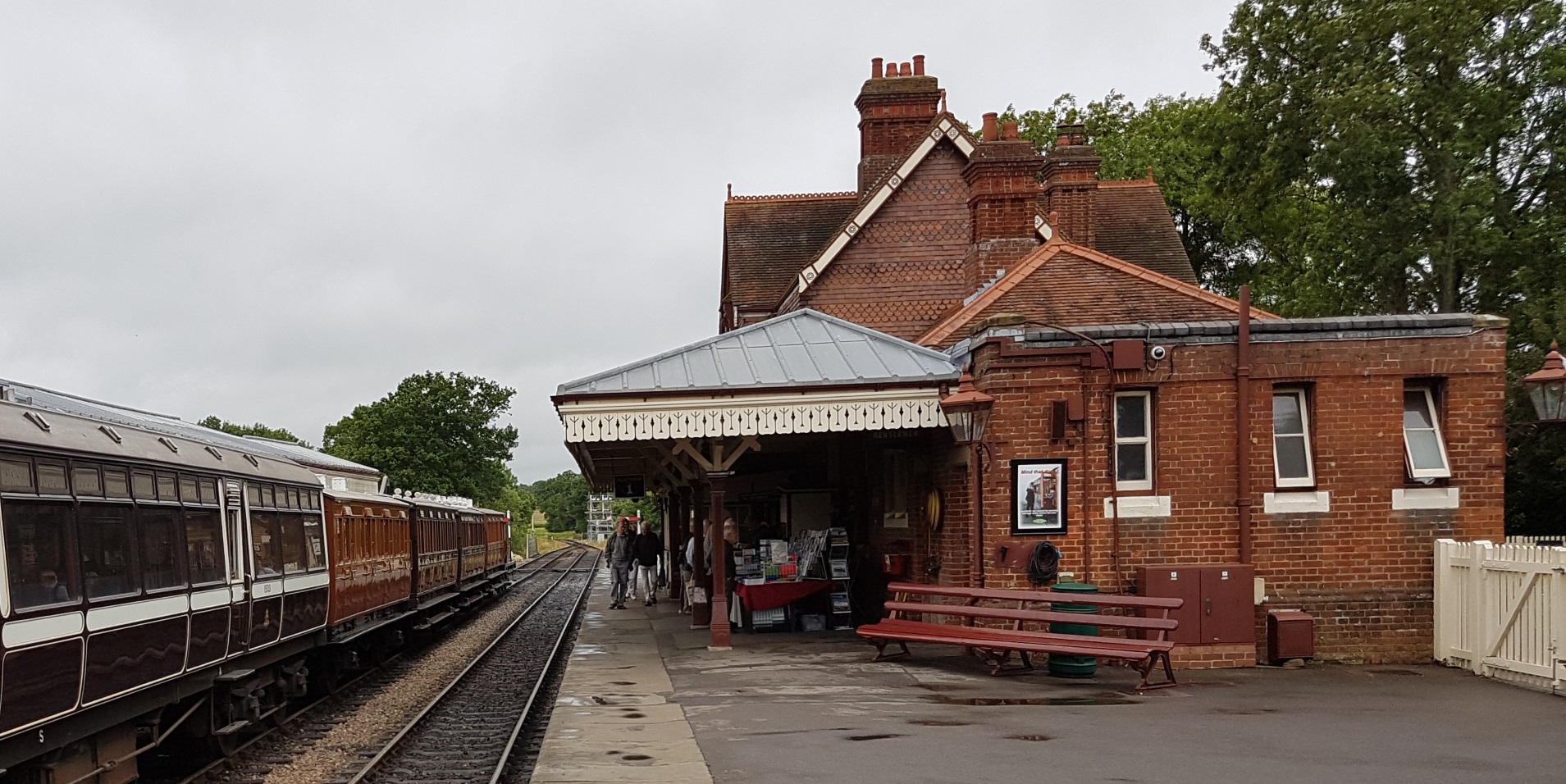
And inside the shed, LBSCR 0-6-0T ‘Terrier’, ‘Stepney’ showed how smart – and complex – the old LBSCR livery was.  It is rumoured that the unusual livery of “Improved Engine Green” came about as designer Stroudley was colour-blind.  I can’t think of any other reason to paint a locomotive that colour!  Built in 1875.  How many preserved diesels will still be running when they are 142 years old??

Also in the shed, but difficult to photograph, was this lovely LSWR Adams 4-4-2T ‘Radial Tank.’  It’s a shame that you can get two versions of this classic locomotive in ‘OO’, but nothing is available in ‘N’.  Not sure where the motor and weight would go, though?

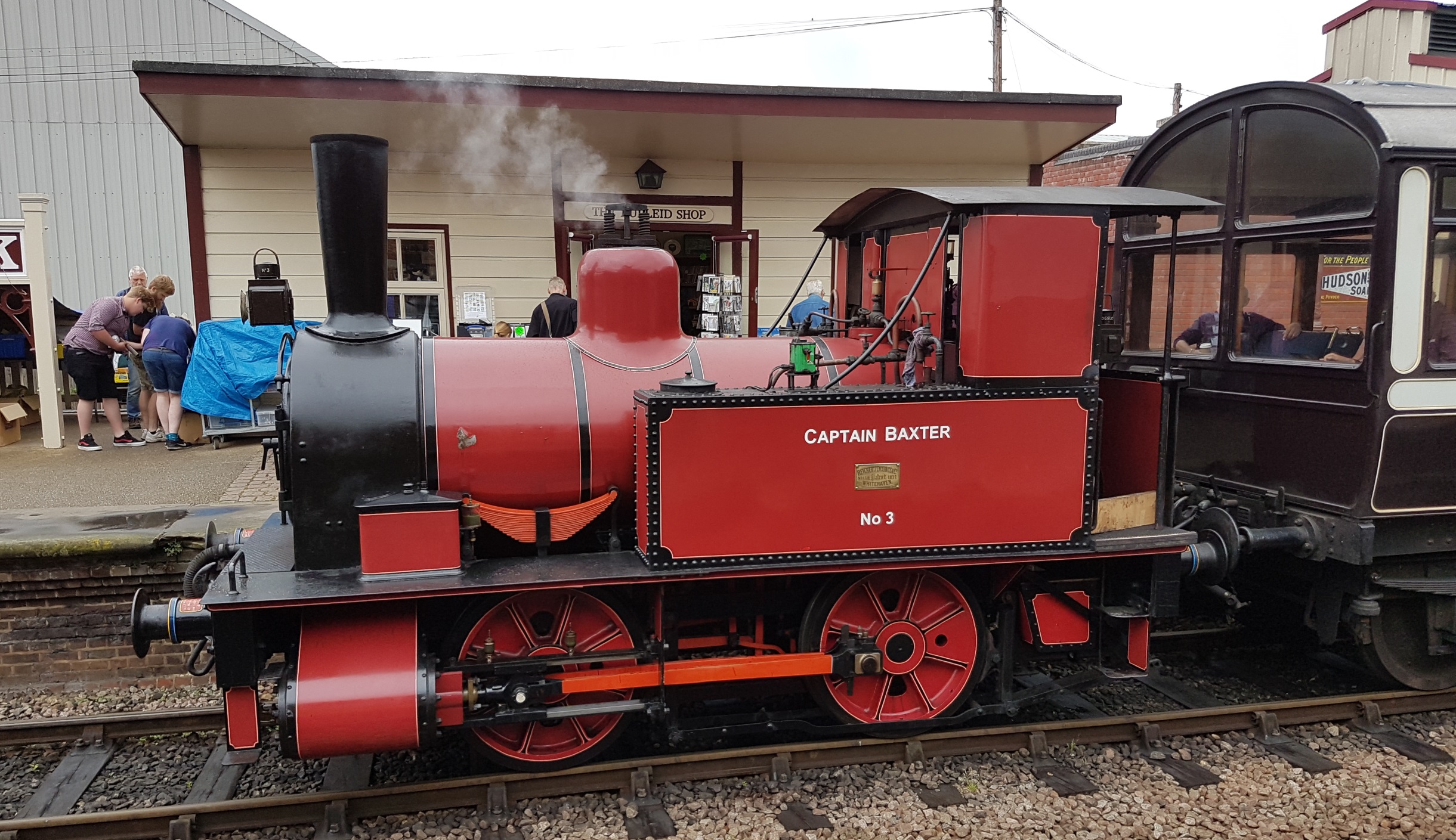
Outside, there was a shuttle service running push-pull from Sheffield Park to Horsted Keynes, with this little industrial locomotive on one end….

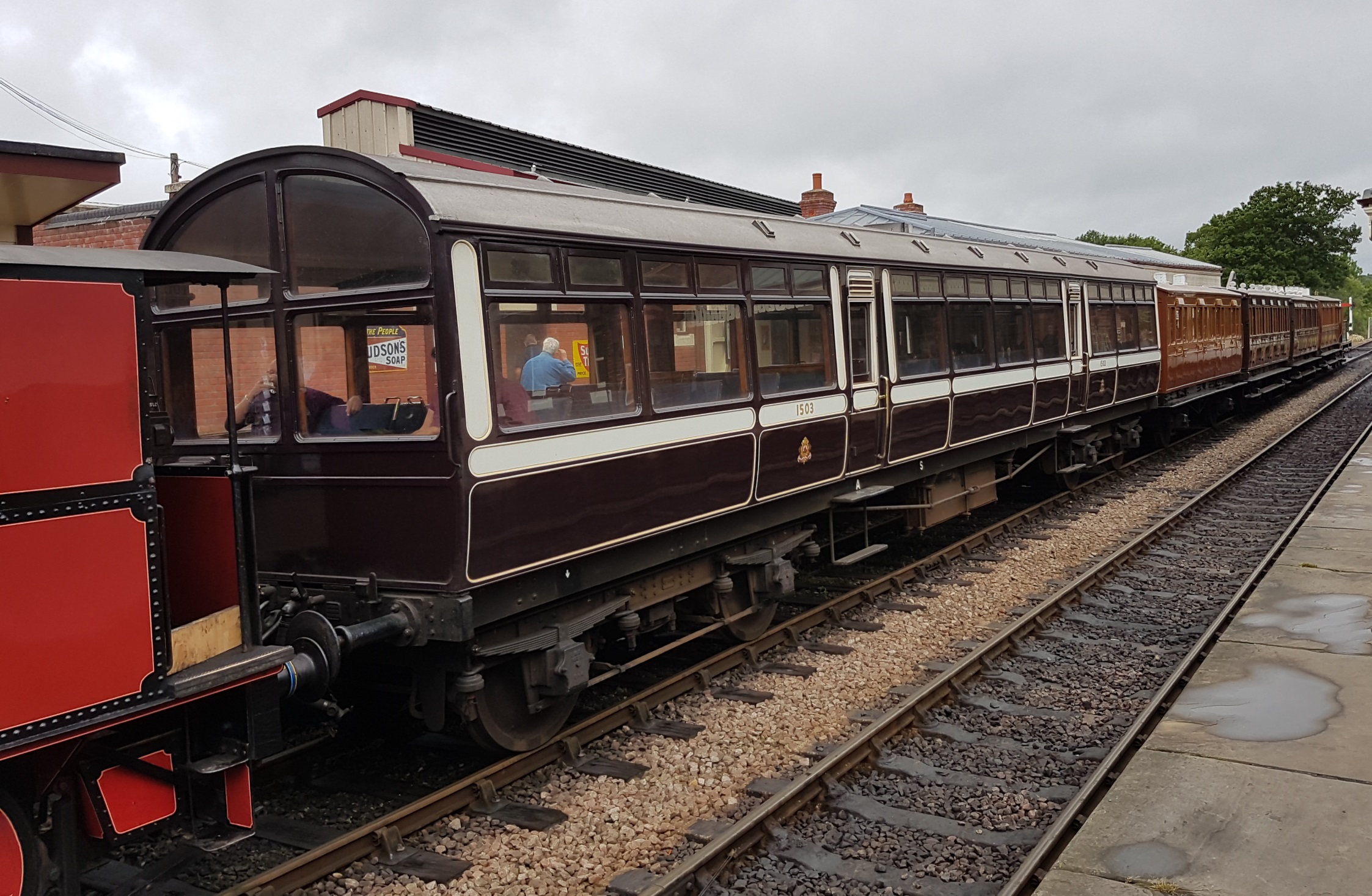
An observation  car and some four-wheeled coaches between…..

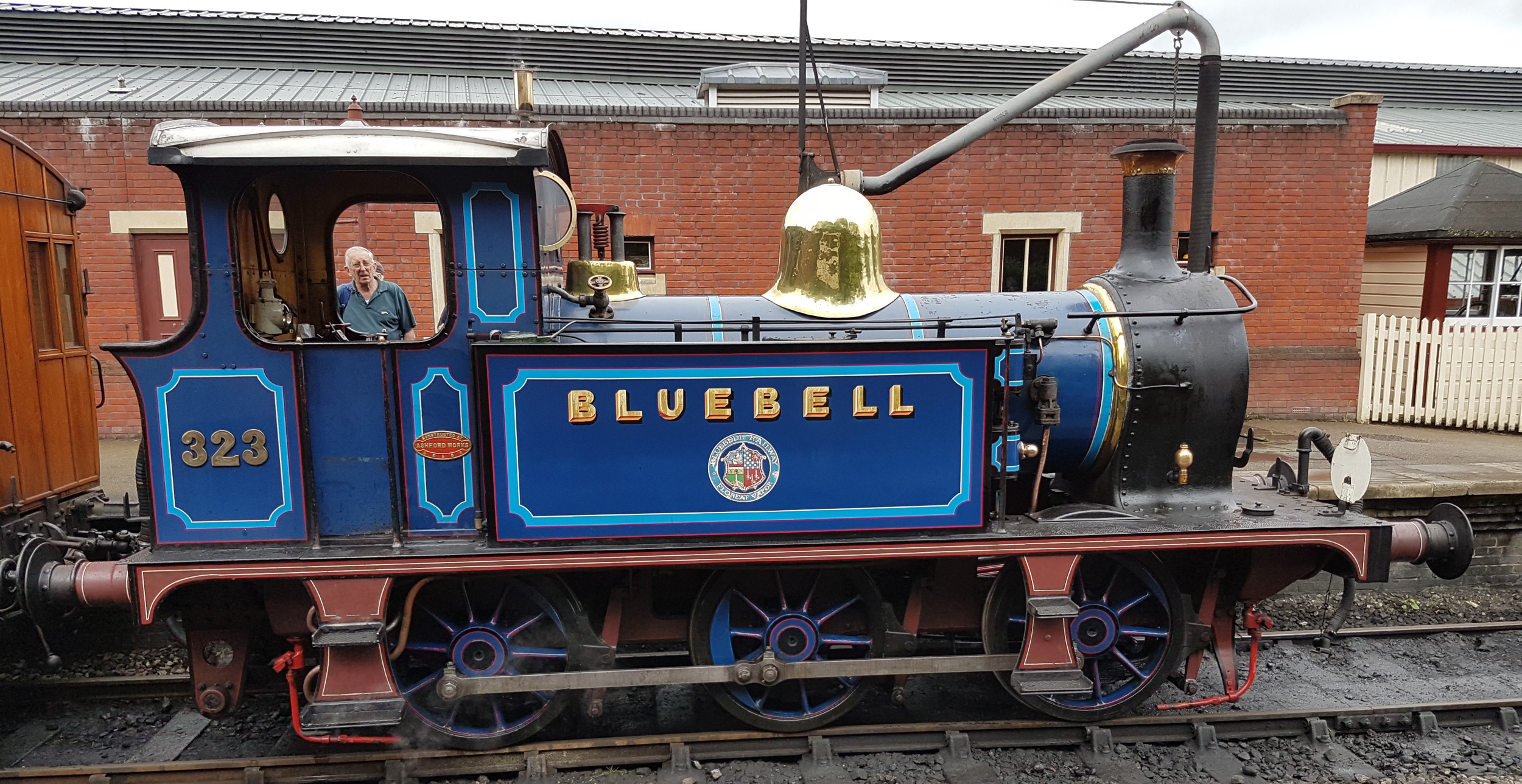
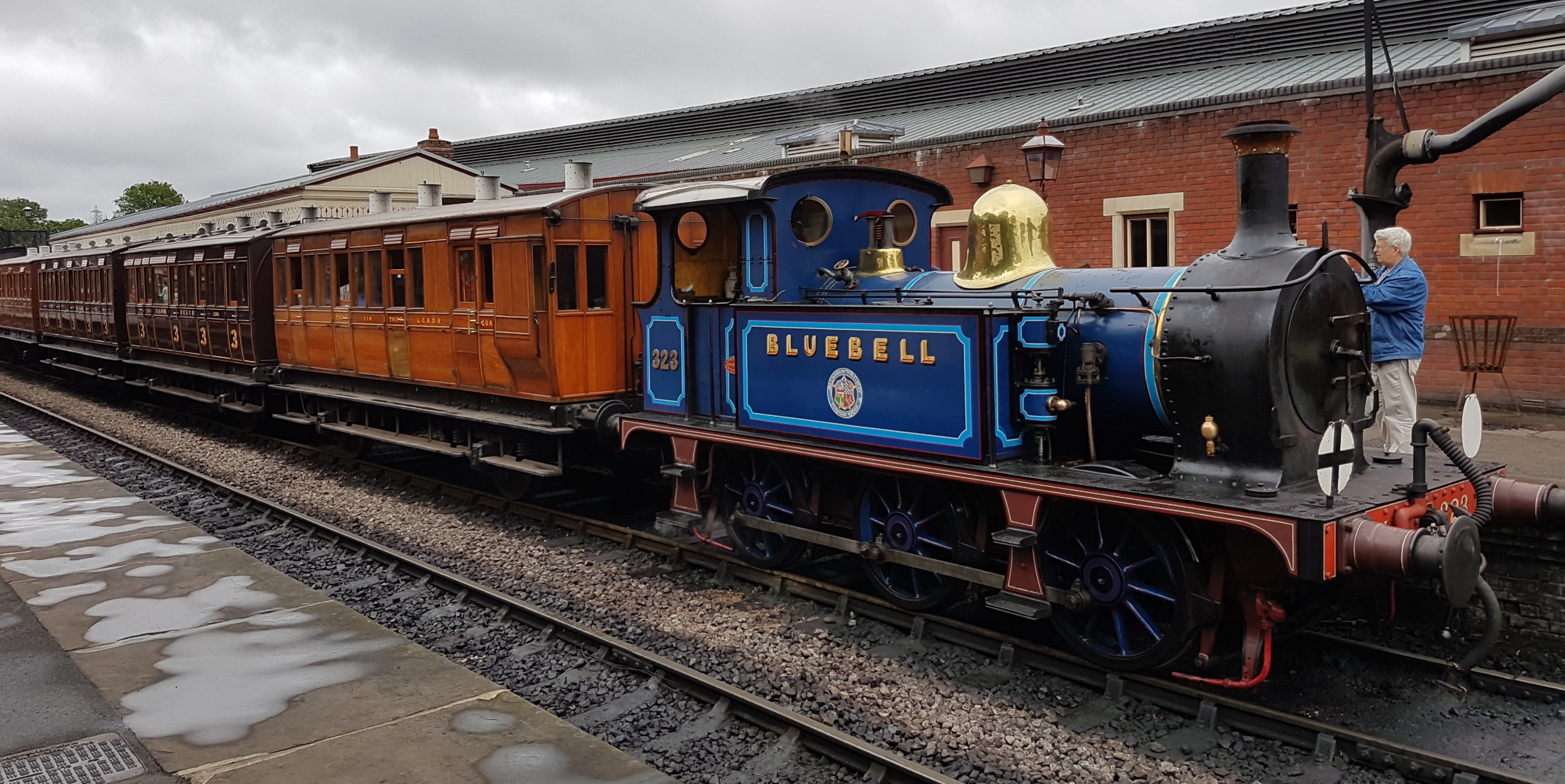
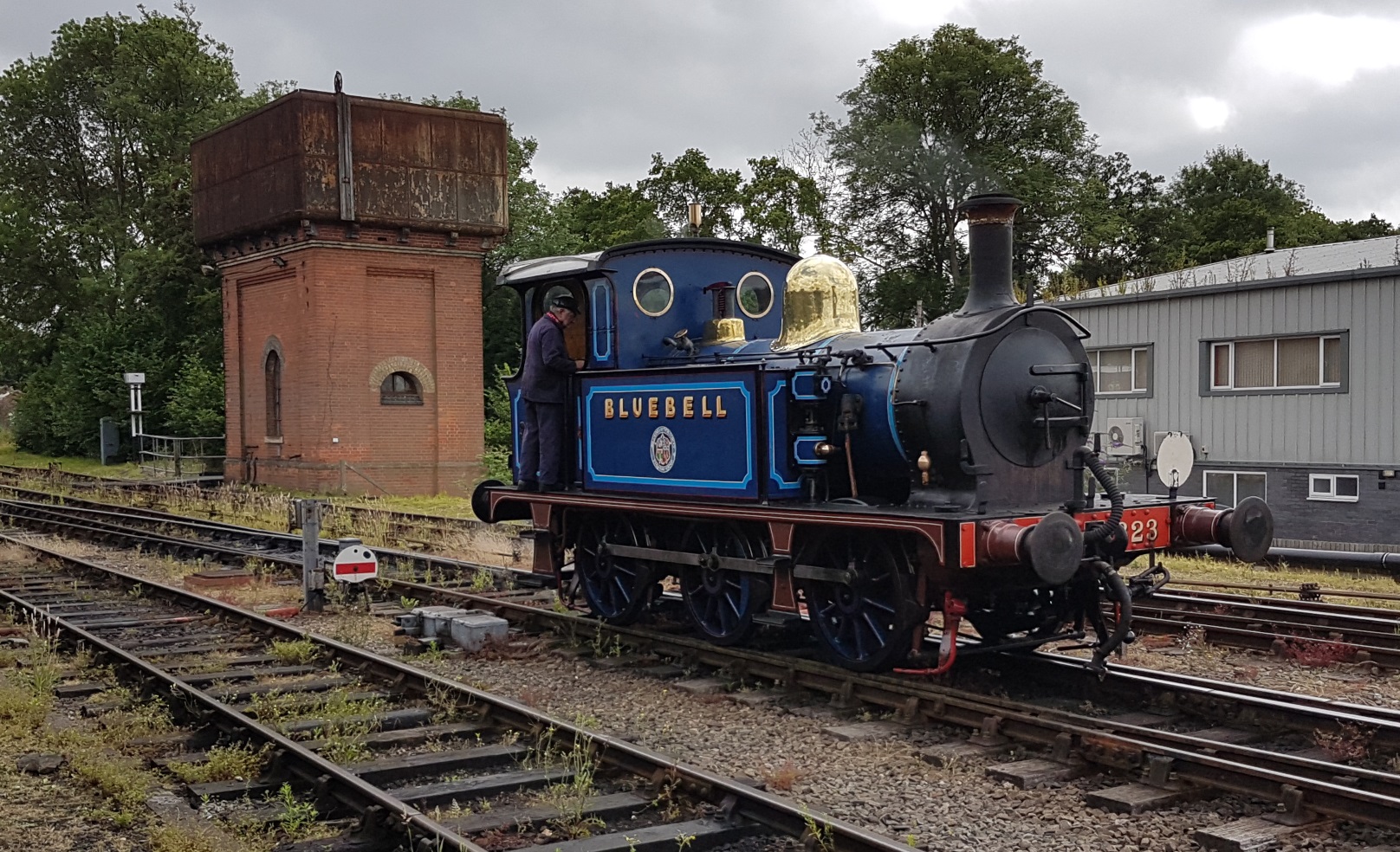
And an SECR ‘P’ class 0-6-0T on the other end of the train.  These diminutive tanks were built for push-pull services on the SECR, and would have been SECR, then Southern green in livery.  However, this one looks very smart in ‘Bluebell Blue.’  It remains a moot point – should preserved locomotives appear in imaginary liveries, or, as has happened, be renumbered and named as a different member of the class.  I’m not sure of the answer.  I guess if it doesn’t happen too often, why not?  We can’t keep the past completely frozen, and the Bluebell is a living, working, railway as much as the privatised railways next door.

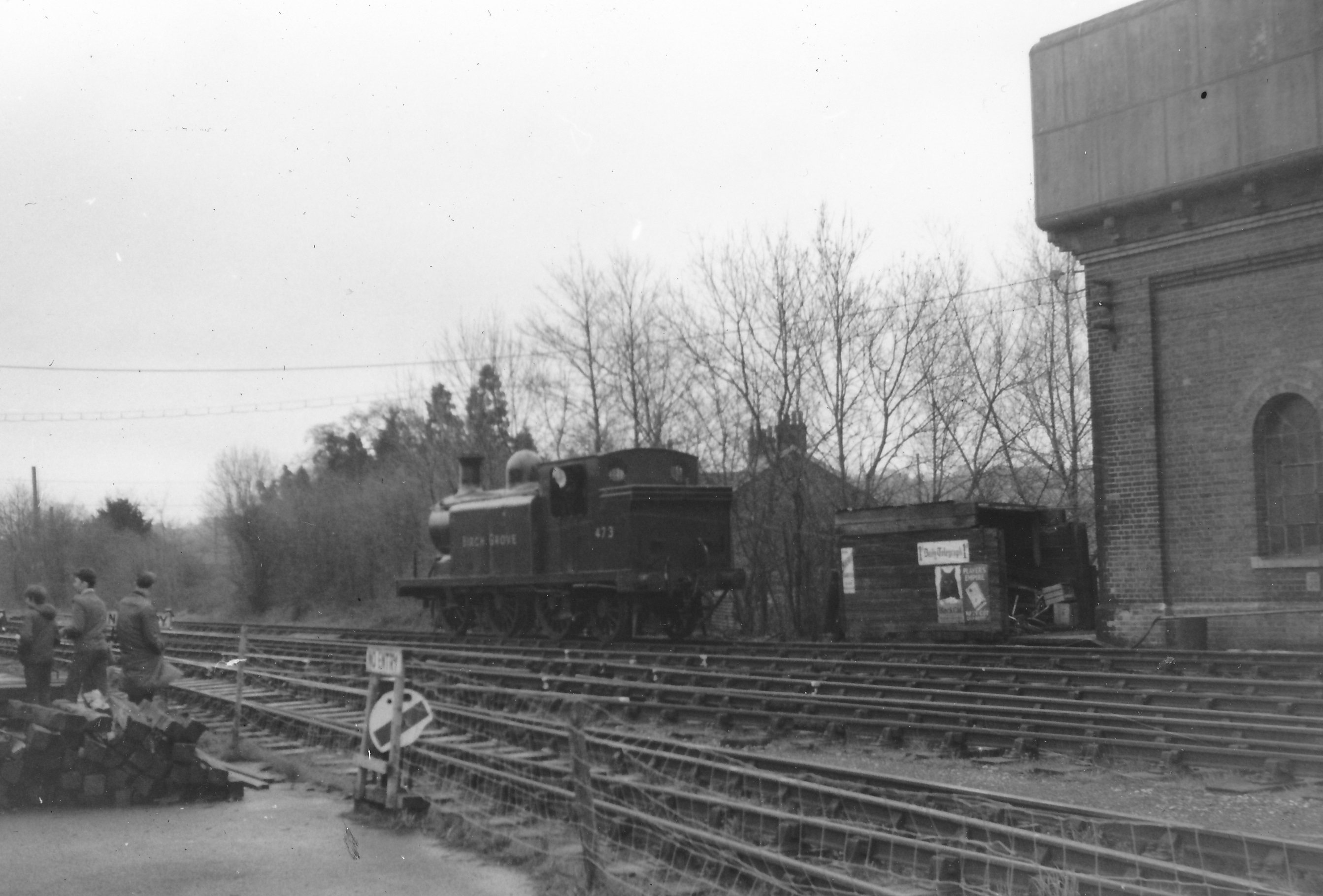
Finally, here’s a contrast – the same spot by the water tank in 1970…

Next post, a look at the other models on display.

Posted in ESNG, Exhibitions, Out and about | Tagged , , , | 1 Comment

ESNG at the Bluebell – 1

We spent a very pleasant weekend at the end of June exhibiting at the Bluebell Railway Model Railway show.  Two days playing trains, with the real thing just outside the “exhibition hall”.

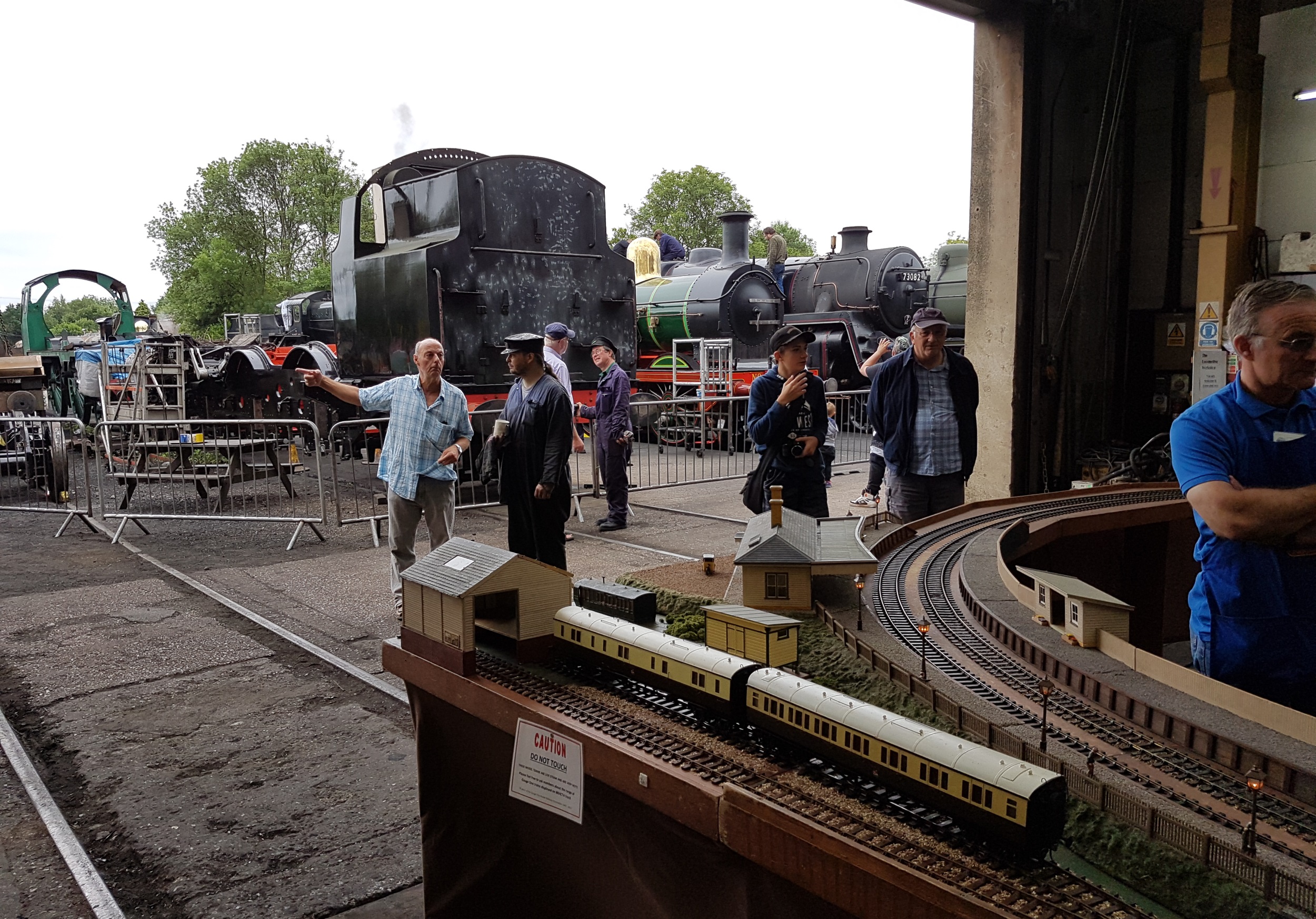
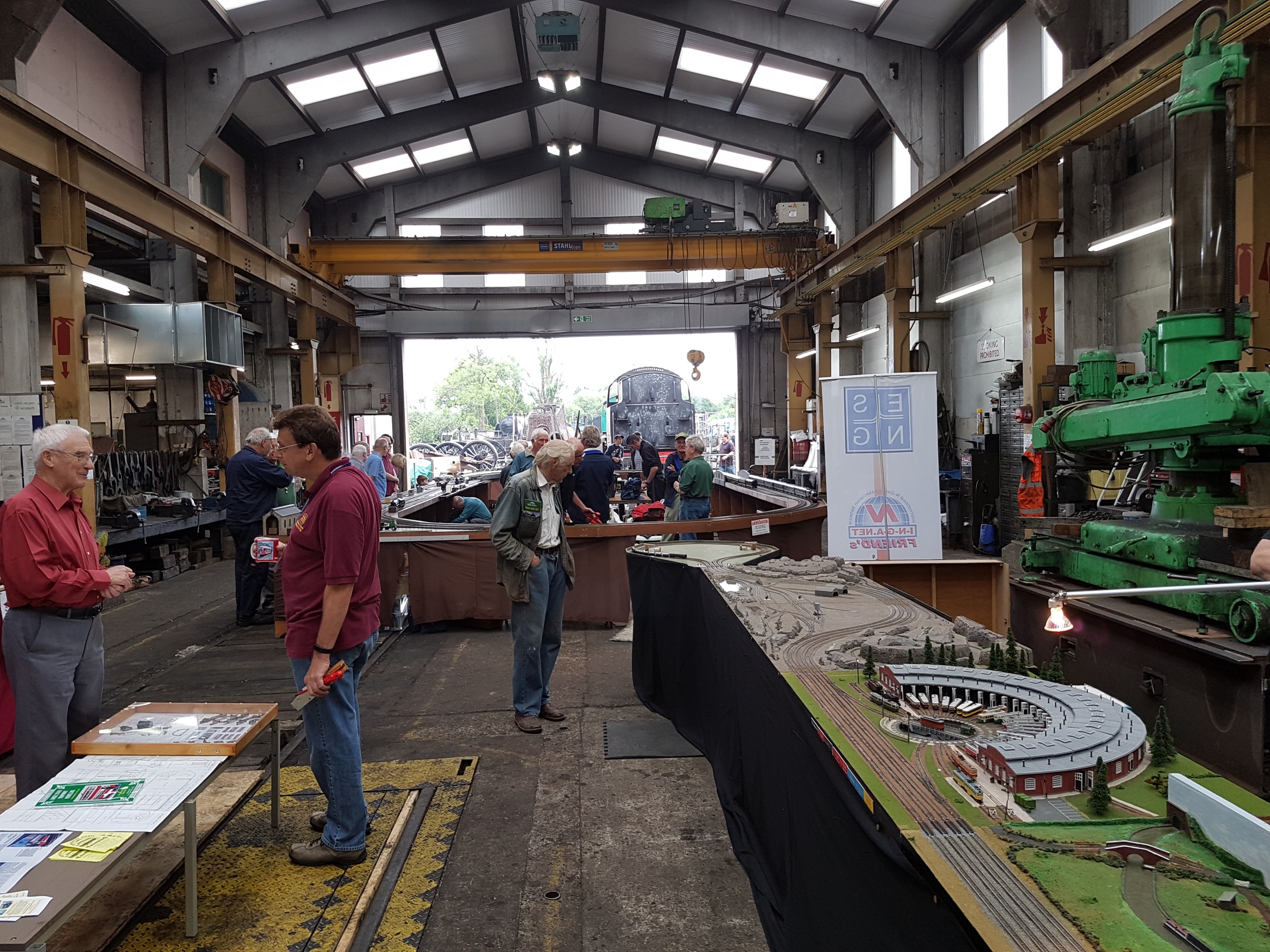
The models at the Bluebell show are scattered between Horsted Keynes and Sheffield Park stations, in the works buildings and on the platforms.  We ended up in the locomotive works, that was certainly different, and a good place to be.  On our right was a locomotive wheel lathe, and through the open door at the end, full sized engines were being steamed up for the day’s work.  In fact, it got a bit smoky in the works, what with the smell of coal from the large locos, and the smell of methylated spirits from the Gauge 1 live steam next to us.  The only complaint was the slightly grimy and oily surroundings – a number of module boxes came home with finger-prints on.

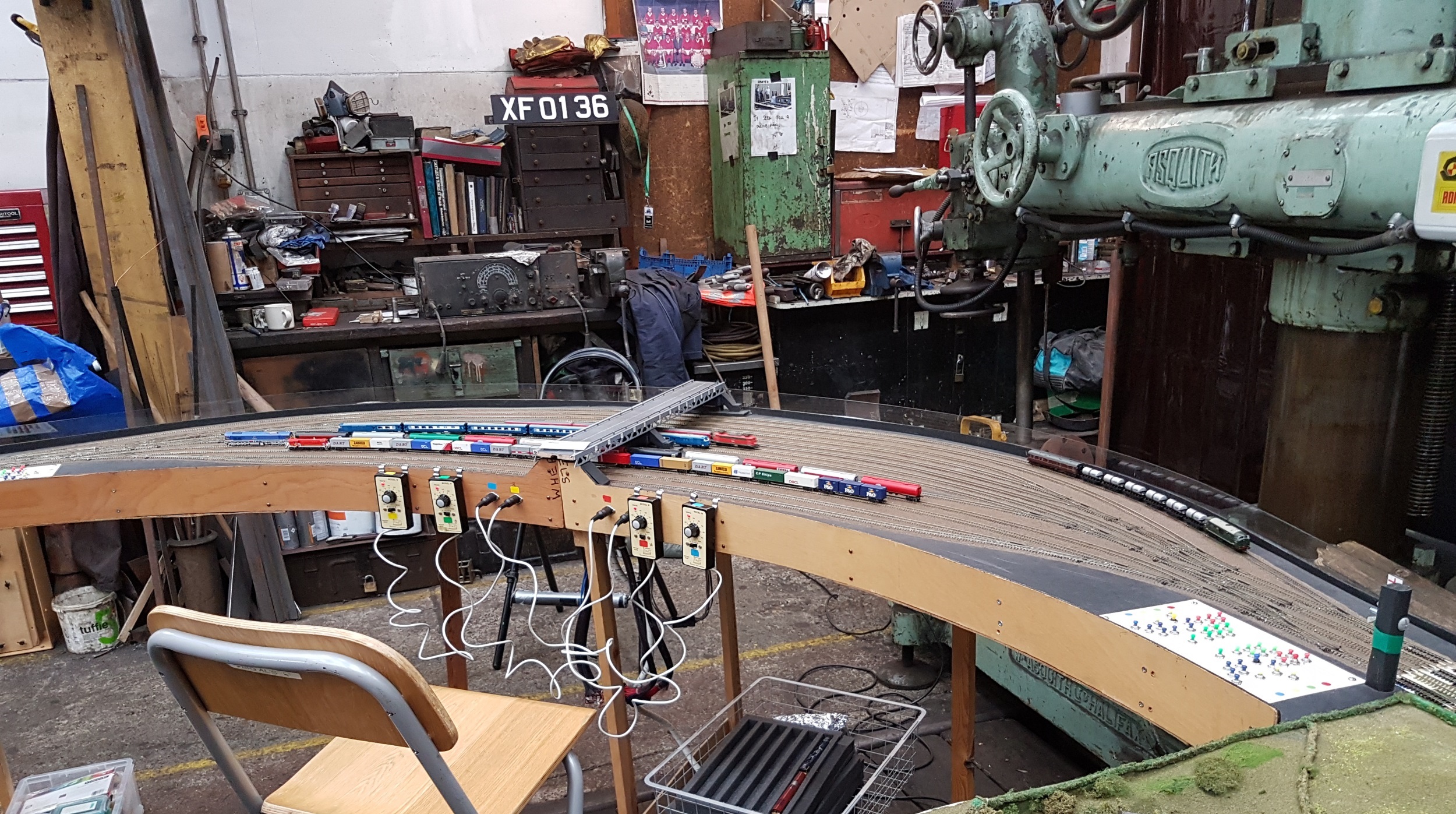
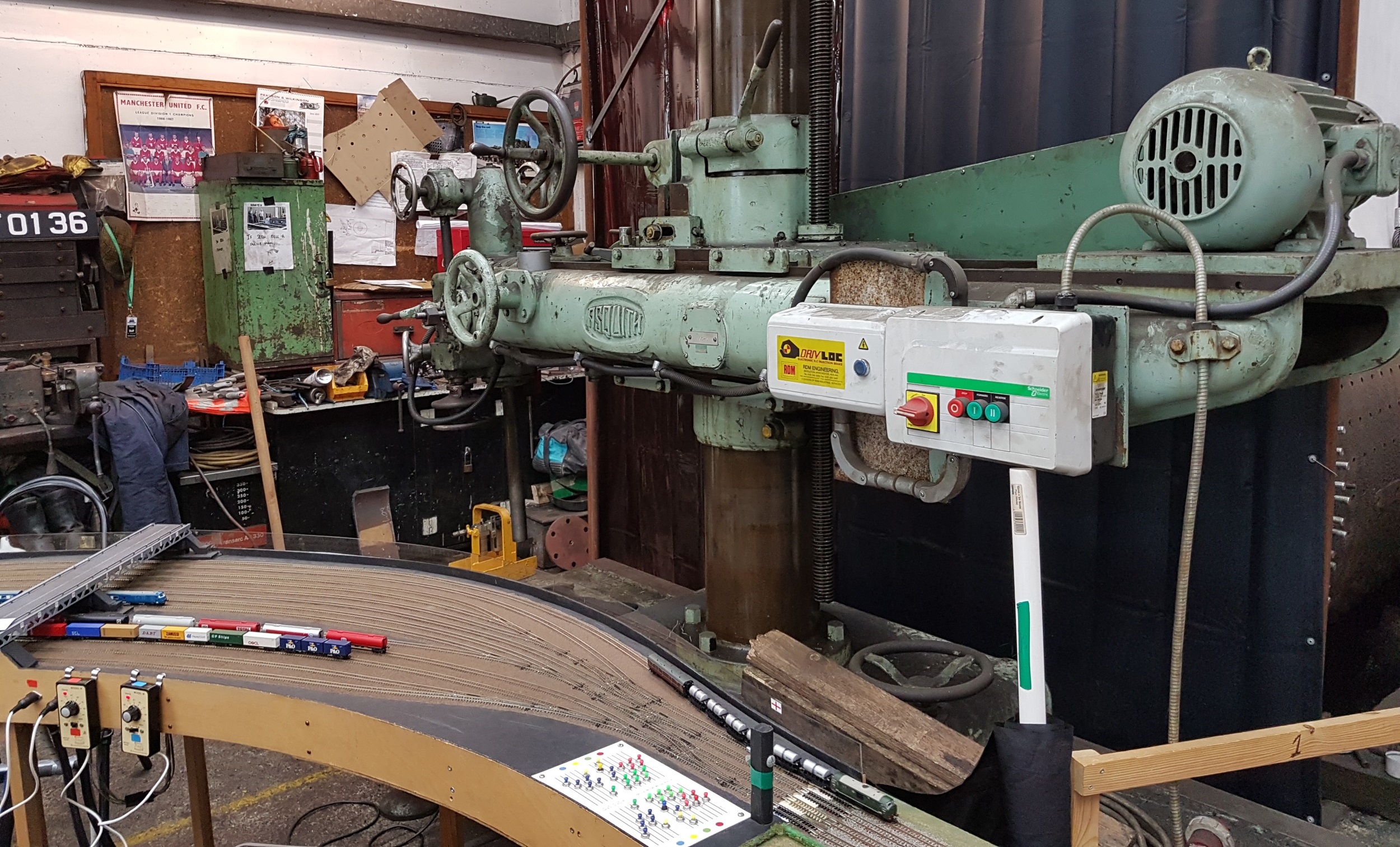
There was another interesting bit of kit next to the fiddle yard, and the workbench behind contained all sorts of bits of steel, tools and junk – much as my railway room at home, but on a slightly larger scale.

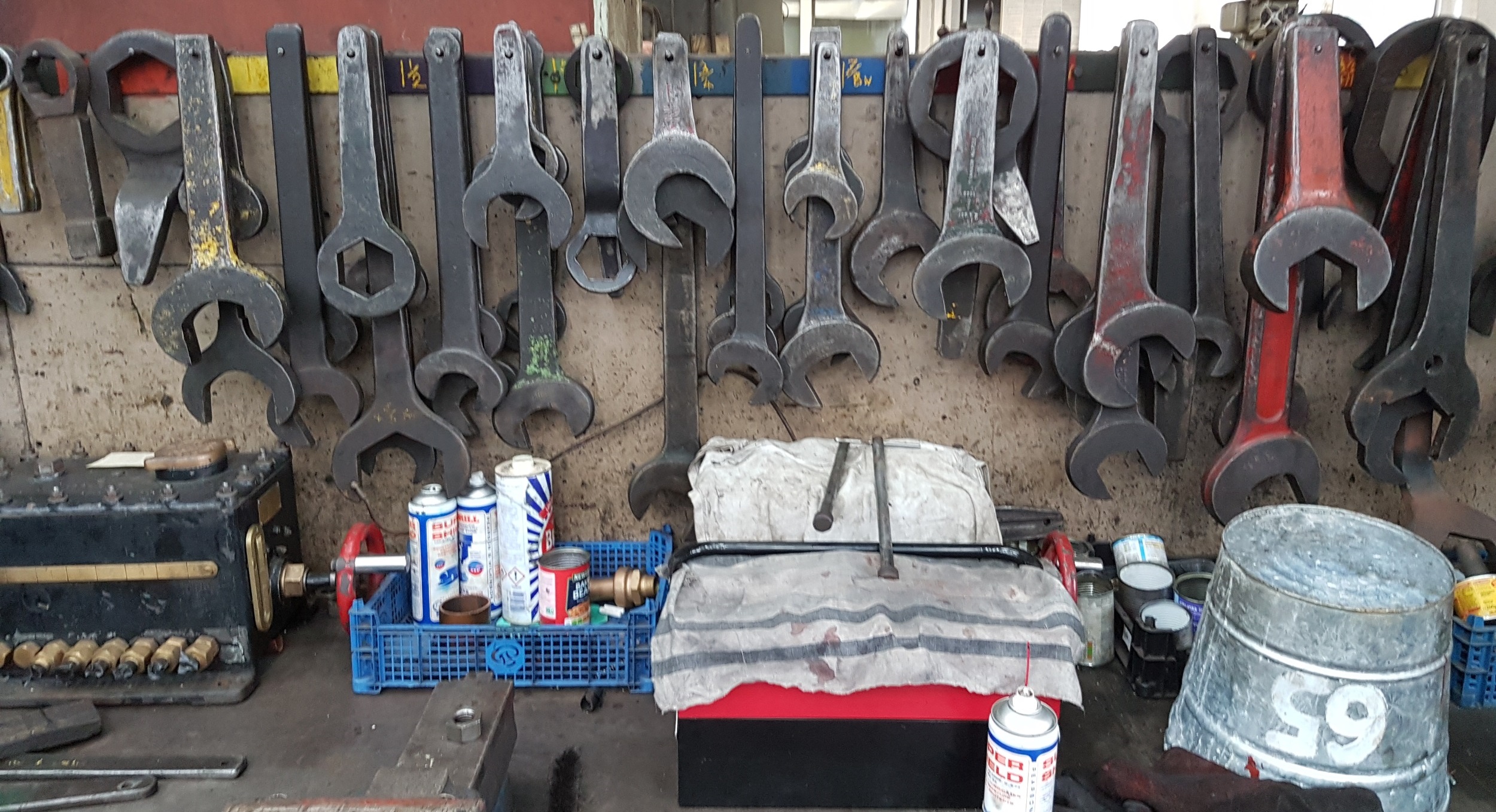
And as for these spanners – you could fix anything (large) with this lot.  But why is the bucket numbered “65”?  Could this be a new hobby – bucket numbers?

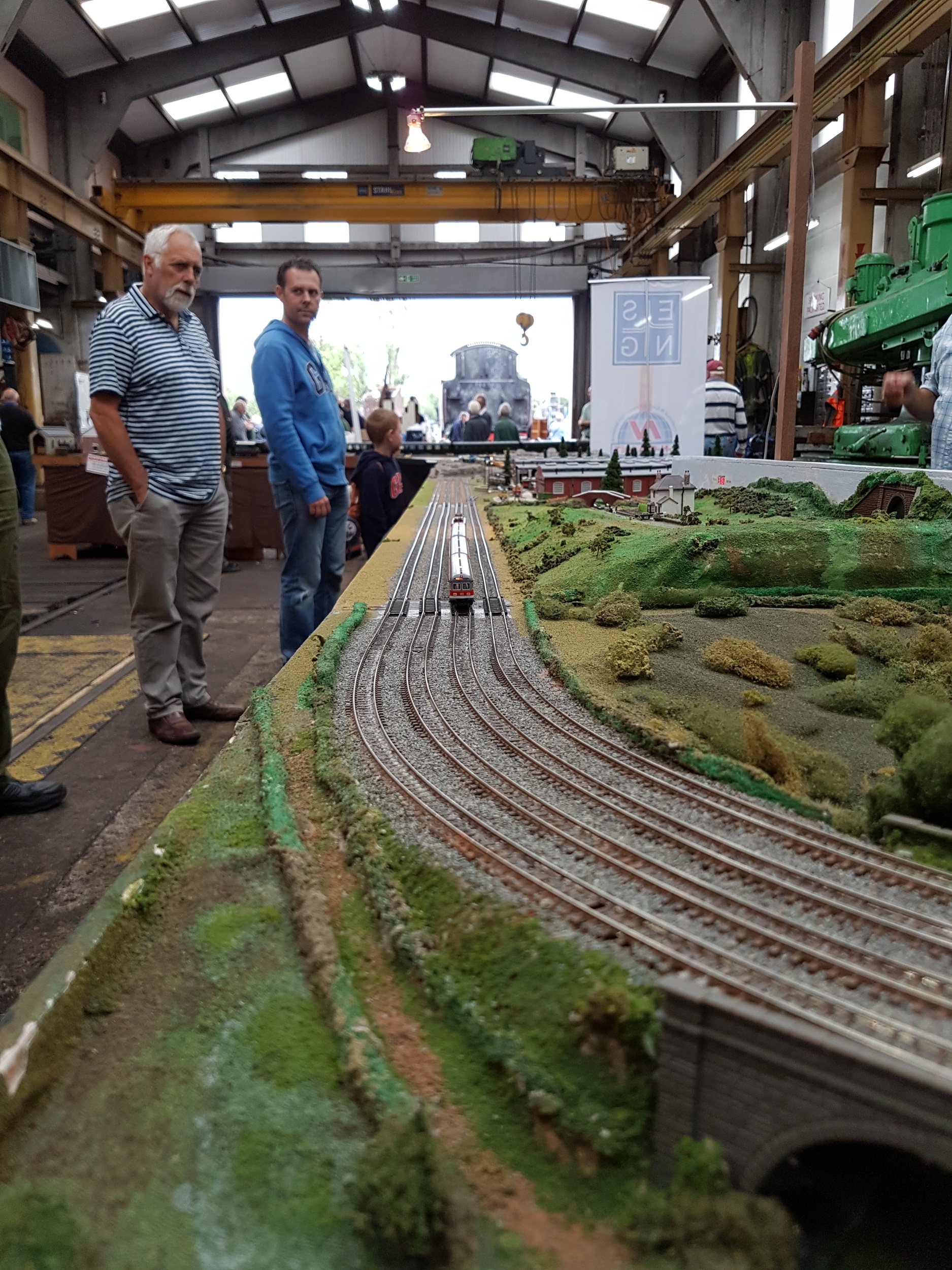
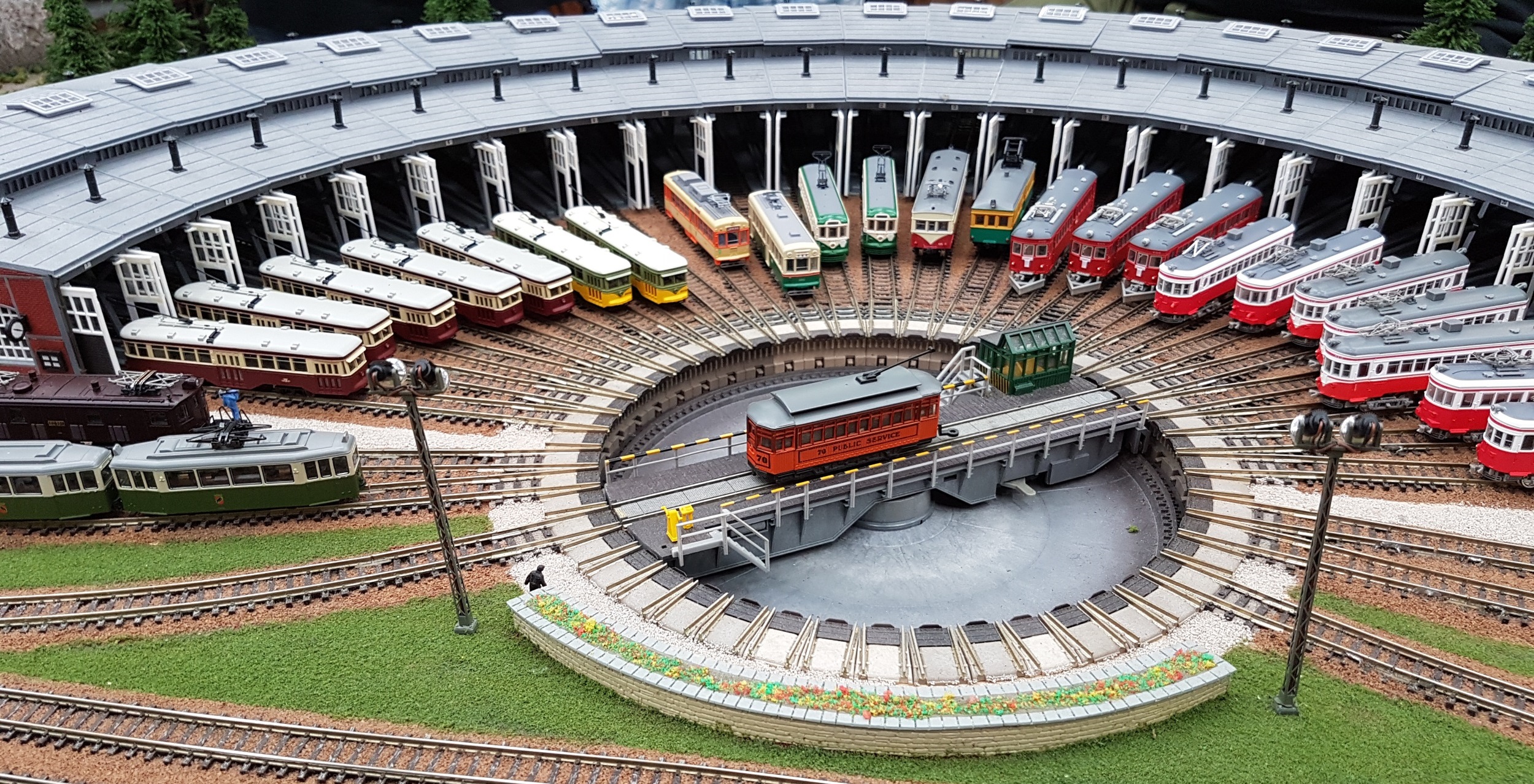
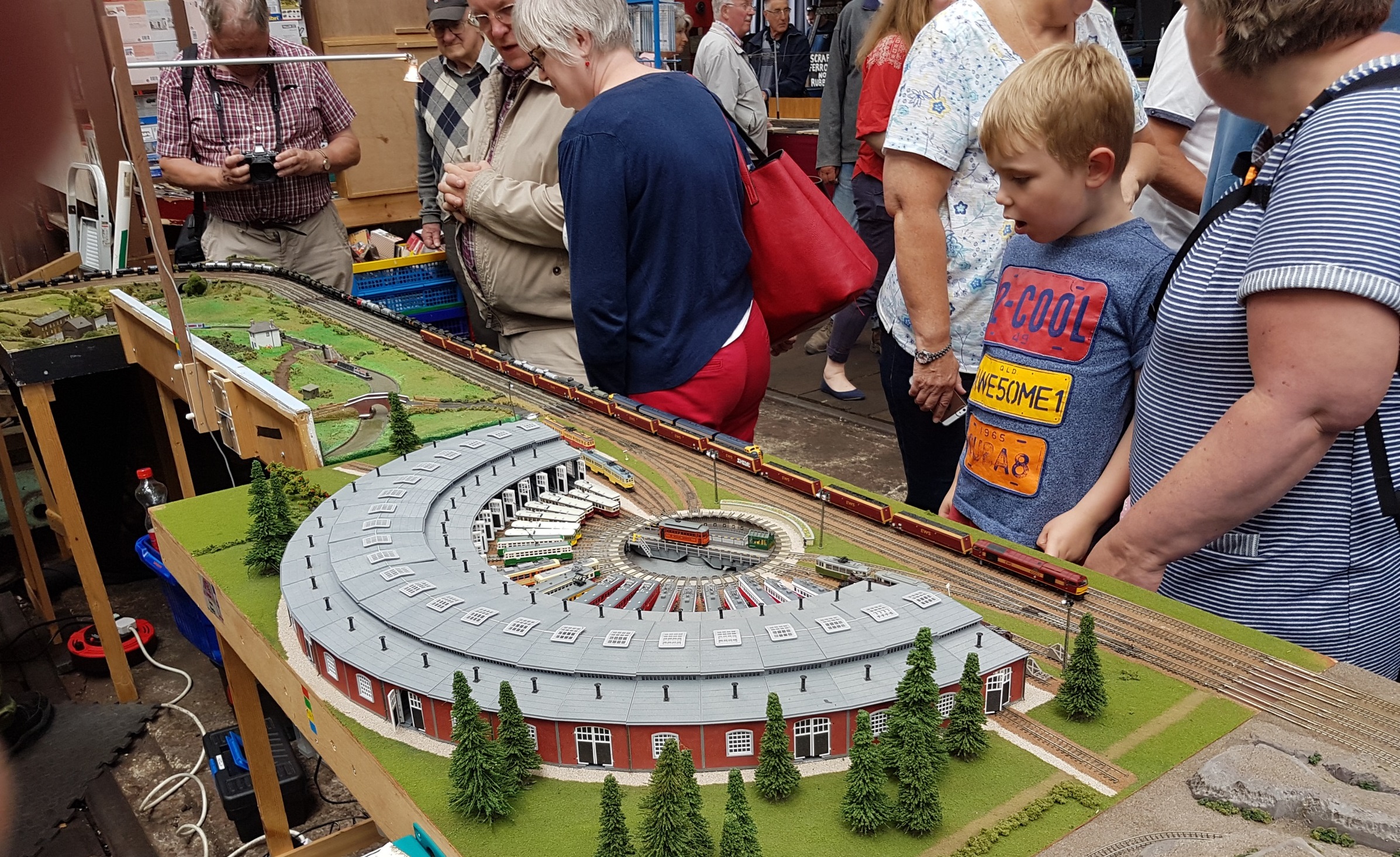
We set up an end to end circuit, having modified the design slightly to fit the available space.  One advantage of modular layouts – you can change them on the fly.  It was an early start on Saturday morning to get up and running, but everything was complete and running well by opening time at 10.  ERIC reappeared as an international tramway museum, partly because all my trams were still sitting in a box in the loft, as I hadn’t got around to putting them away after the ESNG show in April.  The combination of ERIC and trams got a lot of favourable comments.

We ran the usual selection of member’s trains, and we actually had trains from all continents (not including Antarctica), as Peter brought along an Australian diesel to run.

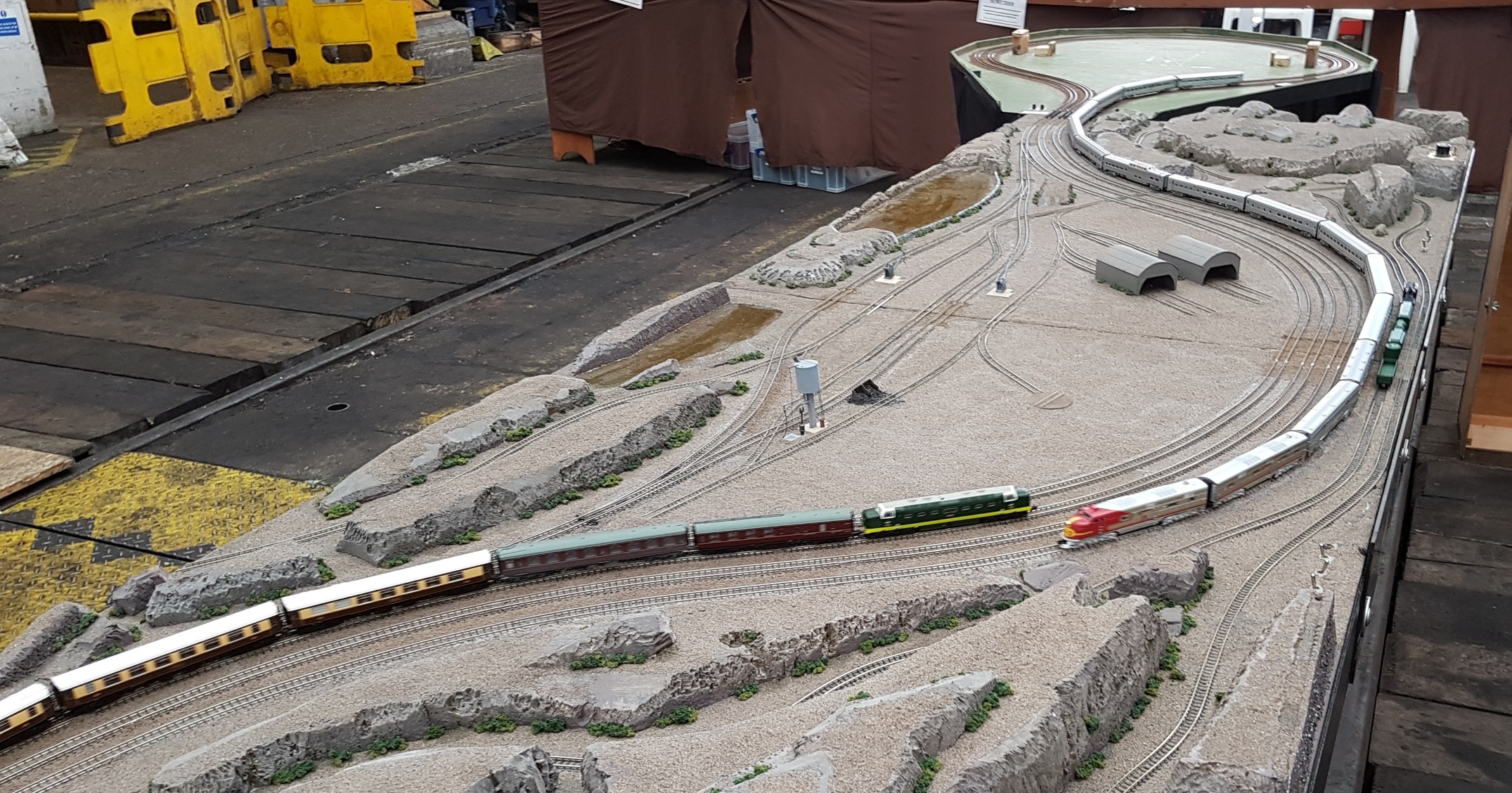
On Sunday, Simon ran some impressive Santa Fe trains.  Firstly a 14-coach passenger service – also seen below passing a Deltic with a Pullman express in tow.

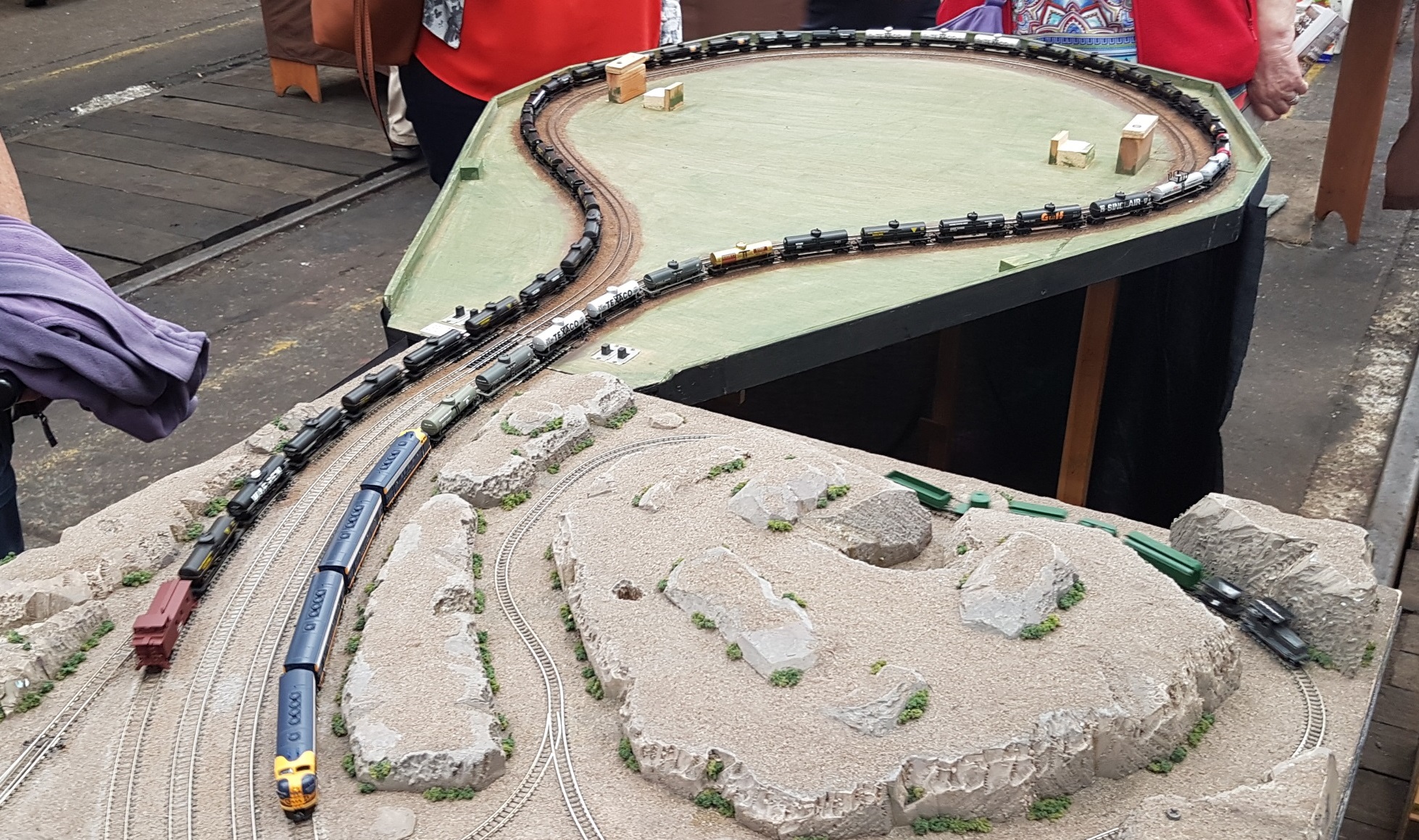
Sunday afternoon is definitely time to run some very long and very short trains.  Here, Simon has a Santa Fe oil tanker train with 45 tankers and a caboose behind an A-B-B-A diesel consist.  The train stayed together pretty well, and it’s also interesting that the 4 Kato locomotives didn’t overload our controllers, drawing so little power.

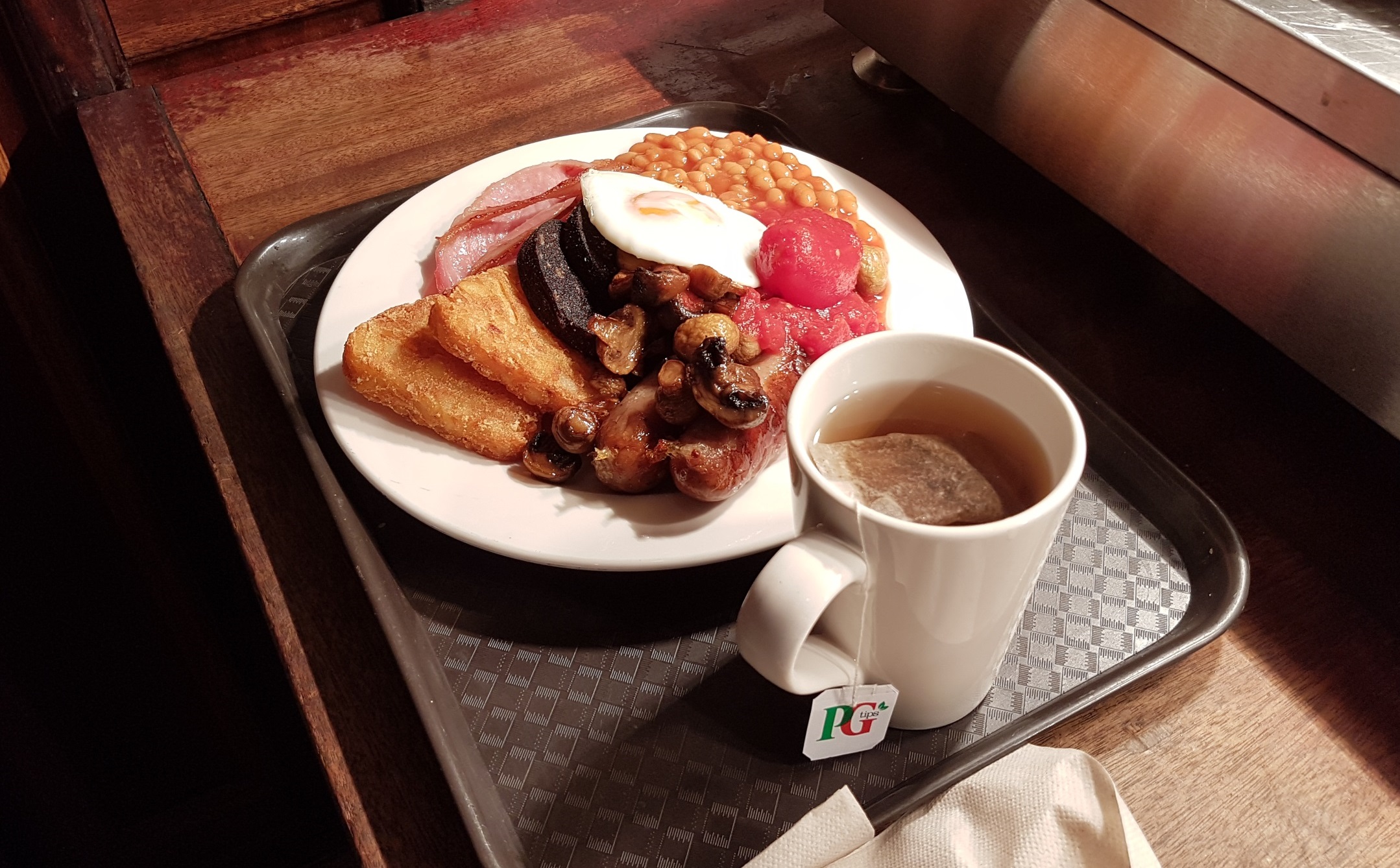
And finally, a shot not for the weak-hearted or vegetarian.  The Cha(I)rman’s breakfast.  The restaurant on the platform at Sheffield Park did a magnificent full English breakfast – the large one having two of everything.  (I only managed the small version!)  As my grandfather once said, “What you eat would kill a weak man!”

Next post, I’ll report on the real trains….

Posted in ESNG, Exhibitions, Out and about | Tagged , , , | 1 Comment

The empty railways of America

Before reporting on ESNG exhibiting at the Bluebell Railway, here’s a couple of links to an article I came across on the BBC website, “In pictures: The empty railways of America.”

One of photographer John Sanderson’s earliest memories was family road trips to Pennsylvania from his home in Manhattan, New York.
While on one of these trips, 13-year-old Sanderson discovered the delight of taking pictures when shooting the Strasburg Rail Road and its historic steam engine.
Returning to the subject of railways in adulthood, he rebelled against his younger self and this time chose to photograph American railroads devoid of trains.

He appreciated the quietness of the tracks, as opposed to the more frequently documented roads of America.
That is, he said, “until a 100 car-long freight train rumbles into the scene”.

The end results are most attractive, and could give a few ideas for scenery on our layouts – American or otherwise.  Here’s one of them (copyright John Sanderson.)

There are more photos on John Sanderson’s site, under Railroad Landscapes.
Looking on the menu, there is also an item, “Fallen Flags.”  This is a series of head-on photos of preserved F-units, all in the colours of railroads no longer with us.  Worth a look, and I liked the Lehigh Valley example (copyright John Sanderson.)

Posted in Inspiration, Out and about, Prototype | Tagged , , | Leave a comment

ESNG meeting – 22 June 2017

I’d missed too many club meetings with travels and holidays, and was missing the chance to meet with friends and watch the trains go by.

Early June we had a working party, where two workers were supervised by two others.  But we did get some wiring faults repaired on the fiddle yard, and some track laid on the new corners.  And as ever the afternoon finished with a curry to celebrate commiserate on the Cha(I)rman’s birthday.

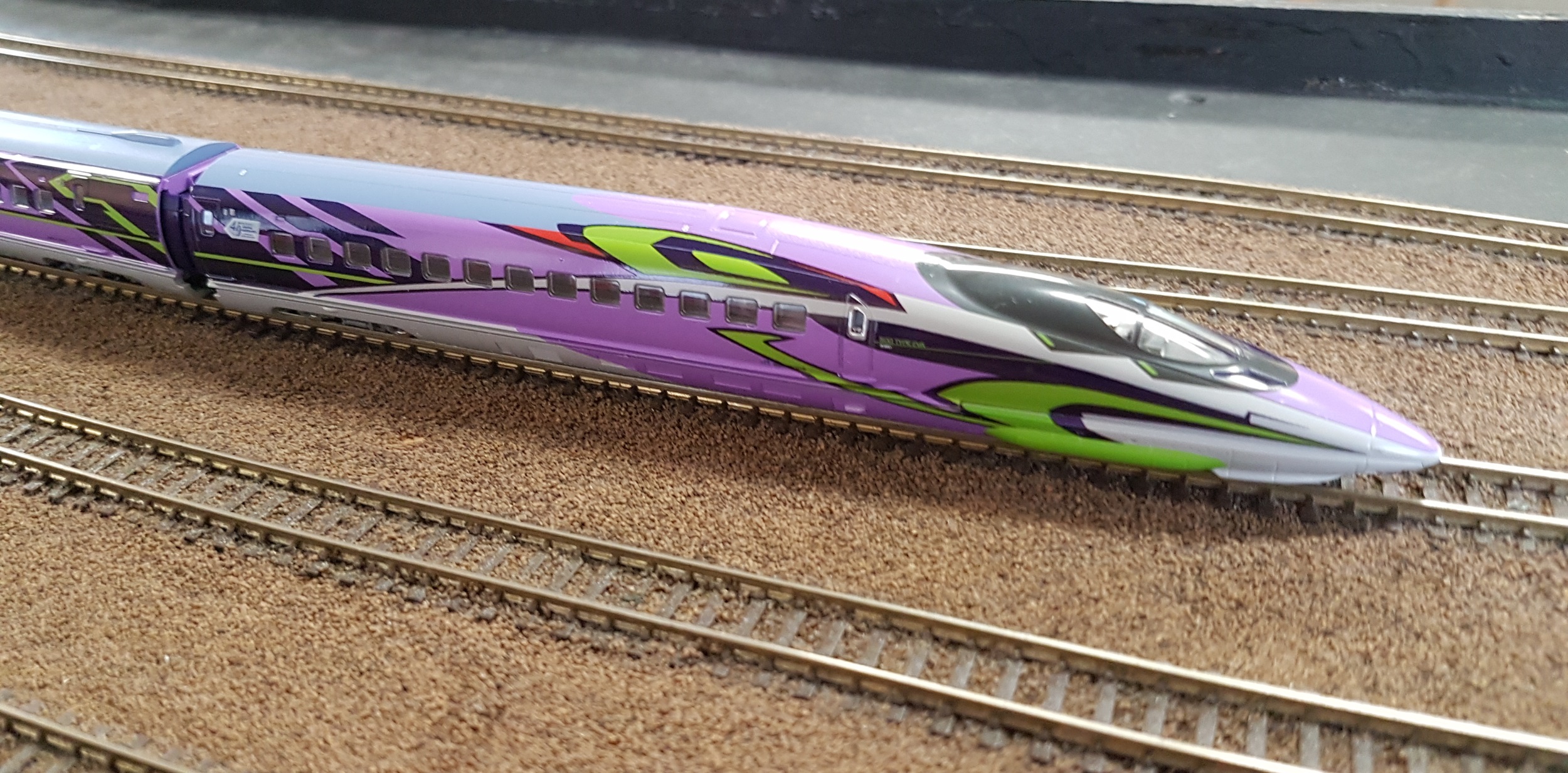
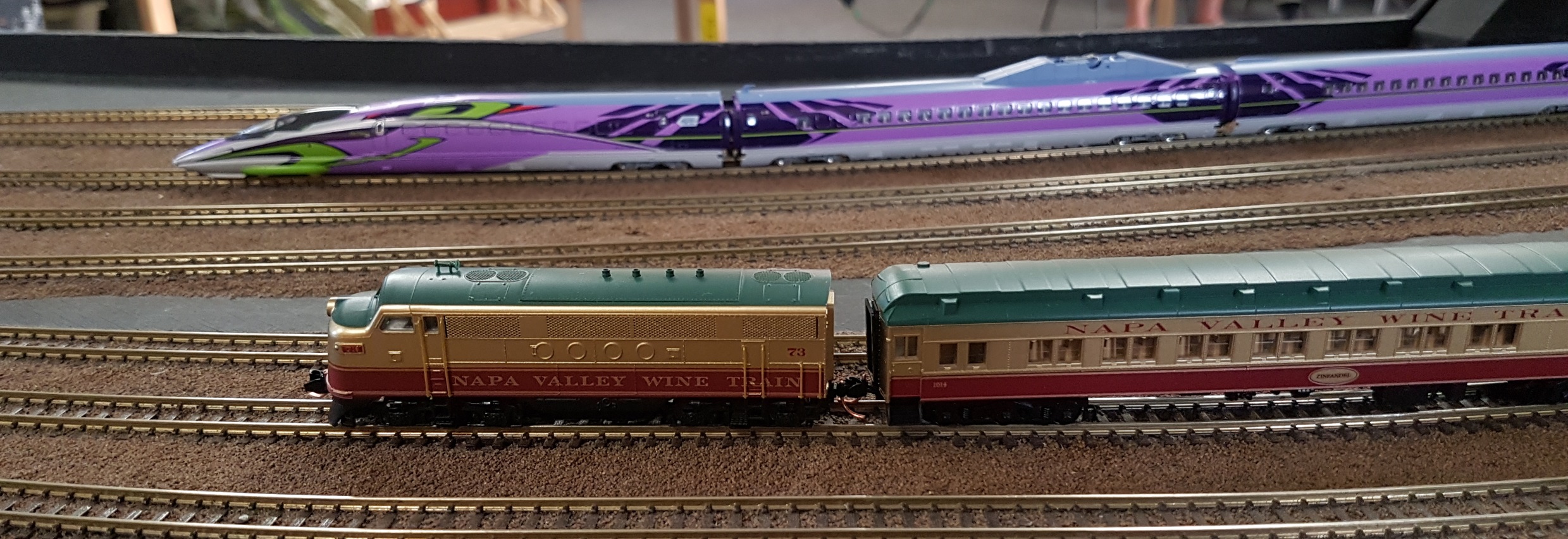
The next Wednesday meeting was well attended, although it was one of those record hot June days.  It was good to welcome Ian Buck along, and he brought some interesting stock to run.  I’m been tempted by the Napa Valley Wine Train, but it’s not really the same without the wine.  The technicolour Japanese bullet train celebrates one of those strange Japanese cartoon series.  Ian said the train is decorated with vinyls – but surely they would peel off at the extreme speeds these trains reach?

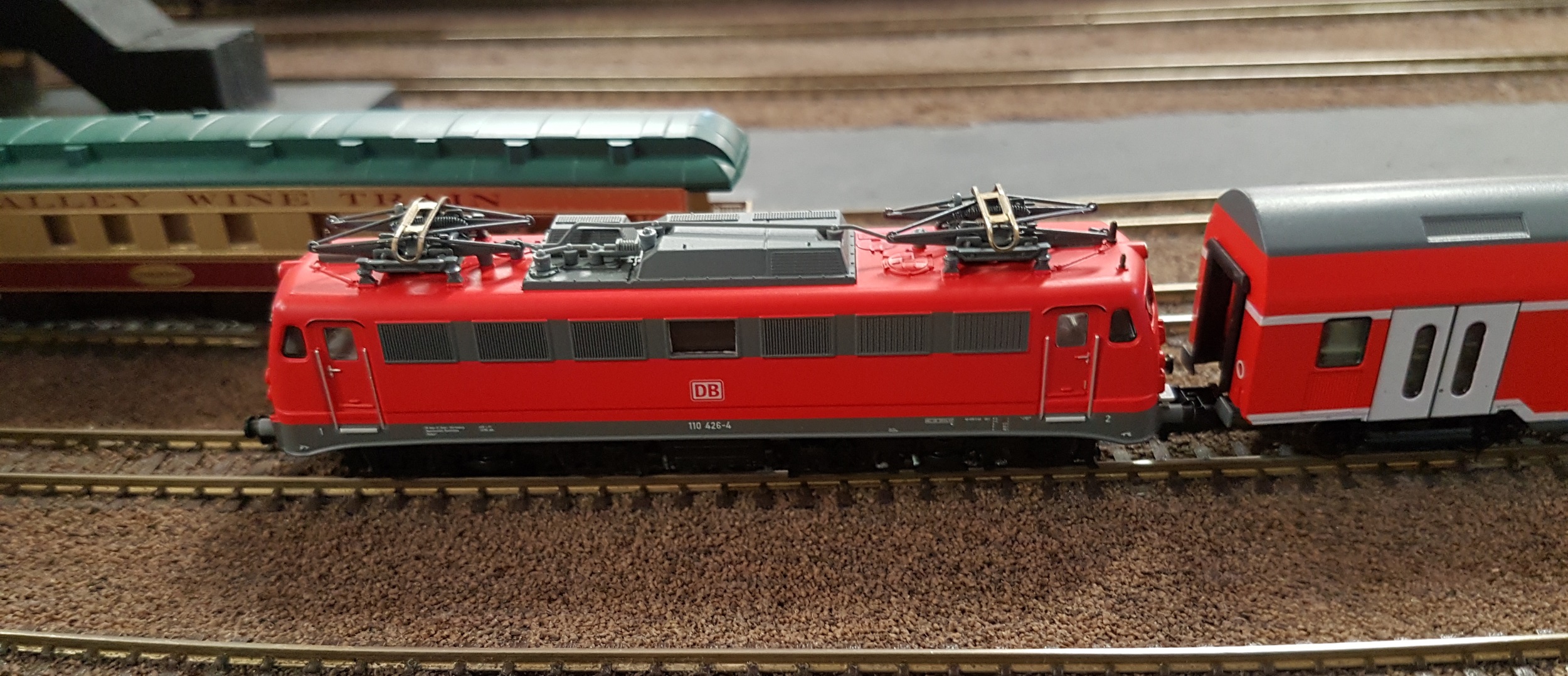
And Neil was testing a couple of modern German rakes.

A reminder to ESNG members – this Thursday is the AGM.  Come along for another riveting evening’s entertainment….

Posted in ESNG, ESNG meetings | Tagged , , , | Leave a comment