ESNG exhibtion – 8 April 2017 – on Saturday

A final reminder for local readers that the ESNG 2017 show is on Saturday!

As for the show contents, here’s a quick reminder….East Surrey N Gauge are 20 this year, and totally logically are holding their 19th annual exhibition in Redhill.  Same venue as last year, but they’ve finished rebuilding the school and the free car parking is back.  Should be up to the usual standard (whatever that is!)  Details are:

Sat 8th April 2017
St Joseph’s Catholic Primary School, Linkfield Lane, Redhill, Surrey RH1 1DU

OPENING TIMES:  SAT 10am-4pm
ADMISSION:  Adults £4.00  Concessions £4.00  Children £2.00  Family £10.00
Still the N gauge show of the South. ESNG is 20 this year. We have the usual mix of N gauge layouts, including 3 modular layouts, and specialist traders. We are again at St Joseph’ School, with the benefits of all exhibits on one level, free parking (it’s back), and refreshments including real coffee!

LAYOUTS
ESNG N-Mod & N-Club (UK Modular Layout)
West Sussex N-Mod (UK Modular Layout)
Alpenbahn & N-Club (German Modular)
Santa Barbara (USA, West Coast)
Tunbridge Wells Sidings (Southern Region)
Atlantic Road (UK South London Modern Image)
Forrestone (UK Modern Image)
Oakhurst (UK Preserved Line)
Three Gates (UK Shunting Layout)
Kato Racetrack (Japan, Bullet Trains)

TRADE
BH Enterprises
Ian Grace (Rail & Military)
Invicta Model Rail
JB’s Model World
NscaleCH
ESNG Club Shop – mainly with the late ESNG President’s collection for sale
Neil & Martin’s Emporium – more second hand sales

Lots of good things to see and buy, I hope…

Posted in ESNG, ESNG meetings, Exhibitions | Tagged , , , | Leave a comment

Swanage

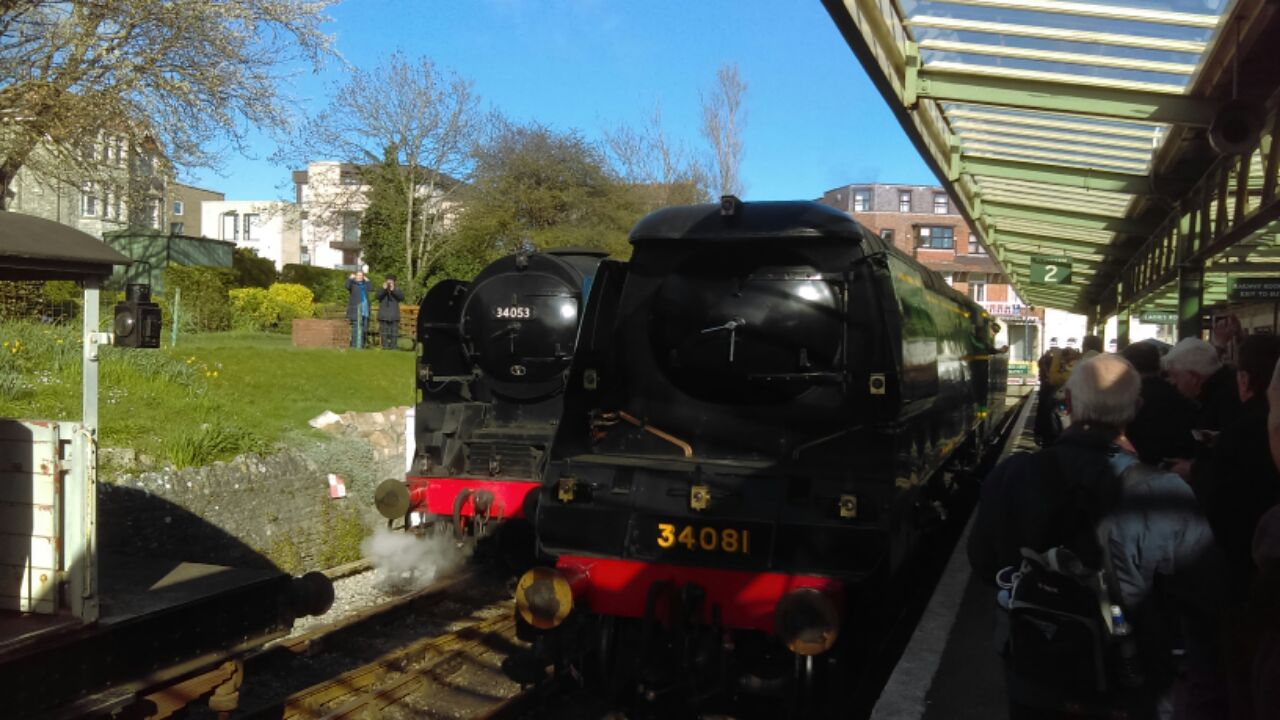
Bit hectic at the moment, so here’s a picture from Mr Dawes of Swanage in the sun, with two Bullied Pacifics in Swanage station.


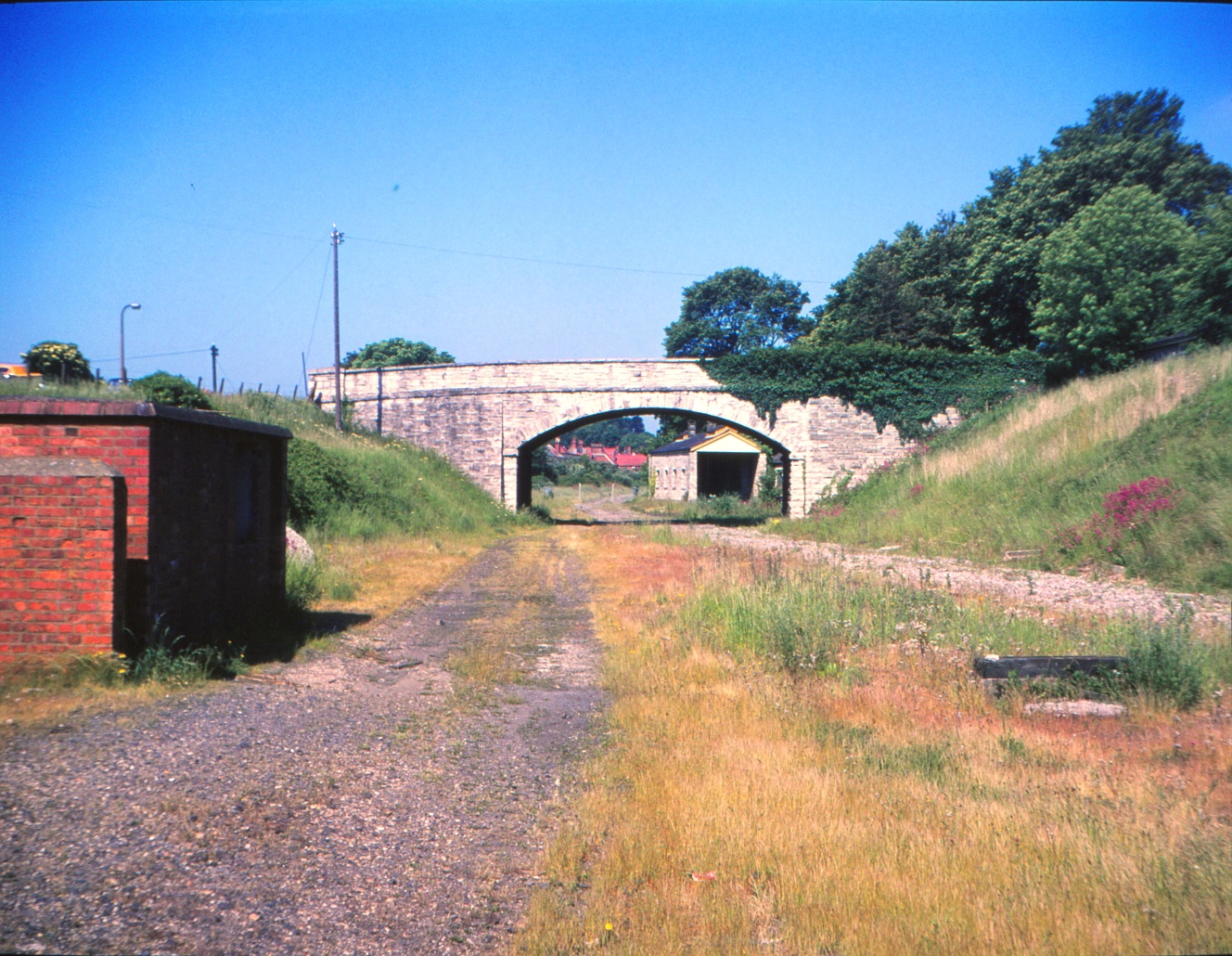
A contrast to when my father visited the station site in 1973!

But I do like the cars.  Some classic models on show.


And remember the ESNG show on Saturday 8th……

Posted in Inspiration, Out and about, Prototype | Tagged , , | Leave a comment

Odd modelling ideas #398

From the Daily Telegraph

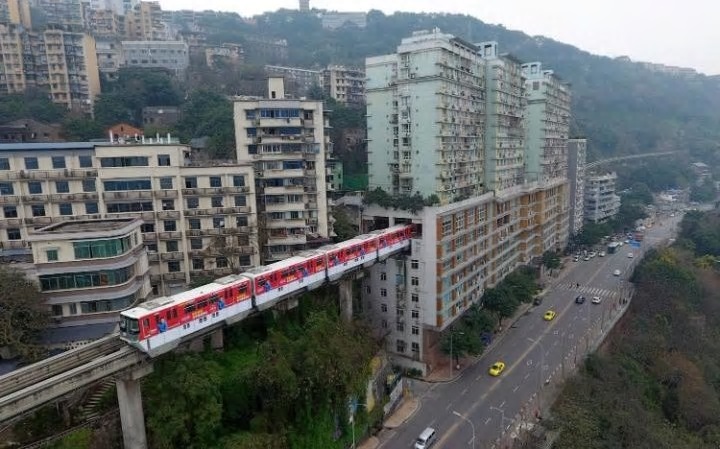
Incredible train ‘disappears’ through block of flats in China’s ‘Mountain City’

Architects and planners in a Chinese city have designed a novel way to make space for an essential train route – by building it through the centre of a block of flats.

The unusual train track passes directly through the 19-storey residential building in the “emerging mega-city” of Chongqing, located in the south-west corner of the East Asian nation.

Could make an interesting model!  But I hope this is right…

Noise reduction equipment installed at the station means the train only makes the same noise as a standard dishwasher.


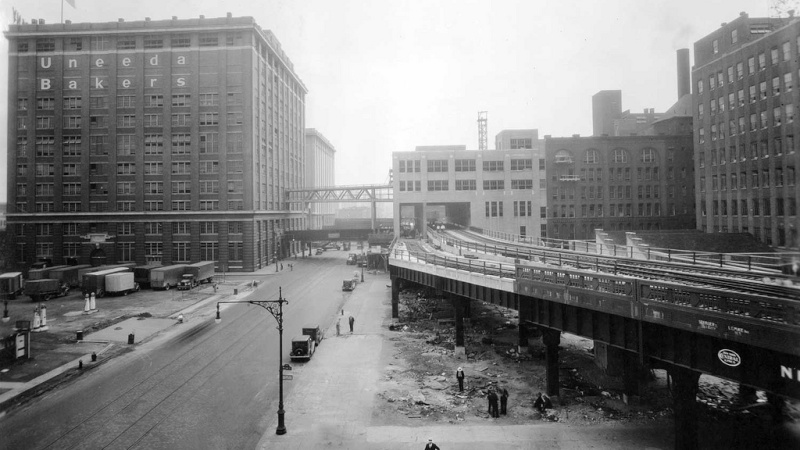
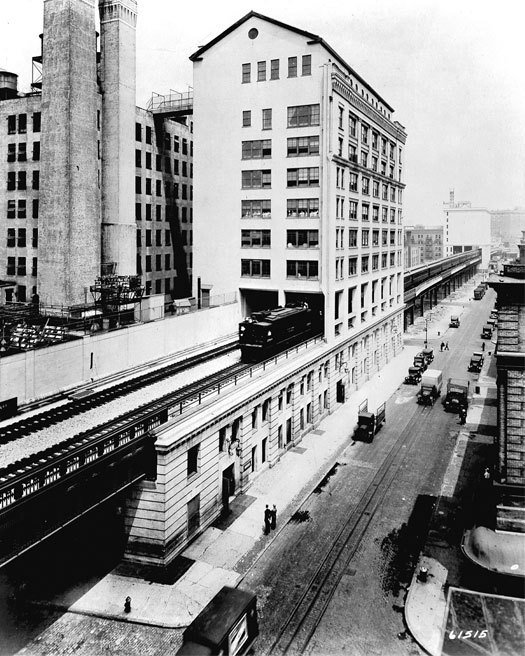
However, the NYC ‘High Line’ in New York was older and also had the line passing through warehouses and factories…..


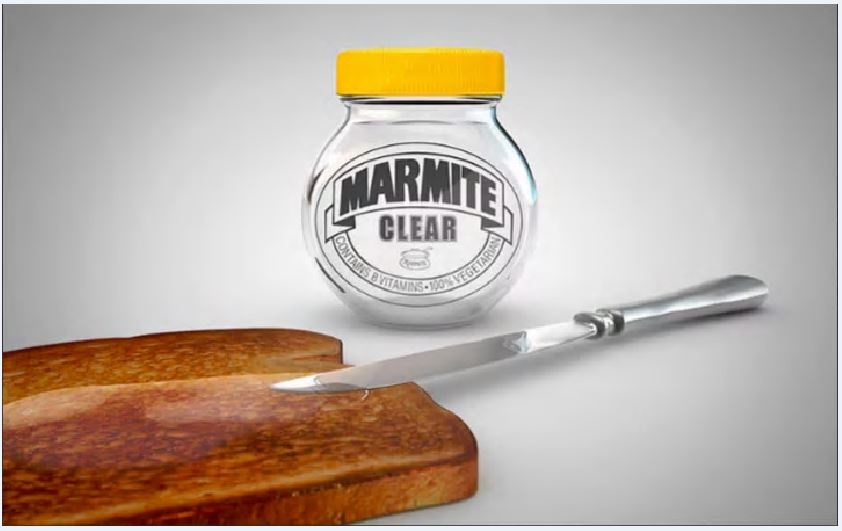
And in view of the date…..

Posted in Hints and tips, Inspiration, Out and about, Weird and wonderful | Tagged , , , | 2 Comments

1971 – April – “Gricers” reach Wales

The April 1971 edition of Railway Magazine contained an article informing us that there were still seven classes of steam locomotive operating in Malaysia.  They had certainly all gone by 1985 when Maxine and I took a train from Kuala Lumpur.

But the best article was one by PJC Hitchcock, reproduced from the “Llanfair Railway Journal”.

It had to happen eventually.  Their stream withdrawal symptoms proving too much to bear, the gricer population has braved the obstacle of the British Rail, Crossville and W&L timetables and has started to arrive at Llanfair to the amusement or annoyance of members.  Notebooks at the ready to mark down anything from works numbers to laundry marks, and tape recorders recording all that’s going on, including carpentry work and hand trolleys being moved, various desiccated characters wearing equally desiccated gabardine raincoats now wander around the yard in febrile attempt to find things to photograph.  Complete with duffle bag and National Health Glasses, the Greater British Gricer is on the grice.

With remarkable tenacity, the gricer ferrets around for works numbers and other useless information to put in his little red book.  The fact that it is all in the “Guidebook” is immaterial, as part of his philosophy is never to spend a penny he doesn’t have to – even on fares – the other part never to get his hands dirty in any way.  Having said that, he can go to extraordinary lengths to find things to put in his little book.  On a number of occasions, people working beyond Castle have been surprised by weird characters seeking the number on the works train stock.  As one member said, “If you think we are potty, just look at some of our visitors!”

Apart from the classical gricer, there are numerous sub-divisions, the most common being the junior or apprentice type.  The ‘pretices mostly come in pairs – one holding the camera (usually one between two) – and the other the knowledge (invariably wrong!)  Monarch has them guessing: they have never seen anything like her before.  And as they never buy a “Guidebook”, all sorts of things go into the little red books about her.  For those who discover Nutty, there is a complete bewilderment followed by a furtive and hasty retreat.

Perhaps fortunately, because of its geographical position, Llanfair is never going to become a gricer’s haven as Longmoor was on Open Days when one could see six or seven of them clambering up a swaying signal mast and hundreds milling over the running lines.  But they have discovered us and we had better be prepared.

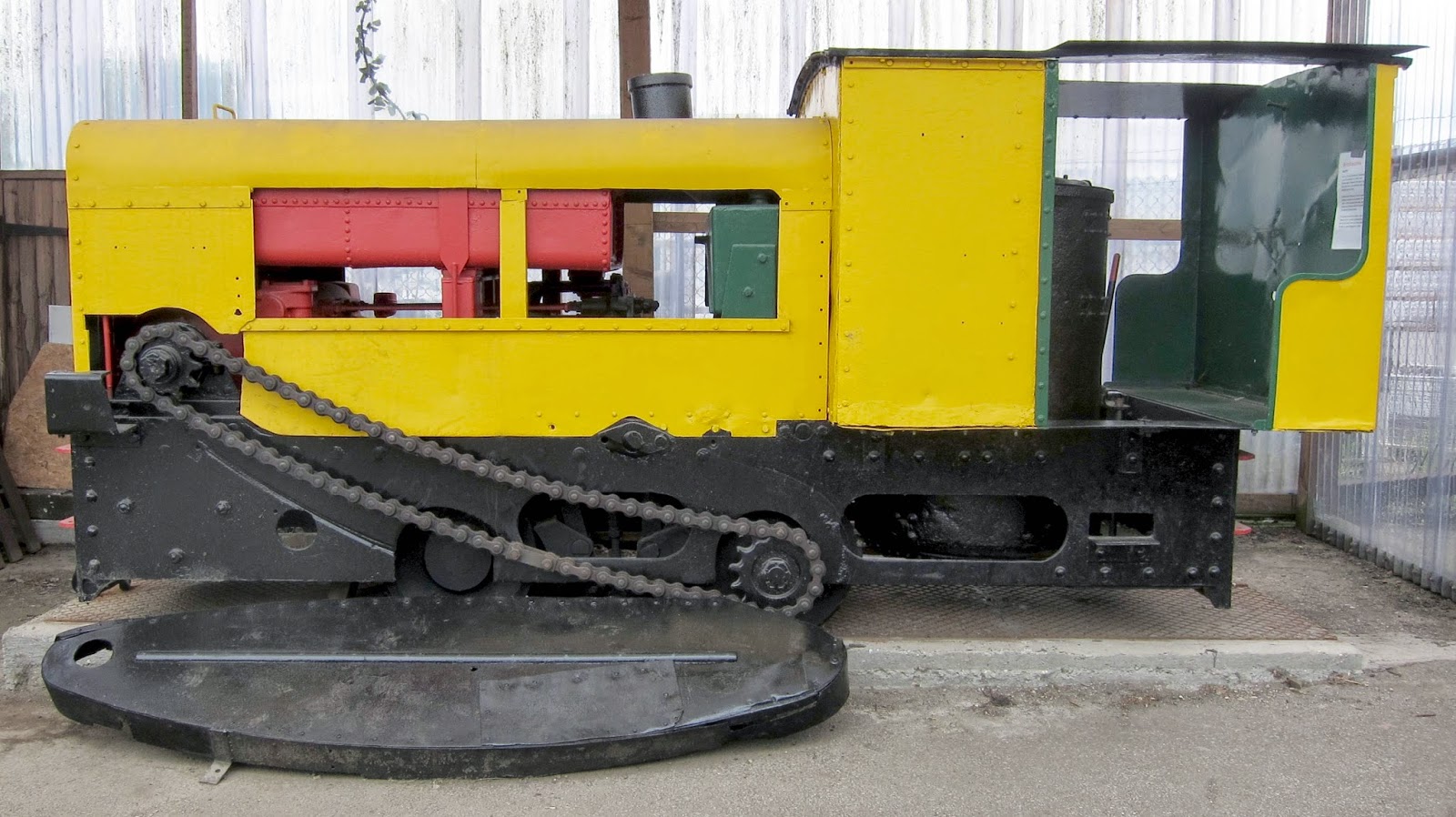
img_4571-cropped

‘Nutty’, a chain driver Sentinel loco for brickworks use

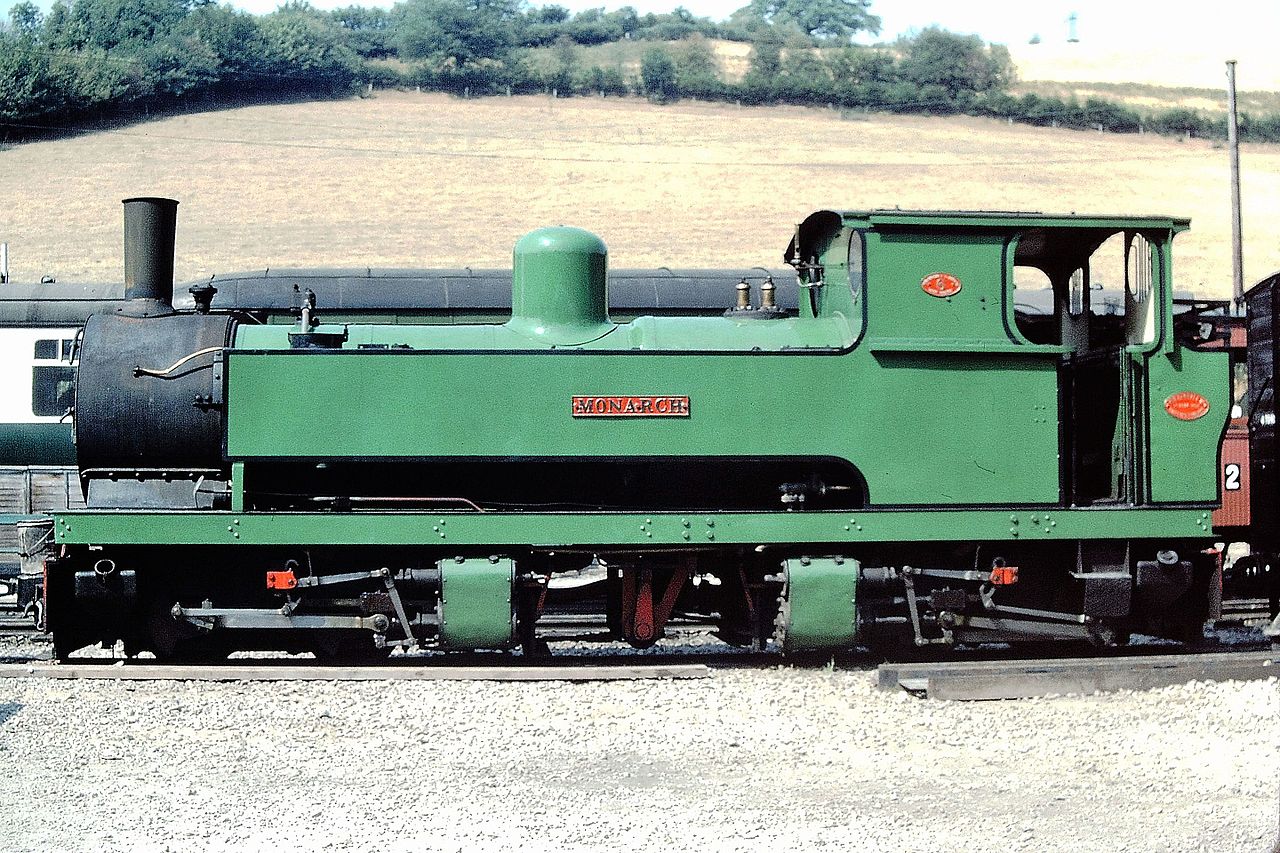
monarch_llanfair_caereinion_welshpool__llanfair_76_31977941251

‘Monarch’, a Meyer articulated locomotive, from Bowaters Paper Railway


The article contains this definition:  Gricer: railway enthusiast of the non-practical type, best compared to a football supporter; a sort of railway voyeur; has easily recognisable features of dress and attitude.  Etymology of word uncertain.

Posted in Prototype, Uncategorized, Weird and wonderful | Tagged , , , | 1 Comment

Blatant tourism interlude

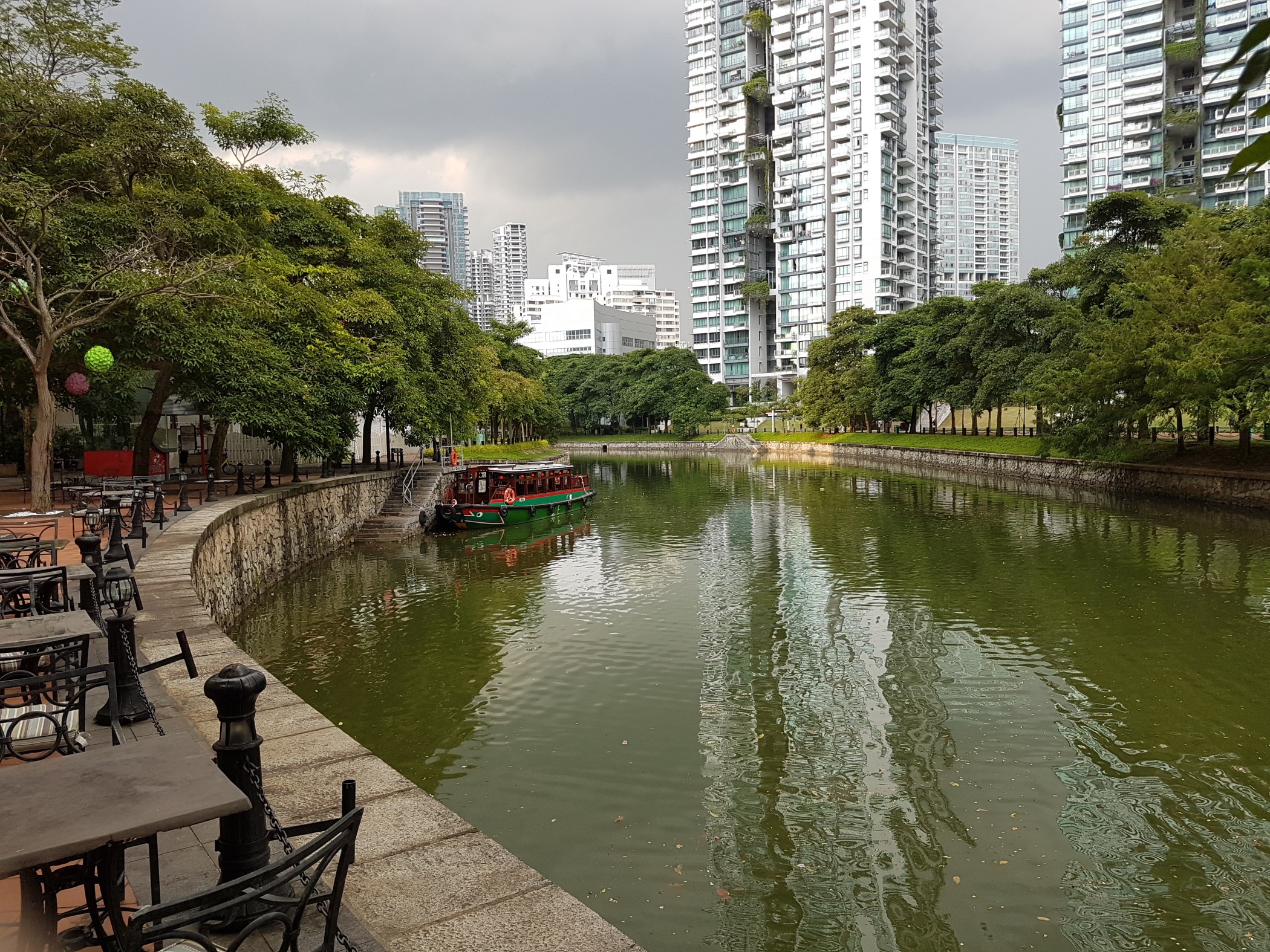
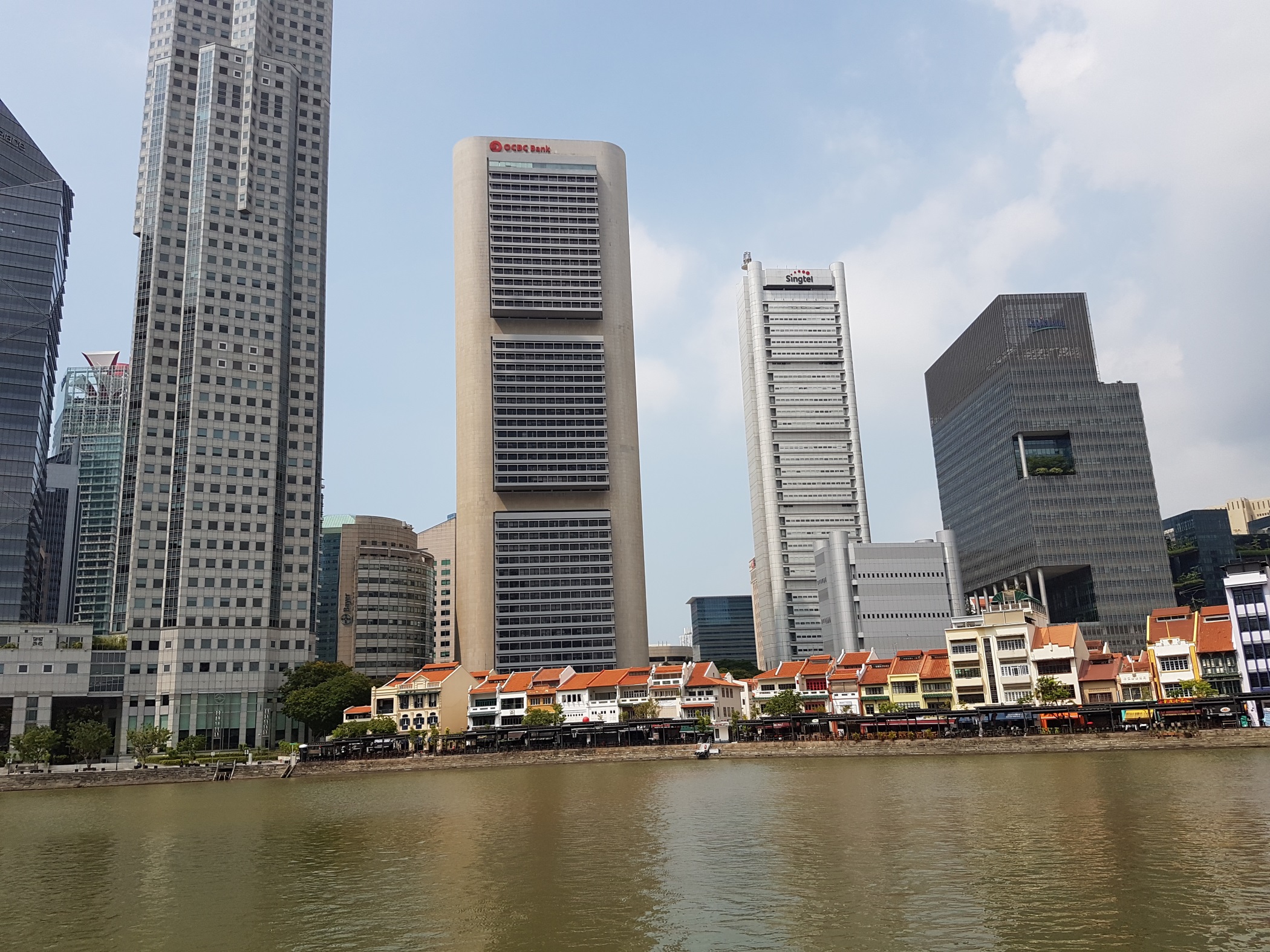
Back from Singapore last weekend, having worked for 10 days solid.  But there was time to take a few photos.  So here’s a little tourism as a diversion from the usual trains.

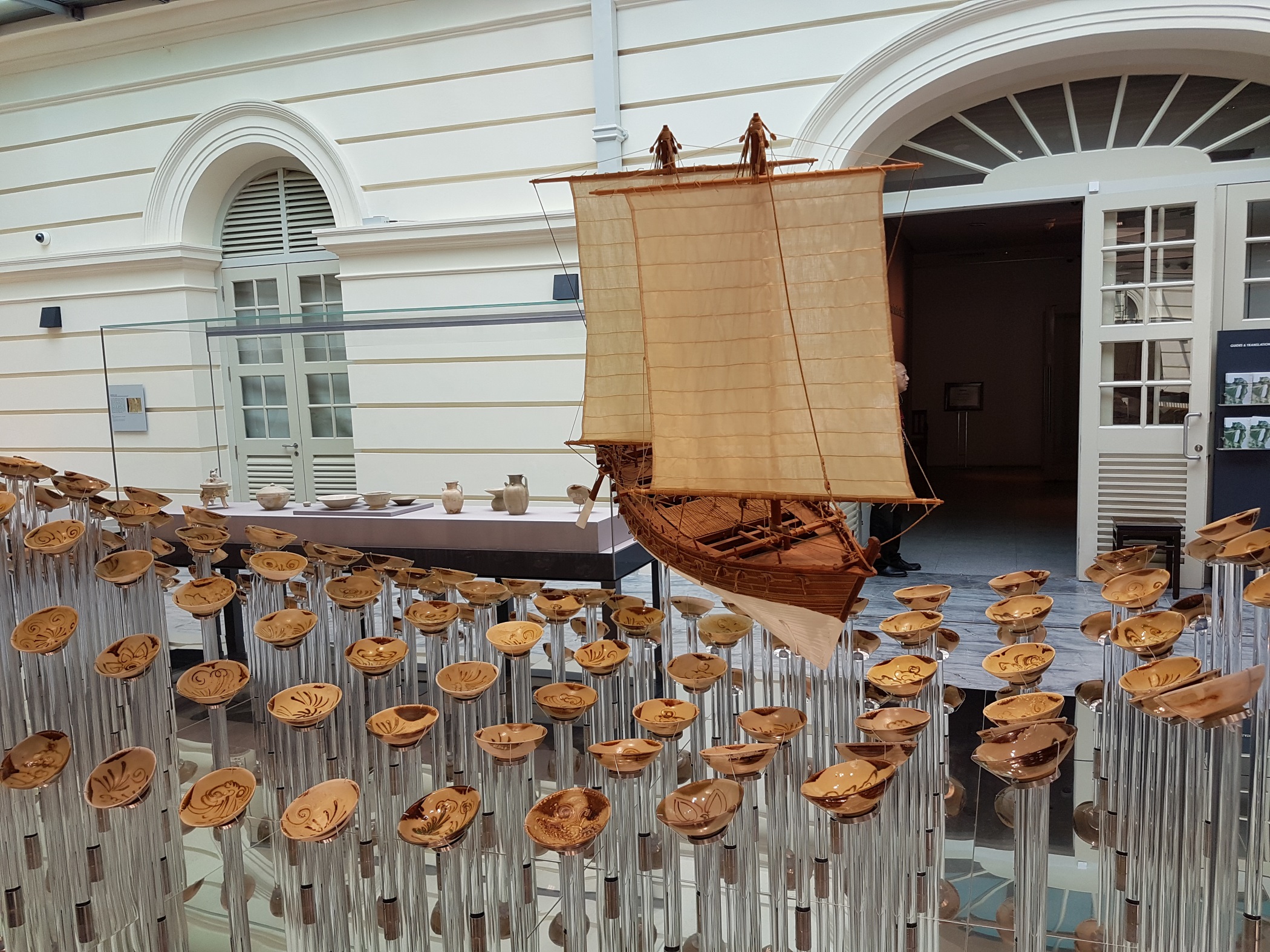
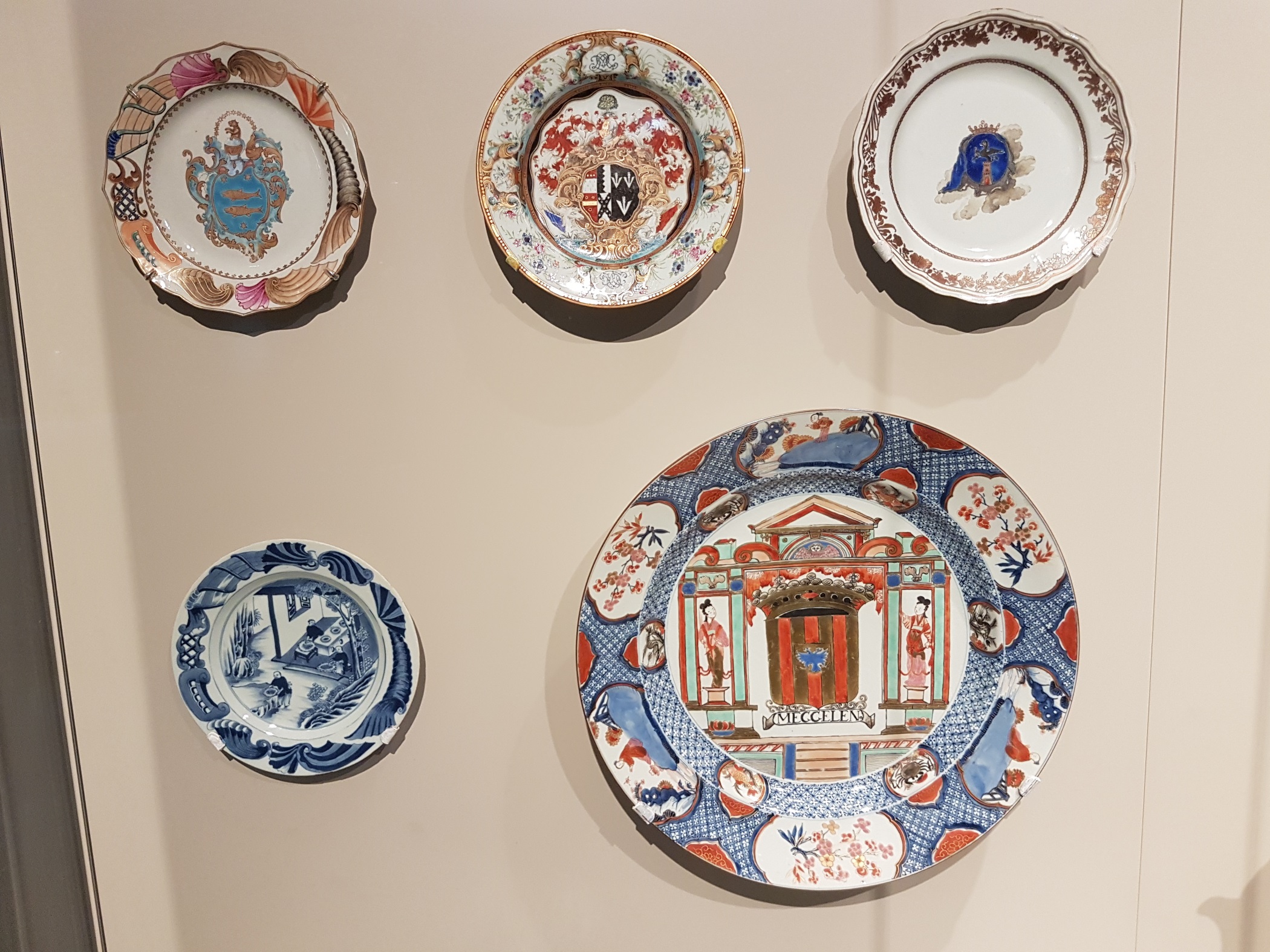
I did find time to visit the Asian Civilization Museum, and enjoy some exquisite art.  I liked the way they had presented the Chinese plates rescued intact from a shipwreck in the Persian Gulf….

And exhibits including this antique stock box, for keeping trains?

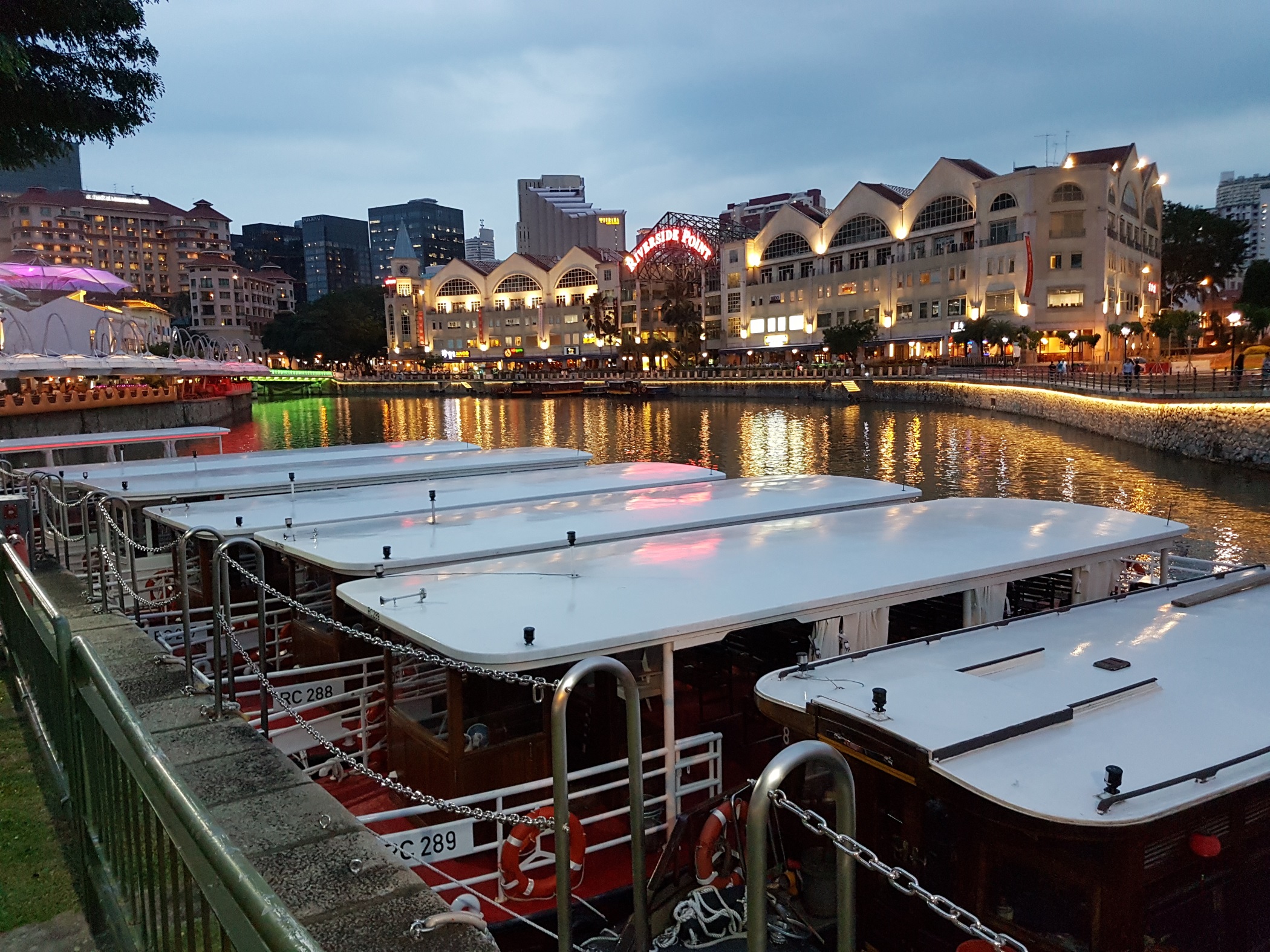
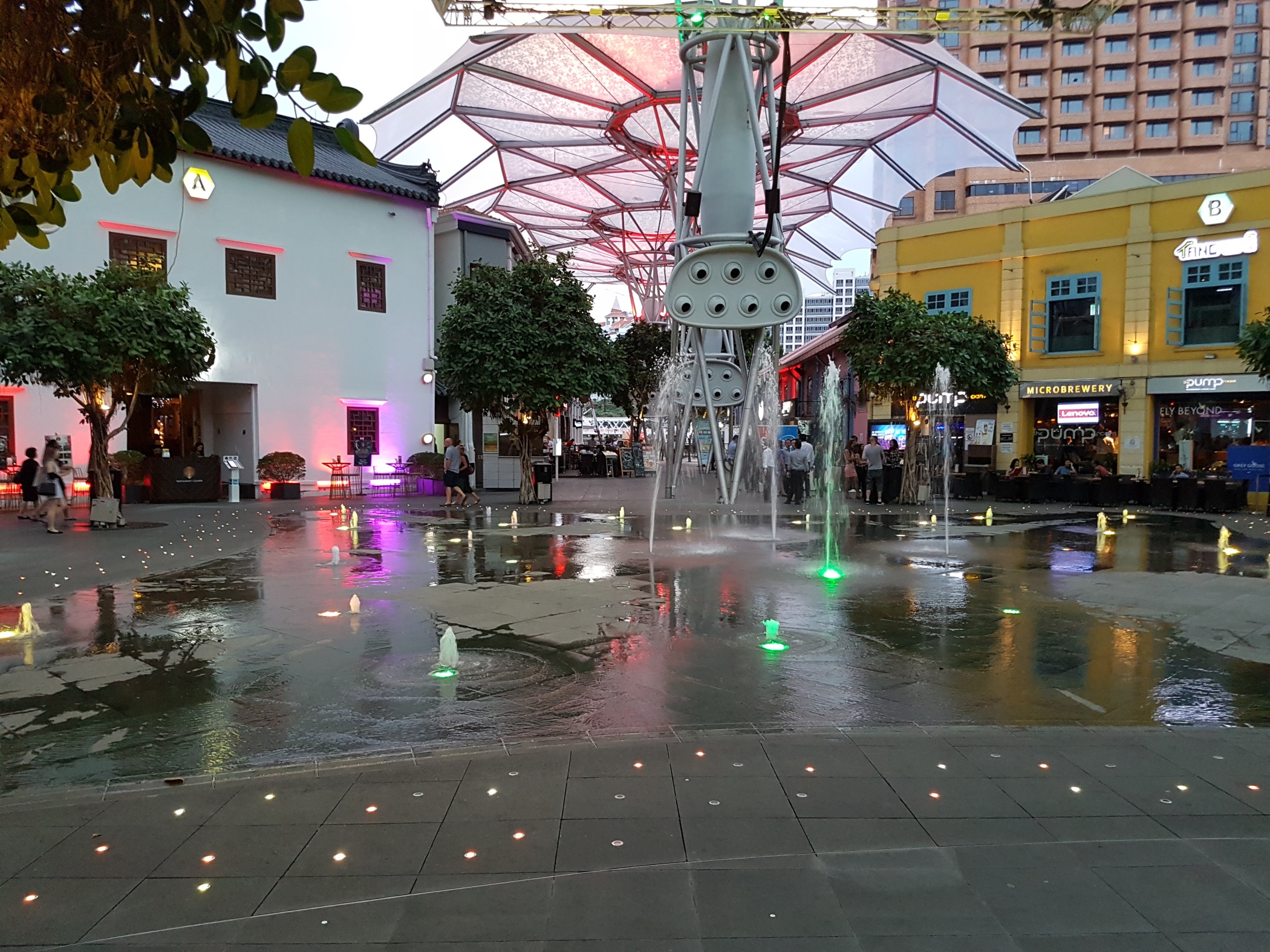
As dusk falls, the Singapore River and Clarke’s Quay light up and look very different….

Singapore may be urban, but there’s plenty of urban wildlife (of the non-human kind) to look out for.  These terrapins were sitting on a rubbish boom in the river by the hotel.

Unfortunately I only saw the otters that live in the river when I didn’t have a camera.  These creatures may be shy in the UK, but in Singapore they were  sunbathing on the river bank, watched by a dozen people just a few feet away.

The (feathered) bird life is surprisingly good, too.  Sitting next to the river having dinner, a Crested Serpent Eagle flew past.  And Collared Kingfishers are common by the river, or searching for food on the playing fields near by.  One of my favourites….

Posted in Out and about, Weird and wonderful | Tagged | Leave a comment

A question of gauge

In March 1995, ‘Back Track’ had an interesting article on the gauge of railways, with particular reference to the GWR broad gauge and the 4′ 8.5″ ‘narrow’ gauge.  Railway history is often thought of as a battle between these gauges, between Brunel’s masterpiece and the width of a Roman horse’s rear and its attached chariot.

But this does not seem to be the case:

In the totality of the applications of railways to transport both in the UK and the rest of the world, the variations in railway gauge are remarkable.

In 1983 the Industrial Railway Society published a list of National Coal Board underground flameproof locomotives that had operated since nationalisation on 1st January 1948.  In that short period of approximately 35 years, such locomotives had been supplied by outside industry to 30 different gauges, at every inch increment between 1′ 6″ and 3′ plus 3′ 6″ and many 1/2″ increments…..

The author goes on to examine how units of measure dictated gauge.  I was unaware of units such as the Castillian foot (6′ = 1672mm) and Swedish feet (4′ = 1188mm).  Britain could have used metric gauges, but it was anathema to the British government because of its revolutionary (and French) origins.

And to support the fact that there was no ‘standard’ gauge in the early years of the railways, here is a list of some gauges used – although the total mileage shown here is probably only a few hundred miles.

  • Date     Railway                                    Gauge
  • 1826     Redruth & Chasewater         4′ 0″
  • 1832     Saundersfoot                           4′ 0″
  • 1831     Garnkirk & Glasgow             4′ 6″
  • 1826     Gonkland & Kirkintilloch    4′ 6″
  • 1825     Stockton & Darlington         4′ 8″
  • 1830     Canterbury & Whitstable    4′ 8″
  • 1830     Liverpool & Manchester      4′ 8.5″
  • 1832     Leicester & Swannington    4′ 8.5″
  • 1840     London & Blackwall             5′ 0″
  • 1839     Eastern Counties                   5′ 0″
  • 1838     Arbroath & Forfar                5′ 6″
  • 1839     Ulster (Ireland)                     6′ 2″
  • 1838     Great Western                       7′ 0″
  • 1841     Bristol & Exeter                     7′ 0″

This list puts some perspective on us modeller’s arguments over HO, OO, EM and P4.  The above list has them all…..

Technically, the broad gauge was superior to the standard gauge adopted in 1846.  And Brunel would have probably won the battle if he had expanded the network northwards, rather than consolidating the railways in the south-west.

America was no better:

… in the United States it was a case of anything goes for many years in spite of the fact that the Stephenson gauge had been introduced very early on.  Most of the railways in the south-eastern states were built to the 5′ or Carolina gauge, resulting in major problems in the Civil War.  The Erie Railroad was built to a gauge of 6′ and possessed some splendid locomotives built to take full advantage of it. [See here] Over 3,000 miles were built to 4′ 10″ and there was a compromise of 4′ 9.25″ in some places to allow both 4′ 10″ and 4′ 8.5″ to use the same tracks.  Wider wheels were used, but derailments were common. When the Niagara Bridge was opened in 1855, it could accommodate trains of three gauges: 6′, 5′ 6″ (running in from Canada) and 4′ 8.5″.

And in Europe there were inexplicable variations:

France for example used 1.45m (The Est, PLM and Midi), 1.44m (the Nord, PO and Etat) as well as some 1.435m.  Rationalisation to the latter has been relatively recent.

And if history had turned out different, and very much for the worse, Brunel’s lines would have been distinctly ‘narrow’ gauge:

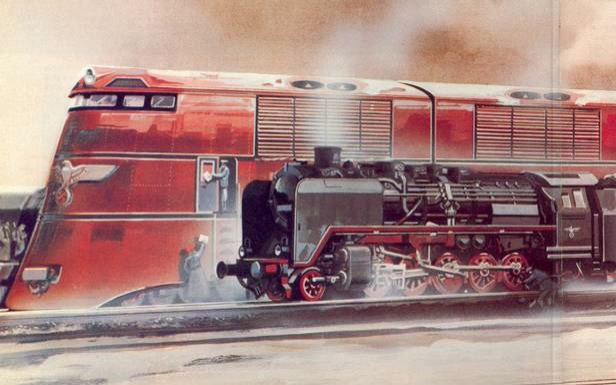
The most bizarre railway project of this century was Hitler’s Breitspurbahn, a broad gauge railway of colossal proportions.  The gauge was to be 3 metres and that would achieve speeds of 250km/hr.  Monstrous locomotives of 30,000hp were planned, weighing over 1,000 tons each.

That would be some model!  2mm scale on S4 track would be about right????

breitspurbahn1-305302-02df857082

Posted in Out and about, Prototype, Weird and wonderful | Tagged , , | Leave a comment

What’s in a name?

A good article from the BBC, exploring how ten London Underground stations got their peculiar names:

How tube stations got their unusual names

Scan a map of the London Underground for the first time, and you’ll likely notice that it is more than the ground-breaking design that seems imaginative. The names of the stations, too, can seem curiously, even bizarrely, whimsical. Some seem suited better to a medieval fantasy (Knightsbridge, Queensway) or a children’s book (Piccadilly Circus, Elephant & Castle) – and others still make Londoners giggle (Shepherd’s Bush, Cockfosters).

But these names weren’t chosen simply to give city-dwellers an alternate world to imagine as they hurtle beneath the capital. Some of their origins, in fact, date back millennia.

In summary, the stations are:

Covent Garden: The name for this Tube station would be almost self-explanatory – if it weren’t for the ‘n’ that went walkabout at some point since the Middle Ages. By the 13th Century, the site was a walled-off area of orchards and gardens which belonged to the monks of Westminster Abbey. They referred to it as “the garden of the Abbey and Convent” and then, of course, as “Convent Garden”.

Elephant & Castle: This one in south London, oddly enough, most likely comes from the Worshipful Company of Cutlers – a medieval guild of craftsmen who made swords and knives. Granted in 1622, their crest included an elephant… carrying a castle.  (But I’d always thought it was named after a Cockney corruption of ‘Infanta Castille’ a venerable Spanish princess from somewhere in English history.)

Cockfosters: Cockfosters was once the location of Enfield Chase, a royal park home to nearly 8,000 acres and 3,000 deer – as well as to foresters, who protected the park from would-be poachers or woodcutters. The word for the chief forester? Cock forester.

Tooting Bec: The name goes back more than 1,300 years.  Tooting is Saxon in origin, and first recorded in the 7th Century, as belonged to Tota or his friends.  The Bec comes from Bec comes from Bec abbey, in Normandy, who grabbed the land after the 1066 invasion.

Knightsbridge: The word ‘bridge’ comes from Old English ‘brycġ’, of the same meaning. Here, it refers to a crossing over the West Bourne River – one of the ‘lost rivers’ of London, which was re-routed through an underground sewer in the 19th Century. A ‘knight’, on the other hand, meant a boy or young man, particularly one in someone’s employment.

Maida Vale: The dip in land is indeed a ‘vale’. But Maida was a town in Calabria, Italy that became famous when the English crushed Napoleon’s allies in an 1806 battle.  A pub called the Hero of Maida, named in honour of the battle, has vanished, but not before lending its name to the street.

Aldgate: Around 190, when London was Londinium, the Romans walled the city; they also built six gates, including one here. Versions of these gates (and of the wall) existed into the 1700s. This one was known as Aldgate.  Why ‘Ald’ – that’s more difficult.

Piccadilly Circus: The alternate meaning of ‘circus’ refers to a round junction where several streets meet. The other half of its name, is from ‘piccadill’ a large, ruffled collar that was the height of fashion in the late 16th and early 17th Centuries.

Queensway: Of course, named after Queen Victoria. But Queensway has an especially sweet story: named in her honour soon after she ascended to the throne, the road was where she rode horses as a child growing up in nearby Kensington Palace.

Shepherd’s Bush: Once a rural byway, a ‘shepherd’s bush’ referred to the shelter that a shepherd would make by pruning a hawthorn bush.

Read the full article here.

It does mean you can call the stations on your layout absolutely anything, and still be prototypical.  I’ve always rather liked ‘Queen Camel’, a village just off the A303.  Wikipedia tells me that:

The name “Camel” derives not from the animal but from “cantmael”, the name of the place in the 10th century. “Cantmael” possibly derives from the Celtic words canto “district” and mael “bare hill”.  The “Queen” in the village’s name is probably Queen Eleanor, the wife of Henry III, who owned land in the area in the 13th century.

Now I know – I wondered every time we drive past the signpost!
Posted in Uncategorized | Leave a comment

Shunting ad infinitum

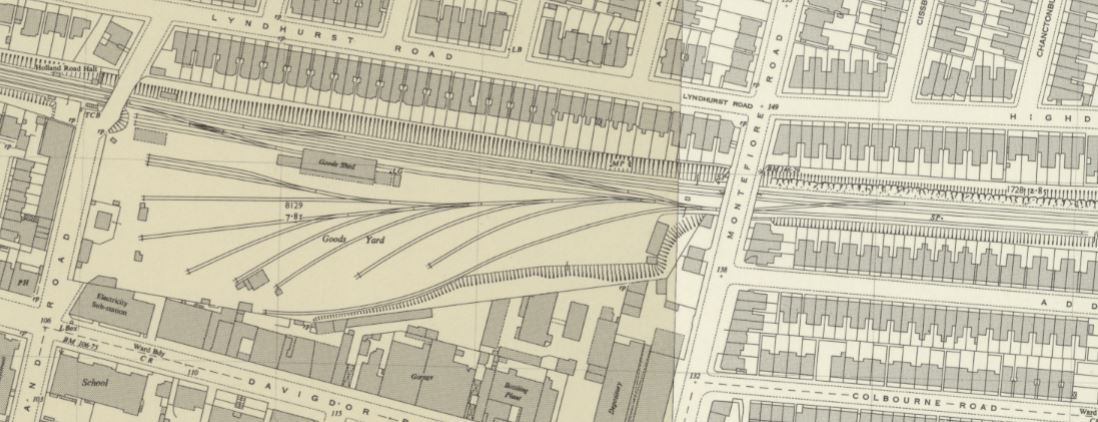
You may recall that I found this plan of a small urban goods yard in Brighton, and commented on its suitability for a model. (All maps from the National Library of Scotland site, under creative commons.)

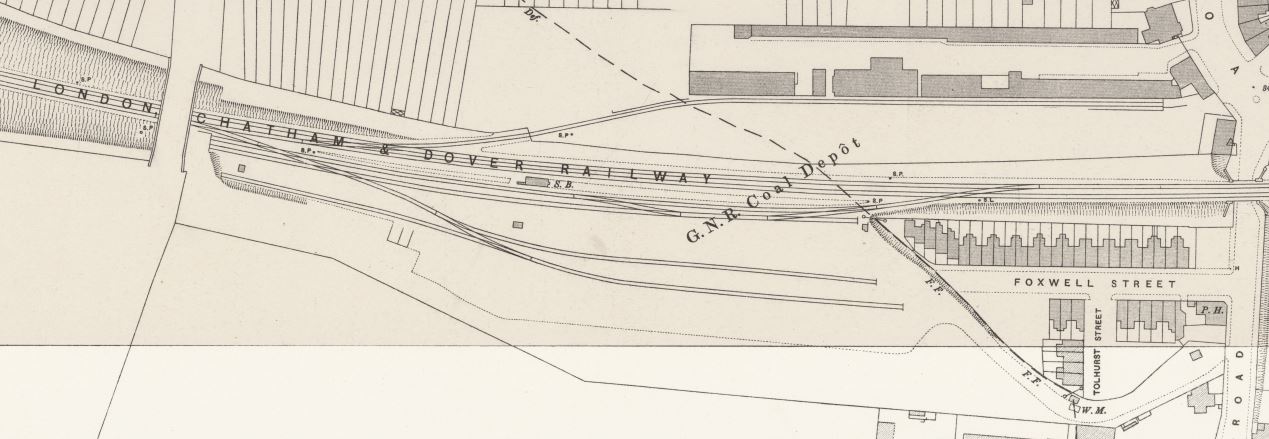
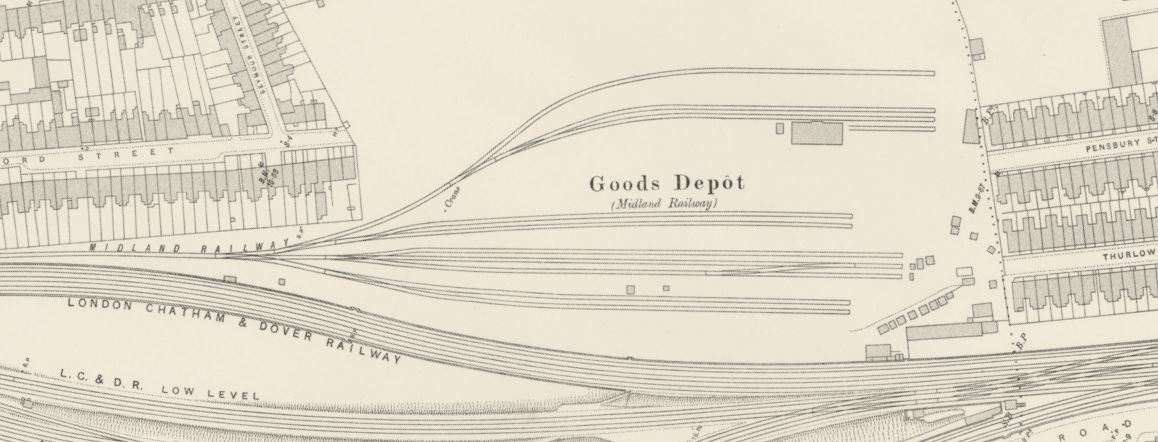
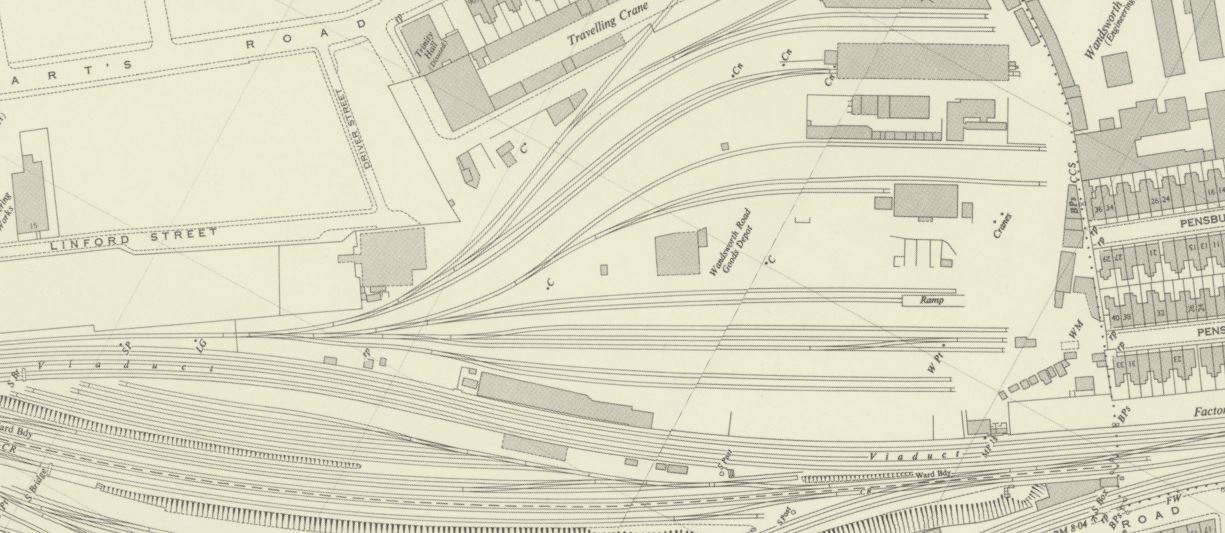
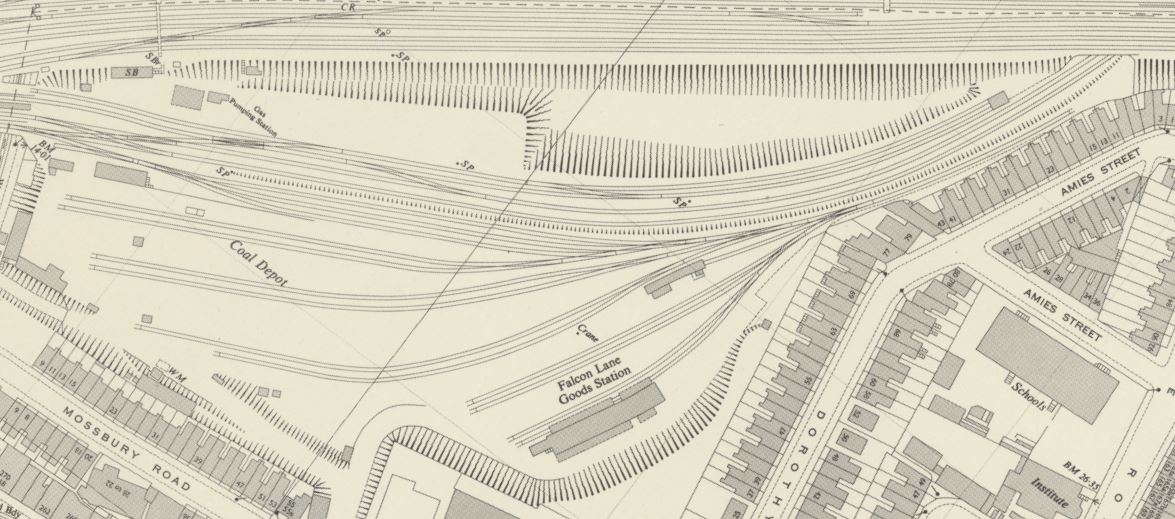
Wandering around south London, I have come across a good number of other small yards.  My interest started as I noticed the number of north London railway companies – such as the Midland or LNWR – with coal yards south of the river.  Coal trains from the mining areas of the midlands and north were run south of the river to provide domestic and industrial coal – and smog.

I’ve presented a number of these yard below, mostly both as they were in 1900 and in 1950.  I think they provide some interesting yard layouts, though modelling them purely as a coal depot may lack a little operating interest, despite the interesting private owner wagons that could be modelled.

We’ll start with Knight’s Hill, not far from Crystal Palace.  This appears to belong to the London & North Western Railway.  It would make an interesting model, with the tunnel and steep slopes down to the road bridges.  The yard could be straightened up a bit to make the scene a little narrower.

The growth of suburbia is obvious in the second plan – but both would make good models.

Nearby at Nunhead was the Great Northern Railway coal depot.  A far simpler design, but including some complex pointwork.

Moving in towards central London, Wandsworth was home to the Midland Railway.  It was already largely urban in 1900.  It is interesting to see how the yard has grown by 1950, and the war damaged streets to the west.

The Midland Railway depot in Brixton was very compact, using wagon turntables, but had all but disappeared by 1950.

And finally the LNWR depot at Clapham, on the end of the West London Extension Railway.  The multiple main lines into Waterloo are to the north of the depot, and Clapham Junction is just to the west.  Everyone seems to have a yard around Clapham – there was even a Great Western Railway broad-gauge yard prior to 1900.

I might try and find some yards further afield – there are some amazing places in East London, but hopefully those above will provoke the designer’s juices!
Posted in Hints and tips, Inspiration, Layout design, Out and about | Tagged , , | 4 Comments

Commuter spots seven nuns at Seven Sisters

Something special from the Daily Telegraph….

A commuter was astonished when he saw seven nuns waiting for a train at Seven Sisters Tube station in London.

The entertaining coincidence appeared not to have been noticed by the nuns as they sat and chatted in a group.

Ben Patey, 33, said: “I had just had a long day and I was waiting to jump on the train when I looked across and saw the nuns and the sign. “I had to do a double-take. It was one of those strange but amusing moments.”

Seven Sisters is believed to take its name from a group of seven elm trees that were planted around a willow tree in the 14th century.

Can anyone suggest any alternative cameos for your layout?  (Not too rude, please…..)

Posted in Inspiration, Out and about, Prototype, Weird and wonderful | Tagged , , , | Leave a comment

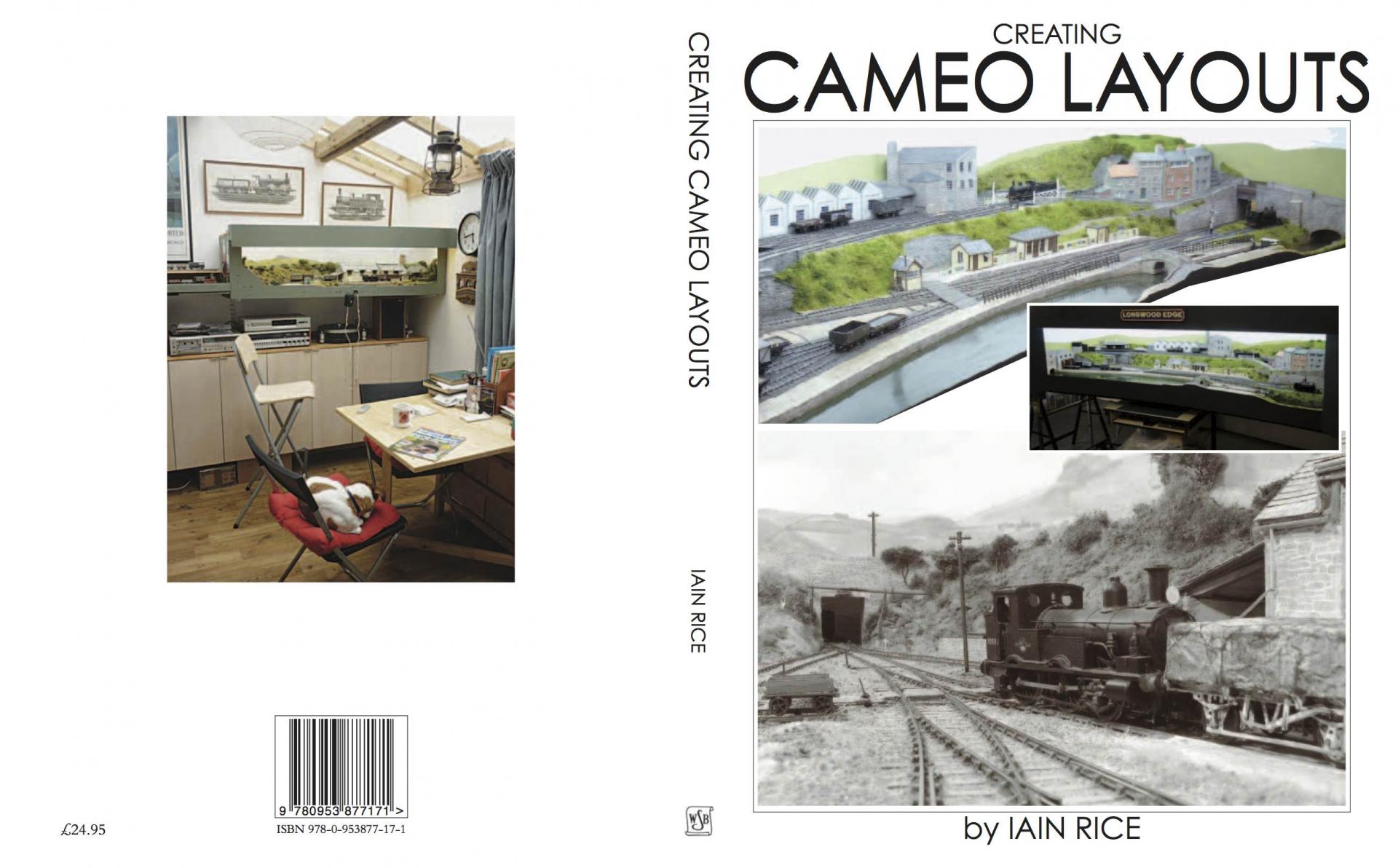
Book review – Creating cameo layouts’

We all get older.  Even Iain Rice gets older.  That young whipper-snapper with radical ideas on P4 modelling and on layout design is now an elder statesman of the hobby.  Fortunately he writes in just the same style as he ever did – and this makes his books a joy to read even about the more boring bits of modelling – but perhaps with a modicum more experience.  His latest book explores the world of cameo layouts.

You may first note the price – a significant £24.95.  It seems expensive, but all books are these days.  And it is still less than a new Farish coach, and probably a lot more useful.

And what is a ‘Cameo Layout’?  The author says that:

It is this sense of something that encapsulates a subject concisely and within a complementary setting that I seek to apply the term ‘cameo’ to a model railway.  That is, a representation which conveys the nature and character of a prototype in a small space while being executed to a high standard, the modelling being set off by a visually pleasing presentation.  To which aesthetic criteria I have added the  practical ones that the whole thing should be structurally and functionally self-contained, easy to move and store, and readily adaptable to different circumstances.

Perhaps we might define it as a small layout, perhaps up to 8′ in length, of a small piece of prototype railway.  This may well be a branch line terminus, or a light railway, but could equally be industrial, urban, or part of a goods yard or loco depot.  It will probably be foldable and easily transported to shows.  And it may well be operated from the front, have an integral backscene and ‘proscenium arch’ to frame the layout, and an integral fiddle yard and electrics.

The covers of the book illustrate the idea from Rice’s own layouts – front and back cover show Trerice, ‘P4′ china clay in 6’ plus a fiddle yard.  And the front cover has the two level LNWR and L&YR urban layout ‘ Longwood Edge’.  Here’s a short video of Trerice.

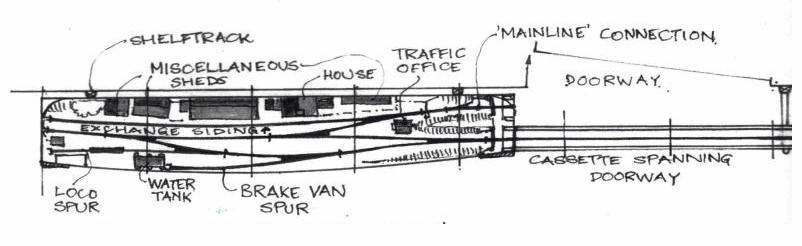
And this is a typical Rice small layout – originally as a three level, ‘stacked’ design where you used the cassette to move from one level, and station, to another.  But it would make an interesting small goods exchange station in its own right.

The book is full of good advice and techniques for design, baseboards, through to couplings and operation.  Indeed, the section on couplings is most worthwhile, although it is aimed at 4mm scale, as it carefully compares a range of different couplers.

At the end of the book, there are a number of worked examples of ‘cameo’ layouts.  All of interest, though my one criticism of the book is that these examples only includes one ‘urban’ one, and none from East London, where I feel some of Rice’s best designs originate.

Again, another recommended purchase to add to your armchair modelling books.


This blog (and the next few) come from Singapore.  I’m lucky enough to be here for 10 days – though I will be working for the weekdays and trying to finish other projects over the weekend.  No chance of trainspotting, though….

Posted in Hints and tips, Inspiration, Layout design, The trade | Tagged , , , | 2 Comments