Australian inspiration

Rediscovering websites that seem to have gone for good is always good news.  I enjoyed Andrew Martin’s site as it had a good number of very buildable small layout plans.  Although based in Australia, small stations are small stations worldwide – the difference between locations is often that of buildings, scenery, and of course rolling stock.

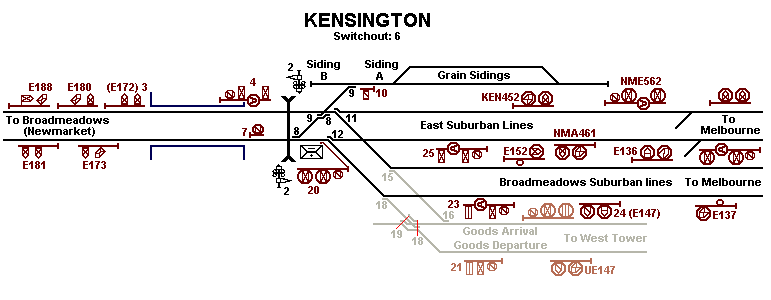
I’m pleased to rediscover Andrew’s site here (or maybe he never left and I lost touch or deleted the wrong link from my favourites).  He recently described some Australian grain operations in a post, ‘An industry you can model – Kensington Grain Siding (Victoria, Australia)’.  The track layout caught my eye as a good prototype for a scenic N-club to N-mod, 2 to 4 track transition module.  Forget the goods roads greyed out on the diagram and you still have an interesting layout.  The catch might be that the double junction means that the N-mod tracks will be up-down-up-down rather than up-up-down-down as usually set up.  However, that will be no problem providing the operators keep awake!

kensington

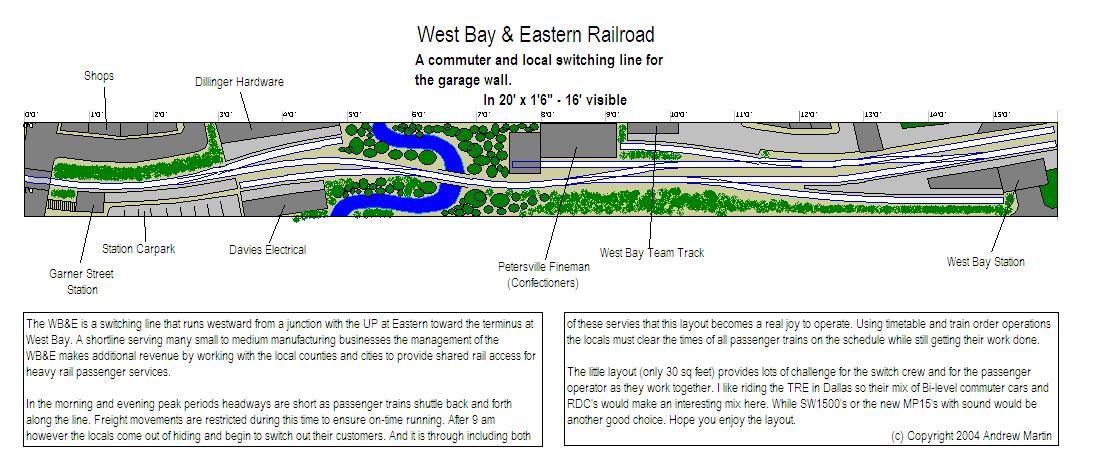
And I’m pleased to see that my favourite from Andrew’s designs is back on the site.  Only 10′ plus staging in ‘N’ gauge, and offering plenty of both passenger operations and switching.

westbay_eastern

Posted in ESNG, Inspiration, Layout design, N Club International | Tagged , , , | 1 Comment

Exhibitions, are they worth it?

Julias Modelopolis  (Julia makes marvellous 2mm fine scale models, with some 3-D printing thrown in for good measure) recently commented on taking your layout to an exhibition.  The money comments were…..

Browsing the interweb forums I always stumble across people critising layouts that are out and about at shows. The trend these days seems to be that people are almost demanding that layouts run faultessly and have a contunuous flow of trains passing by throughout their time in front of the layout as it’s their right to see this because they have paid to see it.

To me as a layout owner who occasionally takes it to shows it scares me rotten. It applies even more pressure to a situation which is quite stressful anyway. The thought of someone publishing critisism online about my layout because I didn’t run trains constanly or a wagon derailed makes me think is it worth all the effort. To get the layout to a show, set it all up, and try and keep things running throughout is not an easy thing to do.

I built the layout because I enjoy it (well, most of the time anyway!). If it gets invited to exhibitions then great (and it does!) but if what I read on some forums it the general mentality of exhibition attendees then I cannot see that its worth the effort. I wish I was thick skinned but I am not, should I need to be anyway for doing something I enjoy?

There were some good comments, too, including…..

Do those that criticise exhibit themselves? Or even build stuff? Are those that criticise to your face trying to make them selves feel good by putting down your efforts? Are those that do so online cowards who know that you’ll never knowingly meet the person making those comments so they can be rude from the safety of their living rooms?

As long as you’re happy with what you’ve created, does it really matter what other people think?

Don’t get stressed by the small minority of critics. They will be criticising everything (not just your efforts) and can be safely ignored.

I very much enjoy operating at shows you do get some rude idiots but you also get a lot of appreciative people. Life in general throws up rather more rude idiots so being at a show is fun for me. My favourite though are those who gaily talk have visit the station modelled and offering criticism when it is fictitious.

Don’t you just hate ’em??? I use the comment ‘I look forward to critiquing your next exhibition layout. When are you showing it??’

I hope that our ESNG show is generally free of such comments.  It does seem to be a ‘danger’ of modelling a prototype to fine scale that you open yourself up to criticism from so called experts.  However, I do recall my first N-gauge US module on display and two gentlemen complaining that my sidings didn’t have buffer stops.  I refrained from telling them that it was quite normal for rural sidings in the USA to run out to nothing and a pile of earth, as I had modelled.

Posted in Inspiration, Layout design, Operation, Out and about | Tagged , , , | 2 Comments

Less is more – two interesting examples

I used to follow a blog called ‘The Staging Yard’, following a UK based modeller’s trials at building a US layout, until it went quiet in 2014.  Reading RMWeb the other day, I saw that the blog had reappeared and was being continued on RMWeb, written by a certain Dr Gerbil-Fritters.  I thought my alias was strange…..

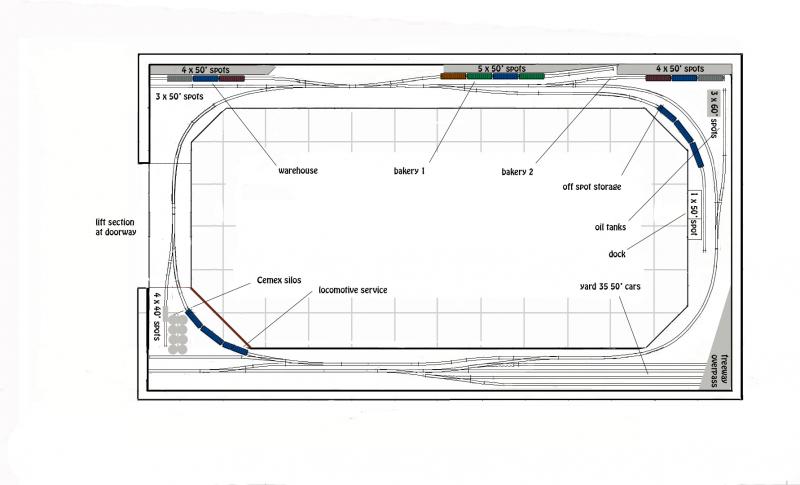
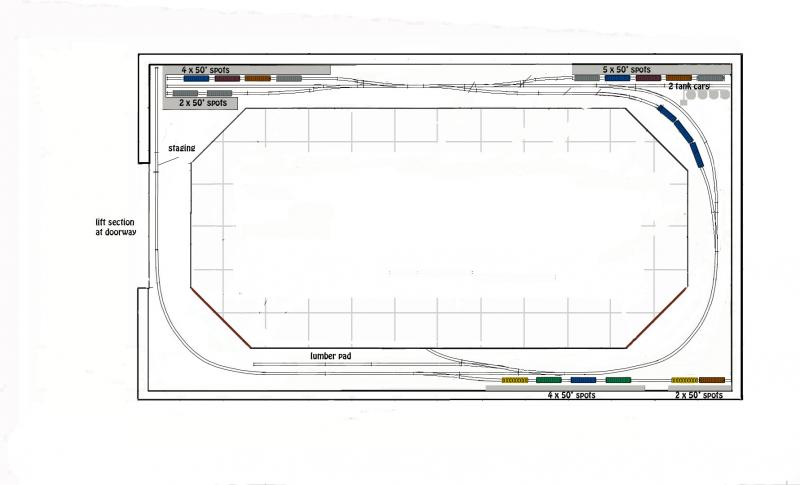
Nevertheless, this thread makes interesting reading, as the layout gets progressively simpler, as can be seen from these plans.

post-238-0-66253800-1399828029_thumb post-238-0-16720300-1432734350_thumb

The thought is that the simpler plans are just more realistic and can be operated prototypically.

However, at the end of the thread, we have the worrying comments….

Not sure yet.  The pike worked fine, was reasonably authentic, yet I just didn’t have any love for it.  I am still looking for an emotional connection, but it’s proving elusive.

And after a little play with British ‘OO’ and ‘O’….

I’m having a short sabbatical from model trains.

Sometimes its difficult to decide what you really want to model.  I hope he will soon be back, but I can so identify with that!

The second example of ‘less is more’ is in ‘O’ gauge, and is on the Model Railroad Hobbyist site.  Here ‘Kurt’ describes his new switching layout, Cleveland Flats.  A mere 11′ long in ‘O’ gauge, plus a few feet headshunt on the left.  This little layout is based on the big cereal food processor at Cleveland Flats.  And even in ‘O’ gauge, it is close to scale length.  The plan is closely based on the prototype, with short tracks and tight clearances.

Cleveland_flats

Another excellent little switching layout that could built in any scale – in ‘N’ perhaps a 6′ x 6″shelf would take the whole plan and give a lot of entertainment for its size.  Imagine the care needed when crossing both grade crossings.


Posted in Hints and tips, Inspiration, Layout design, Operation | Tagged , , , | 1 Comment

Long and winding road – narrow and wide

One feature of the ‘Shed’ era that I forgot was an interest in narrow gauge railways.  A few Model Railway News articles were supplemented by a copy of Don Boreham’s seminal ‘Narrow Gauge Railway Modelling’ and a history of the Lynton and Barnstaple Railway.  Also at that time, Eggerbahn, Minitrains and Peco Crazy Track appears.  I produced a number of models with varying success – including L&B coaches and goods stock in Plastikard – and models of a Glyn Valley tram engine and L&B ‘Lyn’ on early ‘N’ chassis.  And predating these, an ‘O’ gauge Glynn Valley coach in card with thread beading as described by Don Boreham.  This model fitted perfectly on a Hornby Dublo 10′ van chassis removed from its donor vehicle.  Unfortunately, none of these vehicles exist today.

So, off to university in Cambridge, that logically generated a new interest in the Great Eastern Railway, and less logically in EM gauge.  And an uncertainty whether I was interested in 1900, 1950 or 1990 as a period to model.  I still have my rather nice detailed Will’s Finecast kit of a J69 0-6-0 tank, in GER blue as the Liverpool Street pilot.  I haven’t got my scratch built GER 2-2-2 express locomotive.  Not finished (sounds familiar) but it looked the part.  I build one or two ‘O’ gauge GER wagons in plastic, that are still tucked away somewhere.

1976.  After university came work and flats in Kennington and Clapham.  Not much time or space for a railway, but I started to build an EM version of the classic ‘Minories’ layout.  It didn’t get far, though I found an unbuilt EM point kit recently.  Marriage in 1979 and children followed.  I had plans for a small EM shunting layout, based on John Allison’s Selbury Works Sidings, there wasn’t really room in our flat for it.

Selbury

We spent 1984-5 in Hong Kong, and the modelling muse picked up again, as I took enough modelling materials and etched kits to build a number of ‘O’ gauge pre-group wagons.  Then in 1986 we moved to a house in Redhill, with a lined loft space and room for a 12′ ‘O’ gauge layout, a work bench, and a chance to build a few models and even finish some of them.

All this came to an end in 1993, when it was all put away to move house again (from one end of the road to the other, to gain more space).  The loft was lost to a conversion to a bedroom for my eldest daughter.  But a foot was kept in the door by keeping the landing outside as a workshop area.

And then in 1997, the ESNG approach Earlswood Baptist Church with a request to hire the hall for their meetings.  The church leadership made the fateful suggestion – ‘Jon, you like trains, can you liaise with them?’  I did and that has started 18 years of ‘N’ gauge modelling, and three layouts that were really pretty well finished!  And an interest in the USA railways, specifically Lehigh Valley and interurbans, especially Pacific Electric.

As you can see from the last three posts, I am not one of those people who spend a lifetime building one line or one company.  Too much of a magpie mind I guess.  But as I review my modelling activities and the drawers of models at home, I am trying to ask myself, ‘What do I really enjoy about model railways?’  Writing this series of posts has been one way to think through that question.  I’ll think some more, perhaps as I go on holiday, and write a final post with some thoughts in that direction.

Posted in Inspiration, Jon's layout ramblings, Weird and wonderful | Tagged , , | 2 Comments

ESNG meeting – 15 July 2015

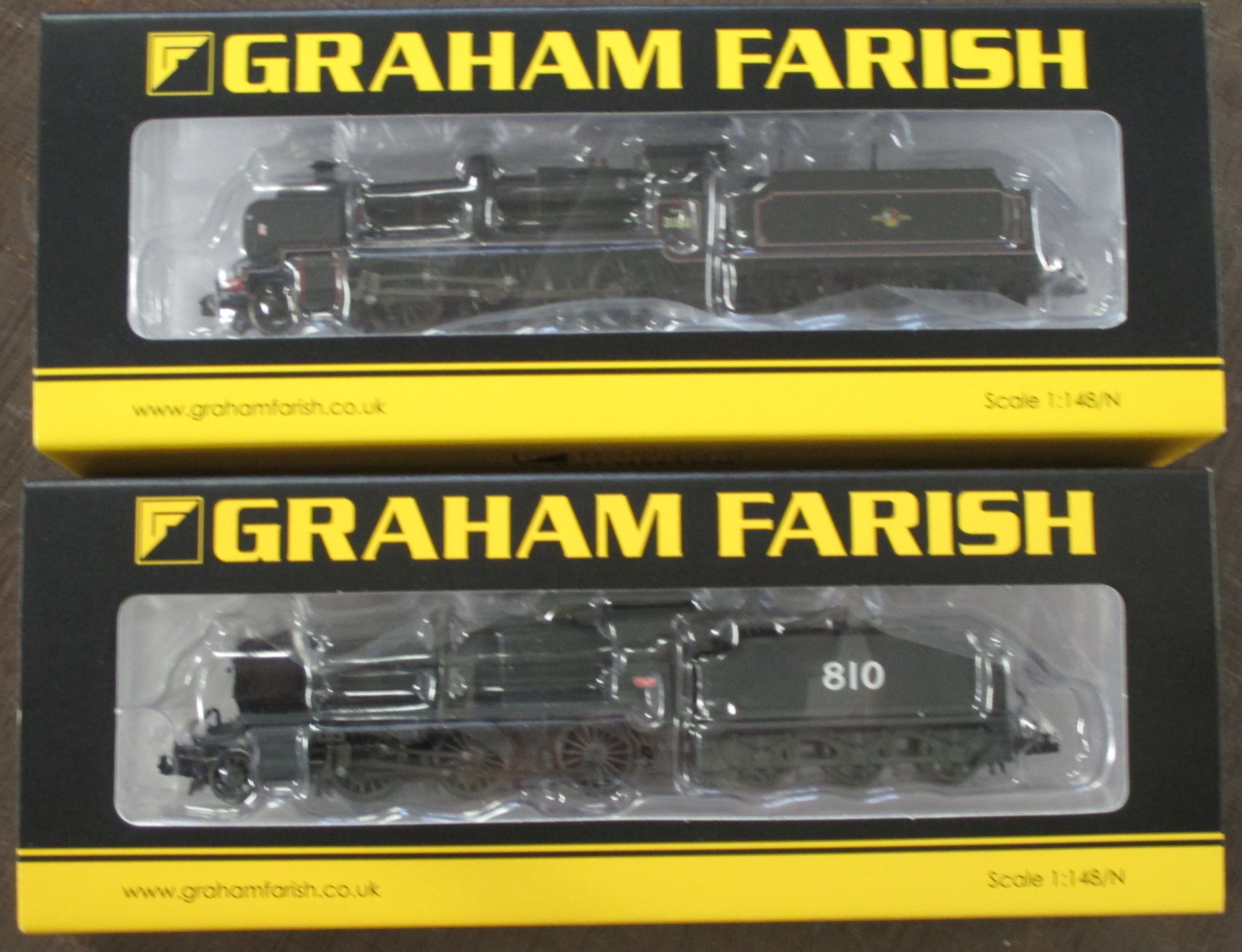
A quiet but busy evening as the club.  Only 8 members present, but we had some good trains running, and more track was laid on the new end loop.  I had acquired a new Farish Southern N 2-6-0 since Sunday – couldn’t resist it.  It’s difficult to believe that this is ‘N’ gauge….

1_N

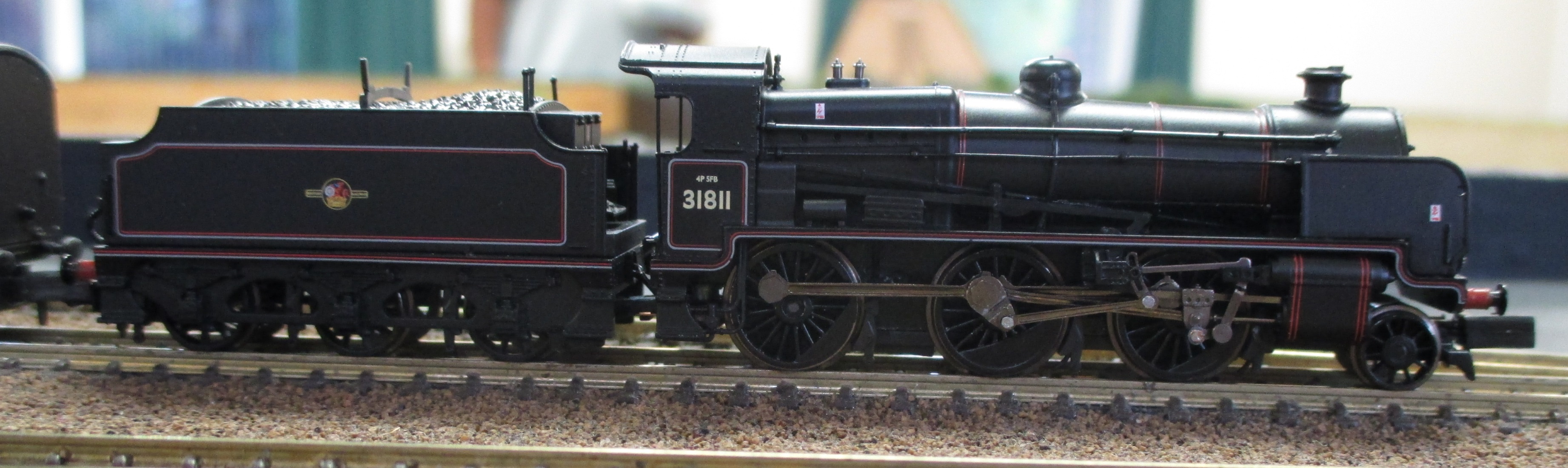
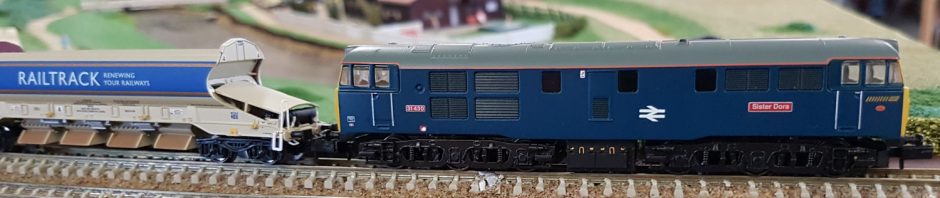
It ran perfectly straight out of the box.  There was some confusion, though, when Derek’s 31811 was running on the adjacent track.

Graham’s bullet canary made a return visit, and coped better with the larger curves on tonight’s circuit.

2_people

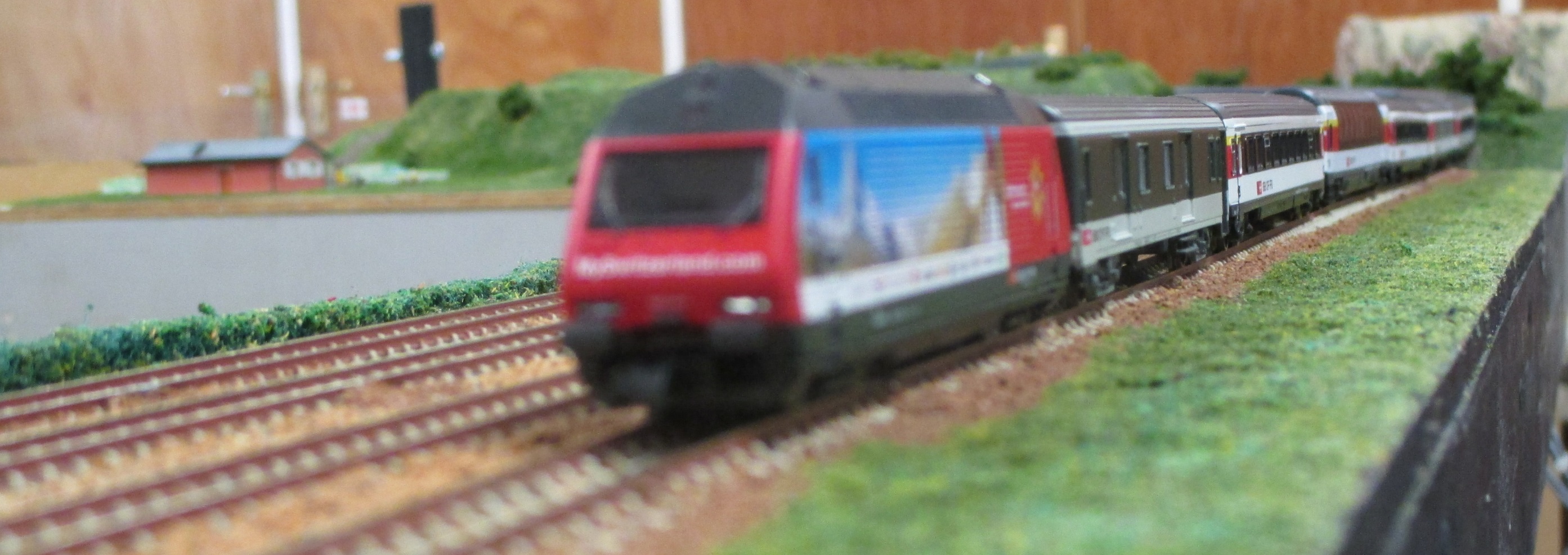
Whilst Allan was running a train of Swiss international stock, from a range of manufacturers.  It was notable how all the coaches from different sources matched each other for level and livery.

3_swiss

Peter’s A4 made a good show, albeit with a train of blue and grey coaches.  No doubt it was on a preservation steam special.

4_A4

Posted in ESNG, ESNG meetings | Tagged , , , | 1 Comment

London Underground: 150 fascinating Tube facts

Or how to bore your travelling companion on the bus during a tube strike.  These are taken from the Daily Telegraph.  Here are my top 30 (or so), avoiding a very long post!

1. There is only one Tube station which does not have any letters of the word ‘mackerel’ in it: St John’s Wood.

2. The average speed on the Underground is 20.5 miles per hour including station stops.

6. Many tube stations were used as air-raid shelters during the Second World War, but the Central Line was even converted into a fighter aircraft factory that stretched for over two miles, with its own railway system. Its existence remained an official secret until the 1980s.

9. Only 45 per cent of the Underground is actually in tunnels.

12. Aldgate Station, on the Circle and Metropolitan Lines, is built on a massive plague pit, where more than 1,000 bodies are buried.

17. The London Underground manages about 10 per cent of all green spaces in London.

18. Wildlife observed on the Tube network includes woodpeckers, deer, sparrowhawk, bats, grass snakes, great crested newts, slow worms.

19. Over 47 million litres water are pumped from the Tube each day, enough to fill a standard leisure centre swimming pool (25 metres x 10 metres) every quarter of an hour.

44. The tunnels beneath the City curve significantly because they follow its medieval street plan.

45. The Central line introduced the first flat fare when it opened at the turn of the 20th century. The tuppence fare lasted until the end of June 1907 when a threepenny fare was introduced for longer journeys.

52. Sting and Paul McCartney are both rumoured to have busked on the Underground in disguise.

55. The Jubilee Line is the only one to connect with all the other Underground Lines.

60. An estimated half a million mice live in the Underground system.

64.There are only two tube station names that contain all five vowels: Mansion House, and South Ealing.

68. In January 2005, in an attempt to alleviate a problem with loitering young people, the London Underground announced it would play classical music at problem stations.

69. The Underground has the oldest section of underground railway in the world, which opened in 1863.

72. During the Second World War, part of the Piccadilly line (Holborn – Aldwych branch), was closed and British Museum treasures were stored in the empty spaces.

74. The first Tube tunnel was opened in 1880, running from the Tower of London to Bermondsey.

91. A spiral escalator was installed in 1907 at Holloway Road station, but linear escalators were favoured for the rest of the network. A small section of the spiral escalator is in the Acton depot.

97. The coffin of Dr. Thomas Barnardo was carried in funeral cortege on an underground train in 1905, one of only two occasions this is known to have happened.

103. According to a 2002 study air quality on the Underground was 73 times worse than at street level, with 20 minutes on the Northern Line having “the same effect as smoking a cigarette”.

113. King’s Cross St Pancras tube station is served by more Underground lines than any other station on the network.

126. The River Westbourne was funnelled above a platform on Sloane Square in a large iron pipe suspended from girders. It remains in place today.

128. There is a mosquito named after the Tube – the London Underground mosquito, which was found in the London Underground. It was notable for its assault of Londoners sleeping in the Underground during the Blitz.

134. In cockney rhyming slang, the London Underground is known as the Oxo (Cube/ Tube).

144. A fragrance known as Madeleine was trialled at St. James Park, Euston, and Piccadilly stations in 2001, intended to make the Tube more pleasant. It was stopped within days after complaints from people saying they felt ill.

147. A 2011 study suggested 30 per cent of passengers take longer routes due to the out-of-scale distances on the Tube map.
Posted in Inspiration, Out and about, Prototype, Weird and wonderful | Tagged , , , | Leave a comment

ESNG PlayDay – 12 July 2015

July’s PlayDay was a successful afternoon.  We had 10 punters in attendance, including a pleasant surprise in Sean.  Sean had been able to leave work early from driving trains on Southern due to a convenient replacement bus service.  (What, don’t they get you to drive the buses as well?)  The only negative was Mr Atfield’s bad back, that slowed down the building work that we got done.

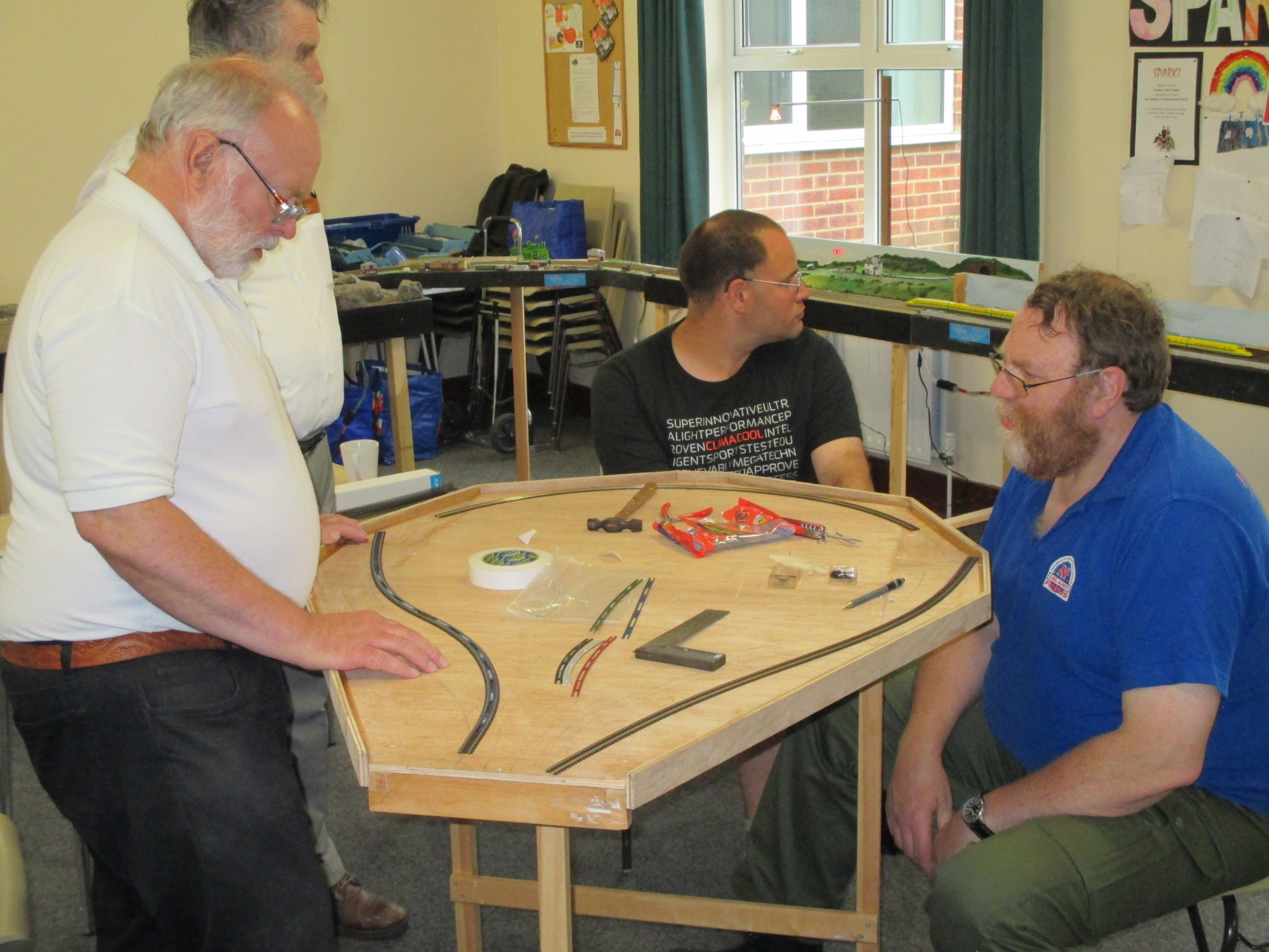
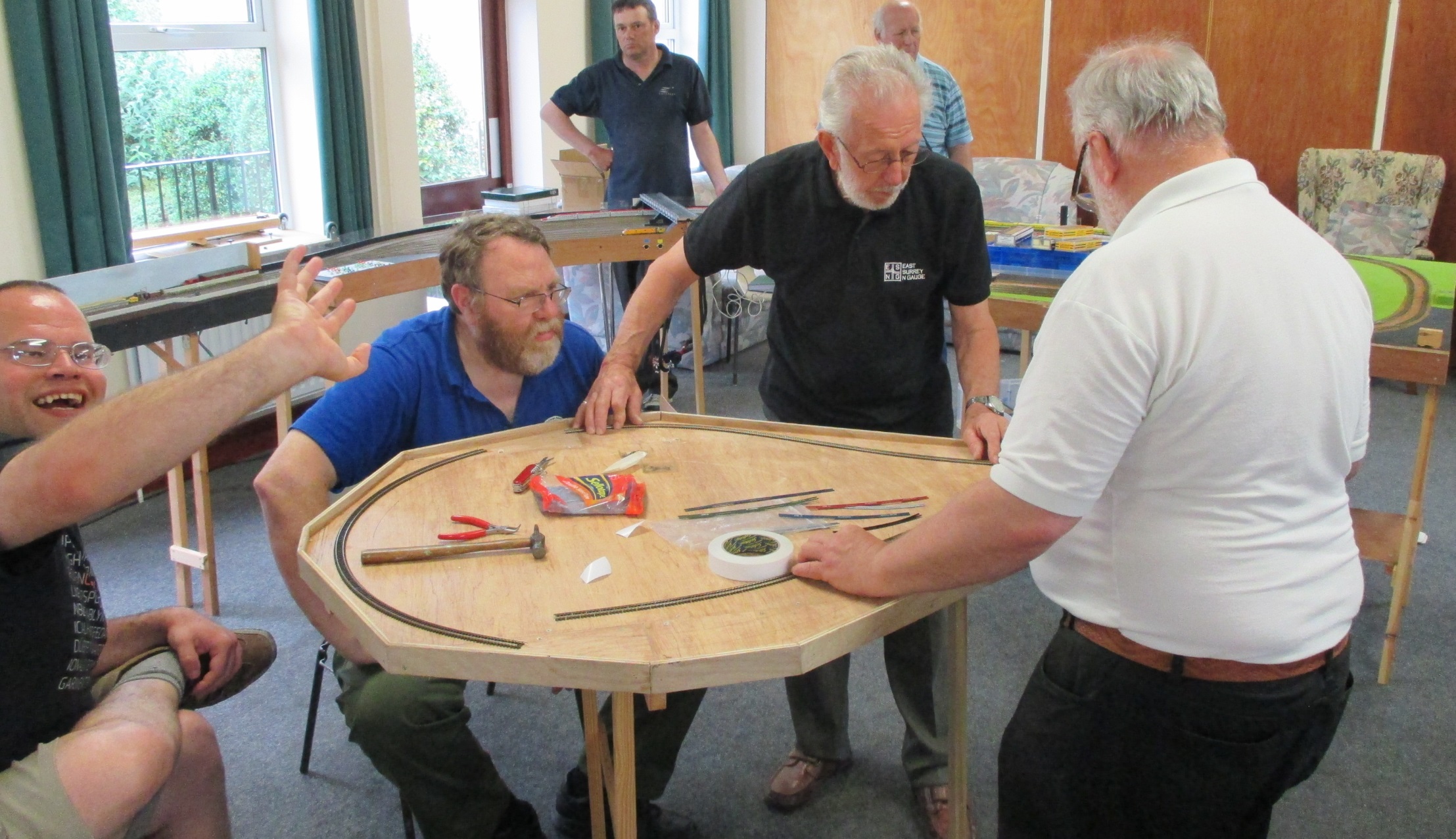
Construction was by committee, as we started track laying on a new N-mod end loop, to be used in Stuttgart this year, and any time we want an end to end layout at home.  Surprisingly, this worked very well, and there were no fist fights over track laying technique.  All good ideas were taken on board by the committee and firmly rejected.  Just like RailTrack, really.  But here’s the photographic evidence….

1_loop 2_loop

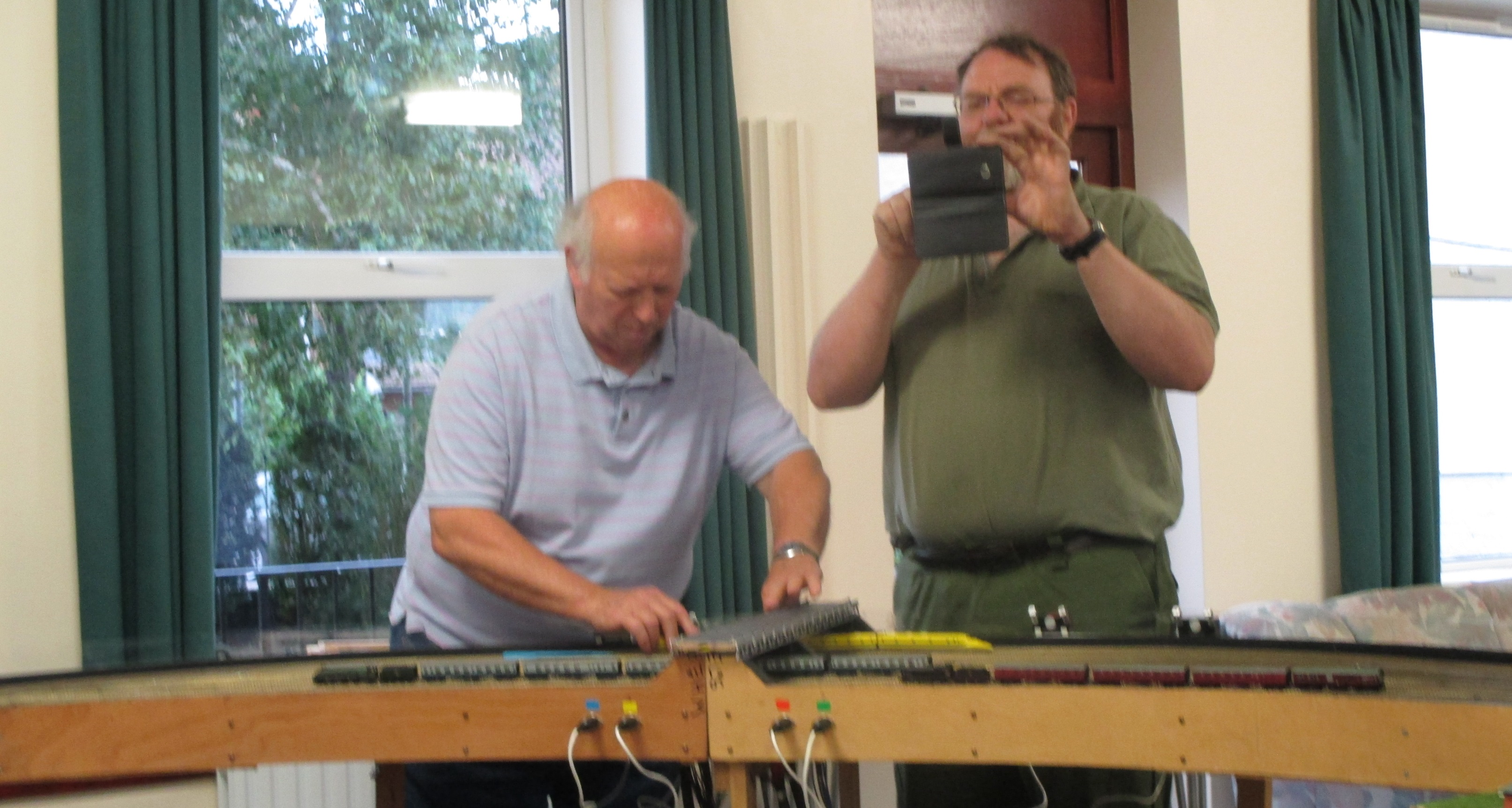
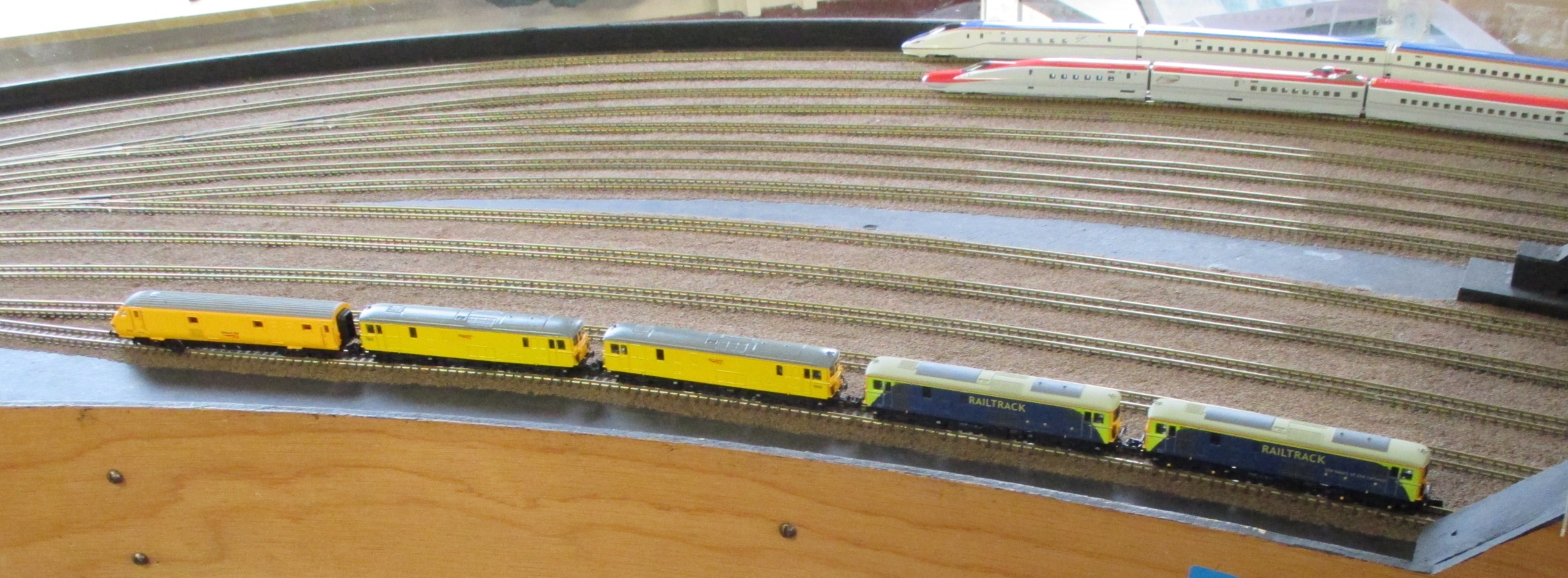
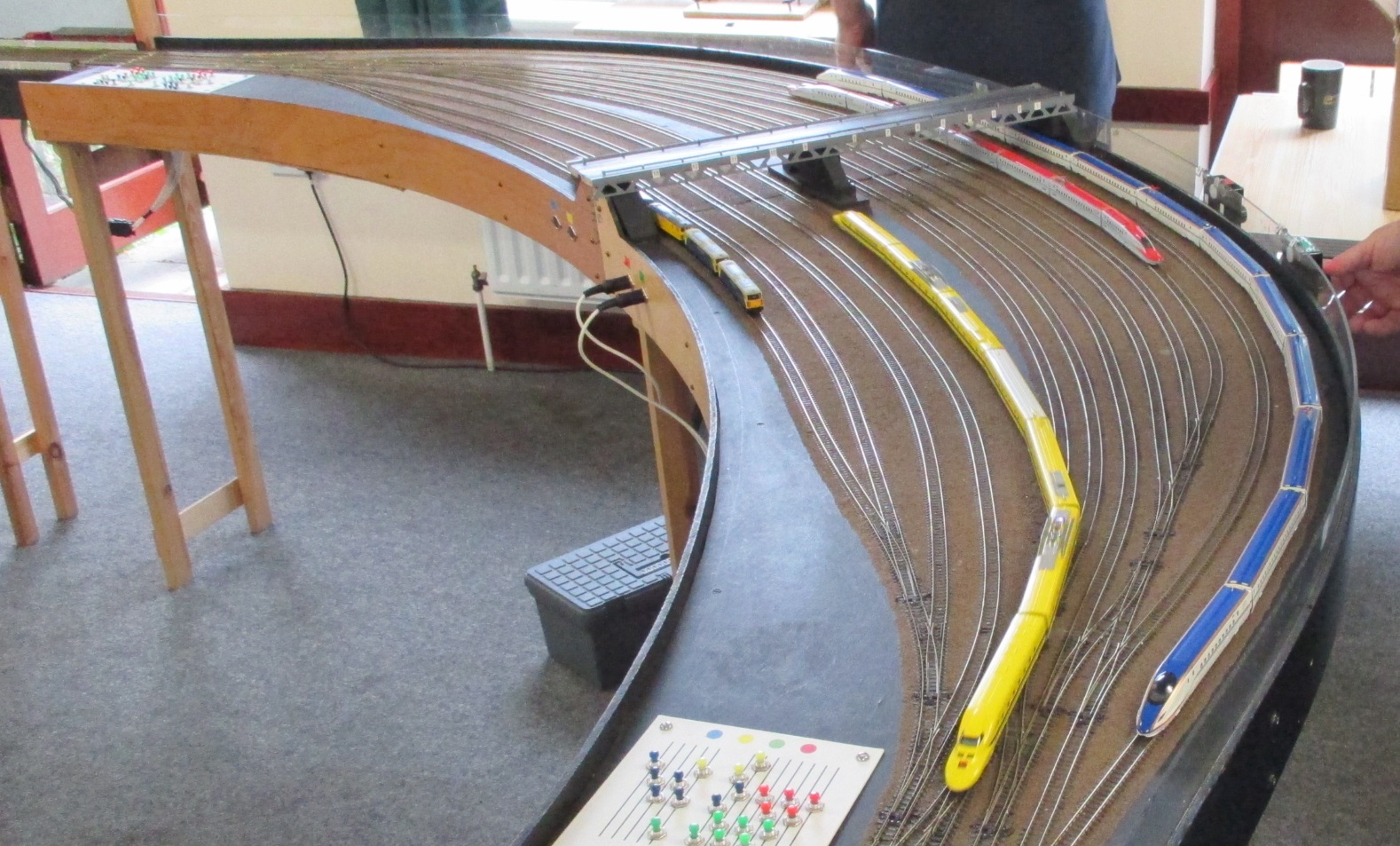
On the circuit, we put together an end-to-end circuit, with Derek’s ‘banjo’ at one end and Allan’s ‘Bowler’s End’ at the other.  This does reduce the number of trains running to two, but did also leave room in the middle for the working party.  A variety of trains were on view, including this interesting line of Class 73s…..

3_73s

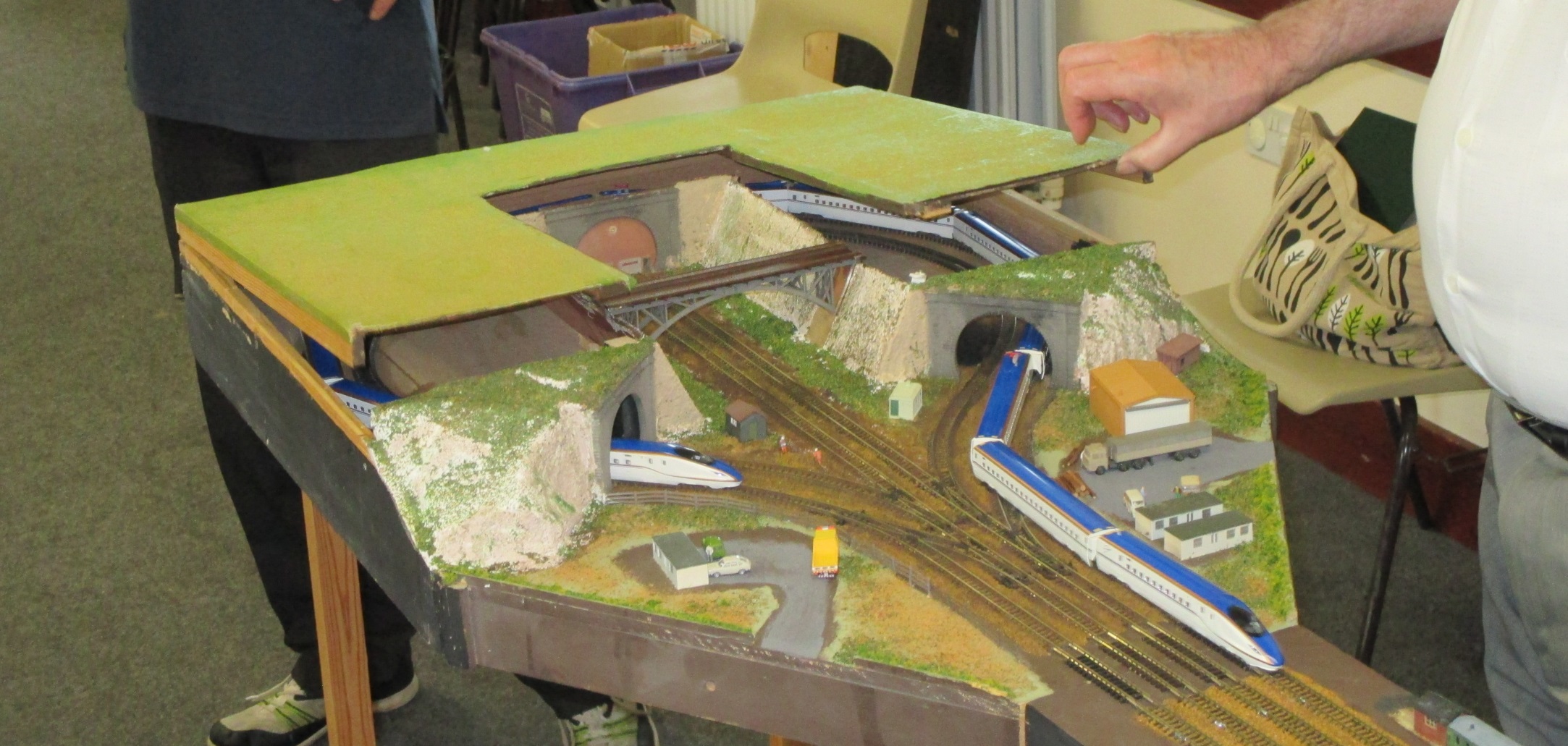
However, most of the afternoon was dedicated to Japanese Bullet trains, as Paul had brought a selection of his collection, and Graham had a new luminous yellow unit.  Unfortunately, not all units coped with the tight curves at both ends of the layout.  Surprisingly, it was the Kato units that didn’t like the bends, as Kato stock normally runs over anything.  There was also a minor issue with the units with very long ‘snouts’ catching the tunnel mouth on Derek’s banjo.  Still we had a few running successfully….

4_bullet 5_bullet 6_bullet 7_bullet

Phil’s just checking this one doesn’t get lost in the banjo….

8_tunnel

We also had the pleasure of seeing the new Farish Southern N class 2-6-0 in action.  Lovely model, perhaps only spoilt by the large hexagonal heads to the coupling rod fixings.  I was so impressed that I gave in and went home and ordered one.  Now to wait for the Farish Birdcage coaches or the Dapol Maunsells in BR green to pull behind it…..

9_Ns

And of course the meeting finished with an excellent curry!

Posted in ESNG, ESNG meetings | Tagged , , , | 1 Comment

Long and winding road – the shed

In the mid-sixties, I was in need of the larger back bedroom in our 1930’s 3-bedroom semi, so my father invested in a SHED.  This 9′ x 8′ empire was carefully built by my father, saturated with wood preservative, insulated and lined.  The roofing felt had an added corrugated plastic layer.  This careful construction meant that the shed was still in good condition when my parents moved house over 15 years later.  Power was strung from the kitchen and garage, so one could flick a switch and pre-warm the shed with an electric convector.

Three generations of layout lived in the shed.  The first was another continuous layout, really just another ‘big station opposite small station’ design, much as we had indoors.  The next introduced a junction and a terminus in front of storage loops.  The third was the most satisfying and had most progress.  The continuous run was abandoned in favour of a simple U-shaped terminus to fiddle yard layout.  The terminus was modelled after a number of smallish Southern Railway stations.  Most track was hand-built, with some PCB sleepered Marcway points.  Ballast was in place and some basic scenery as well.  It was never finished, but it was the first ‘real’ railway I had helped build.

Through my teens and university years, my father and I were members of the Beckenham and West Wickham club.  In fact my father remained a member well into his retirement and contributed a number of models to their fine-scale ‘O’ gauge layout at that time.  I’ve posted the picture below before, but it is well worth posting again.  A typical early 70’s exhibition, with the club’s semi-coarse standard ‘O’ gauge line on display.  My father is in the middle back, and my signal box, hiding the working lever frame is middle front.  Lots of lovely Southern ‘O’ gauge (plus a couple of re-motored ‘Big-Big Train’ Hymeks).  A model railway show, so ties had to be worn (except my dad) and smoking was allowed not only in the hall, but also during operations!

BWWExpo

The BWWMRC gave me my first introduction to 2mm modelling.  In a room next to the large club library lurked what my father called, ‘The Mechanical Mice’.  2mm fine-scale modelling progressed at a slow pace.  If my memory is correct, we either had a piece of the famed Inversnecky and Drambuie Railway, or a close copy of it.  I recall the station terminus that fitted in a violin case, and the lighthouse scene next to it.  Most of this pioneering model railway can now be seen in York Railway Museum.

inversneckyfrombuffers

For those familiar with the names Willis and Cox in the context of the 2mm Association, I remember these worthy gentlemen working on the layout, together with a small American gentleman, probably called Len Fidkin, who built amazing trestles and buildings.

Then in 1973, it was off to university, and a whole set of new ideas (to say nothing of beer) opened up.  That will be for next time!

Posted in Inspiration, Jon's layout ramblings, Weird and wonderful | Tagged , , | 1 Comment

Off my trolley – North Shore in ‘N’ gauge

I recently came across David Milburn’s layout on the web.  His layout is unusual in that it:

  • Is traction, a model of the North Shore (CNS&M) interurban out of Chicago.
  • Is in ‘N’ gauge.
  • Is British.

It’s also very, very, good, and it combines UK modelling techniques and values with a US interurban prototype.  If only I could make something almost as good….

He has developed 3-D printed models of the prototypes on display.  If you fancy a go at making one, they are available on Shapeways at the Boxcar Models shop.

Enjoy these YouTube links, together with a couple of the prototype station modelled.

(Links from the Yahoo Nscaletraction forum and YouTube).

Posted in Inspiration, Layout design, Prototype, Traction | Tagged , , , | Leave a comment

Long and winding road – beginnings

A while back, I posted some photos of some of my old kit and scratch built models.  Those posts didn’t include the path that I took to get from there to here.  I was thinking about this in the context of where to go next in the hobby, so it’s good to put it all down.

Like many of my generation, my interest in models started on the floor with Hornby clockwork ‘O’ gauge.  I remember a green 0-4-0 passenger engine and tender and two 4-wheeled carmine and cream BR coaches and a circle of track got me going.  My father understood real railways so a black 0-4-0 tank engine, and some goods stock followed, with some points and extra track.

I quickly developed an early appreciated the benefits of the ‘shelf layout’.  If I laid out a circular layout, I had to put it away at tea time.  If I built a straight shunting layout down one wall, it could stay there for weeks.  No brainer!  Shunting with Hornby clockwork was less than ideal, but I had hours of fun with these models.

Age 1o my father and I started out in OO.  A little 6′ x 4′ layout in the spare bedroom, using 2-rail Hornby Dublo stock but the newly released Peco Streamline track and points.  My first locomotive was O8 diesel shunter.  Still an excellent model, 50 years later.  My father didn’t really understand why I chose this model.  Perhaps it was the influence of Thomas the Tank Engine, and ‘Diesel’ in those stories.  The O8 was followed by a BR standard 2-6-4T (another lovely model that still looks good today).

Next came a larger 7′ x 5′ layout, that was not as satisfying as the smaller oval.  We considered moving the layout into the third bedroom / boxroom – it would have been about 6′ x 6′ – perfect now in ‘N’ but I think my mother may have put her foot down.  The 7′ x 5′ layout was replaced by an L-shaped terminus to fiddle yard layout, although only one leg of the L got built.  I was still able to have a lot of fun, using the three engine shed roads as my fiddle yard.

I added one more Hornby ‘locomotive’ to the roster – the 2-EPB electric unit.  No doubt I made this choice as I saw 2- and 4-EPB’s every day on the local commuter lines.  The trailer car proved very useful, in later days, as a push-pull driving carriage with a small steam locomotive.  This is one model I wish I still had – I recently saw one on Ebay selling for £800.  However, this was a collectors item – my Hornby models were well used, slightly battered, and in the case of some goods wagons, repainted in pre-nationalisation liveries.

A feature of these years was visits to ‘Hobbytime’ in West Wickham.  This was the classic Aladdin’s cave of a model shop, and the further you got back into it the more interesting the kits and bits and pieces got.  My father referred to the owner as ‘dog-face’ (I can, I think, reveal this as all parties are safely deceased) – unfair, but I suspect he’s passed his sense of humour to his son.  However, said gentlemen was a source of generally good advice, and through him we discovered Romford wheels, copper clad live-frog points, Wills kits and other essentials of the hobby at that time.

I’m sorry there are no photographs of these early efforts.  In the 1960’s there were no digital cameras, and money was short enough to think before using and developing film.  But that’s enough for today – next time, we’ll recall the ‘shed’ era…..


Posted in Inspiration, Jon's layout ramblings, Weird and wonderful | Tagged , , | 10 Comments