Southern Railway Coach formations

With the advent of the excellent Dapol Southern Railway Maunsell coaches, we’ll need to know how to put together a realistic formation.  I came across this useful information on the Worsley Works etched ‘scratch-aid’ and kit site (originally from the Southern e-group, I think):

The Southern Railway built many of its coaches to run in sets as follows:-

Five Coach Sets
Semi-Open Brake Third
Corridor Third
Corridor Composite
Corridor Third
Semi-Open Brake Third

Four Coach Sets
Semi-Open Brake Third
Corridor Composite
Corridor Third
Semi-Open Brake Third

Three Coach Sets
Semi-Open Brake Third
Corridor Composite
Semi-Open Brake Third

Maunsell Coaches ran in the same formations as above with a Corridor Brake Third replacing the Semi-Open Brake Third.  The following additional formations were also used:

Six Coach Sets
Corridor Brake Compo or Brake Third
Corridor Third
Corridor Composite
Corridor Composite
Corridor Third
Corridor Brake Compo or Brake Third

Five Coach Sets
Corridor Brake Compo
Corridor Third
Corridor Composite
Corridor Third
Corridor Brake Compo

Four Coach Sets
Corridor Brake Third
Corridor Composite
Corridor Composite
Corridor Brake Third

Two Coach Sets (Introduced 1959)
Corridor Brake Compo
Open Second

The Corridor Brake Composite used in the two coach sets was designed for loose working with as many as seven included in the Atlantic Coast Express.

No excuses for incorrect formations now!

Posted in Hints and tips, Inspiration, Prototype, The trade | Tagged , , , | Leave a comment

The railway lines alarmingly close to the sea

The quantity (and quality) of railway articles on the BBC website is a pleasant surprise.  There must be a few closet ‘gricers’ somewhere the organisation.  This latest one is about those stretches of railway in danger from the sea.  We all remember Dawlish last year but there are other high risk site as well.  The  BBC article concludes with a letter to the Times newspaper, dated 1 January 1853, written by someone calling themselves “A Lover of Truth”:

Sir, Observing a very slight notice in your valuable journal of this occurrence, which is calculated to mislead the public as to the extent of damage done, and to the probability of the reopening of the line, I beg to send you the facts as they are, and the probabilities of impending accidents.

Previous to the opening of this coast line – which for 20 miles runs beside the water, and 16 of which are subject to the wash of the tide – it was well said by a contemporary of the press that “Old Neptune would always claim his share” before the proprietors could receive their dividend. For the last three weeks a number of men have been employed in removing the fallen earth and watching the impending slips of the cliffs between Dawlish and Teignmouth. On Wednesday last a slip of the side of the cliff between the above-named towns took place (about 4,000 tons), which completely broke up the rails and forced the sea wall into the tideway.

I guess the route was always a high risk one.

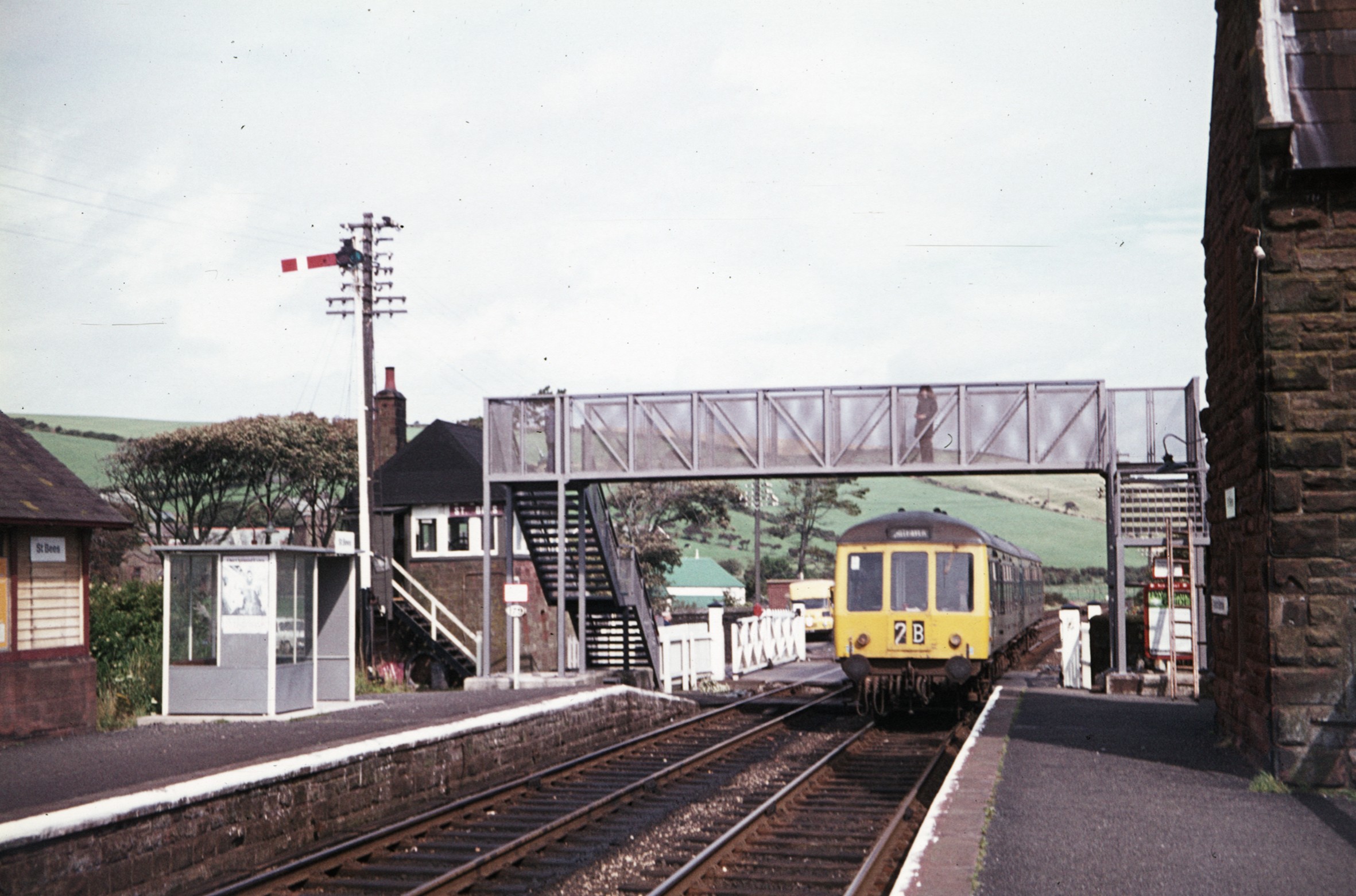
Is it just some quirk of the alphabet that two lines most at risk are the ‘Cambrian’ and the ‘Cumbrian’?  I’ve stayed near both.  I recall a family holiday in Barmouth, where the Cambrian line literally passed within inches of the hotel lounge window before crossing the road on an overbridge.  Both hotel and railway were built up the side of the hill.  A later holiday took me to St Bees in 1974, and here is a photograph of the station, with train arriving.  An interesting mixture of period details here – the new footbridge and ‘bus shelter’ contrast with the semaphore signal.

b8

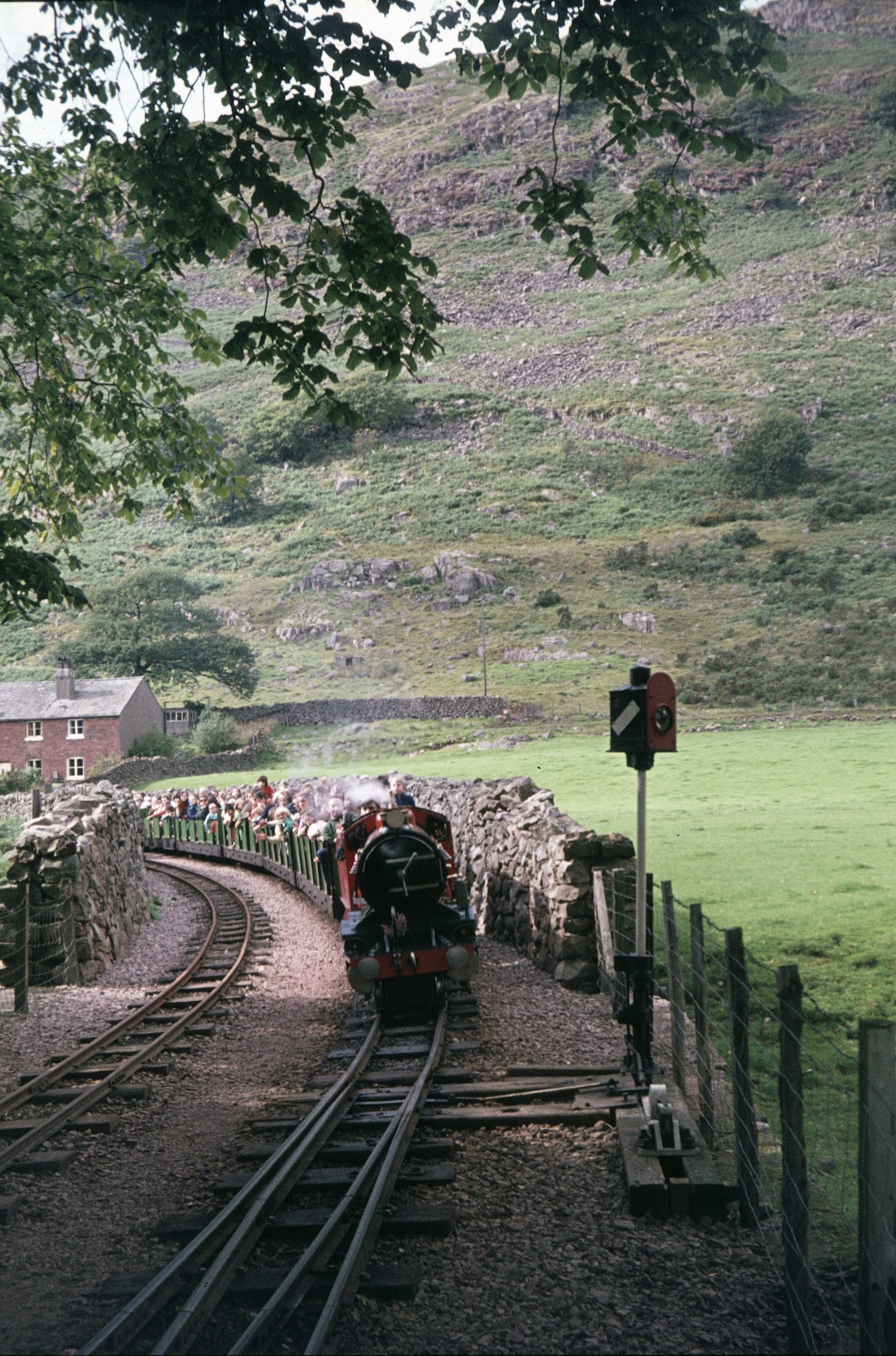
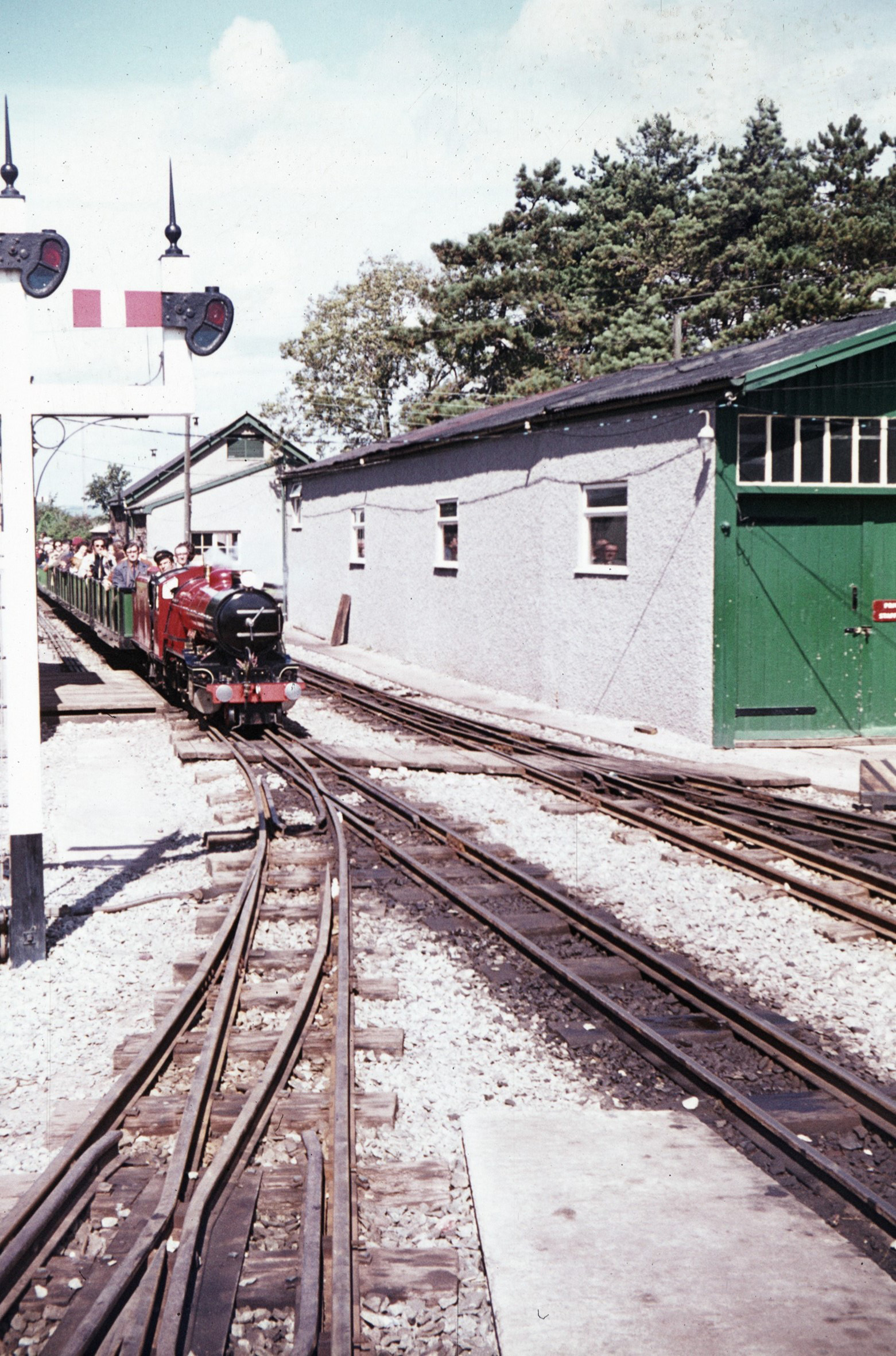
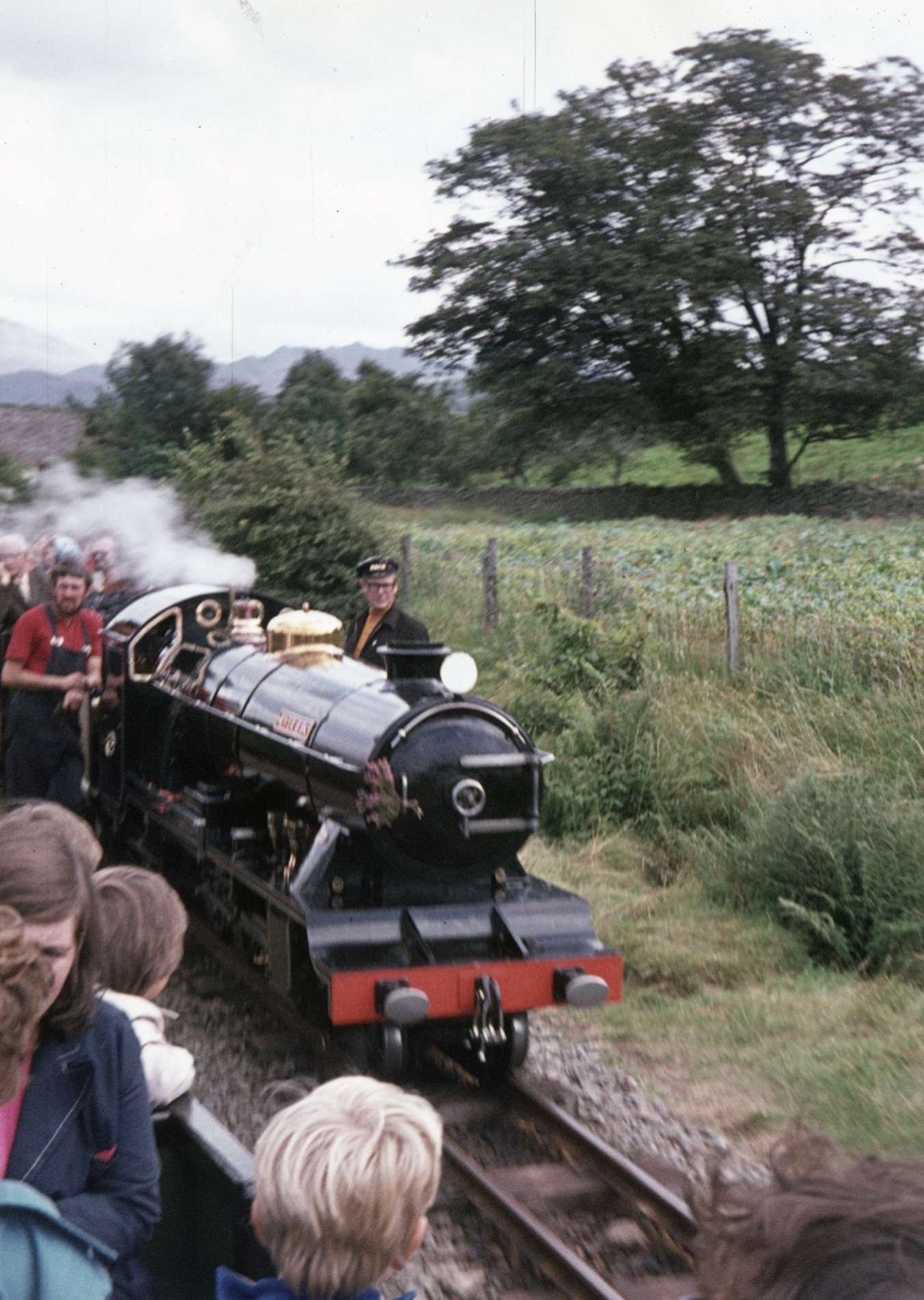
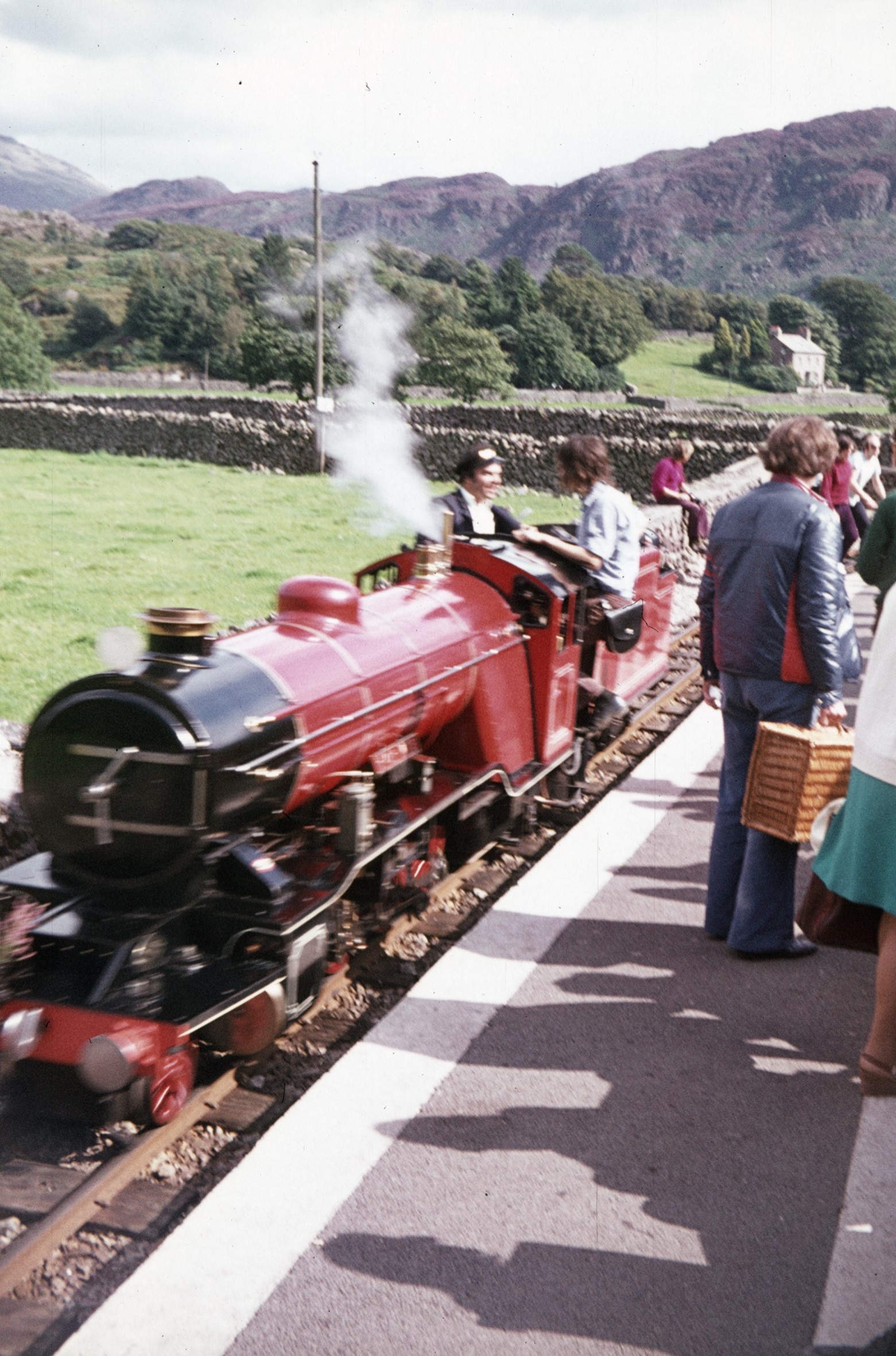
The Ravensglass and Eskdale miniature railway was nearby, and I paid it a visit that day.  This line is also at risk from the sea – providing climate change and sea level change goes to plan.  Here are my photos of the day….

b10 b9 b7 b11

Posted in ESNG, Inspiration, Out and about, Prototype | Tagged , , | Leave a comment

Is this Google’s fault?

It continues to amaze me that one of the most read posts over the last 18 months is a little item called, “Jon’s Modules – Peco lash up”.  I don’t know what people expected to read??

And I pre-dated ’50 Shades of Gray’ by a year or so!

peco lash up

Posted in Inspiration, Jon's layout ramblings, Layout design, Weird and wonderful | Tagged , , , | Leave a comment

Signal problems at Redhill

The Sorry Error, whoops, Surrey Mirror reported yesterday that….

Signalling problems causing delays of up 30 minutes for Redhill commuters

COMMUTERS are facing delays of up to 30 minutes this morning due to signalling problems around Redhill railway station.

Southern Rail tweeted to say: “Signalling problems in the Redhill area are creating delays of up to 30 mins, with short notice cancellations & alterations”.

And a statement on the company’s website says that vandalism over the weekend has disabled thirty of its carriages, which has added to the cancellations.

I was trying to get to Kew Bridge via Clapham Junction on Monday morning, and was caught up in the above delays.  If I hadn’t been trying to get somewhere, the half hour spent on Redhill station would have been most interesting.

First, the First Great Western DMU from Reading (through Reigate) came in.  Instead of the driver immediately walking from one end of the train to the other to reverse direction down to Gatwick, he took the train into the headshunt at the north of the station.  A platform announcement said that the next train to Gatwick would be in about 15 minutes time.

Next a Southern EMU came down from London, bound for Reigate (the end of electrification, just two miles from Redhill.)  Instead of stopping at platform 3 and taking the double junction onto the Reigate branch, the train crossed over onto the up line just north of the station, and did a little wrong-road running to enter platform 2.  Obviously, the signal failure had taken out platform 3.  After a few minutes, it left for Reigate.

Another EMU came up from the south and Horsham, headed for East Croydon and on to London Bridge.  It stopped in platform 1.  I was hoping for the advertised Victoria train, but the announcer suggested changing at East Croydon, so I joined this train.

No doubt, after I had left, the DMU would have pulled back into platform 1 or 2 and headed south for Gatwick.

And all this gave an idea for operating a model station.  How about ‘modelling’ a signal failure?  Like Redhill yesterday, assume one running line and platform is non-operational, so you have to keep the timetable moving, as much as possible, on the available track with some careful planning of moves and a little wrong-road running.  This would work better with the American operating techniques, with a dispatcher, than with our usually timetable based operations, but I’m sure it could work.

If a signal failure isn’t obvious enough at an exhibition, perhaps a broken down train or a minor derailment could provide a more obvious reason for the games on the other line?

As for my day, I got to East Croydon and then changed trains to get to Clapham and on to Kew.  Once on a train, there were a number of seats marked off by black and yellow tape.  No doubt more, if less serious, vandalism.  Fortunately, coming home was easy, if crowded, with everything absolutely on time.
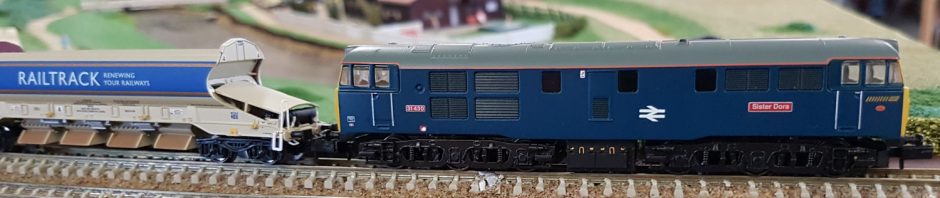
 

Posted in ESNG, Inspiration, Out and about, Prototype | Tagged , , | 1 Comment

‘OO’ Coaches – Jon’s old trains #3

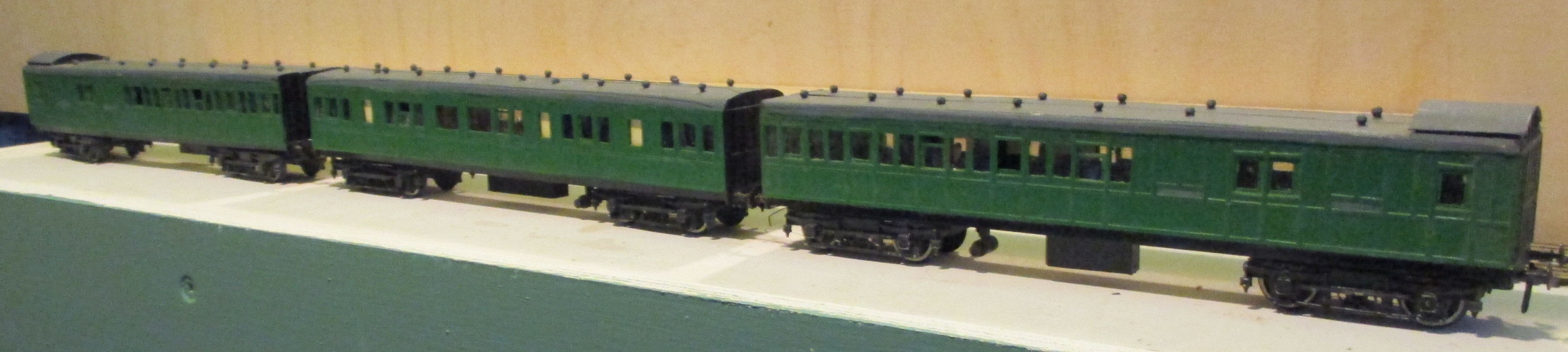
From Irish narrow gauge to Southern coaches.  Here are a few of my early efforts.  Some of my first successful scratch built models were this SECR ‘Birdcage’ rake.  They never got lettered or lined, but weren’t bad at all.  Note the open drop-lights in places.  I could have done with a bit more detail on the underframes, and some of the beading is a bit rough.  Not quite as good as the Farish ‘N’ gauge versions will be, I’m sure, but a whole lot cheaper and a lot of fun to make.

s_1 s_2

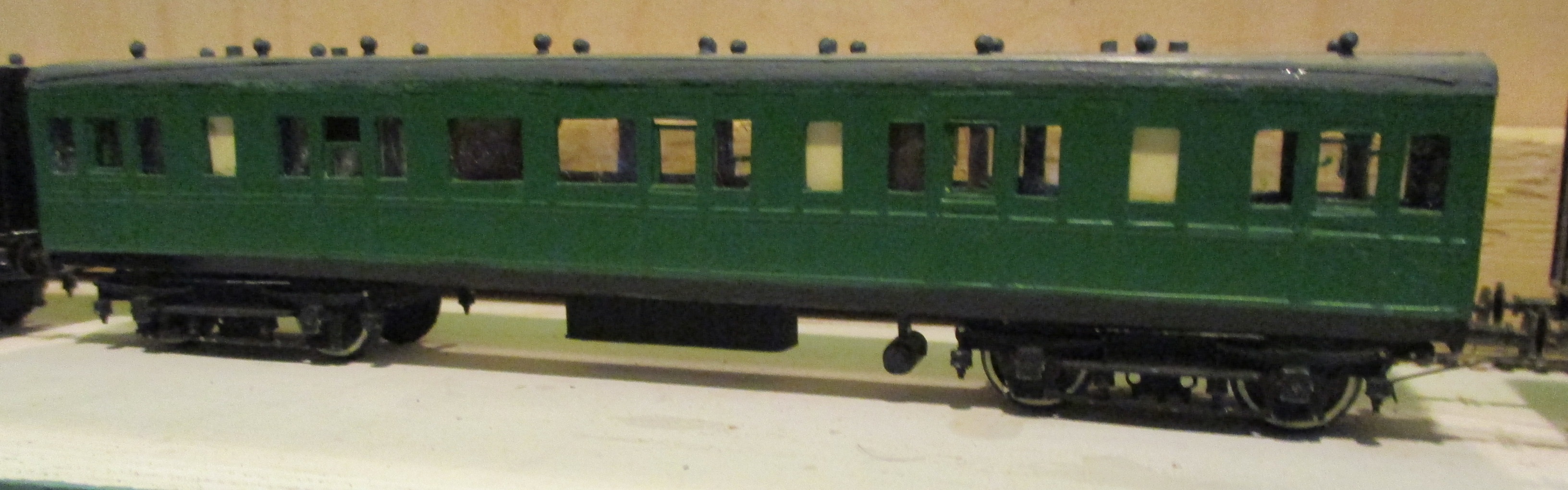
Next a BSL Maunsell brake coach.  This was from a BSL kit (later Phoenix), with aluminium sides and cast ends, and a plastic roof.  This made up into a very nice model, that I am going to keep.  I was very proud (and probably still am) of the window frames in brown, masked on the body and added after the green base was painted on.  Not as much lining as the new Dapol version, but, hey, who’s worried, as I did it!

Next to it is an LSWR restaurant care, used on Southampton Boat Trains, I think.  Not appropriate for our little branch line, but I fancied building it.  It was all put together from Plastikard, and still looks OK, but I think didn’t come out as well as my Birdcages.

s_3

And finally two parcels vans.  The right hand one comes from the LCDR and is homebuilt from Plastikard.  I think I built this as there were not many windows to cut out, and it had a simple arc roof profile.  The left hand on is a ‘K’s kit of a GWR 40’ brake, and was one of the first plastic coach kits on the market.

s_4

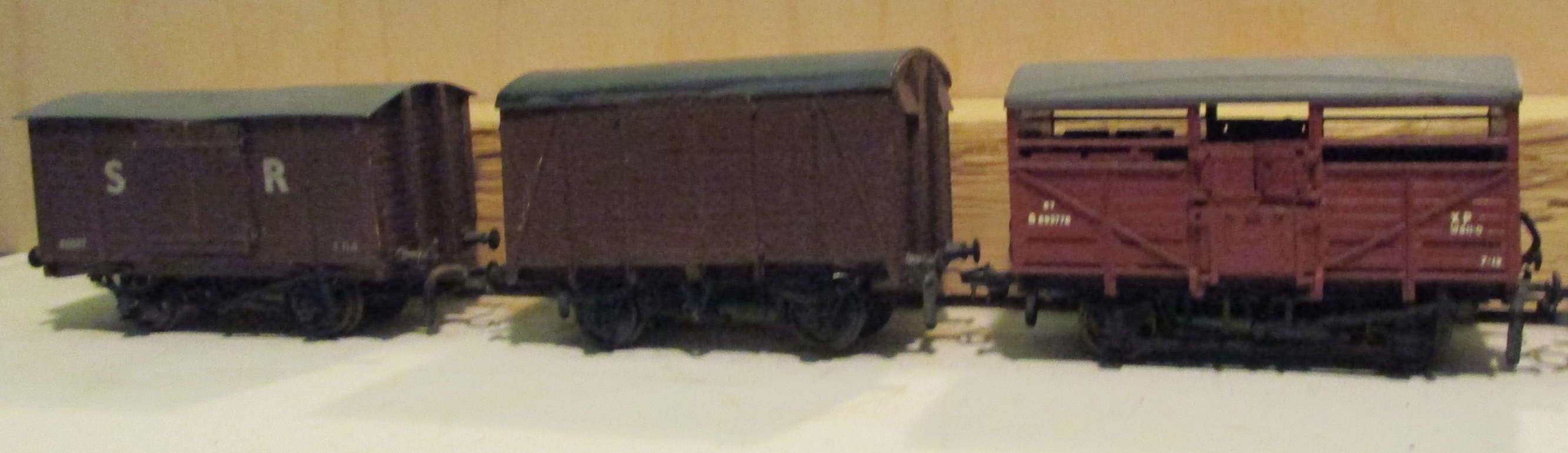
And as a PS, here are some wagons.  A ‘Kenline’ printed card kit of an LBSCR van, an early Ratio plastic kit of the characteristic unequal planked Southern Railway van, and an Airfix BR cattle wagon.  These early Airfix kits look very good, even by today’s standards.

The second row is four Peco ‘Wonderful Wagons’.  Very innovative kits for their time, with a cast body for weight, plastic (nylon) underframes giving very free running, and an embossed cardboard body to stick over the cast on.  The end result lacked a little relief on the strapping, but was effective and a good way to add some colourful private owner wagons to your goods train.

s_5 s_6


Posted in Inspiration, Jon's layout ramblings, Weird and wonderful | Tagged , , | Leave a comment

ESNG meeting – 5 February 2015

‘Twas a cold and snowy night in Earlswood….  The faithful few got to the club night, and thought, surely we’re not putting the layout up tonight?  Then more and more people turned up with trains to run – 11 eventually.  So we relented and put a circuit together.

I retired early as the end of my cold was catching up with me, but when I left there were some interesting trains from at least three countries lined up ready to go in the fiddle yard.


We’ve booked some additional meetings through the year.

After the success of the January Play Day, we have booked a series of Sunday afternoons through the year.  They are bi-monthly and apart from September (that clashes with the N Gauge Show in the Midlands) are on the 2nd Sunday of the month.  Meetings will be from 2-7pm (except September), no doubt followed by curry. .

We thought that having plenty of advance warning, we could get these dates in our diaries and try and keep them free.  And if you miss one, there will be another coming fairly soon.  We will be running on all dates.  Some have also been allocated for working.  We will try and get some running repairs done on those days – or bring something along to work on, provided you clean up after yourself (putting his Church Secretary hat on).

So the dates are…..

  • March 8 – Working and running (gate and preparing for ESNG show)
  • May 10 – Running
  • July 12 – Working and running
  • September 20 – Running (1:30 till 6:15, as there’s a service at the church at 6:30).
  • November 8 – Working and running (any preparation for Stuttgart)

The treasurer suffered a significant lapse at the last Play Day, and suggested that the club give something back to the members, and have a free afternoon.  Come along in March and see if it’s free again (no guarantees, though).

And any old friends out there who fancy a social afternoon, do feel free to drop in.  It would be good to see you!


And it’s been snowing again! (Not my photo – I’m not that good….)

potd-jay-2_3135322k


Posted in ESNG, ESNG meetings | Tagged , , , | Leave a comment

Ideas matter

This is from another thought provoking post by Mike Cougill on the OST blog…

Our craft suffers from a scarcity of ideas. Ideas that change our image of what the hobby could be. When Frank Ellison suggested that a model railroad’s operations is comparable to a theatrical production, where the trains are actors and the layout is a stage, he expressed the idea that model trains could do more than go round and round without purpose. This idea altered the concept of what model railroading could be. Miniature trains could be more than toys, they could have a larger purpose. Today, we’re still exploring and benefitting from his fundamental thinking. A few decades later, Allen McClelland proposed that a layout could represent something bigger still: a portion of a national transportation system that funneled traffic from outside its boundaries. In an era when the majority saw their layouts as a closed, self-contained entity bound by the size of the room, that concept blew those artificial barriers away. The V&O was a testament to the power of an idea and one man’s vision. Allen spent decades exploring and refining that core idea. Was he inspired by Ellison? Perhaps. Did he carry Ellison’s idea forward? Definitely. Conceptual ideas like Ellison’s and McClelland’s have been few in number but, when you consider the impact both have had, I wonder if we’d all still be watching toy trains mindlessly chasing their tales without them. I speak so often of this theme because I believe our old definitions and concepts have grown shallow and lack the power to carry this craft into maturity. They’re quickly becoming a straitjacket, rather than a foundation to build on.

He concludes…

What does railroad modeling offer me in the twenty-first century? As a creative person, it offers me a medium to explore ideas and to grow in ways to numerous to count. It offers an outlet for work that engages my mind and hands as well as my heart. It gives me a connection to the past and present. It shows me who I am and who I can become. Would you ask more than that? All these themes are a way to examine what we bring to this work as modelers. If all we bring is an ability to reproduce objects in miniature form, we’ll go right on the same path and arrive at the same ends we have now. But if we can expand our vision of it, there is no limit to where we can go. I have said countless times this craft amply rewards what you bring of yourself to it. If it does die of irrelevance, it will be our failure to each other and to ourselves that killed it.

I have a lot of sympathy with this article.  Beautifully accurate models are great, but they are soulless.  What we are aiming for is, I suspect, more like art!  Read more here.

Posted in Hints and tips, Inspiration, Layout design | Tagged , , | Leave a comment

Forgotten Dreams – Jon’s old trains #2

Most modellers have what is generally known as a ‘gloat’ box – but mine must be worst than most.  I’ve been excavating some more, and have come up with all sorts of things.  A lot of them I’d forgotten completely.

I started with a couple of boxes that came out of my father’s shed.  This had all sorts of bits of brass and the like, brick paper and wire.  All stored in some antique shoe boxes.  One must have been nearly 50 years old, as I remember wearing ‘Tuf’ shoes at school.

I moved on to three boxes on top of my wardrobe.  I really didn’t know that I’d built that many ‘O’ gauge etched wagon kits – mainly horse boxes and other non-passenger coaching stock!  I did a lot of ‘O’ gauge modelling between 1984 and 1993, but packed it all away when we moved house and I lost my loft.  Modelling only came back on the scene in 1999 or so, when I joined ESNG and ventured into ‘N’ gauge.

But I did also find two RJH conversion kits for the Lima Class 33, to put proper bogies under them and detail the body with etched bits and pieces.  These date from 1989 and are not quite as refined as today’s etchings, but very much OK.  Why I have three Lima models and two conversion kits, I don’t know.  It could have been that I was going to ‘stretch’ two of the Lima models, that are a little short, using the third loco.  And I found the Class 47 High Level Models etched kit, dating from around that time.

And I’ll have plenty to build in future, when my eye-sight is defeated by ‘N’ gauge.  There’s a couple of part built and a couple of unbuilt etched parcels vans.  And for locos, there’s a nearly complete LSWR G6, a part made Terrier, and a Beattie Well Tank and 0330 saddle tank unmade.  Actually two 0330’s.  First a basic etched kit, then a rather more refined one with a resin saddle.  I’d forgotten about the latter two kits.

So I need to repack one or two boxes, and put a few things on the RMweb classifieds or perhaps Ebay.


And an update.  A club member wanted the Lima Class 33’s.  I put some other items on the RMweb classifieds, and have already sold one and got interest in another.


Posted in Inspiration, Jon's layout ramblings, Weird and wonderful | Tagged , , | Leave a comment

Living in the past – Jon’s old trains #1

Not much progress on the modules since coming back from Hong Kong, but I decided it was time for a real turnout of my storage boxes of trains, dating back nearly 50 years.  It’s time to keep a few things, and dispose of a lot more! And of course, this job is full of surprises.  If you want three brand new Lima ‘O’ gauge Class 33’s in blue, please contact me – you can have them for a very, very keen price.

What on earth was I going to build when I acquired those models?  Perhaps it was when we first moved to Redhill in 1986, and there was plenty of trainspotting to do at Redhill station, with plenty of loco hauled goods (and even a few passenger) trains. I was thinking of ‘O’ gauge modern image (for modern image read 25 years ago).

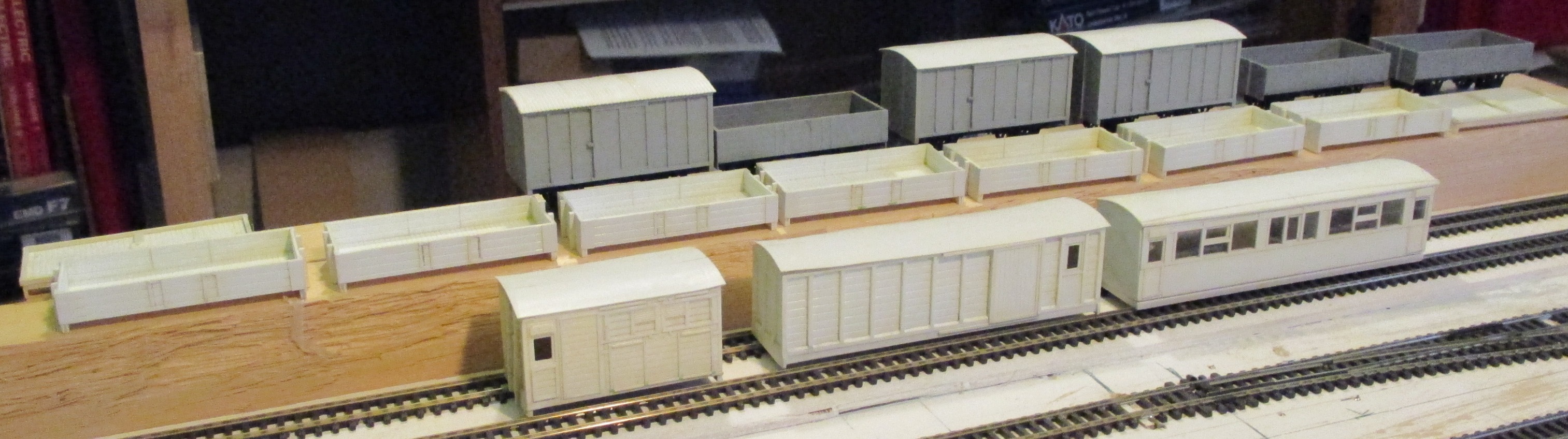
Digging deeper into this particular gloat box, I came across a real surprise.  First, a rake of OON3 Irish wagons and coaches.  A few kits but mostly scratch built.

irish_01

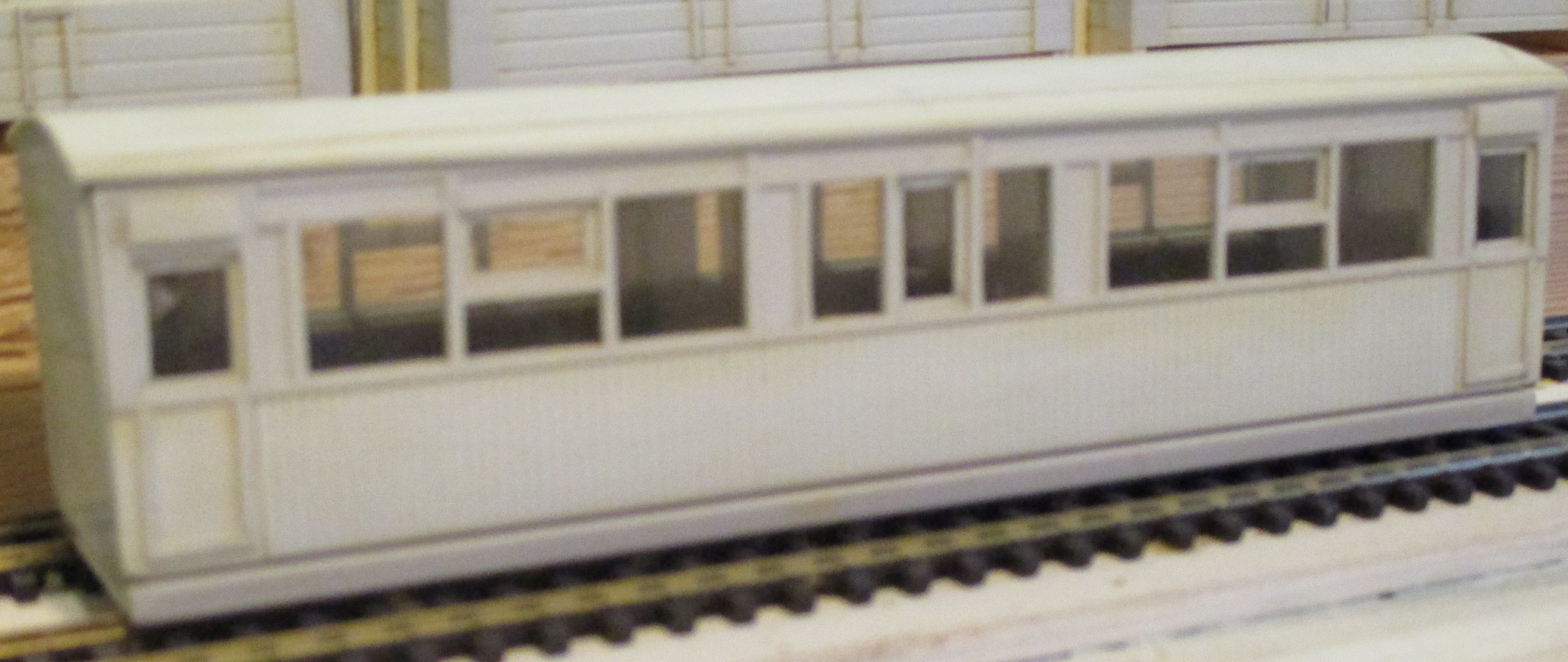
I recall (just) that I built most of the wagons during a couple of months in a rather poor hotel room in Semarang, Java, in 1990.  I think the coach, brake van and horse box were built a little earlier.  I had always wanted a model of the two Trailee & Dingle coaches since a plan appeared under the title of ‘Narrow Gauge Wanderers’ in a copy of the Model Railway News, sometime in the 1960’s.  When I got found to the model, it used the approach written up by David Jenkinson, with clip on ends and removable glazing.  I have to say, this model is probably as good as anything I’ve done since.

irish_02

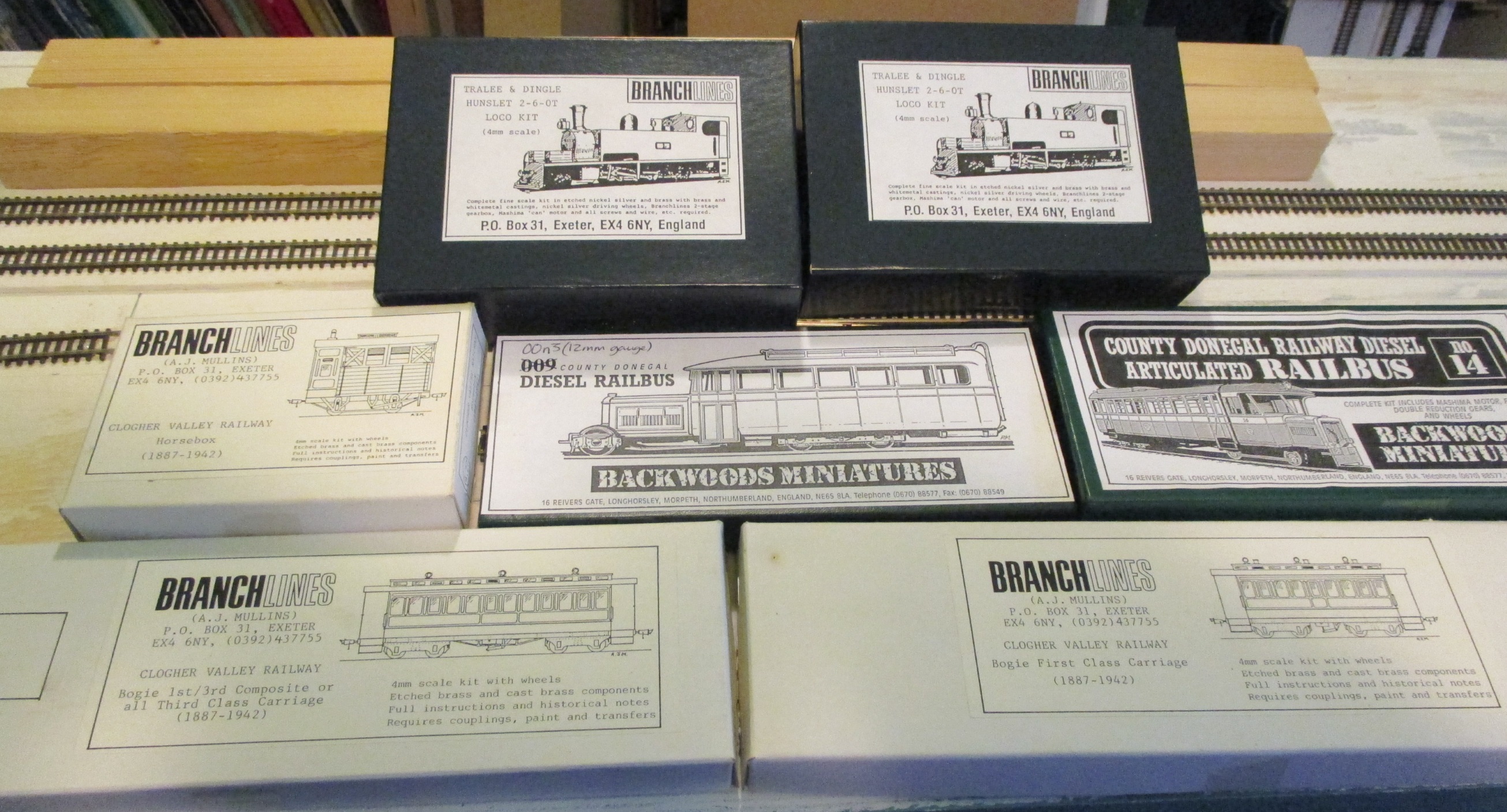
But digging into the box, there seems to be more – enough loco and railcar and coach kits for a complete OON3 layout!  All that lovely etched brass is crying out for a soldering iron.  Perhaps a diversion into narrow gauge is called for.

irish_03

And this is only the start.  I’ll post some more pictures of my early modelling attempts over the next few weeks.  I am going to scrap some of these models, as they hold only limited sentimental value, but a few pictures will make a permanent record.

Posted in Inspiration, Jon's layout ramblings, Weird and wonderful | Tagged , , | 2 Comments

Planning the exhibition

Putting a model railway exhibition together is a bit like a jigsaw.  You have the rooms, the traders needing tables, and most importantly the layouts themselves.  Some of these layouts will need a fixed size; others may be modular, so can be adjusted to fix the space available.  And there are bragging rights – who gets in the main hall and who in the side rooms?

I have spent several evenings putting together a floor plan for the ESNG show.  I find that using a CAD program on the computer helps get things right.  At least you can rely on the measurements.  I have a CAD program on my laptop, but I find it easiest to use 3rd PlanIt, the excellent track planning software.  This is designed to draw rectangles and other regular shapes and works very well for putting a show together.

And it is easier to plan when you have exhibited somewhere before.  Having used St Joseph’s School last year, it became easier to visualise how things would be set out.  So first we get the large immovable objects in place – the catering area is next to the kitchen, our N-mod circuit goes next to it in the middle of the large hall, and the Berkshire NGS group’s N-mod goes into the largest classroom.  The N Gauge Society stand and shop have a classroom to themselves – same one as last year.  They seemed to fill it well enough!

Next a surprise.  I thought Neil’s Bleak Moor would fit across the end of a classroom.  But 24′ is bigger than the school, so it has to go along one wall of the main hall.  Then we fill in the traders in the main hall.  N-Scale CH and Invicta get two slots, the former as a club member and regular trade, the latter as our ‘general’ trader for this year.  And Winco go near the fire exit so Benson can stretch all four legs.

We then distribute the remaining exhibits in the remaining space.  Burshaw North Western looks a bit tight in one classroom, so they might have to go in the main hall, and Benson relegated to a classroom, adjacent to the fire exit there.  The Japanese interurban layout Kuritu is small and narrow, but viewable from both sides.  This is a little different from most layouts and needs a little thought.  And Ian’s little 4′ x 2′ layout needs to go somewhere where it is not ‘swamped’ by bigger exhibits.

A little shuffling gets most exhibits in place, trying to have at least one layout and one trader in each classroom.  The only problem is my N-Club USA layout, Roselle Park.  It will be running by April, but far from complete.  It would have been good to have it joined up to our N-mod circuit, but I’m not sure there’s room.  In the end, I opt for a display in with the Berkshire Group.  It may be a non-working exhibit, and I’ll put together some posters on the prototype and the N-Club modular construction.  This does free me to do the Exhibition Manager’s job around the place!

So the floor plan looks OK….  But I’ll be looking at it again over the next week or two to see whether we can shuffle things around a little.

What prompted this post?  I visited the Erith show today, that is billed as the 2nd largest model railway show in London.  I enjoyed the layouts, but I wondered whether they could have planned it a little better (typical arrogance of an Exhibition Manager of a small show, criticising a big one…. )  The points I noted, though, were applicable to all sizes of exhibition:

  • Don’t overfill (or underfill) rooms.  One looks cluttered and it’s difficult to get to see things, the other looks badly planned.
  • Linked to this, have wide corridors between layouts.  If there are exhibits both sides, you need room on both sides to view, plus space for two people to pass in the corridor between them.  Ideally, you need to allow two wheelchairs to pass each other, or more likely one wheelchair and one person on foot.
  • Watch the lighting.  Direct sunlight is not good for models, and may cause track to expand too much.  But brightly lit rooms are better than dingy rooms.  If it is too dark, layouts need their own lighting to be fully appreciated.
  • Don’t have any rooms dominated by traders.  A mix with a majority of layouts is best. Otherwise it is easy to miss layouts.
  • Also mix the quality of layouts and traders.  Inevitably some are ‘better’ than others and it is important to give show space to young modellers, beginners and Thomas the Tank Engine.  If the stands are mixed, people are more likely to stop and view.
  • Model building demonstrations are excellent.  I need to think how to get this feature into our own ESNG show.
  • Plan the entrance area well – in the winter months it can get very cold for the exhibitors near the open entrance lobby.

If anyone from Erith reads this, I really DID enjoy the show.  But the above points made me think about how one plans it all out!

Posted in ESNG, ESNG meetings, Out and about | Tagged , , , | Leave a comment