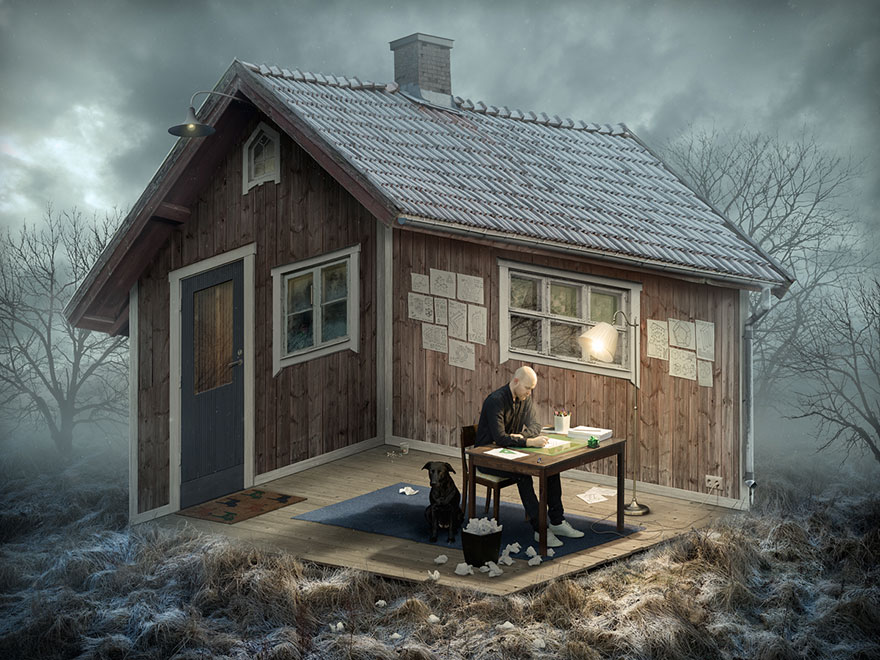
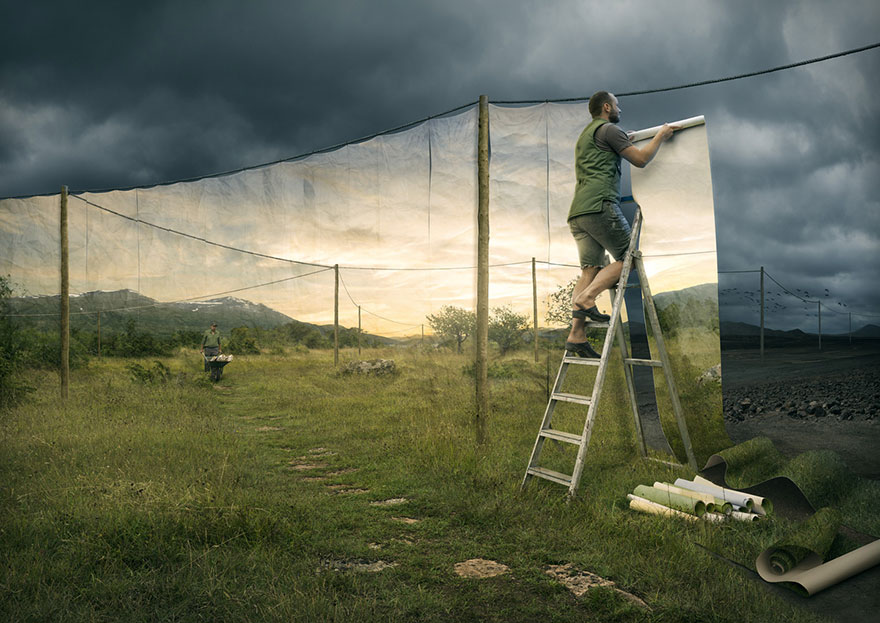
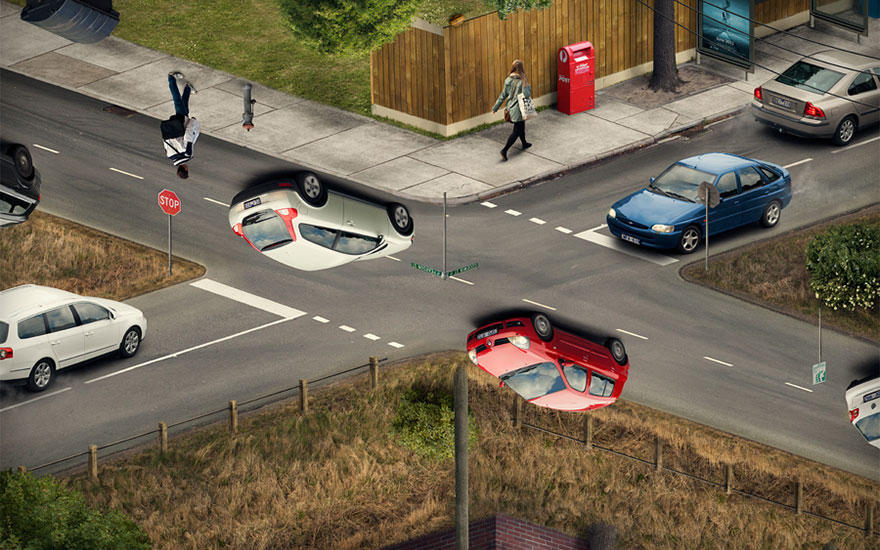
If M. C. Escher had photoshop?

Once again, not quite ‘N’ gauge, but I couldn’t resist reposting these photoshop specials.  Mind you, a couple of them look like some scenery I’ve seen on layouts on the exhibition circuit (though the tip for backscenes looks a good one)….

optical-illusions-photo-manipulation-surreal-eric-johansson-1 optical-illusions-photo-manipulation-surreal-eric-johansson-3 optical-illusions-photo-manipulation-surreal-eric-johansson-6 optical-illusions-photo-manipulation-surreal-eric-johansson-8

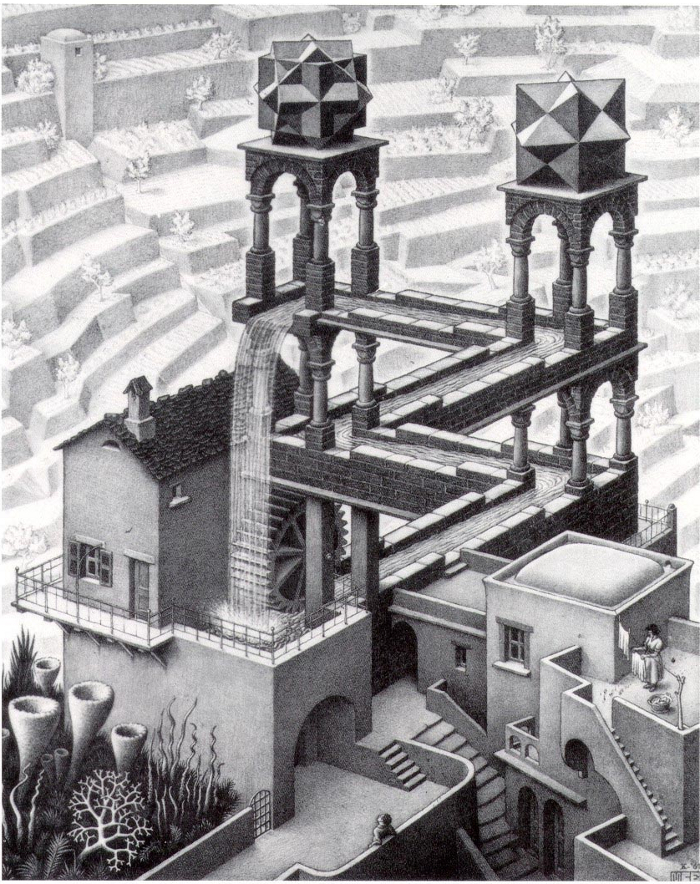
And if you don’t know who M.C. Escher was (as I didn’t) you will recognise the picture below.  There’ll be a special prize at the AGM for anyone who can do this in plastikard….

mc-escher-waterfall

Posted in Inspiration, Prototype, Weird and wonderful | Tagged , | Leave a comment

Adventures in time and place #2 – Location, location, location

A number of recent blogs and articles have had me thinking not only about time, but also about place.  There are two aspects to this – can the location of your model railway be identified before a train arrives – and secondly why model this location anyway.

It seems that we have got much better at location.  When I was modelling as a kid, one was grateful to be able to model a train that was of the correct region and period without too much scratchbuilding.  You would also try and get railway buildings and signals correct, but beyond that, it didn’t seem to matter too much.

There were, of course, plenty of pioneers whose layout gave a consistent picture of location – even without going to the wonderful lengths of the Pendon layouts.  But it seems to me that we have all raised our standards.  We are much more aware of the correct architecture for a region, the road vehicles that would be in period, the local industries, geology and land forms.  In larger scales one might even consider local crops, plants and trees.

All this builds into a recognisable picture of a place, without a train in sight.

And the second question is, ‘why build this model in the first place?’  Reading the modelling magazines, people come up with all sorts of reasons.  Sometimes, an unusual prototype captures the imagination.  A photograph or book inspires a model.  But most often, I guess, one is attracted by the railways you knew in years past.

For my part, my interest in the Southern Railway comes from my ancestors Somerset heritage, and being brought up in the south-east commuter belt.  Railways ought to have lots of EMUs, and run on brick viaducts.  I like non-passenger rolling stock, be it full brake coaches, parcels stock or horse boxes.  Why?  Train journeys in my teenage years were spent looking for old vehicles, and most of these were venerable vans and full brake coaches parked on sidings under the viaducts.

My American interest perhaps was a pragmatic choice, as the models looked and ran so much better than the UK ones of the time.  Why Lehigh Valley?  It seemed (and still seems) a Class 1 railroad of manageable proportions.  I was inspired by a number of photos, and decided that Alco’s were just the best .  But my musical interests in rock and blues gave me trans-Atlantic interests.  Isle of Wight and Irish narrow gauge?  I think I was and still am charmed by both!

I think what I am trying to say is that I need some link with what I build.  Some people seem able to build models for building sake alone.  I think I need more that that, and I need to draw on this inspiration to keep my interest in my hobby.

Posted in Hints and tips, Inspiration, Layout design | Tagged , , | Leave a comment

What colour(s) is track?

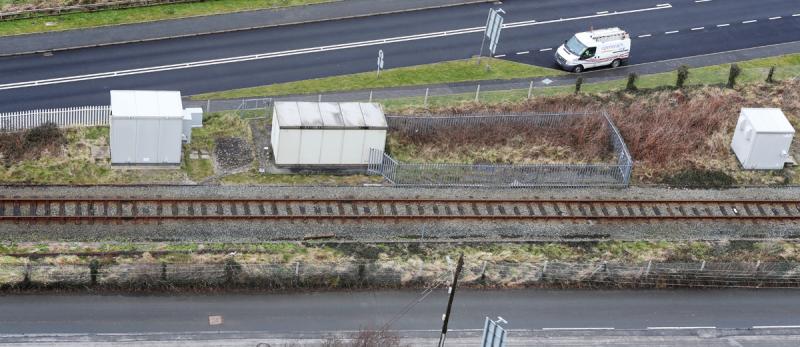
I’m getting to the stage when I will need to start painting and ballasting the track on my modules.  Looking at the albums I have in my possession, one can see that it’s not a matter of a spray of track colour and a little rust.  For example….

  • New ballast may be grey, old ballast is dirty brown, but the initial colour may vary depending on the geographical location of the line and hence the source of the gravel – especially in the USA.  It’s not like the Southern Railway in the UK, where most of the ballast, I believe, came from Meldon Quarry in the West Country.
  • Sidings, especially little used sidings, may not appear to be ballast, but just have dirt infilled to the top of the sleepers.
  • Rails quickly rust, but it’s a dark brown, not a bright rust colour.
  • Sleepers (ties) on the main line may be ‘wood’ colour.  As they age, they fade, and old sleepers on sidings may be closer to grey than brown.

Having got this basic finish, it will then be further coloured by:

  • A strip of oil between the rails, especially where locos stand for any length of time.
  • Brake dust where fitted trains apply the anchors.
  • Coal around steam locomotive facilities.
  • Sand around any locomotive facilities.
  • Minerals of all sorts of colours in sidings for industries.
  • Grass between the tracks.

I stood on Earlswood station this morning looking at the 4 lines through the station.  This is a bog standard Southern EMU line, with concrete sleepers, but there were all sorts of bits and pieces lying about, from rail, to cable, not to mention the track cabling and the lilac bushes (that were stained a dark brown) trying to survive between the fast and slow lines.  I must take a photo and post it sometime soon.

There have been some interesting pictures, from my usual suspects, recently on track detail.  Chris Mears at Prince Street Terminal posted this lovely picture of track at West Lebanon, New Hampshire, in the Claremont-Concord’s yard.  He says:

The older track is original in the yard while the freshly ballasted is a new siding recently added as a result of increased traffic.

It could equally be a main line and a siding.

DSC00702

West Lebanon, New Hampshire, in the Claremont-Concord’s yard Photo: Chris Mears

At RMweb, ‘KH1’s blog has an article on realistic track including this picture of track near Harlech Castle, in Wales.

blogentry-16008-0-94828200-1424871740_thumb

near Harlech Castle – RMweb

The blog says….

I just love the track work and the details you can spot…. One of my pet hates on layouts is bright orange rails so to anyone who may be responsible I offer these pics of what a realistic colour actually is! The other thing I like is the way that the rust has leached out from the rails onto the ballast. Now this could be exaggerated because of the salt from the coastal location but it is a detail I have rarely seen on a model.

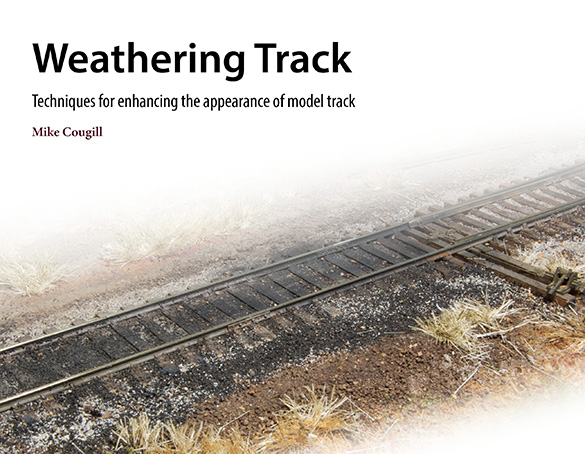
Finally, Mike Cougill on the OST blog talks on the subject, albeit for ‘O’ gauge not ‘N’ gauge.  But there are good thoughts for all scales here…

For decades the standard advice was paint the rails with Floquil Rail Brown, mix in some Grimy Black around turnouts and other special work like crossing diamonds and, splash a little Mud color around both sides of grade crossings. Job done, move on, what’s next?

Not so fast. There’s more to weathering track than three colors.

You can download a free PDF guide on ‘Weathering Track’ here.  Well worth a read, as indeed are the other two free guides he has available.  All are aimed at getting more realism and more fun from a small railroad.

WT_cvr

Posted in Hints and tips, Inspiration, Jon's layout ramblings, Layout design | Tagged , , | Leave a comment

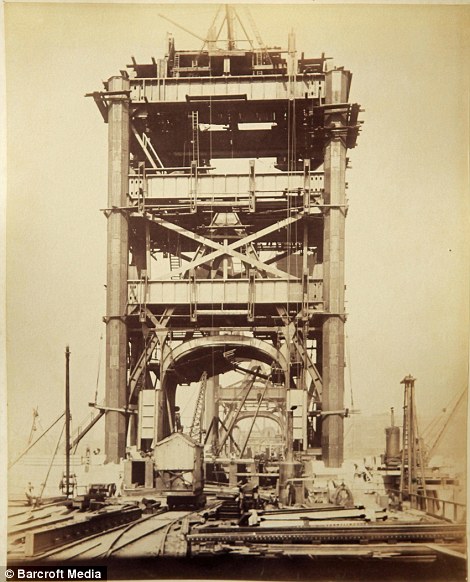
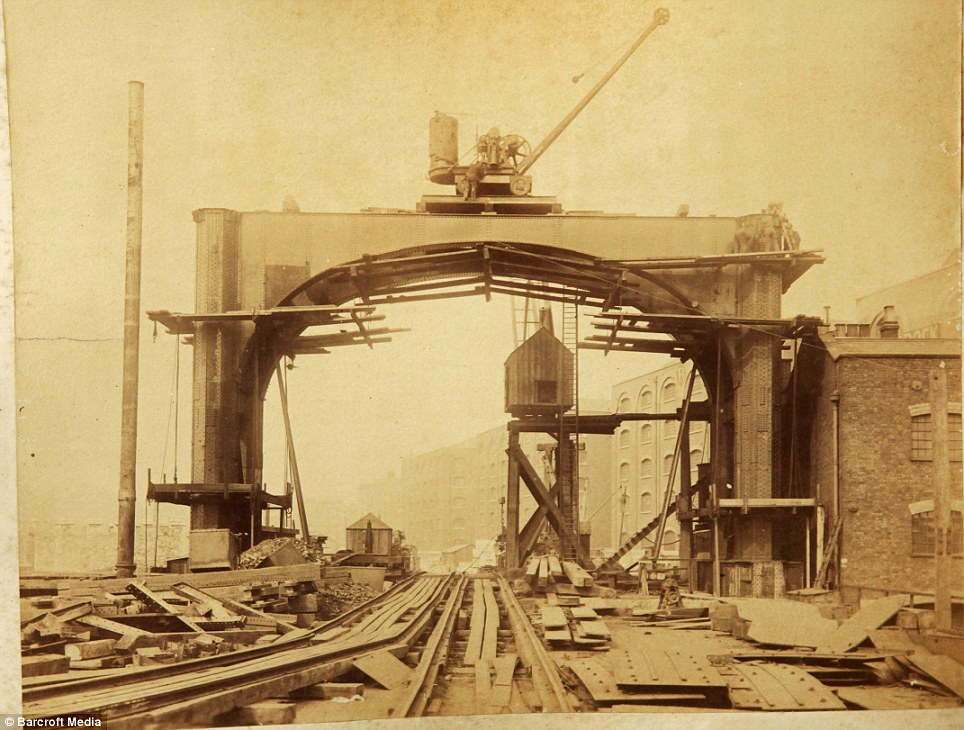
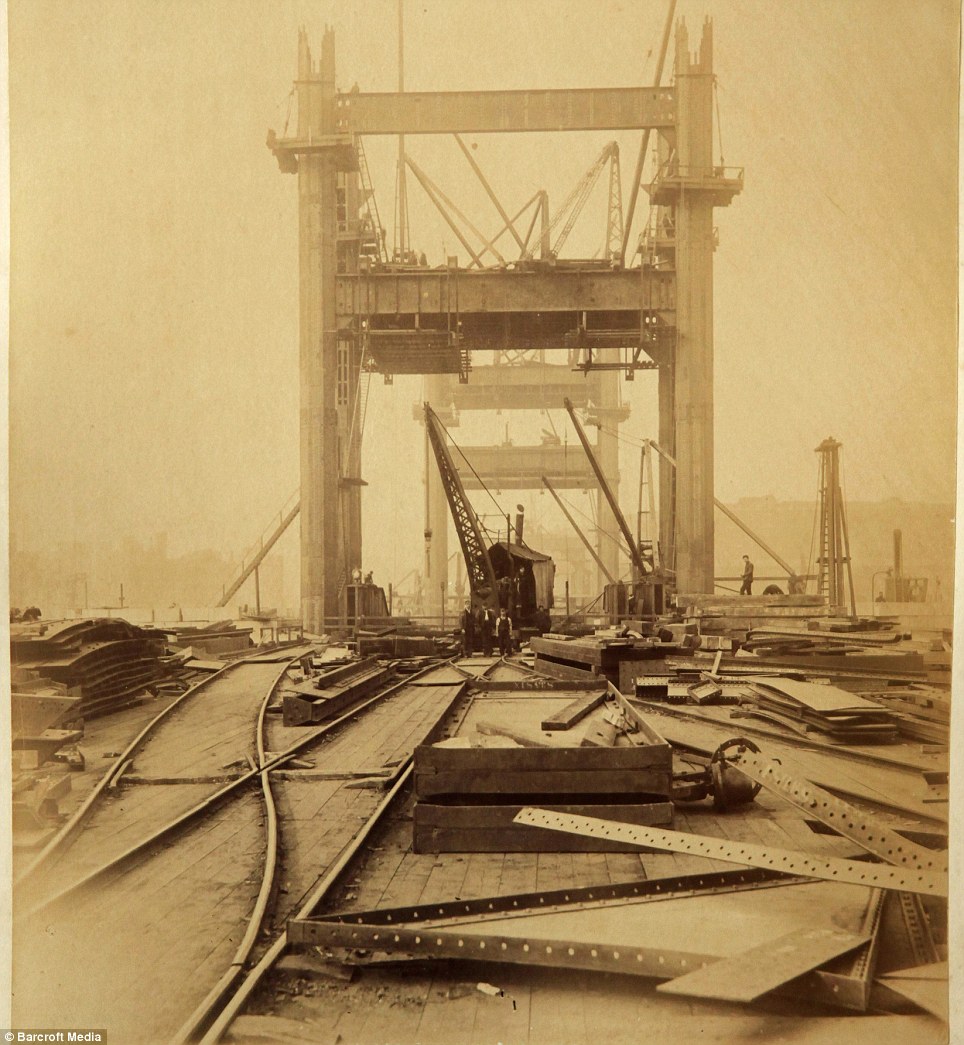
Tower Bridge under construction

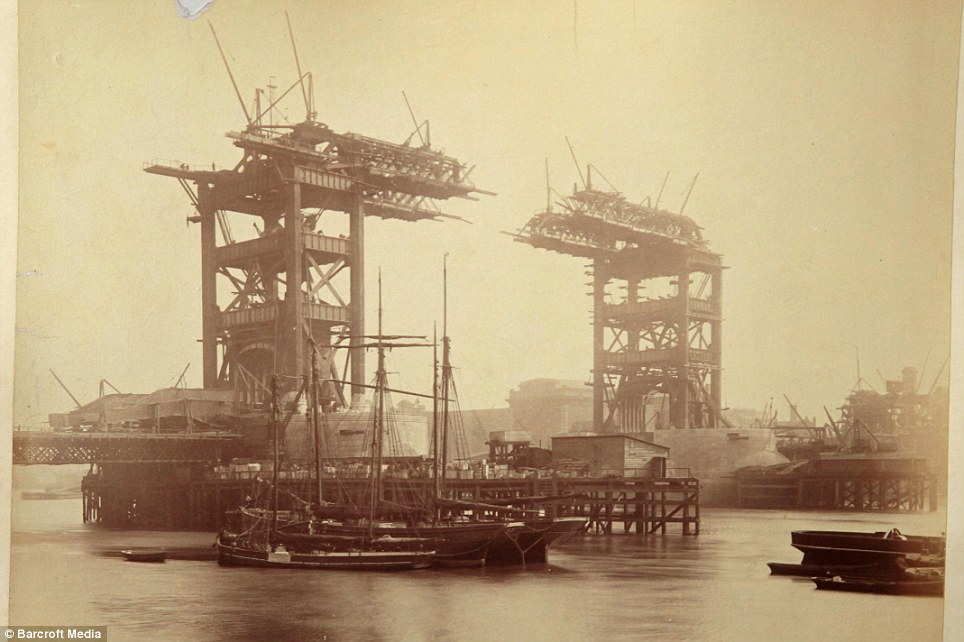
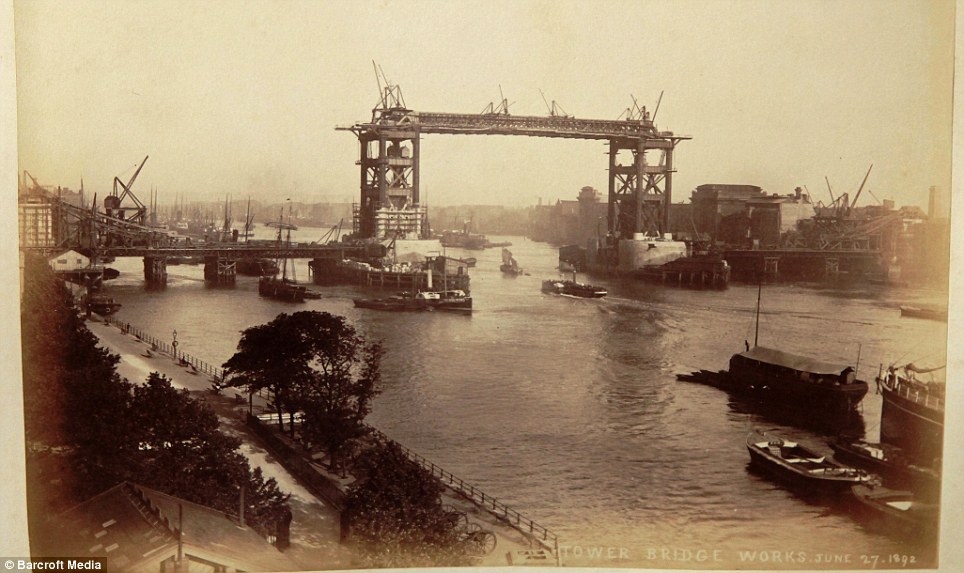
Not quite ‘N’ gauge, but a friend sent me a mail with a series of pictures of London’s iconic Tower Bridge under construction.  They are too good not to pass on.  Perhaps the only railway interest are the tracks for the steam crane being used for construction.  And the mess the site is in – they can’t have heard of ‘Elf and Sadie’.

All pictures belong to David Willoughby / Barcroft Media

tb1 tb2 tb3 tb4 tb5 tb6

Posted in Inspiration, Prototype, Weird and wonderful | Tagged , , | Leave a comment

The longest train journey in the UK

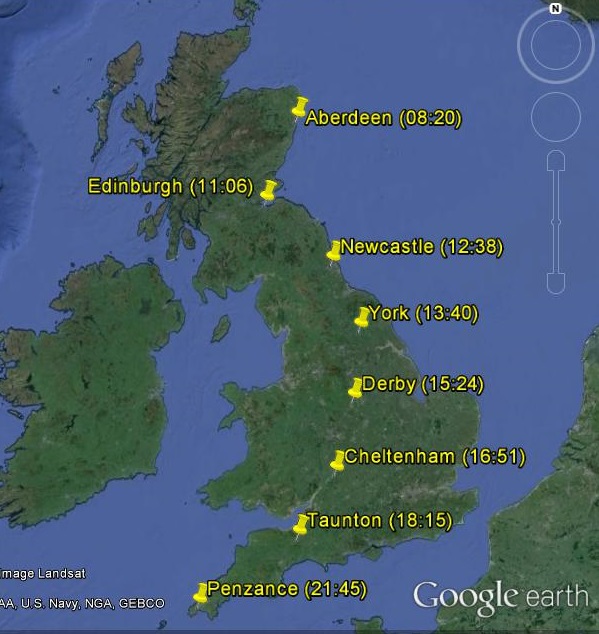
What’s the longest train journey that you can do in the UK?  According to the Daily Telegraph it’s Aberdeen to Penzance in 13 and a half hours.

All you USA and Canada readers will laugh at this.  That’s just down the road to the corner shop when you are talking transcontinental at the speed of a North American passenger train.

This article describes the route and it sounds a lot more interesting than I suspect it really is.  I’ve plotted it on the map below.  I hope they didn’t leave the car in the station car park in Aberdeen.

journey

Posted in ESNG, Out and about, Prototype, Weird and wonderful | Tagged , , | Leave a comment

‘OO’ Locos – Jon’s old trains #4

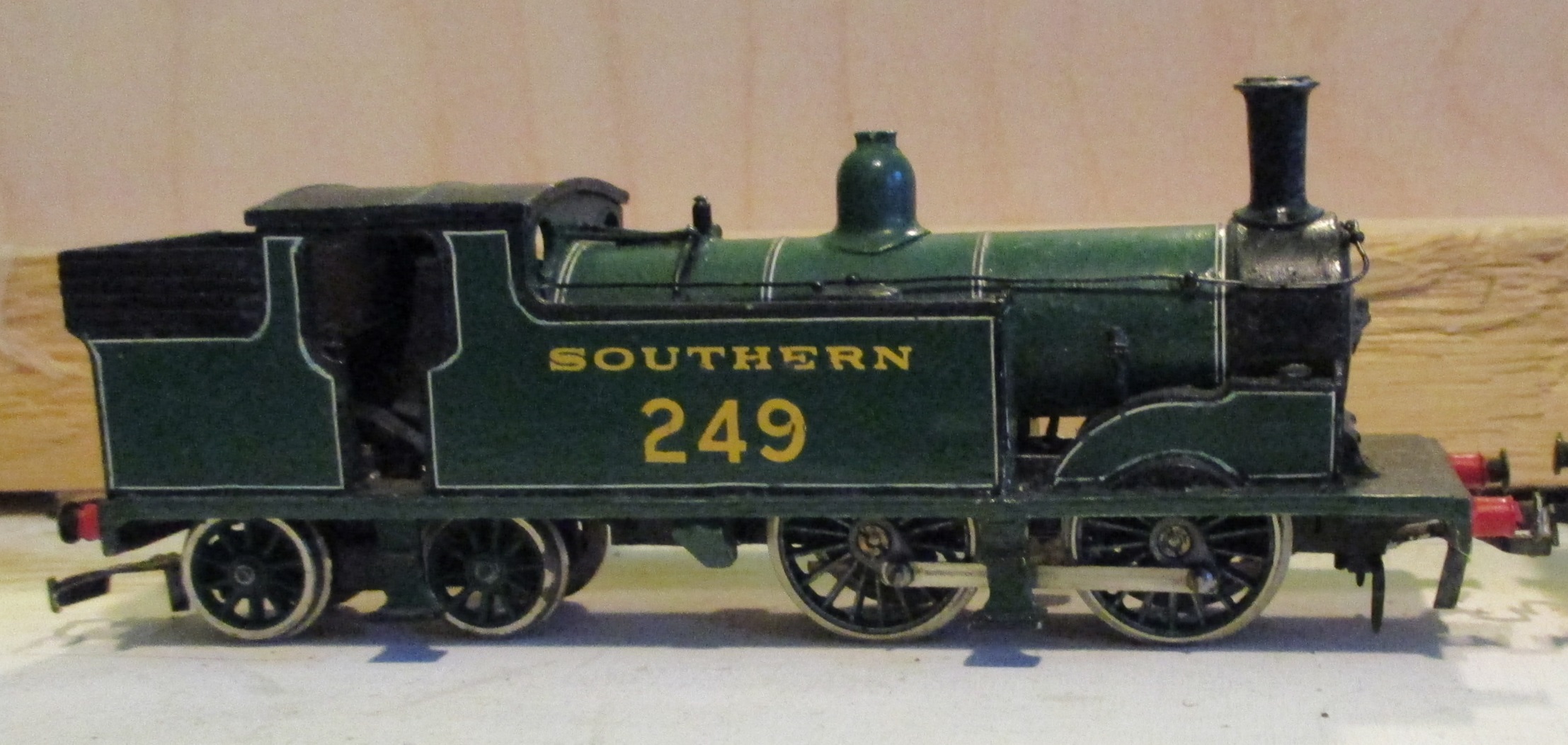
Last of my old ‘OO’ stock packed away were a number of Southern Railway locomotives.

l_1

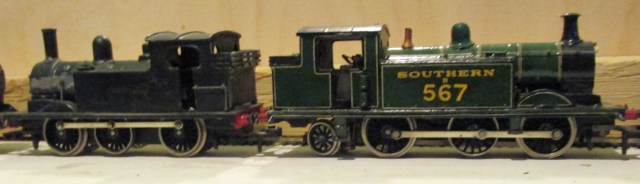
The two tank engines both run on the old Hornby ‘R1’ chassis.  The ex-LSWR  ‘G6’ on the left was my first cast kit (by Wills).  It has had several liveries, and the chassis is just about worn out after running for many real miles.  I was obviously trying to spruce up the body when I packed all these engines away, as the boiler seam had been refilled, and I’d added a shunter’s handrail to the bunker.  I have a nearly finished ‘O’ gauge G6 upstairs, and I’d like to build an ‘N Brass’ 2mm version.

The loco on the right is an ex-LBSCR E5, another Wills kit.  A later model, that still looks quite smart in Southern green.
l_2

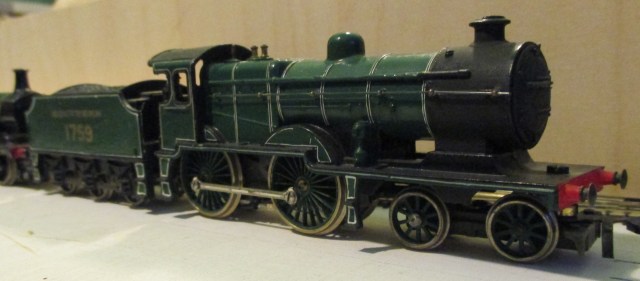
An early modelling success was my upgrade of the Triang Southern Railway ‘L1’.  One of Triang’s better models, it has had scale wheels fitted to loco and tender, new handrails and pipework, and a fair effort at a fully lined livery.  It looked the part, but despite the new wheels, could hardly pull the skin off a rice pudding, and tried to do it at 100 mph.
l_4

Another Wills kit, the Southern ‘Q’ goods locomotive.  This was originally in lined green, but I’ve slopped some black over it at some time.  The loco has again been converted to run with ‘Romford’ scale wheels.  This wasn’t quite such a good job as the L1, as I think I bent a coupling rod slightly, and it wasn’t very free running.

l_3

My perennial failure was this Wills LSWR ‘T9’.  It’s had several chassis, new coupling rods, several liveries, and never really ran properly.  All this was in the days before compensation, transferring weight from tender to locomotive through the draw bar and the like.  I might do a little better now (or probably just buy the excellent Hornby model).

IMG_0333

My father had all the same problems with his Wills LSWR ‘M7’, but managed to get it going rather better than I did.  He always was much more patient than his son….

IMG_0334

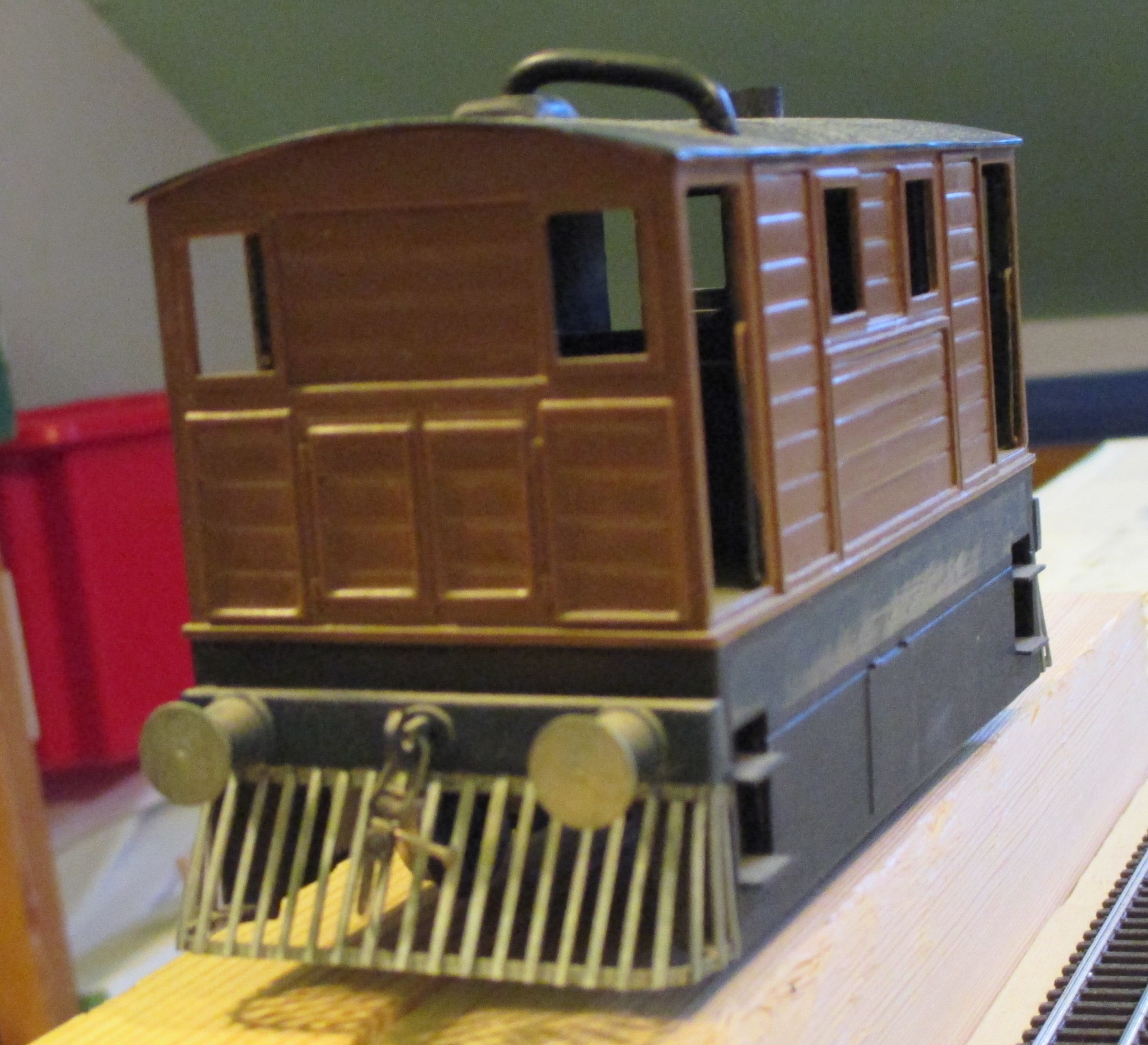
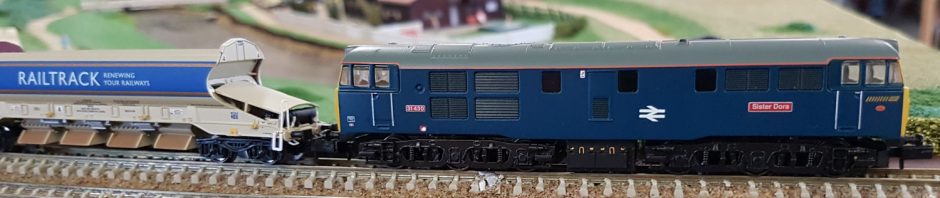
And after this came a dabble in EM gauge, then on to ‘O’.  This GER tram engine, dating from the early 1970’s, was a pre-formed plastic kit, with some added detail, running on a Lima motor bogie.  It goes like a rocket, quite unlike the original.  The plastic cowcatcher is broken at the far end, and the plastic roof is quite brittle, but it still looks the part.

l_5


Posted in Inspiration, Jon's layout ramblings, Weird and wonderful | Tagged , , | Leave a comment

ESNG meeting – 18 February 2015

A genuinely quiet evening.  Only seven members turned up, maybe the school-half term holidays cut numbers a bit?  However, we quickly got a small circuit up and running.  Derek and Allan were both running the new Dapol Maunsell coaches.  A train of 2 coaches, a Southern utility van and an M7 0-4-4 all in Southern Railway livery looked very smart.  I’m still holding out for the Maunsells in BR livery.

Derek Apps changed the chassis in his GWR  0-4-2, as the original one had the wheels at different levels, that didn’t aid smooth running.  It was soon happily running around the circuit, but we rarely saw it, as it was mostly hidden behind Paul’s 73 wagon Japanese goods train.  This ran very well, with few derailments, providing a gap was left between the brake van and the train loco chasing its own tail.  You wouldn’t need a radio link between driver and guard – they could just use hand signals.

I tested my Bachmann ‘Doodlebug’, that is an Ebay purchase.  It runs well, and just needs repainting in Lehigh Valley colours.

We also had a look at a small layout, some stock, and other bits and pieces kindly donated to the club by the family of Michael Partington, an old member sadly no longer with us.  We’ll see what we can sell at the show, proceeds to the Stuttgart travel fund.

Posted in ESNG, ESNG meetings | Tagged , , , | Leave a comment

A little more Photoshopping….

After yesterday’s non-competition, I can’t resist a bonus post of this photograph from today’s Daily Telegraph.

Paris

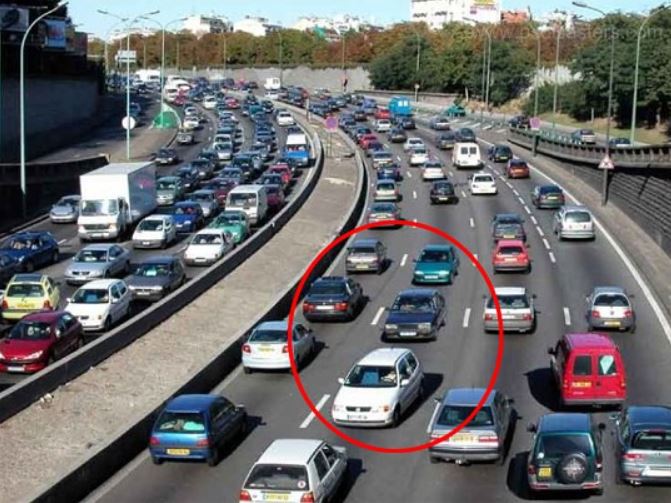
This image was used to show how heavy the traffic is on the ‘peripherique’ in Paris.

In case you didn’t notice…..

Unfortunately someone photoshopped some road users driving on the left hand side of the highway

I’m not sure what the modelling moral of this story is – but lane discipline can be equally bad on an ESNG running night!

Posted in Inspiration, Jon's layout ramblings, Out and about, Weird and wonderful | Leave a comment

Today’s competition

No prizes, but what is wrong with this extremely festive Christmas card, sent to me just in time for Chinese New Year by Cha(i)rman Allan?

.facebook_1424020245678

Yes, the Routemaster on the left looks like it’s an export model and it could be a little bit dangerous alighting in the middle of the road.  But how many other errors can you see?

It’s easy to be critical of an artist with no heart for public transport, but it also raises a few questions as to our hobby. For example, the picture ‘looks’ right, as to the place and atmosphere.  It’s the detail that lets things down.  If you looked at my model railway, how much incorrect detail will you find?  (Actually, none, as it’s still bare baseboards – but I suppose the track is not to scale?)  And does it matter?

So when does valid critique of a model turn into rivet-counting and then into petty criticism of another’s work?  We’re all prone to it!

Posted in Inspiration, Jon's layout ramblings, Out and about, Weird and wonderful | Tagged , , , | 2 Comments

Adventures in time and place #1

No, this is not a review of the latest episode of ‘Dr Who’.  Rather, there have been some interesting posts recently on how ‘time’ and ‘location’ work when we are building a model railway.  I’m a sucker for these ‘philosophical’ posts.  That’s probably as if I keep it all in the mind, I won’t have to build anything.

First, Chris Mears’ ever reliable ‘Prince Street Terminal’ on ‘Seven minutes and fifty-three seconds’.  He writes…..

The above video was shot on the Claremont-Concord at West Lebanon. The video runs just under eight minutes in length. It has been edited from its original length but is a terrific record of just how long each movement takes and the pace of working a simple yard. Why not use the video itself as a measure of what can be accomplished in that same period of time on the model?

There are some interesting comments, as well.  I’ve reposted the video below, as it’s a good view.

Our American (and Canadian) cousins are much better than us in the UK at timing our shunting / switching.  I think this is a different hobby perspective.  In the UK we are often exhibition orientated, and the idea is to keep things moving and entertain the public.  Nothing wrong with that, and we also see some prototypical shunting on other layouts at a show.  In North America, they seem to be discovering how a simple shunting operation becomes more interesting if you think what actually needs to happen.  For example, there’s the pause to let the ‘man on the ground’ drop off the engine without too far to walk.  And the wait to let him walk back.  There’s the pause before buffering up to stock so you don’t hit them too hard.  There’s the time to couple, to connect brake hoses, to through point switches….. and so on.  It might need a little research to realise what ought to be happening at each stage of our model shunting operation, but this will fill out our operation – and make our small layouts seem a lot bigger.

If you enjoyed this video, try these other posts by Chris,  “Allowing Time” and “It’s like a dance of sorts” (with another good video).

As a PS, progress in the railway room continues.  Several years ago, I bought a carrying case with a number of trays for ‘N’ gauge stock.  I have transferred all my USA stock to this case and found that a draw full of Atlas and Microtrains boxes are compressed into a smallish case.  Only the cabooses (or cabeese) reside elsewhere, in their own box.  I do have some stock left over, that will get sold off.

Posted in Hints and tips, Inspiration, Layout design | Tagged , , | Leave a comment