Off on a well-earned holiday for a week.
So no computer, no Wi-Fi, no posts and probably withdrawal symptoms.
But I’ve left a couple of articles that (I hope) will publish themselves. And I will return…….
Off on a well-earned holiday for a week.
So no computer, no Wi-Fi, no posts and probably withdrawal symptoms.
But I’ve left a couple of articles that (I hope) will publish themselves. And I will return…….
Gardening tips from the BBC website (edited)……
It’s hard to walk by a railway line in Britain and not see Buddleia.
Along fences by the tracks and almost any patch of waste ground, you will notice the long, slender clumps of flowers, usually lilac but also blue, deeper purple or white, at the end of long, arching branches.
BBC weather forecaster Peter Gibbs says the mild, wet winter will have improved germination and growth this year, especially in areas where water normally drains away quickly, such as derelict urban sites. “Buddleia is an opportunist that’s always ready to capitalise on any slight advantage.”
Sprouting from seemingly every derelict building, it stakes an increasingly plausible claim for the title of Britain’s national flower.

Buddleia at Willesden Junction
The plant can cause damage to buildings, such as crumbling brickwork – its tiny wind-blown seeds can germinate in decaying mortar.
And the problems caused by Buddleia to the management of the rail network are described by the Non-Native Species Secretariat as “significant”.
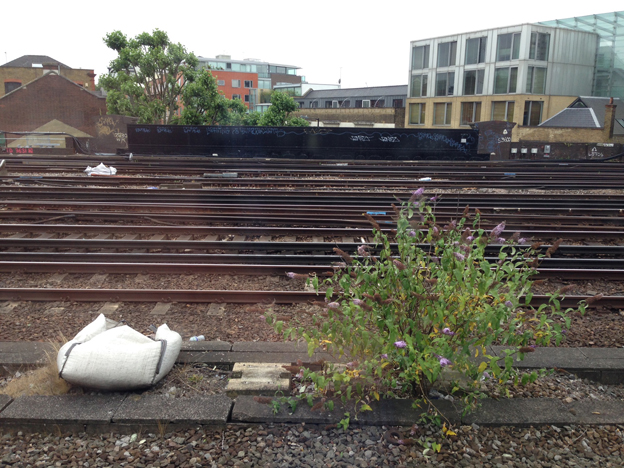
Buddleia on the tracks – and a lot of detail modelling challenges?
Network Rail says Buddleia has a habit of growing in walls where it can interfere with overhead power lines and obscure signals. While it does not cause “serious” problems such as blocking train lines, it does have a habit of popping up in “annoying places” where removing it takes up valuable time and resource.
The company cuts down large Buddleia before removing or killing the stumps, sprays small Buddleia with herbicide, and uses weed-killing trains to keep the network clear, while staff use portable sprayers at stations.

Buddleja davidii
Another modelling challenge for ‘N’ gauge and modern image modelling? Looking at the photograph in the article, there’s a lot of detail for the modeller there apart from the Buddleia – track and ballast colours, trackside ‘litter’ and some graffiti.
An annual pilgrimage for me is the 30 miles or so to Four Marks for the Alton Ltd show, as it’s all American. It’s also a pleasant drive through the countryside along the A31 Hogs Back and the Winchester road. A bit busy today, though, as it is the first day of the school holidays for many here. I like this show, too, as it’s a ‘real’ model railway show – a very friendly small show in a classic English village hall. But plenty of interest none the less…..
A few layouts, but all were interesting. This included…
Good trade stands…..
And even better, after my expensive week buying Swiss trams I didn’t buy anything. Well, that’s not strictly true, as Alton Ltd provides some of the best bacon baps on the exhibition circuit. A bacon and egg bap and a cup of coffee were my sole purchases.
Next year (I say this every year), I must go on to the Watercress preserved line at Alton. Today, as always, household jobs were waiting for the afternoon.
As a PS to last time, and Swiss trams, this Basle “piggy tram” defies description! I came across it whilst browsing the internet, and had to look at Google Images to check it wasn’t a Photoshop special.
Perhaps it’s an ideal way for the railway modeller to combine his two main interests, trains and bacon? All it needs is to be coupled to another tram advertising beer…..

There is some concern around as to whether this tram can be considered anti-Islamic. Personally, I’m more concerned for the sanity of the designer, and am naïve enough to wonder what on earth has been drawn on the side of the tram. Looks like gigantic n*ppl*s to me????
It’s AGM time again. The chance for the members to rebel against the committee and stretch out the meeting for hours debating minor issues – then vote them back again to continue running the club. But tonight was different – there was no need to frisk the members for fruit, rotten, canned or otherwise.
Perhaps it was the eight apologies for absence. Some of these were quite imaginative. Martin (senior) is in intensive care. (But seriously, we were delighted to hear that he had come through a major operation successfully). Paul was having trouble with his irrigation system – on the golf course that is. Peter claimed to be in Ireland on the way to Cyprus (if I was going there I wouldn’t start from here). And Sean was driving a train.
Or perhaps it was the sauna like atmosphere after the hottest day of the year (till tomorrow). Or maybe it was the prospect of lots of second hand railway stuff for sale afterwards (see below).
Anyhow, the meeting was over in an hour. We were just quorate. The committee were re-elected en masse to carry on the good work. There were no other nominations and they weren’t allowed to resign. And a number of good points came up – including how to get beyond this blog and into social media, and a suggested Play-Day in the Autumn.
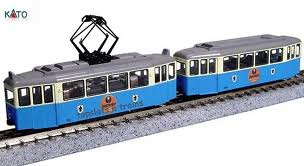
And the shopping was good! Many thanks to the Crimbles for bringing over lots of lovely railway goodies from their late father (and our late member) Robin’s collection to allow the club to have first pick. Lots of British and European stock but (fortunately) no American. Nothing for me, I thought. But some Kato Swiss 4-wheeled trams were too tempting. I have looked at these at Stuttgart every year, but had resisted thus far.
And having got the trams, I just had to buy a number of Faller and Kibri plastic building kits. I’m thinking of a little tram diversion of a mainland European street with trams running down it….
This month’s Model Railroad Hobbyist has an excellent article on track and wheel cleaning. Here are a few excerpts….
The author, Brent Ciccone, starts with the question, “Problem #1: My track is dirty and I have an open house tomorrow!”…
I compared cleaning track using a track eraser versus a liquid
cleaner and cloth. The quickest way, in terms of elapsed time, from dirty track to clean, is the track eraser. Liquid cleaners required multiple passes before the track was clean. A quick back and forth scrubbing with the track eraser and the track is shiny clean…..
He then goes on to consider:
He concludes with two interesting sections…
Myth Busting – Scratching the Rails? The often-reported problem with abrasive track cleaners is that they will scratch the rail surface and dirt will accumulate in those scratches…..
While the scratch theory sounds plausible, I can see no evidence to support it. I don’t recommend coarse sandpaper, but I would have no concerns about using any of the track cleaning blocks on my track, or on the wheels of locomotives. Until someone comes forward with evidence to the contrary, I would say that this myth is busted!
Looks like my old PECO track cleaner is still OK…. But what is ‘black gunk’ on wheels and track (spoiler – not for the squeamish)?
What is that black gunk and where does it come from? I did some Google searches looking for answers, but did not find many. In a couple of cases, people have taken track to a laboratory to see what this stuff is…. One analysis reports that a lot of oxides of nickel are present. A different forum post, can no longer find, found evidence of bits of dead skin cells. Dead skin cells might sound surprising until you realize that household dust consists of a large proportion of dead skin cells from the occupants of the house and their associated cats, dogs and other pets. My testing found that strong organic solvents are the most effective against “Black Gunk”, so this does fit with the origins of the “black gunk” being organic material.
I have some spur tracks on my layout where cars are pushed, but locomotives seldom venture on to them. I have noted that these sidings develop much less black gunk than the active tracks. These findings support the idea that it is the combination of the electrical current and the rail/wheel interface that creates the black gunk. In the absence of either, it will not form. Electrical arcing occurs between the wheels and the rail, and the arcing oxidizes the rail and degrades the dust into black gunk.
Calgary Alberta, Canada, where I live, is very dry with almost desert-like conditions during the winter months. This results in the house occupants (myself, my wife and three cats) having dry, flaky skin during the winter, and consequently there is a lot of dust in the house. We fight this dust in the house constantly and I fight dirty track on my layout in the basement all the time.
So now you know…..
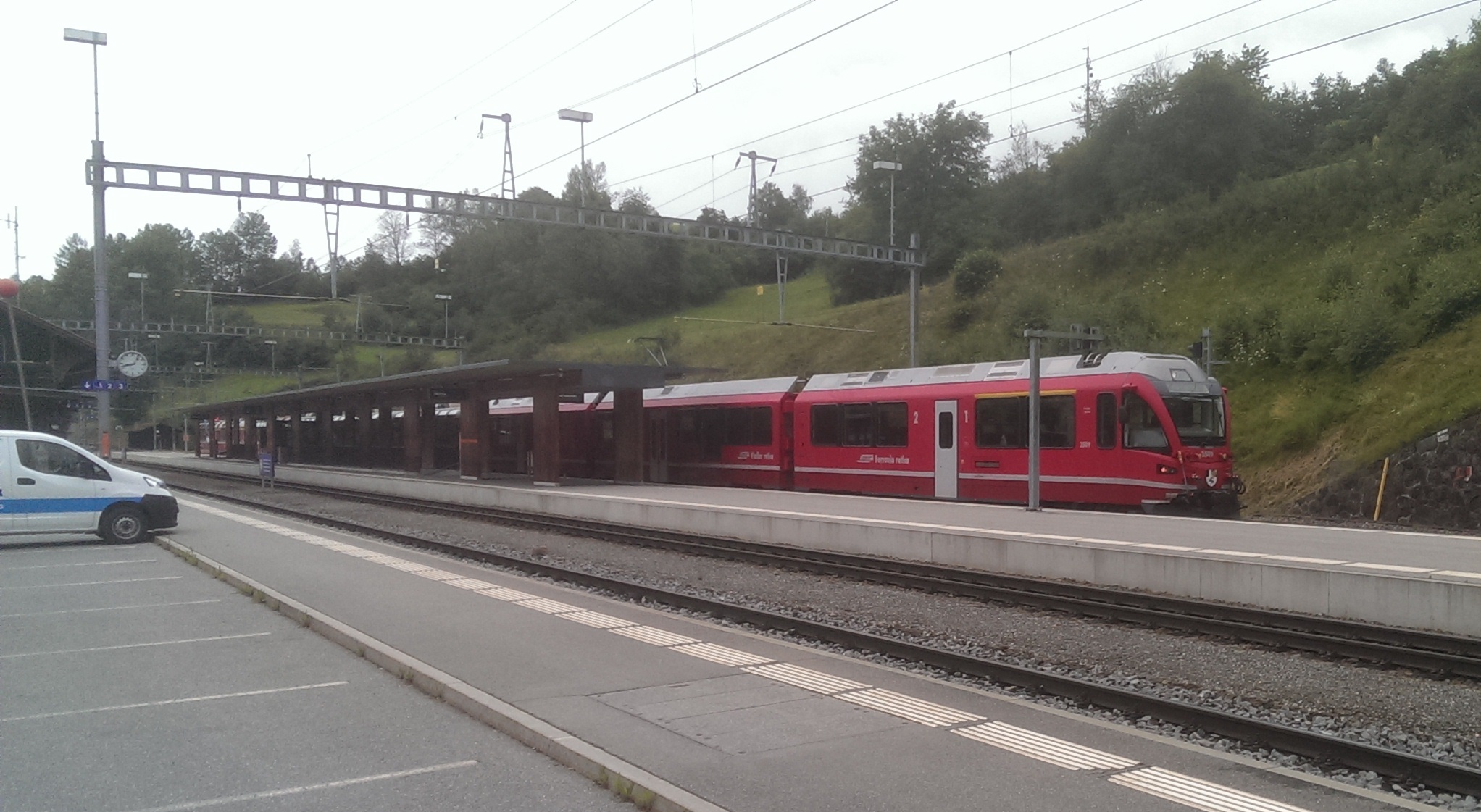
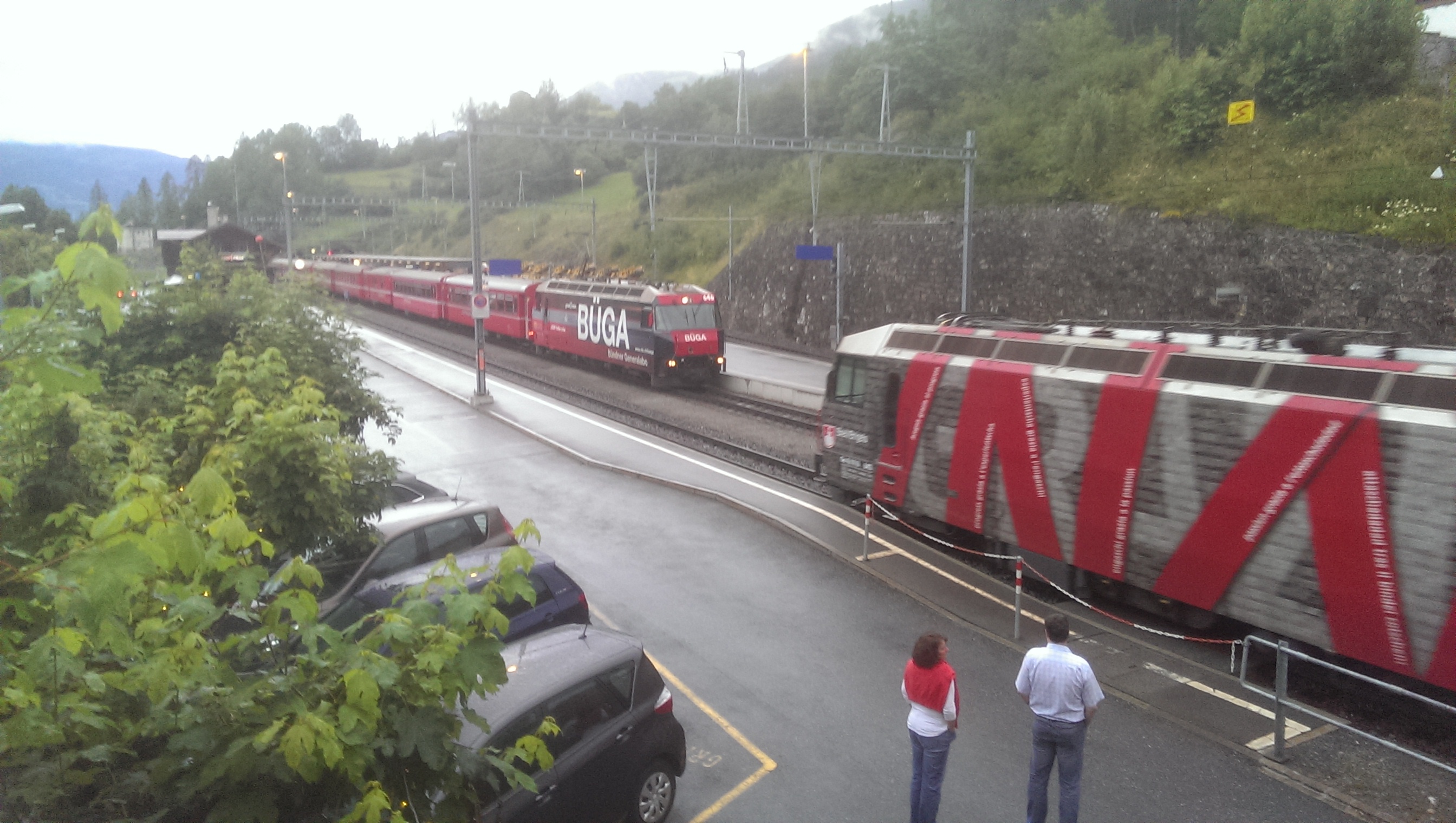
More from our man in Switzerland. I can see the attraction of modelling modern Swiss railways. Lots of colourful and interesting locomotives and stock. He writes:
As for the two locomotive & their freight/works train. It came in and was to big for the loop. They ran round. Backed up the train then put the train forward over the small turntable and into the small shed the other side. This was far enough to clear the points at the other end. All good fun.
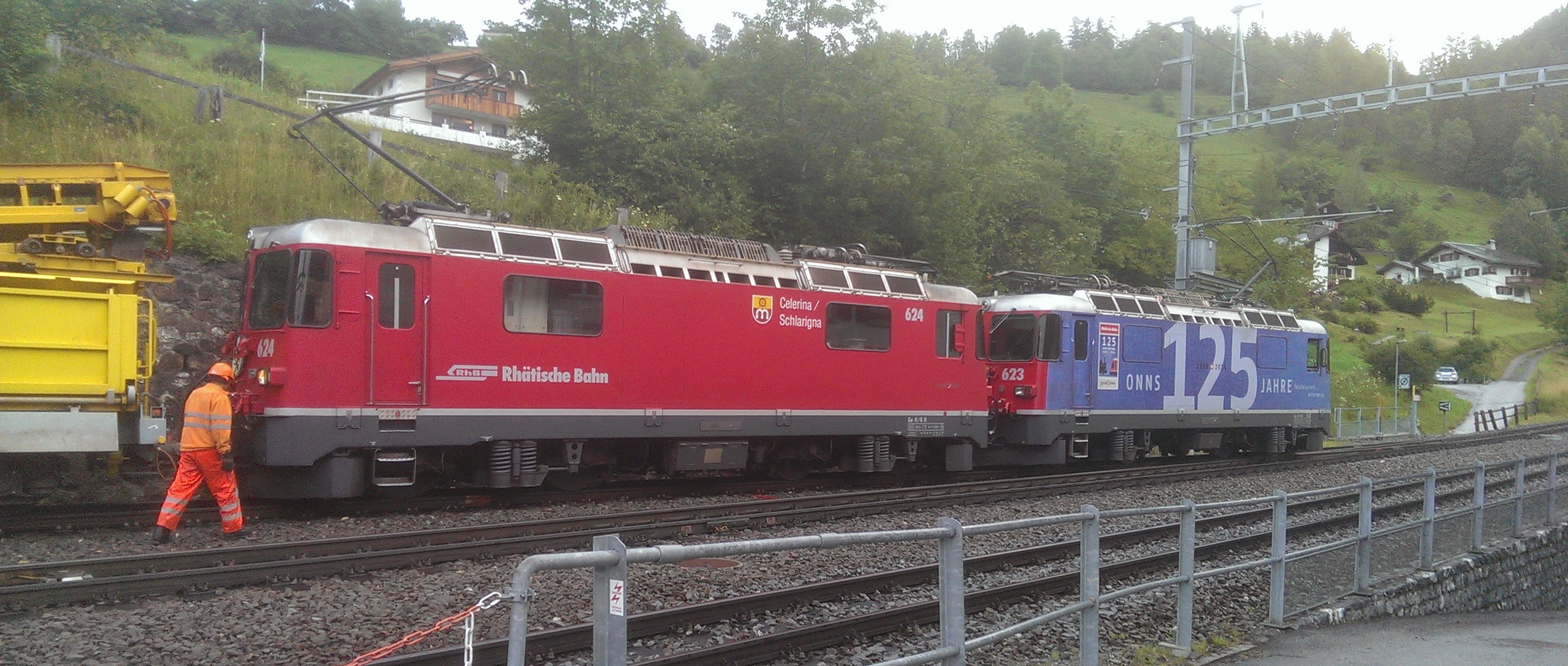
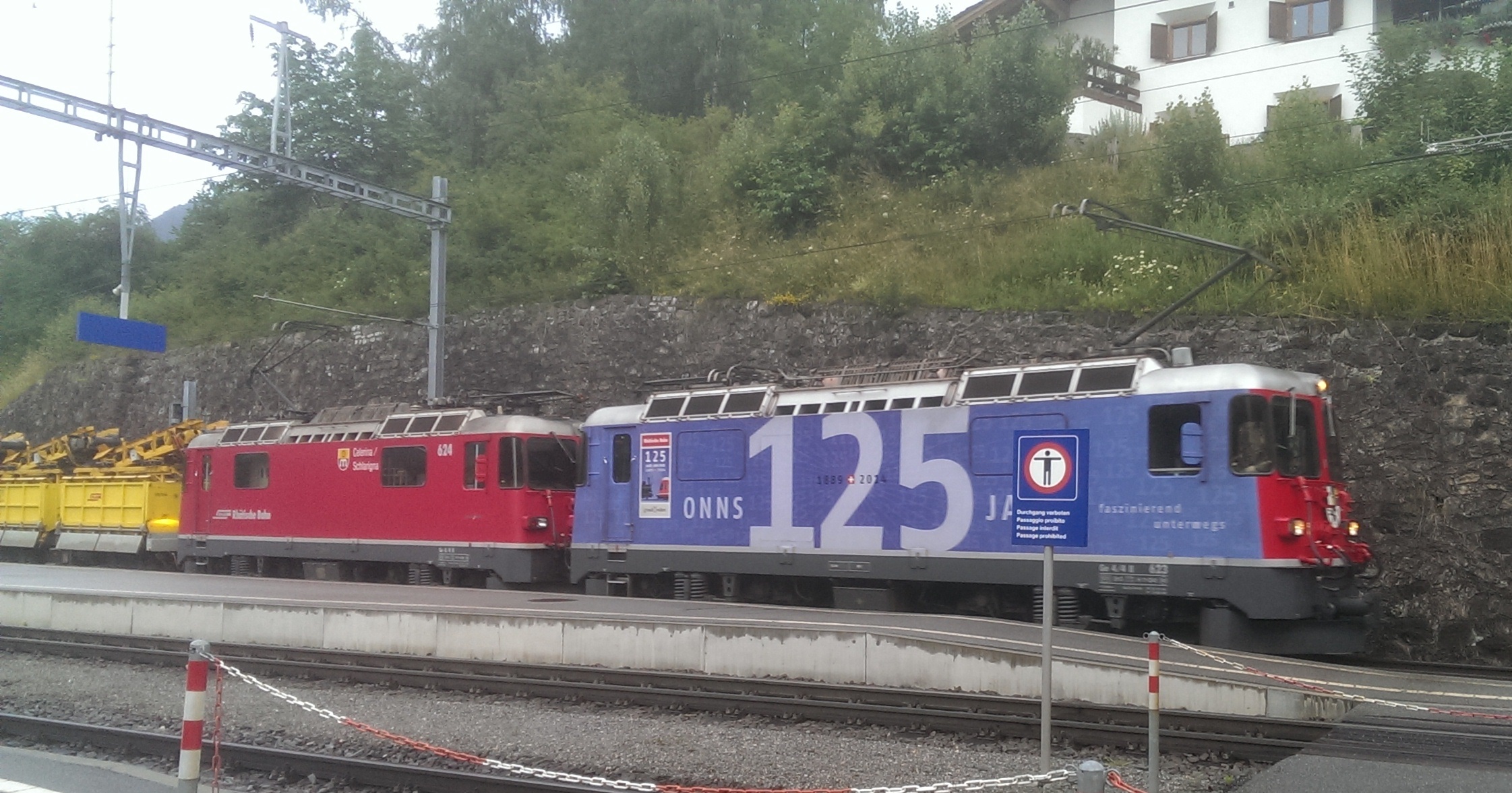
It’s also good to see a ‘normal’ bit of Switzerland, hilly enough to make a backdrop to the railway, but not a ‘rabbit-warren’ mountain line. Yes, I know these exist, but when I see a layout of extreme Swiss (or elsewhere) railways, I tend to think ‘toy’. Perhaps this is an example of an old lesson in layout planning – total realism may not be believable! I know that when I go to a model railway show, my interest is usually sparked by the slightly different rather than the extremely unusual.
I’d just written this up, and yet another episode arrived. Is that Ron I see unsuccessfully trying to hide behind the catenary mast?
That works train has turned up again tonight. Same pair of locomotive. Third night running that we been here. The works are on the Davos – Filisur line.
Here are photos of the other end. They are not on the turntable as I thought. Just short. (next time I will check myself).
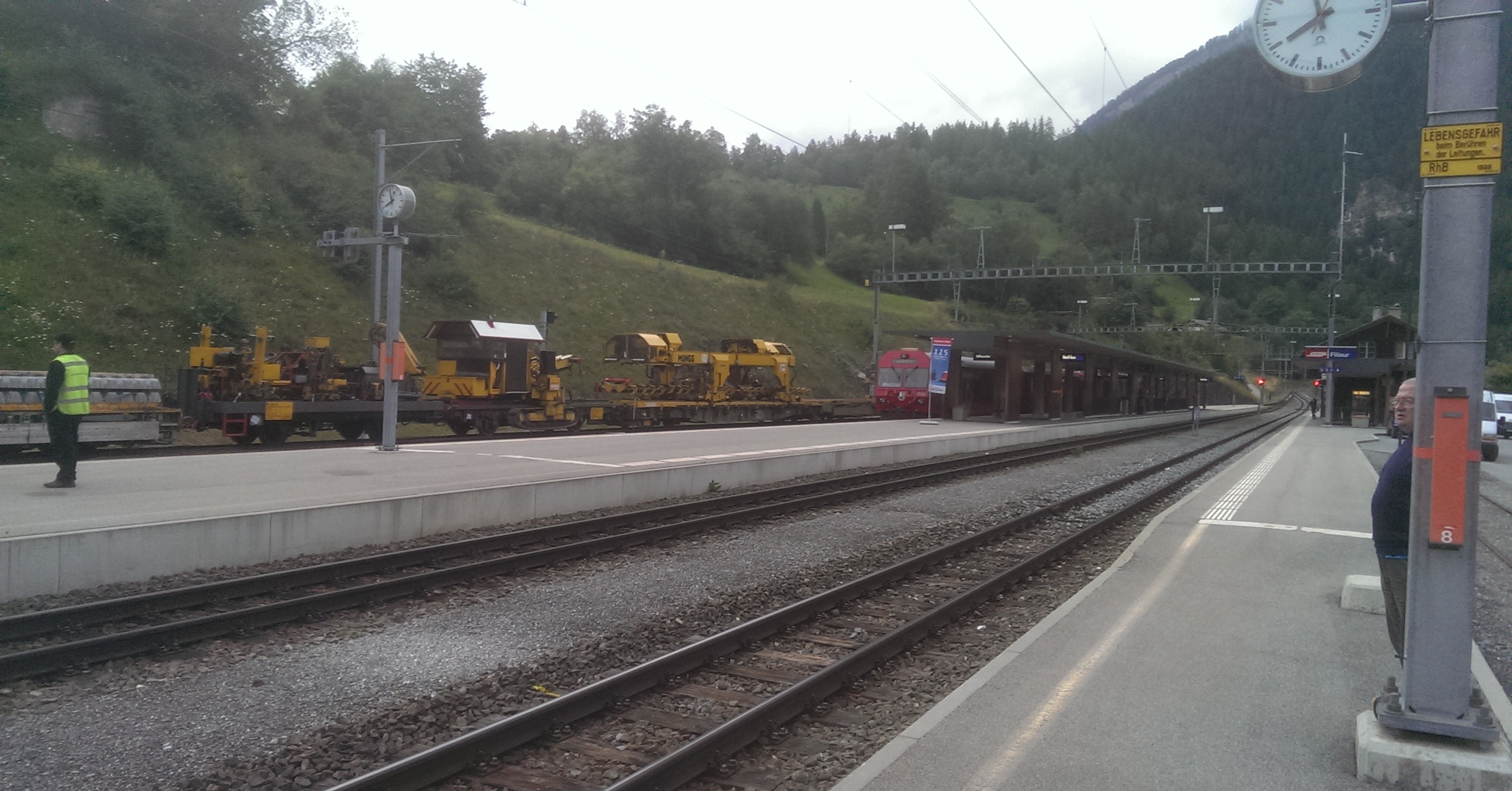
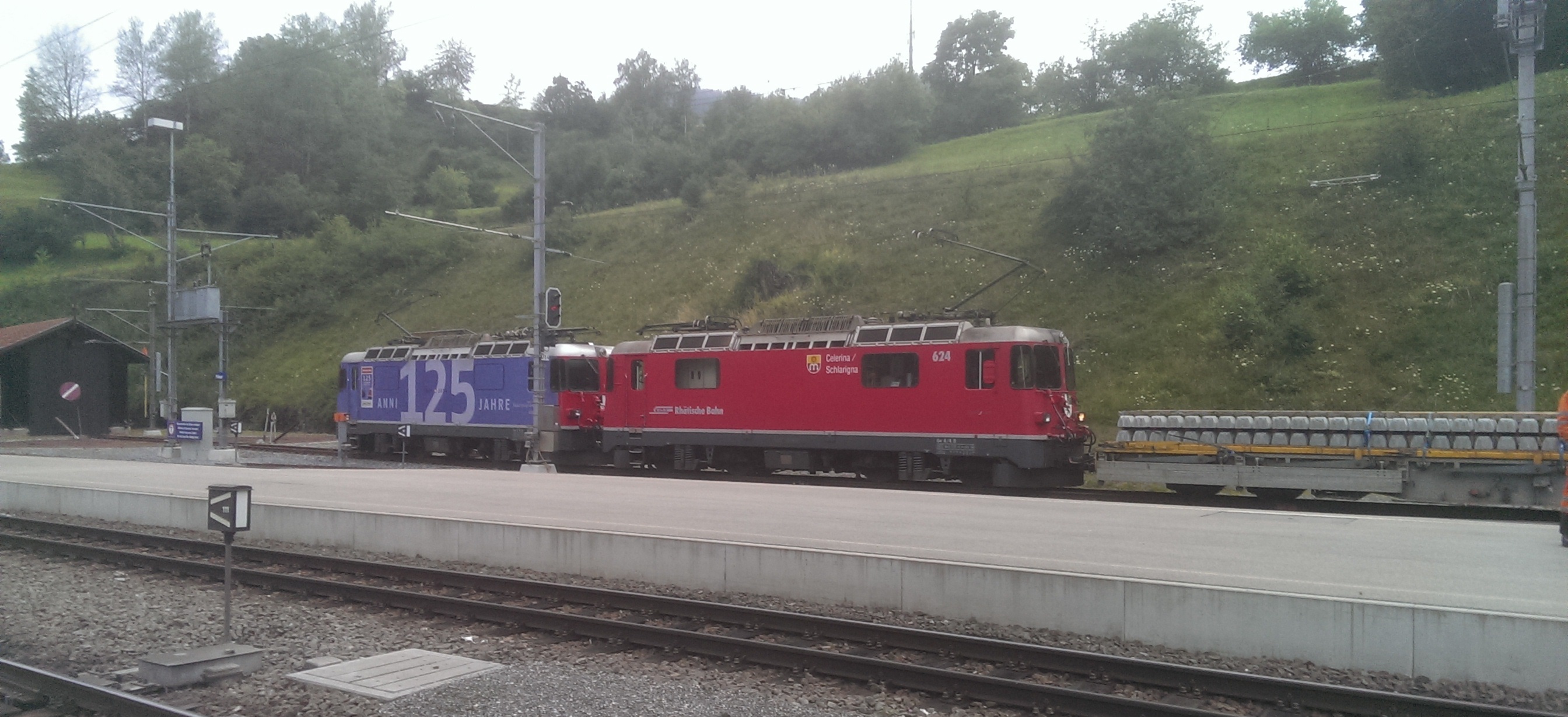
Maybe 0ur last communication from Switzerland for 2014. ESNG Charman Allan writes….
Holiday slowly coming to an end. That’s the Hotel we are staying in at the end of the platform. The double head freight has just turned up.
He’d better be back for the ESNG AGM next week. I don’t want to referee all the members on my own. The Swiss weather hasn’t improved, I see….
I recently came across the Barriger Library collection of old USA steam railroad photographs. Lots of inspiration if you model such things. Plenty of pleasant browsing even if you don’t. The photos are not always of the best quality, but are often interesting. In the Lehigh Valley section there are a whole load of pictures of ‘the open road’ – just main lines with no stations or trains included. These are very different from the usual album.
The link to the Flickr collection is here.
Looking back at earlier posts, you will have detected a dislike for wiring. Having looked at the design of staging for the main line, my thoughts turned to operation. Loops at either end of a N-club modular set-up could need an operator at each end. This assumes DC rather than DCC control. And it could mean three operators to handle the layout – one at either end and one to operate the short line and interchange. I was working on the line of local control for points, rather than a central control panel – that would, of course, need miles of wire to both ends of the layout to operate the staging loops.
Mulling this over, I had an idea…..
Perhaps I could use DCC for point control (ease of wiring), whilst keeping the running tracks DC (silly, but I need to fit in with the club modular system)? This would enable me to have a traditional control panel, and operate remote points with a simple to wire power bus.
I put a question into RMweb – “Has anyone else taken this perhaps unusual route, and what system did you use?” And within a couple of days, I had 20 (mainly) helpful replies. I had a browse through the suggested approaches and the suggested web-sites. Here’s my proposed way forward:
I trust all this makes a degree of sense! I think it will work for me. I’ve received 3 Cobalt decoders from trusty Hattons and will now wire up my next module to see if it works.
 | Allan Dawes on On my workbench – module… |
| “Stuttgart 202… on Stuttgart 2025 – 4… | |
 | Jonathan Caswell on Stuttgart 2025 – 4… |
 | Chuckster on Brockenhurst show 2025 |
 | snitchthebudgie on Potpourri #1130 |
 esngblog