ESNG meeting, 4 April 2014

Last meeting before the exhibition!  Predictably, we spent a lot of time discussing logistics.  Who will be doing what, when can the van pick up layouts, when can we get into the school.

We did have one scare last week, when Surrey County Council announced that it was resurfacing the road past the school starting the week before the show.  Help!!!!  This is logical, of course, to do the work in the school holidays, be we want to get 100+ cars plus vans into the school over the weekend.  However, a few phone calls revealed that there had been such a public outcry that they were only resurfacing part of the road – the part away from the school.  We breathed again.

My only complication is that my wife heard that the date for her hip replacement is the Saturday of the show.  But actually, that will work better than if it had been before.  She is booked in to arrive at the hospital at 7am, so I’m afraid she will be dropped at the door, and I’ll go off to carry on setting up the show.  I may have to miss the traditional post-show curry, though, and that would be a shame….

Back to club night, we did get the usual circuit up and running, with a nice variety of trains from the UK, USA, Switzerland, Austria and Japan.  Of course, just before the show, one controller is playing up, but better to find that out now.

Posted in ESNG, ESNG meetings | Tagged , , | Leave a comment

Why N gauge?

I seemed to have wandered away from N gauge modelling in recent posts.  So with my 100th post on the blog, it’s back to my roots (for now) and to ask the question, why model in N gauge.

A little background may be in order.  I started with model trains with a Hornby clockwork ‘O’ gauge system on the floor of the living room.  Great fun!  At the age of 10, my father and I upgraded to ‘OO’ gauge with a 6×4 and then 7×5 layout.  We started at a reasonable standard, with Peco track and points (when they first came out!)

In my mid-teens, the 7×5 became a shelf layout along one side of my bedroom, and then we built a 9×8 shed in the back garden – a cosy empire with heat, light and insulation.  Best of all, in winter you could turn the heat on from the house to warm the shed up before venturing outside.  We built a continuous run layout round the walls, but reading the model magazine convinced us of the need for a fiddle yard / staging, so the final layout in the shed was the classing end-to-end branchline – Southern of course!  I learnt a lot about model building at that time, and scratch built a few coaches (quite respectable) and tried a loco or two (kit built, OK, scratch build, far less so).

Then to university and dabbling in the Great Eastern in EM.  Followed by flat sharing and marriage.  Railways took a back seat, but moving to a house in Redhill meant we had a loft space, and I returned to ‘O’ gauge.  I still have the kit and scratch built stock from this era.  Moving house in Redhill and converting the new house’s loft into a fourth bedroom was the end of modelling for a while.

Then, 15 years ago, ESNG approached Earlswood Baptist church with a request for the club to meet in the church hall.  I was on the church leadership team at the time (and I still am), and knowing my interests I was told, ‘Jon, you can liaise with them’.  So I not only liaised, but also joined the club and went ‘N’ gauge, and quickly adopting USA outline as having reliable models and interesting prototypes.

Yet walking around Alexandra Palace last weekend, I was thinking, why do I model in ‘N’?  I came away still very satisfied with the scale, and really quite uninspired with the other scales.  Why?  I suggest there are a number of factors involved:

  • ‘N’ is small enough to fit in the house.
  • ‘N’ allows me to model trains in a landscape, rather than just a railway.
  • It’s getting quite rare to see an ‘OO’ (and larger) layout that really appeals.  People seem to have done everything, and the classic GWR branchline is, to quote a well known phrase, boring if nice.  ‘N’ layouts often still manage to do something a little different.
  • ‘N’ models are still improving release by release.  It’s exciting to see the advances made in quality and reliability, now matching the larger scales.
  • There are just too many commercial models in ‘OO’.  I can now buy off the shelf most of the models I hankered after or tried to build as a teenager – a T9, and N class 2-6-0, a King Arthur 4-6-0, and M7, a Beattie Well Tank, an O2 coming, a C 0-6-0.  The list goes on….  Really, it’s just become too expensive and easy!  Perhaps this will change as ‘N’ improves further?

The future?  I may go back to scratch building in ‘O’ gauge if my eyes give up on ‘N’.  I do like making things, and an ‘O’ gauge trolley layout would be small enough for my now reclaimed loft.  Or for a real challenge, what about ‘S’?  Then I would really have to build nearly everything!  And then there is the other challenge to dabble in fine scale 2mm…..  Whatever!  There’s more than enough to keep me interested in this excellent hobby!!

Posted in Inspiration, Jon's layout ramblings, Layout design, N Club International, Uncategorized | Tagged , , | 3 Comments

EVEN MORE SHEEP

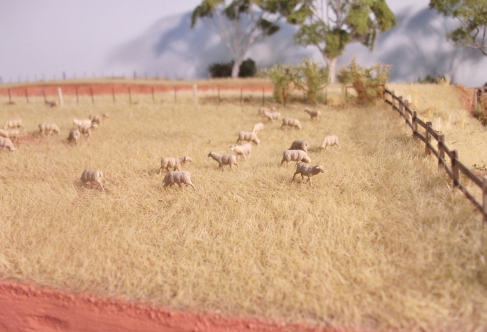
Keeping the antipodean theme, I enjoy blogs for the modelling knowledge worldwide. And the particular challenges of modelling different parts of the world. Here in Australia, the challenge is enough sheep….

BURROWA's avatarBurrowa is an HO scale model railway set in the NSW southern tablelands

An update on the sheep – there have been 80 beasts added to the flock on both sides of the track, so here they are grazing in the morning sun.

Image

Image

Image

Image

Image

View original post

Posted in Inspiration, Out and about | Tagged , , | Leave a comment

Sugar cane railways – 1

In 2010, Maxine and I we fortunate enough to spend two fantastic weeks Queensland, in the general area of Cairns. We used the conventional Australian check-list, from “I-Spy Australia”.

  • Shark (small friendly 6 ft one) – tick!
  • Snake (harmless 4 ft one) – tick!
  • Crocodile (medium sized and also in burger) – tick!
  • Kookaburra (lots including one almost on our balcony) – tick!
  • Duck billed platypus (three of them) – tick!
  • Kangaroos (and wallabies) – tick!
  • Leeches (3 made unsuccessful attack on legs) – tick!
  • Drongo (the bird species) – tick!
  • Cassowary (father plus chick) – very, very, big tick!!!!

This list reveals my other time-consuming hobby – bird watching (mostly of the feathered kind).  Similar to train spotting, really, as I have a big database of worldwide sightings.  Just the objects of interest are more difficult to find, as they don’t run on rails to a timetable.

But we also saw a few trains….  Best of all were the sugar-cane lines.  Around 2 foot gauge, these are laid out like a big train set around a sugar refining works, with loops here and there to load the cane, and random turnouts and branches following the field edges.  Our first train, about 50 trucks long, was crossing the road as we approached Mossman.

P1000424 

And finally, just to show that there are short cane trains around, we came across this one, with only a dozen trucks, running crossing the prosaically named ‘Bruce Highway’ on the way back to Cairns.

P1000486

Of course, my thoughts turned to modelling potential!  Not a great variety in stock, but very interesting tropical locations.  For those interested, this site for Queensland is excellent, as is this one worldwideBackwoods Minatures make OO9 kits of Fiji sugar cane railways, that might be near enough for a small diorama or model.

xfwldm xhc2

I’ll blog about the sugar cane works another time.

Posted in Inspiration, Out and about, Prototype | Tagged , , , | 1 Comment

London Festival of Railway Modelling

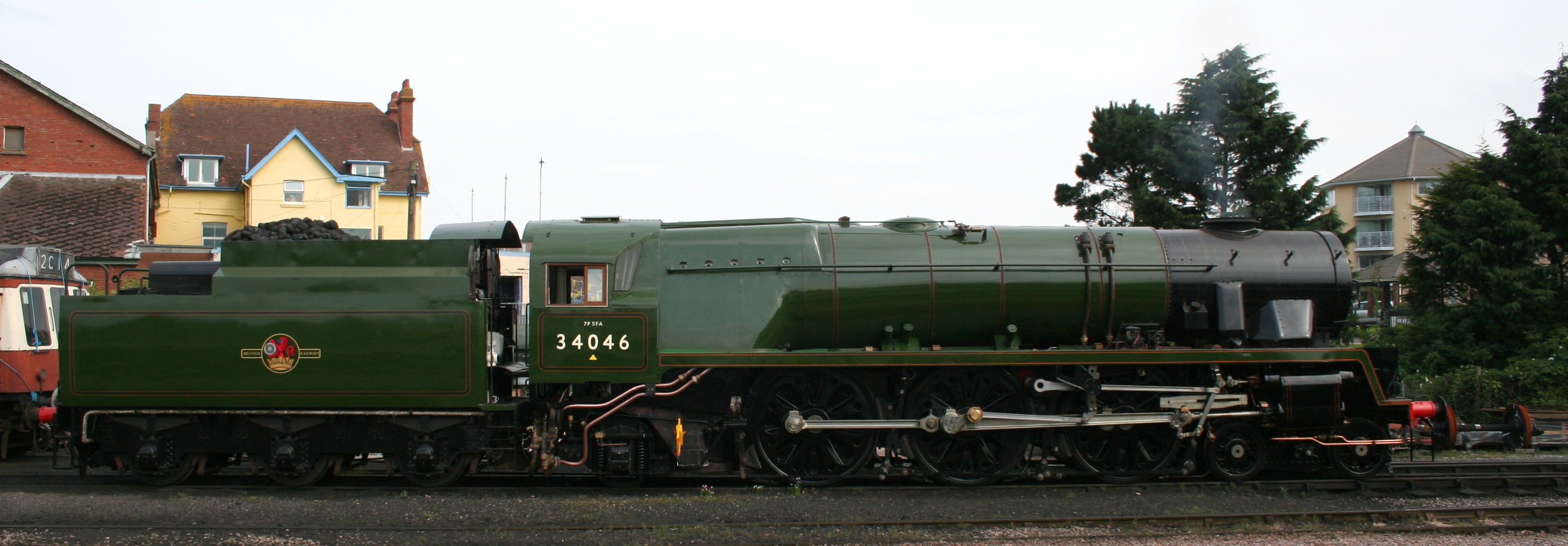
I actually got to a model railway show this weekend – the London Festival of Railway Modelling at Alexandra Palace.  Two work colleagues, who might even qualify as good friends were going, so I sent my apologies to the morning service at church and headed for Redhill station for the 7:52am train. As usual on a Sunday, there were engineering works around, so our train to Victoria took a short diversion via Balham and didn’t stop at Clapham Junction.  At Victoria, transfer to the Victoria line (about the only London Underground line working due to some signalling fault) and up to Kings Cross.  We had time for a coffee and to admire the new roof over the side concourse before finding our train to take us north. We had seen a charter train on the departure board, and after a few minutes a blue Class 47 came into the station with a rake of old maroon coaching stock, plus a couple of Pullmans.  Aha, steam excursion, we thought.  Sure enough, drawing out of Kings Cross, we saw the train was headed by a shining rebuilt West Country 4-6-2, Braunton. Ten minutes later, as we got off the train at Alexandra Palace, it occurred to us that the excursion was due to leave five minutes after us, and it would have to pass through Ally Pally.  So (with a good number of other train-iacs) we waited and were rewarded by the sight of the West Country passing through the station at a steady pace.  It took me back to the last days of steam on British Railways…. 34046_Braunton_West_Somerset_Railway

After this excellent start to the day, we walked up the hill to Alexandra Palace, and got on with the real business of the day. The Ally Pally show is one of the larger annual events in the UK, and this year had about 40 layouts, numerous traders, and a lot of society and demonstration stands.  I attended this show last year (in the snow and ice, I recall, rather than today’s sunshine).  2014 seemed to have less stands – things were quite well spaced out – but the quality of exhibits seemed higher. There were the usual selection of British branch line layouts, but really these have been overdone over the years, and although very well modelled, fail to inspire.  So what were the interesting layouts?

  • Some very well conceived ‘O’ gauge layouts, including St Marnock, a small Scottish loco shed in British Railway days, and Oldham King Street Parcels, a small station and parcels depot.  The latter appealed as it is modelled on a brick arch embankment – as a South London boy, trains belong on the top of brick arches.
  • Well modelled European prototypes including Swiss, Austrian and Spanish layouts.
  • Heculanem Dock in OO, a Liverpool docks layout that included the Liverpool Overhead Railway – and a ladybird that was crawling along the dock, having made guest appearances on cranes on the previous day.
  • Overlord, with almost more ship and military models than OO trains, representing a loading point for the 1944 D-day landings.
  • An excellent HO USA modular layout, the RS Tower.

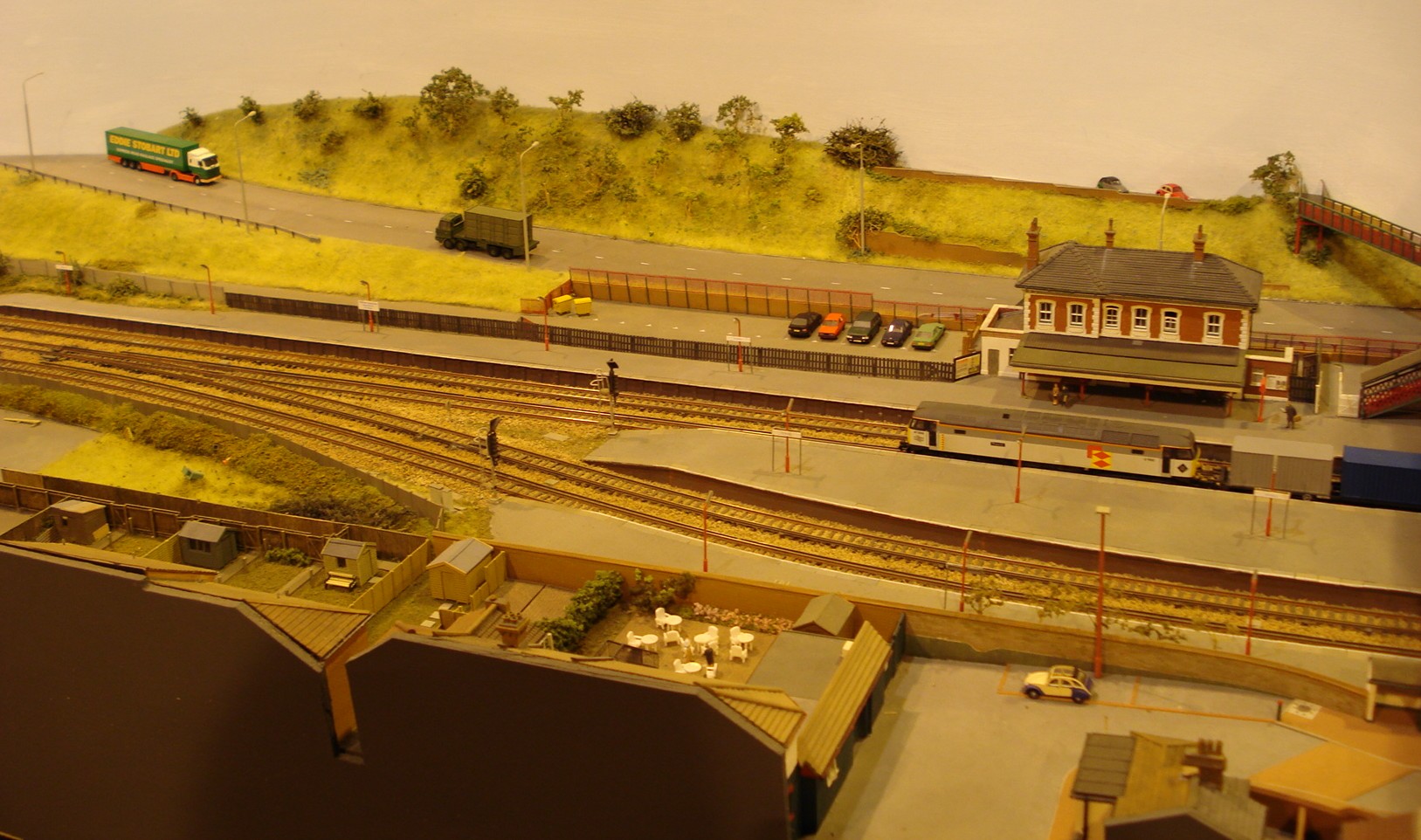
In 2mm and N gauge, there were some very good layouts.  Lambourn is in 2mm scale and is some 30 years old.  The layout itself still looks good, a tribute to Martin Allen’s original work, but the trains were more recent models.

untitled

Bevois Park and St Denys models a near scale half mile of main line, the prototype being just outside Southampton.  This was of great interest to one of my colleagues, who was brought up half-a-mile away.

DSC00412

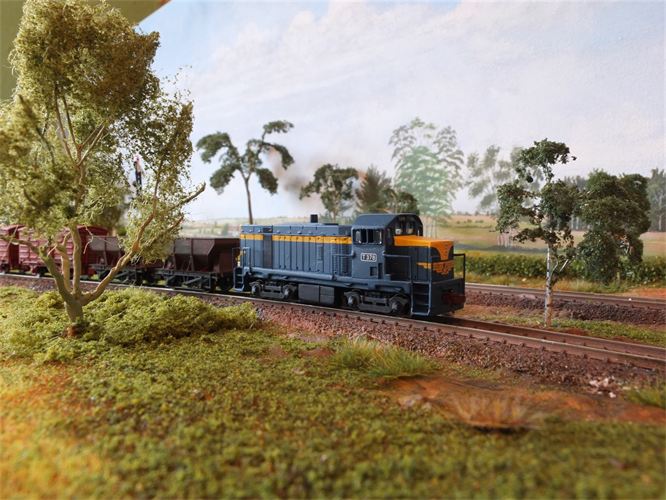
Finally, Dawes Creek models Victoria, Australia in the 1980’s.  Nice to see something a little difference, and the model stood out with its ‘down-under’ scenery and a very well pained backscene with the low horizon characteristics of flat countryside.

666_500_csupload_60873897

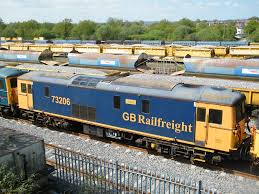
And as a final bonus to a good day out, there were two Class 73 Electro-diesels in Redhill station when I got back.  Always one of my favourite locomotives, from their early days in places like Hither Green yard to later days heading (or pushing) the Gatwick Express past my garden in Redhill

images (2)


Posted in Inspiration, Out and about, The trade | Tagged , | Leave a comment

3 weeks to the ESNG show

And you will get much better “bargains” in the club shop than the one below! (Can’t seem to reblog this from the ‘Playing Trains‘ blog, so I’ve just copied it).  I hate to think what it would have cost with a ‘mint original box’.

When two positives make a negative…

Posted on 24/02/2014 by

Those two being Yes and Alright… As in Yeah, right!

What

How much? It’s just a toy train FFS!

esng2014

Posted in ESNG, ESNG meetings, The trade, Weird and wonderful | Tagged , , | Leave a comment

ESNG meeting 19 March 2014

Plenty of people this week, but we were a little short of trains! We seemed happy to sit and chat over the inevitable teas and coffees.

However, Paul had his usual selection of Japanese stock, this week an interesting collection of suburban multiple units.  Dave rang the changes with a 35-year old Union Pacific DD40 Bo-Bo-Bo-Bo and tender.  It may have been old, with genuinely weathered paintwork, but it still ran like a watch (and not a Mickey Mouse one).  Finally John with a little help from Allan ran some attractive Swiss passenger trains.

And Duncan and John continued crocheting the catenary for Alpenbahn (PS, slight correction on last month’s meeting – Duncan is doing the work, John is acting as a consultant).

Posted in ESNG, ESNG meetings | Tagged , , , | Leave a comment

Physical Graffiti (with apologies to Led Zepplin)

From the BBC News website, 18 March 2014:

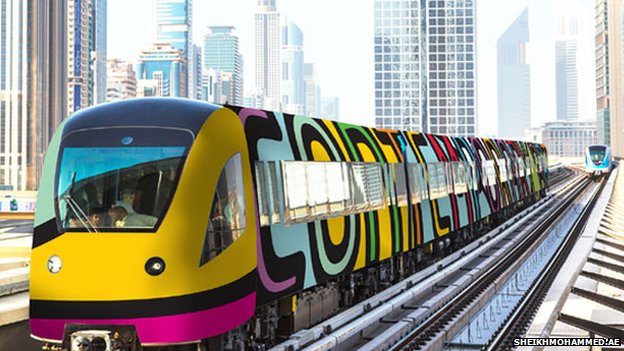
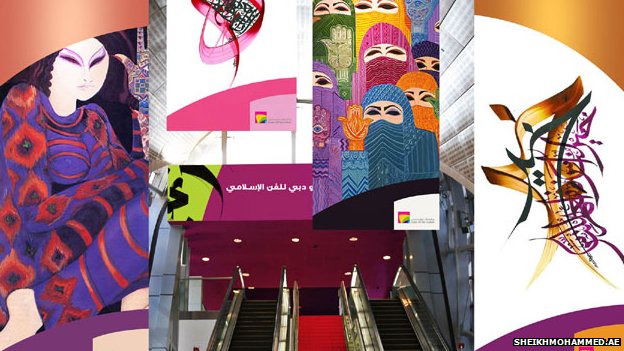
Dubai: Metro system to be turned into art gallery

The Dubai metro system is going to turn into an art gallery on the orders of the emirate’s ruler, it’s been reported.

_73649797_dubai-train

Trains will be redecorated to reflect the museum project

Sheikh Mohammed bin Rashid Al Maktoum says he wants to “inspire and communicate with every employee on his way to work, every student on his way to pursuing education and every tourist visiting Dubai”.

Four stations have been selected for the first phase of development. One will host a collection of Islamic art and Arabic calligraphy, with pieces drawn from 1,400 years of Islamic culture. But it’s not only the stations that are getting a make-over, as the driverless trains will also be decorated inside and out to reflect the project.

Construction is due to start within weeks, the Emirates 247 news website reports, and work should be finished in time for a national arts festival taking place next year.

According to Gulf News, half a million people use the five-year-old metro system every day, many of whom will pass through at least one of the four new museums on their journeys.

_73650173_dubai-station

An artists’s impression of what the renovated metro stations might look like

Now, what could we do to rival this in N gauge?  An HST covered in ‘Banksie’.  Or probably more suited to the average railway modeller, a EuroStar covered in classic nudes?  Or thinking about it, wouldn’t the Eurostar be better covered with the Bayeux Tapestry?

I’ll stop whilst I am (slightly) ahead.

Posted in Out and about, Prototype, Weird and wonderful | Tagged , | Leave a comment

Round the Underground on an Engine – Fred T. Jane

I have hi-jacked this fascinating article from the Basilica Fields blog.  I think I am OK to reproduce it in full, as Adrian writes:

“During the 1890s, The English illustrated Magazine published a series of illustrated articles by Fred T. Jane on The Romance of Modern London. The third instalment in Volume 10, dated August 1893,  deals with a footplate trip on the Inner Circle. Now long out of copyright I’m able to reproduce the text and illustrations in its entirety.”

The Romance of Modern London:  III-Round the Underground on an Engine.

Written and Illustrated by our Artist-Commissioner Fred T. Jane.

Trains Meeting

Trains Meeting

By the courtesy of Mr. Powell*, manager of the District Railway, I was provided with an “engine-pass” for the “Inner Circle”; and on a bright June morning I made my way to St. James’ Park station. There I met Chief-Inspector Exall, who was detailed to accompany and look after me generally.

The train selected was a District “down” one. “Down,” by the way, signifies up to the Mansion House; the explanation of this apparent paradox being that the northern part of the “Circle” was opened first. In those days the line was only some three and a half miles long and yet cost over a million pounds to construct.

In a short time our train rushed into the station, and a moment later we had boarded the engine. I was accommodated with a position near the left-hand tank, whence I could get an uninterrupted view ahead; but it had its drawbacks as the water in that tank was hot.

No time is wasted at stations on the Underground, and a minute later the train was off—off into a black wall ahead with the shrieking of ten thousand demons rising above the thunder of the wheels. The sensation altogether was much like the inhalation of gas preparatory to having a tooth drawn. I would have given a good deal to have waited just a minute or so longer. Visions of accidents, collisions, and crumbling tunnels floated through my mind; a fierce wind took away my breath, and innumerable blacks filled my eyes. I crouched low and held on like grim death to a little rail near me. Driver, stoker, inspector, and engine—all had vanished. Before and behind and on either side was blackness, heavy, dense and impenetrable. Westminster Bridge, Charing Cross, and The Temple were passed before I could do or think of anything beyond holding on to that rolling, rushing engine: then finding that I was still alive and sound, I began to look about me. Inspector Exall put his head to my ear and shouted something at the top of his voice, but I could only catch the word “Blackfriars.” I looked ahead. Far off in the distance was a small square-shaped hole, seemingly high up in the air, and from it came four silver threads palpitating like gossamers in the morning breeze. Larger and larger grew the hole, the threads became rails, and the hole a station; Blackfriars, with rays of golden sunlight piercing through the gloom.

Approaching Blackfriars

Approaching Blackfriars

Off again, a fierce light now trailing out behind us from the open furnace door, lighting up the fireman as he shovelled more coal on to the furnace, throwing great shadows into the air, and revealing overhead a low creamy roof with black lines upon it that seemed to chase and follow us. Ever and anon the guard’s face could be dimly seen at his window, more like a ghost than man; while in the glass of the look-out holes were reflected the forms of the engine-men, like spirits of the tunnel mocking us from the black pit into which we were plunging. Then again we would seem to stop, and to fall down, down, down, with always the wild shrieking surge and ceaseless clatter of the iron wheels.

Stoking up

Stoking up

Soon ahead of us gleamed pillars of crimson stars, the signal lights of the Mansion House. Between this station and Mark Lane there is nothing particularly noticeable, saving the approach to the latter; where ghostly looking figures paced a hidden platform across which fell great golden beams that looked like impassable barriers. Yet here one could take a second glance, the beams were riven asunder and a black engine blotted them out with clouds of writhing steam. Next to Mark Lane, and almost close to it, is the old Tower station, now disused.
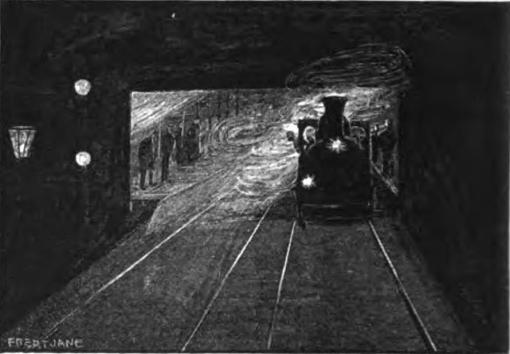
Mark Lane (the end of the Extended Circle via Basilica Fields!)

Mark Lane

We sped past its deserted platforms and limp signal posts, and a few minutes later steamed into the central station, Aldgate. The firemen at once jumped off the engine and made the necessary arrangements for filling our water tanks. So quickly was this done that probably none of the passengers noticed any difference in the length of the stoppage, and in a very short while we were off again into the tunnels, two minutes sufficing to bring us round a sharp curve into Bishopsgate.

Bishopsgate Station (the northern end of the Extended Circle via Basilica Fields)
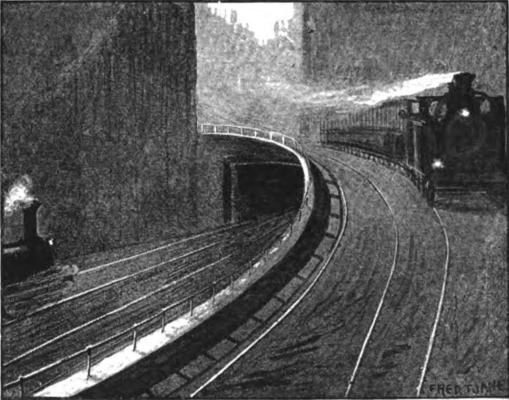
Bishopsgate Station

Under the Underground (shades of Artillery Lane)

Under the Underground

Aldersgate, the next station, was opened in 1865, and for many years was comparatively deserted by passengers. The opening of the markets hard by has altered all this, and it is now one of the principal stations on the line. All about this section we encountered other lines which sometimes dived under us, at other times merely diverged in various directions. Outside Aldersgate the line is ventilated by a series of arches, which give a fine effect of light and shade, making the tunnel look like an old-time dungeon.

Outside Aldersgate

Outside Aldersgate

From Farringdon Street to King’s Cross is the longest stretch without a station, and the driver here gave us an exhibition of full speed, and No. 18 came into King’s Cross at the rate of some forty miles an hour. The average speed of trains between one station and another is from twenty to twenty-five miles.

The road now began to be uphill, and at the same time the air grew more foul. From King’s Cross to Edgware Road the ventilation is defective, and the atmosphere on a par with the “‘tween decks, forrud” of a modern ironclad in bad weather, and that is saying a good deal. By the time we reached Gower Street I was coughing and spluttering like a boy with his first cigar. “It is a little unpleasant when you ain’t used to it,” said the driver with the composure born of long usage, “but you ought to come on a hot summer day to get the real thing!”

Fog on the underground appears to cause less inconvenience than do the sultry days of July; then the atmosphere is killing. With the exception of this one section (between King’s Cross and Edgware Road) I found the air far purer than I had expected, and the bad air so much complained of by the “sewer-rats”—as those who habitually use this circle are called in “the City”—is due in a great measure to their almost universal habit of keeping all the windows and ventilators closed.

Uphill from Kings Cross

Uphill from Kings Cross

The finest bit of scenery on the underground is the Baker Street Junction, where a second tunnel leading to the St. John’s Wood line branches out of the main one. It is no longer used for through trains, however, owing to a fearful accident that occurred here some time ago, and Baker Street is now the terminus of that line. On the left through the main tunnel lies the station, a medley in crimson and gold ; on the right the daylight creeps in, and the picture is a harmony in blue and silver. It is a novel and unexpected sight to see the ordinary black coat of respectability look crimson, as it does when seen after the intense blackness of the tunnel. But like all the other scenes, this was brief and momentary; then a dream of the past.

Baker Street Junction

Baker Street Junction

There is a similar and much-used junction before Praed Street, but it is provided with a big signal box where the tunnels meet.  The ventilating holes in the tunnel roof all about this part give a beautiful effect of light striking into darkness ; especially one before Edgware Road is reached, where the silver column of light fell on a green signal lamp, set low in the permanent way.

Approaching Edgeware Road

Approaching Edgeware Road

Just before Praed Street we got into daylight again—the line passing through a sort of valley formed by high houses on either side.

A bit of sunlight (near Praed Street)

A bit of sunlight (near Praed Street)

Hitherto, though we had passed many, I had scarcely noticed the trains that we met; but about here I changed over to the right side of the engine in order to get a better view of a coming train. I had not long to wait. Far away in the distance was an ever-increasing speck of light—the head light of an approaching train. A moment later, it had come and gone—a silent flash of light, so silent that it might have been a phantom; our own engine made too much noise for any other sound to be audible. Curiously enough, an approaching train is totally unlike what one would imagine it ought to look like. A strong light bursts from the furnace if it chances to be open, and illuminates the tunnel overhead, the carriage windows and brass work make lines of light that run off and die in the distance, but the engine itself is lost in the blackness through which it is rushing.

At High Street, Kensington, engines are changed so we jumped off—at least my guide did—my attempt to follow his example being calculated to cause an impression that I had taken the platform to be a seat—but all this is by the way. Engine No. 18 went off into a shed to rest awhile, and No. 7, a precisely similar one, backed on to the train in her place. This resting of engines is rendered a frequent necessity from the strain caused by the numerous stoppages ; incessant running in one direction has also been found bad for them as it wears away the wheels on one side sooner than on the other. To remedy this, the engines half their time run “backwards forwards,” as they say in the West of England.
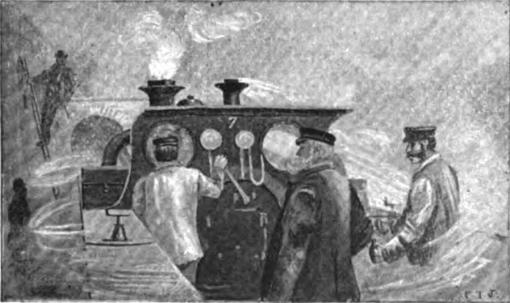
Bill stickers in danger at South Kensington

Bill stickers in danger at South Kensington

Off again; and this time down-hill. We dashed rapidly through the grass embankments outside Gloucester Road, past some men posting bills on the advertisement hoardings that border the line below South Kensington, now deep in a tunnel, now traversing a cutting open to the sky; until we shot once more into St. James’ Park, seventy minutes after leaving it. We had covered some thirteen miles in our trip round London; seemingly no great distance for the time occupied; till one recollects that it entailed no less than twenty-seven stoppages, with a watering and change of engines into the bargain.

It is these stoppages that make the journey as long as it is ; if a train went round at its usual rate it would be back at the starting point in less than forty minutes, while if it went full speed some twenty minutes would suffice.
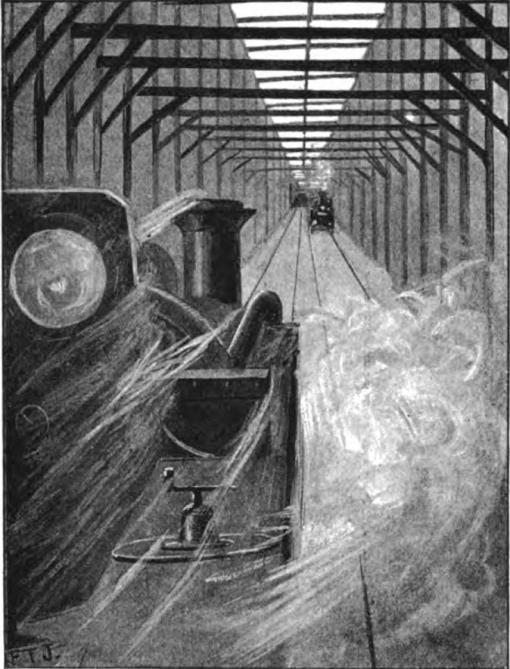
Passing through a "lung" near Sloane Square

Passing through a “lung” near Sloane Square

However, the seventy-minute trip is quite rapid enough for all practical purposes, and is only rendered possible by the excellence of the brake arrangements, and the perfection to which the block-system of signalling has now been brought. The length of the stoppages could not well be reduced, indeed they are already too short if we are to believe the tale now current of a wandering Jew sort of passenger—a lady of advanced years who can only alight from a train backwards. Every time she begins to get out a porter rushes up crying, “Hurry up, ma’am; train’s going!”—and pushes her in again!

“This finishes our journey,” said the inspector, as, taught by previous experience, I cautiously crawled off the engine,—”unless you’d like to go round again.”

I declined.

*Alfred Powell was manager of the Metropolitan District Railway Company from 1885 to 1902 when he retired by reason of ill health.
Posted in Out and about, Prototype, Weird and wonderful | Tagged , , | 1 Comment

ESNG – What’s in a name?

A guest blog by Paul Rowlatt, written back in 2008, but still a good one.  How wrong can you get about a name – we are of course the only real ESNG!

In 2007, there was a debate amongst the group about what our acronym, ESNG, should stand for after our departure from the N Gauge Society ranks. Earlier this year, I gained regular access to the internet and as a result, I have looked into ESNG in the wider world. A search produced 28,700 references of which I have listed a selection below.

  1. eSNG – A Canadian company based in Toronto who specialise in computer hardware. They seem to have quite a good reputation.
  2. ESNG –Electronic Systems and Networking Group. A research group based at the Department of Biophysical and Electronics Engineering at the University of Genoa in Italy.
  3. ESNG –Eastern Shore Natural Gas – The interstate natural gas pipeline subsidiary of Chesapeake Utilities Corporation based in Dover, Delaware, USA. Listed on the New York Stock Exchange.  It is a big company.
  4. esng – A range of bagging machines made in France. They come in various sizes depending on what you are trying to put in bags.
  5. ESNG –East Sound N Graffic – A promotions company that works with all types of artists in the entertainment business, but mostly hip-hop groups.
  6. ESNG – A type of microchip, but quite what, I can’t fathom out!
  7. ESNG – The airport code for Gallivare in Sweden. Because of its northern location, it is also known as Lapland airport. I wonder if Santa has a hangar for his reindeer and sleigh there.
  8. ESNG –Easter Seals North Georgia. This group works under the Babies Can’t Wait scheme which helps parents whose babies have developmental problems. They are based in Atlanta, Georgia, USA.
  9. ESNG Group INC – A shipping company based in China, with links to the USA.
  10. ESNG – Elsevier Society News Group – A medical newspaper group based in the USA.
  11. ESNG – Enterprise Storage Networking Group. I haven’t made this up, this really does exist!
  12. Esng –Escagenetics Corporation. A genetic engineering research company in the USA.
  13. esng – Electrospineurogram. A medical test for the nerves around the spinal cord.
  14. esng – A device used by Arabic engineers, but what it is for, I have no idea.
  15. ESNG –Electric Systems and Networks. This company is based in Khabarovsk, Russia and sells stand alone generators and other electrical equipment.

So there you have it, we are not alone. We appear to be the only ESNG that has anything to do with model railways, but I will let you know if I find anything in the future.

Posted in ESNG, Weird and wonderful | Tagged | Leave a comment