Review of 2013

It seems to be the done thing to produce a review of the year.  So what did 2013 bring for the Budgie:

  • A total lack of modelling for 8 months, thanks to too much engineering to do, especially Chinese dams, an Australian dam break mathematical model, and sewage works in Toronto and Vancouver.
  • Thanks to my antique appendix, and its removal, modelling kick started in September, and I’ve made more progress in the rest of the year than the past 18 months.
  • A successful ESNG exhibition in April was very satisfying.  (I’d better organise the next one ready for April).
  • Another visit to Stuttgart was great fun.
  • Model of the year was the Farish Blue Pullman.
  • Books of the year were publications on the Lehigh Valley, Pacific Electric, Central California Traction, the Ventnor West Branch and the Wisbech and Upwell Tramway.

And will 2014 be any better – who knows….

Posted in ESNG, General | Tagged , , , | Leave a comment

Layout design – different voices – simple layout, complex operation

Another interesting voice in the layout design world is Lance Mindheim, who most originally posts at http://www.lancemindheim.com/.

GMR47pic

He has built a number of very interesting layouts.  The first was a 20×20 foot N gauge layout of the Chicago, Indianapolis and Louisville or as it’s usually known, the Monon in Indiana in 1955.

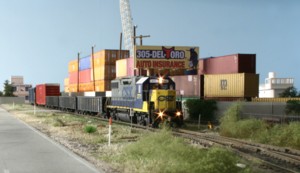
He then moved to modelling modern-day Miami in HO.  The small East Rail was a 10×10 foot L-shaped switching layout.  Simple, but lots of operation.

ZopsSmall images

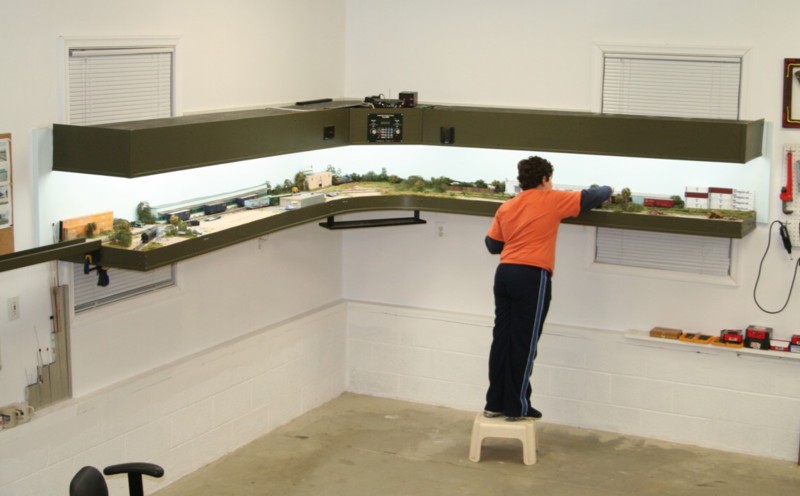
The room-sized Downtown Spur occupies the full 20×20 foot of the railway room.  It is wonderful modelling, and a couple of photographs in a recent Model Railroader article really could have been the real thing.

Ant300 CourtyardSouthThumb

So, what are the design points we can learn from Lance’s brilliant modelling?

  1. The ordinary makes a good model.  It’s better to model a realistic square concrete box of a warehouse, than some fancy, and unrealistic, building.
  2. Switching takes time.  There’s the time at each road crossing.  There’s the flares to light at ungated crossings.  There’s the time to uncouple or couple the wagons.  There’s the time taken to walk from one end of the train to the other.  There’s the time taken to unlock points and relock them after switching.  It all adds up to a slow procedure if its done realistically.
  3. One siding can act as three or four, if there are a number of different industries, or different doors on a single building, that need cars spotted in front of them.

Lance’s blog includes a number of deceptively simple switching layouts.  But if operated as the prototype, even a couple of sidings can offer an hour or two’s instant entertainment.

(All pictures, from Lance Mindheim’s website)

Posted in Inspiration, Jon's layout ramblings, Layout design | Tagged , | 2 Comments

ESNG meeting – 2 January 2014

Well, who was going to turn up at the first meeting in 2014?

We got a very creditable nine members in attendance, including Ian back after time out for a broken arm.  So we had a full circuit up and running.  It was nice to see a US train on the circuit, thanks to Dave Stewart.  Two Union Pacific RS-somethings pulling some long tankers and a string of boxcars.  There were also a number of the new Farish Bullied coaches in attendance.  Very nice, and the similarity to BR Mk 1’s is obvious.

Minor excitement was caused by Derek the Apps’ Farish 2-6-0, that seemed to keep stopping on rail joints and points.  A close look showed that the front guard irons were very close to the track.  Allan suggested ‘gelding’ the loco with a set of rail cutters.  Sanity won the day, and Derek will apply a needle file to the offending objects.

So that was the first meeting in January….  Next stop, a curry evening on the 11th.

Posted in ESNG, ESNG meetings | Tagged , , , | Leave a comment

Jon’s modules – the thrill is gone…

large_4371674196

According to B.B. King and numerous other bluesmen.

You may have noted how my module posts have slowed up.  I seem to have been distracted from railway modelling over this Christmas.  Perhaps it’s the fact that I’ve now laid all the track and I’ve got all that exciting wiring and ballasting to do before I get on to the scenery.  Or maybe it’s the arrival of Bishop Tom Wright’s 1600 page magnum opus on Paul that has provided some good reading.  Or perhaps some rather non-festive music, amongst others the remixed versions of Eric Clapton’s 461 Ocean Boulevard, and a double album of John Lee Hooker playing the blues backed by Canned Heat.

No worries….  I’ll soon have my mojo working again!

Posted in Inspiration, Jon's layout ramblings | Tagged , , | Leave a comment

And a Happy New Year

Who knows what 2014 will bring?  There are some very interesting models promised by the UK manufacturers.  I am very much tempted by the Farish Merchant Navy and Dapol’s 33 and Maunsell coaches.  But no doubt they are still stuck in some Chinese factory.  Perhaps I ought to be realistic and limit myself to the Hornby Brighton Belle.  From the photos in Railway Modeller, it does seem to be progressing and looking about right.

As for Continental Europe and the USA, I’m not sure what is happening.  Again, they are probably slowed by the Chinese economy.   Maybe the area to watch is 3D printing and the Shapeways site.  The quality of 3D printing seems to improve by the week, and the levels of detail are certainly as good as resin cast models.  There are some very interesting interurbans in N gauge on the site, but no-one has ventured – yet – into a Pacific Electric car.  Now that would be a quick purchase….

Posted in General, The trade | Tagged , , | Leave a comment

Off my trolley – a new design series

As I continue to make good progress on my modules, the armchair modeller in me is already thinking about another layout.  I have this irrational urge to build an N-gauge US trolley or interurban layout – sometimes known as a ‘traction’ layout.  Not easy, with the materials available, but still an attractive proposition.

In these posts, I’ll try and look at some possible designs, but firstly, what is a trolley and what is an interurban and why model them?

In the UK context, for ‘trolley’ read tram – like the systems that once graced our cities.  ‘interurban’ read ‘large trams’ or ‘EMUs’ running between towns and cities.  There was also often a freight service interchanging with the conventional railroads, handled by small – or in some cases very large – electric locomotives.  Perhaps the UK equivalents are the modern LRT systems such as Croydon and Newcastle that run on public streets, but in places have taken over redundant portions of the rail network.

So traction equipment can cover a spectrum ranging from interurbans, colourful urban trolley lines, modern light-rail systems and elevated rapid transit systems.  In the USA, a number of railroads, especially in the northeast, but also in San Francisco, also went electric.  They ran commuter services with EMU’s much as we find into London, but some ran all services by electricity.  The famous GG1 class electric comes to mind here.  These systems, interesting as they are, are a step up from trolley and interurban modelling.

Interurban and trolley lines often were built with tight curves of smaller radius than we use in our mainline models.  This makes them ideal model railroad subjects, especially in the larger scales.  Interurban equipment often ran on trolley lines as well as their own rights of-way to link city centres together.  Given the limited space many of us have for a layout, traction could be the ideal solution for combining operation, intriguing equipment, and interesting, short, trains.

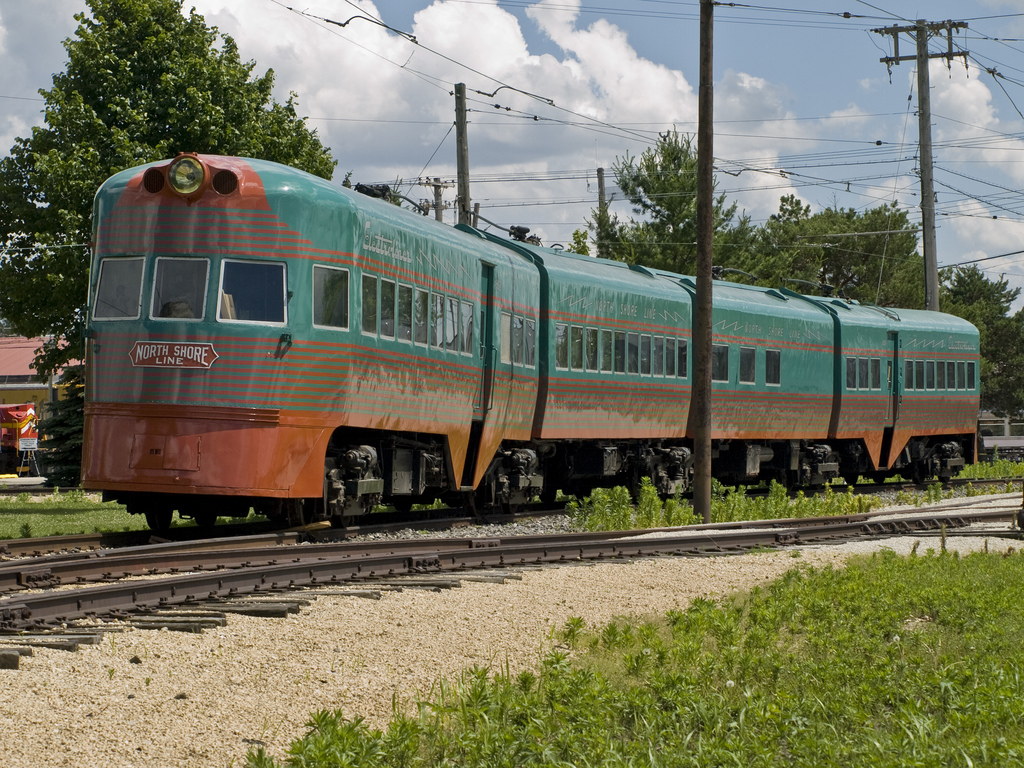
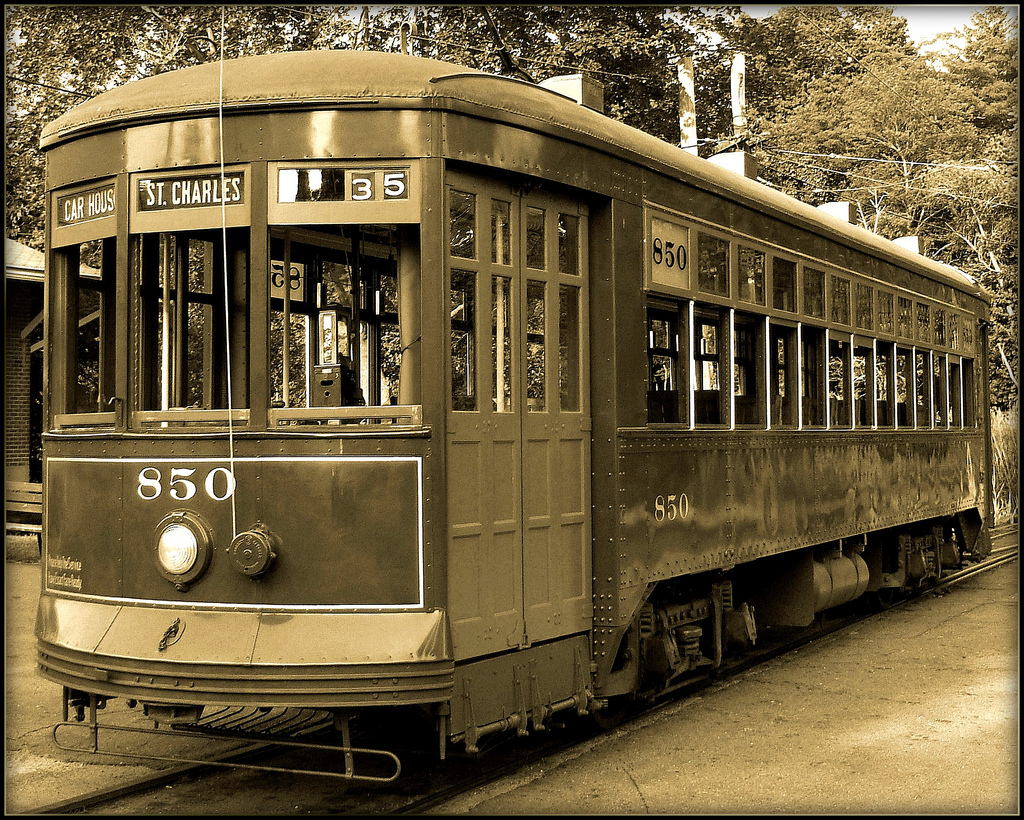
The photos below show some typical traction equipment (photos, creative commons).

large_2608236857 large_2676649224

Next time, I’ll look at the potential of trolley modelling.

Posted in Jon's layout ramblings, Layout design, Traction | Tagged , , , | Leave a comment

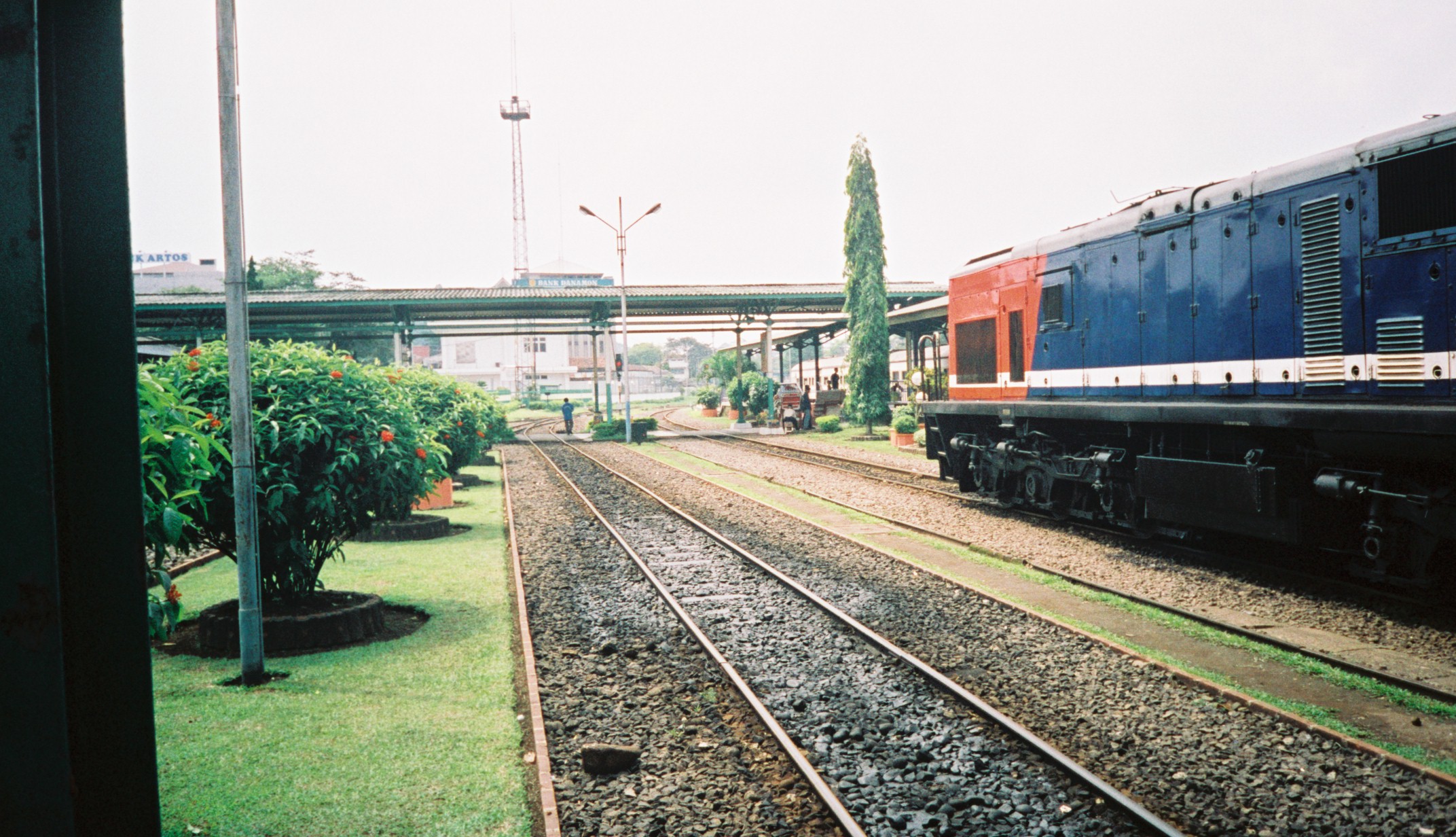
Java junction

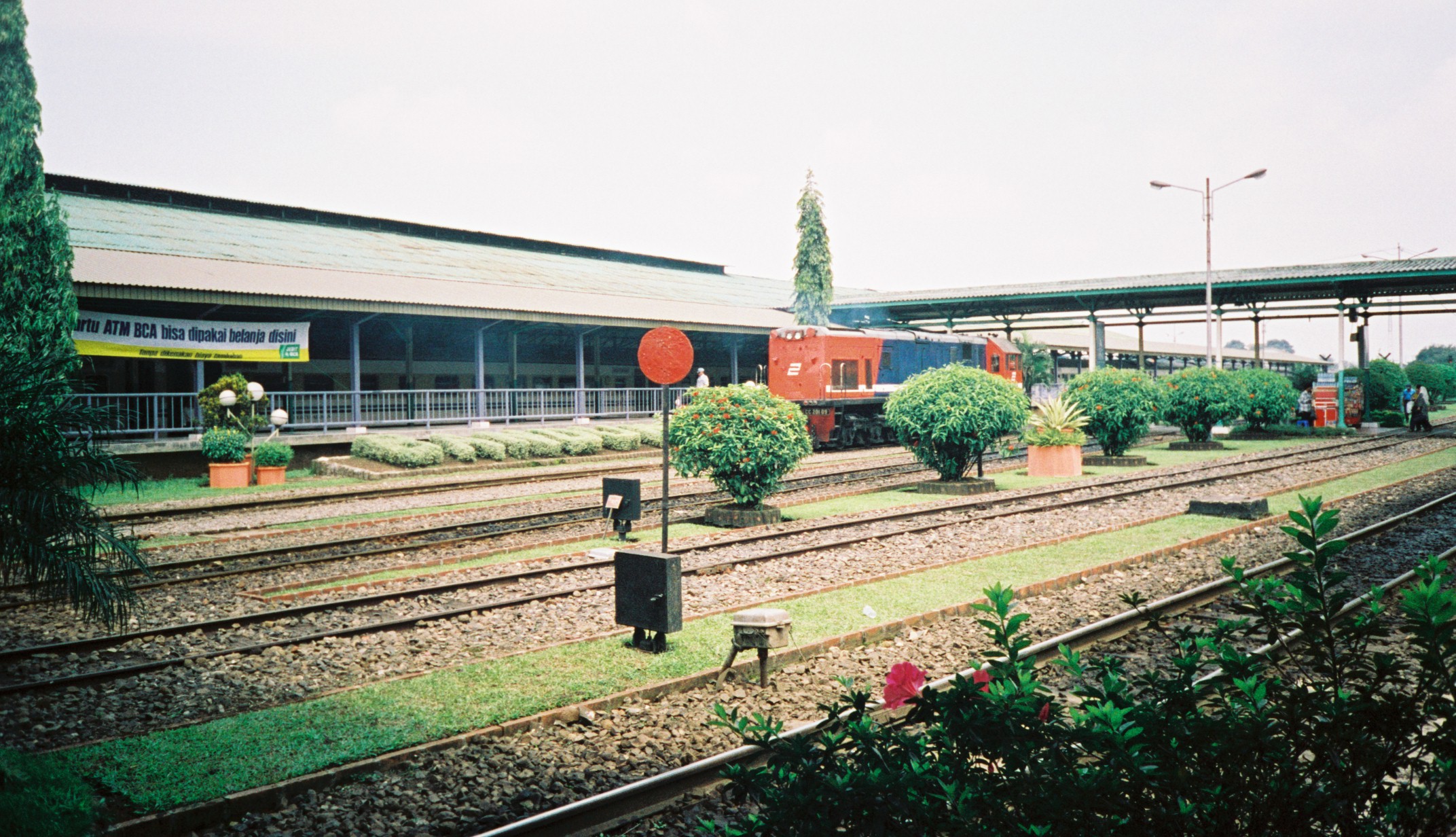
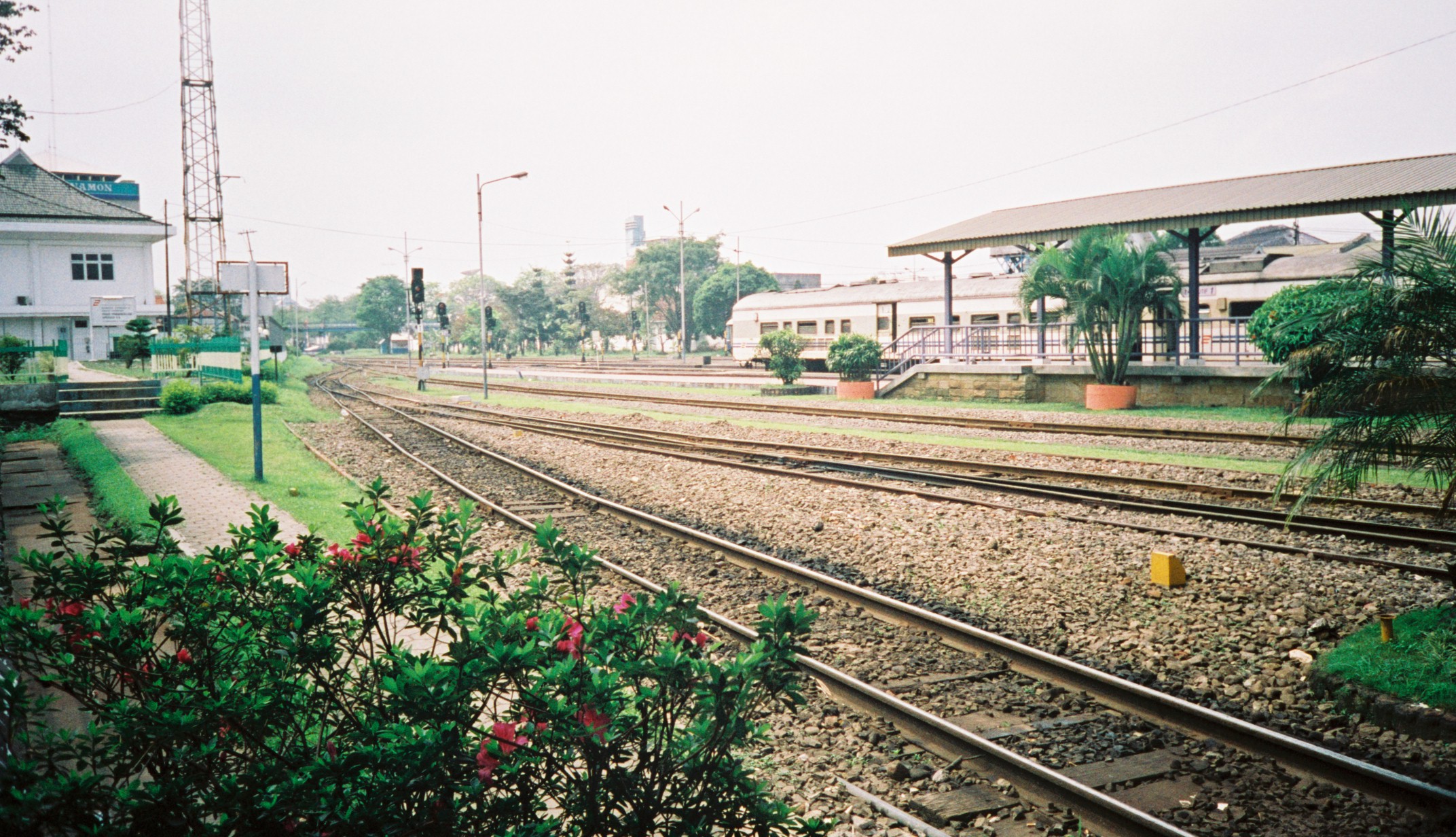
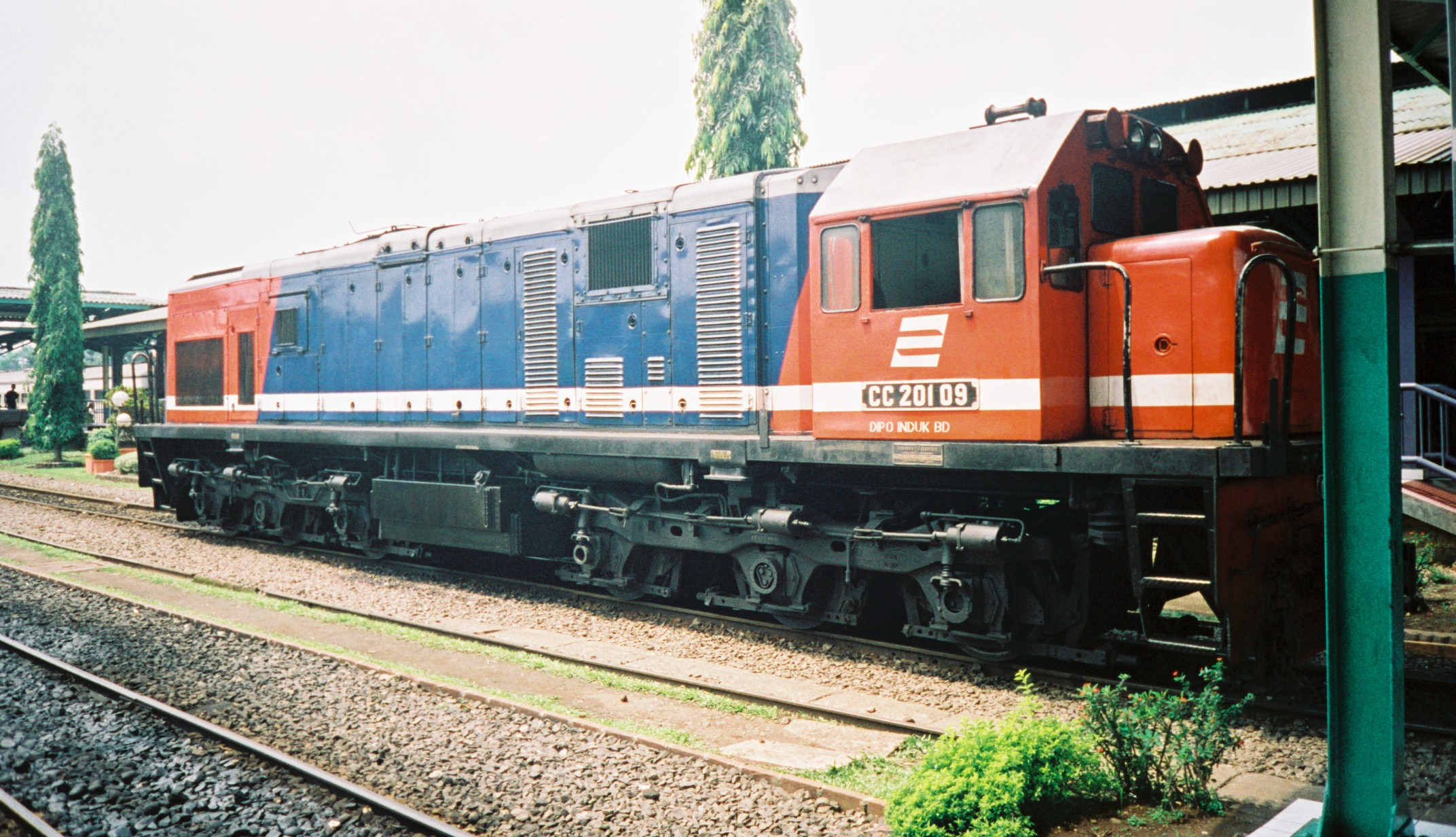
Keeping the overseas flavour, here are four shots of Banjar, Java, and some Indonesian trains.  A modelling point I liked are the grassed areas between tracks.  You don’t see those at Clapham Junction!

java1 java2 java3 java4

Posted in Out and about, Prototype | Tagged , , | Leave a comment

Christmas greetings

A very blessed and happy Christmas to all (both) my readers!

large_2253210318   medium_8313310120
Photo credits: Creative commons, Raela9 (left) & Base Camp Baker (right)
Posted in General | Tagged , | Leave a comment

Quote of the week

From “Branch Line to Upwell” in the Middleton Press series of albums, describing the well known ex-Great Eastern steam (and finally diesel) tramway:

Rev. Teddy Boston, who moved to Wisbech in 1950, was a (sic) ardent railway enthusiast and often travelled on the footplate wearing his cassock and dog collar.  Charlie Rand recalled the occasion when Teddy shunted wagons into the middle siding beside Wisbech shed.  “He gave them such a wallop that they demolished the buffer-stops”.  The official explanation given to Station Master Rose was that the engine had slipped.  It would not have been in Charlie’s best interests to reveal that the Curate of St. Peter’s Church had been driving!

medium_3455766801I can remember Teddy Boston writing about his GWR layout in the Model Railway News in the late 1960’s.  But there is an added family interest as his brother, Rev. Billy Boston, was the vicar who married my parents in East Dereham in 1947.

Photo credit: Phil Parker

Posted in Prototype, Weird and wonderful | Tagged , | 2 Comments

Jon’s modules – staging a fiddle

Or to put it another way, how am I going to add the fiddle yard (UK usage) or staging (USA) to the short line?  I thought I had this all worked out, but once again reasoning through the options came up with a different solution, as shown below.

lvr_fiddle

Option 1 in the sketch was my additional thought.  I could add another N-club 800 x 400mm module at right angles to the main boards.  This could hold a fiddle yard, or form the basis on an N-club single track branch.  However, it does stick out into my loft room a long way, and is less than ideal as far as home use is concerned.

There is also quite a sharp curve into the fiddle yard – I was considering using PECO Set-track radius 4.

Option 2 is another approach.  Here, the fiddle yard lies at an angle to the main boards.  It solves the curve problem, and takes up less space, but it is still less than ideal.  Somehow, it just doesn’t look right.

So we end up with option 3.  Why not put the fiddle yard behind the main lines on the first 800mm board?  There is room for a road switcher, 4 x 40 ft cars and a caboose – a reasonable short line branch train.  This option can hug the wall and is better from a household point of view.  It is less prototypical, as the branch doesn’t curve away through 90 degrees, but I am not trying to exactly model Roselle Park.  Overall, this seemed to be the best option.

There are a couple of issues, though.  If I put points into the fiddle yard, I can only really have two storage tracks.  It would be nice to have three or even four, but even a two track yard will provide two trains for switching, and a pleasant hour’s operations.  If the model goes to a show, a little hand shunting will be in any case be needed after the two trains have returned to the yard to reverse the loco and caboose, and stock could be changed.

Alternatively, using cassettes for storage could both allow trains to be moved onto or off the layout and also allow them to be reversed.  However, I do have unpleasant memories of cassettes at an ESNG show, and an Atlas locomotive hitting the floor.  Perhaps it’s time to give them another go?

The other issue is how to hide the fiddle yard.  A standard USA trick is using large industrial buildings.  This would work well enough, but I wanted to give the layout a more rural appearance.  A high steep hillside or cliffs will look out of place, though I have some good pictures of the Lehigh Valley running next to a set of low bluffs.  It is also difficult to blend the hillside into the module end and a connecting module.  I think the best option is a low bank about the height of N-gauge stock plus a bit – perhaps only 50mm high.  This will be densely wooded, hiding the tracks behind.

I’ll post some pictures when final decisions are made and the track’s all in place.
Posted in Jon's layout ramblings, Layout design | Tagged , , , | 1 Comment