Surely this must be on my bucket list for next year? Perhaps an ESNG expedition???
And meet the builders….
Surely this must be on my bucket list for next year? Perhaps an ESNG expedition???
And meet the builders….
From Facebook….
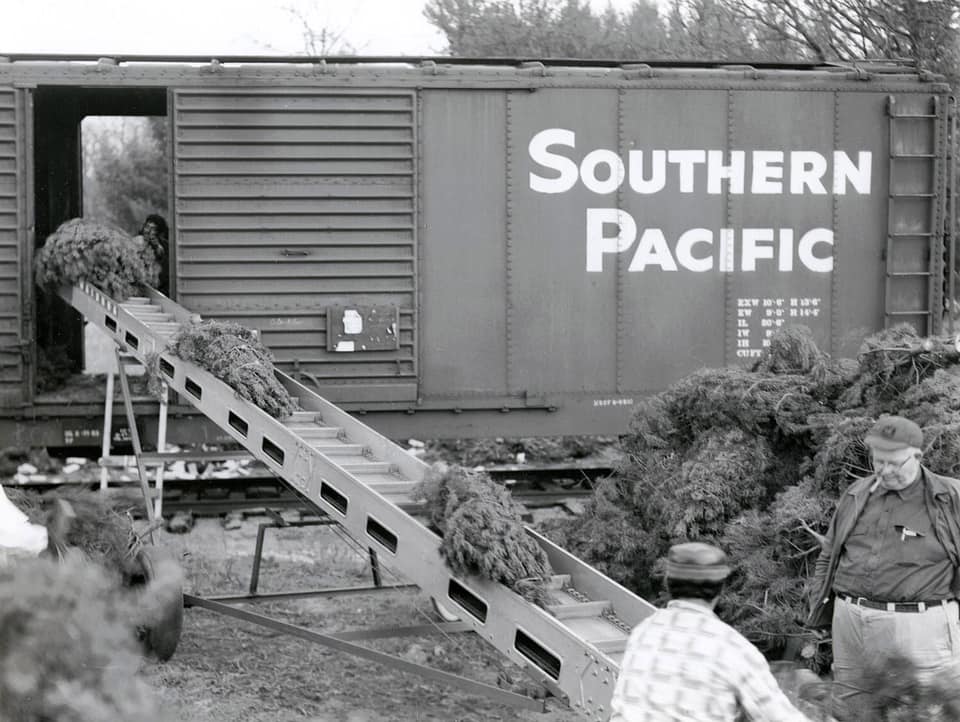
Christmas trees bound for Texas in November 1964. SP box cars loaded by conveyor at Kirk, Minnesota, Christmas tree grower. The company had 1,750 feet of rail spur and could load 32 cars. They used 180 railroad cars in 1964 to ship nearly 200,000 trees to Texas and other states. (Photographer Floyd Hoverter; Wisconsin’s Historic Natural Resources Photos; The State of Wisconsin Collection; University of Wisconsin Digital Collections.)
And a hint. Please don’t lay track after a large festive (and fluid) lunch….

From the Guardian:
Charles Dickens’s final Christmas turkey lost by Great Western Railway
Rediscovered letter records that 30lb bird was dispatched by train but transferred to a replacement coach service that caught fire.
Charles Dickens’s stoic response to the destruction of his Christmas turkey in a train fire has been revealed in a letter rediscovered at the National Railway Museum in York, in which the author says he “bore the loss with unbroken good humour towards the Great Western Railway Company”.
Dickens, whose love for the seasonal bird came through in books such as A Christmas Carol, was sent the turkey in Christmas week of 1869 by the manager of his reading tours, George Dolby. Dickens was often given a turkey as a Christmas present; according to Dolby’s memoirs, this particular bird weighed 30lb. The festive package took wing from Ross-on-Wye in good time to reach the author on Christmas Eve, but Dickens sent an urgent message to Dolby that day: “WHERE IS THAT TURKEY? IT HAS NOT ARRIVED!!!!!!!!!!!”
The turkey had been moved, along with other parcels, to a horse-box carriage in Gloucester, which had subsequently caught fire. The charred remains were later offered to the people of Reading, for sixpence a portion.
Perhaps Dickens should have gone to Tescos?
Last ESNG meeting of the year, and I wasn’t expecting many to turn out on a cold, wet, night just before Christmas. But there were 10 members present, including the Cha(I)rman, despite his early milk round the following day. The festive season was duly marked by a large number of mince pies being eaten.
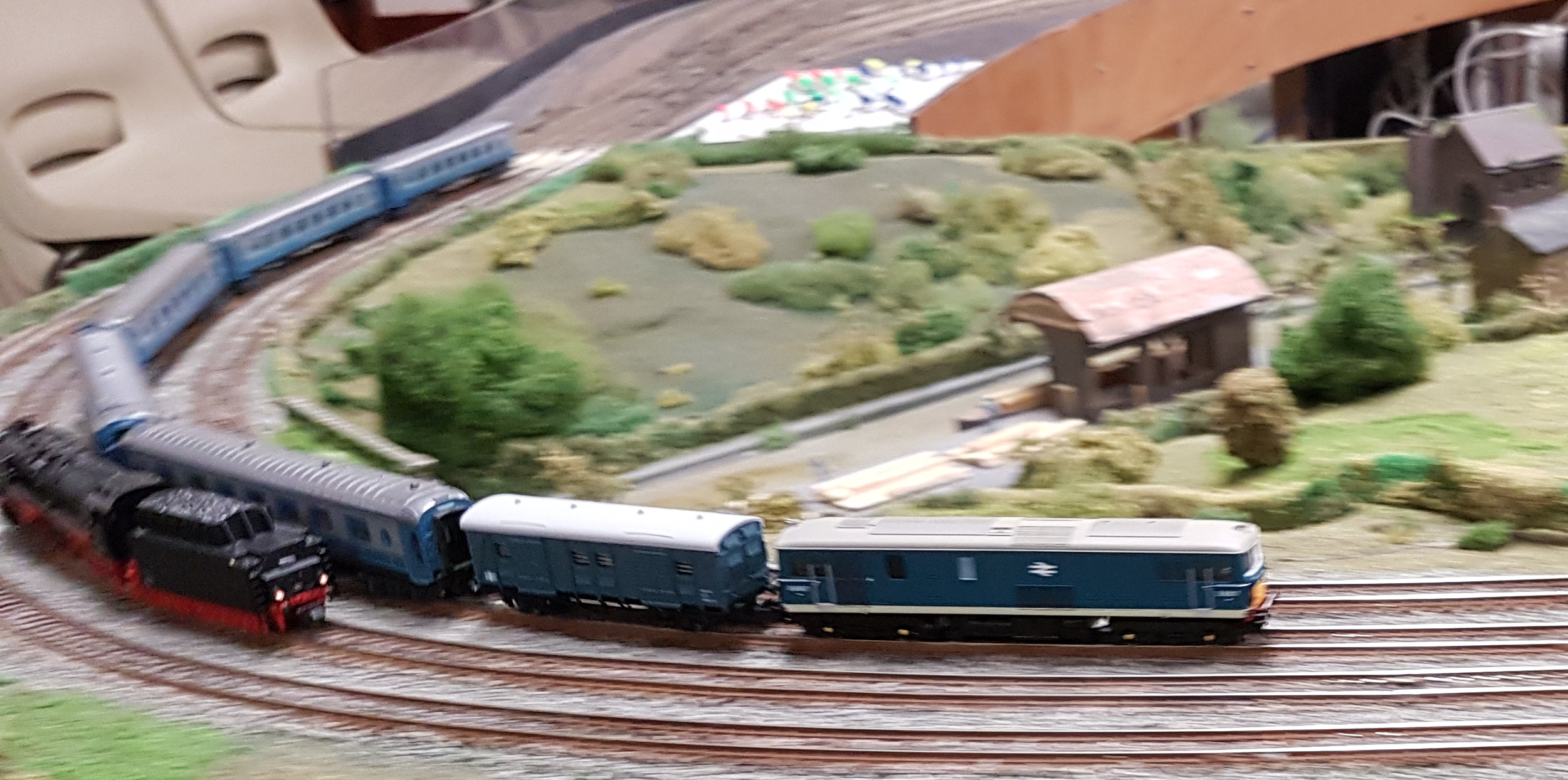
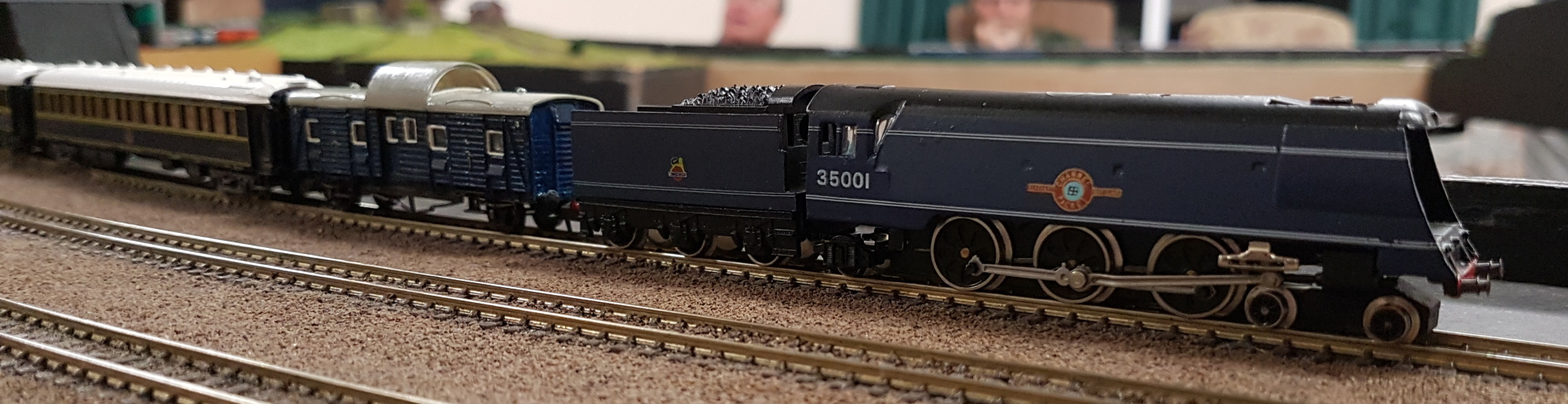
Derek was running both the Golden Arrow and the Night Ferry….

Again trawling the Traction Facebook site. Volkmar Meier has some interesting 3D printed interurbans and streetcars on Shapeways. But here he looks at getting the trolleys to go round in ever decreasing circles….
Tomytec drivers, have you ever wondered about the minimum radius, specially of the TM-TR01 and TR04 streetcar drives ? The smallest commercial available N scale radius is the Tomix track with R=103 mm (about 54 ft), and I never tried to go beyond.
But, in a hint of recklessness – and firmly decided to fail – I made a batch of trackbeds with decreasing radii. Starting with 86.5 mm (45.4 ft), down to 74.5 mm (39ft) and now 63 mm! (33 ft).
Bigger drives, like the TM21 still take the 86.5 mm curves. The smaller streetcar drives TR01 and TR04 are able to turn on 63 mm. Now, in a last attempt, I will go down to 59 mm (31 ft). I think that the TR01 will still go through, perhaps with a little tuning. Then I will stop …To give a size: A common streetcar and Interurban radius in the US was 45 ft, Toronto has 36 ft curves, Philadelphia 34-33 ft, and some extinct networks as few as 30 ft
It’s interesting isn’t it – for most modelling, the radii on our layouts are way below those on the prototype – usually a generous minimum radius on the layout is about the same as the prototype minimum curve in an industrial yard. But for traction, the opposite applies – it’s difficult to get the model to go around prototypically small curves. This is presumably due to getting the drive from the motor onto the pivoting trucks. Anyone for ‘N’ gauge axle hung trucks (it has been done in ‘O’ gauge.)
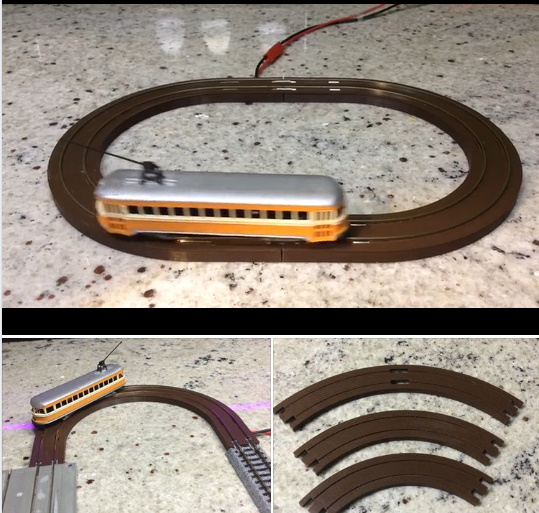
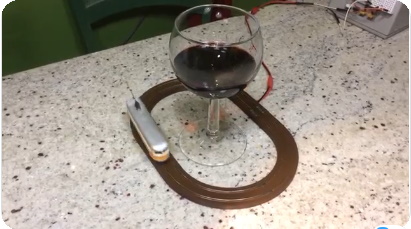 The prototype…. (From Jarrod Allan Henry’s post in New York’s Railroads, Subways & Trolleys Past & Present.)

And a late addition…..
Less is more: with extreme radius curves, there is plenty of space for an entire return loop for city cars/small interurbans on a single 248 x 155 mm module (9.76 x 6.10 in)

A few weeks ago I posted a link to the little micro-layout of the Japanese Gakunan line. I’ve included the track layout and another picture below…


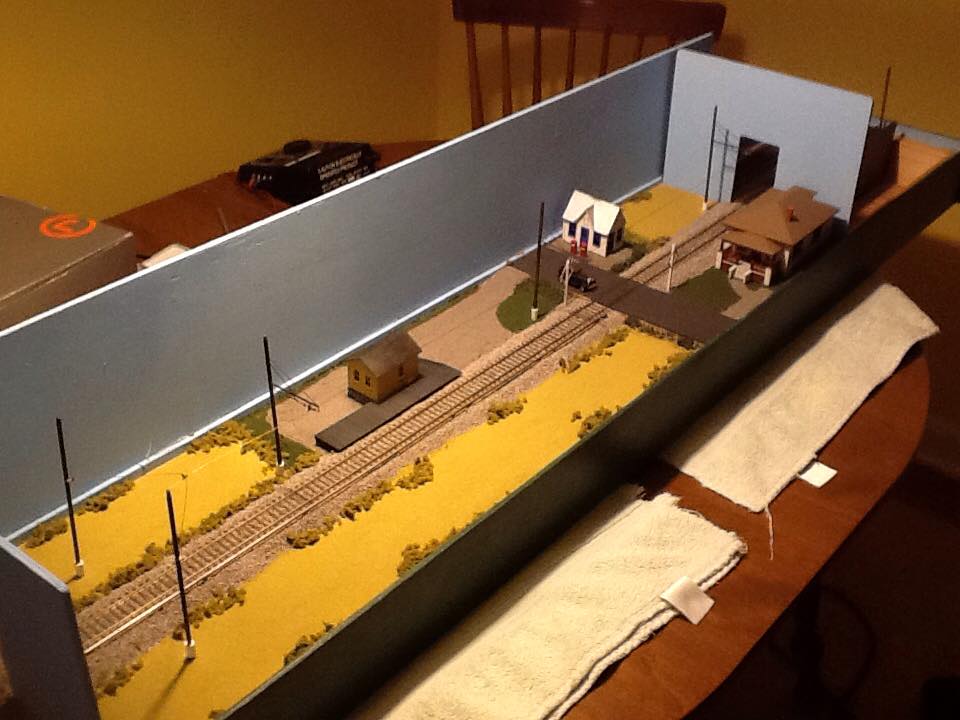
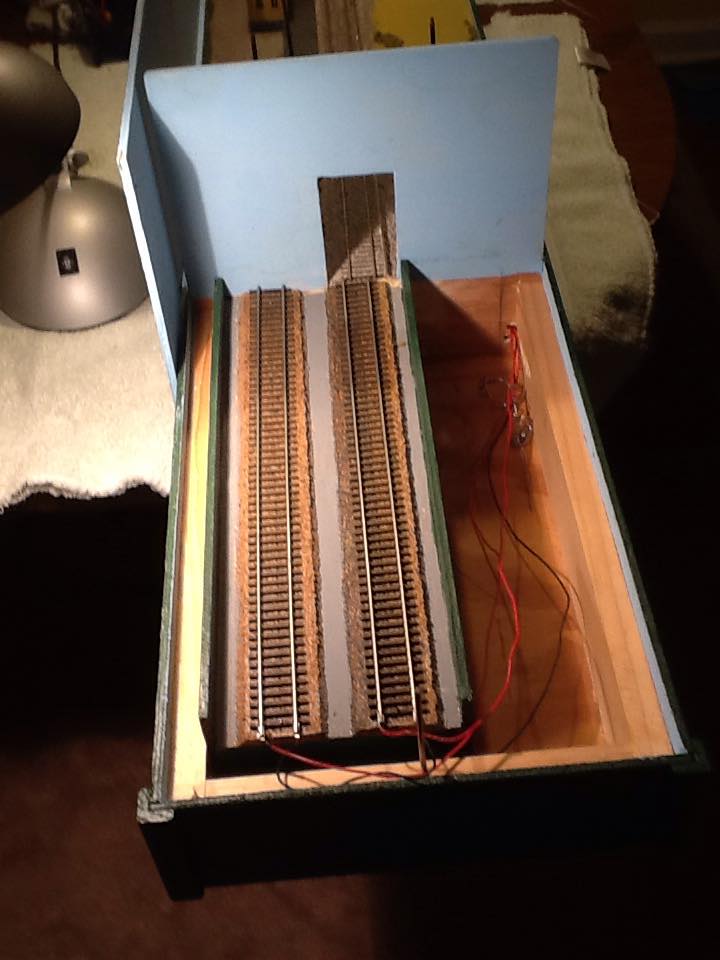
I recently joined the Facebook ‘Traction Model Railroading’ group, that is full of inspiring pictures. This included the a micro-layout of the Sacramento Northern. A ‘pointless’ layout (with a traverser at each end), yet it accurately models the point where the SN transitioned from overhead to third rail – a bit like Thameslink but in the desert! This is another very simple design, but a good background for interurban models.

After 43 years working for the same company, I paid my last visit to work today. As I have been working part time and on zero-hours, I submitted my final invoice, and handed in my computer and door card.
Truly the end of an era, and it’s a case of, “So Long, and thanks for all the fish.”
On the whole, I’ve had a lot of fun and intellectual challenges, worked with some great people, and seen some interesting places. I now have to get down to that modelling I never quite had time for!
My overseas work started with designs for the cross-drainage on the first motorway in the Hong Kong New Territories…..

And went on to look at drainage through much of Hong Kong…..
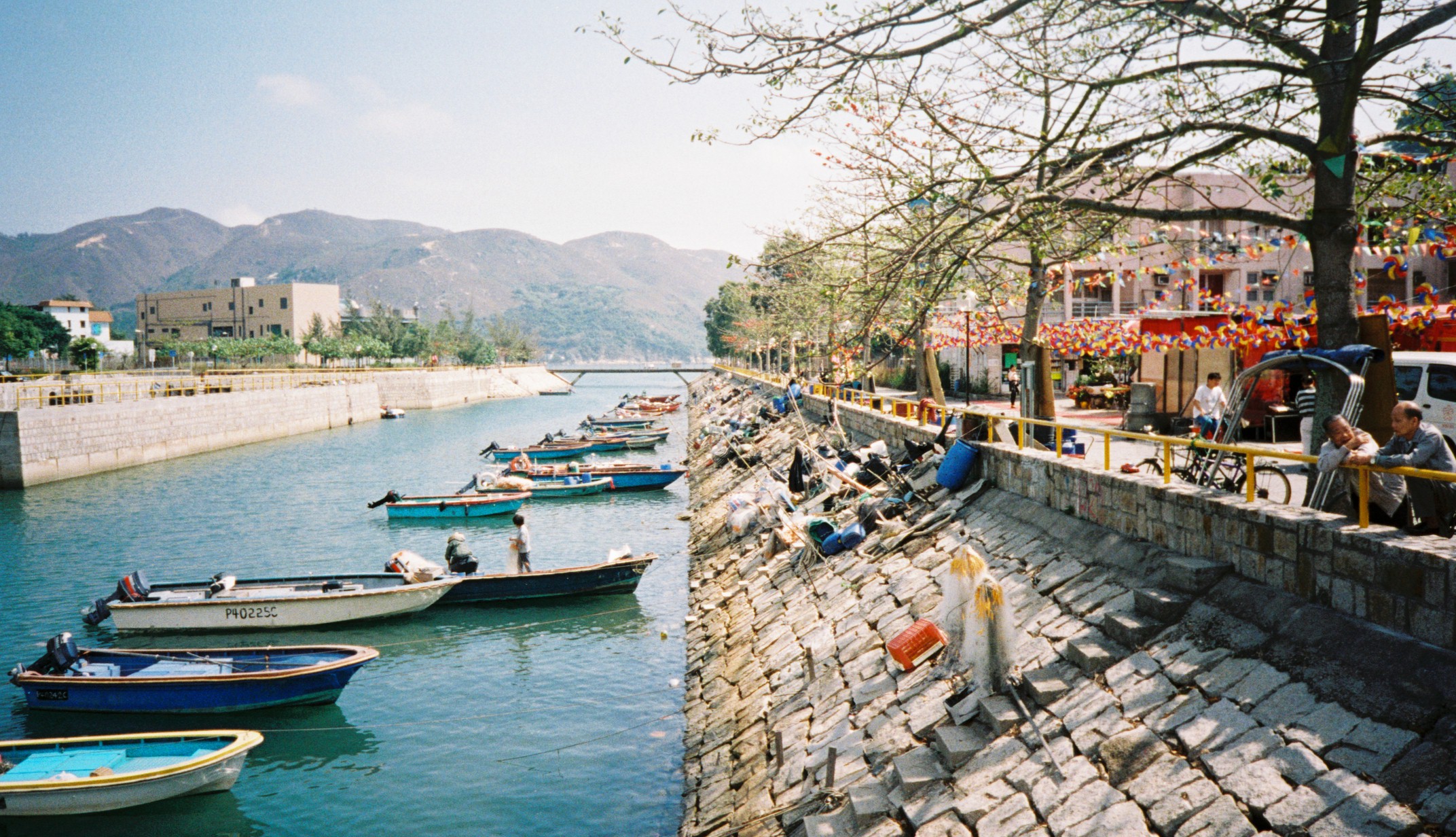
Widening out to irrigation and water resources in Thailand…..

And rivers in Indonesia….

The last 15 years included visits to pre-ISIS Syria, looking (believe it or not) at flooding and potential washout of gas pipelines…..

And in the mountains of Georgia (ex-Russian version.)

And that’s just the edited highlights!!! In the immortal words of the Grateful Dead, “What a Long Strange Trip It’s Been!”
Brian has been testing his Brighton Belle….
“This is not supposed to be a spoiler, but I couldn’t help but be impressed by the detail on The Brighton Belle 5BEL from Arnold – it shouts quality”
And how about these end loops. The idea is to drop the track from top to bottom of the baseboard, so that the baseboards can be stored face to face.


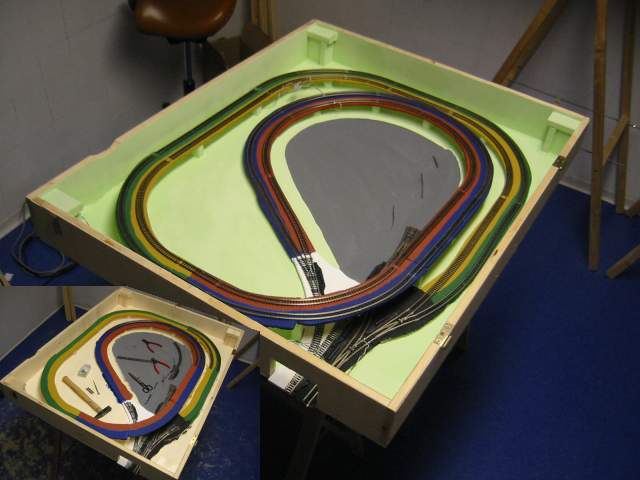
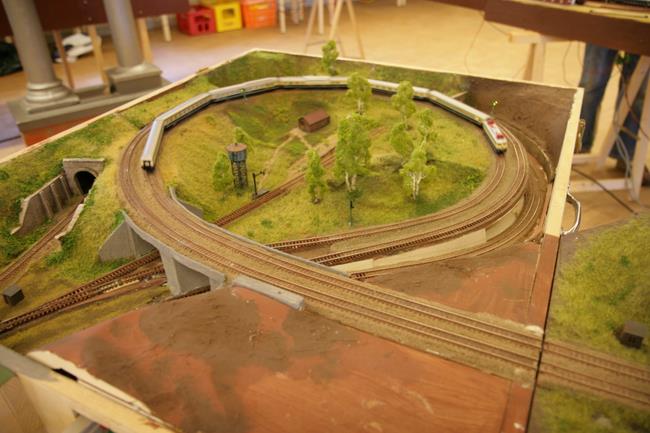
They come from this German site that needs translating, but has some interesting content: Modulbau: Bauphasen in Bildern
I have been continued to think about the best design of end loops for our N-club modules. I was impressed by this loop next to us in Stuttgart this year, with its internal sidings. I have also been spurred into action by Derek’s superb baseboards for the new club fiddle yard – though I could never complete any carpentry that good!
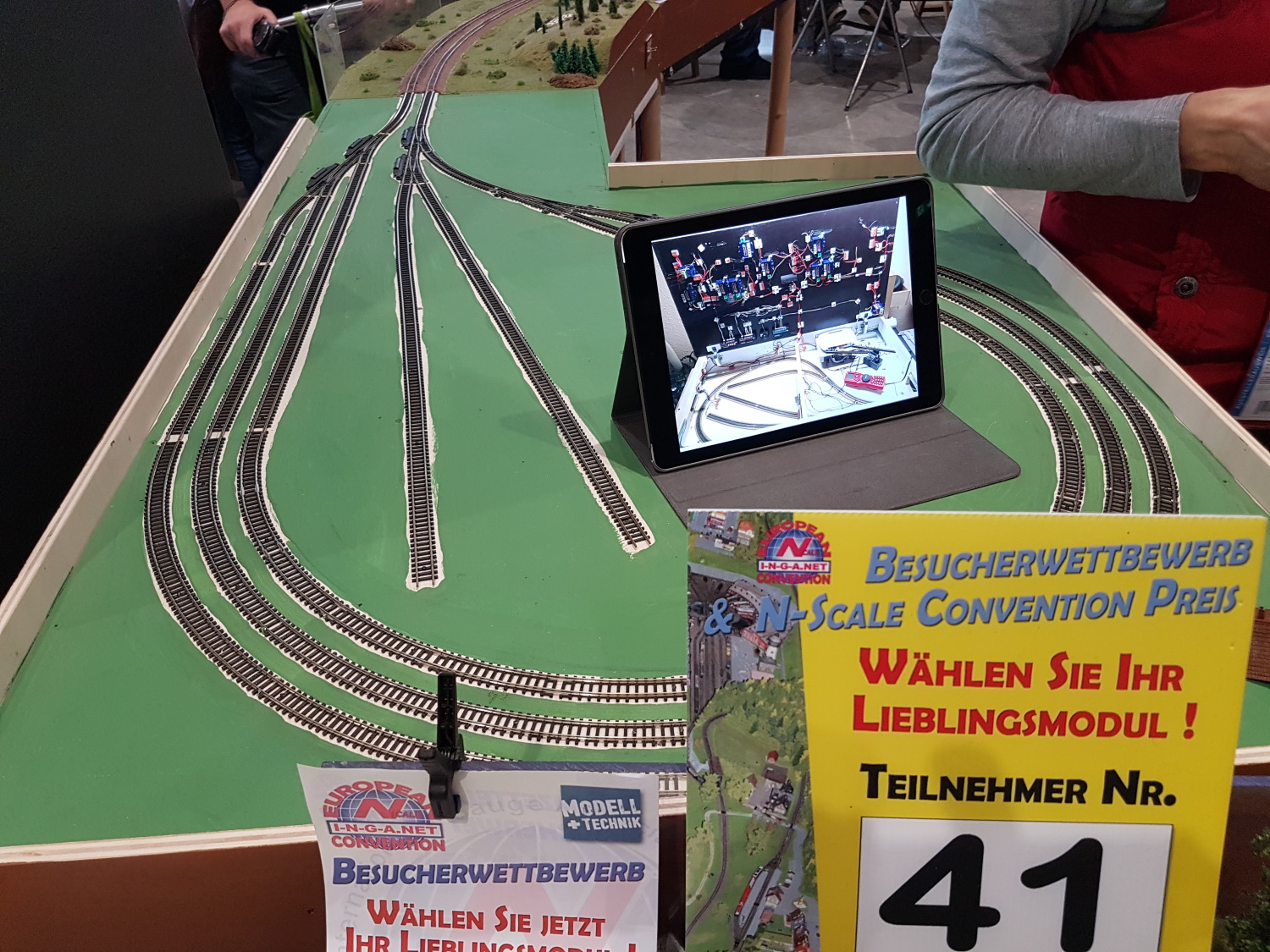
So I went back to playing with the design software, and came up with this design. The end loops are Peco Set-Track #3 and #4 plus one larger curve. The two inner sidings are bi-directional and can be used to reverse short multiple units and push-pull trains.
The overall size of the board is 1200 x 800 mm. I did look at the potential for a fold in the board to make it smaller for transport. However, I’ve decided that this just over-complicates things. There is no scenery, so the boards can be shallow. Further, as there is only one joint to the outside world, there is no tension on the boards due to being clamped into a line of modules. Lighter, 6mm ply (but good quality ply) will be strong enough for the loops.
Now all I have to do is make them…..

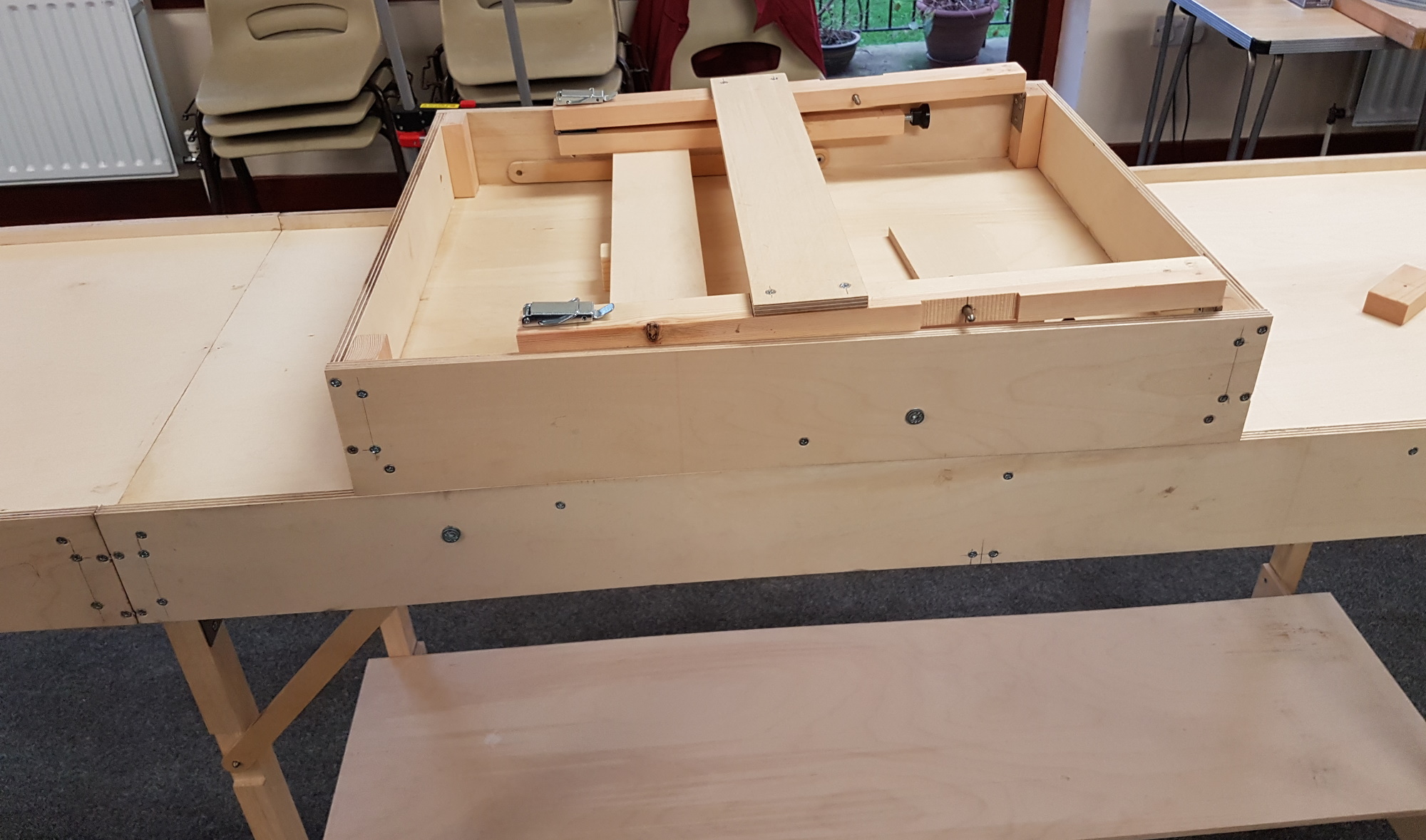
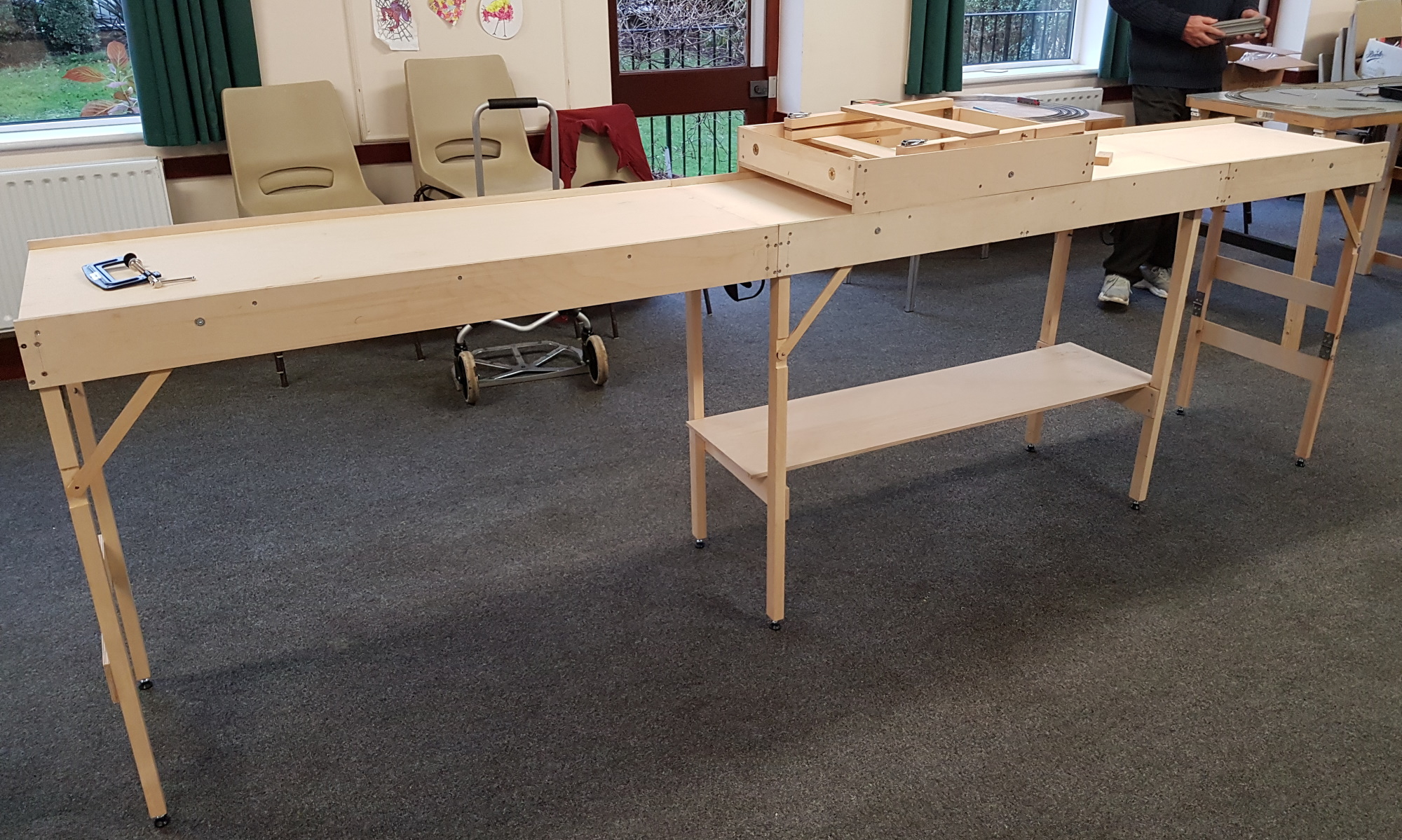
This afternoon was the first ESNG ‘BuildDay’ and it has been a success, I think. We had 8 members along, together with a number of projects to work on, observe and learn from. Or one could just enjoy good company and banter!
We weren’t quite able to start laying track on the new fiddleyard, but Derek had all the boards set up and having discussed a few details, we helped add some of the fittings. It is a very professional piece of work, and will hopefully serve the club as well as the last one.
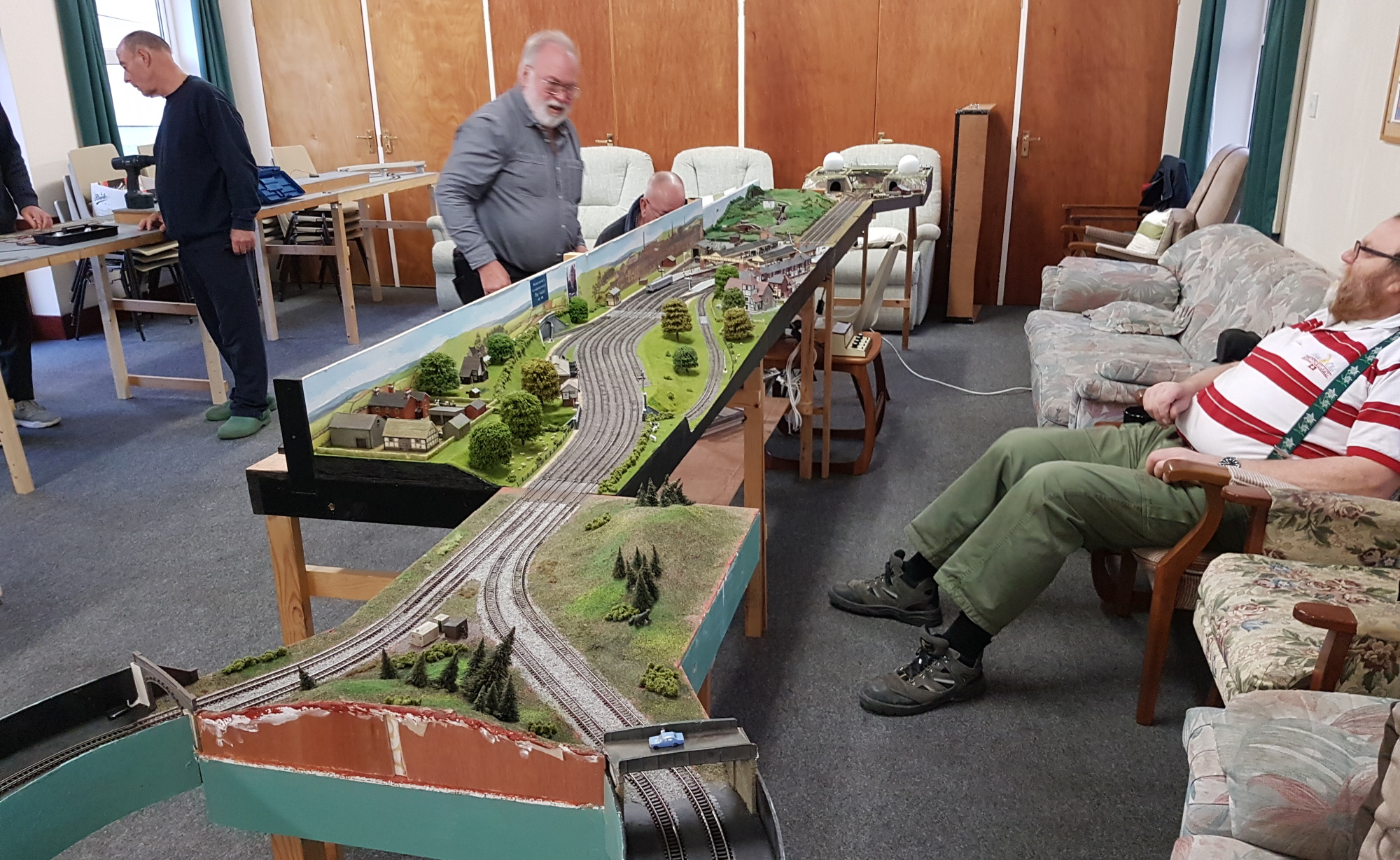
T’other Derek worked on Raysden, repairing a little scenery, and most importantly, trimming back the platform edges. These were most probably a scale distance from the track, and steam locomotives and long coaches tend to get stuck as they are a little too wide to get through. So in future it’s a case of ‘mind the gap’. We also added another module and two end loops, so could run a few trains.
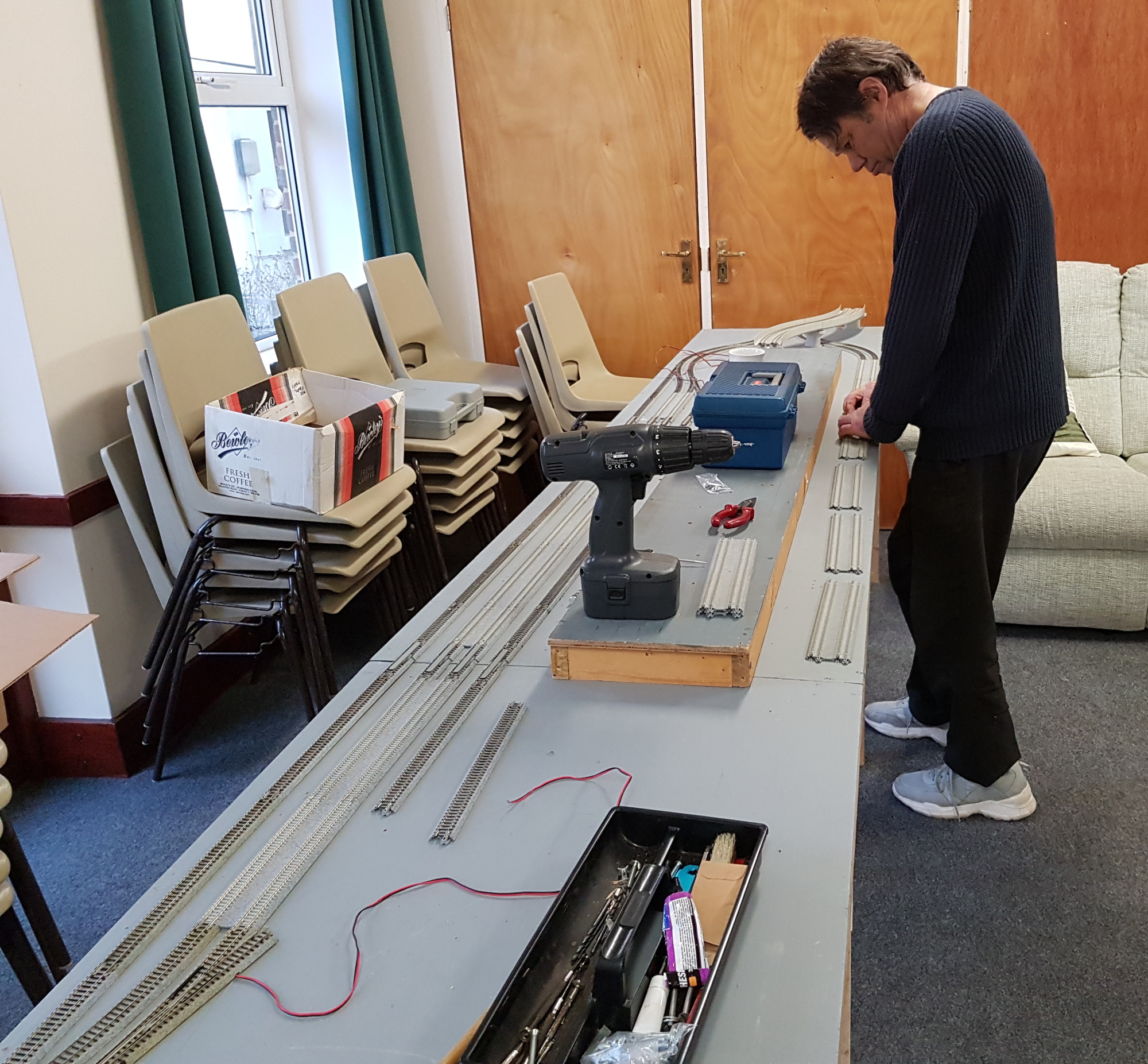
Paul was busy laying Kato track at high speed on another module.
And he also brought along the ultimate test track!
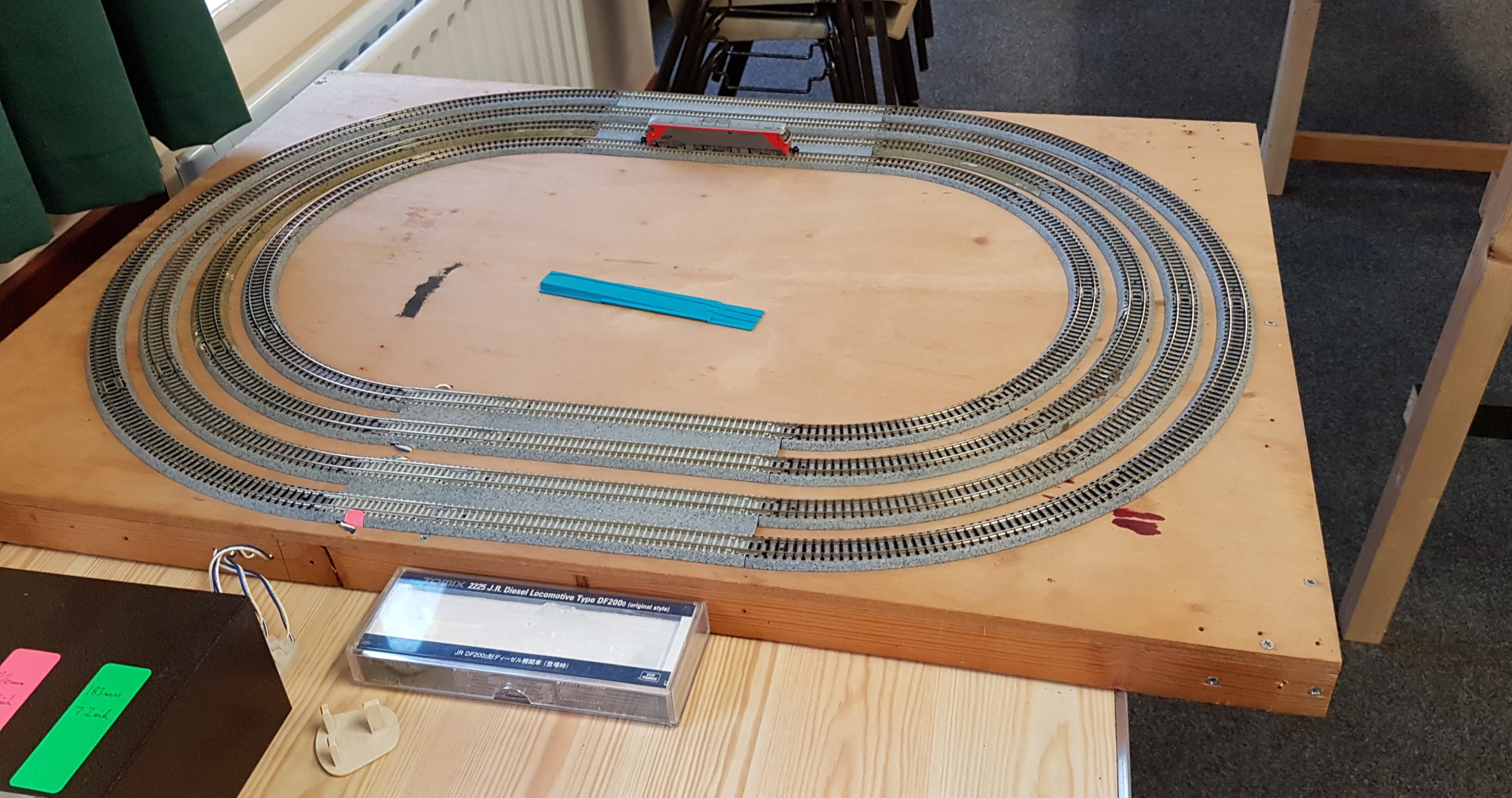
We finally packed up around 5:30pm, and will repeat the afternoon as it was both enjoyable and productive.
And a short video from Brian….
 | Allan Dawes on On my workbench – module… |
| “Stuttgart 202… on Stuttgart 2025 – 4… | |
 | Jonathan Caswell on Stuttgart 2025 – 4… |
 | Chuckster on Brockenhurst show 2025 |
 | snitchthebudgie on Potpourri #1130 |
 esngblog