1971 – December – you can’t please everyone

Our last look at the 1971 Railway Magazine.  From the always reliable letters page, an outbreak of outrage, but from Dawlish, not Tunbridge Wells….

Ridiculous

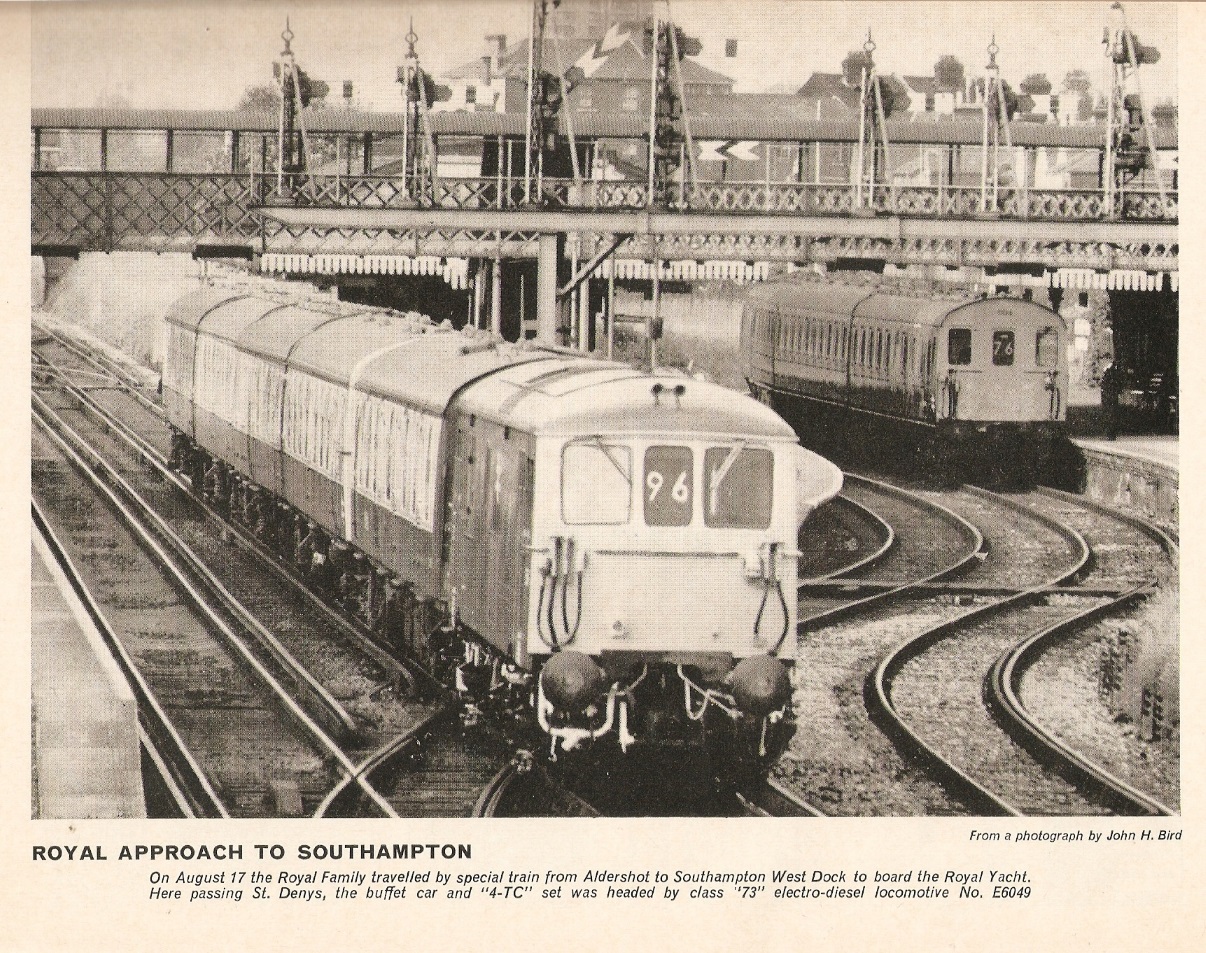
SIR – The photograph facing page 577 of the November issue of The Railway Magazine must be the ultimate in absurdity, caused by the fooling about by photographers with their telescopic lenses.  The locomotive looks twice as high as it is long, the signals on the gantry seem to be wider than the track, and the curves of the lines are ridiculous.  Television, of course, is also ruined by this sort of thing.

Well, here’s the photograph.  Looks like a standard, and rather attractive, telephoto lens shot to me.  Obviously, such things as perspective hadn’t reached the rural seaside of Dawlish yet..
33

And finally, a more whimsical exchange, that typified some exchanges through the year – such as the design of Scottish mileposts, and whether the Adams LSWR 4-4-2 radial tanks had been loaned to work to Kyle of Lochalsh in the west of Scotland (consensus was they did.)  This is on station names.  It was started in November by….

Piccadilly “H” line

SIR – When the Piccadilly Line extension to Heathrow Airport is complete, there will be five consecutive stations all beginning with the same letter – Hounslow East, Hounslow Central, Hounslow West, Hatton Cross and Heathrow Central.  Is this unique?

Then in December came the replies…

Southern alliteration

SIR – With reference to the letter (November) concerning consecutive stations with the same initial letter, I would point out that until 1961 there were six stations on the Waterloo-Portsmouth line, all with the initial letter “W”.  These were Walton-on-Thames, Weybridge, West Weybridge, West Byfleet, Woking and Worplsedon.  The sequence was broken when West Weybridge was renamed Byfleet and New Haw.

SIR – Four stations on the “Cuckoo Line” consecutively began with “H”.  They were Heathfield, Horam, Hellingly and Hailsham.  Although Mr Beauvais mentions five stations on the Piccadilly Line, three of them begin with “Hounslow”, whereas the “Cuckoo” stations are all different.  Hampden Park would have made a fifth on the way to Eastbourne, but Polegate intervenes.  Horam was called “Waldron and Horam” before the 1939 war, but in later years it was simply “Horam”.

SIR – Although the Rother Valley Line has only four consecutive stations beginning with “H”, it also has three consecutive stations ending in “field” – Rotherfield, Mayfield, Heathfield!

SIR – The letter headed “Piccadilly ‘H’ Line” reminds me of the staff man, deputising some fifteen years ago for the customary female announcer at Leeds City one afternoon, who spoke of “… the 5:42 to ‘Arrogate, calling at ‘Olbeck, ‘Eadingly, ‘Orsforth, ‘Arthington….”  ‘Onest.

Posted in Out and about, Prototype, Weird and wonderful | Tagged , , , | 1 Comment

1971 – September – the Victoria line opens

September 1971 edition of the Railway Magazine included an article on the opening of the final section of the London Underground Victoria line on July 23 1971.

Public opening of the 3.5 mile southward extension to the Victoria Line of London Transport, from Victoria to Brixton, took place at 15:00 on Friday, July 23, following a formal ceremony in the morning when Princess Alexandra pressed a button to start one of the Brixton escalators, rode in the cab of an automatically-driven train to Pimlico, and then transferred across the platform for a southbound train to return to Brixton.

My memory must be playing up on the opening of the line.  I recall it being open in 1976, when I moved to Kennington after university.  However, in 1973, when I was working on the Albert Embankment, near Vauxhall, before university, I recall getting off a southbound train that was terminating at Victoria.  I was with some work colleagues, and one of them got back on the train to pick up a discarded newspaper – and the doors shut and the train disappeared into the tunnel.  He reappeared about 10 minutes later, when the train returned into the other platform, for a trip north.  Some trains still terminate at Victoria, but we must have wanted a walk back to the office, rather than wait for a Brixton train.  The editorial had a good comment.

Look, no hands!

Automatic operation of trains on the Victoria Line – now fully open to Brixton – has demonstrated its worth, and provision for one-man crew is incorporated in the design of other stock being ordered by London Transport.  What are the possibilities of completely driverless trains, at least for urban rapid-transport?  Research is going forward with this in view, but for operation through single deep-bore tunnels it normally will be necessary to carry a qualified member of the staff to deal with any emergency which arises and to supervisee detrainments of passengers if necessary.  For accessible sections where it might be practicable, the travelling public would have to be assured on safety.  Resistance should not be insuperable.  Economic pressures have long since produced automatic lifts, including leviathans to and from underground platforms.  Admittedly these are restricted to “one engine in steam” shuttle service on each track; however, if the shaft is imagined horizontal, with stations instead of floors, the principle is not so different!

Reading these old articles, I have been amazed at just how many headlines could apply to today’s railways!

The 60’s and 70’s were a time of change on the railways, and not just the passing of steam.  This is well captured in a second short article.

Last LB&SC signal removed

The early hours of Sunday, May 2, saw the demise of another pre-grouping feature from BR lines – the LBSCR “standard” type wooden-arm lower-quadrant signal mounted on a wooden post.  The signal concerned was the Up Main (from East Grinstead) Home signal at Hurst Green Junction on the Oxted line, which was a fine example of the type.  It has been replaced by a three-aspect colour-light signal.

The Bluebell Railway Company had the purchase of the signal reserved for some years and several members of its preservation society turned up at the site to ensure that their acquisition did not get damaged during dismantling.

An interesting feature was that it was one of that select group of home signals that passenger trains are specially authorised to approach under the Warning Arrangement (Block Telegraph Regulation 5).  This was because the service required trains to leave Lingfield (the previous signalbox) before the preceding Up Branch train had passed the junction at Hurst Green, a short distance ahead of the signal, often for connection or attachment at Oxted.

Although this type of signal has now disappeared from BR, fortunately it is not extinct, for several other examples already are in working use on the Bluebell Railway.

Posted in Out and about, Prototype, Uncategorized | Tagged , , | 1 Comment

Odd modelling idea #1677

It’s becoming a forgotten art, converting one model into another prototype.  When I was a teenager, Triang GWR Clerestory coaches could be made into almost anything, with a new roof and a bit of cutting and sticking.

But this article suggests the art is far from dead – at least with old BMW cars!

Cinders and ashes! Police stop Thomas the Tank Engine on M1 motorway

A driver has received three points on his licence and a £100 fine after being stopped driving an unconvincing  Thomas the Tank Engine replica down the M1.
David Scott was pulled over on his way to Dover for ‘Scumrun’, an annual charity rally with a mystery location only unveiled at the start of the event. Participants tend to drive heavily modified cars, though in this instance the ‘tweaks’ made to the his BMW 5 Series were deemed to be illegal and unsafe.

More pictures here showing exactly how it was done.  But it’s not that convincing really….

Posted in Hints and tips, Inspiration, Out and about, Weird and wonderful | Tagged , , , | Leave a comment

1971 – September – Nine Days to Vladivostok

Also in the September 1971 edition of the Railway Magazine, was a description of a trip on the Trans-Siberian Railway.  It’s written rather in the “British Empire” style – intrepid explorer with Union Jack and pith helmet reaches the interior and meets friendly natives – but is still an interesting read about railway, and the USSR socially and politically in 1971.

… My publisher said “Go to Vladivostok”, so I went.

It was not quite as easy as that. Firstly, east of Moscow, there are only three towns along the route that are open to foreigners.  They are Novosibirsk, Irkutsk and Khabarovsk….  I did not rate my chance of reaching Vladivostok very high…

Let me say, in retrospect, that the Trans-Siberian Express is the best thing in Russia.  It is one of the most comfortable trains in both Europe and Asia.  The wider gauge ensures spaciousness, the coaches are kept spotlessly clean and its timetable is strictly adhered to.  Best of all, it is the one place in the whole Soviet Union in which you can live with its citizens.

The best season for crossing Siberia is autumn.  The world of trees transforms from a depressing green to a gigantic cloth of gold.

A station stop….

vk

Having got to Khabarovsk, with a little help from a student, the author managed to get a return ticket onwards to Vladivostok.

…. In the morning the whole communal coach learnt that there was an Englishman among them and I was invited to about 17 breakfasts.  Police came on board at Ussuriysk and I retired hastily to my bunk.

Was it worth the effort and risk of arrest?

The big steam locomotive brought us into Vladivostok Central on the dot.  I had eight hours to spend before my over-night train back to Khabarovsk.  Between the ranks of a battalion of fully armed troops I emerged into the most depressing of streets.

Vladivostok I soon discovered to be exceedingly awful.  I started my tour with a visit to an office near the station to put in motion the preliminaries of  the return journey.  They spoke no English but seemed to require more than my passport in support of my request.  I tried them with my driving license, regimental association membership card and an out-of-date Barclaycard.  To my amazement they seemed satisfied and no more questions were asked.

Shipping of all descriptions jostled the docks.  Warships in slabs, like compressed dates, showed through the rigging and radar antennae of fishing trawlers, while, in the quayside streets, soldiers were as numerous as the sailors.  The hills of China rose from the far end of the city to remind all and sundry for the reason.  Red slogans screamed “LENIN – OUR TEACHER AND OUR FRIEND” from banners reaching across the road.

Not my first choice for a seaside holiday.  He concludes on his return to legality….

I couldn’t tell them the truth of course: that I went to Vladivostok just for the ride.  Only a decreasing breed of Englishman would understand that.

But in the November edition came a terse response.

SIR – I have been a reader of your magazine for well over twenty years, not having missed a copy in that time (even when serving as a national serviceman in Malaya).  I have always found it an excellent source of railway information.  How did you allow such a politically-motivated article as “Nine Days to Vladivostok” to slip in?  The pre-conceived prejudices and snide remarks of the author are surely out of place in a serious magazine devoted to railways.  The only justification for it seems to be that he used rail as a method of foisting himself on the people of Siberia.

I am unsure whether the writer considered the article pro- or anti- USSR.  I suspect it was just the superior tone of the article.  But if you have happily read a magazine for 20 years, why put pen to paper for the one article that annoys you?  Why not just ignore it…..

Posted in Inspiration, Out and about, Prototype, Weird and wonderful | Tagged , , , | Leave a comment

Flying Scotsman on the Bluebell

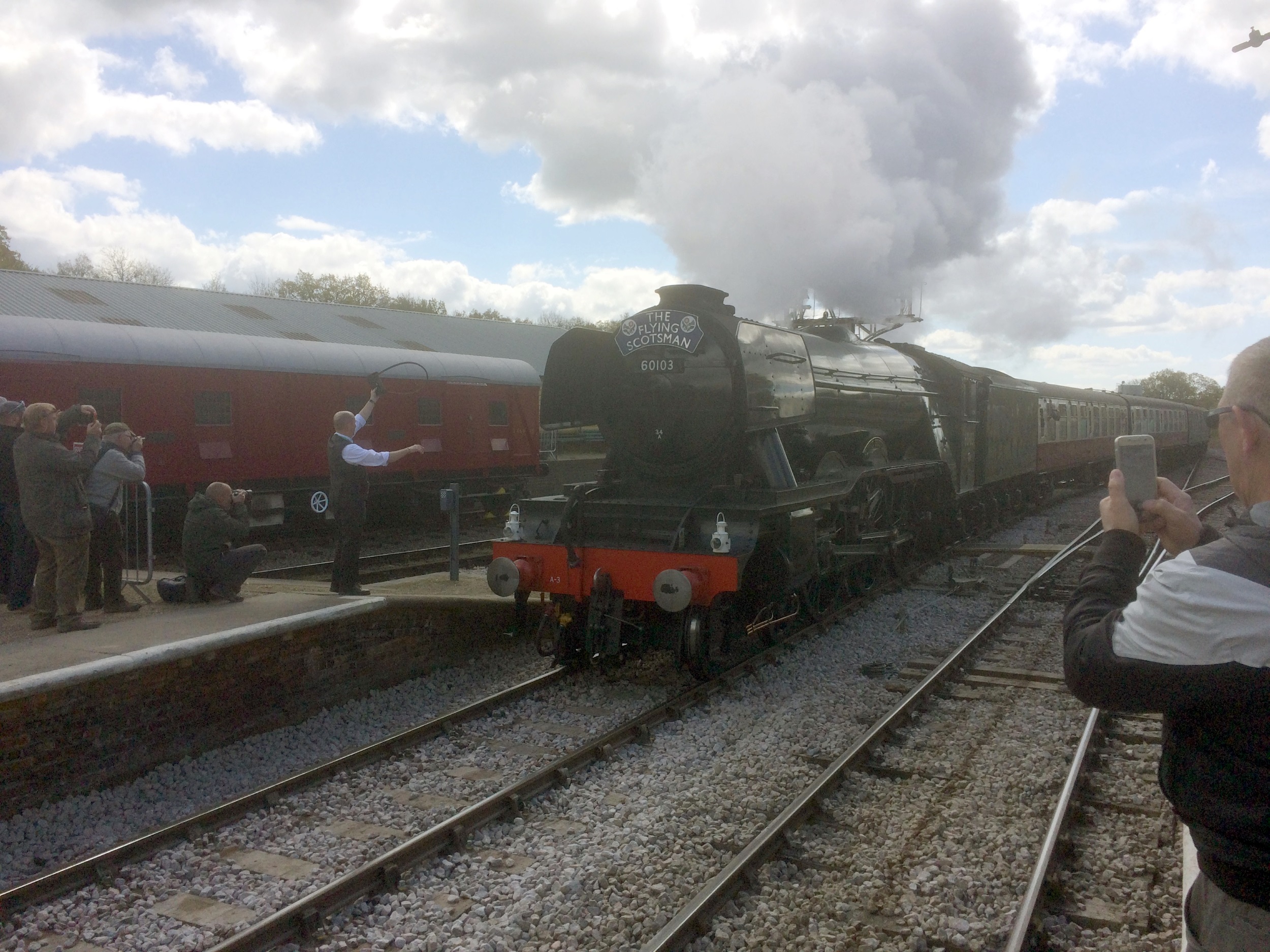
Thanks Peter, for this shot of the Flying Scotsman on the Bluebell Railway.  Not everyday that 60103 has to collect a tablet for single-line working.  I wonder how many times, if ever, that happened in pre-preservation days?

And that’s a good lead in to a reminder that ESNG will be exhibiting on 24-25 June 2017 at the Bluebell Railway model railway weekend.


And at the end of an Indonesian trip, I can’t resist linking this article.

The Indonesian army has demolished a tiger statue in front of a base in West Java after it became a laughing stock online.  The grinning tiger in a small village in Garut was supposed to be a mascot for the Siliwangi Military Command.

But internet users found it hilarious because it was so different from the fierce tiger on official logos.  “I don’t know why, but every time I see its face, I laugh… buahaha,” said one Facebook user.  The tiger had been in place for several years, but only recently found internet fame.

I have visited Garut, but I am sure that I didn’t see the tiger.  It does look rather odd – and would make a good model!?!

Posted in Hints and tips, Inspiration, Out and about, Weird and wonderful | Tagged , , , | 1 Comment

Odd modelling idea #999

As I return back to the UK and the depths of Redhill…..

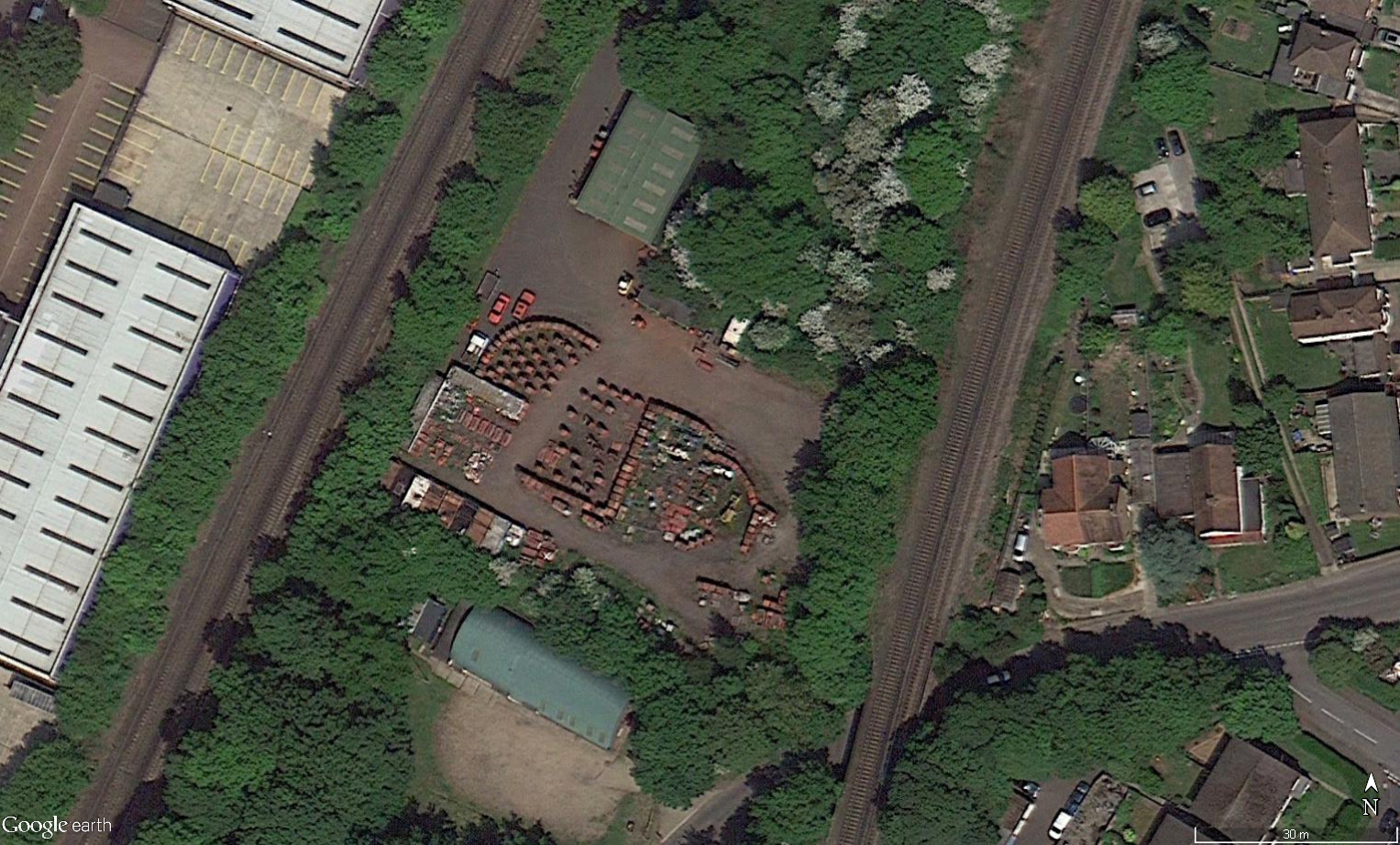
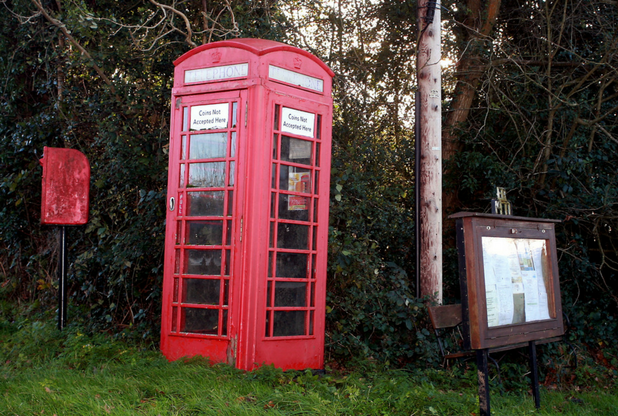
Here’s why there is a red telephone box graveyard between Merstham and Redhill

For most of us who commute by train the journey to work will be a fairly unremarkable one for the most part.

Each day we go through the same tunnels, arrive at the same platforms, pass the same homes.

Except if you travel between Merstham and Redhill your journey does have one memorable moment.

Because by the side of train line is a graveyard for red telephone boxes.

The yard is reported to stock more than 70 red telephone boxes and is one of the largest homes for the much-loved pieces of British history.  Classic red buses are also visible in the yard.

This would make an easy diorama, just needing packs and packs of little phone boxes.

For the full article in the Surrey Mirror, link here.

Posted in Hints and tips, Inspiration, Out and about, Weird and wonderful | Tagged , , , | Leave a comment

1971 – August – a pot pourri

A mixture of items from the August 1971 Railway Magazine, starting with a little deja vu. You could write a similar headline in 2016….

Across America with AMTRAK

Uncertain future of United States passenger trains rests with new national corporation.

….. Another curious (to British eyes) custom on American trains is the ritual surrounding descent from the coach at a station.  It is no use adopting the “Euston position” to be first off the train when it stops.  American station platforms being low, all coaches have vestibule steps, usually covered by a sort of manhole.  When the train stops, the conductor first lifts this cover and clips it back, then throws baggage for any passengers leaving the train onto the platform, then puts a small footstool at the bottom of the steps for alighting passengers to step onto, then wipes the hand-rails, and only then, may the passenger leaves the train….

Did they really do all that?  And I bet they no longer do so?

And from the ever-reliable letters page.

SIR – According to a “Why and Wherefore” item in your May issue, “Easton Lodge Station on the GER was provided chiefly for the use of the Earl and Countess of Warwick whose home was nearby.”  But my information is that this station was built to enable the then Prince of Wales to visit Easton Lodge without having to drive from Dunmow Station, after he had been subjected to ribald abuse by the people of Dunmow.  The then Lady Brooke, although a great beauty of her time (her husband did not succeed to the Warwick title until later), was the reverse of popular with the local people who were well aware that the Prince of Wales was her lover (she was his “Darling Daisy”) from 1889 until he ascended to the throne as King Edward VII and became as devoted to Mrs George Keppel.

Now there’s a prototype back-story for your station.

And from the “Notes and News”……

Red Star to the Isle of Wight.  Red Star express parcel services have been extended by British Railways, Southern Region, to link Waterloo and 12 other stations with Ryde, Isle of Wight.

Tunnels v. mole at Helsinki.  Choice of emblem to be used on the new Helsinki underground, Finland, due to open in 1975, has caused a political storm in the city.  Civic authorities have chosen a stylised silhouette of twin-bore tunnels, but the winning entry in a newspaper competition, a cartoon drawing of a mole, has won many supporters, and a newspaper correspondence battle is raging over which emblem should be used to decorate trains. [I think the mole lost.]

What a way to go.  Writing up the last day of steam on London Underground on June 6, the ‘City Press’ referred to the farewell run of a steam train “from Margate to Neasden Depot.”  We are indebted to Mr AC Pratt, who sent us the cutting. [For Margate, read Moorgate.]

Posted in Out and about, Prototype, Weird and wonderful | Tagged , , , | Leave a comment

Why Rome sends trains filled with rubbish to Austria

This could be another odd modelling article, but it caught my eye as I was catching up with the world news.

Rome’s rubbish is helping to power Austrian homes – and it gets to Austria by train.

Rome has been struggling to cope with a rubbish crisis and Austria has spare capacity at a waste-to-energy plant near Vienna.

So a deal has been struck. The Italians are paying Austrian company EVN to dispose of up to 70,000 tonnes of Roman household refuse this year.

The waste is transported by train through northern Italy, over the Alps and ends up at the EVN thermal waste utilisation plant at Zwentendorf on the Danube.

Up to three trains a week arrive at the Zwentendorf plant. Each carries airtight containers loaded with around 700 tonnes of Roman household waste.

The refuse is incinerated and converted into hot flue gas, which generates steam. The steam is delivered to a neighbouring power station, where it is converted into electricity, which is used to power 170,000 houses in the province of Lower Austria.

“It is not crazy,” insists Gernot Alfons, head of the EVN thermal waste plant. For him it is an environmentally friendly solution and the rubbish trains are key.

“The other alternative would be to put this rubbish into landfill, which creates a lot of methane emissions that create a lot of impact in terms of CO2 emissions.

“It is much better to transport this waste to a plant which has a high energy efficiency like ours.”

Another little modelling challenge and a ‘prototype for everything’ moment.  Read the whole article in http://www.bbc.com/news/world-europe-39641761

Posted in Hints and tips, Inspiration, Out and about, Weird and wonderful | Tagged , , , | Leave a comment

Odd modelling idea(s) #2017

In case you missed it on N Gauge Forum, I can recommend this video.  Not for the faint hearted and for some of these high altitude trips it would be wise to carry a change of underwear…..

I am sorry that I didn’t find out about the Bangkok folding market when I was working there.  It looks a fascinating sight, and how about an animated version for a model diorama?  The railcars are similar to the US Budd version.

I did however, visit the River Kwai and stayed near the Burma Railway on the river.  And one of my great adventures was two trips on Bangladesh Railways from Chittagong up to Dhaka.  Not so many roof riders on my ‘express’ but there was lots to see as we trundled through the rice fields, and the entrance to Dhaka was through slums that came within inches of the train.  Here’s another article on Bangladesh trains….

Back to the dangerous railways, perhaps there are a few potential models there, but most of them would require baseboards as high as they are long!

Posted in Hints and tips, Inspiration, Out and about, Weird and wonderful | Tagged , , , | Leave a comment

Indonesian Interlude

A couple of days after the ESNG show, I was catching a plane to Java, to do a 4 week input to a World Bank aid project on irrigation.  Once again, retirement is postponed, but I fancied another project in Indonesia.  Not many trains about here, just plenty of work, so here are a few of my ‘holiday’ snaps till I think of something railway orientated to write about….

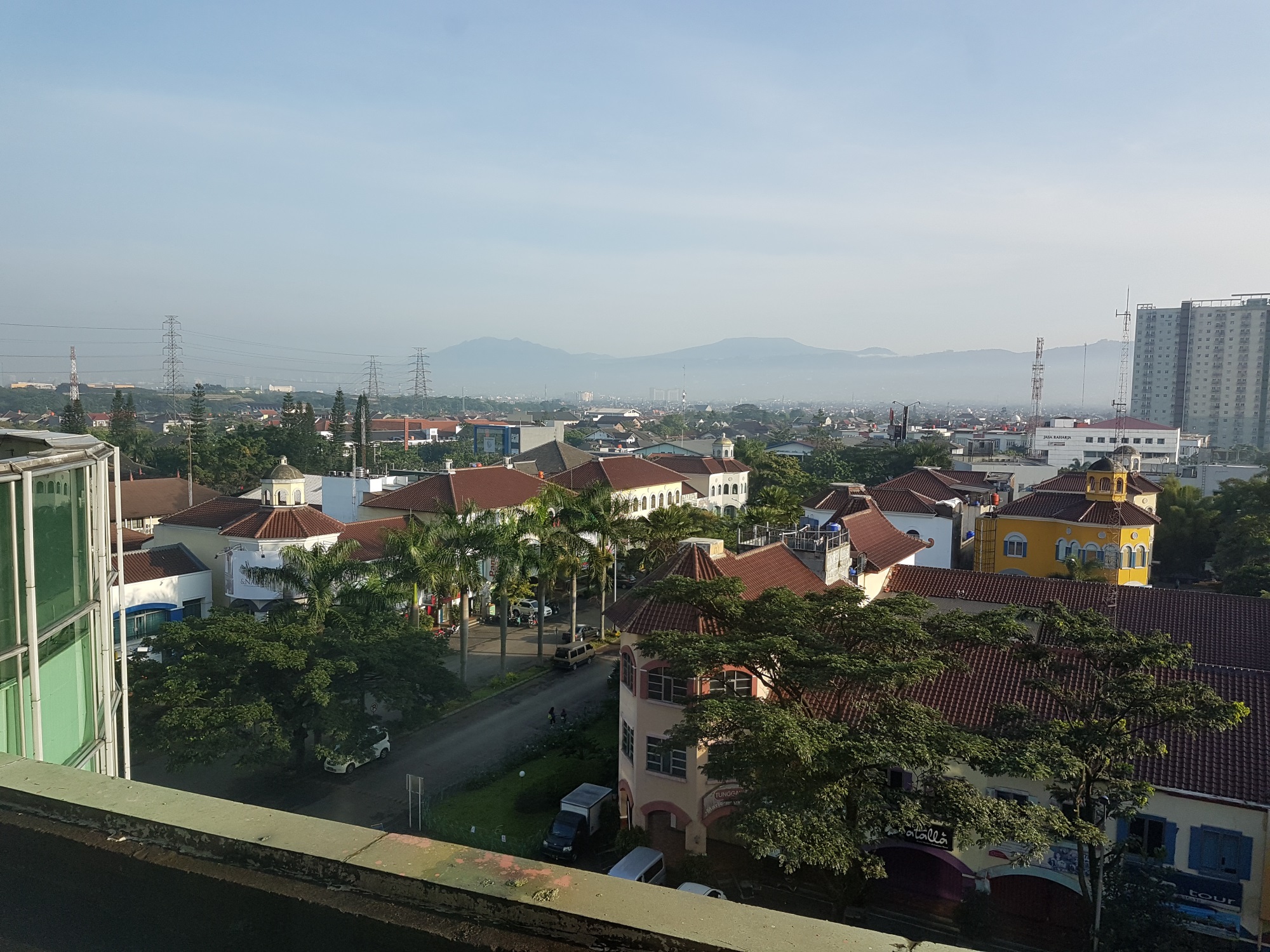
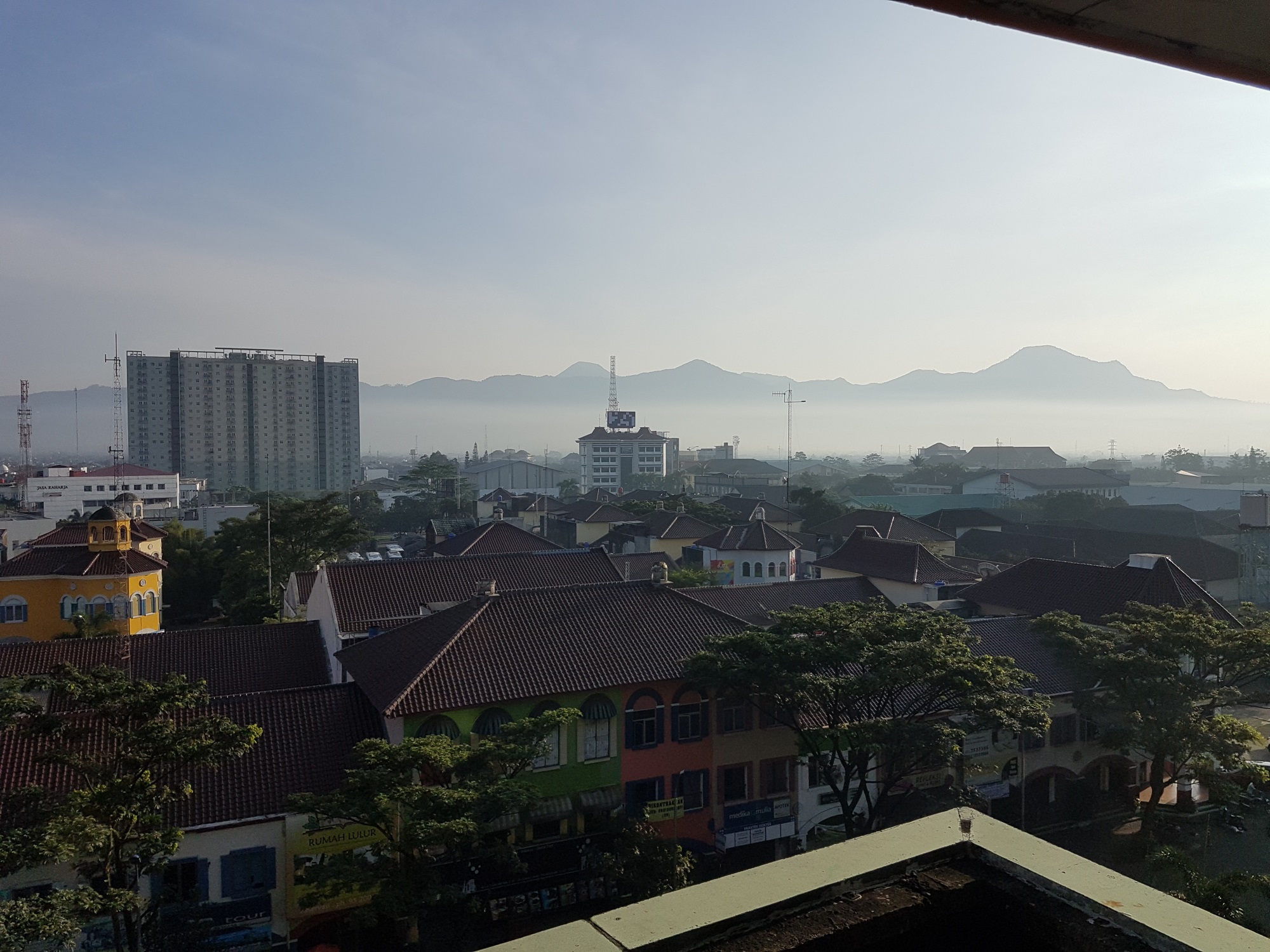
Early morning from my hotel room in Bandung, in the centre of West Java.  It’s unusually clear and you can see the mountains (but not quite the volcano behind.)  Usually the view is veiled by pollution in the morning and rain in the afternoon.

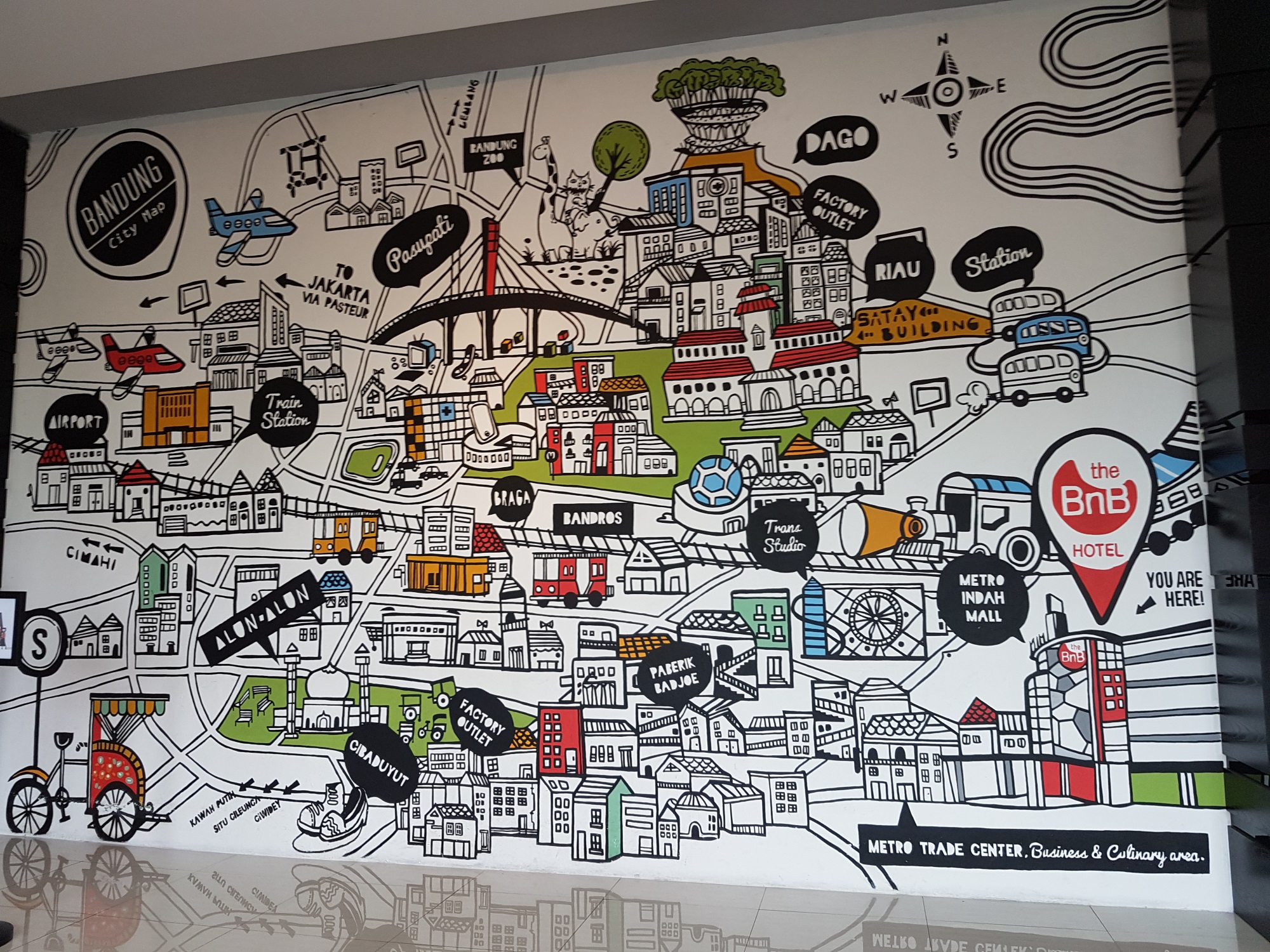
But this is where I am.  Some rather good map-making in the hotel lobby.

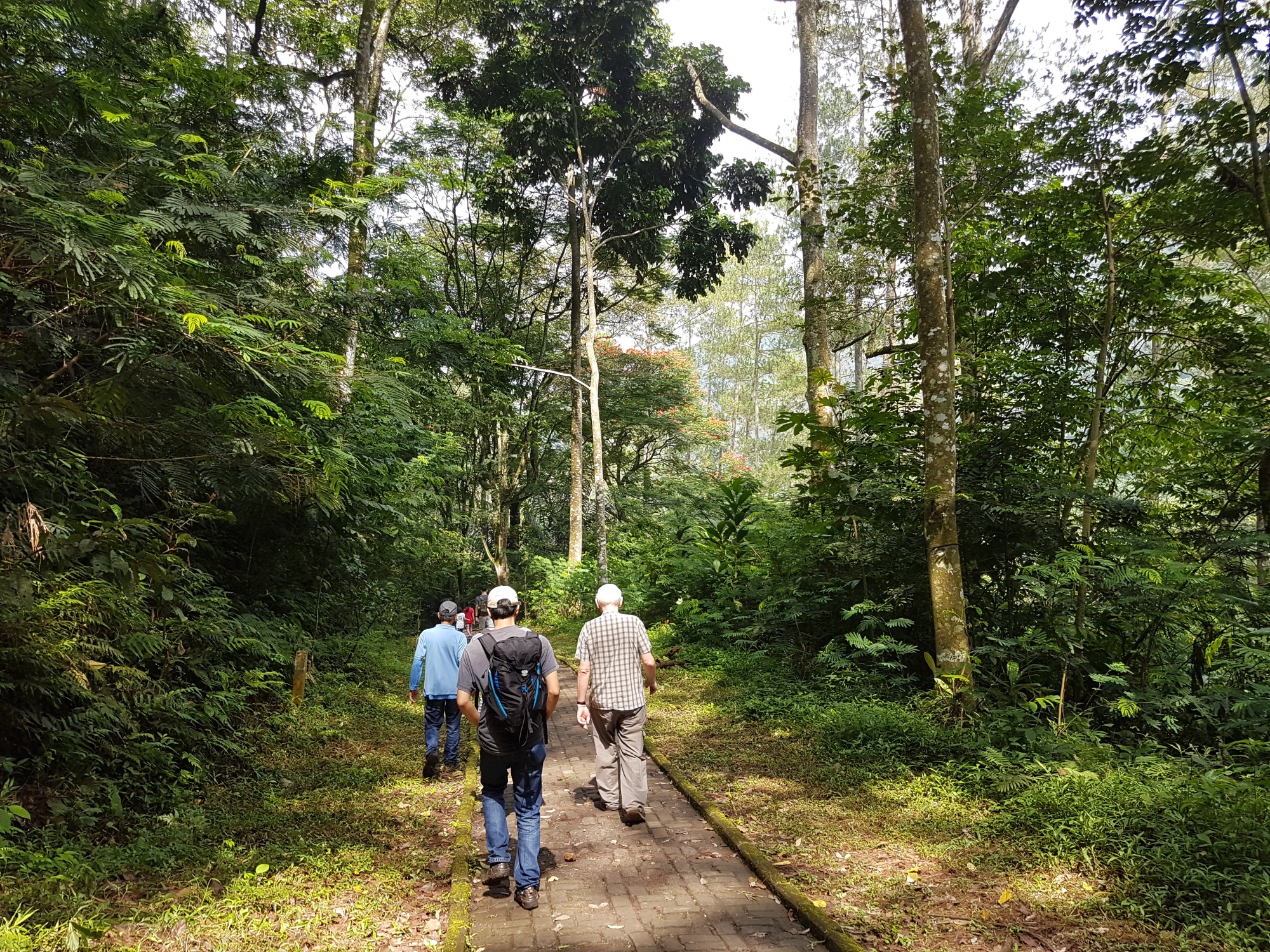
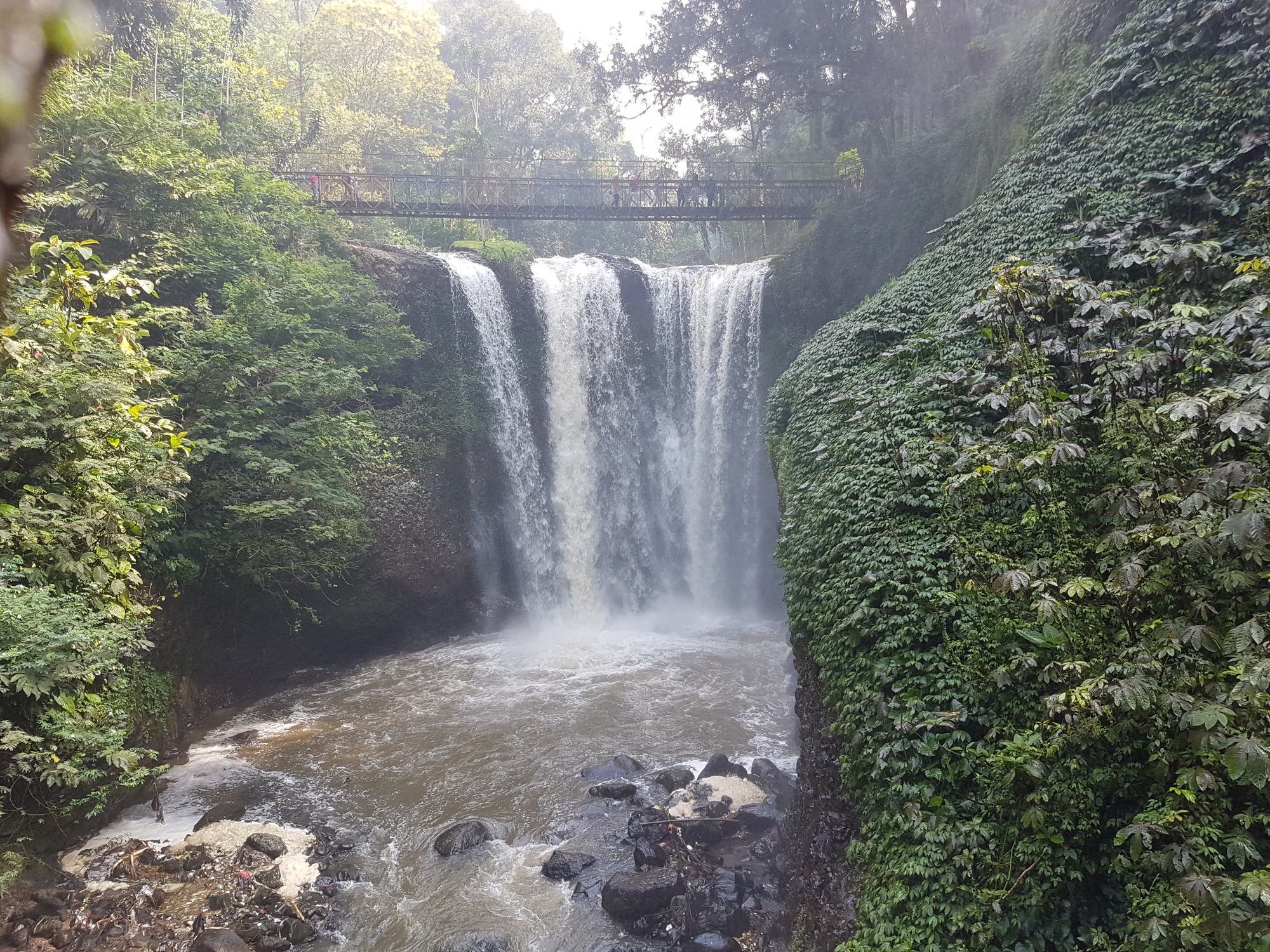
Bandung has become even more build-up than it was when I was last here 20 years ago.  (Was it really 20 years?)  But there is still an area of National Park forest in the hills to the north of the city, that made a good Saturday morning out.

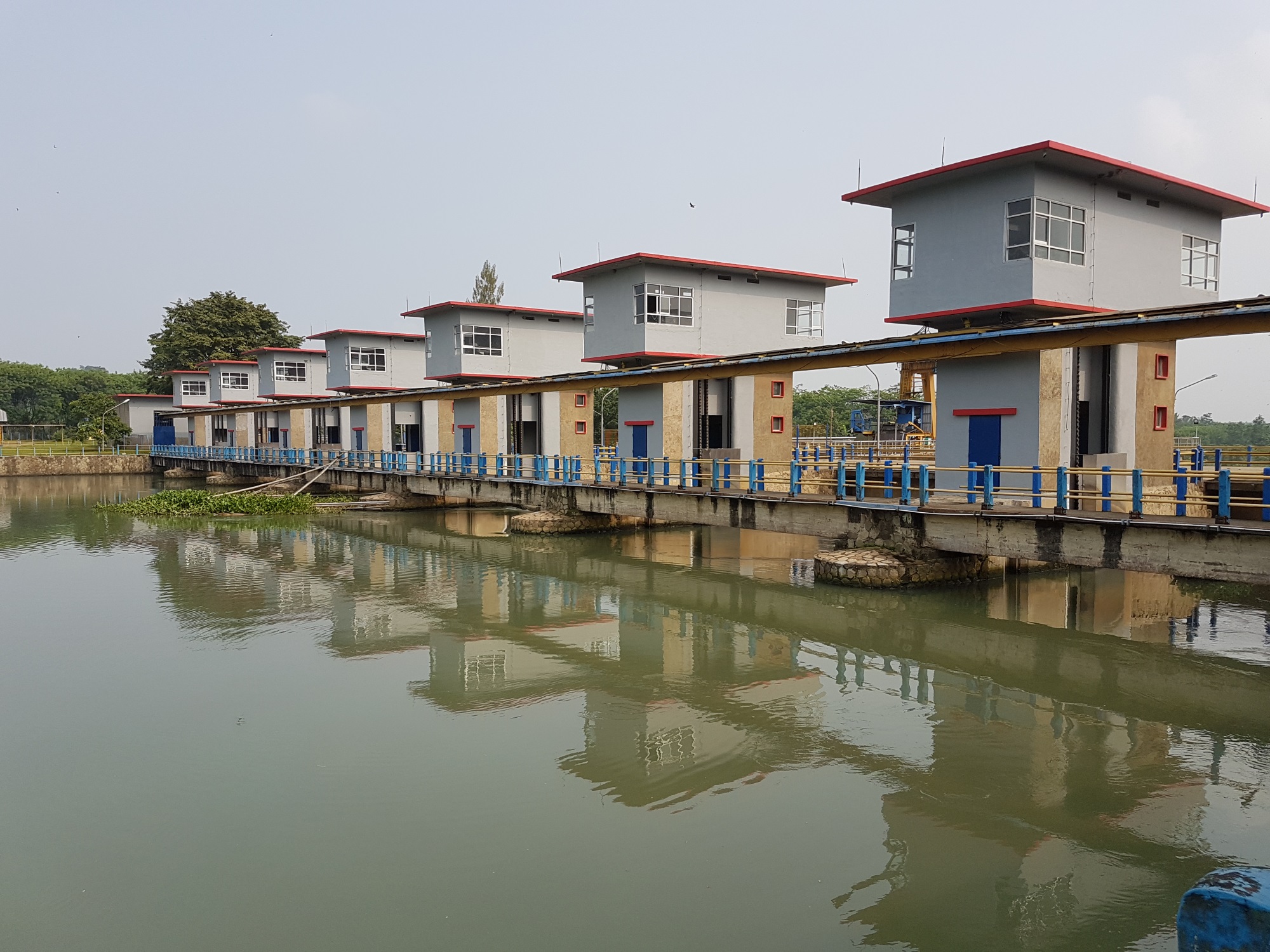
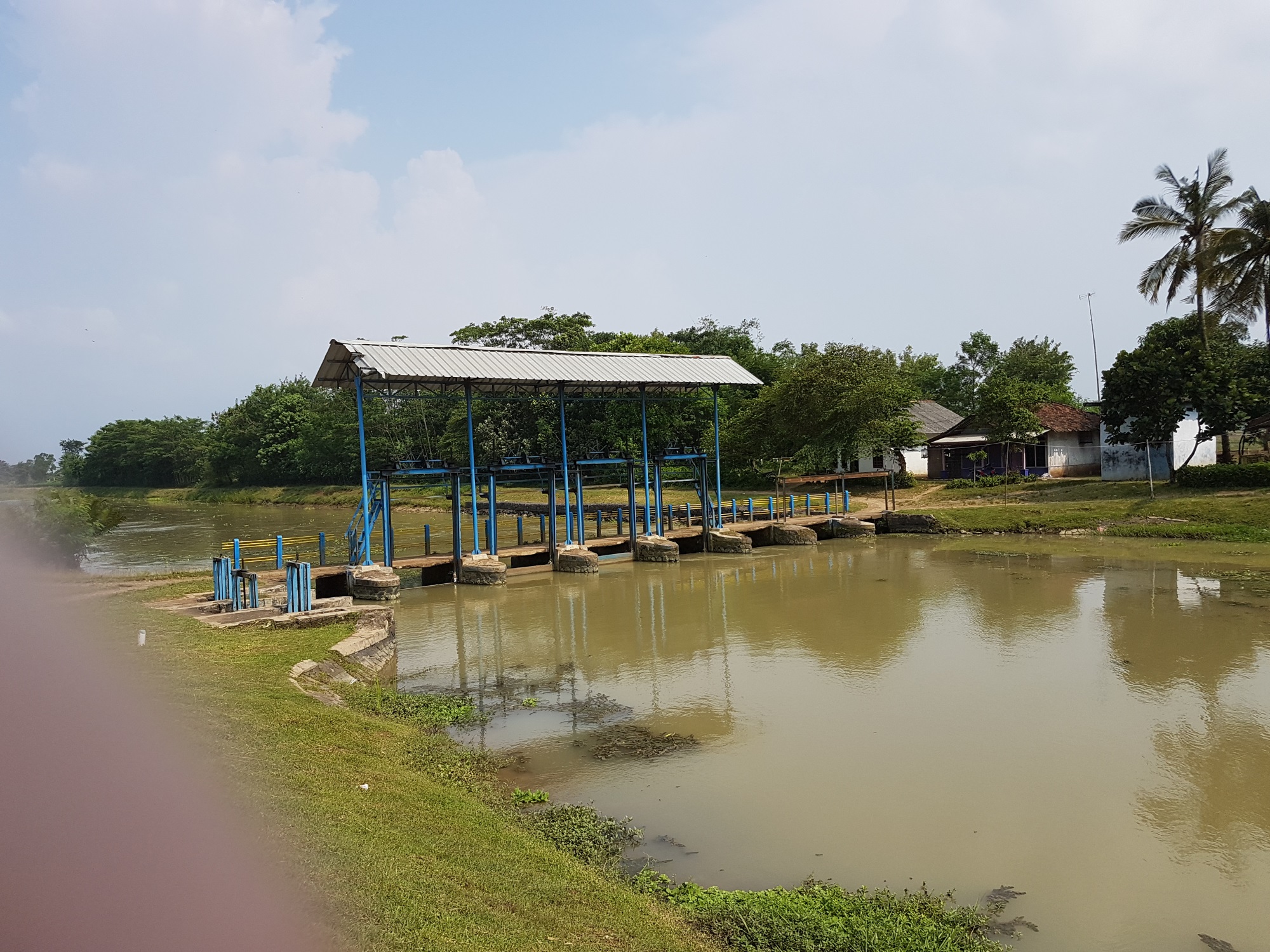
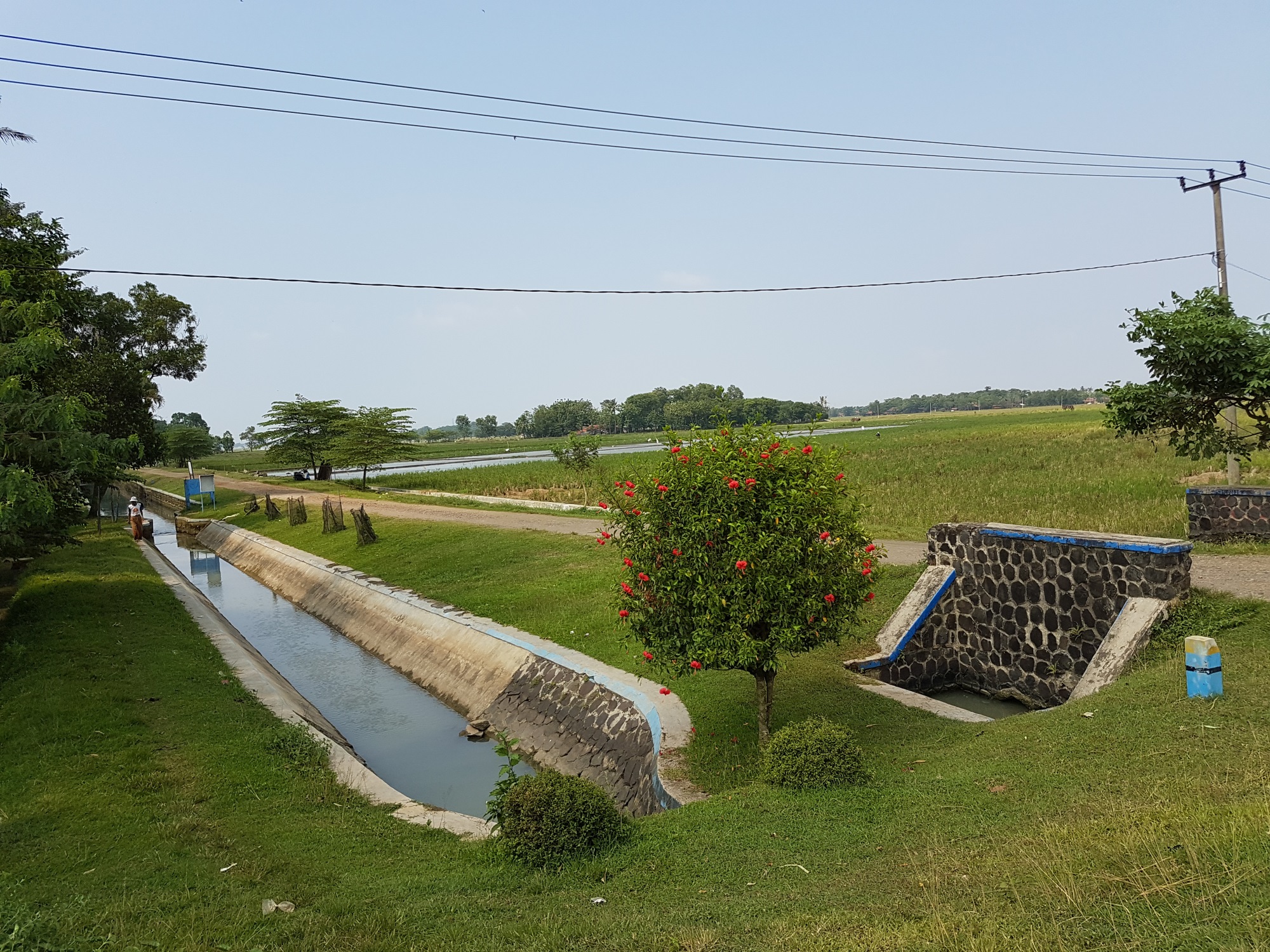
The Jatiluhur irrigation scheme is the largest in Java, and although it is suffering from agricultural land lost to industry and having villages built along its banks, our project area, the East Tarum Canal is still very attractive.

The main barrage, built 50 years ago, is still an impressive structure.

A cross-regulator on the main canal, to maintain levels for the irrigation diversion you can see on the left of the picture….

And of course, rice everywhere…..

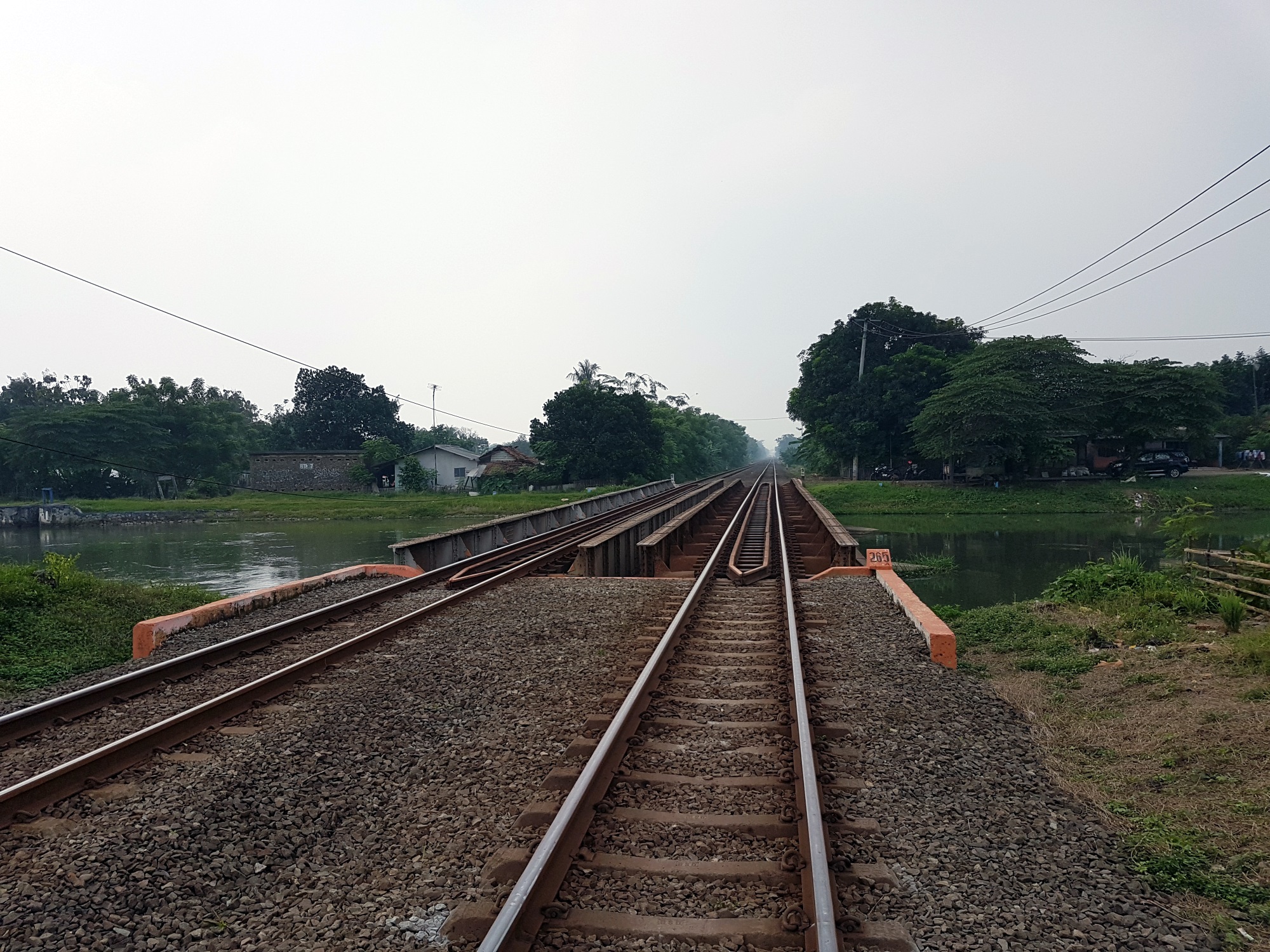
We did find this railway line, on the main north coast line from Jakarta going east.  A train passed soon after I took this, but I wasn’t quick enough with the camera!

I suppose I ought to visit Bandung station this weekend, but it’s over half-an-hour by taxi – too much like hard work!!  So this stock picture will have to do.

The train journey to Jakarta is interesting through the hills, as the trains still cross a series of fine viaducts built by the Dutch.  Some of them can be seen from the Bandung-Jakarta motorway (think M25 on a bad day as you near Jakarta).

Posted in Out and about, Weird and wonderful | Tagged , | Leave a comment