Los Angeles modelling inspiration

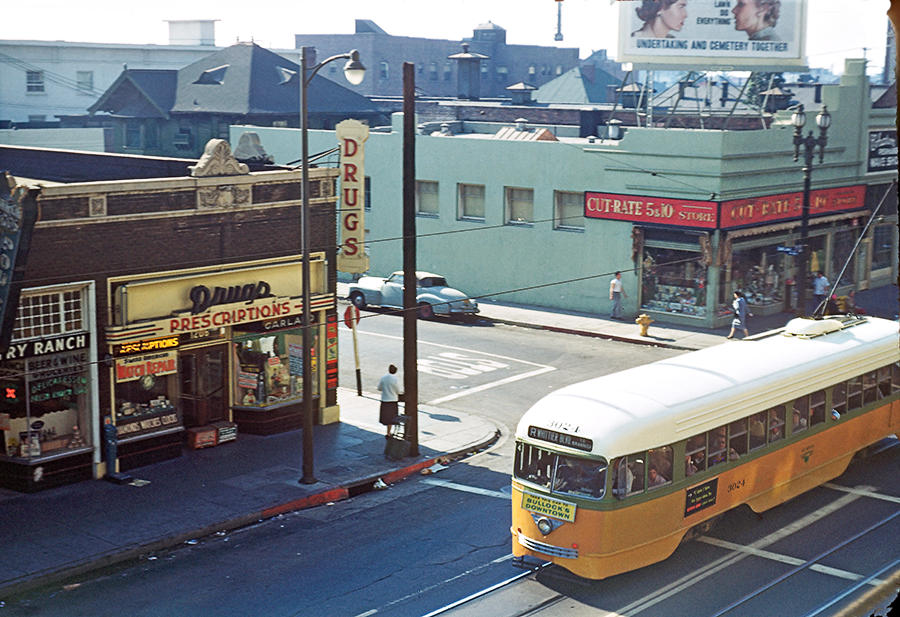
This is one inspiring photograph for urban detail.  It comes from John L. Mathis’ site, and he kindly allows one to reproduce his work with acknowledgment.

The Los Angeles PCC cars were narrow (3 ‘ 6″ I think) gauge and complemented the Pacific Electric in central LA.  In some locations there was dual gauge track in the roadway.  The PCC car was a lovely piece of engineering, although the Pacific Electric had the ultimate development of the design, and the Los Angeles Railway had a great livery, but the real inspiration of this photograph is the urban detail.

Although this is west coast America, there may be ideas for everyone here:

  • 1957 – only one car in sight, and just a few people.  No gridlock – so don’t overpopulate your layout.
  • The new, white-painted shop on the right contrasts with the older brick faced building on the left.
  • Shop windows and signs are nicely cluttered.
  • Rooftop details and advertising.
  • Interesting street lights.  The double light on the right is probably doubling as a support for the trolley wires.
  • Road markings and the inevitable yellow fire hydrant.

It all makes for a perfect scene, and cries out for a little modelling!

LARY%203024%20-%20R%20Whittier%20Blvd%20-%201957%20-%20900x617

Los Angeles Railway PCC car 3024 is on the “R” line heading east on 7th Street and Garland Ave in early 1957. This work is copyright 1957 – 2009 by John L. Mathis , but licensed under a Creative Commons License.

Posted in Inspiration, Prototype, Traction | Tagged , , , | 3 Comments

Thoughts on module design

I have always liked model railroads with a self-contained backscene and lighting.  It is a neat way of presenting your railway, and is especially useful for small layouts.  You can walk into an exhibition and be up and running in minutes.  And at home, the top of the layout ‘box’ keeps the dust off.

My little Earls Wood layout was built like this….

earls_wood_2

I  have recently come across three excellent articles as to how to apply this approach to modular railroading.

Firstly, with ‘normal’ plywood baseboards, here’s a post from the Small Model Railroads site.  The end profile of his modules and construction is shown below.

frame_dim1

frame_sub3

And if you are really adventurous, try foam board construction.  The master of this is Prof Klyzlr, from Sydney, and his Brooklyn: 3 AM layout.  A shot of the layout is shown below and details of the layout can be found at this link, and the form board module presentation, here.  Another approach to foam board is here.

train

Posted in Inspiration, Layout design | Tagged , , , | Leave a comment

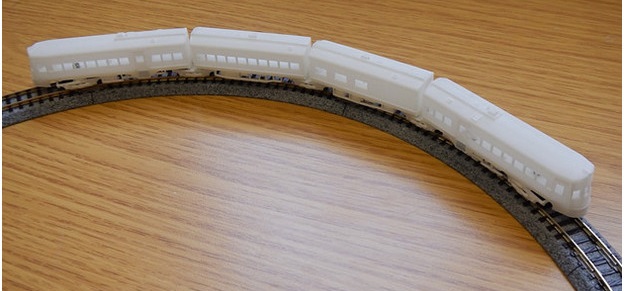
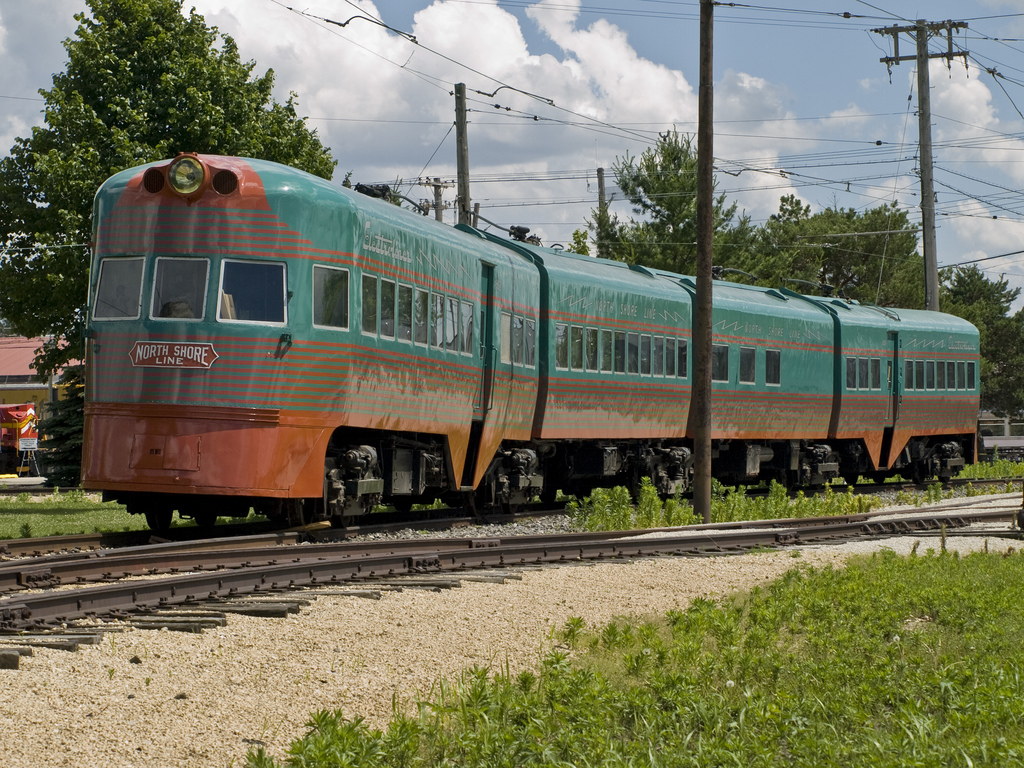
Now we’re talking – an Electoliner for ‘N’!

OK – it’s 3D printed on Shapeways, it’s unpowered and there is no obvious mechanism to put inside.  The livery may be difficult to carry off.  And it’s not my main area of interest.  But can you resist an ‘N’ gauge Electroliner?  (To go with my ‘HO’ one from Con-Cor that has never been run.)

electroliner1 electroliner2

Not when it might look like this!

large_2608236857


Posted in The trade, Traction | Tagged , , , | Leave a comment

The top ten posts – an interesting list

One feature of WordPress that I appreciate is the statistics.  I now know that I have had one visitor from South Korea, although I have no idea what they were actually looking for.  Until recently, I hadn’t tried the ‘most popular’ statistics options.  So these are the top ten posts I have made over the past seven or eight months….

  1. Off my trolley – streetcars and trolley layouts: 170
  2. Layout design – different voices – micro-layouts: 104
  3. Off my trolley – interurban branchlines – 1: 65
  4. Somerset levels, February 2014: 39
  5. simple layout, complex operation: 30
  6. PECO lash up: 17
  7. Quote of the week: 16
  8. About the ESNG blog: 13
  9. Stuttgart 2013 – the photos: 13
  10. Off my trolley – interurban branchlines 3 – the Sacramento Northern: 12

What is interesting here is that the two most popular posts, by far, are about trolley layouts and micro-layouts.  And most of my other trolley and interurban posts have been well read.  I can understand micro-layouts – these have justifiably become very popular.  But ‘N’ gauge trolley layouts?  Surely a totally specialised and minority interest.  Perhaps there are more ‘closet’ traction modellers out there than one thinks!

Going forward, I will try and reflect these statistics.  The ESNG will always be an important feature, as that is the real excuse for this blog.  But please humour me if I write a few more traction posts.  Perhaps designs for traction micro-layouts?  But no doubt next time no-one will read them…..

Posted in ESNG, Inspiration | Tagged , , | Leave a comment

ESNG meeting – 01/05/2014

After the post-exhibition lethargy, back to a normal running night.  We got a circuit up and running, but seemed to have some problems here and there – a broken rail end just about holding together, and something wrong with the electrics (I didn’t get involved).

We decided what we need is a working party.  Either a Saturday, or an additional evening, when we can address some of the wear and tear our boards have suffered over the months.

Another interesting discussion was the need for some new corner modules.  We have four corner boards to make the usual running loop, but they must be 15 years old now.  Despite some structural repair and one or two scenic upgrades, they are just getting very tired.  Perhaps this should be the project for the year?

And finally, I spent most of the evening with the treasurer finalising the show accounts.  It’s amazing how the number of ticket stubs never exactly matches the door takings.  And there is the punter who wants to buy and additional programme.  I’ve no doubt the final accounts will be slightly different from my show spreadsheet, but we are there and thereabouts, and we show a profit.  Job done!

Posted in ESNG, ESNG meetings | Tagged , , , | Leave a comment

Apocalyptic Perspectives and Dystopian Dioramas (recommended)

The Model Railroad Design blog recently had an inspirational post on “Apocalyptic Perspectives and Dystopian Dioramas” offering some inspirational, if slightly depressing ideas for model railroad design.  I recommend the full article, but here are a couple of photographs from the post to whet your appetite.

This is the work of a Yale architecture student (probably graduated by now)  Peter Feigenbaum in his Trainset Ghetto installation. Plenty of graffiti and trash in a rough contemporary urban scene. The lack of scale figures makes it even more foreboding and bleak.

Bleak, barren and broken.


Another artist James Cauty is dabbling in the scale model railroading medium shows us an extended crime scene,.

Collateral damage from the getaway chase.

He describes his work as:

Thousands of police swarm over a scorched landscape tattered and torn by rioting and looting, every window in every building is smashed, vehicles are overturned, bridges and roads destroyed, power pylons are down, a burned-out church still smoulders. Above this post-mayhem scene of destruction, helicopters shine their searchlights on the battered landscape. Above the helicopters, a train rumbles past…

A motorcade brings the queen to view the scene of the crime.

Go and read more on the Model Railroad Design blog.

Posted in Inspiration, Layout design, Weird and wonderful | Tagged , , | Leave a comment

Can’t choose the correct colour?

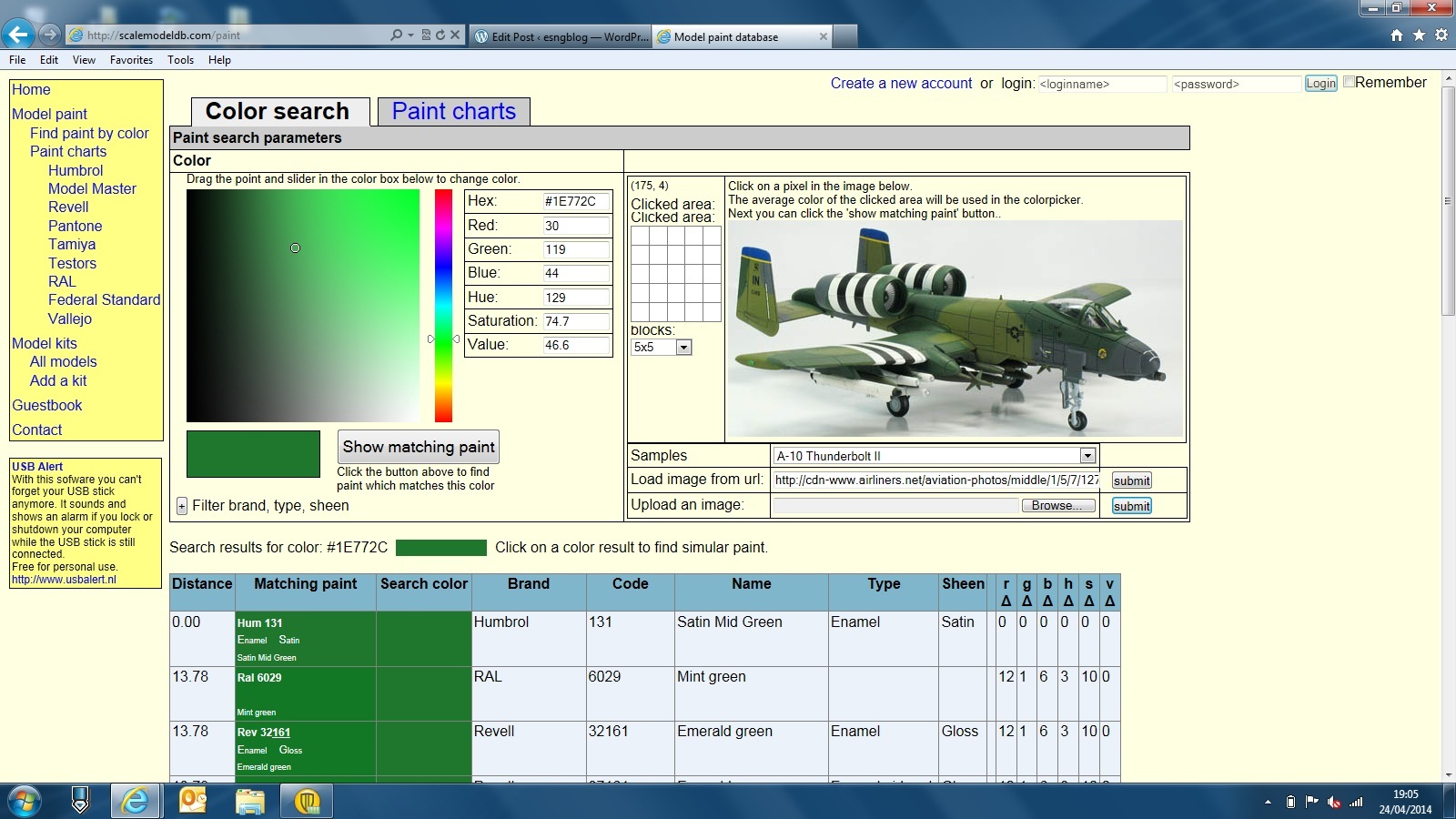
A few posts ago, I was bemoaning the lack of a consistent or correct Lehigh Valley Red.  I then came across this model paint database on a forum.  The on-line software allows you to upload a photograph, then match the closest commercially available model paint.

mbd

Of course you still have to account for the lighting at the time of the photograph, the age of the picture, the colour film used, the effect of the computer rendered colours and the effects of scale on your model.

I tried it for Lehigh Valley red, and of course, having uploaded a range of photographs, got a different colour each time – just like my models in the roundhouse a few posts ago.  But it sure does give you a good start at identifying a colour.


Posted in Hints and tips, Inspiration | Tagged , | 1 Comment

Sugar cane railways – 2

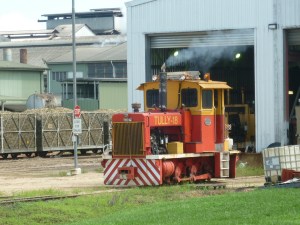
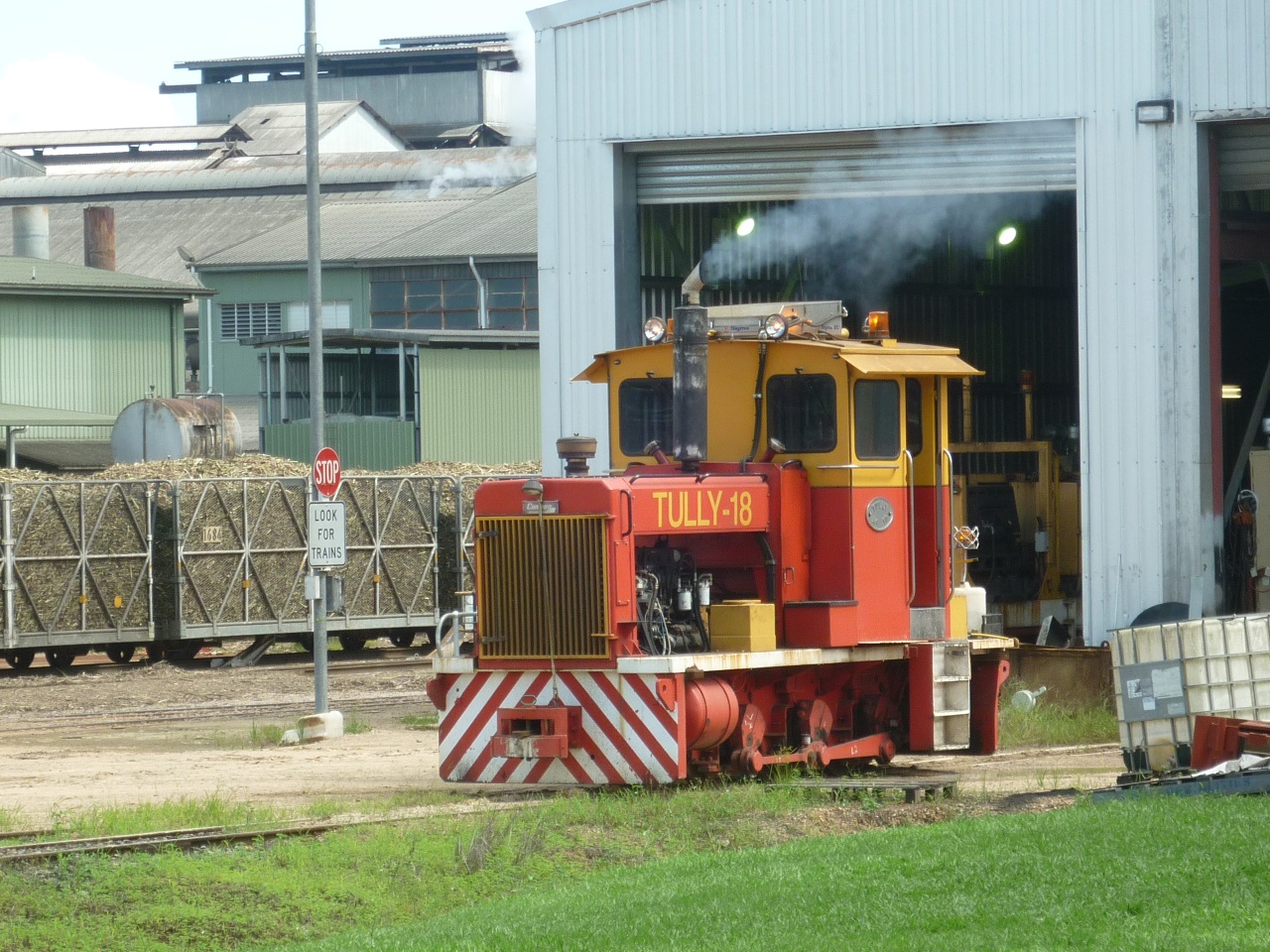
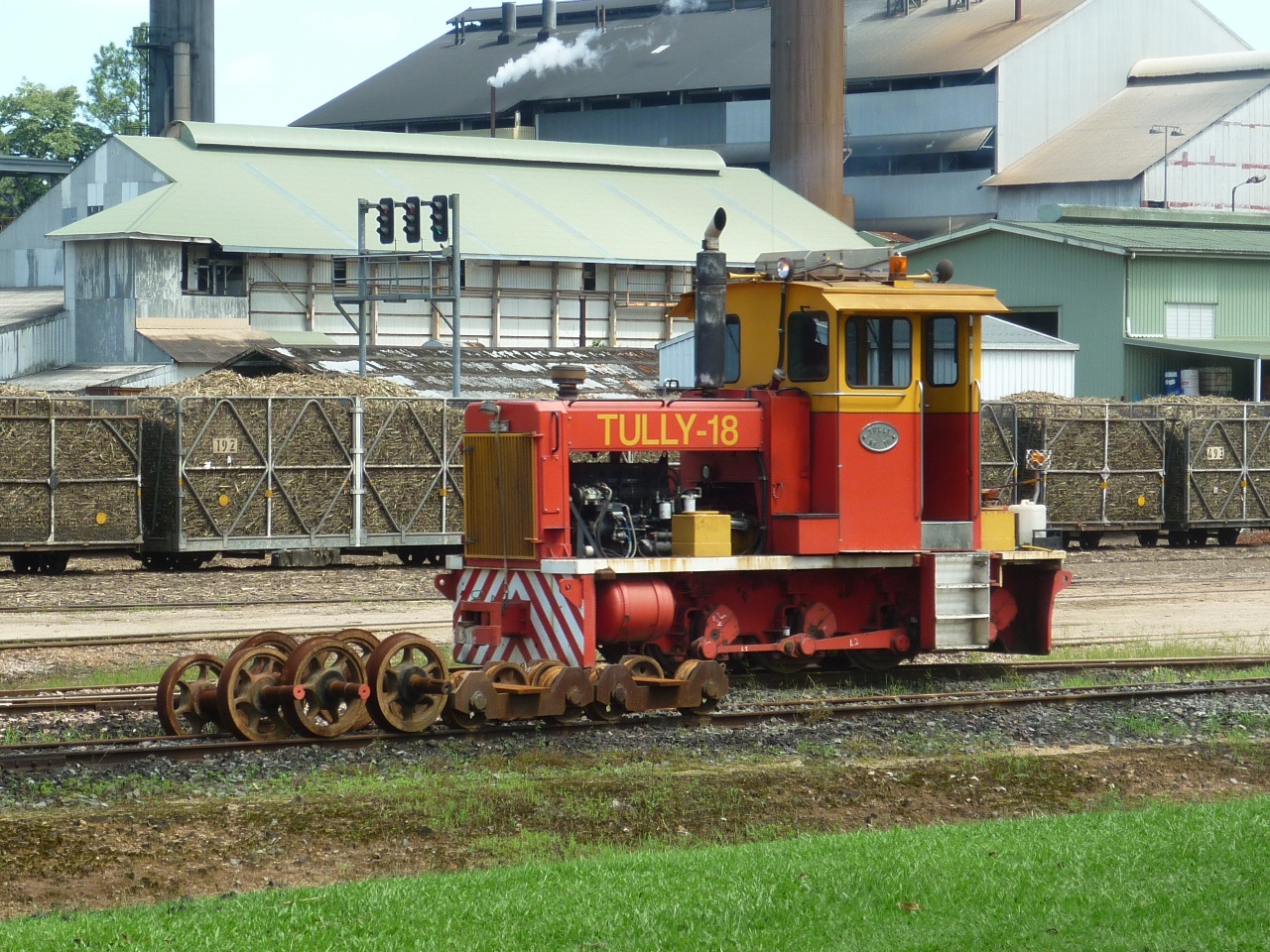
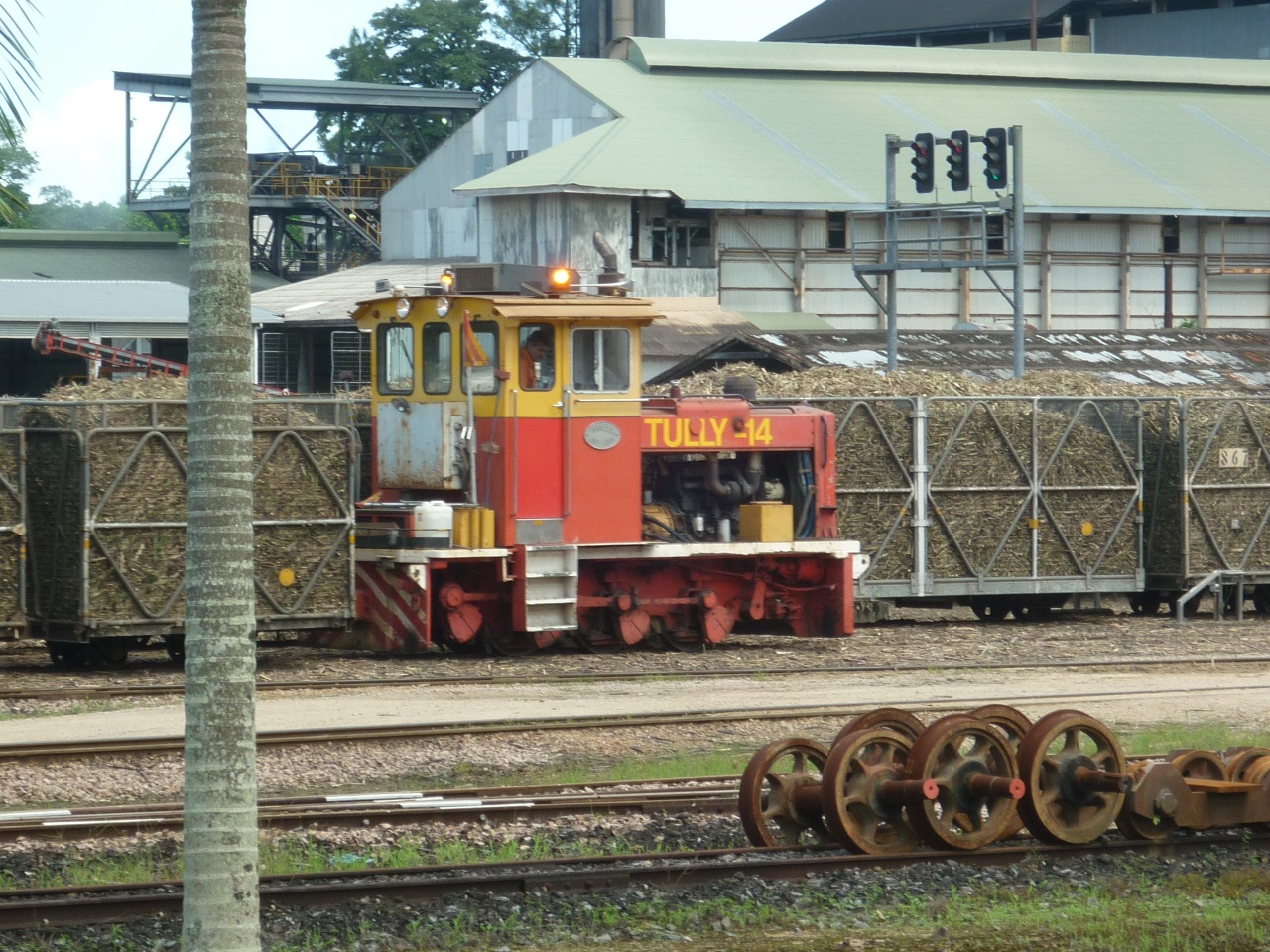
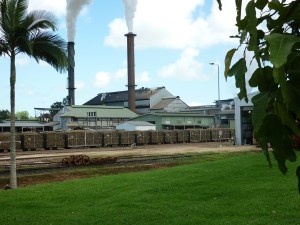
Back to Australia and North Queensland for this post.  A day exploring inland, more or less at random, discovered the sugar cane processing plant at Tully (well, actually, I worked out where it was, and found it by ‘accident’).  The company website describes the rail system and process as follows:

To enable Tully Sugar Mill to crush sugar cane at a constant rate of around 700t/hr, a consistent supply of freshly harvested cane is required. To achieve this aim reliably and efficiently, a well-constructed and maintained rail network is exclusively used. Where the cane growing area has expanded well beyond the existing rail network, semi-tippers are used to transport the cane from the farm to the nearest delivery siding, where it is then brought to the mill on the rail network.

The entire rail network consists of over 200km of mostly 60lb rail for the main line, as well as approximately 80km of track for delivery sidings and loops.

The rail network meanders throughout the picturesque Tully district to encompass the cane growing areas, and is in a continual state of upgrade and expansion.

The rolling stock used to carry the harvested cane to the mill are called “Bins”. They have a nominal capacity of 4 tonnes. In the Tully district, these “Bins” are all paired up to form one “Unit” of 8 tonne capacity. They are only separated for maintenance or repair. This increases efficiency and assists in maintaining high mill crush rates. There is also a growing fleet of 10 tonne bins being introduced into the system to replace the 4 tonne bins. There are approximately 1650 “Units” in service and these usually manage to carry an average of 8.3 – 8.5 tonnes each. In each day the Mill requires approximately 2100 loaded Units, so some Units are loaded twice in a day.

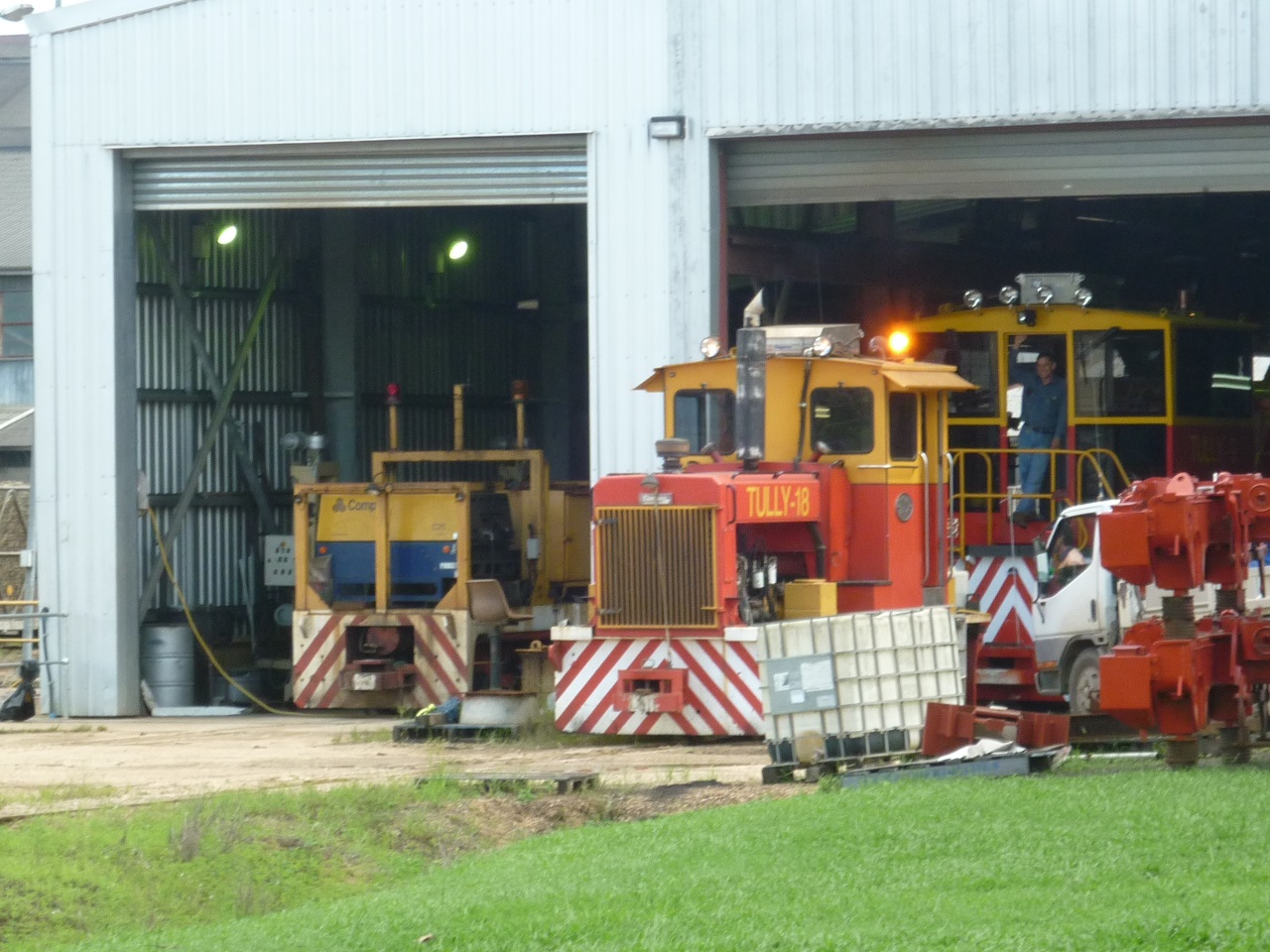
To haul the rolling stock Tully Sugar Mill currently has a fleet of 15 Locomotives.

Of these there are six 40 tonne DH (Diesel Hydraulic) locomotives and six 18 tonne Com-Eng locos which are usually paired up as three “double-headers” and two 18 tonne Com-Eng locos that are not paired up.The double-headers are used to greatly improve tractive power and increase hauling capacity.In addition to this there are three 8 tonne Baldwin locomotives used for maintenance and repair work to the rail network.

On dayshift during the season there are 9 locomotives in service. During the night there are between 5 and 7 operating

For the rail enthusiast, there is plenty to see, even from the plant boundary, with a constant movement of cane and empties – needed to maintain that flow of 700 tonnes/hour of cane for processing.  They are using 4-wheels trucks here, rather the larger bogie ones shown in my earlier post on cane railways.  As usual, my photographs are not the best, but give an impression of the size and activity of the whole operation.
P1000463 P1000468 P1000477 P1000464 P1000465 P1000478 P1000466 P1000467

Tully Sugar also have some larger diesel hydraulic Bo-Bo’s. I only saw one at the back of the shed (can you spot it above), but here’s a picture from a web-site.

tullybobo

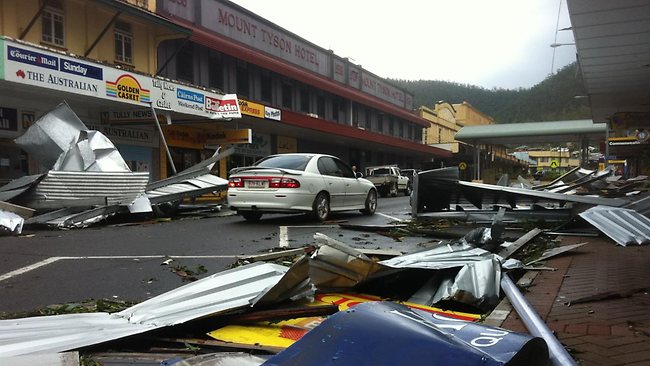
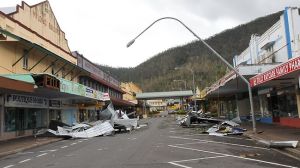
Tully is one of, if not the, wettest place in Australia.  We also visited it just a few months before Tully was very badly damaged by Cyclone Yasi on 3 February 2011.   That fount of all knowledge, Wikipedia tells us that:

According to residents, Tully was “…a scene of mass devastation”. An unknown number of homes were completely destroyed as intense winds, estimated at 300 km/h (190 mph), battered the area. Many other homes not destroyed sustained severe façade and or roof damage.  As daybreak came, reports from the town stated that about 90 per cent of the structures along the main avenue sustained extensive damage.

I have sat out a number of severe typhoons in Hong Kong, but living in well designed modern high-rise buildings, they are more a matter of interest than danger (but don’t walk through water in the street, in case you drop down a manhole where the lid has blown off).  I can’t imagine sitting out the storm in a tin-roofed bungalow.
068144-tully-after-yasi 853529-tully-cyclone-yassi

Posted in Out and about, Prototype | Tagged , , , | 1 Comment

Would you dare model this?

This is the ultimate piece of trackwork.  It comes from Sardinia, and presumably is used to turn locomotives (or maybe just to confuse people).  It’s tempting to build, despite the curved crossings, but you would need to have a picture of the prototype for anyone to believe that (a) it exists and (b) you hadn’t completely lost it.

3point

From Google via David Bromage on the Yahoo Small Layout Design group.

Posted in Inspiration, Layout design, Prototype, Weird and wonderful | Tagged , , | Leave a comment

A third exhibition post

Here’s a third post about model railway exhibitions – and this one is a little bit of history.  It was taken at a Beckenham and West Wickham MRC show back in the early 1970’s.

BWWExpo

The are a number of things that catch the eye in this wonderful shot…

I made the signal box.  It had embossed card brickwork over a perspex shell.  I’m not sure my modelling skills have improved that much since my teens….

The layout was the BWW club ‘O’ gauge layout.  It was an interesting mixture of standards, as they were somewhere between fine and coarse scale.  Fine scale would run OK, but it would also accommodate some older models – bit like PECO ‘N’ gauge track, really.  All track was hand-built spiked flat-bottom rail, and points were operated by point rodding and lever frames (hidden under that signal box).  Half the layout lived in the clubroom for weekly operation, but the whole thing came out for shows, and it was a wonderful spectacle.  Collection was from the authentic Southern Region outside third rail, even the steam locomotives.

The stock used on the layout was mostly scratch-built, the highlights being Frank Keeler’s (second from left) wonderful Southern steam locomotives and Doug Glibbery’s (foreground) Southern EMU’s.  But also note the then new Triang Hymeks in the sidings – but fitted with a new heavy-duty chassis.  A highlight of every show was the 100 wagon goods train.  Two of these Hymeks would happily pull this train of heavy, not very free running, wagons.

And this is a classic 70’s show.  It’s set up in a dilapidated hall.  People actually wore jackets and ties to operate.  And the no-smoking rule didn’t apply to the hall, let alone the operators.

Finally, the gentleman in the background, without a tie, is my father…

Posted in Inspiration, Out and about | Tagged , , | Leave a comment