Jon’s modules – fettling Aldersford

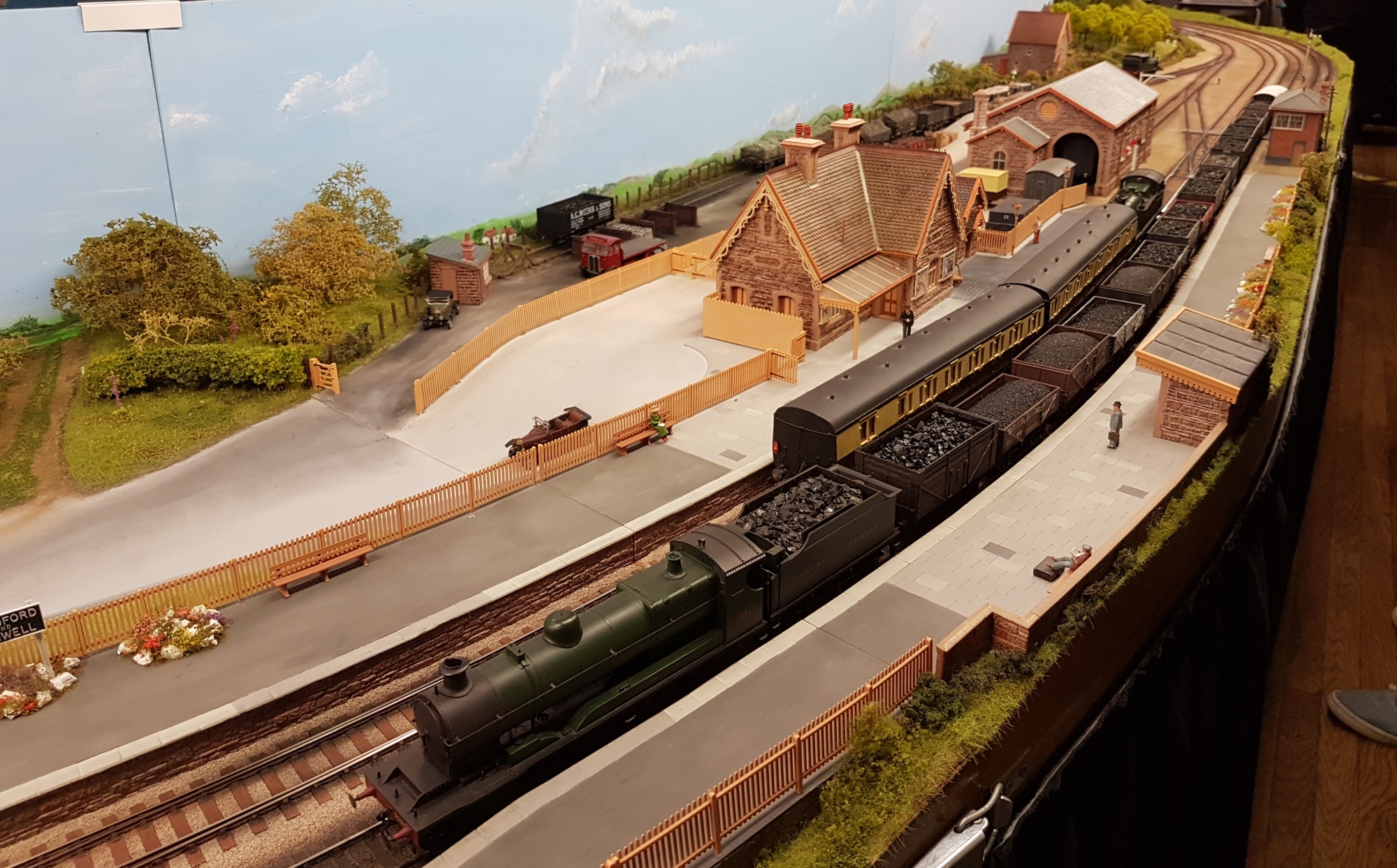
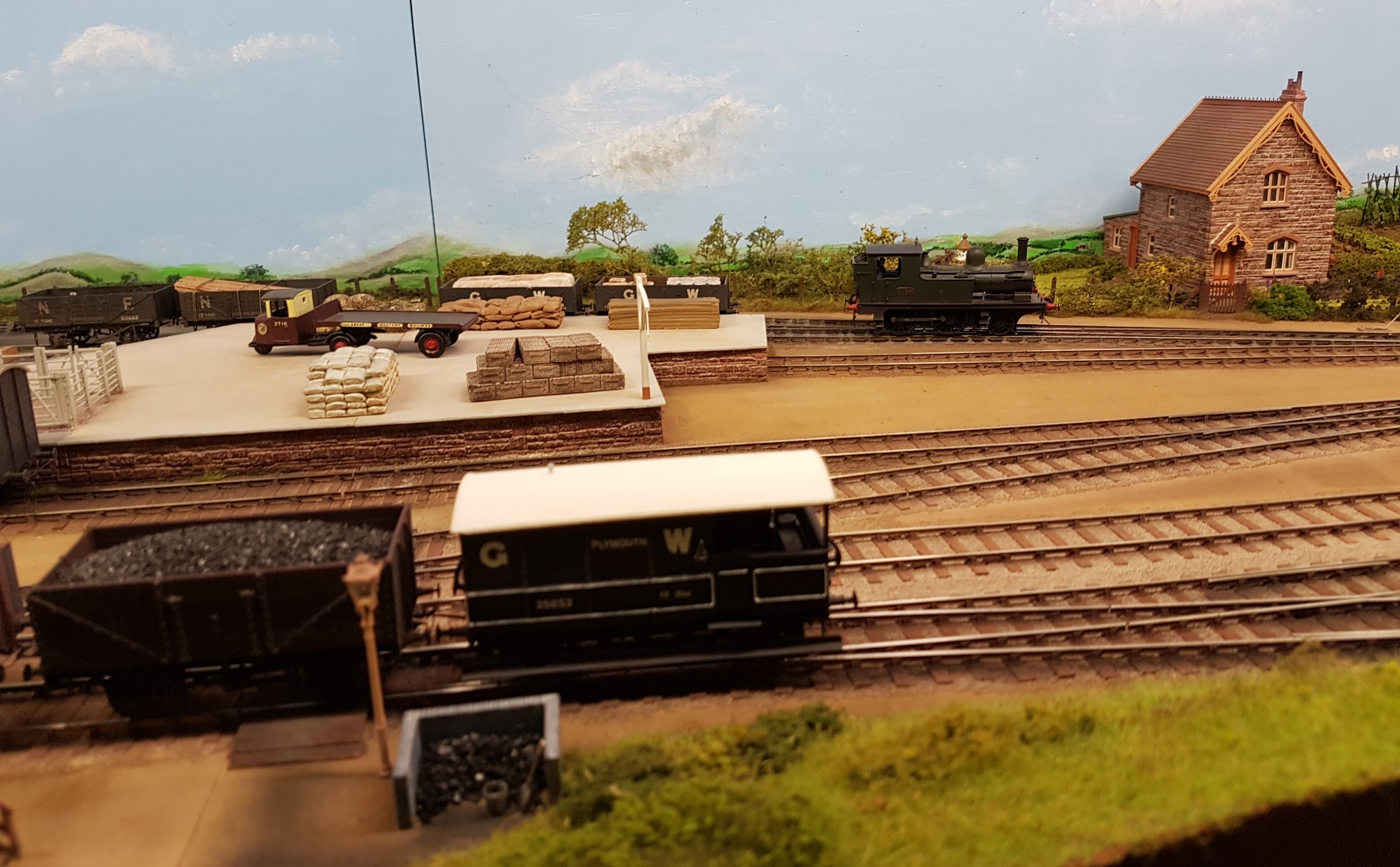
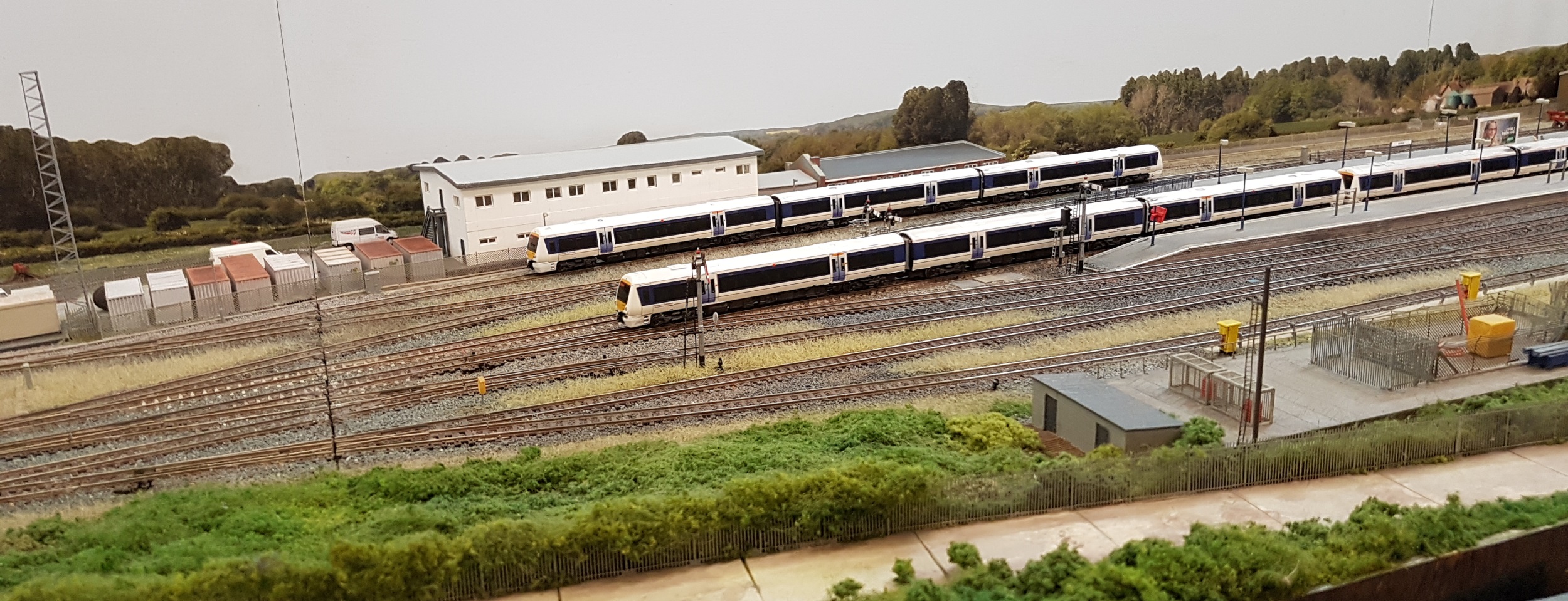
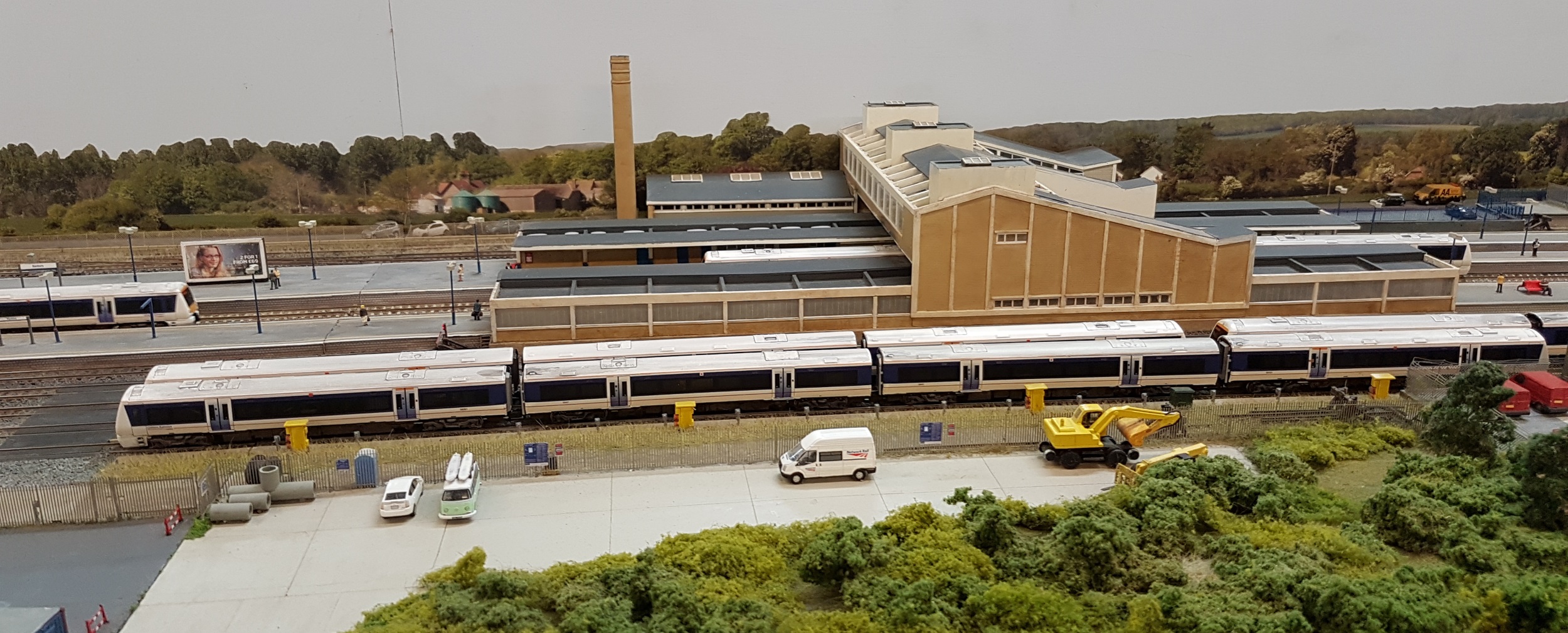
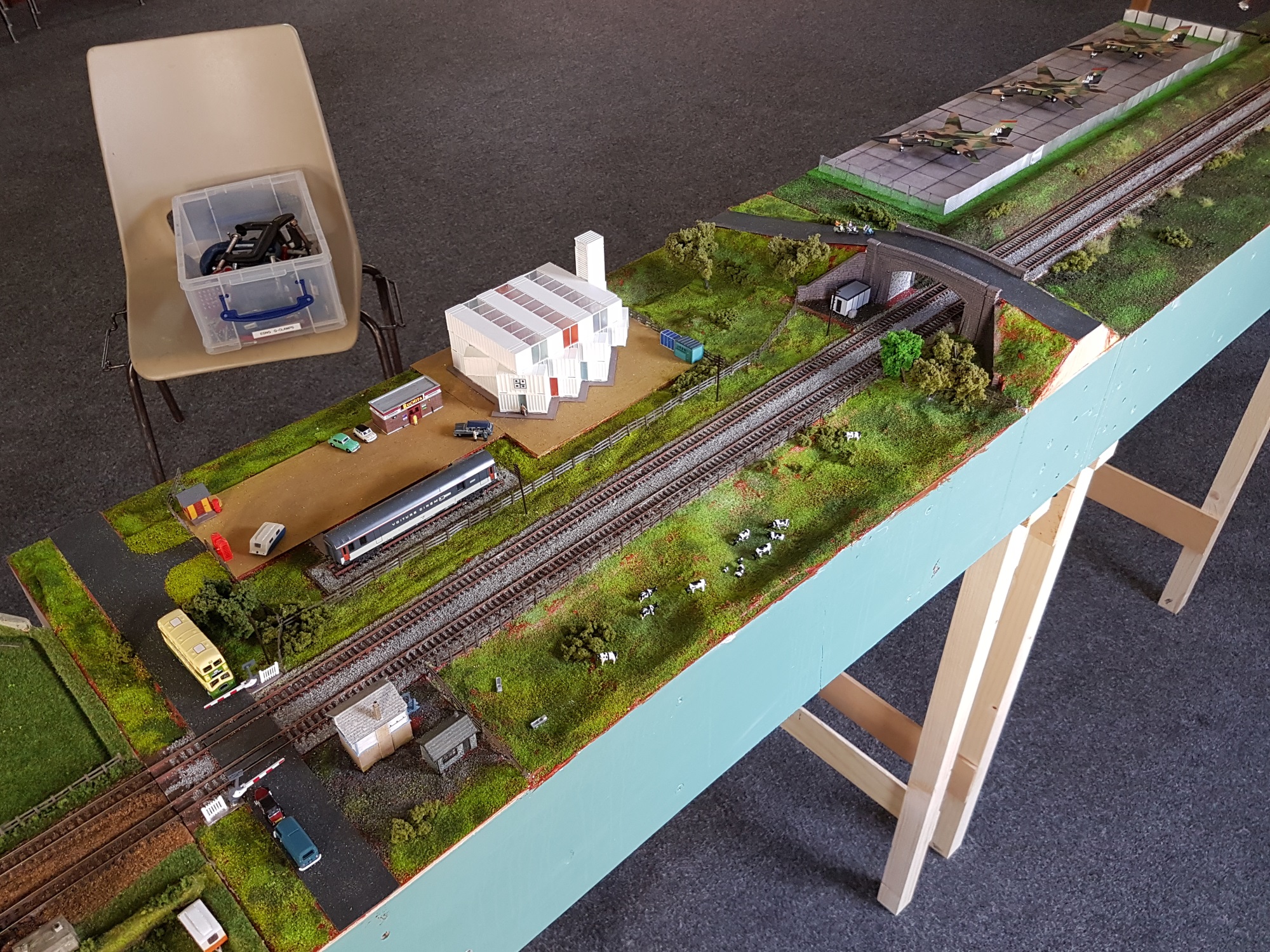
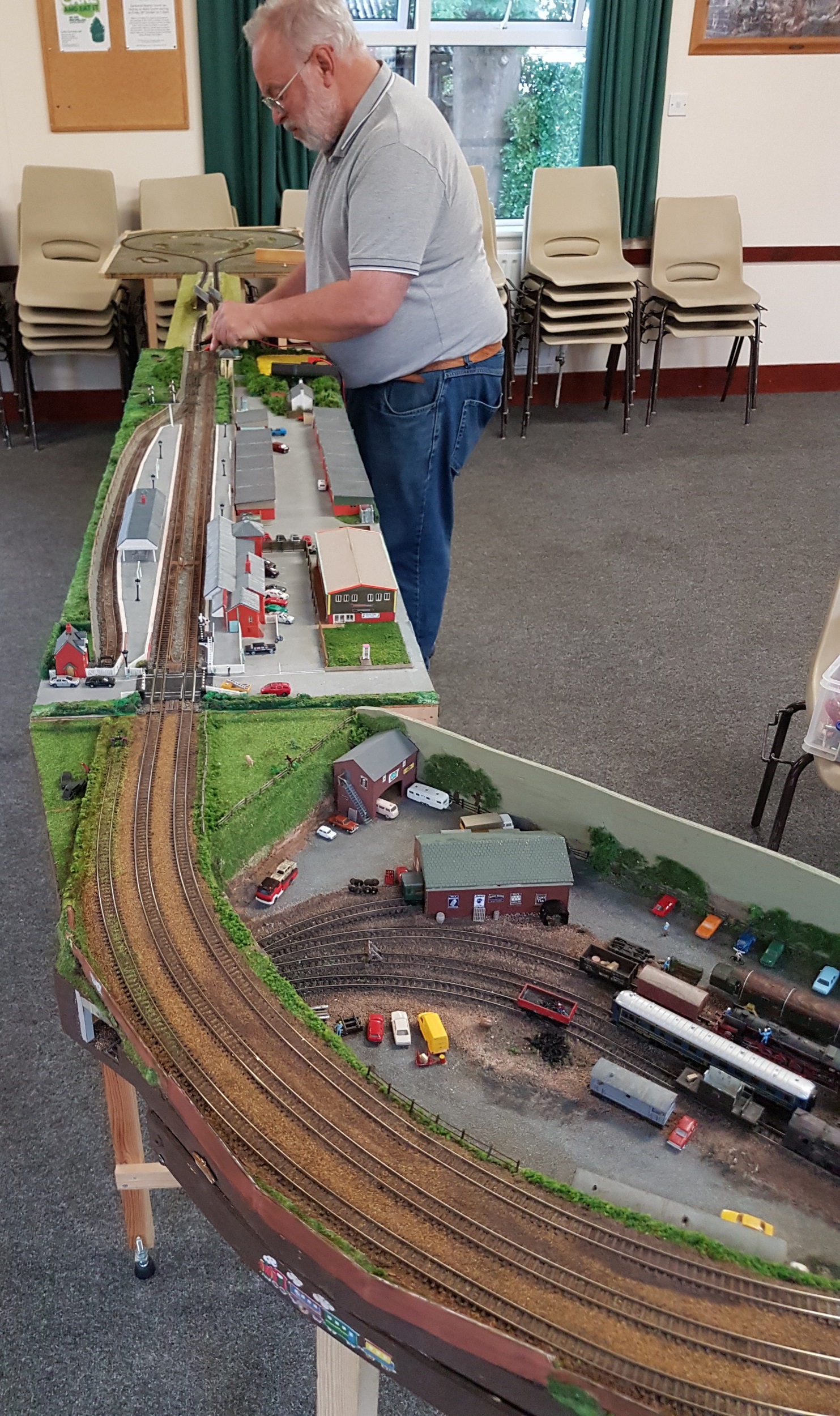
We’ve been meaning to carry out some maintenance on Aldersford, our late President Martin’s N-club modules, based on the Southern Railway station at Ford.  The boards had warped, making running at last year’s ESNG show a little unreliable.  With a little more time on my hands, I foolishly offered to have a go at improving running, so the layout would be more reliable at Stuttgart.

The other catch with the boards was that they needed their own power, as there were 11 switches to operate points, sections, and lights, with a forest of wiring underneath the boards.  This would have allowed a train to reverse in the station bay platform.  But we didn’t understand what the switches did, and operation was by trial and error.  And we had only ever ran trains straight though the station.  So I decided to solder the points to be set to the main line, and replace all the wiring with a simple N-club ‘bus’ from one end to the other.

First job on the small board of the two, was to strip out the wiring that was in the way, and screw a ply and stripwood girder into place along the track centre line.  This more-or-less flattened out the worst dip in the trackwork.  Wiring and plugs were fitted to provide continuity through the module.

However, one track still undulated too much for comfort, and the point was high – possibly as it was a Peco code 80 point linked to code 55 trackwork.  So I did a swift PW job and lifted all of one track.
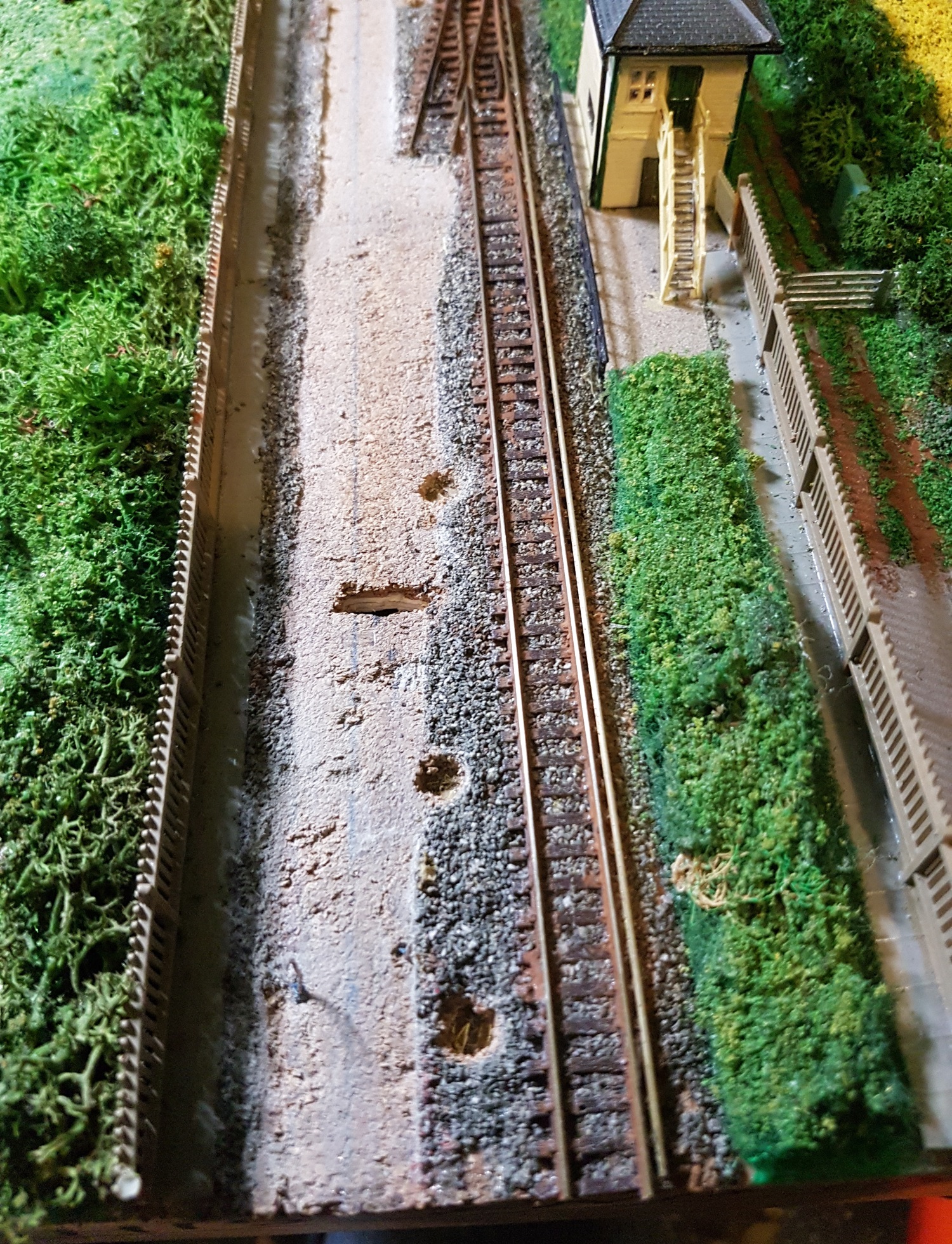
A new code 55 point and track more or less flattened things out.  The new track was reballasted in due course.

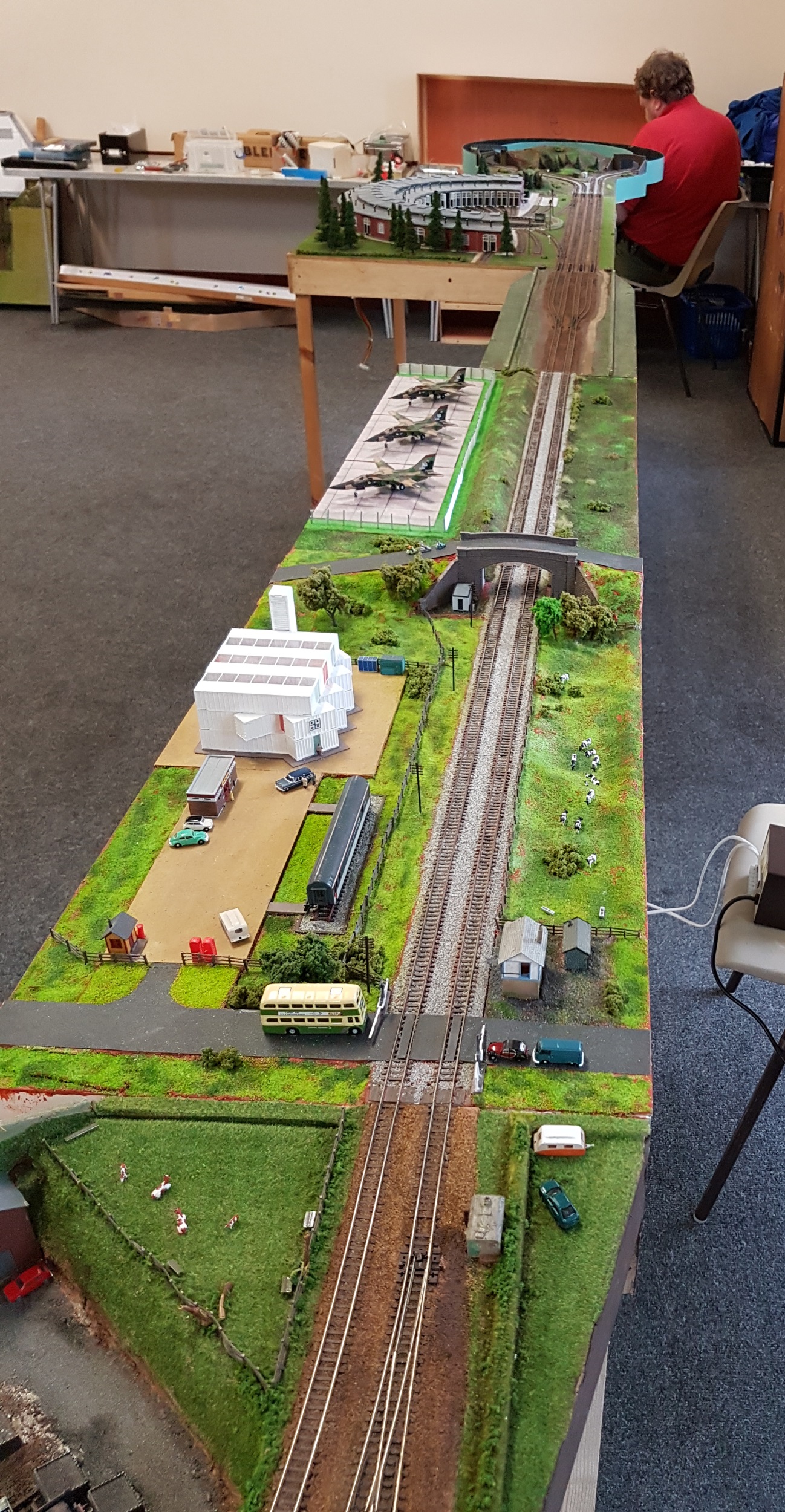
So to the second, long board.  Once again, most wiring was removed, just leaving the lighting bus down the middle of the module.

After a couple of false starts, I opted to use aluminium angle to flatten out the bumps in the board.  Fortunately, this one wasn’t as bad as the short board, and although I couldn’t quite get all the gradients out, it’s a lot, lot, better.

I then had to relay the point on the right and replace the track at the edge of the board.  There’s still a little bump at the join, but it’s a whole lot flatter than it was before.

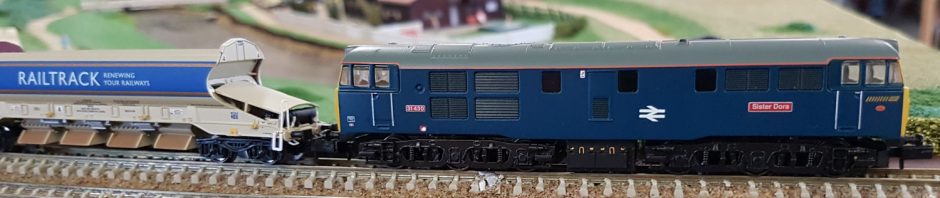
And a ‘first’ train successfully run end to end on both tracks!
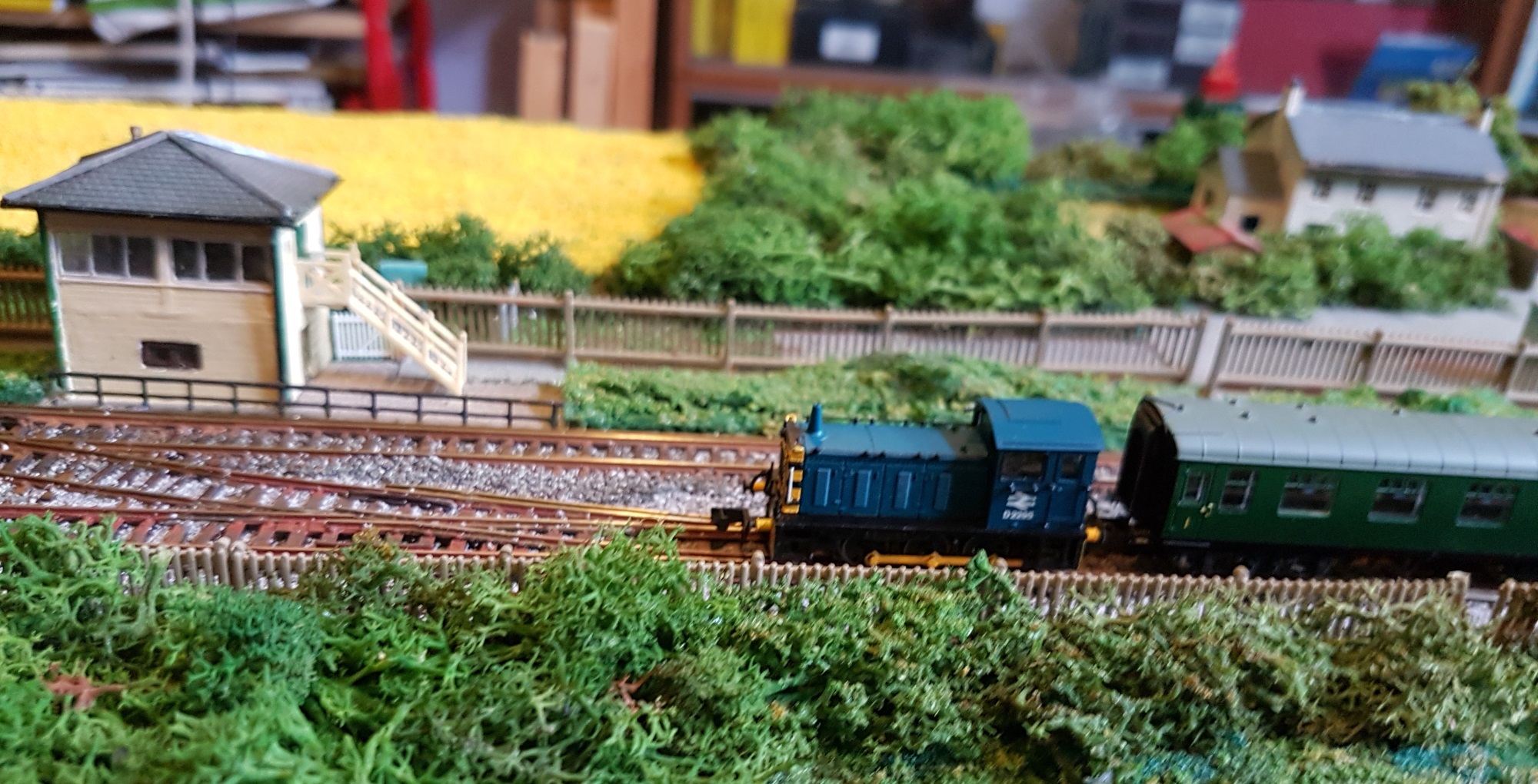
Well, it’s far from perfect, but should run a lot better at Stuttgart and the next ESNG show.  I still need to sort the lights (on the platform and in buildings) out.  These had their own transformer, and frankly, we never used them.  I will fit an AA battery pack under each board, so the lights can run without exterior power.  Still, I think that’s a project to complete by the April show.

Posted in Jon's layout ramblings, Layout design, N Club International | Tagged , , , | 1 Comment

ESNG meeting – PlayDay 8 October 2017

A surfeit of pictures this week – well at least it cuts my pontificating…..

Some club meetings just seem to go very well indeed.  Sunday’s PlayDay was a very pleasant afternoon, and 10 of us had a very sociable afternoon with plenty of trains running, and plenty of conversation.

The fiddle yard had plenty of stock in place, despite missing the Japanese connection with Paul exhibiting at the Croydon show.
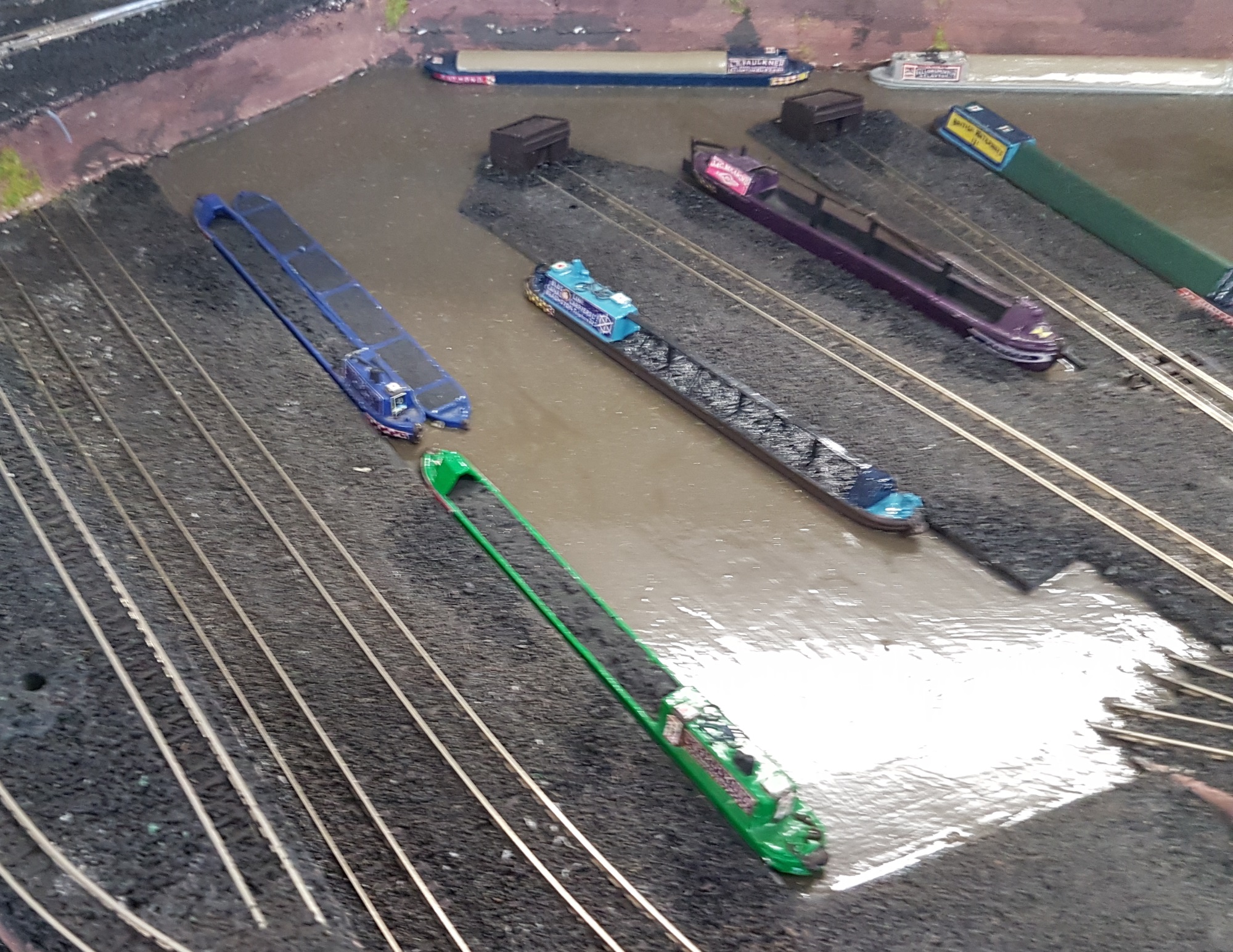
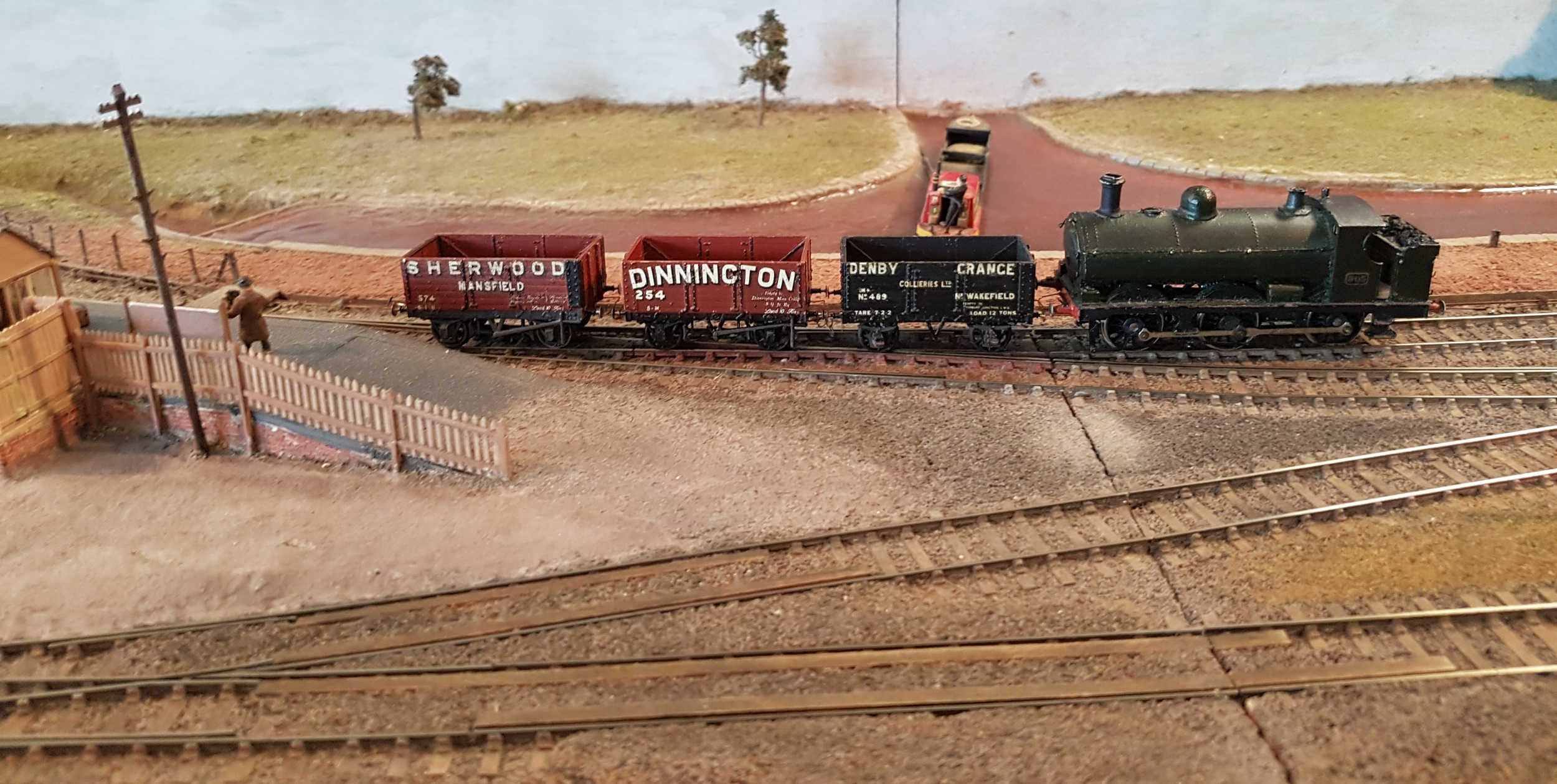
Dave’s canal basin has had some detail added including these delightful canal barges.

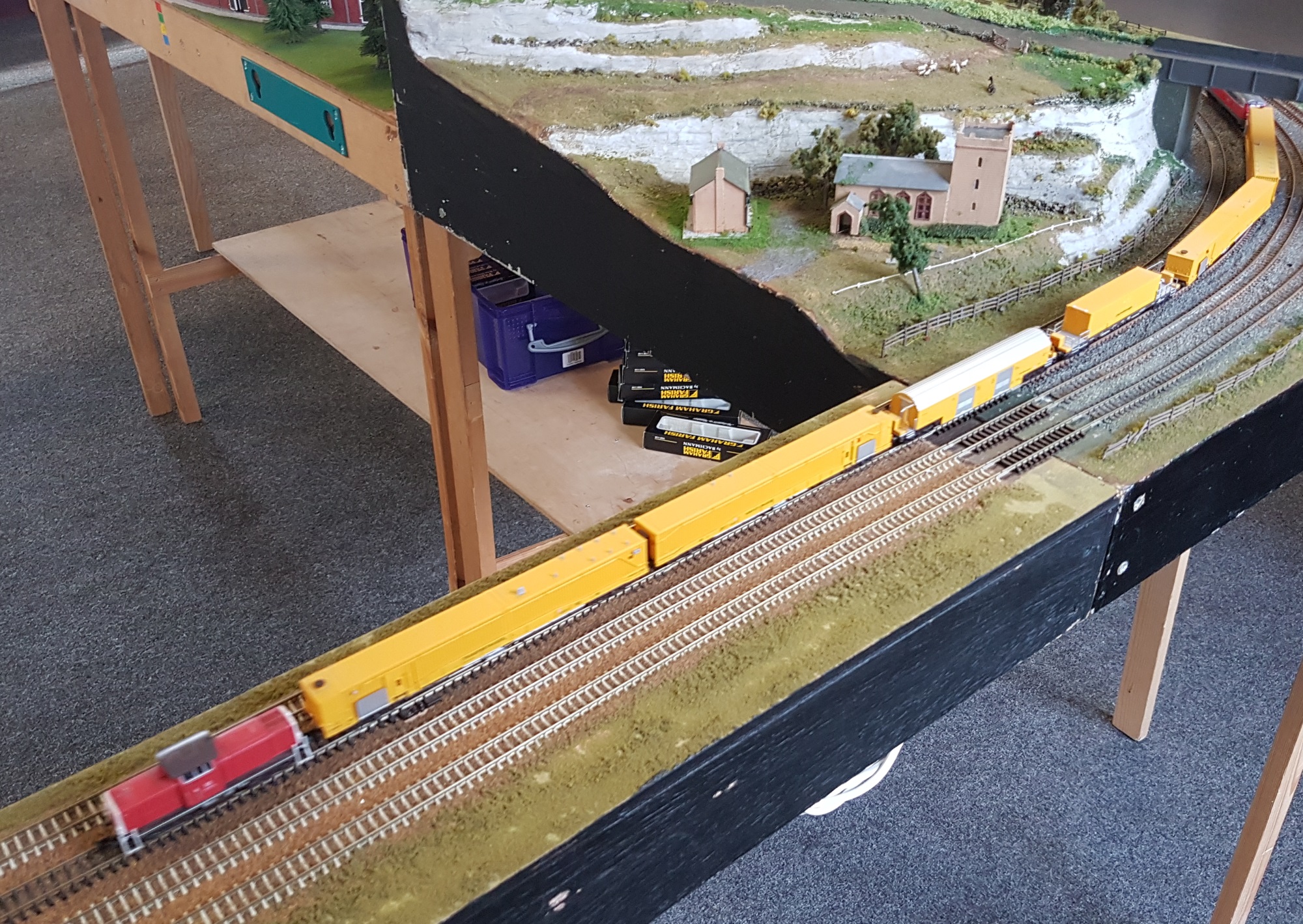
Sean was testing a new (to him) train, a German ‘tunnel rescue train’.  The prototype has an engine on each end, and loads of rescue equipment in the wagons, and even a hospital car.

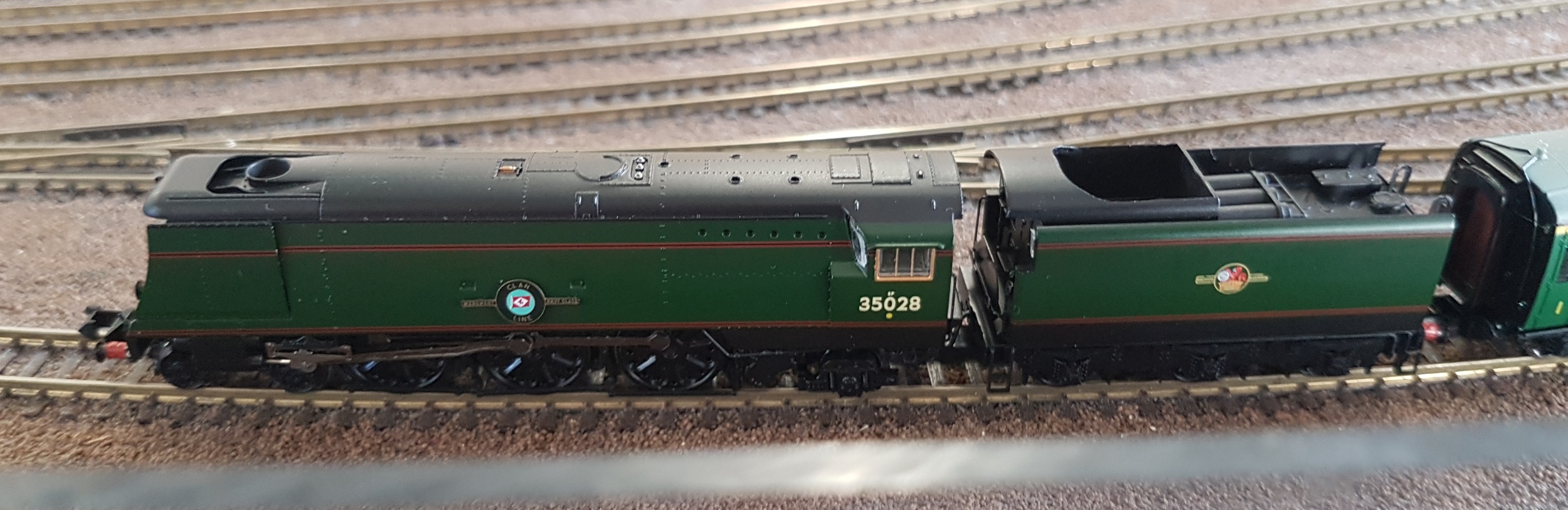
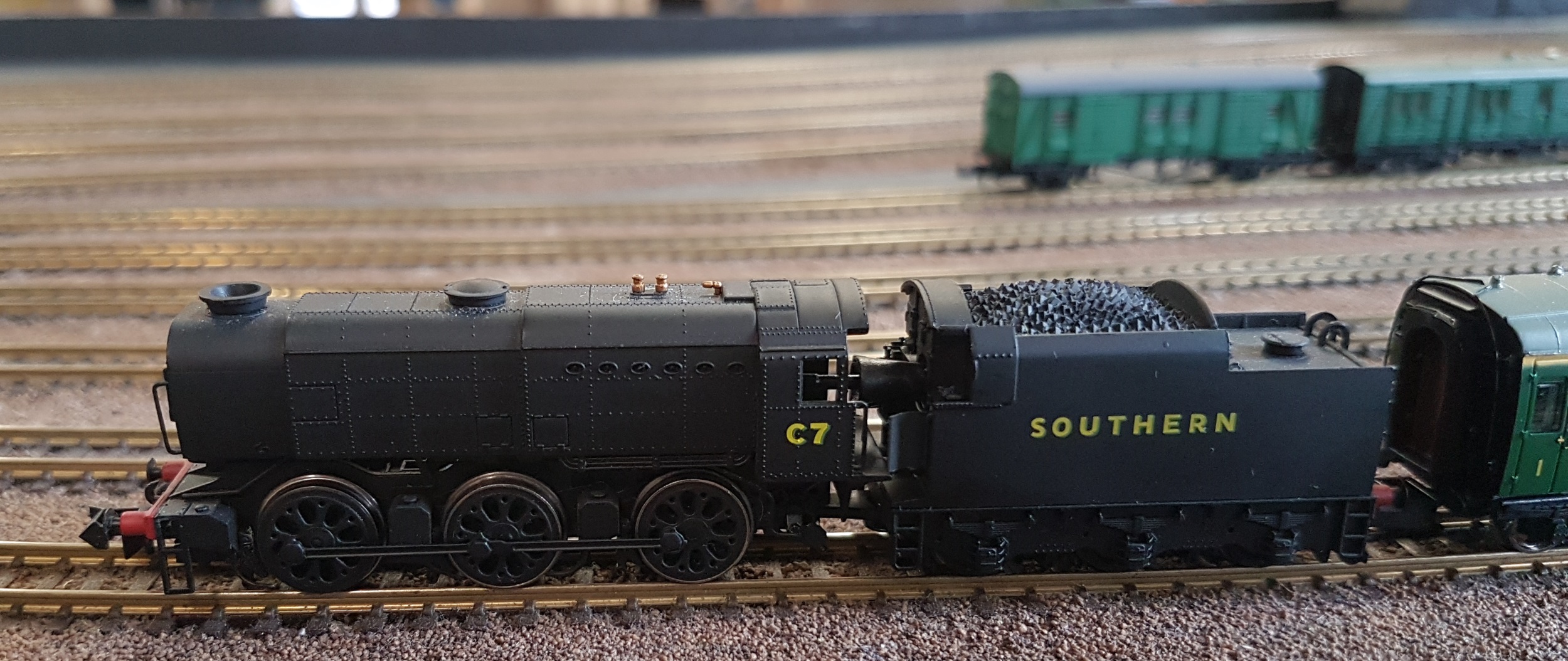
Brian ran this lovely Merchant Navy Pacific, and less elegant, but always interesting, Q1 0-6-0.  The Q1 ran like a watch – it seems to be a model where you get a good one or a bad one!

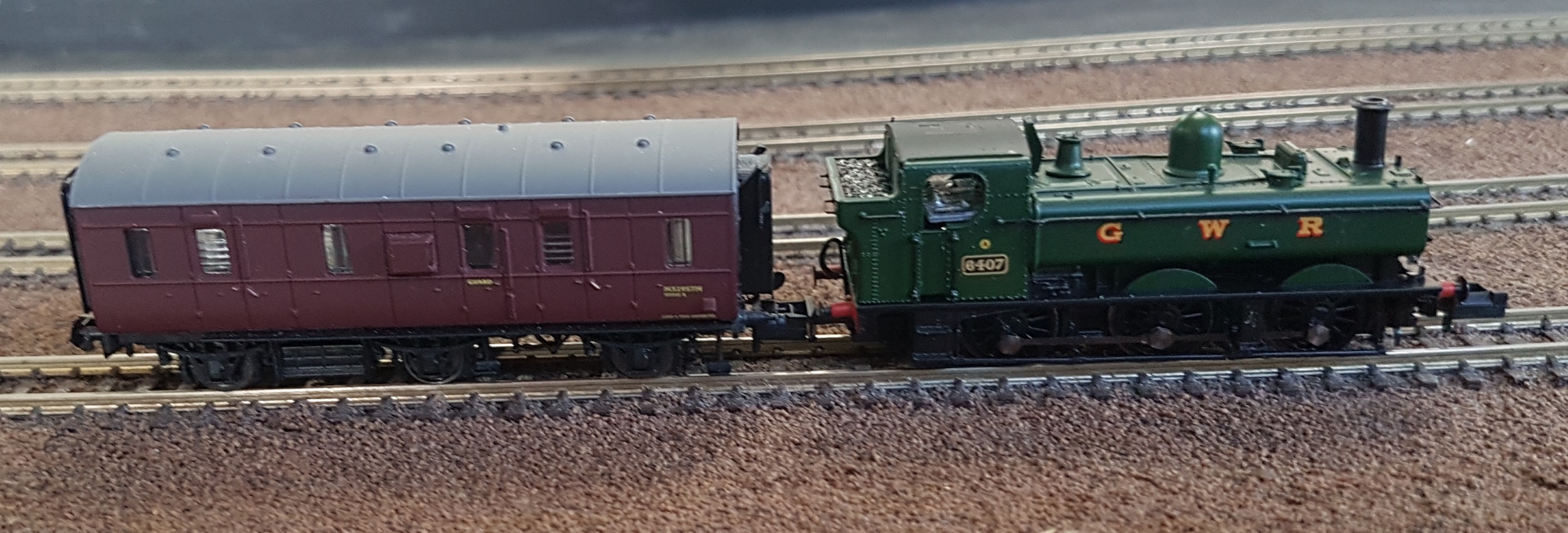
Phil’s Pannier tank wasn’t overloaded!

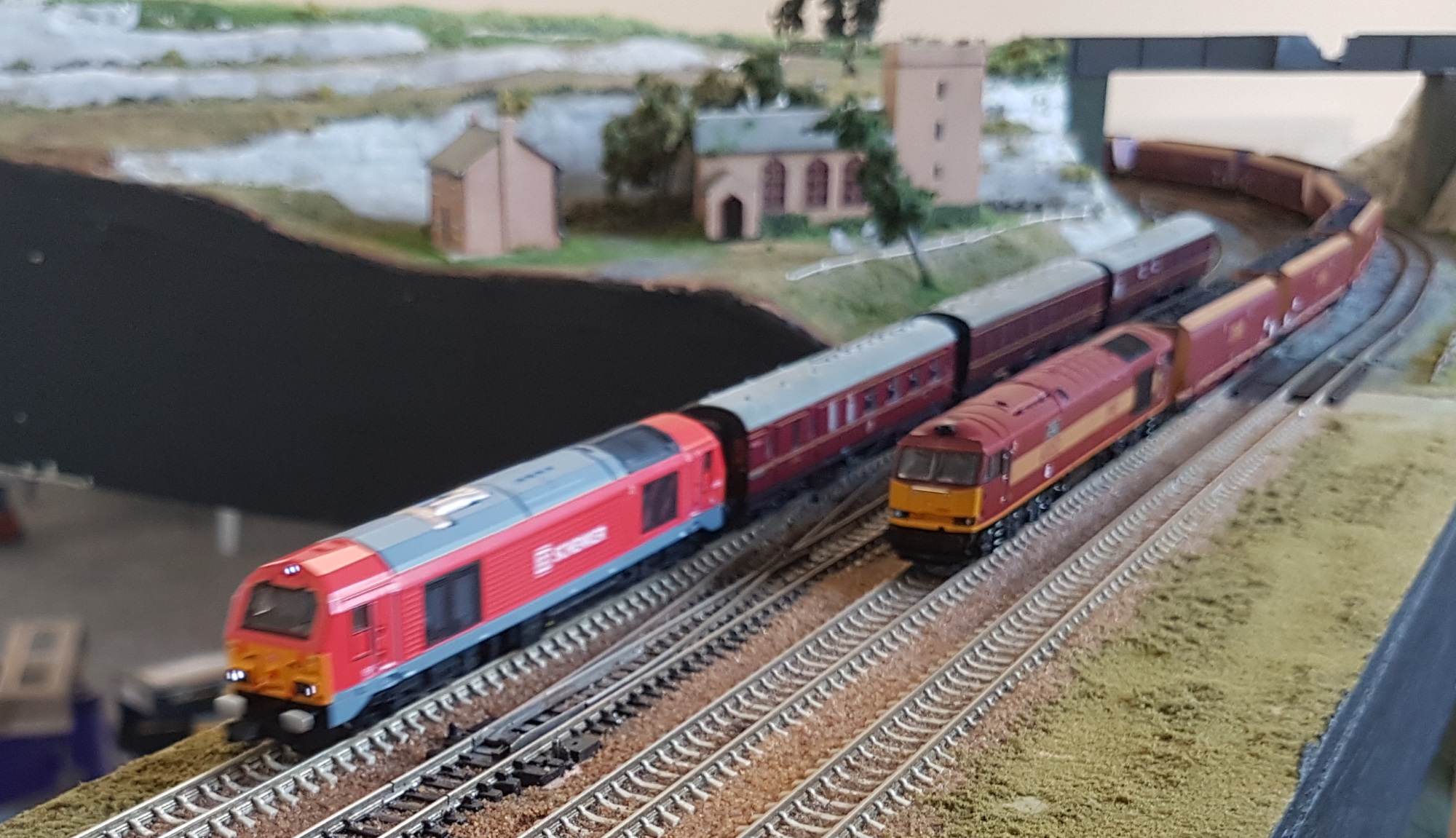
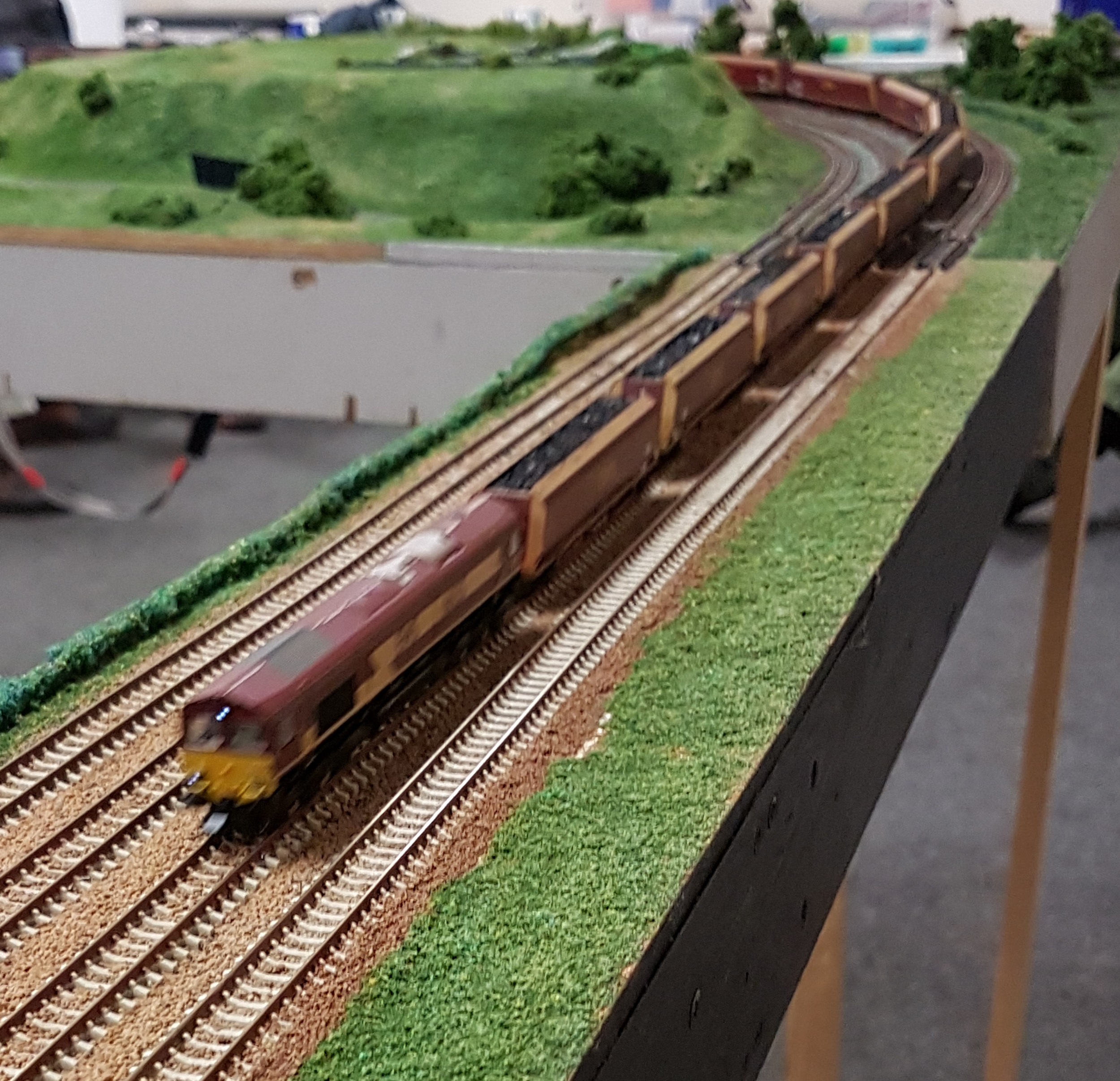
Allan gave his EWS coal train another run…

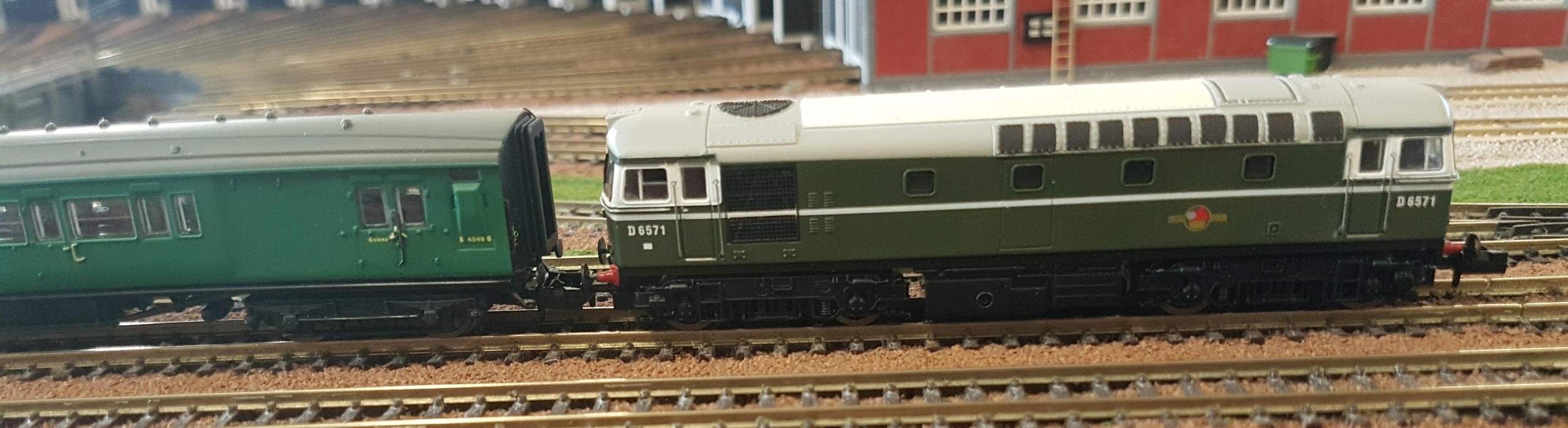
I had a Class 33 and a rake of Maunsell coaches plus a couple of utility vans.  It ran smoothly on-and-off for most of the afternoon.  I’m not sure whether the first 33’s ever pulled these coaches, but it looks the part.

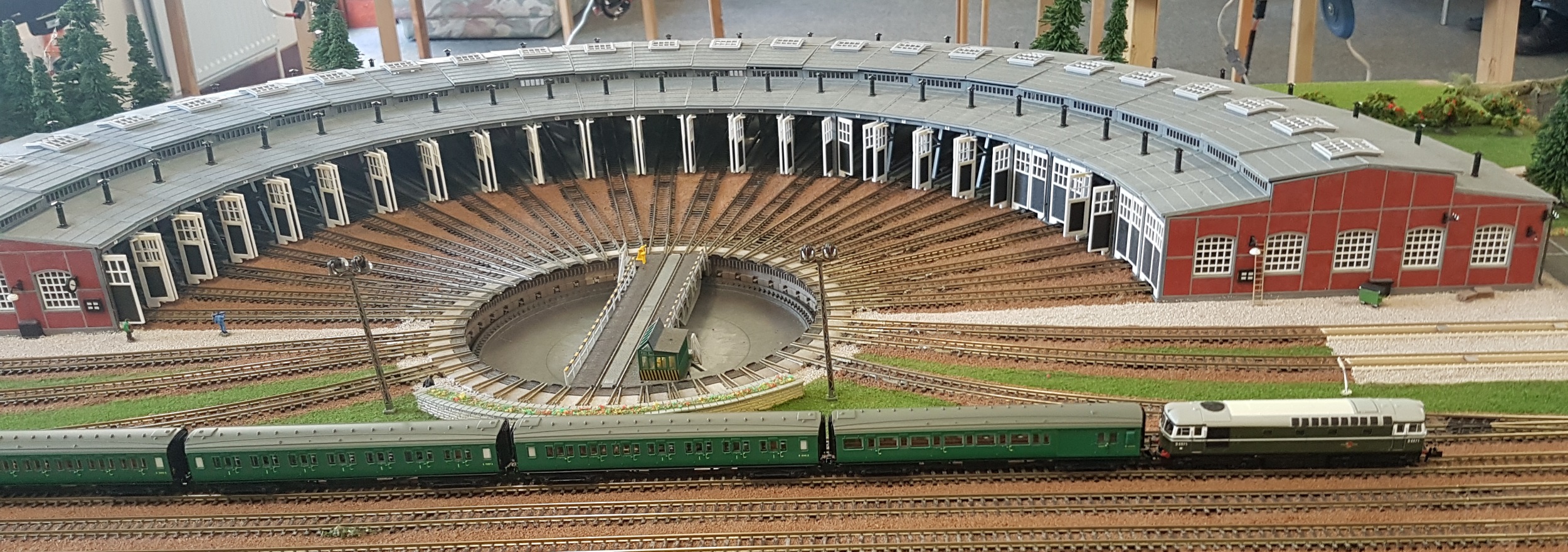
ERIC was on display, but this time as a closed depot??

We were missing Paul, but Simon tried for the American equivalent of the monster goods train.  Not as long, but it ran pretty well!

And here’s Brian’s video of the afternoon – showing how a good camera takes better photos and film than my phone….

And it ended with a curry – a good end to a good afternoon.

Posted in ESNG, ESNG meetings | Tagged , , , | Leave a comment

Croydon MRS show 2017 #2

Another old favourite worth seeing again was The Glyn Valley Tramway, an 009 model of Glynceiriog, the passenger terminus of the line that then continued to the slate quarries.  Lots of excellent detail, but it can’t be the slate area of Wales – it’s not grey and raining!

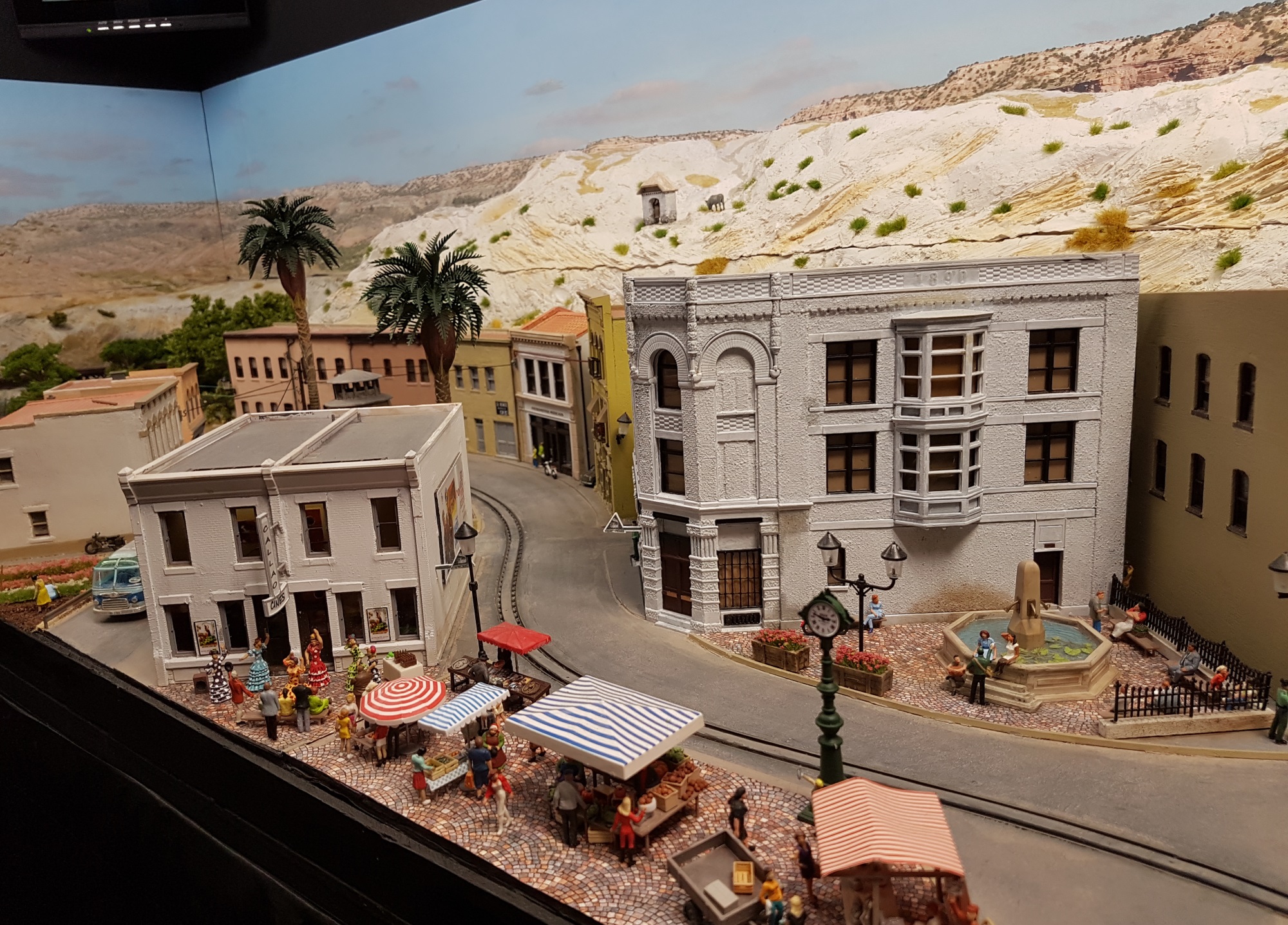
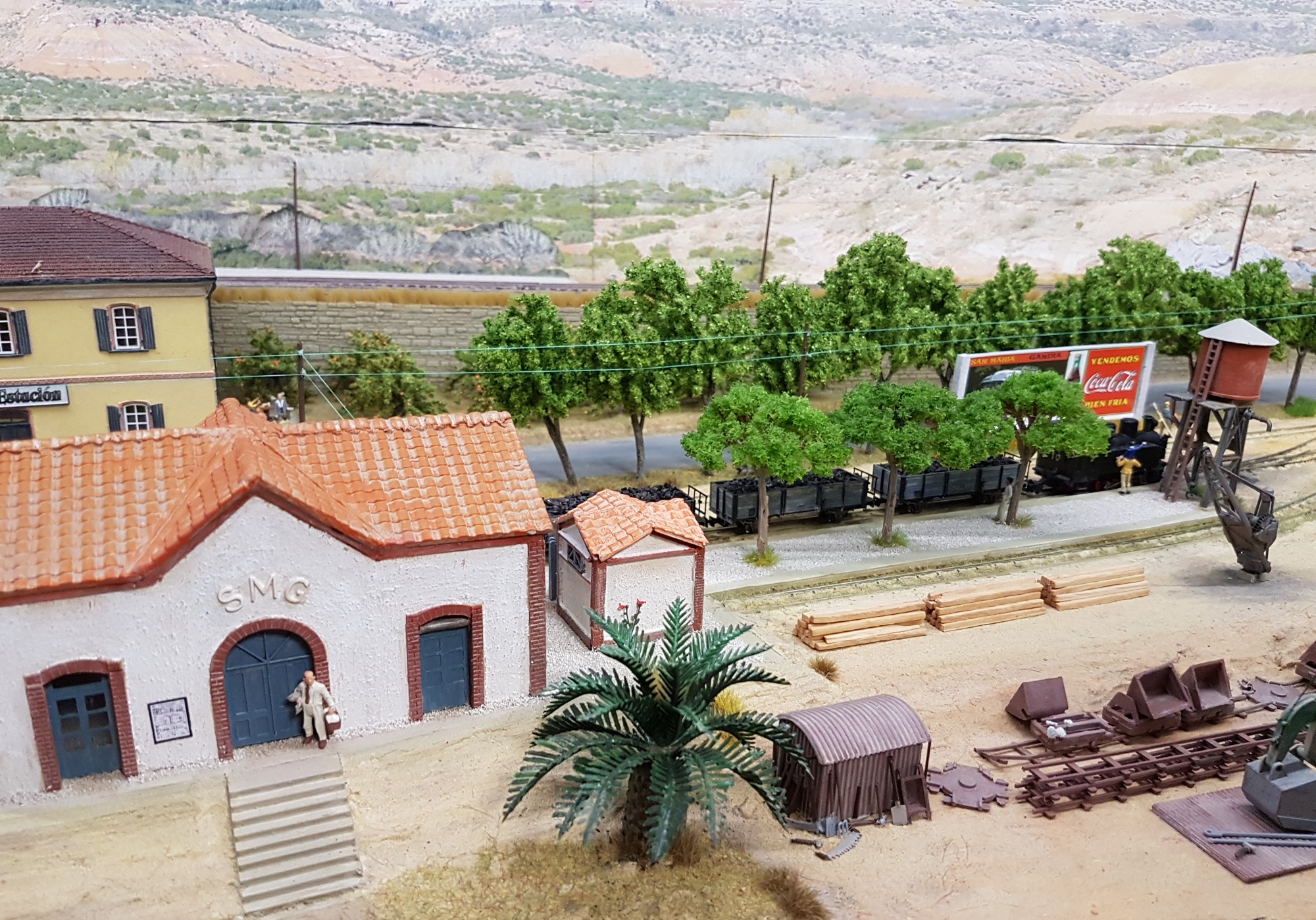
Ian Milroy has obviously been busy!  El Ferrocarril San Maria Gandia is a freelance layout set (can you guess from the name) in Spain, but is closely based on a number of real locations.  It includes HO, HOe narrow gauge, and working road vehicles.  The model includes a single carriageway 1km tunnel where road and rail share the same bore.  Yes, it existed, and the accident rate must have been high!  Excellent modelling and I shall look forward to seeing this one again.

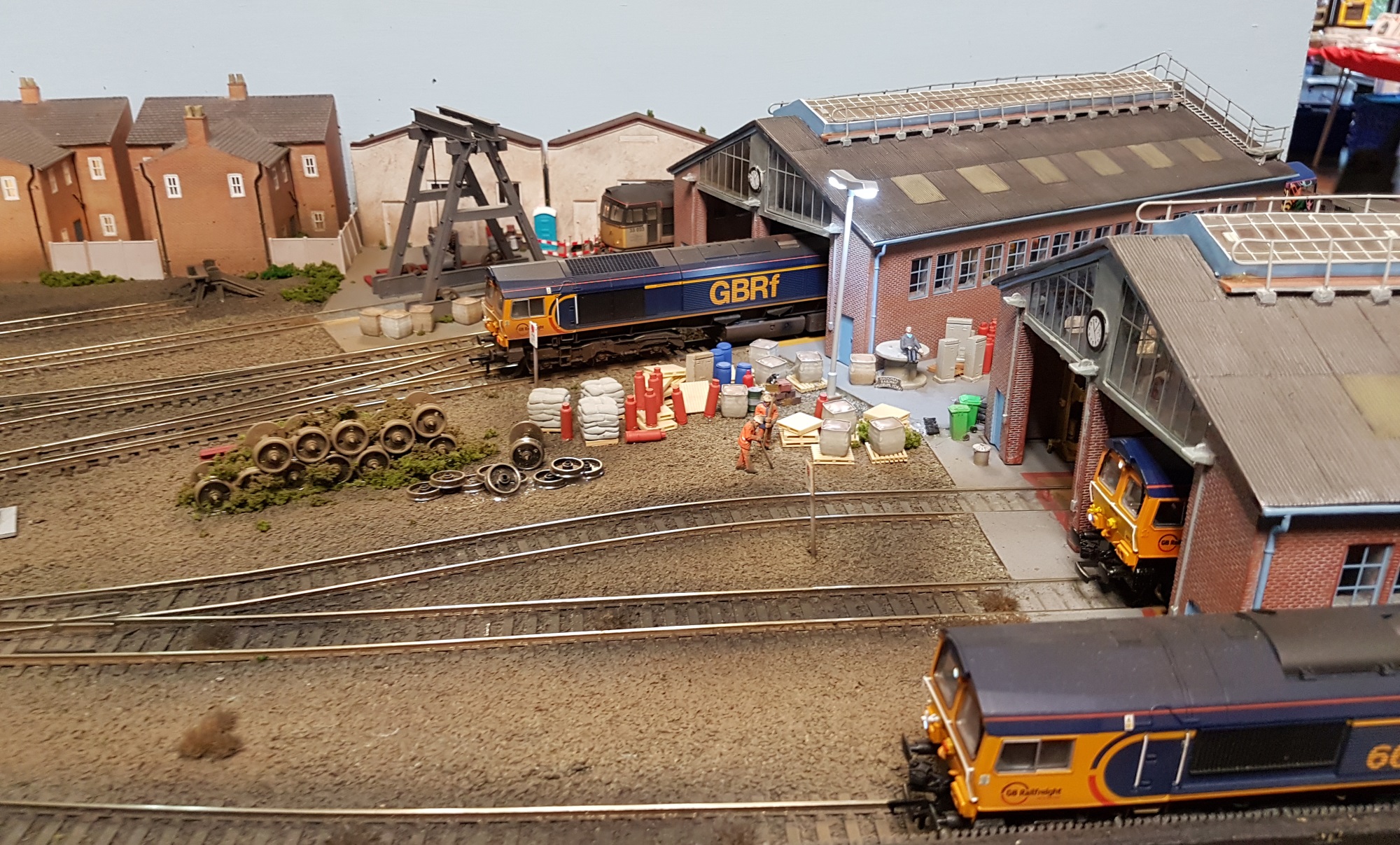
Oak Lane TMD in ‘OO’ could best be described as a noisy layout.  All those sound equipped diesels ticking over….

Sandford and Banwell, in 4mm P4, is loosely based on the eponymous station on the GWR Cheddar Valley line in North Somerset.

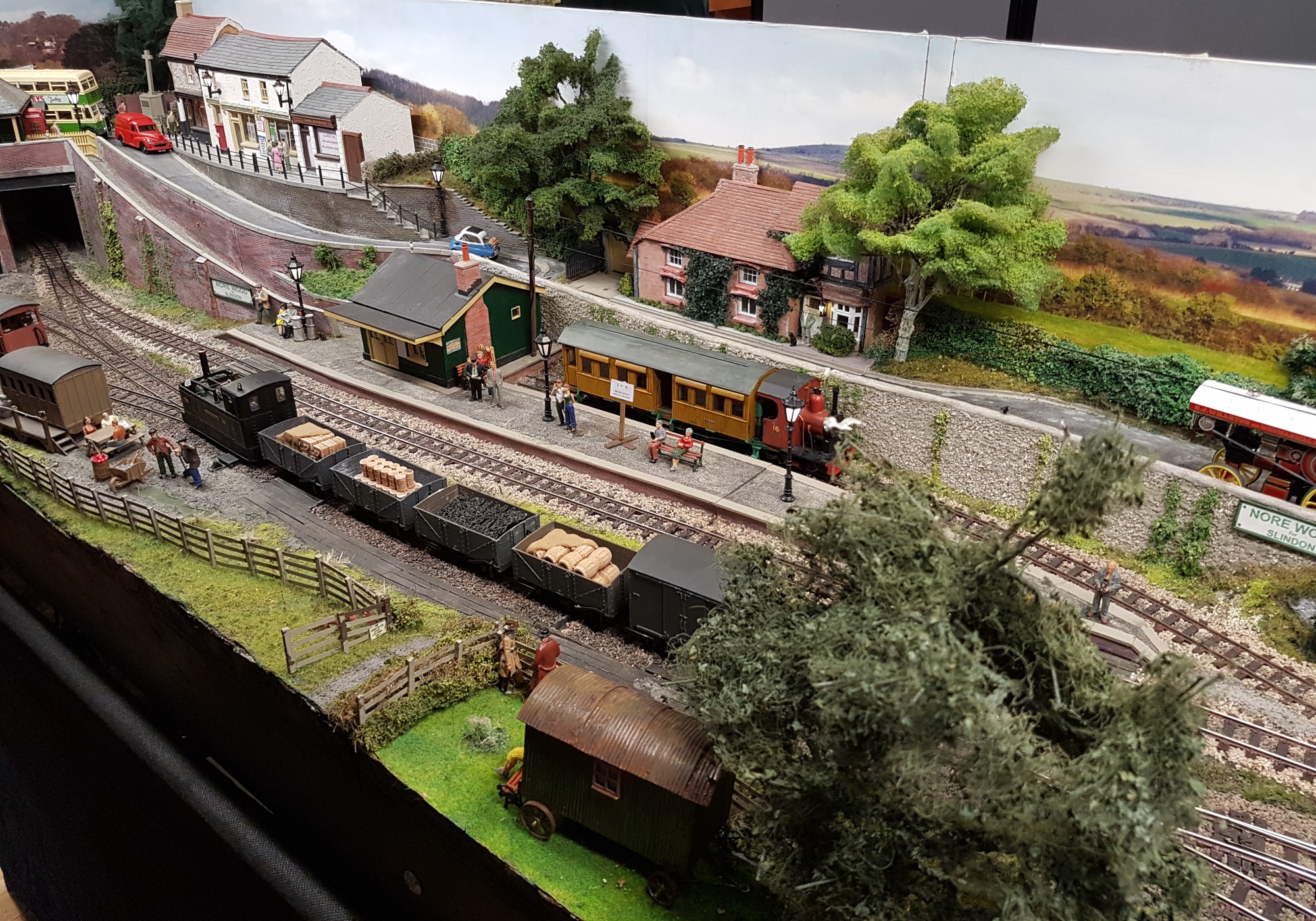
Another exhibition regular is the Slindon Vale Railway, in 7mm narrow gauge.  Lots of good cameo scene and detail, and always worth another look.

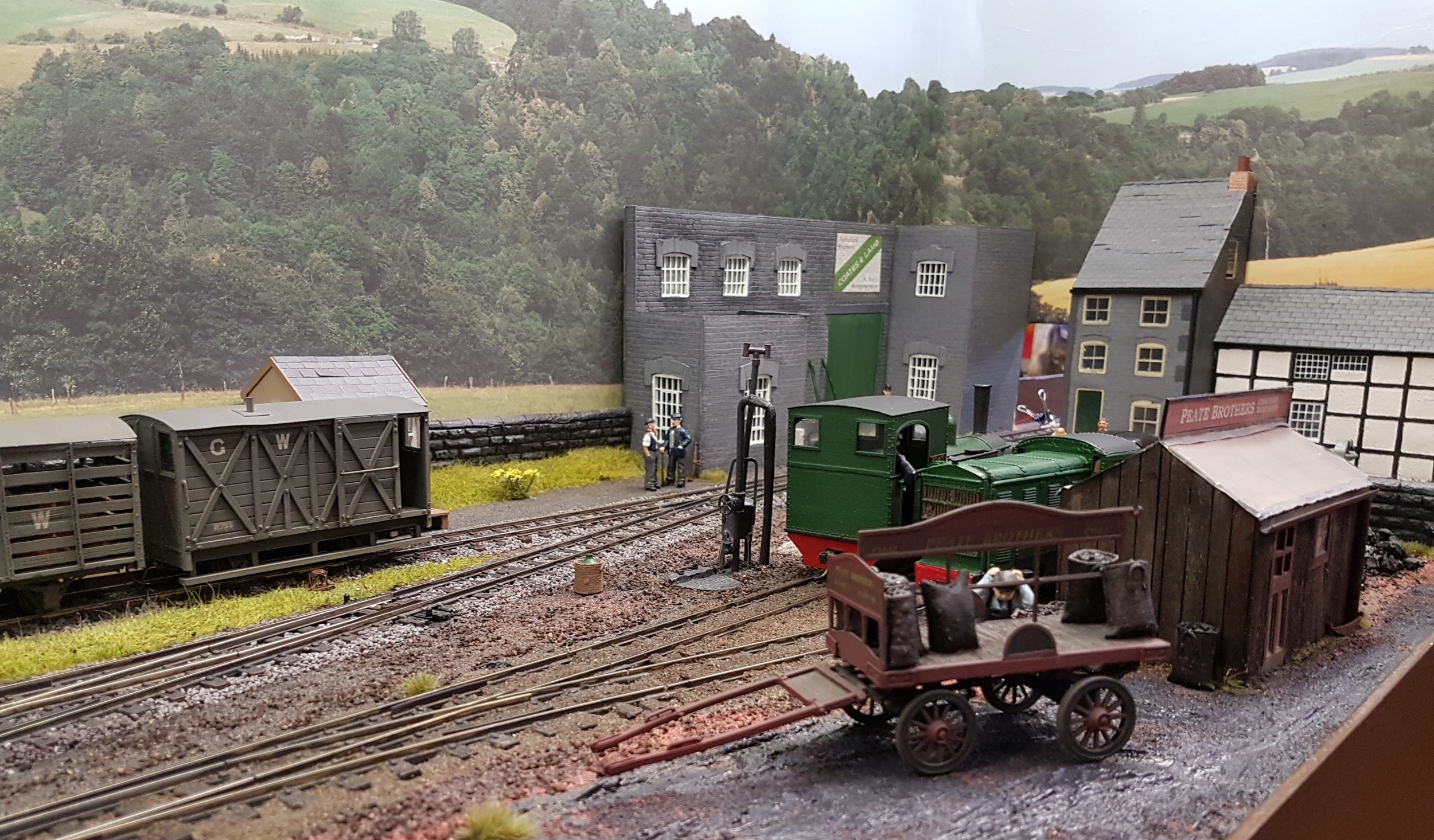
Also in 7mm narrow gauge, is St Mary’s, based on the Welshpool and Llanfair.

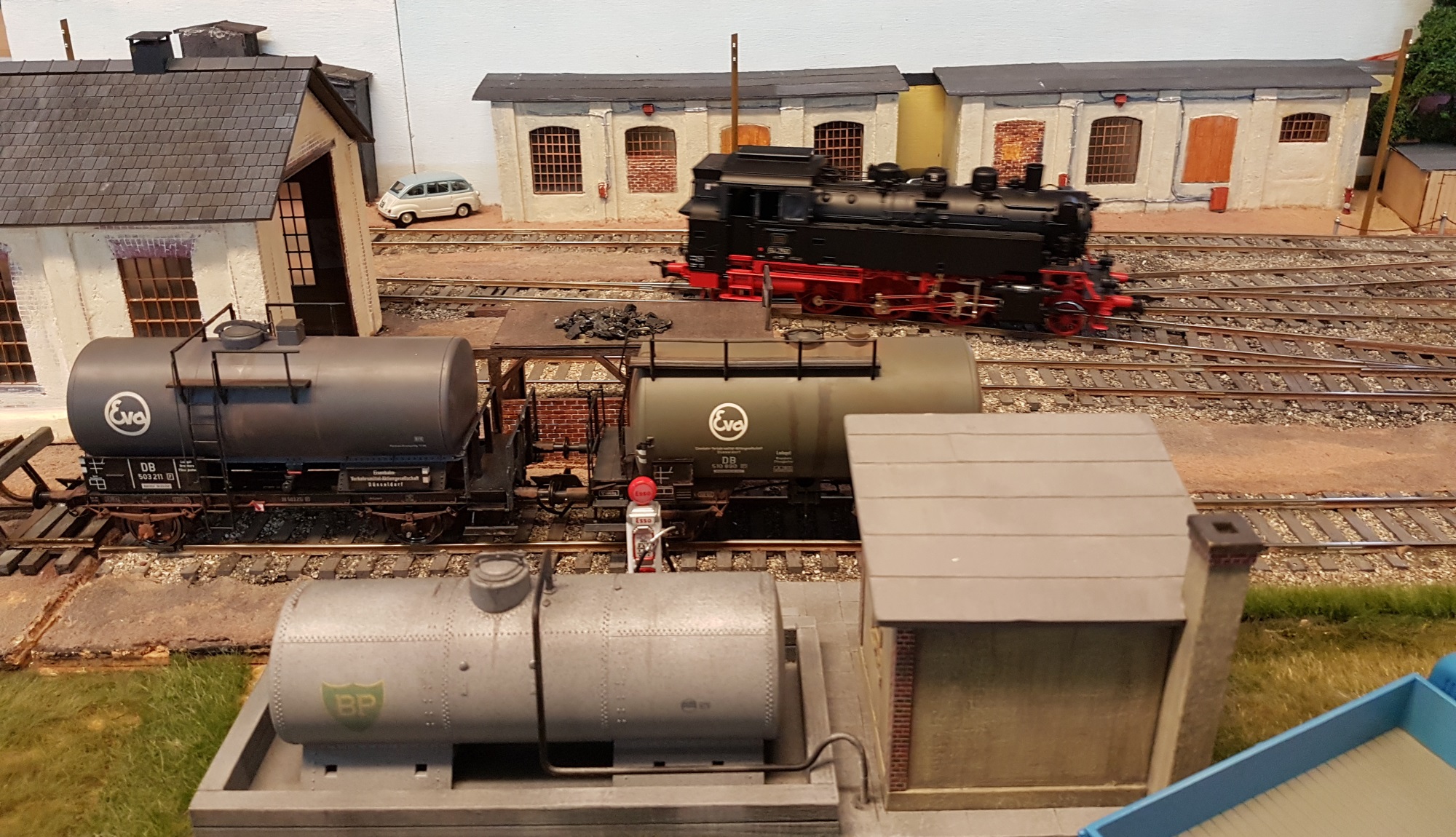
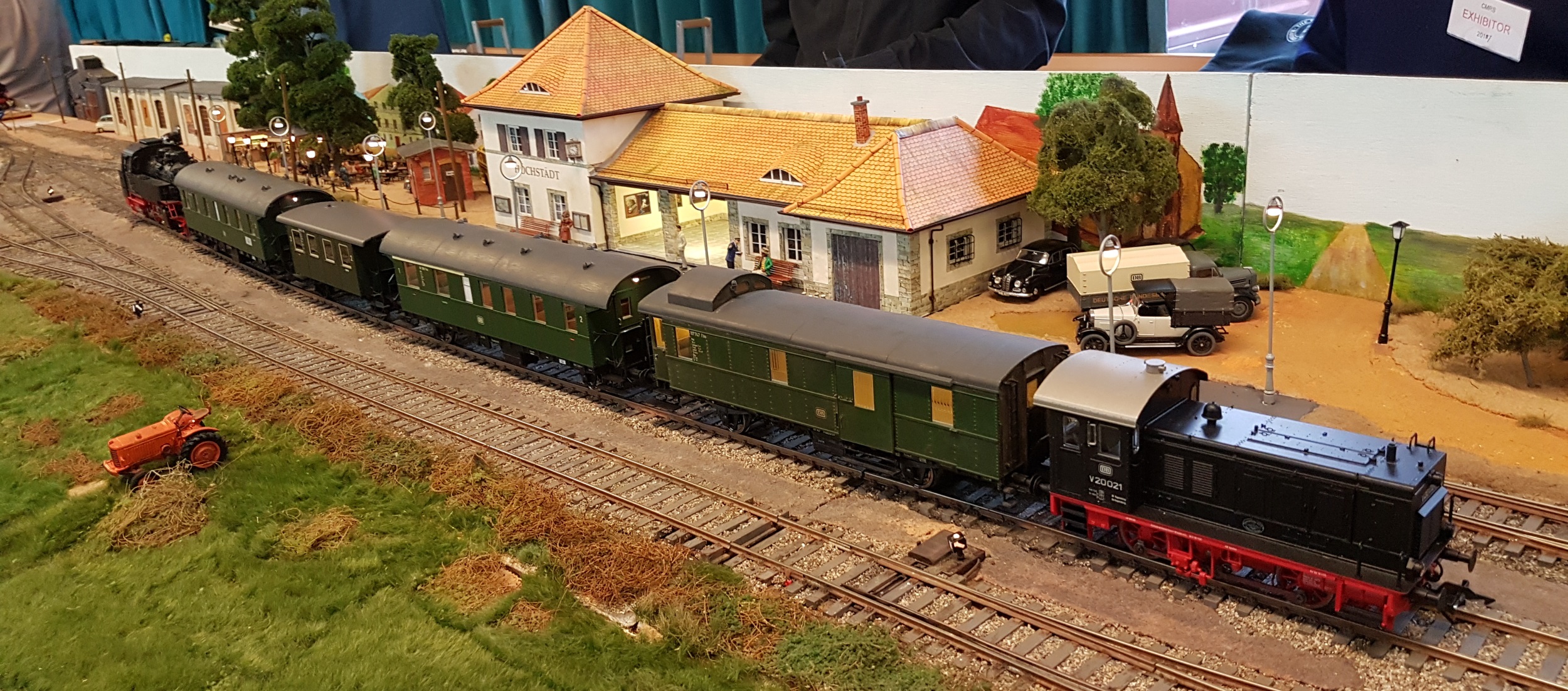
And last but not least, German ‘O’ gauge, with Hochstadt, owned by my old friend John ‘Bill’ Bishop.  We were both members of the Beckenham and West Wickham club in the 1960’s (John is still a member), and are both still playing trains!

That’s Croydon….  It’s a busy few weeks up to follow.  Next week Farnham, then Uckfield, then the Beckenham and West Wickham show, then the weekend exhibiting with the West Sussex Group.  A lot of late passes needed!
Posted in Exhibitions, Inspiration, Layout design, Out and about | Tagged , , | 1 Comment

Croydon MRS show 2017 #1

Having successfully differentiated Farnham from Fareham, it was off to the Croydon MRS exhibition at Warlingham.  It was a very good show, with some excellent layouts, perhaps spoilt in places by poor lighting.  BH Enterprises were in a very dim spot, and were considering issuing miner’s helmets to peruse their stock.  At least the lighting would have allowed Bob to doze off unnoticed…..

In these two posts I’ll work up the scales, starting with ‘N’.  Atlantic Road has become a bit of a local regular, but always worth a look.  A good variety of trains running in location that ‘oozes’ South (or should it be ‘Sarth‘ Sarf’) London.

Banbury is a fine model of the prototype station but it was a little monochrome when I passed by, with prototypical masses of DMUs on display.  The interesting part of the timetable came later.  Banbury station brings back memories of how we analysed the flooding in Banbury by comparing pictures of the station in 1998 and the 1930’s.  The levels of flooding (close to platform level) were similar, and showed that the 1998 floods weren’t as rare as everyone was claiming!

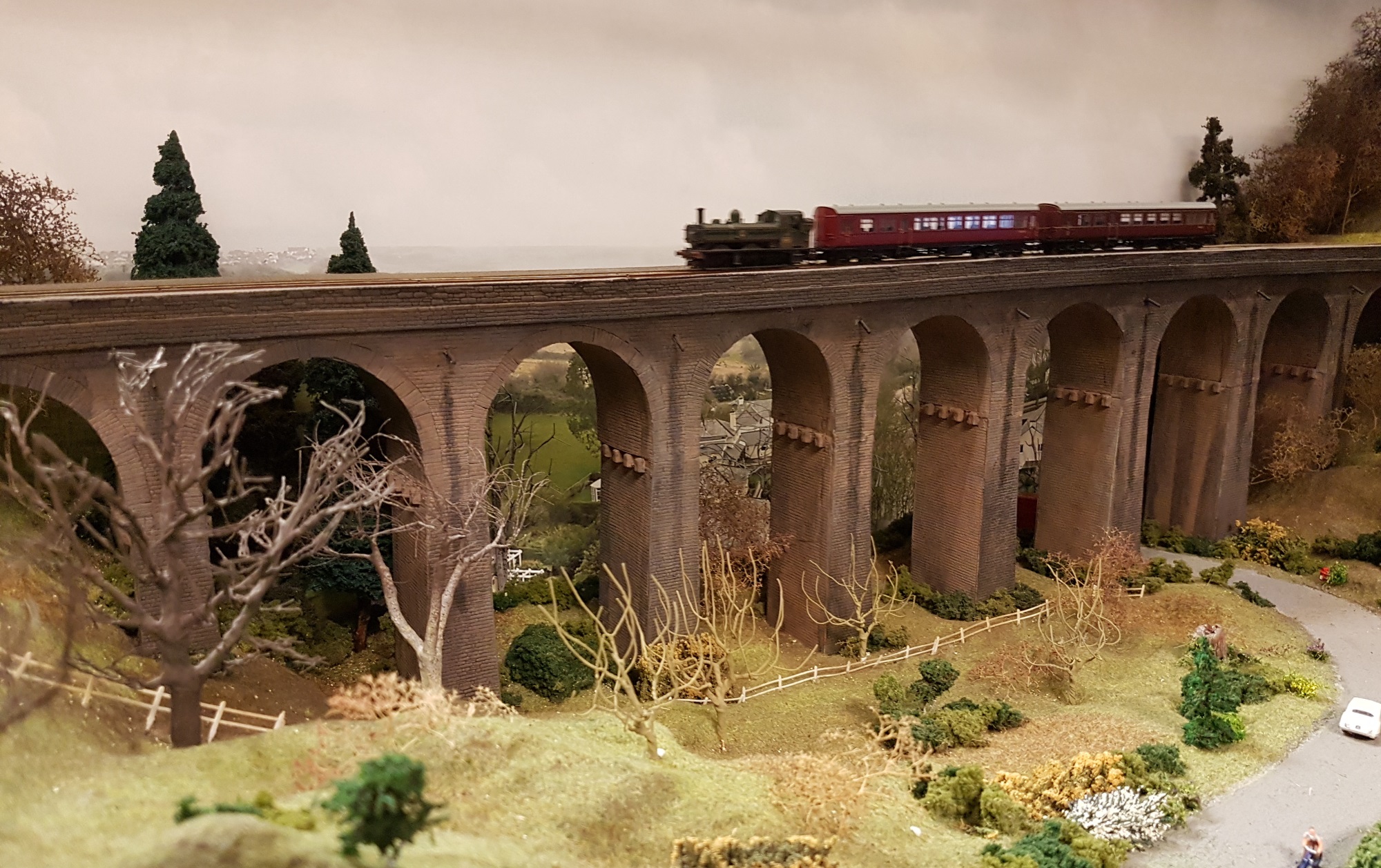
Hookhills Viaduct just models the viaduct that is on the line from Newton Abbott to Kingswear, and the period is set to be 1961/2.

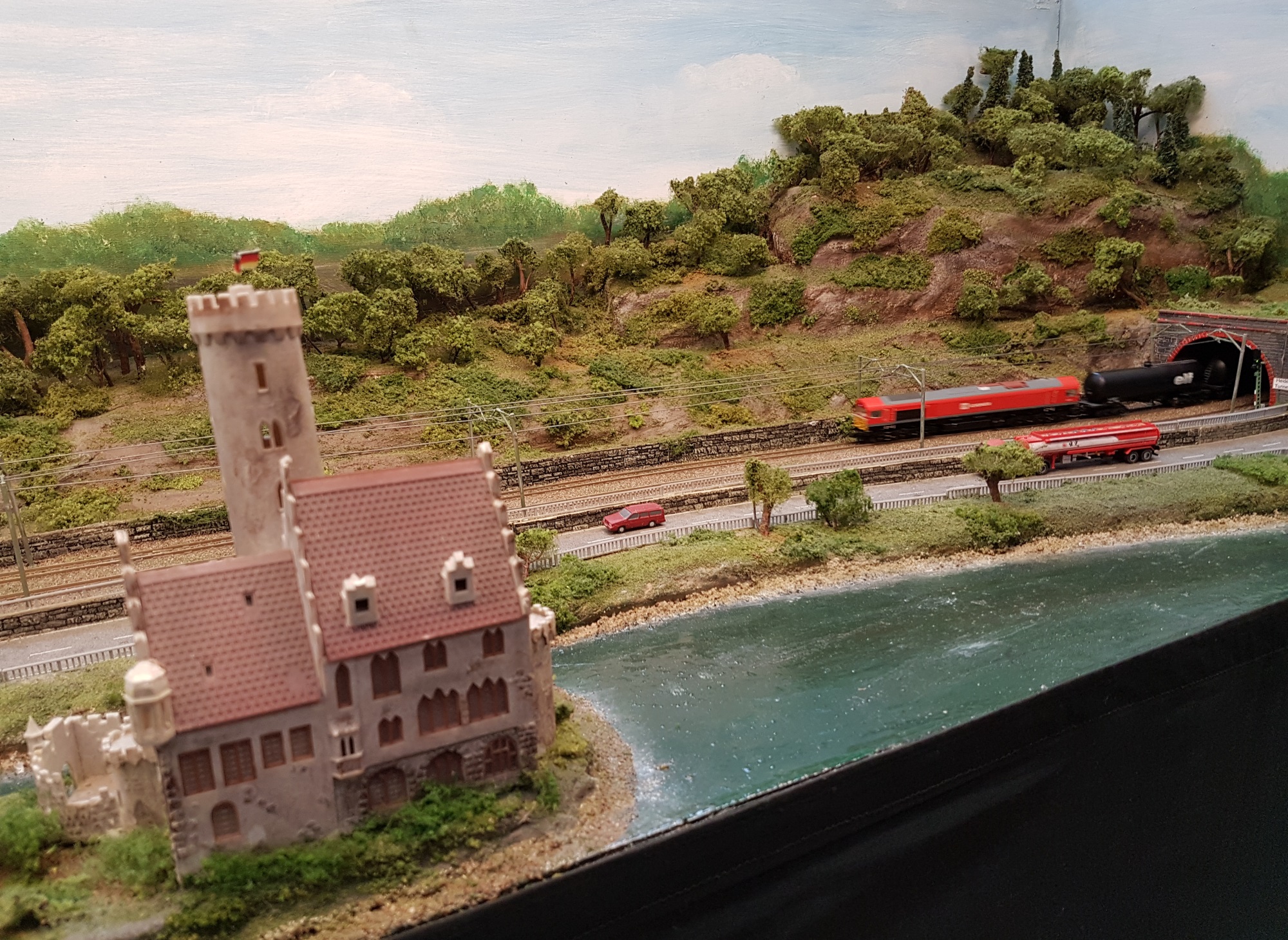
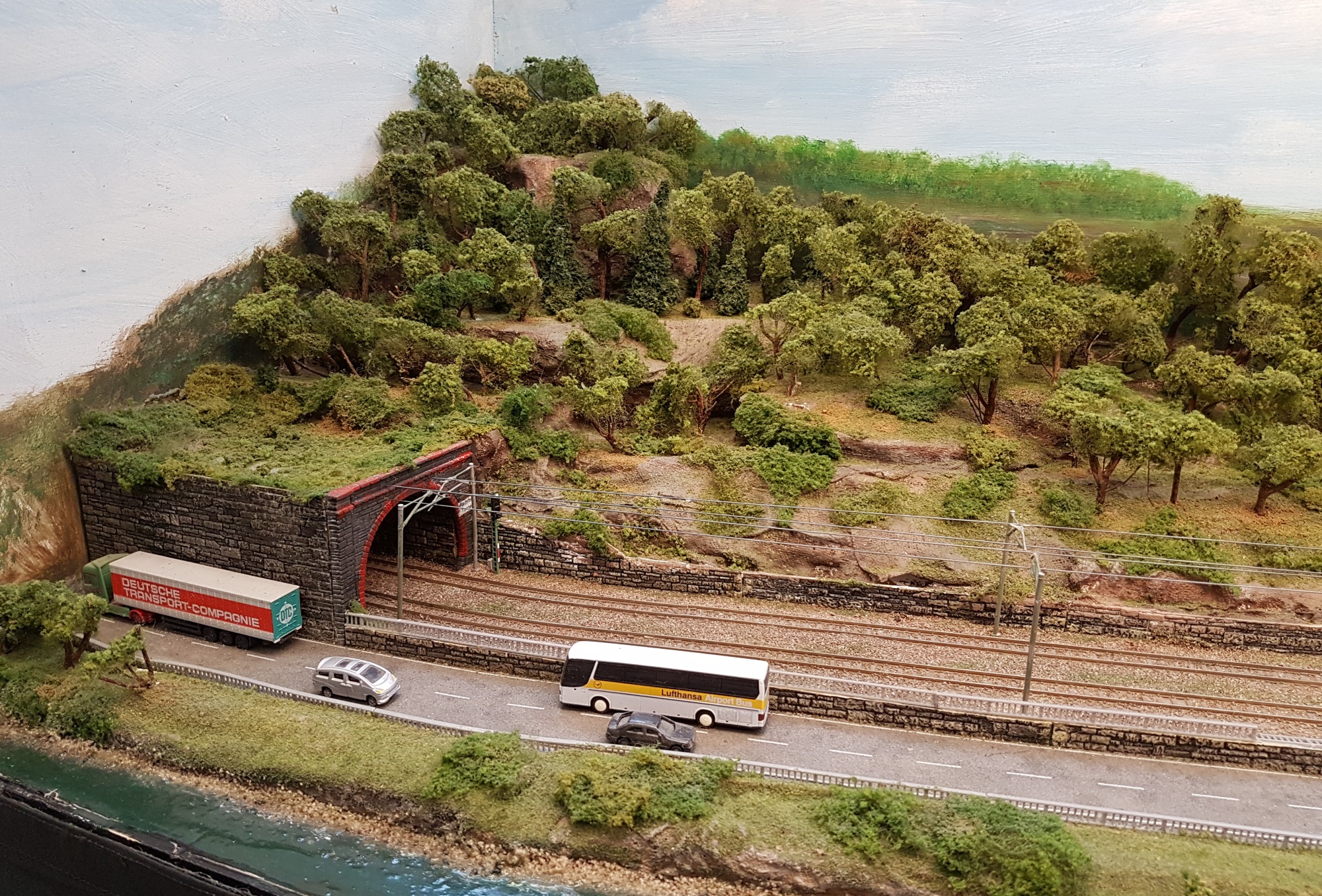
Willmich am Rhein models a stretch of DB line between two tunnels running parallel to the Rhine.  A chance to just watch the trains go by, and, for the builders, bring a favourite holiday spot home with you.

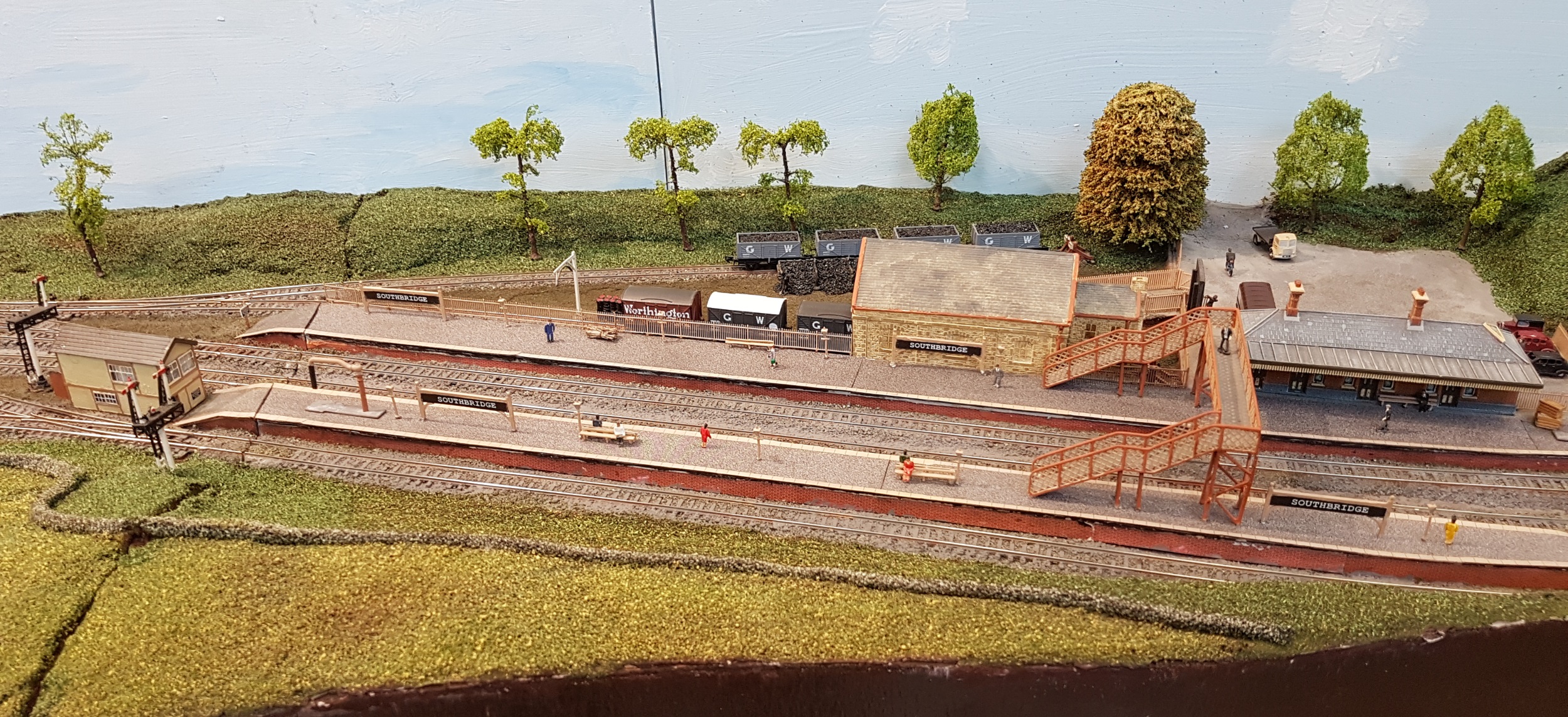
Good to see Southbridge again.  Modelling the GWR 1934-48, the eagle-eyed would have spotted the new Farish Castle on expresses.  To me, this is the acceptable end of GWR modelling….

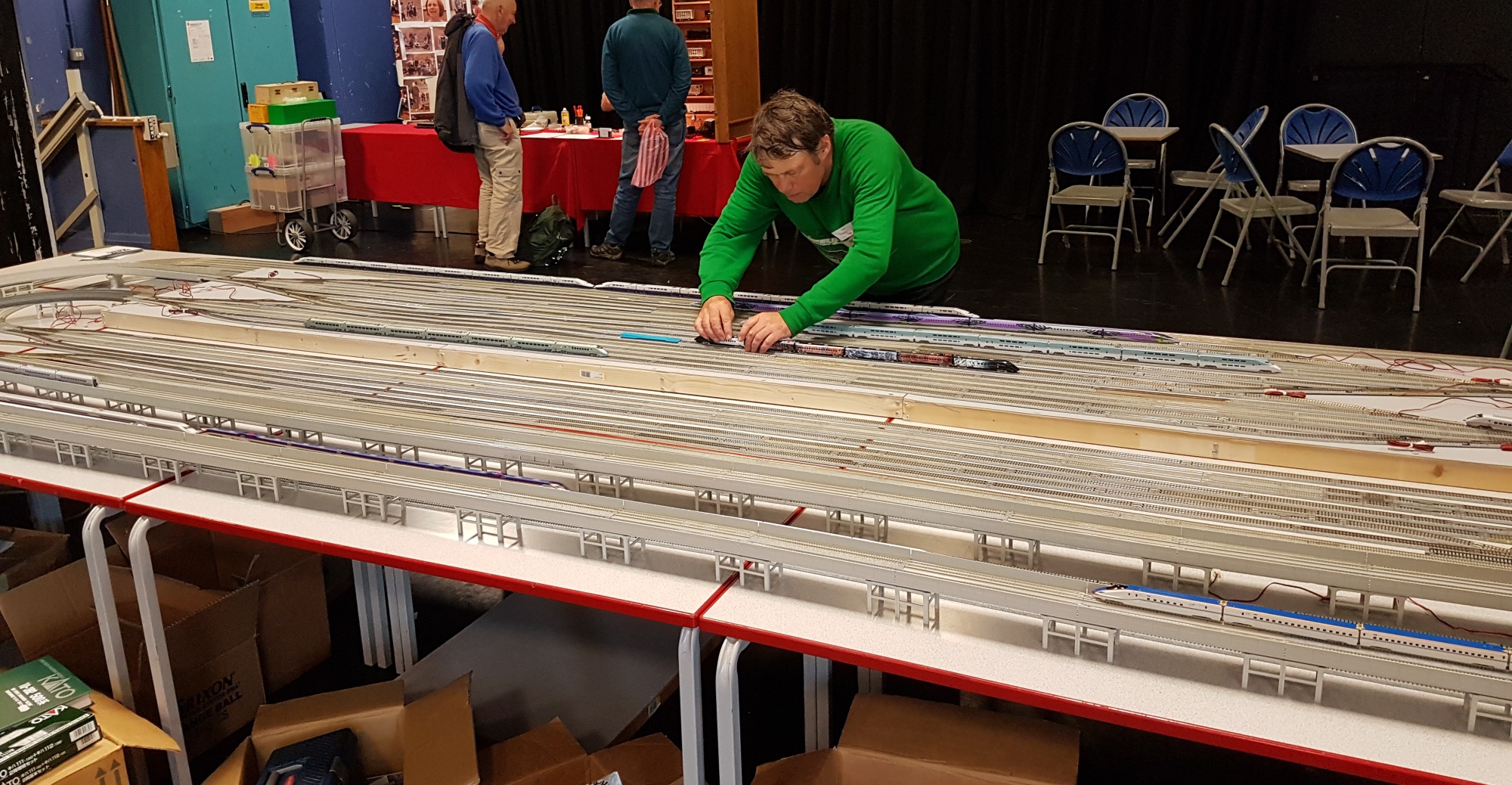
Paul had his Kato Racetrack on display, in a bigger and better format.  However, no-one gave him any tables and he was running late with the setup.  Fortunately, by the time I left, trains were on the move.

Moving up to TT, or to be more accurate, 3mm scale, Whatlington models a real location but imaginary railway in Sussex.  Here, a Class 33 is doing a little gentle shunting.

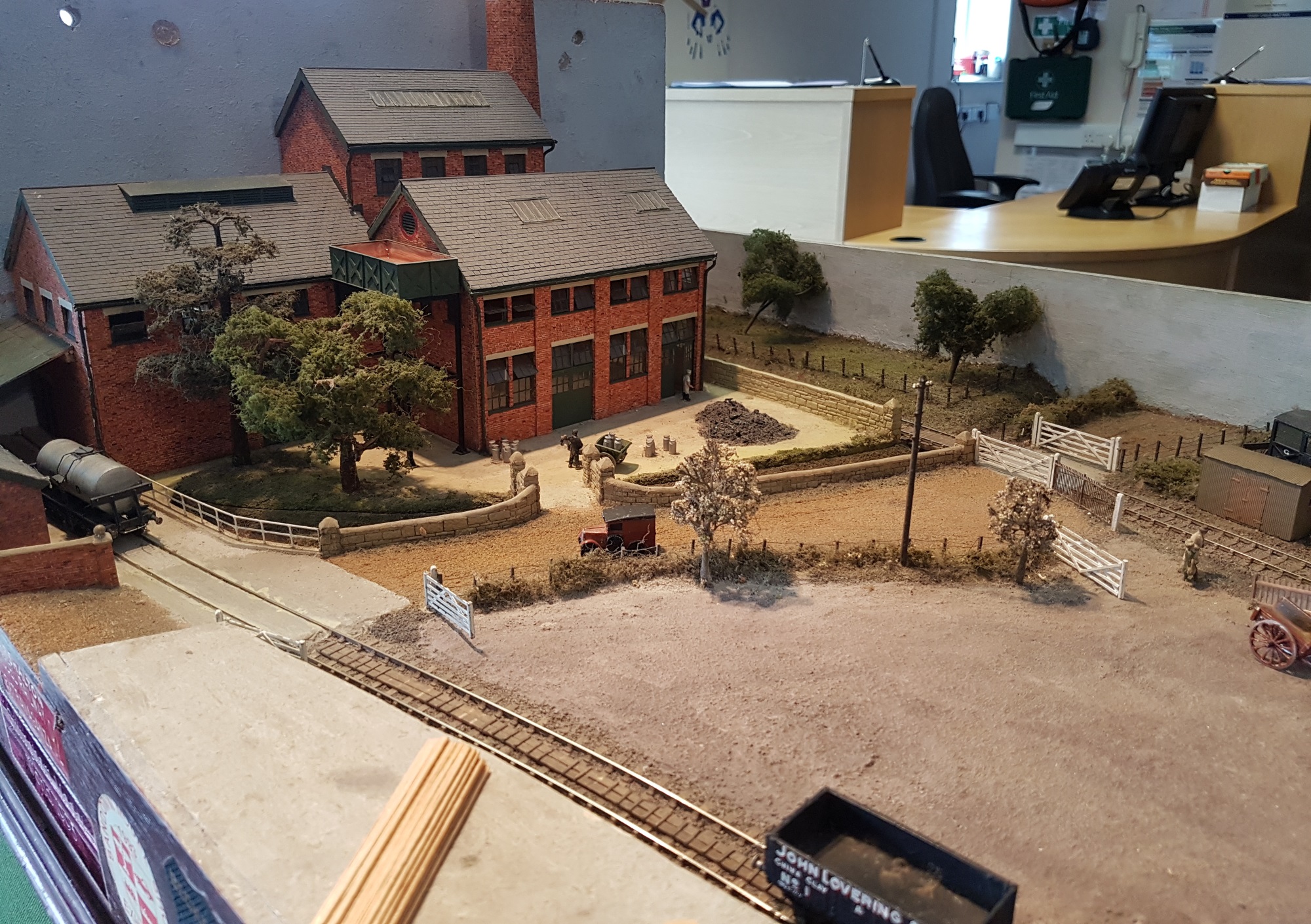
The other 3mm layout was Hemyock, a model of the Culm Valley line in GWR days.  Hemyock is almost the perfect branch line terminus, being well appointed with locomotive, carriage and goods sheds.  It features an impressive dairy beyond the terminus proper, that kept the line open till 1975.

Next post, we’ll move up the scales!

Posted in Exhibitions, Inspiration, Layout design, Out and about | Tagged , , | 1 Comment

ESNG meeting – 5 October 2017

Not a bad turn-out on Thursday, and plenty running for much of the evening – then at 9:15pm, everyone put their trains away, and the hall emptied.  So I got my trains out and running…..

Paul was celebrating a new flat in Redhill by running yet another bullet train….

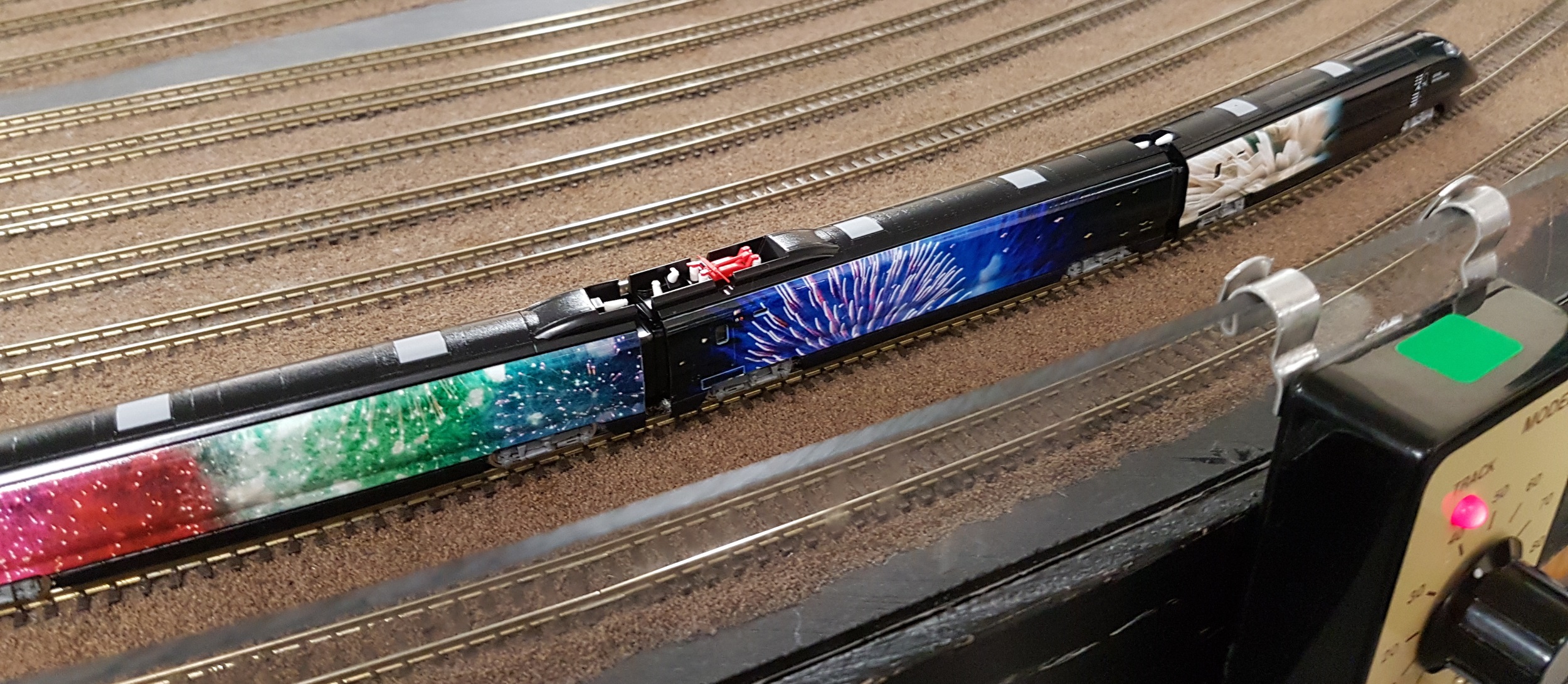
This model of a Japanese Art Gallery train (I think) is nothing less than exquisite…..

Allan was running his EWS coal train.  It’s now just another bit of railway history…..

The flashing tail lamp was most effective.  All done with a little battery under the coal.

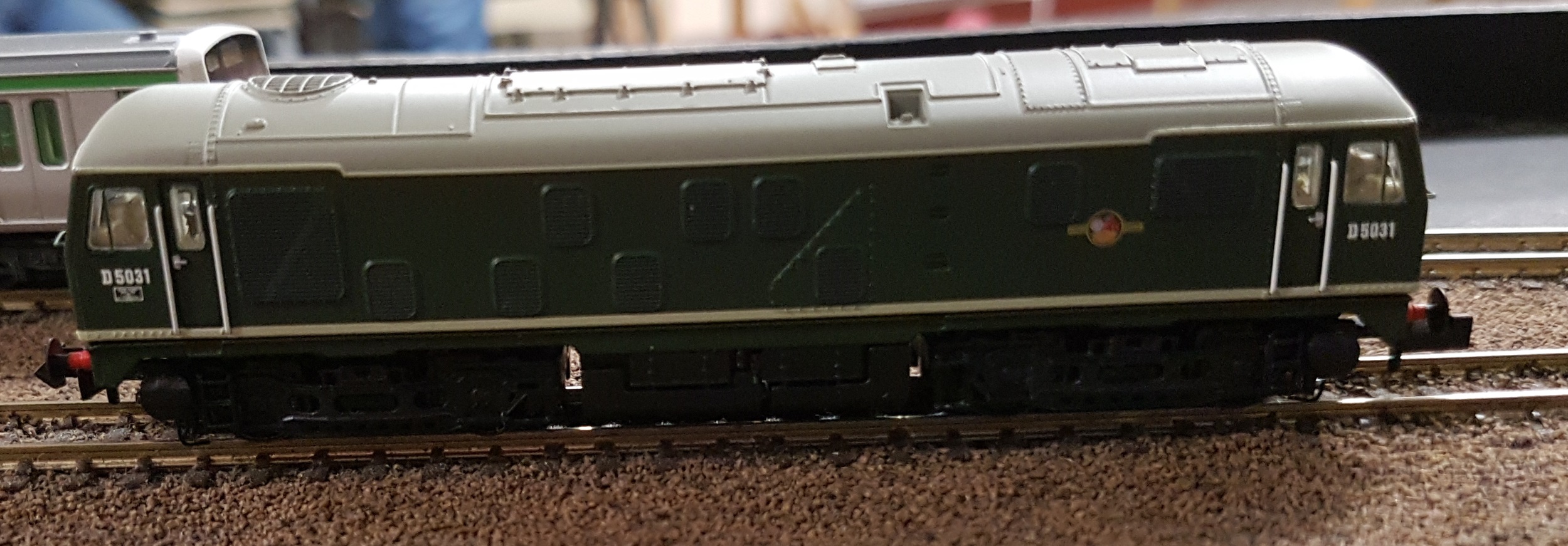
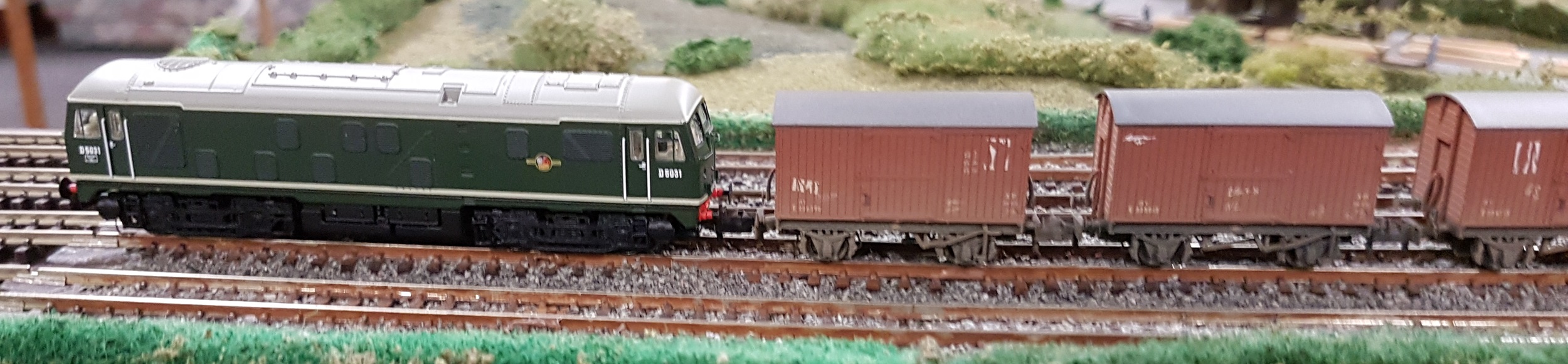
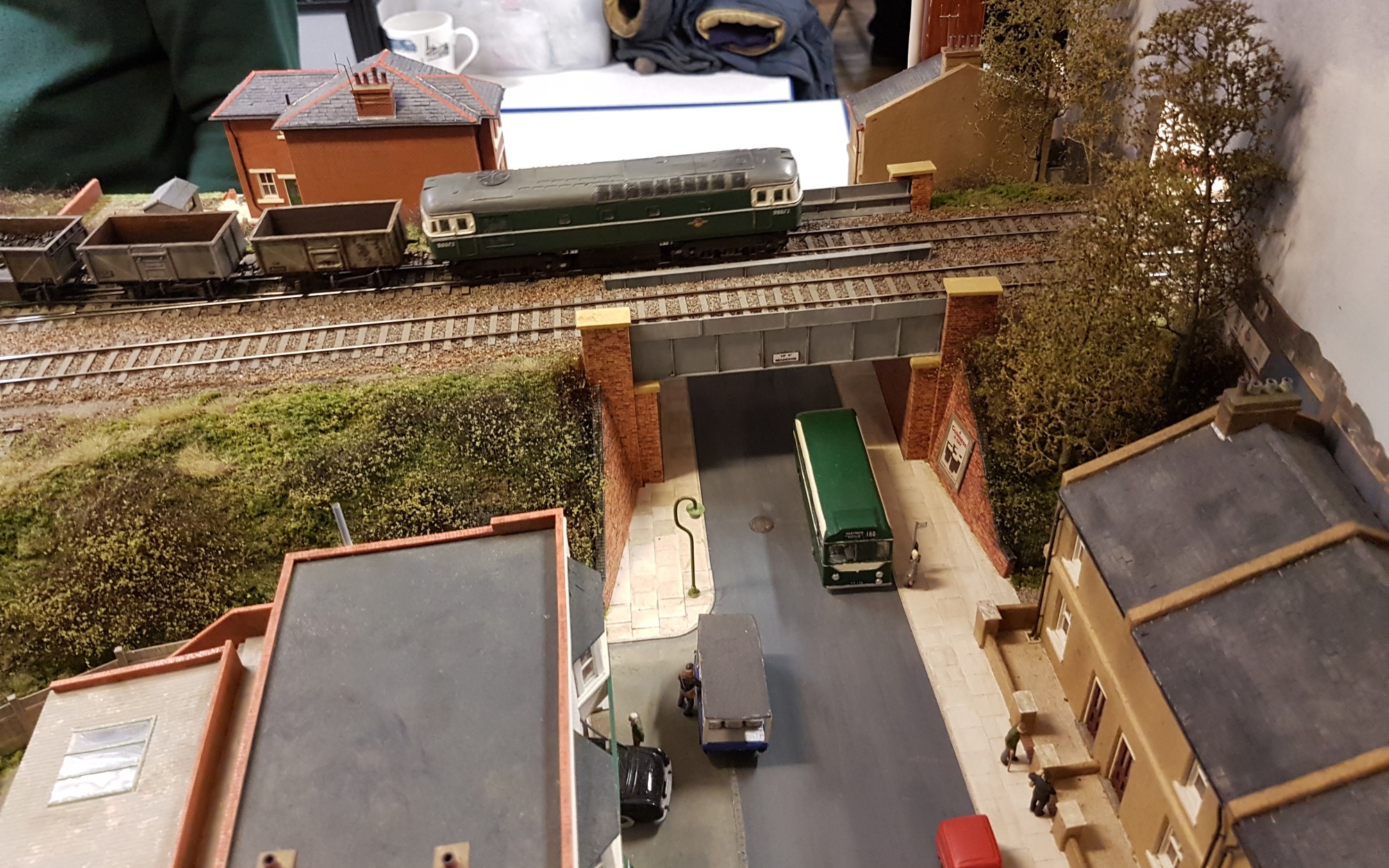
I was running in a Class 24, that ran well from the box.

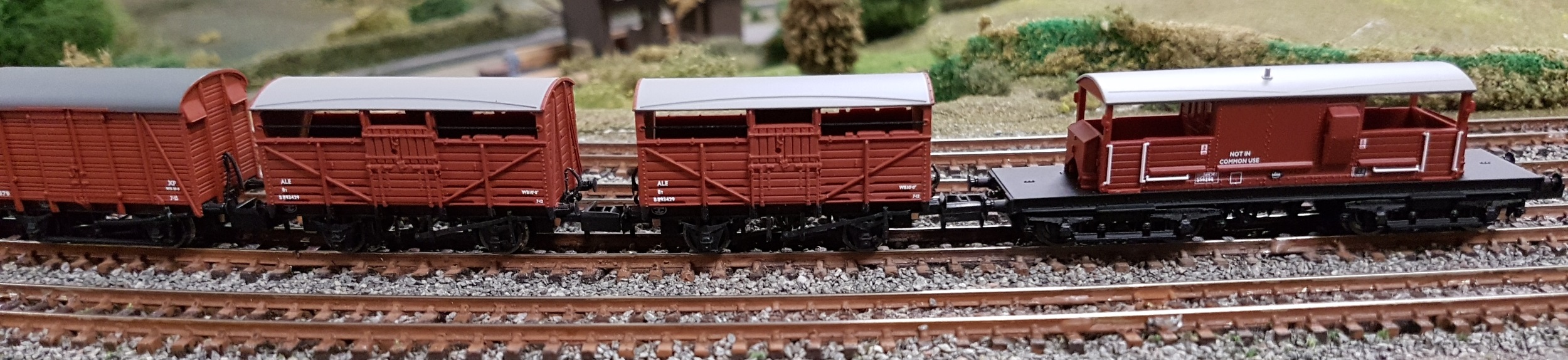
And then gave it 16 vans to pull…..

The bogie brake was a bit OTT for this train, but I do like them!

So to Sunday, and an extra PlayDay to make up for the one we missed for TINGS.  Tomorrow I was going to go to the Farnham exhibition, but I realised that was next week, and it’s Fareham tomorrow.  So perhaps I’ll go to Croydon MRS instead, especially as Paul is exhibiting his Kato racetrack again, in a bigger and better form.
Posted in ESNG, ESNG meetings | Tagged , , , | 1 Comment

Odd or even?

This is a question I’ve heard discussed before – does a train look better with an odd or even number of coaches/wagons?  (Note: American readers modelling mile long double-stacks, please move on now – you will have lost count long before the end of the train.  Or should you debate the number of locomotives – does A-B-B-A look better than A-B-A?)

There has been some recent discussion on N Gauge Forum of this old chestnut…

I’m told that an odd number of wagons always looks better than an even number, for some reason. You should get another one!

Run two trains – 13 in one, 11 in the other (other number combinations are available.)

I realise that this is totally off topic, but a lot of things consist of an odd number. More car wheels have an odd number of ‘spokes’ than have an even number, a lot of stairs consist of 13 steps.

I agree that often an odd number of wagons looks better than an even number, and have wondered why.  My theory is that an even number of wagons can be easily “bisected” by the eye, and broken down into smaller numbers, but this is harder to do with uneven numbers.

I think the thing is, if you have 4 vans together in a train of otherwise low wagons, it looks wrong, but if you have 3, its OK – the other one can be a bit further up the train. Supposedly.

And this interesting (if rather arty) website.

Why Are Odd Numbers So Visually Appealing?

Despite what any of your playground foes may have told you in grade school, being odd is actually a good thing. Odd numbers – and the number three, specifically – have long been heralded by designers and stylists as magical numbers that should be applied to interiors and vignettes to make them look even better. But better how?

Odd Numbers Create Visual Interest – Even numbers create symmetry, but odd numbers create interest. An odd number of details is more effective at capturing your gaze. Odd numbers force your eyes to move around the grouping–and by extension, the room. That forced movement is the heart of visual interest. It’s for that reason that a set of three is more appealing and memorable than something paired off in two’s.

And the answer – in the UK it probably comes down to how much room you have for your layout.  But modelling the Southern Railway/Region, Maunsell  and Bullied coaches were often in 3-sets, so three coaches plus a luggage van would be a quick answer.  And for much of the Atlantic Coast Express, a single brake-composite was dropped off in places – is one an odd number??

Here we see the Wisbech and Upwell again – with three wagons, plus a brake van.  Is this better than four wagons and the brake van?  Does the brake van count?  It certainly seems more visually satisfying to have wagon-van-wagon-brake than wagon-wagon-van-brake.  Did the railways deliberately shunt odd numbers of wagons in a train and leave the last one till tomorrow (especially if carrying urgent goods)?  Surely, making money is less important than aesthetics???

Of course, Rule 1 applies….

Posted in Inspiration, Prototype, Weird and wonderful | Tagged , , , | 1 Comment

Seaboard Southern NMRA show, 30 September 2017

Saturday was the local NMRA group’s annual meet at the Charis Centre in Crawley.  I’ve missed the last two Seaboard Southern shows, as they clashed with other family commitments, so I was pleased to get to this one.  An easy run down the A23 past Gatwick got me there just before opening time – those coming on the M23 had to crawl past the usual accident near Gatwick.

I spend a pleasant couple of hours at this little show, and even managed not to buy anything, except some more storage boxes from Jon the Blue Plastic Box Man.  I spent as much time talking as looking, as apart from having a long chat with Jon (‘Why weren’t you at TINGS?’), I also ran into Simon from ESNG (who was trying very hard not to spend £60 on a half-price book on Santa Fe locomotives), and I then spent time talking to some of the Seaboard members.

There was a good selection of layouts, mainly small switching pikes.

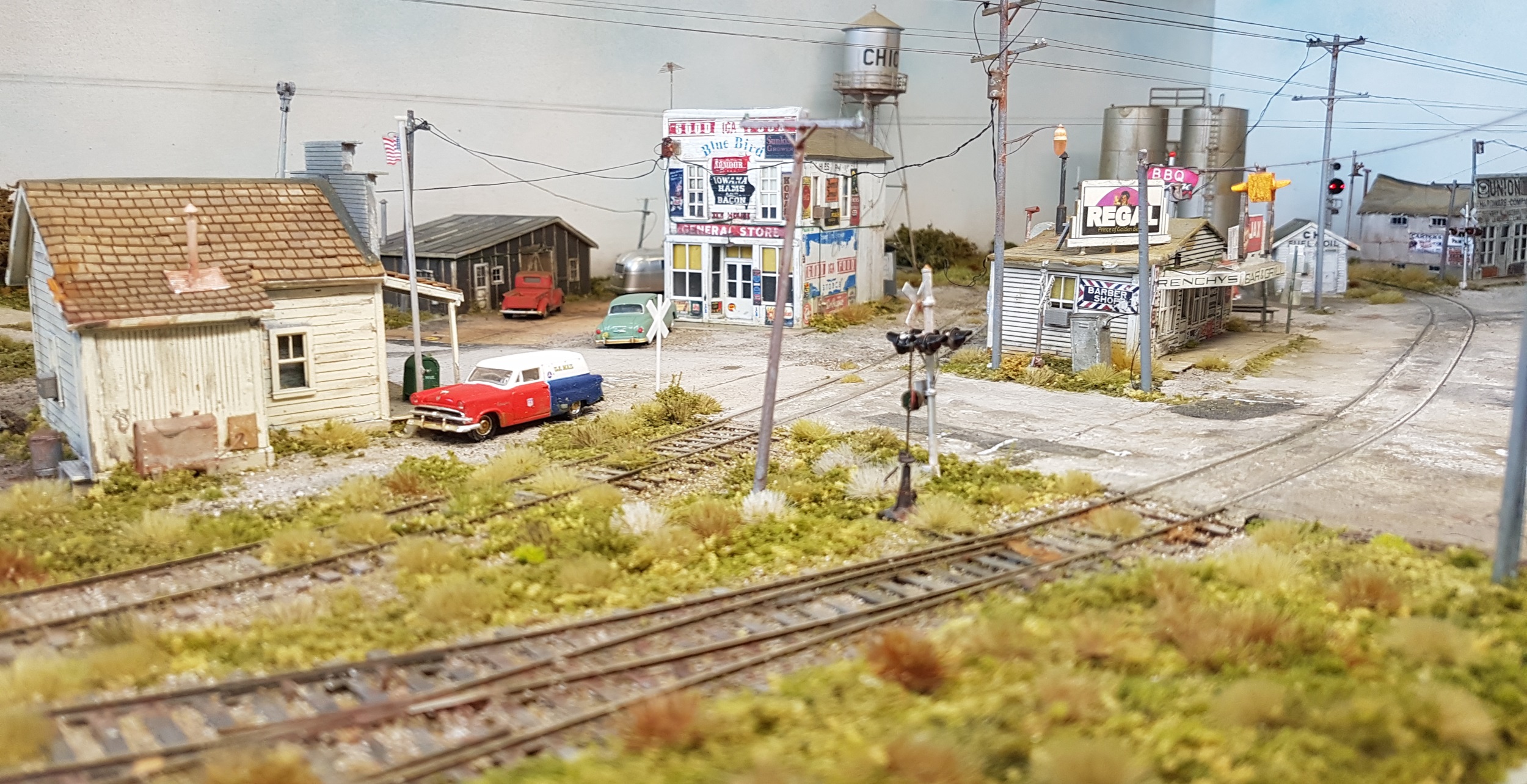
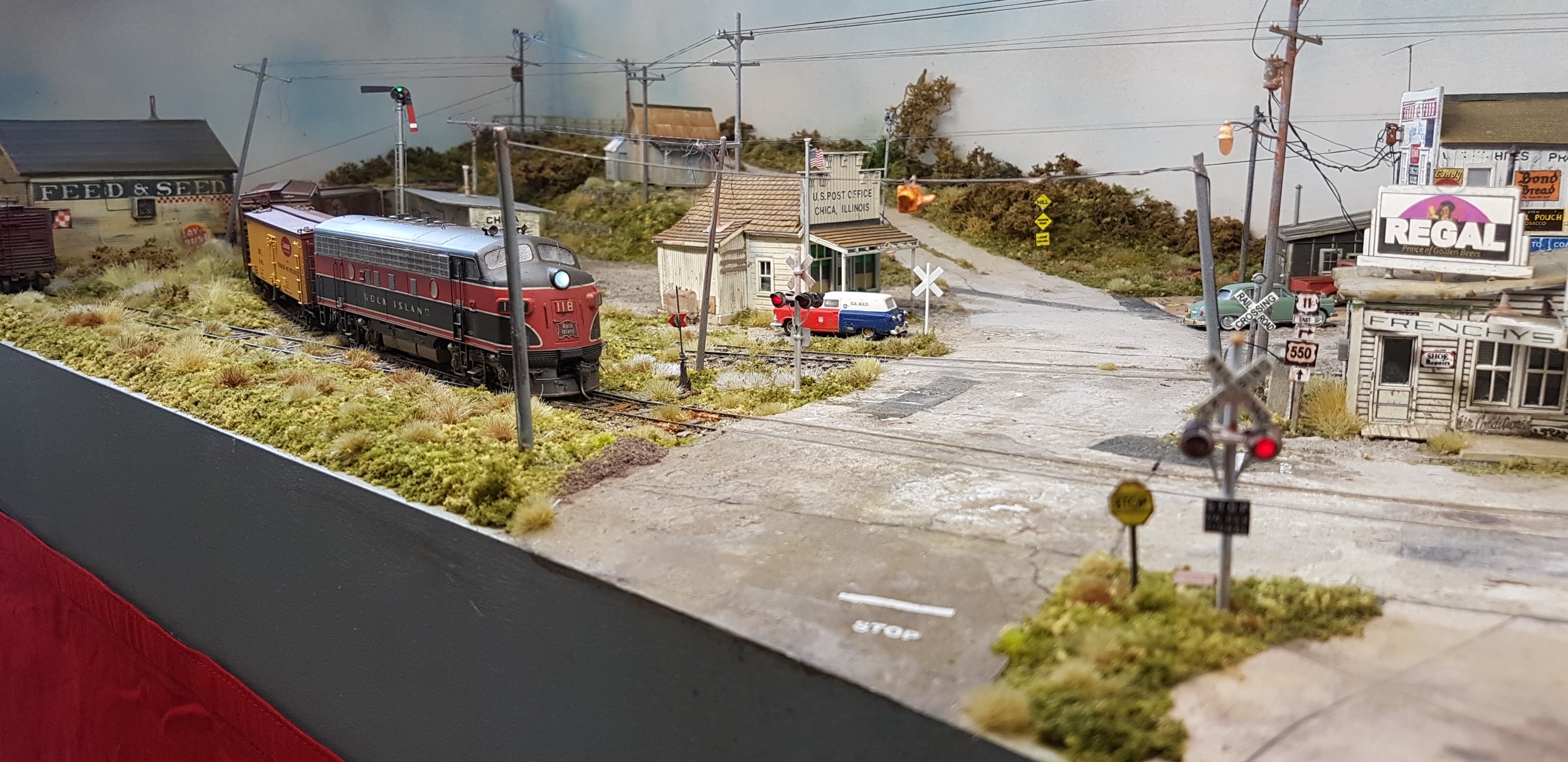
First off was Chica, Il.  I’ve seen this little Rock Island HO layout a number of times, but it is always worth another look, as the detail (and especially the power and telephone lines) is so good.  Occasionally a train crawls through town.  It is a good job this is an HO layout, as it was for sale, and it would have been difficult to resist in ‘N’…..

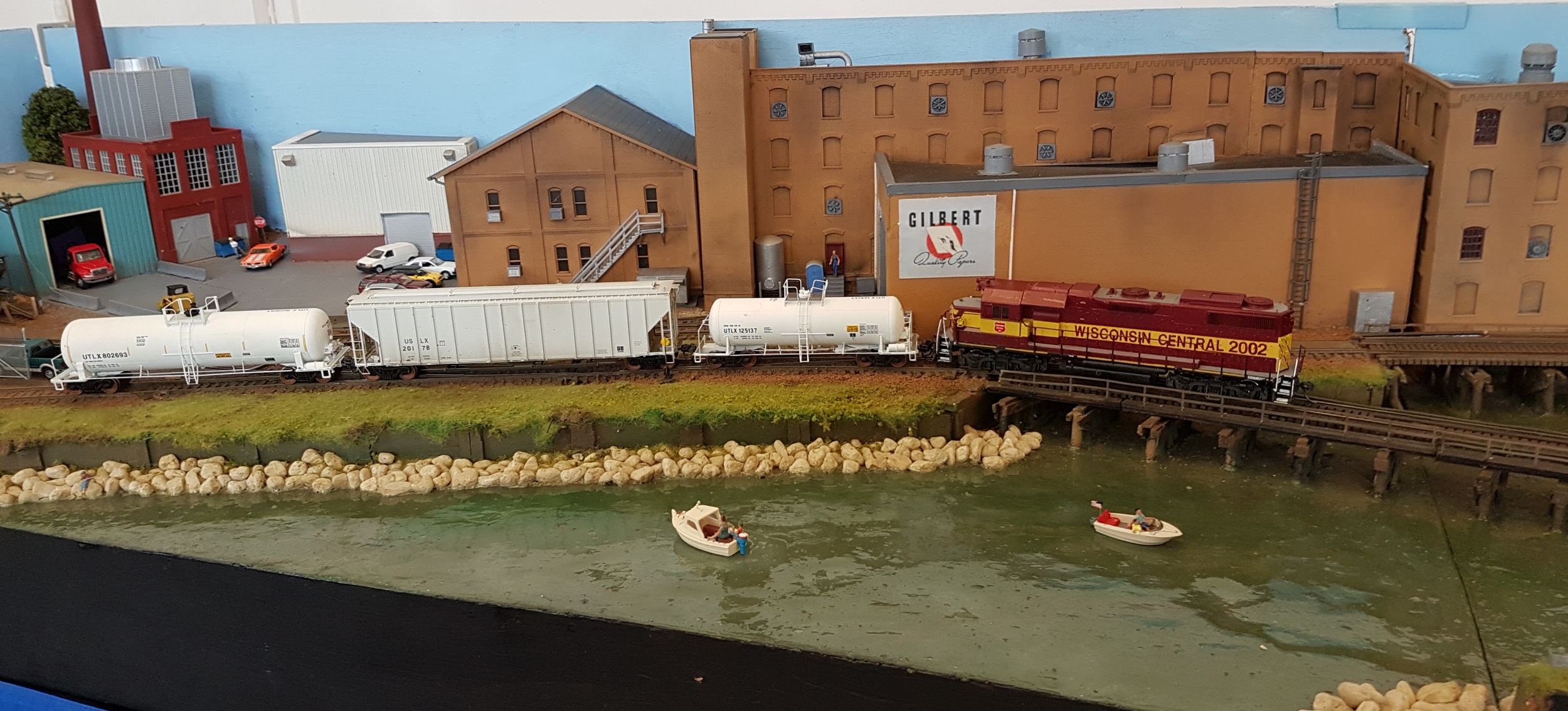
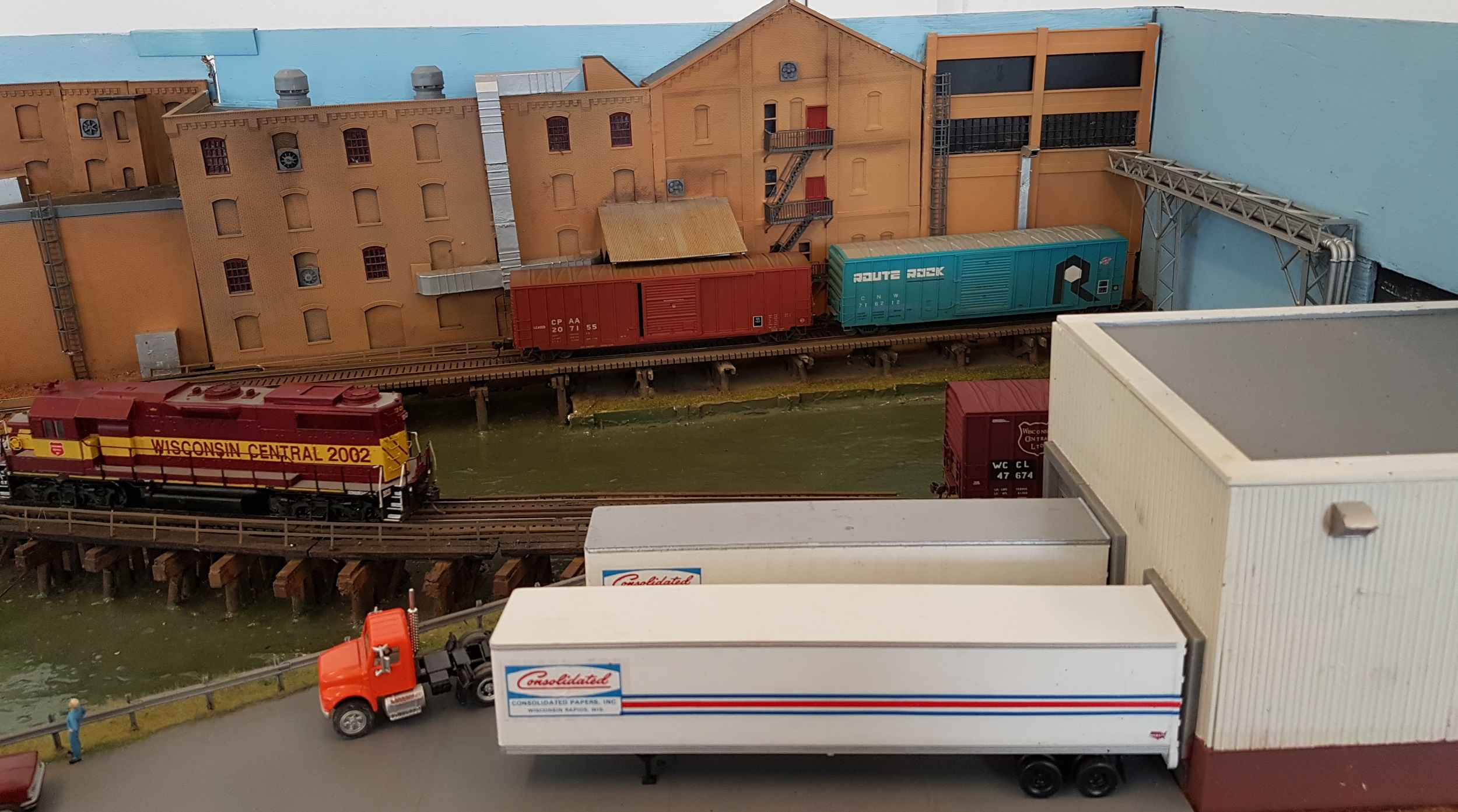
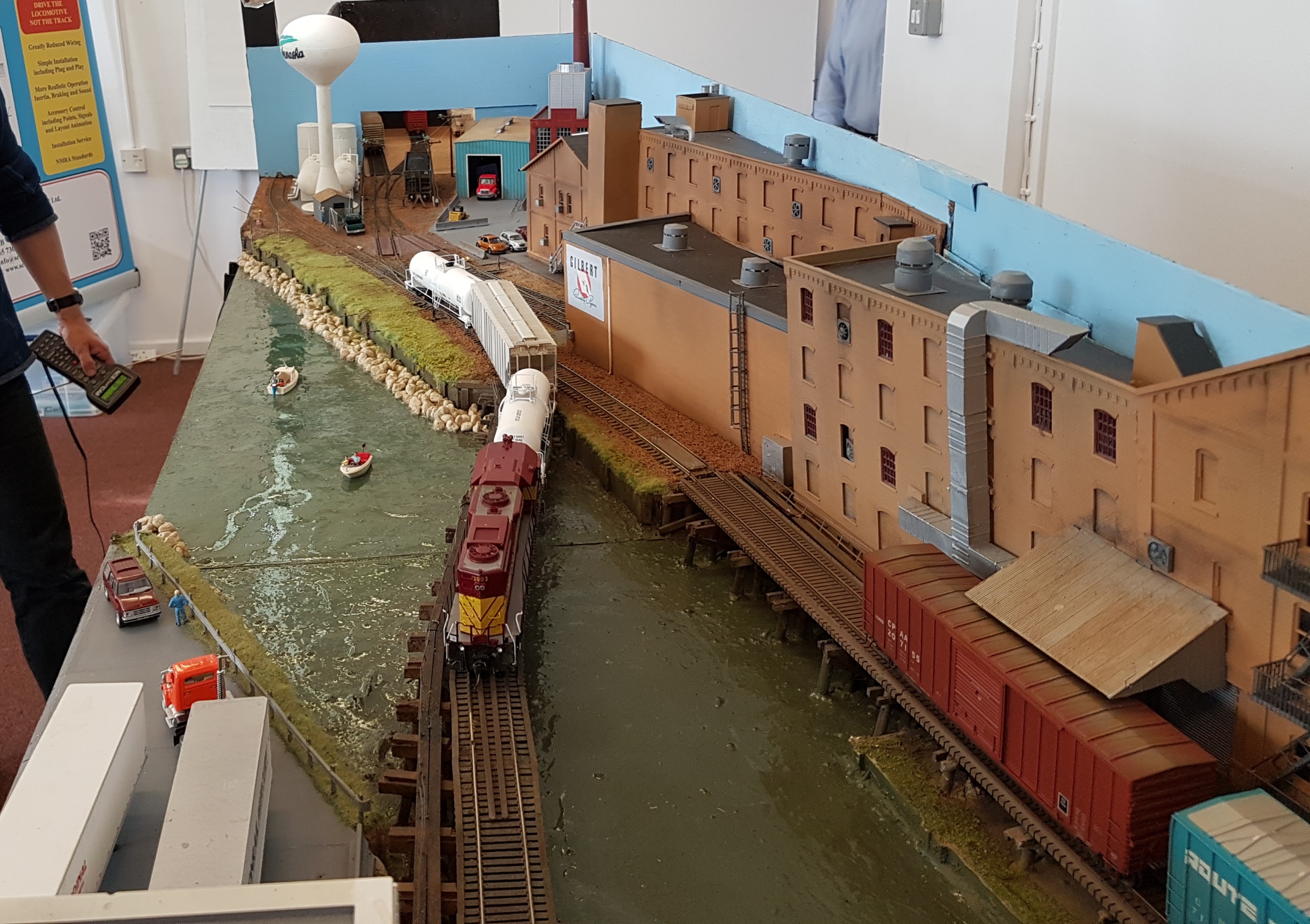
Gilbert Papers (HO) is a slightly convoluted switching layout, with some excellent large buildings and realistic water….

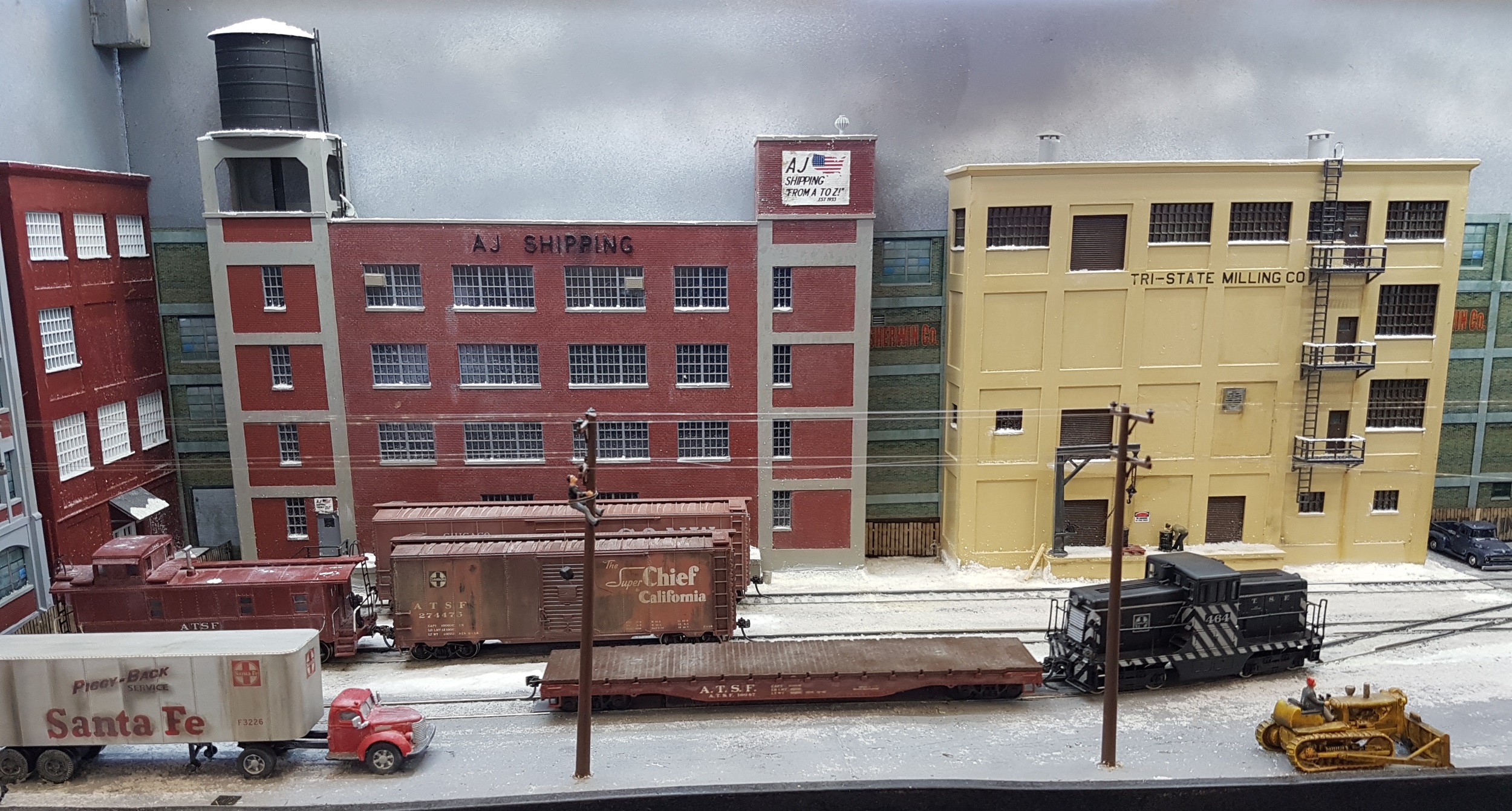
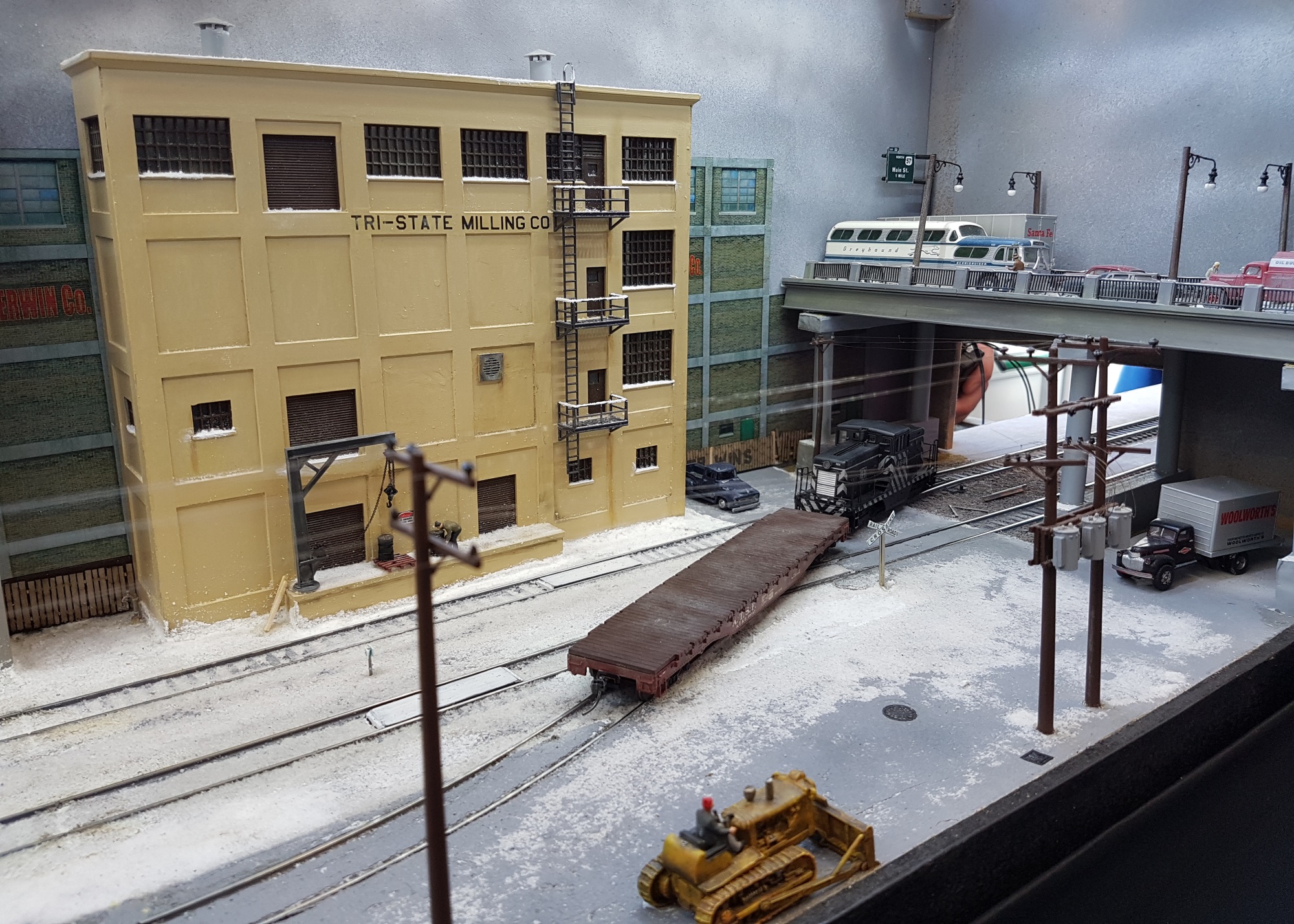
Tilly Yard South (HO) is a minimal space Santa Fe layout, featuring urban switching in the ‘50s.  I liked the realistic snow – always difficult to capture well in model form…..

Some tidy HOn3 narrow gauge modelling….

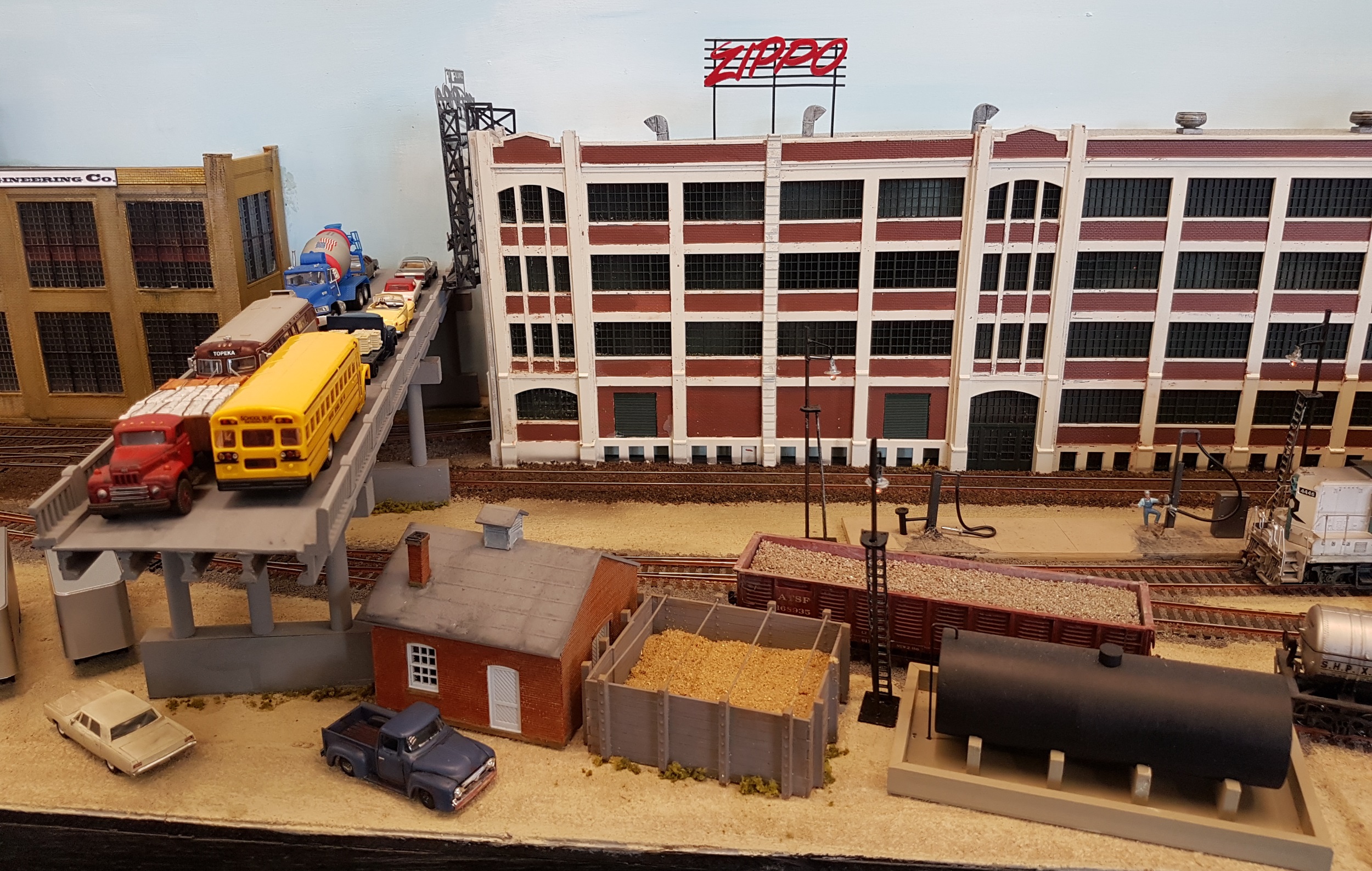
Lemmington Park (HO) features Chicago based urban switching and commuter passenger in the 70’s.  It was good to see that American modellers also fall for the ‘bus on a bridge’ cliché, although this one is a large yellow school bus….

Eastwood, Vermont (HO) is one of Andrew Knights’ many small layouts, this one featuring the 1950s-60s diesel transition period.  Some good bridge modelling, and an interesting urban low relief backscene…..

The Surrey & Sussex Black Sheep FremOn30 Group had their partly complete modules on display.  There were a few early gremlins with the electrics – or the Seaboard Southern hospitality had been a little generous!

Posted in Exhibitions, Inspiration, Layout design, Out and about | Tagged , , , | 3 Comments

Two views of modelling – 2

And from the other end of the October edition of Model Railroad Hobbyist, Joe Fulgate asks, ‘Are we making the hobby too complicated.’  A rather different perspective….

Are we making the hobby too complicated?

As I look at the “ever more realistic” trend in the hobby, I have started to wonder if we make the hobby too complicated for newcomers.

As I look through magazine back issues from the days I first got into the hobby (the 1960s), I notice a lot of writing about the hobby focused on just having fun.  These days, it seems to have
changed.  The prototype modelling trend has taken hold and unless you’re modelling a prototype line accurately, there is a trend to label you a “second class” modeller.

How are uninformed newcomers to measure up? They come online and proudly show us their work – we either yawn because it’s so generic/simplistic, or we pick it apart because it’s not quite prototypically accurate.  If you’re modelling generic trains, or not modelling a precise time period, then you’re not a “serious” modeller….

Perhaps it’s time we stop trying to put so much of a “super serious” spin on how we look at the hobby. How about we avoid “good vs bad” terminology in our discussions of how to approach the hobby? Just because you want to model generally in the 1950s instead of doing something more precise, who is to say that’s “poor” modelling?

In the hobby publications from the 1960s, the focus was more that the various ways of doing the hobby were all good, just different. Another area of concern has to do with operations. If you’re “just running trains” for fun, then you’re just a casual hobbyist!

My greatest fear is we’re getting so picky by defining a “good” versus a “poor” approach to the hobby that we’re driving would-be hobby newcomers away by making the hobby feel too complicated and involved.  What happened to appreciating the fun of model railroading however someone may elect to enjoy it, even if it doesn’t happen to be exactly how you prefer to do the hobby?

And what about moving away from judgmental wording that is self-serving…… that neatly puts how I choose to do the hobby on a pedestal and puts down everyone else’s approach.

Maybe it’s time we all remember our roots in the hobby and appreciate that just having fun with trains can be great too? By remembering that it’s really about fun, whether simple or complex, we can encourage more hobby newcomers.

So the challenge for us is to be passionate about just how good a hobby model railways (or even railroads are), and aim to improve, but always to remember that it’s meant to be fun!

Posted in Inspiration, Layout design, Operation | Tagged , , | Leave a comment

Two views of modelling – 1

The next two posts will have two differing, but perhaps slightly contrary views of our hobby.  Both come from the (free) Model Railroad Hobbyist e-magazine.  It’s all American, and sometimes has little of interest, but it’s free, and occasionally comes up with some inspirational modelling.

First, the view from the editor’s desk – by Don Hanley.

Develop a passion for the hobby

Have you ever wondered why some individuals
succeed and other don’t?  It’s passion.

I have two activities I enjoy: woodworking and model railroading.  They intersect during the benchwork phase, but that is about it.  I love designing and building furniture as much as I love designing and building models.  I have a passion for both.  I can spend hours building a piece of furniture, hours building a structure, or hours modelling  a piece of rolling stock. I often lose track of time and my wife asks me if I got lost! In a way, I did.

Passion and interest are similar, but not exactly the same.
Webster defines passion as “a strong feeling or emotion” but
defines interest as “liking something.”  ….

For us in the hobby it can range from the armchair modeller  to the modeller who must have every nut and bolt correctly modelled.  On a scale of 1 to 10 with 1 being the armchair modeller, and the 10 an every nut and bolt modeller, I am probably about an 8…..

Do all model railroaders have the same degree of passion that I have?  Of course not, and that’s OK. It’s best we not be offended when we run into modellers who don’t have has much passion as we do – and likewise we should not be offended by modellers who have a higher degree of passion than we do.

Some like to call the most passionate rivet counters. If you develop a particular passion for the hobby, you too may become the rivet counter without realizing it!  Encourage those who have less passion than you to work on developing their passion…

Looking ahead, I would say the future of our hobby depends a
lot on those who have passion for the hobby, and for teaching
or mentoring those who are just starting in model railroading.
I would even say how long a modeller stays with the hobby
depends on how much interaction they have with those possessing higher levels of passion. Those of us a higher level of passion need to interact and mentor those who are not as passionate!

Posted in Inspiration, Layout design, Operation | Tagged , , | Leave a comment

Stuttgart coming soon – and a new module

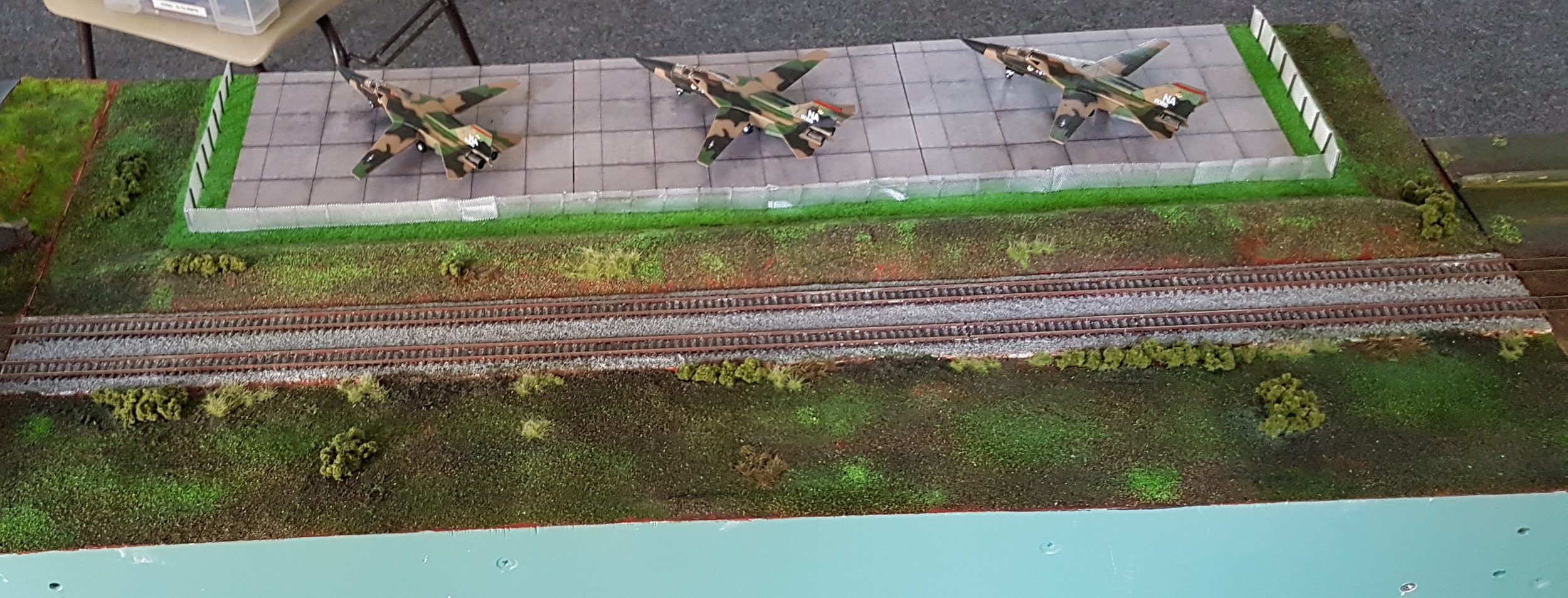
Sunday afternoon was spent in the august company of Messrs Atfield and Dawes, testing out the setup that we will take to Stuttgart.  The last few weeks, I’ve had plenty of free time, so have completed a new module for display.  What is compatible with UK, USA, European and Japanese trains?  An American airbase…..  So here we have the absolute end of an airbase, with three F-111 aircraft parked on the tarmac.  Of course, it will always be possible to run trains from a different era to the F-111, but at least it will look OK geographically, even if there is a clash of eras.

Here we have the airbase connected to the ‘Clubroom’ module.

This is the long side of our Stuttgart display – end loop, ERIC the roundhouse, a 4 track to 2 track transition, airbase, clubhouse, and N-club corner.  The 4 track section will allow us to store one or two trains when operating.

Derek is hard at work trying to understand the wiring of his new module.  This swaps over left and right hand tracks to swap from right hand to left hand running.  It was rapidly christened the ‘Eddie Waring’ module after the late rugby league commentator, one of whose trademark lines was, ‘It’s an up-and-under’.

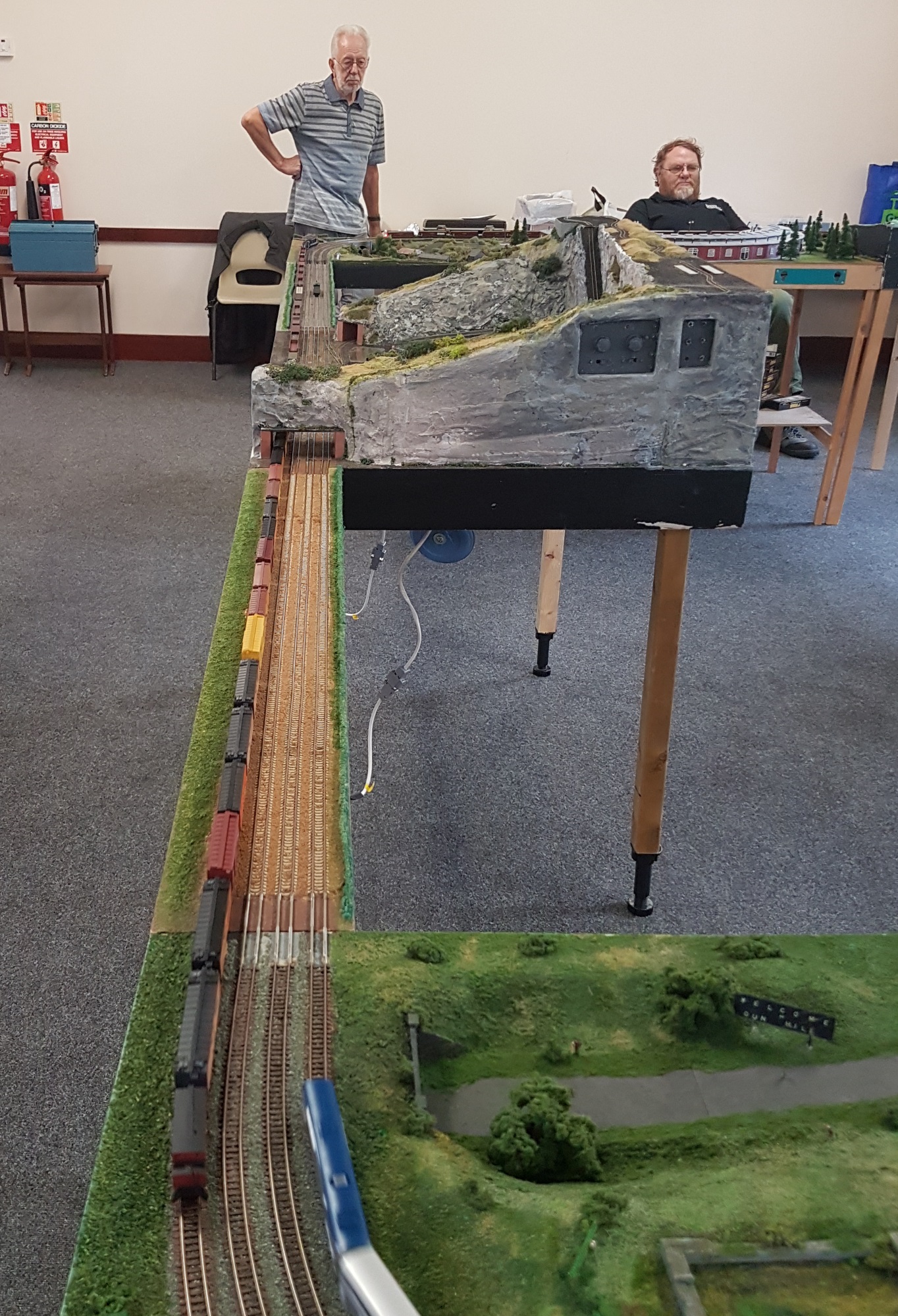
The short leg of the ESNG display has Derek’s N-club corner (interestingly, all the low-level track is courtesy of a job lot of Lone Star 000 track – we never waste anything round here), Attesford, the Eddie Waring module, and a loop where the link with the rest of the N-club world will be.

There are a still some adjustments to make.  My lounge is full of the Attesford layout (to add to the other modules already camping there) as I took it home to see if I can improve the wiring and running.  And Derek has a bit of work to do on his ‘Eddie Waring’ board.  We’ll need another trial run, but are well on the way there.

And of course, the afternoon was completed with a curry….

Posted in ESNG meetings, Jon's layout ramblings, N Club International, Out and about | Tagged , , , | Leave a comment