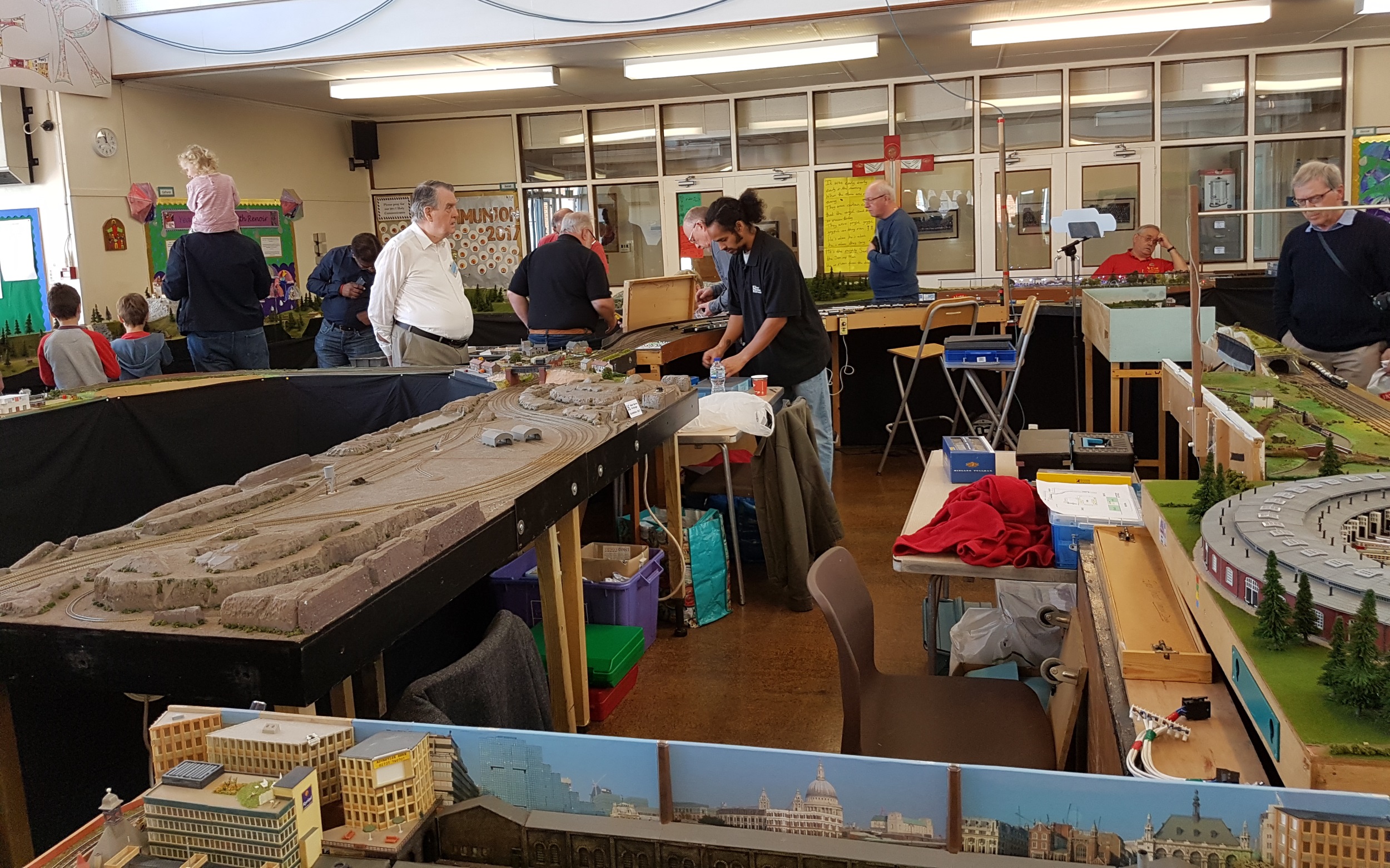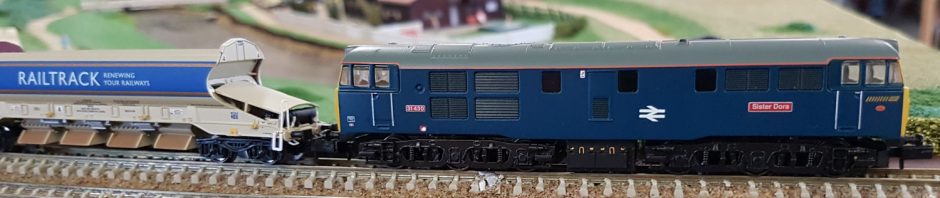
ESNG Exhibition 2017 #1

Well, we’ve survived another annual exhibition!  A lot of hard work, but well worth it.  All went well, we had some good modelling on display, and received a number of very positive comments from the punters – not least about the real coffee on sale in the refreshment area!

But work started on the Friday afternoon, collecting things from the club room about 1pm, then slowly working to put the N-mod/N-club circuit together.  Ideally, one should have a trial run of the layout to be exhibited, to make sure all is working.  However life has been just too hectic, so a long afternoon to allow for a few repairs and rewiring is a good substitute.   And there’s time for coffee breaks and a fish-and-chip supper.
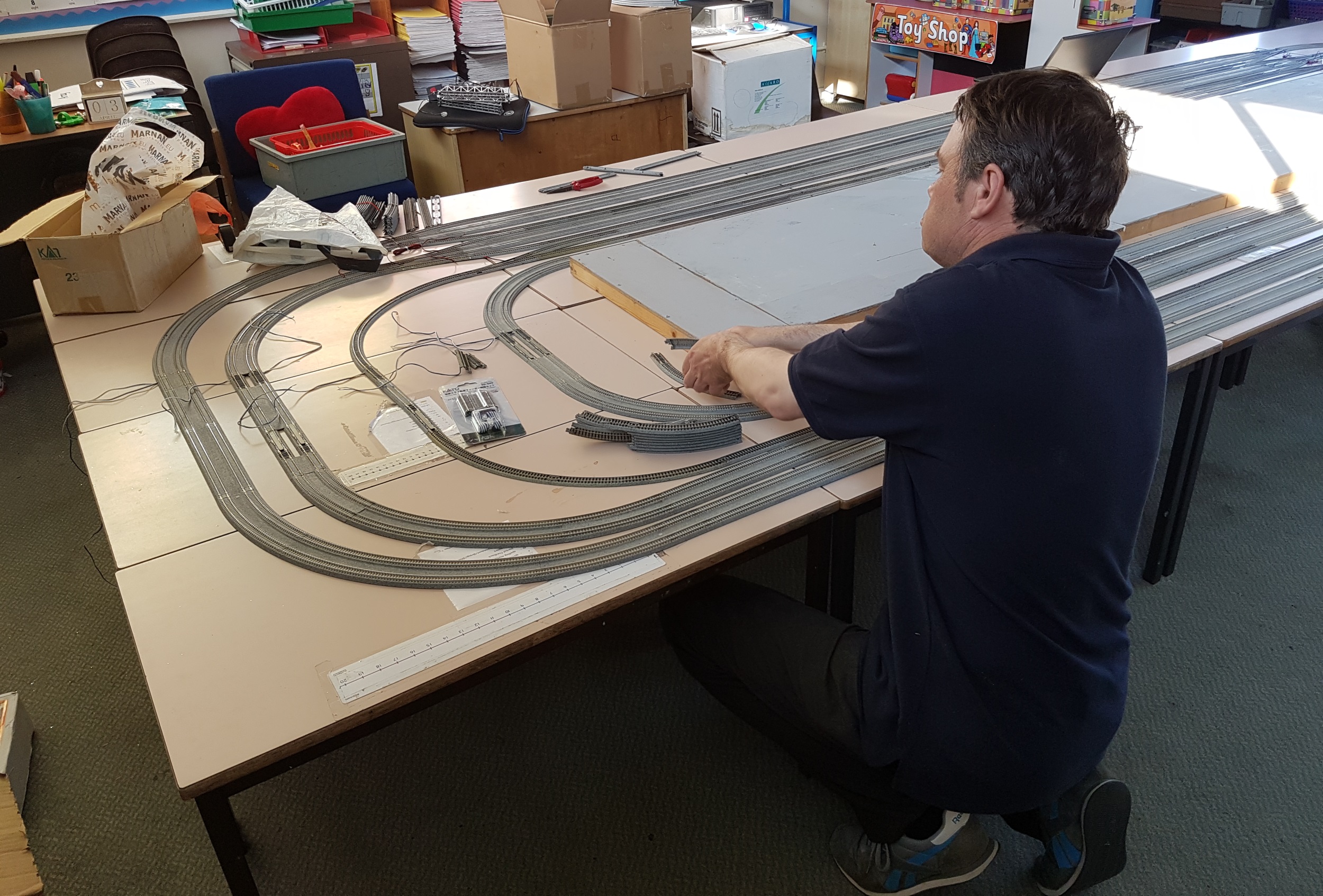
In another room, Paul was piecing together all his Kato Unitrack for the Kato Racetrack….
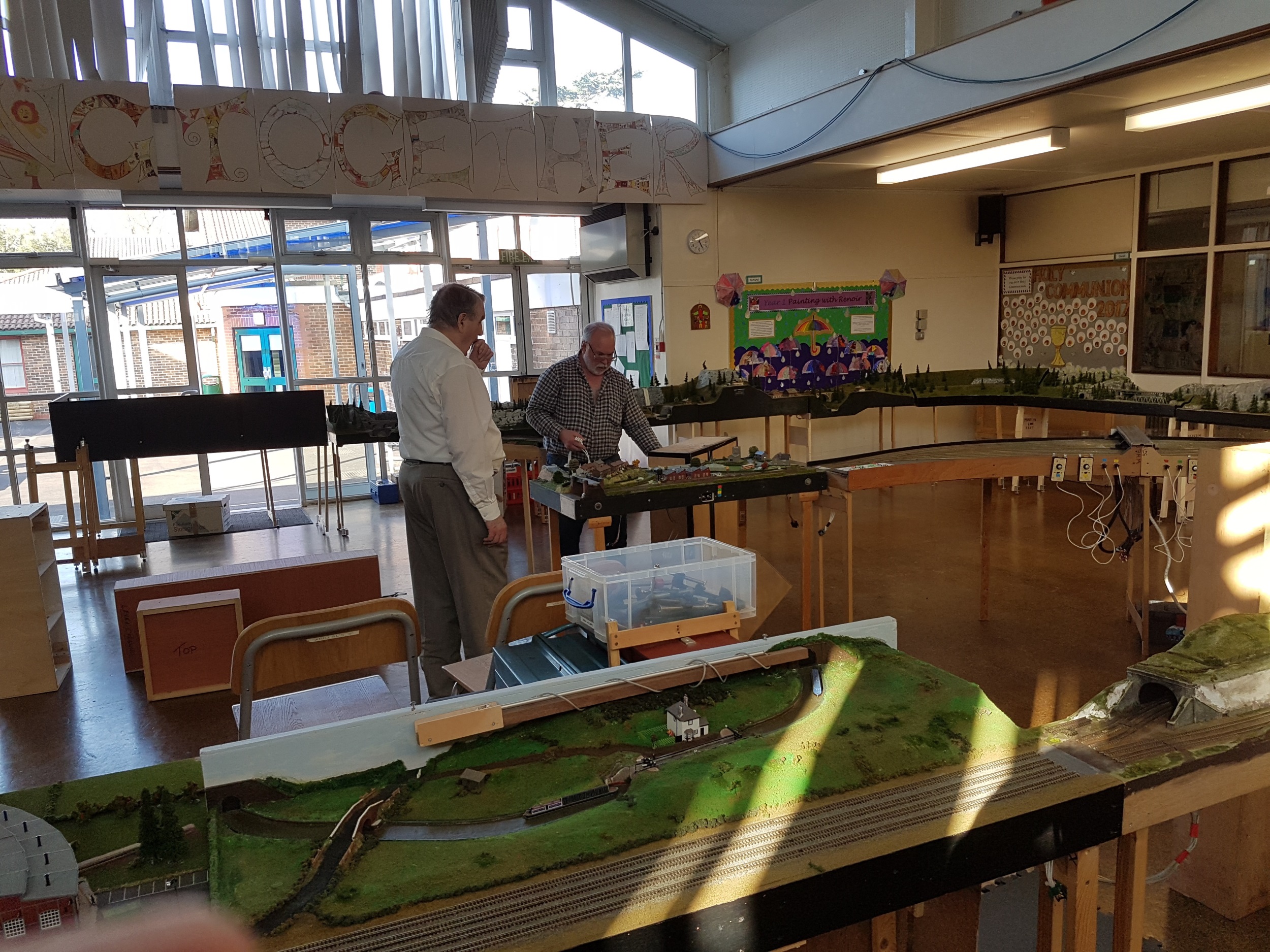
Saturday morning, 10am, all was working (just) and the doors opened to our visitors.  It was a strange year, in that there was a very high attendance in the morning (I was wondering about a record year), but a very quiet afternoon without the usual ‘surge’ after lunch.  Perhaps the fine weather and the Grand National kept people away.

However, to get in you have to pass the ‘gate-keepers’, experts in giving the wrong change and insulting the visitors.  For some reason, they seem to love it!  Here, Graham and Reg look ready to confuse all comers…..
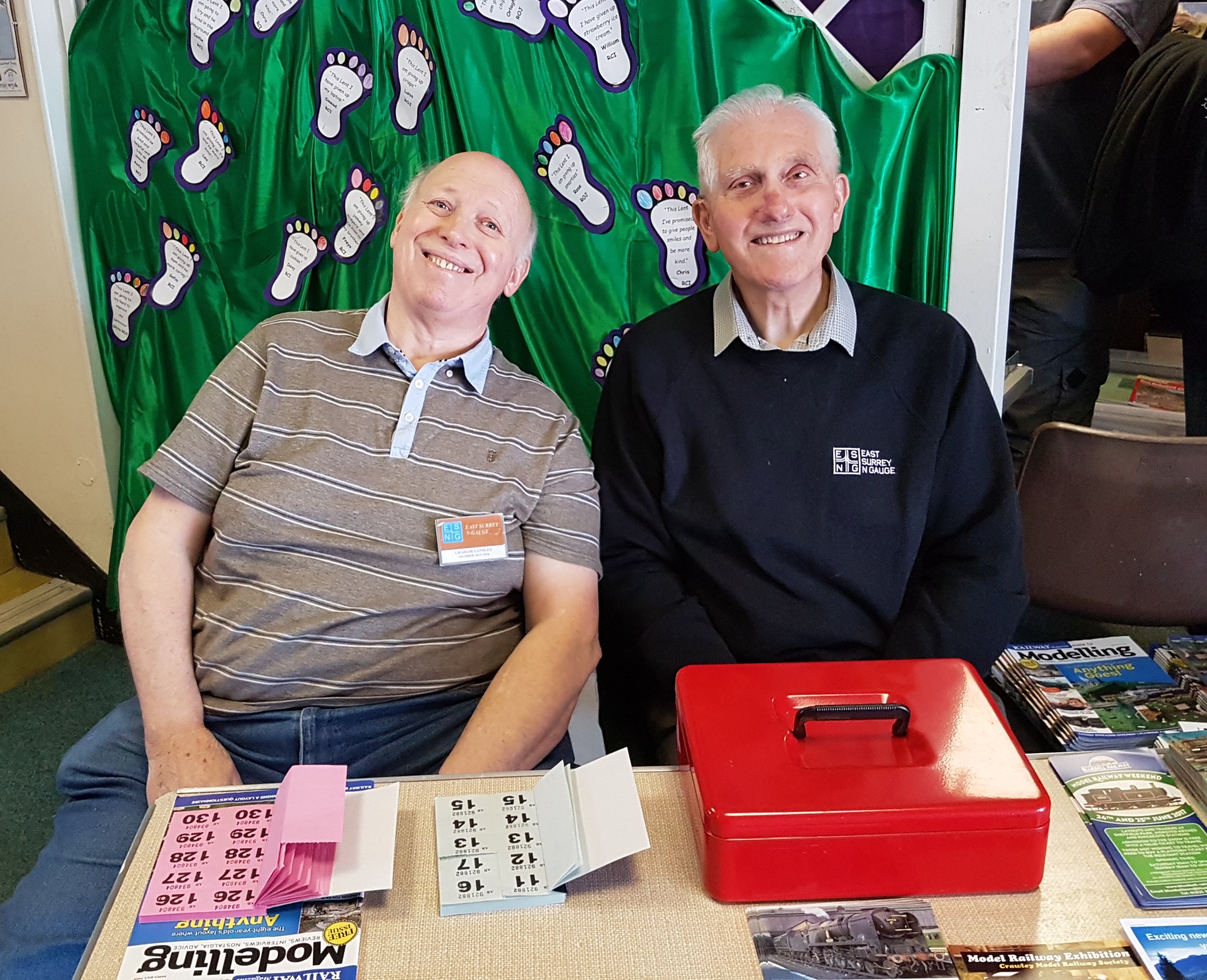
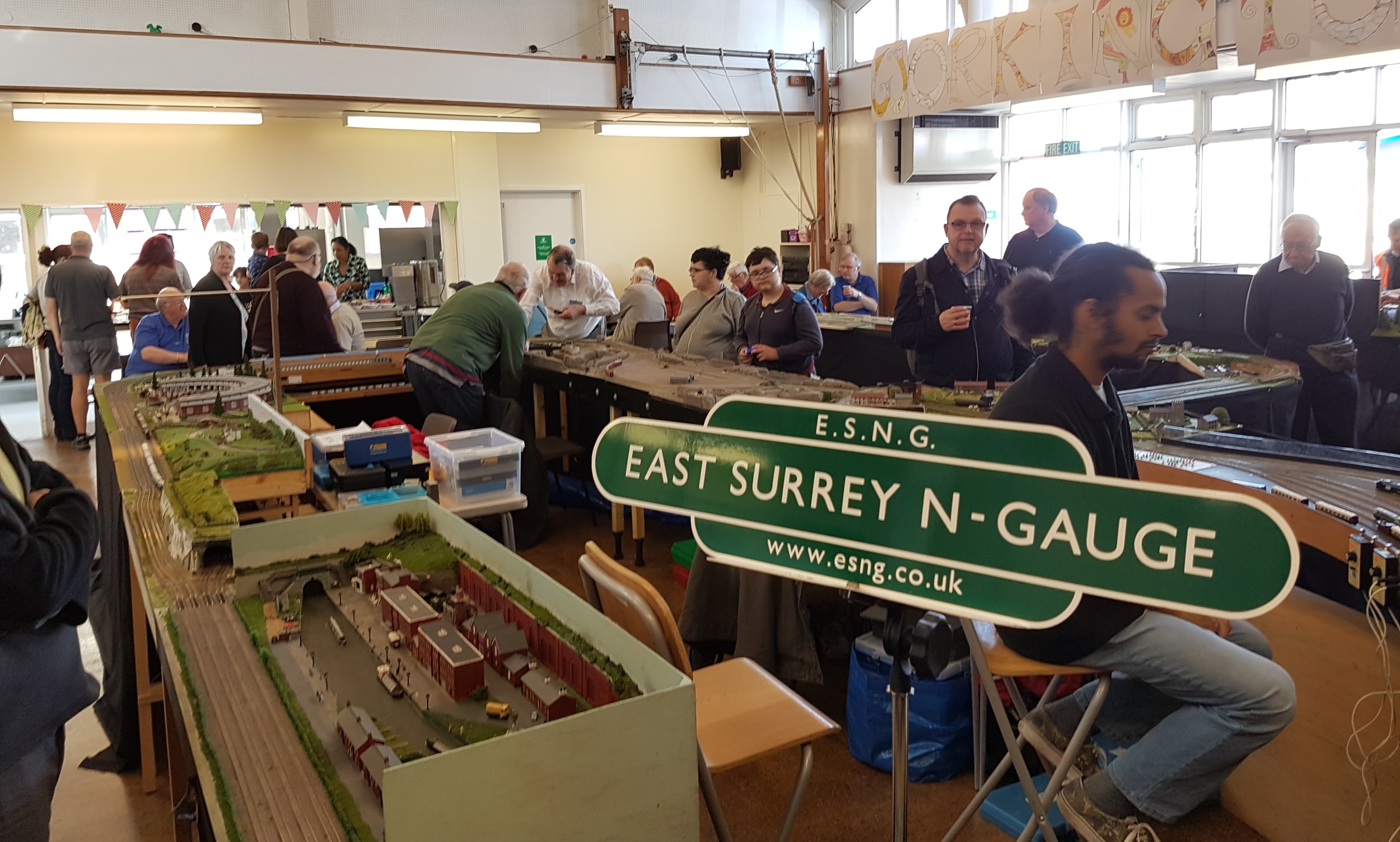
Still, the hall is pretty busy, so a few hardy souls have made it past the pay-desk.
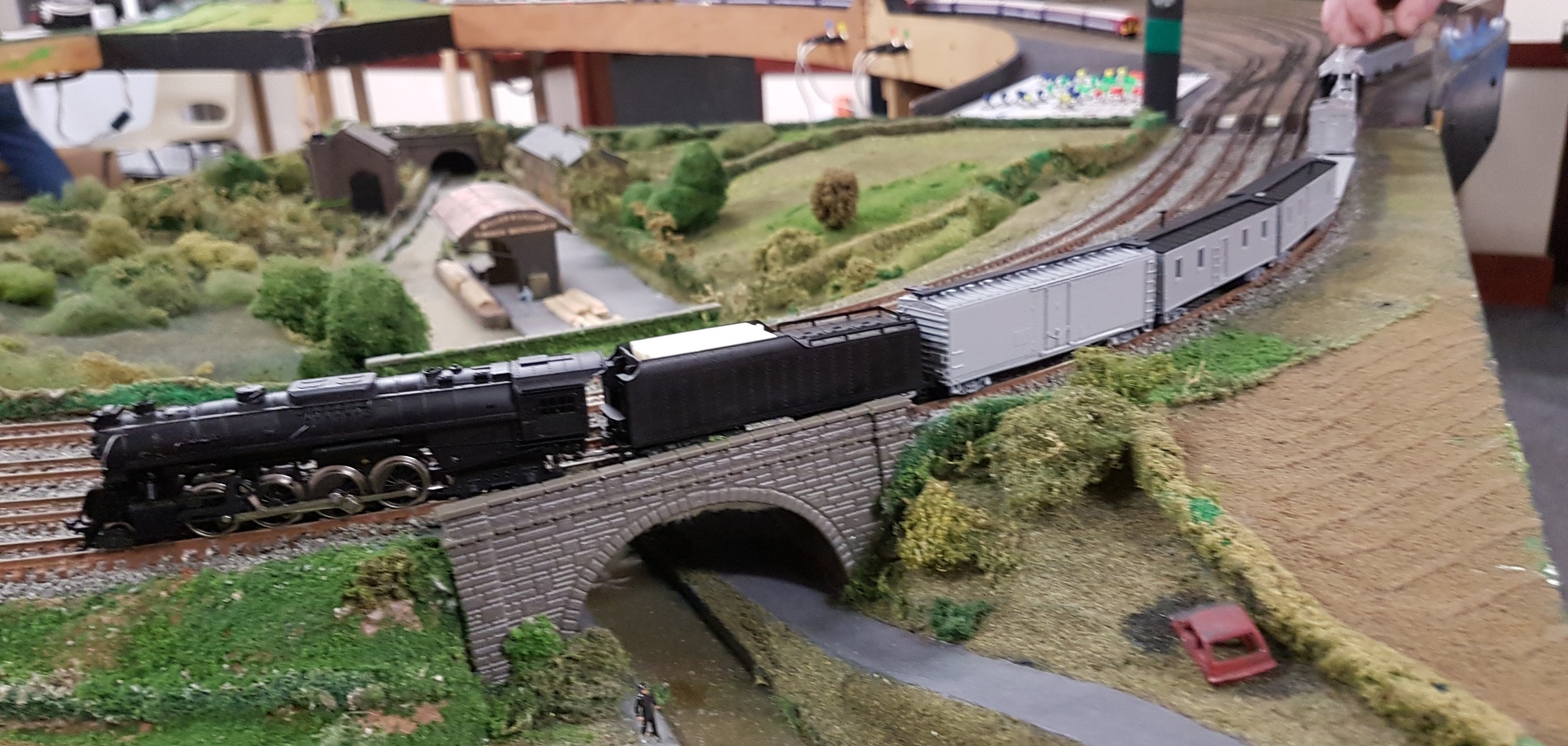
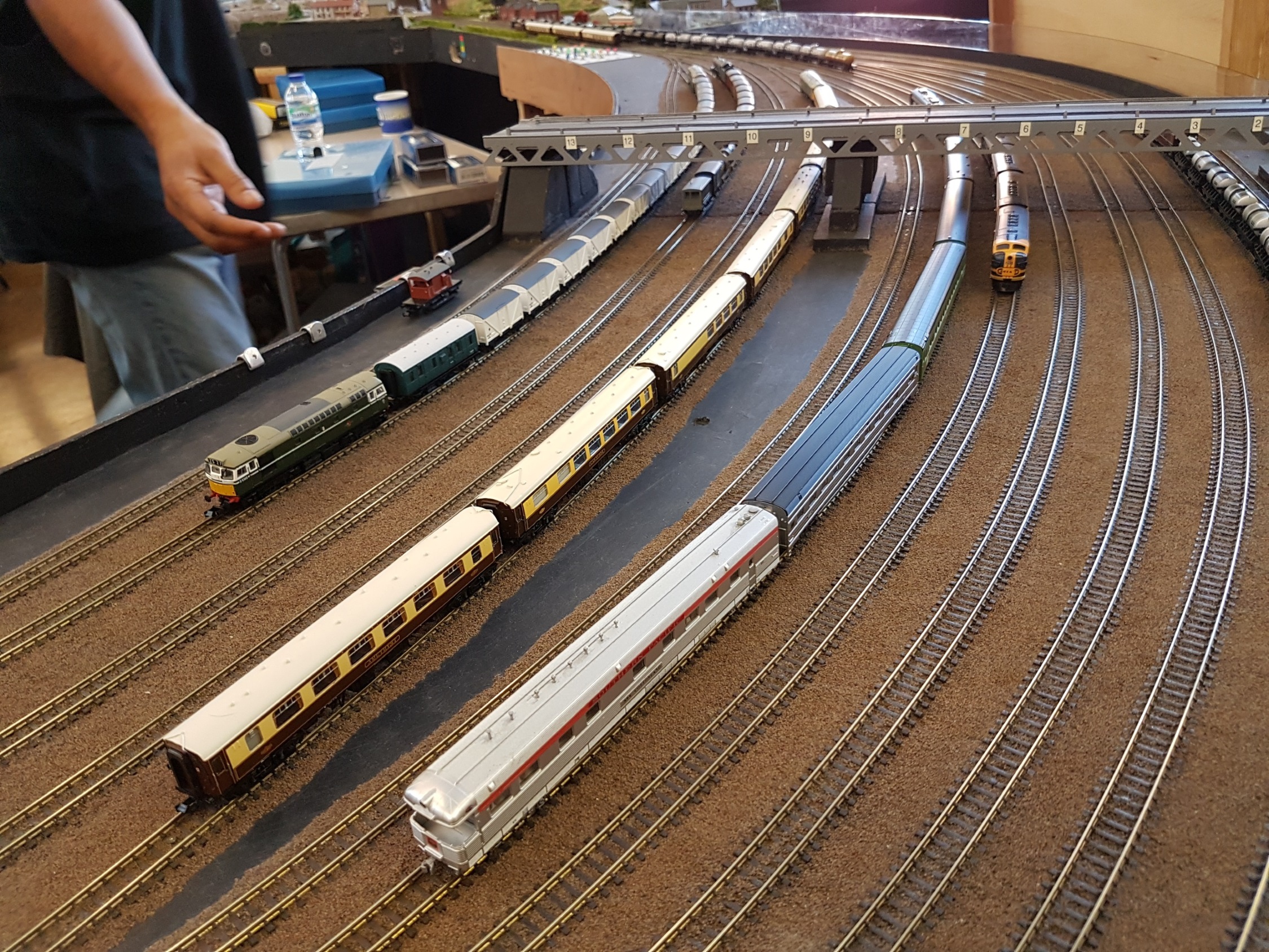
The fiddle yard has the usual variety of stock/  We were initially aiming for a UK themed day, but Simon, Graham and I have set up a few American rakes.
On the N-mod circuit, our late President’s ‘Lowwater Basin’ diorama was behind the main lines, though it looks as though a little repair is needed to one roof.
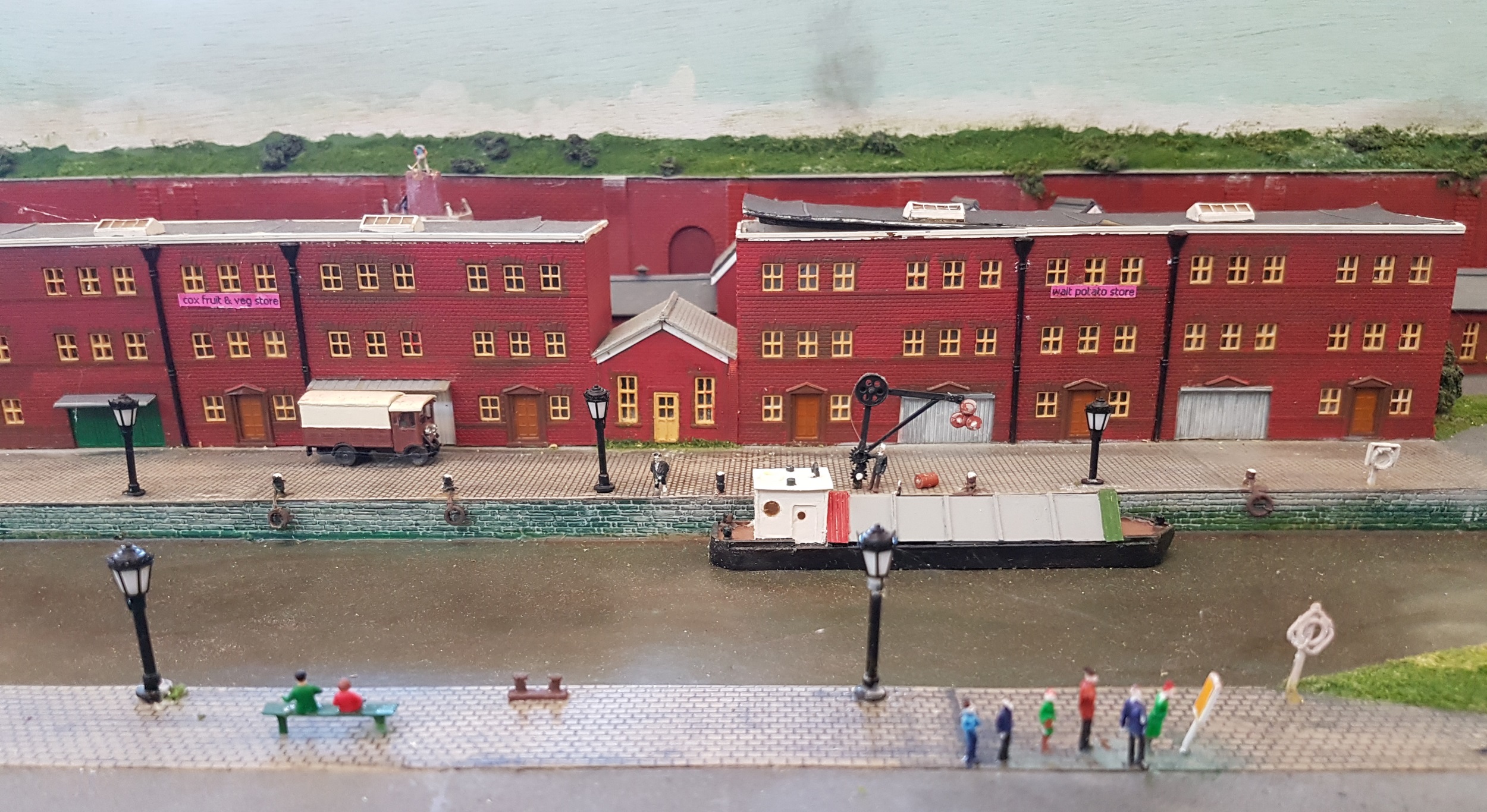
One new idea for the modular layout this year was the addition of a double track N-club standards branch off the main N-mod circuit (we’ve done it once before.)  Here we have one of the junctions on Derek’s module, whilst Simons long American tanker train passes on the main line.
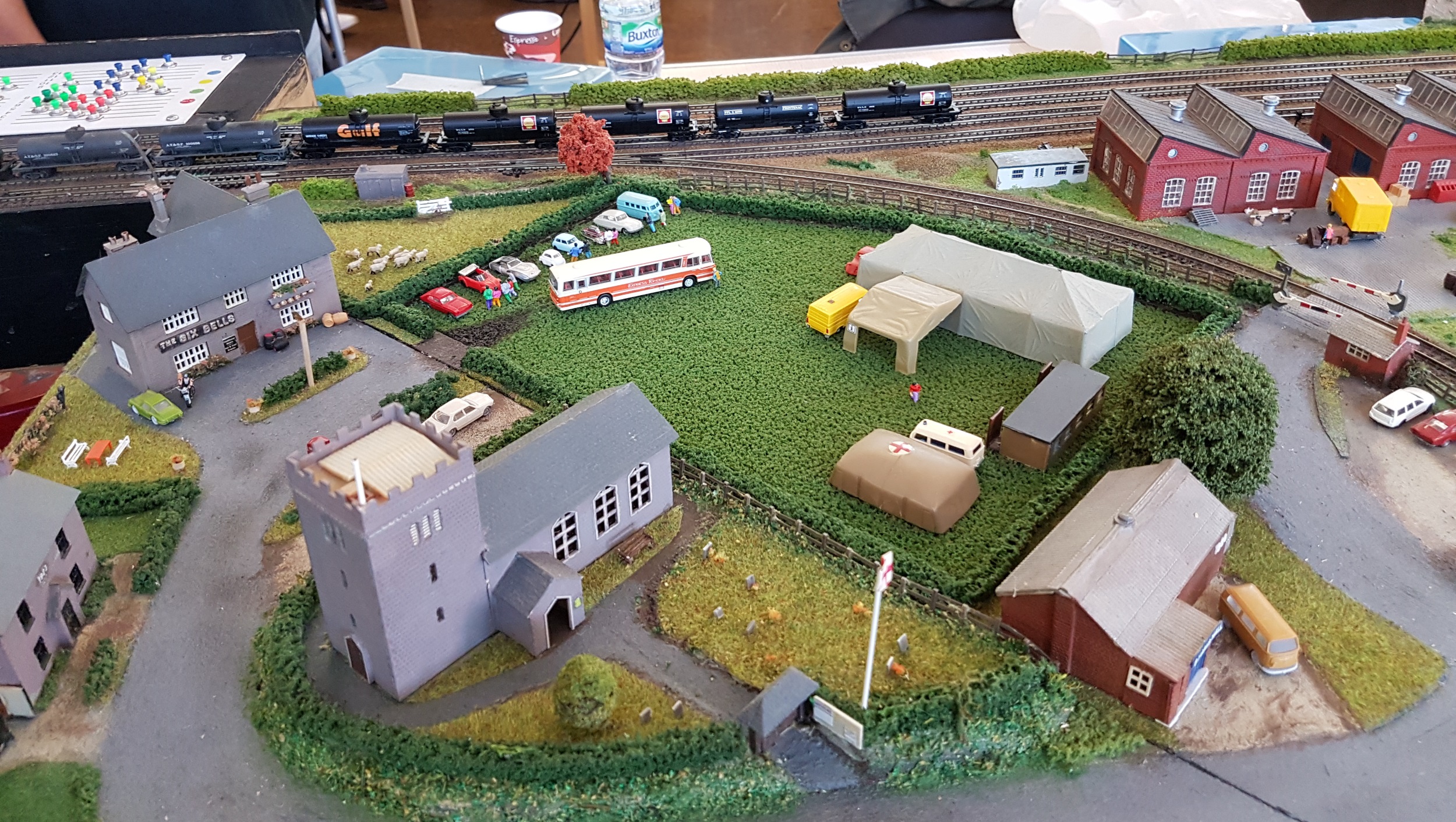
Derek’s N-club corner hosts a preservation society, who seem to have preserved some old ‘Lone-Star’ track to build their yard.  That Derek recycles everything….
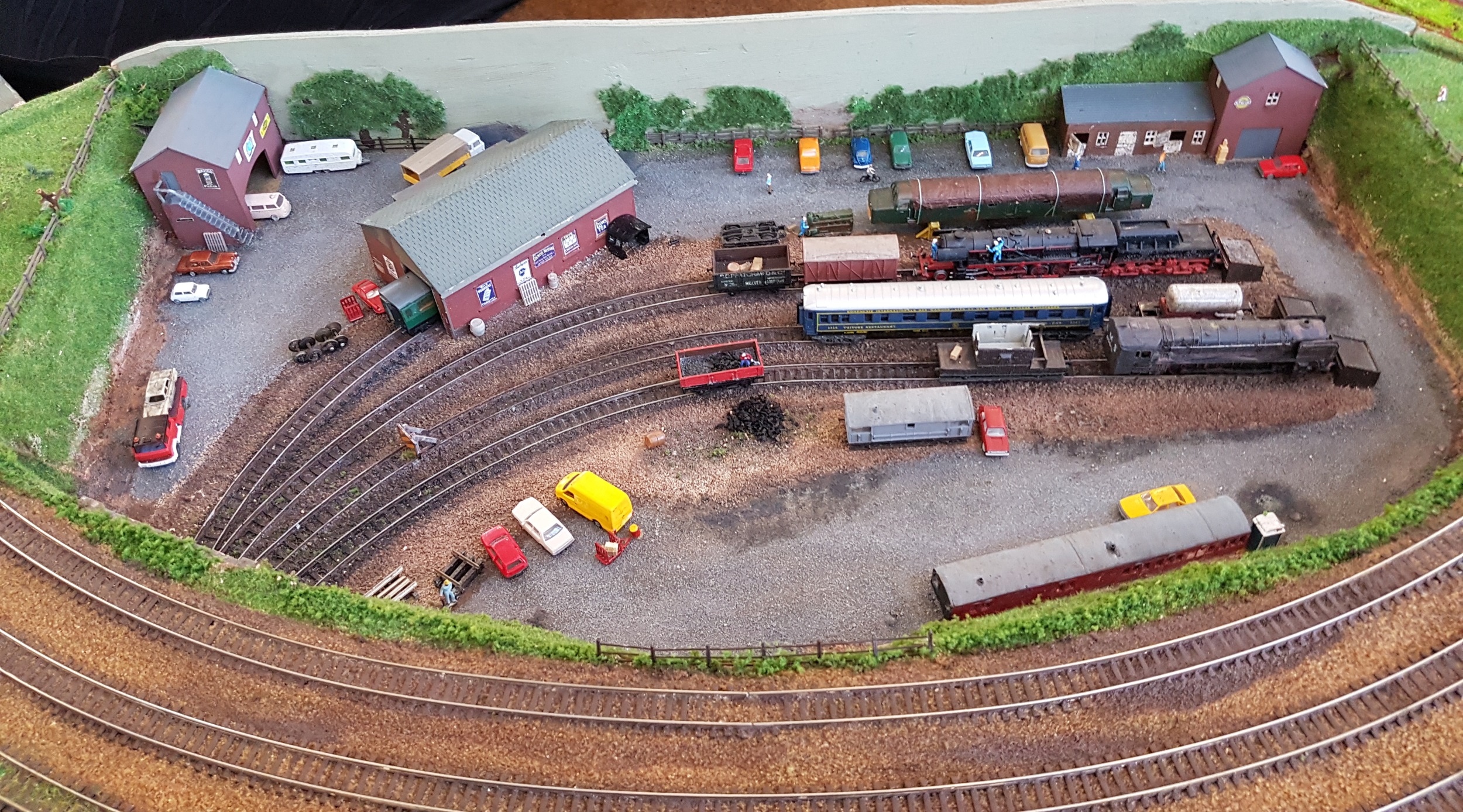
After going to Stuttgart and back unused, I was pleased to see that my ‘Clubhouse’ N-club module saw trains running over it, and worked fine.  I’ve got all the figures and vehicles to place on the scene, but just haven’t had time to set it up.
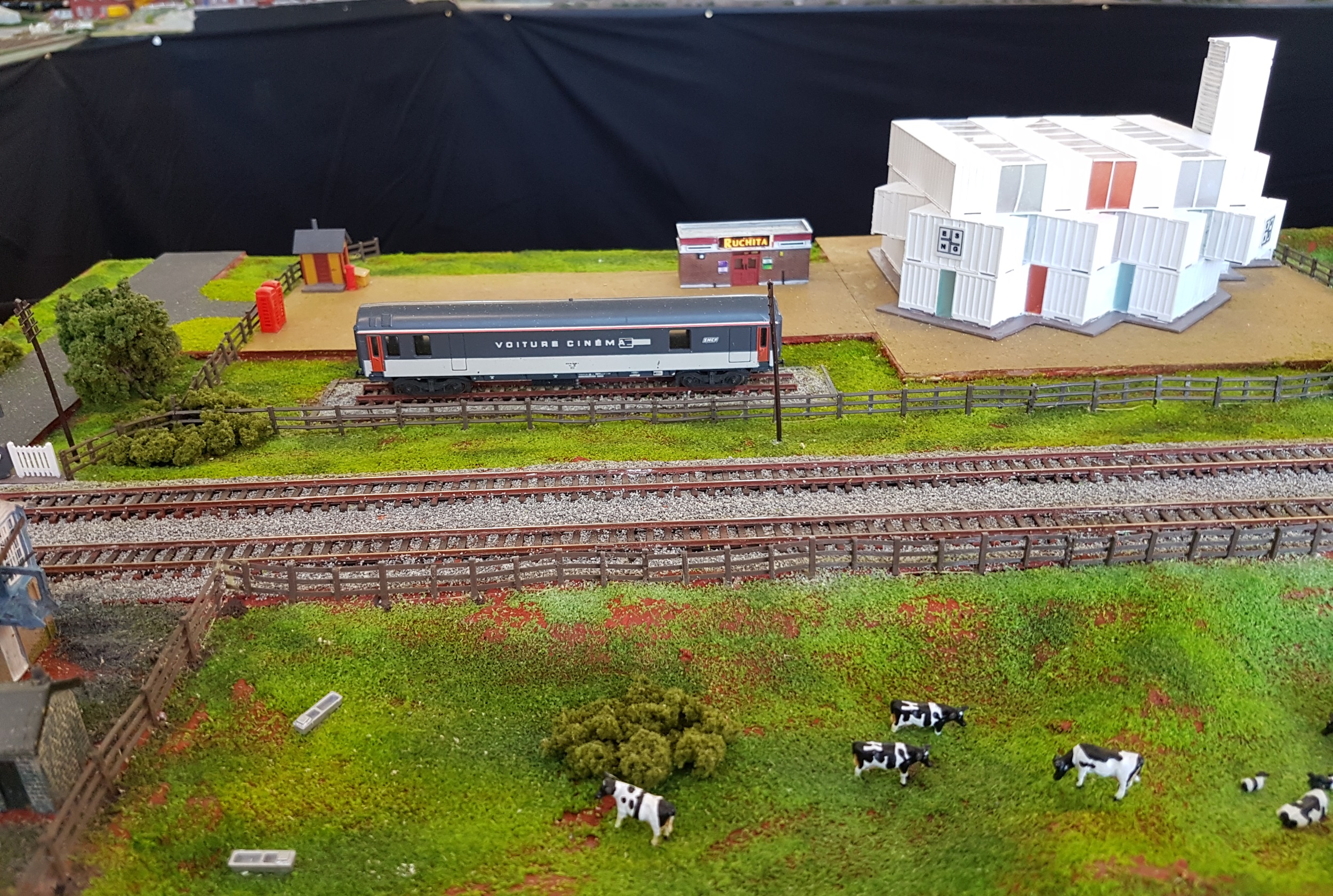
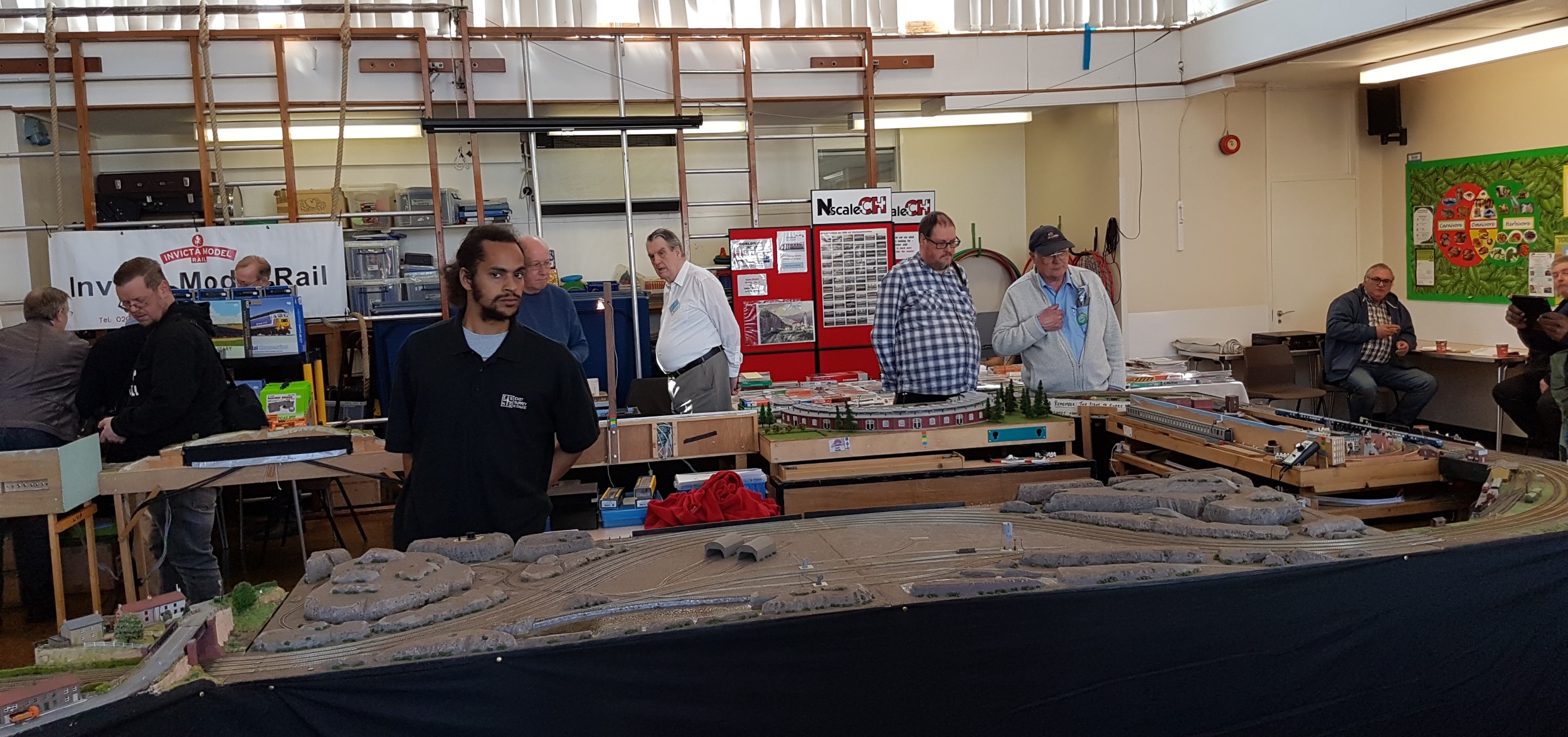
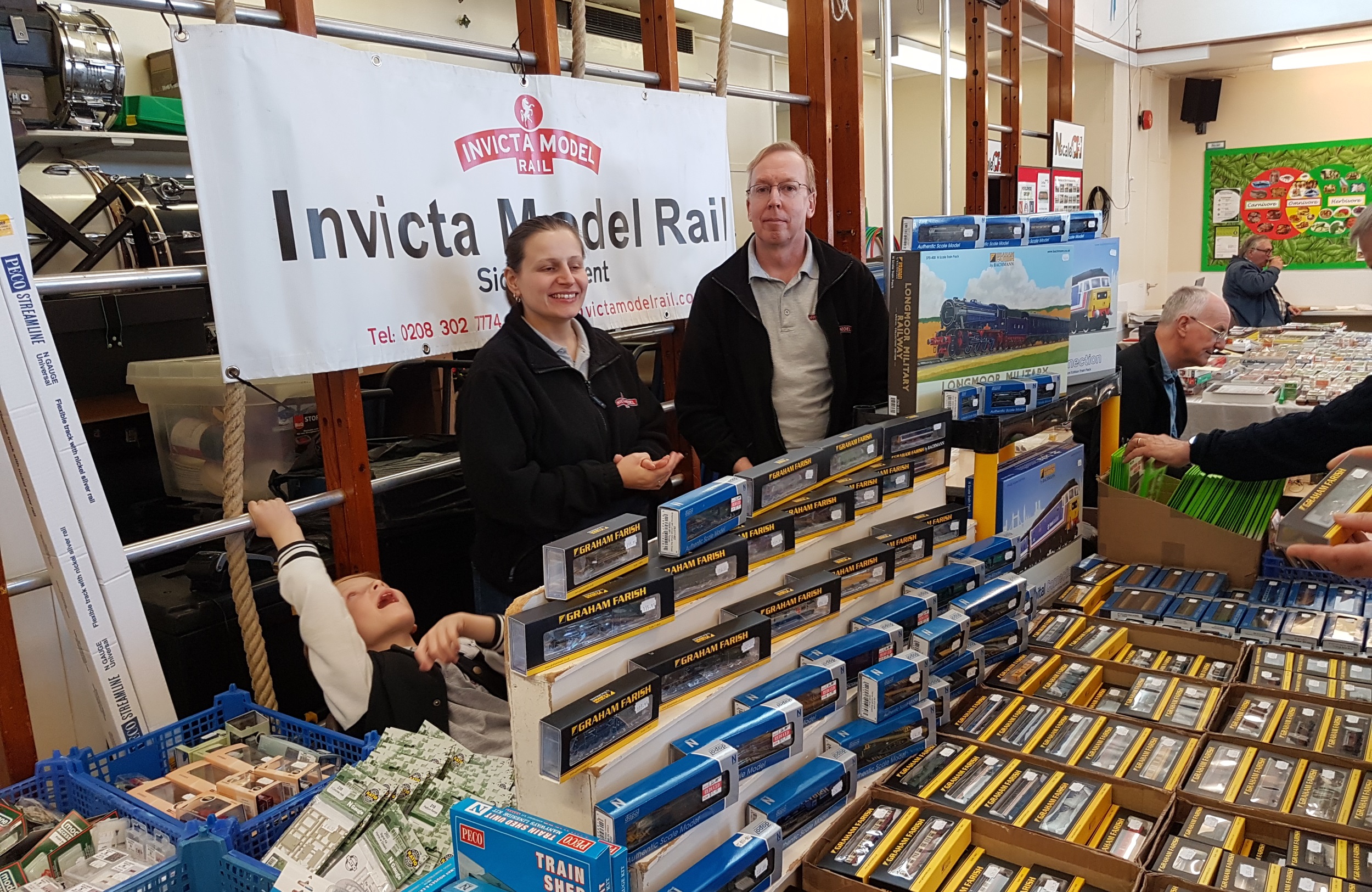
Trade in the main hall included Invicta, that was a real family business for the day….
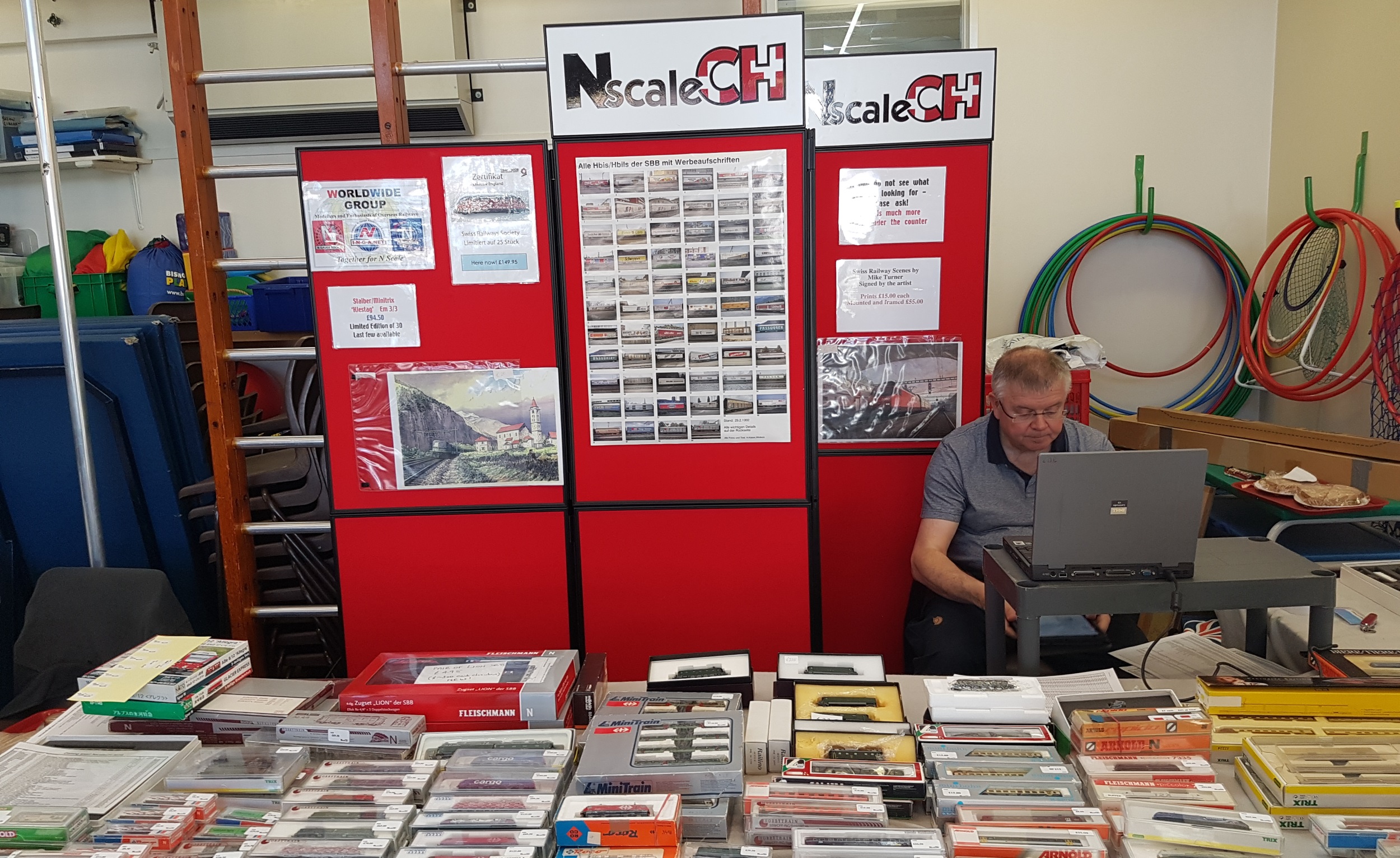
And NScaleCH.  No John guarding his stand, as he was keeping Alpenbahn running.
Next post, more from the main hall.
Posted in ESNG, ESNG meetings, Exhibitions, Out and about | Tagged , , , | Leave a comment

Swanage Strictly Bullied Steam Gala #2

Second episode of the Derek & Allan show from Swanage…..

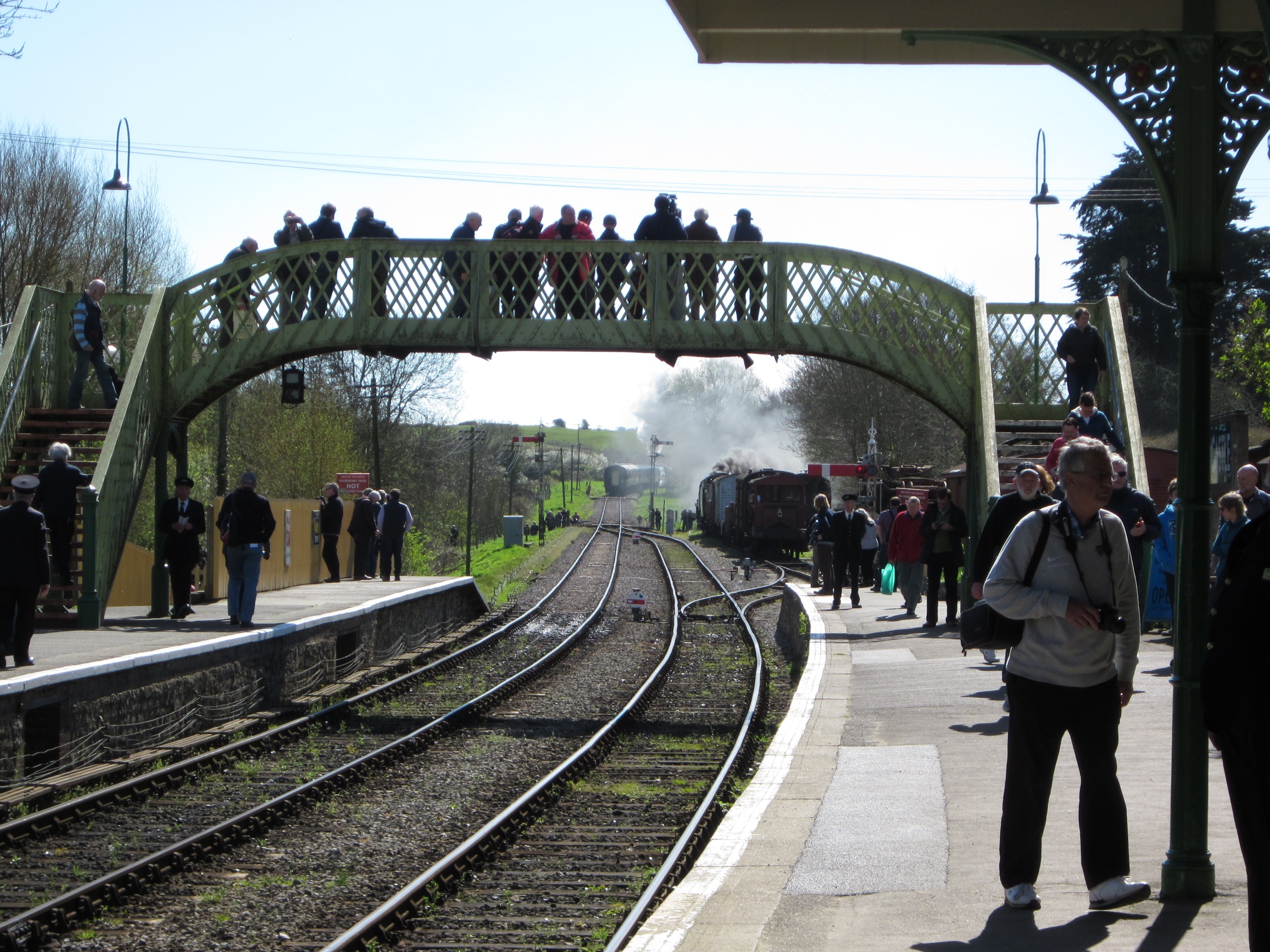
Load testing the footbridge…..

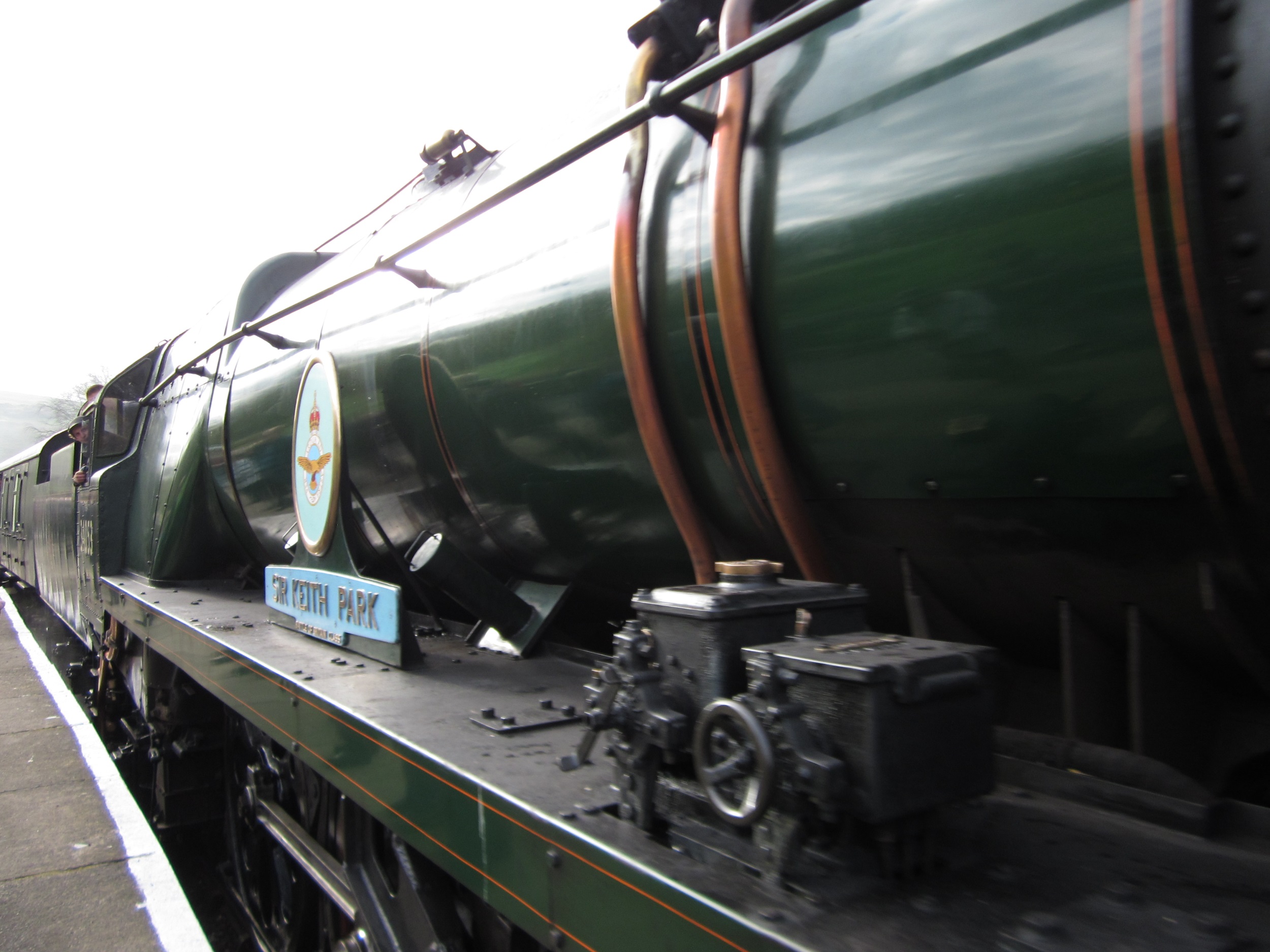
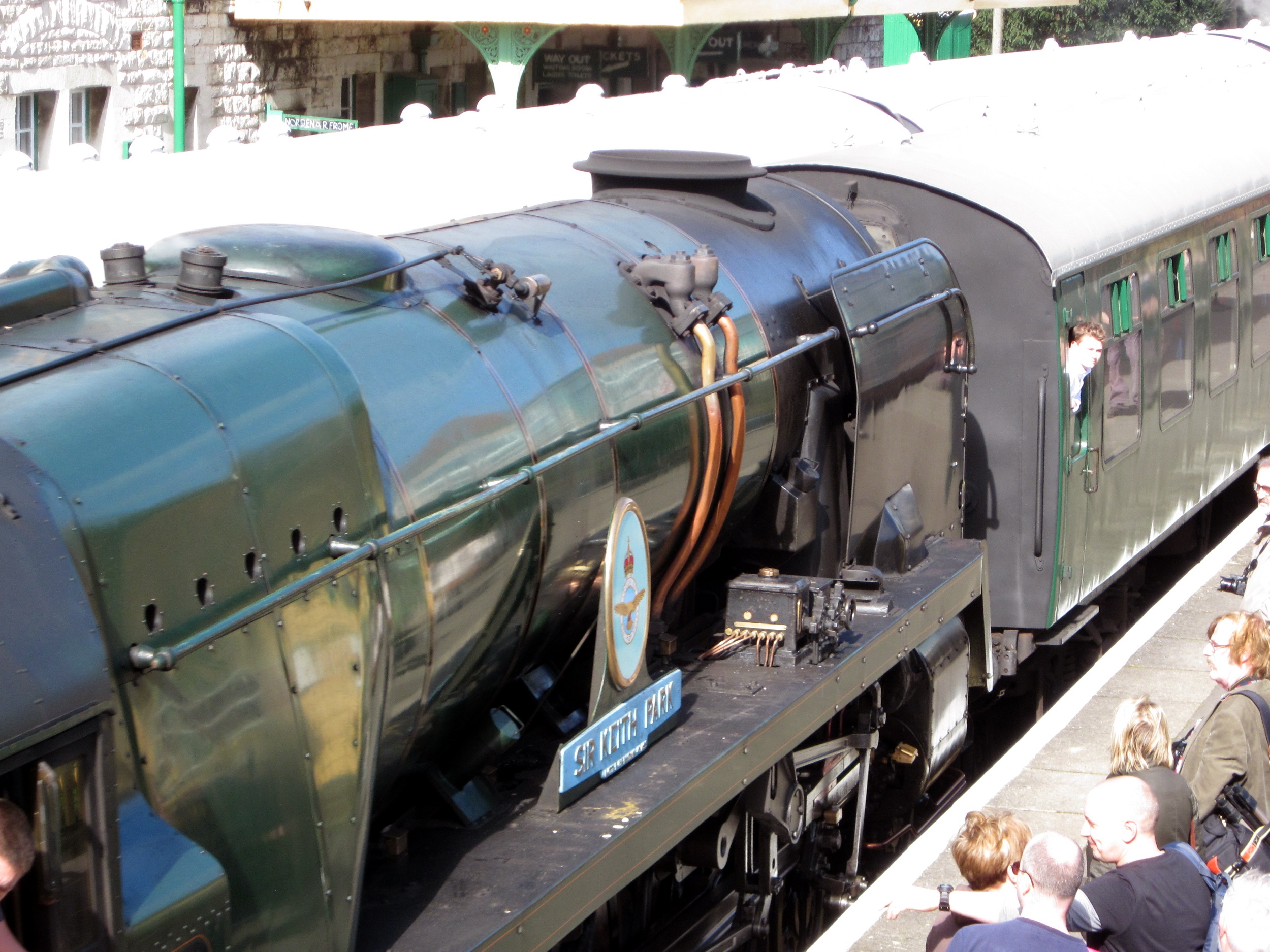
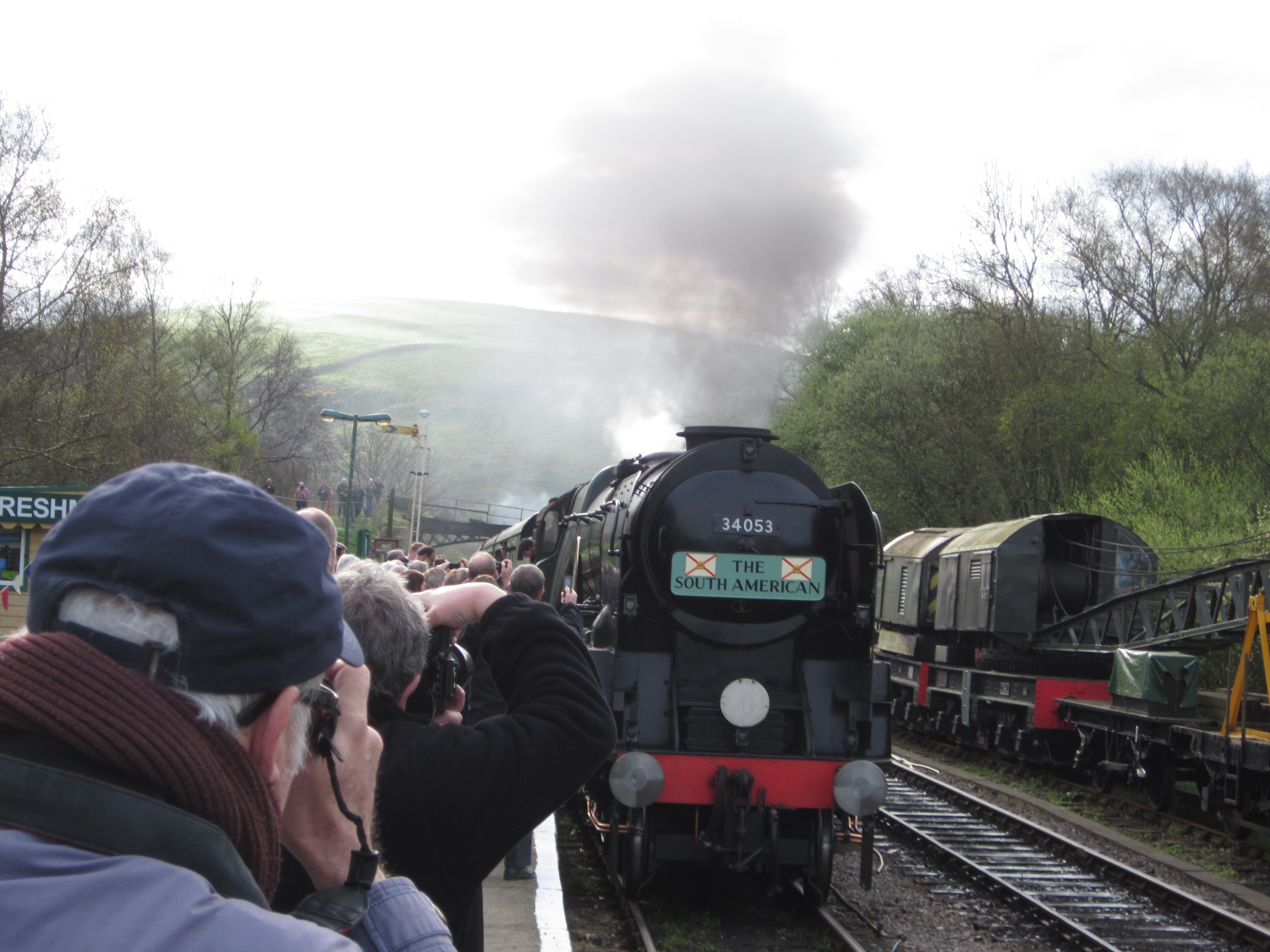
Rebuilt Battle of Britain 34053, ‘Sir Keith Park’.  Park was in operational command during two of the most significant air battles in the European theatre in the Second World War, helping to win the Battle of Britain and the Battle of Malta. In Germany, he was supposedly known as “the Defender of London”. (From Wikipedia).

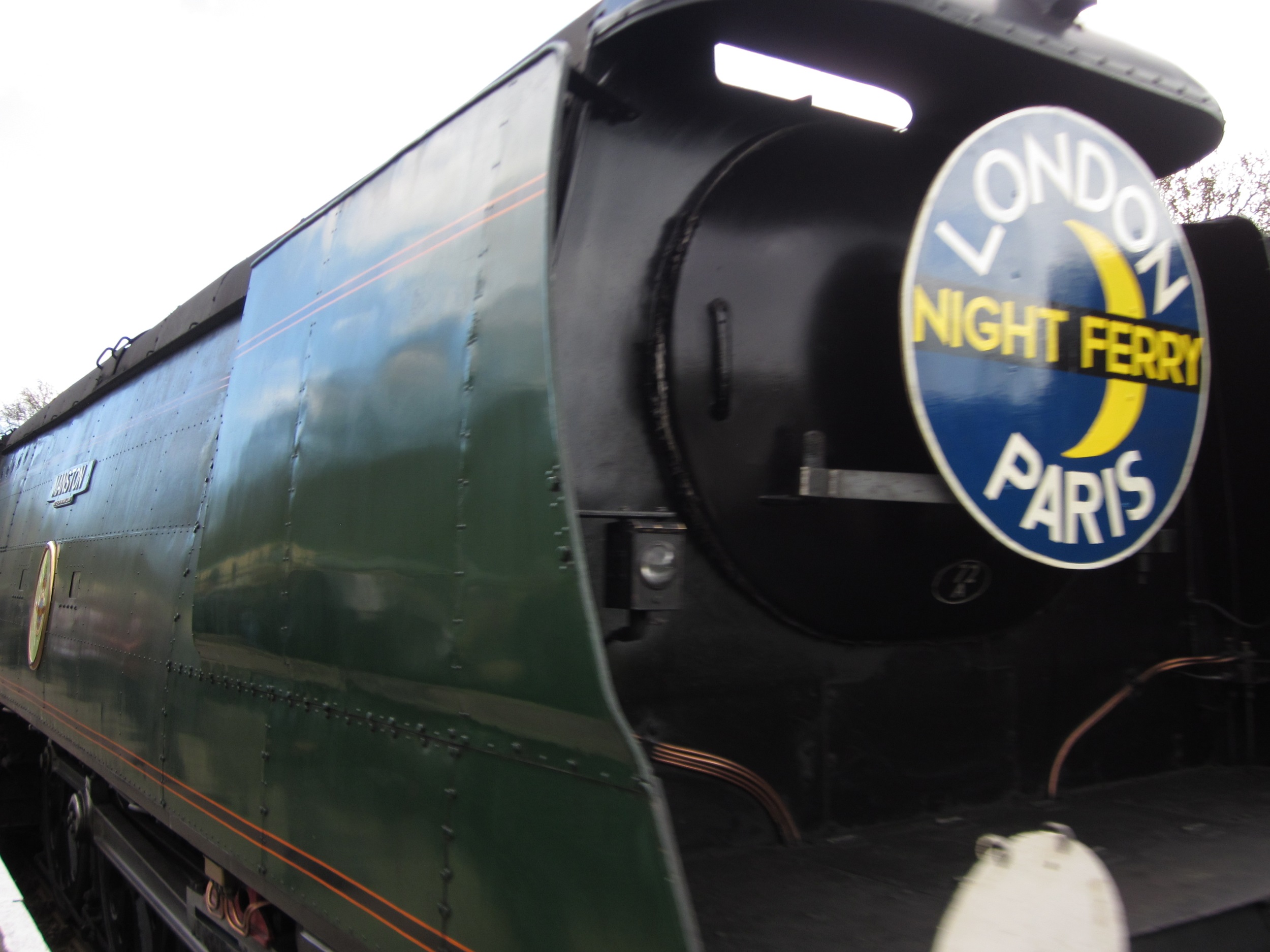
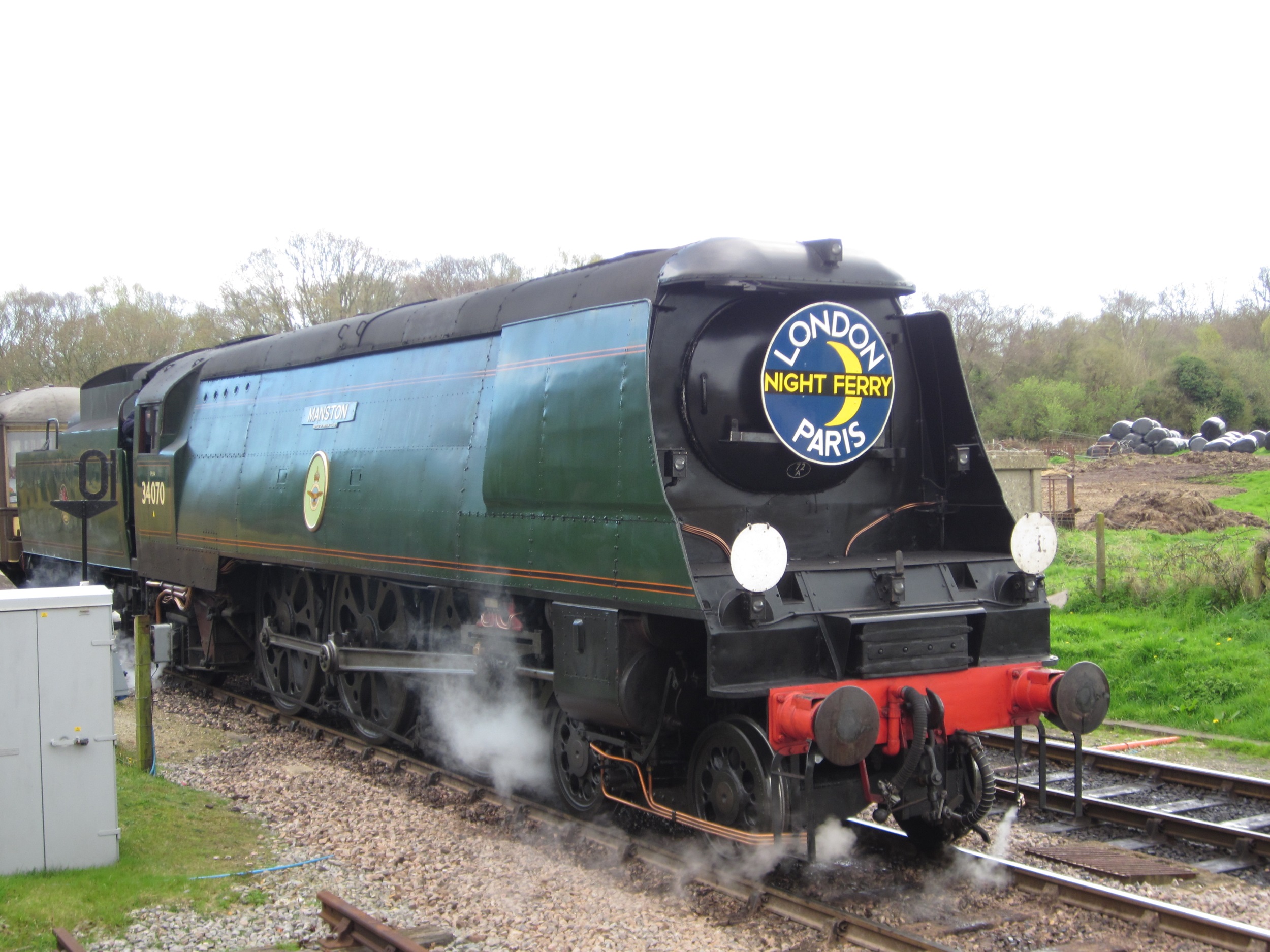
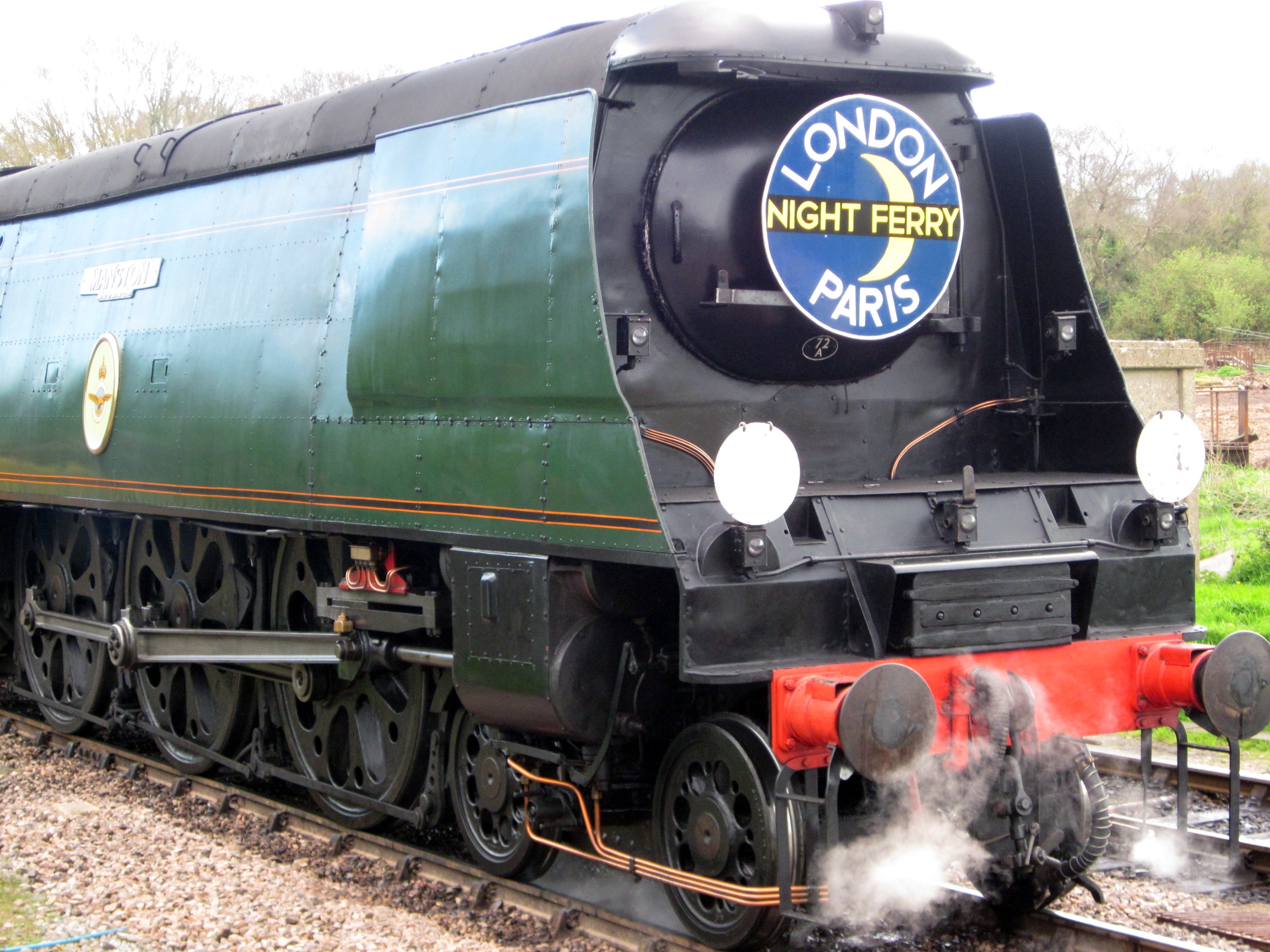
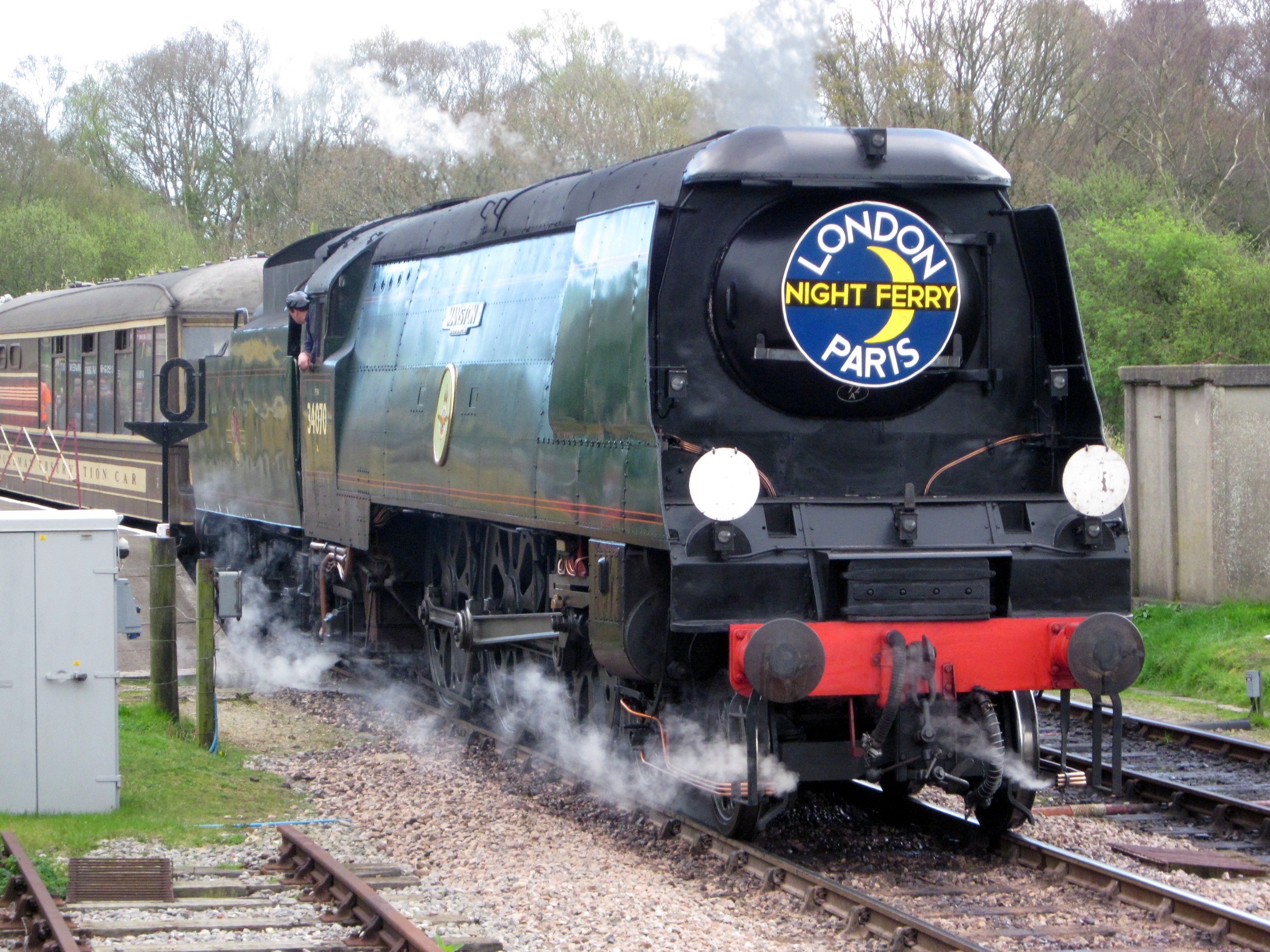
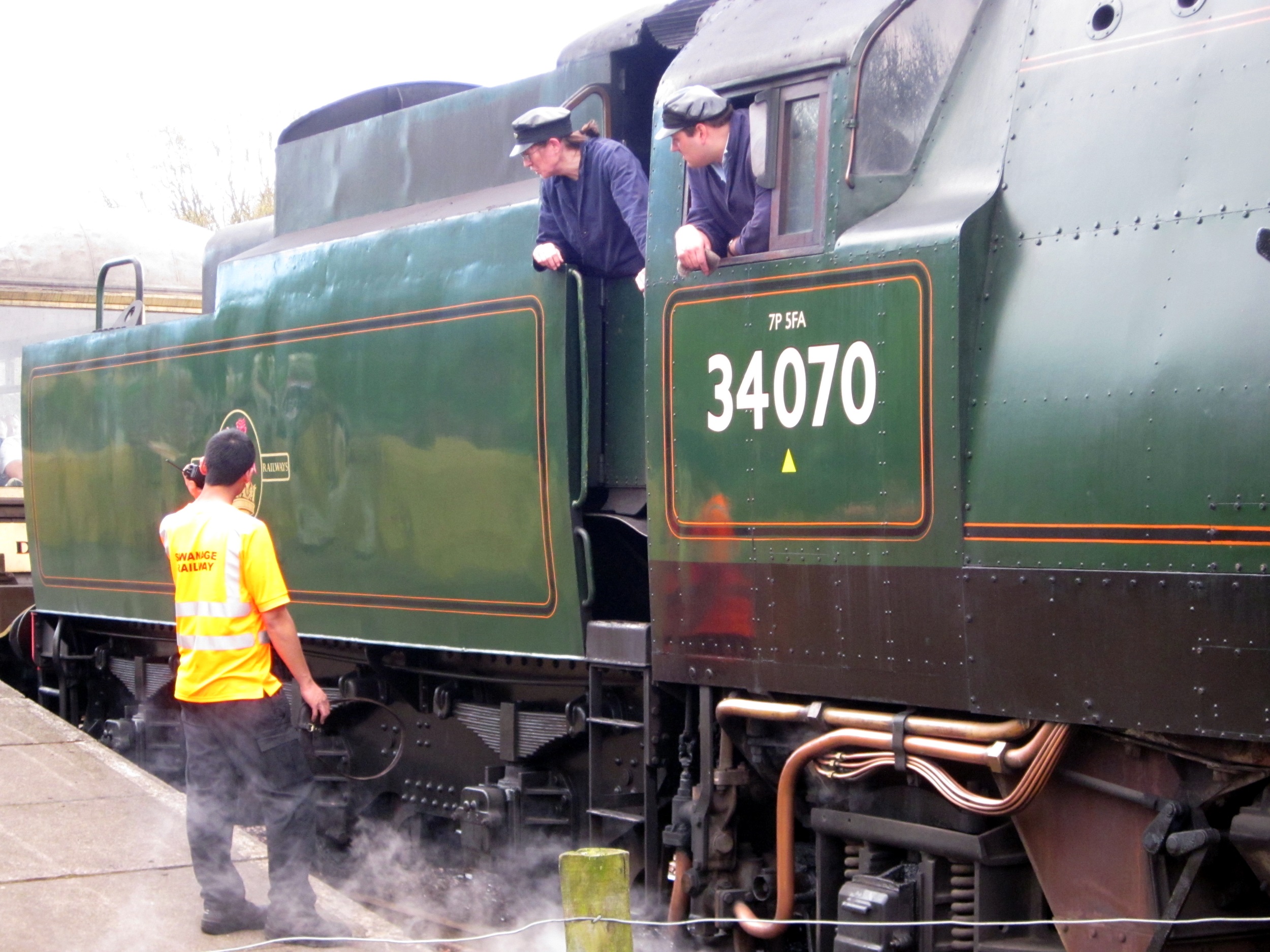
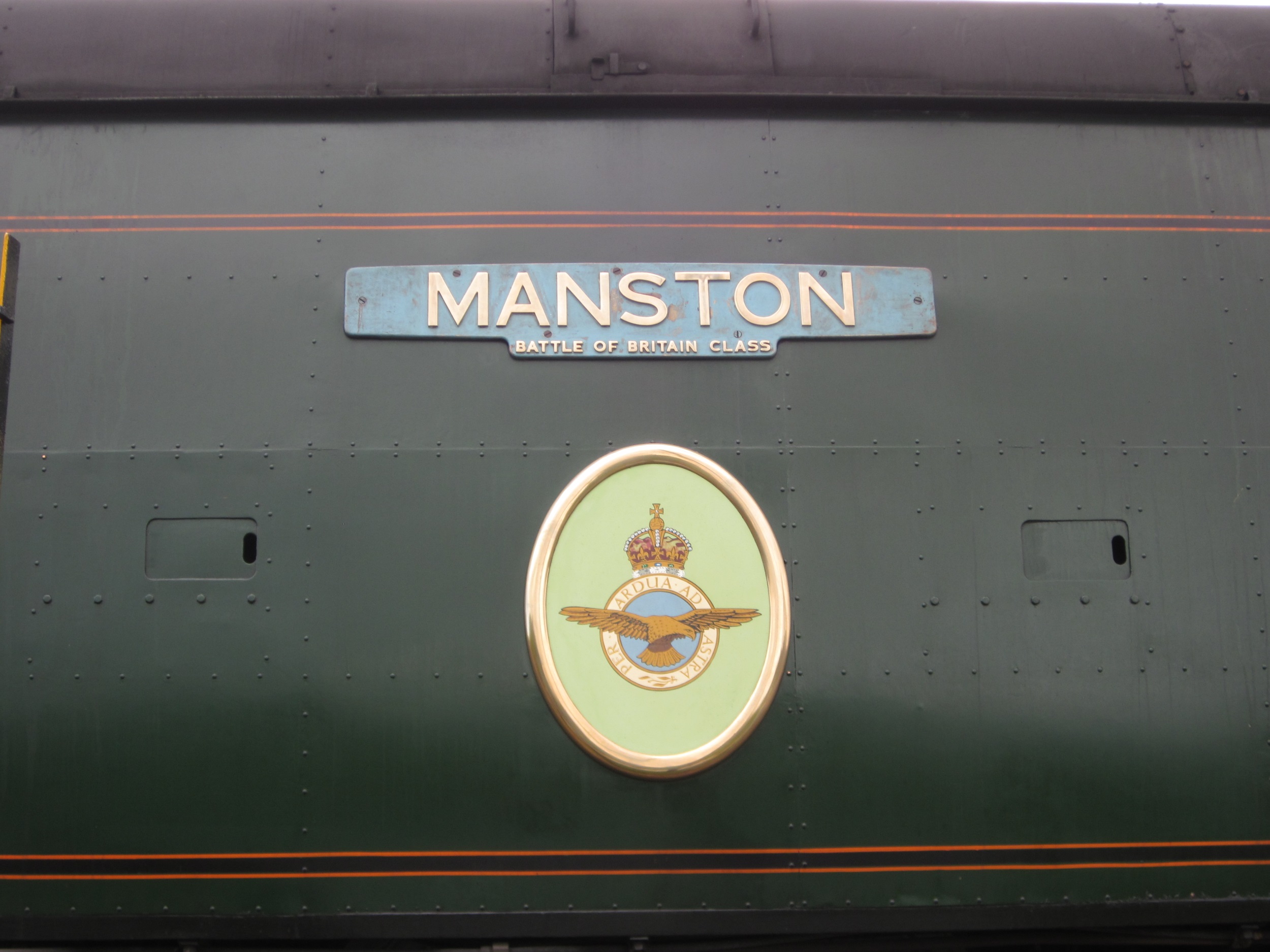
And un-rebuilt Battle of Britain class, 34070, ‘Manston’.  Manston, in East Kent, was a key air base during the Battle of Britain.

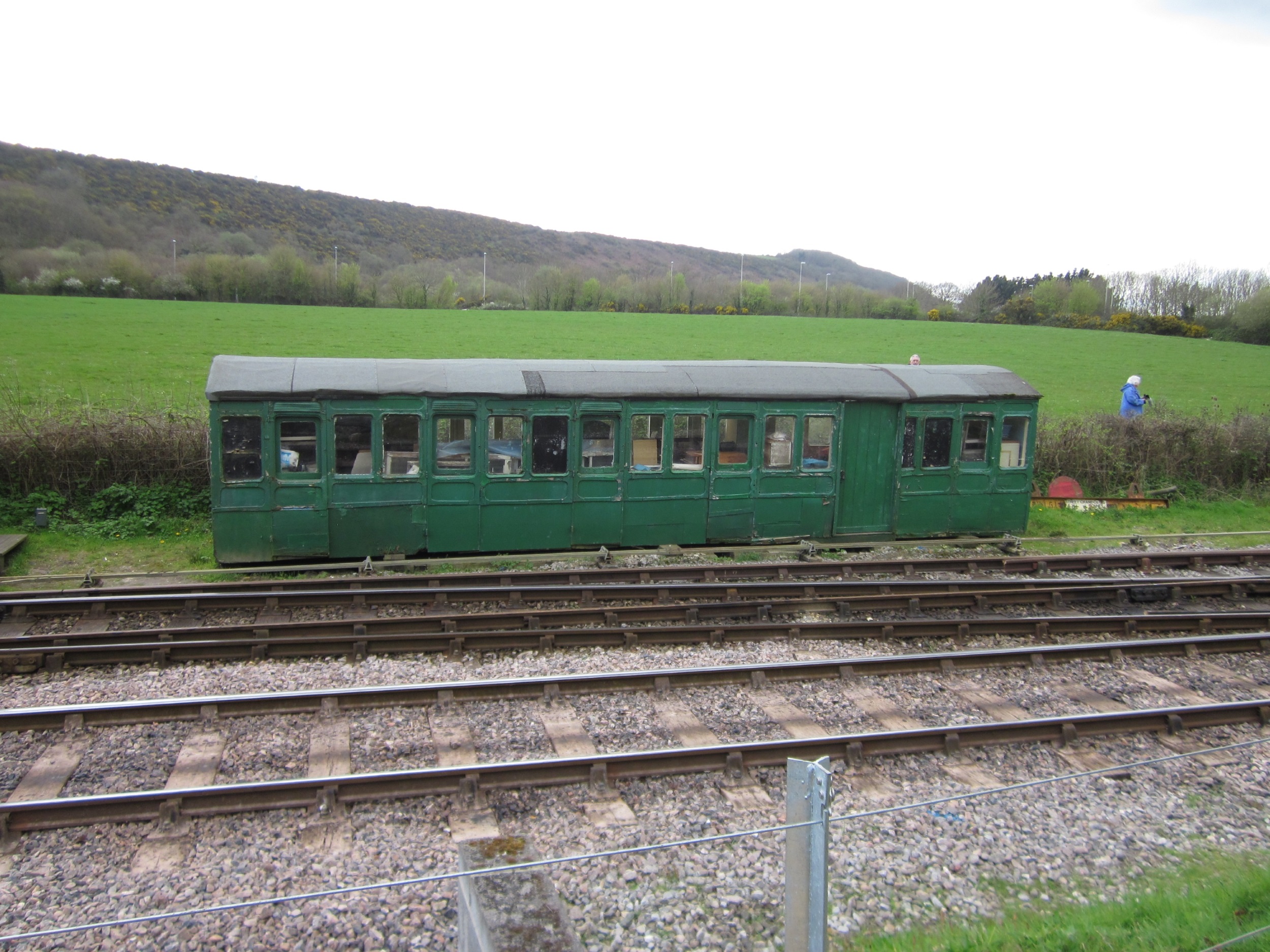
To finish, a little scenic inspiration.  It’s probably more difficult to model this well, than a brand new coach….

And last but not least, I don’t think Bullied had much to do with this, but I like it!

Posted in Inspiration, Out and about, Prototype | Tagged , , , | 1 Comment

Swanage Strictly Bullied Steam Gala #1

I’m panicking towards a flight to Jakarta, so the ESNG show pictures will have to wait a couple of posts more.  But for now, some prototype inspiration…..


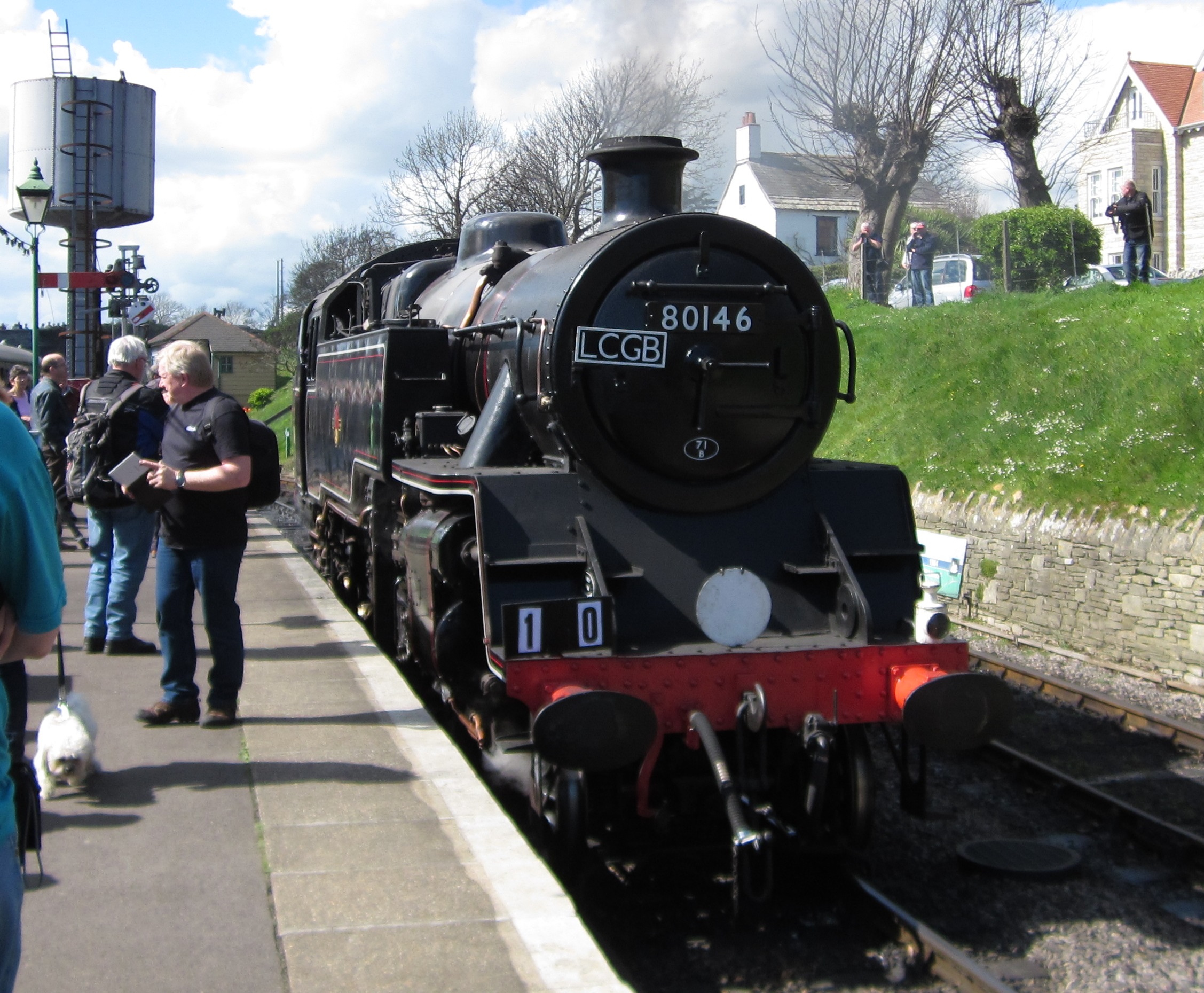
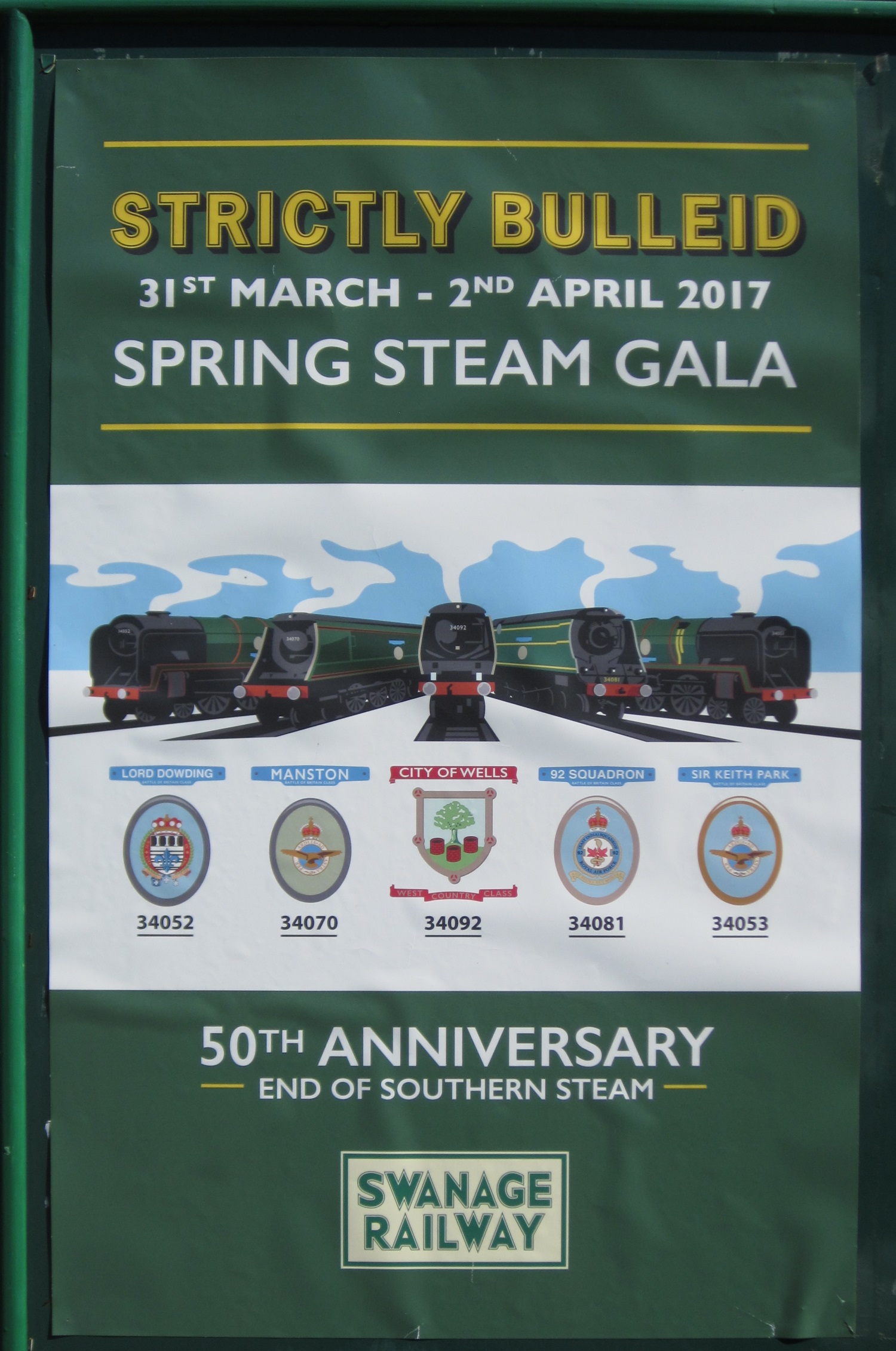
Allan & Derek recently spent a weekend on the Swanage Railway, where they were running a number of Bullied Pacific 4-6-2’s.  Some of the last steam locomotives to run on British Railways, they are handsome locomotives in both un-rebuilt and rebuilt forms.  And one of my favourites, as I saw them in their last days on services from Waterloo.

And is it really 50 years since I was behind a West Country or Battle of Britain class?

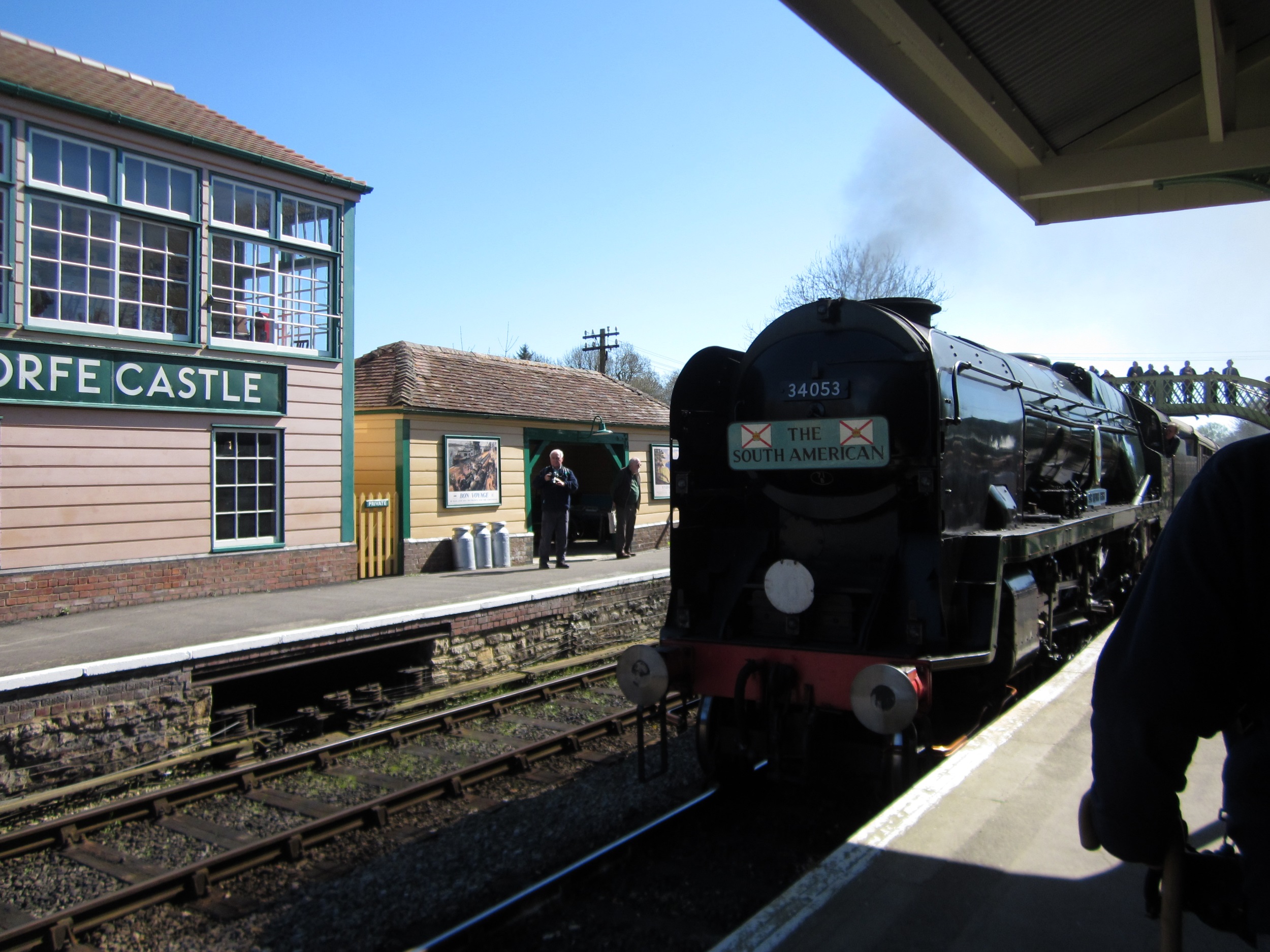
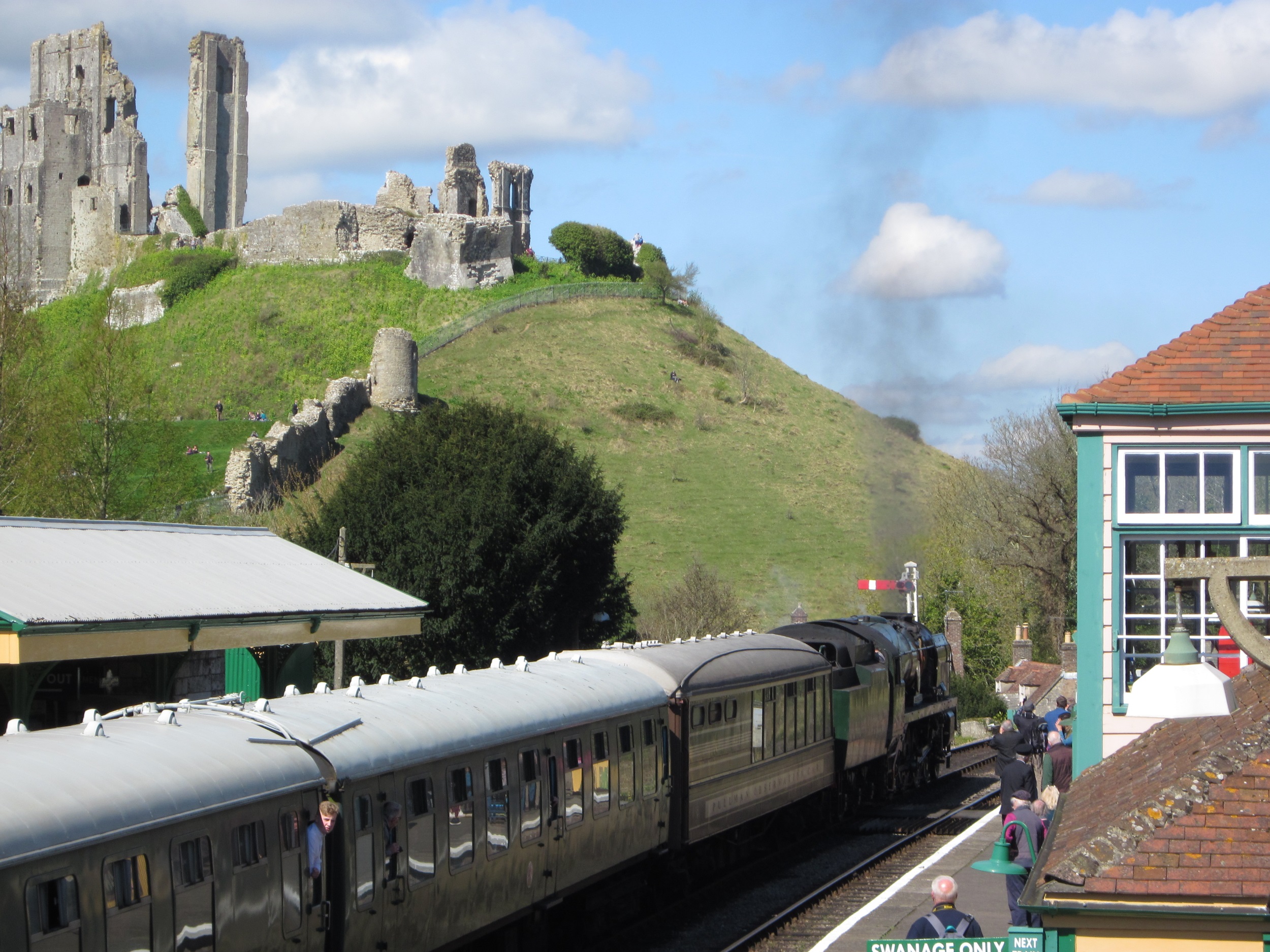
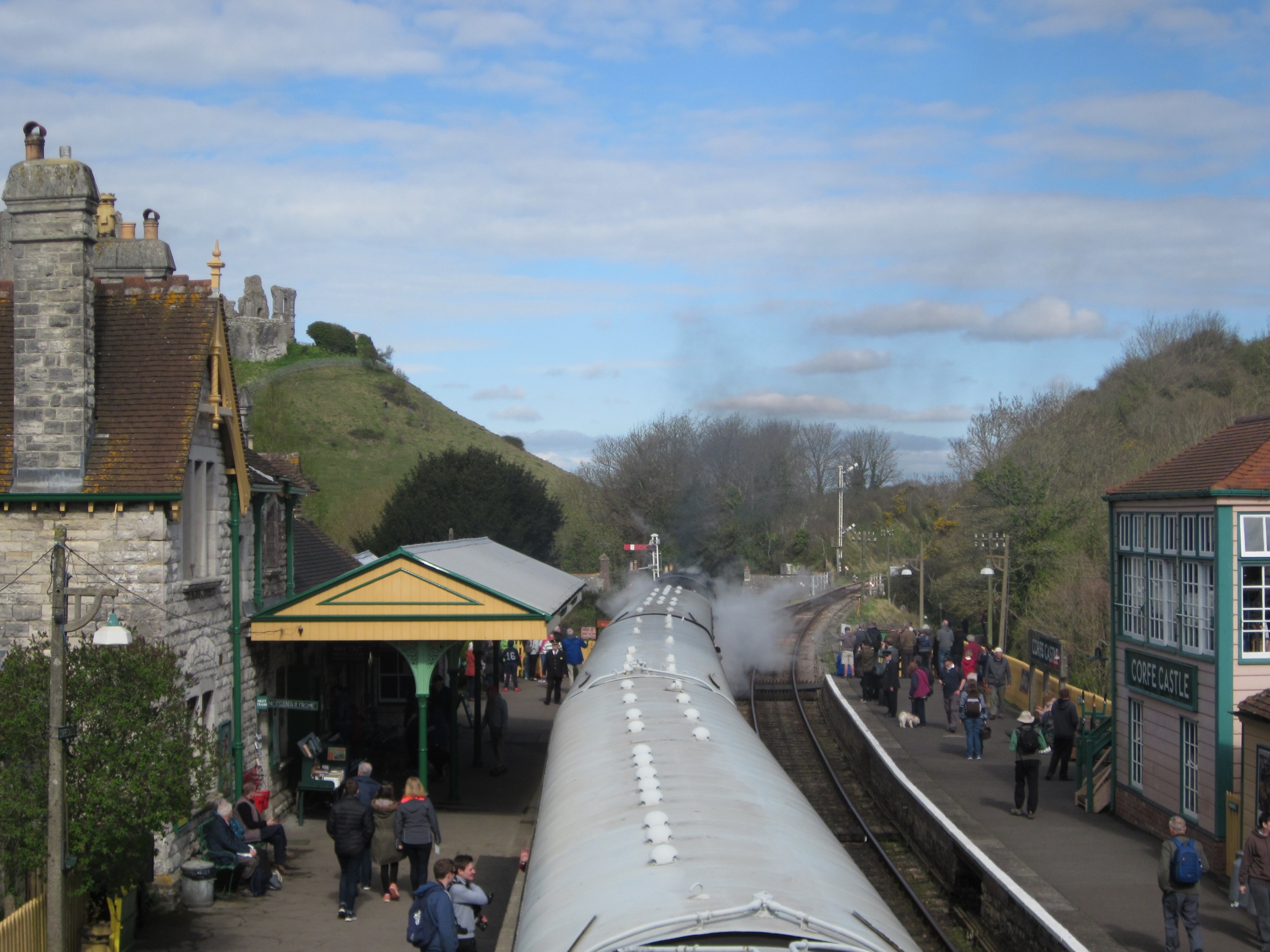
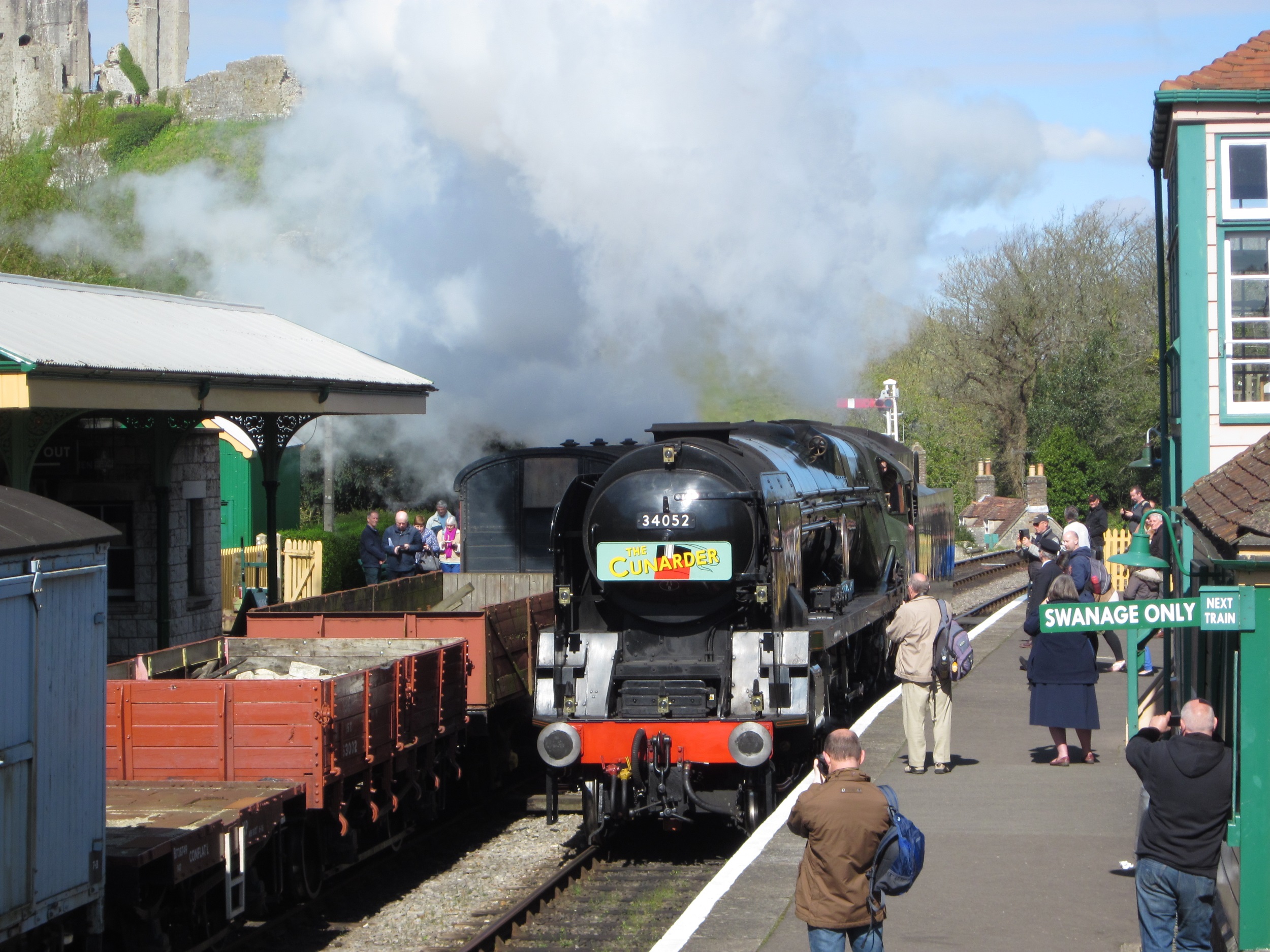
The Swanage railway is blessed by some wonderful scenic locations, none better than at Corfe Castle.

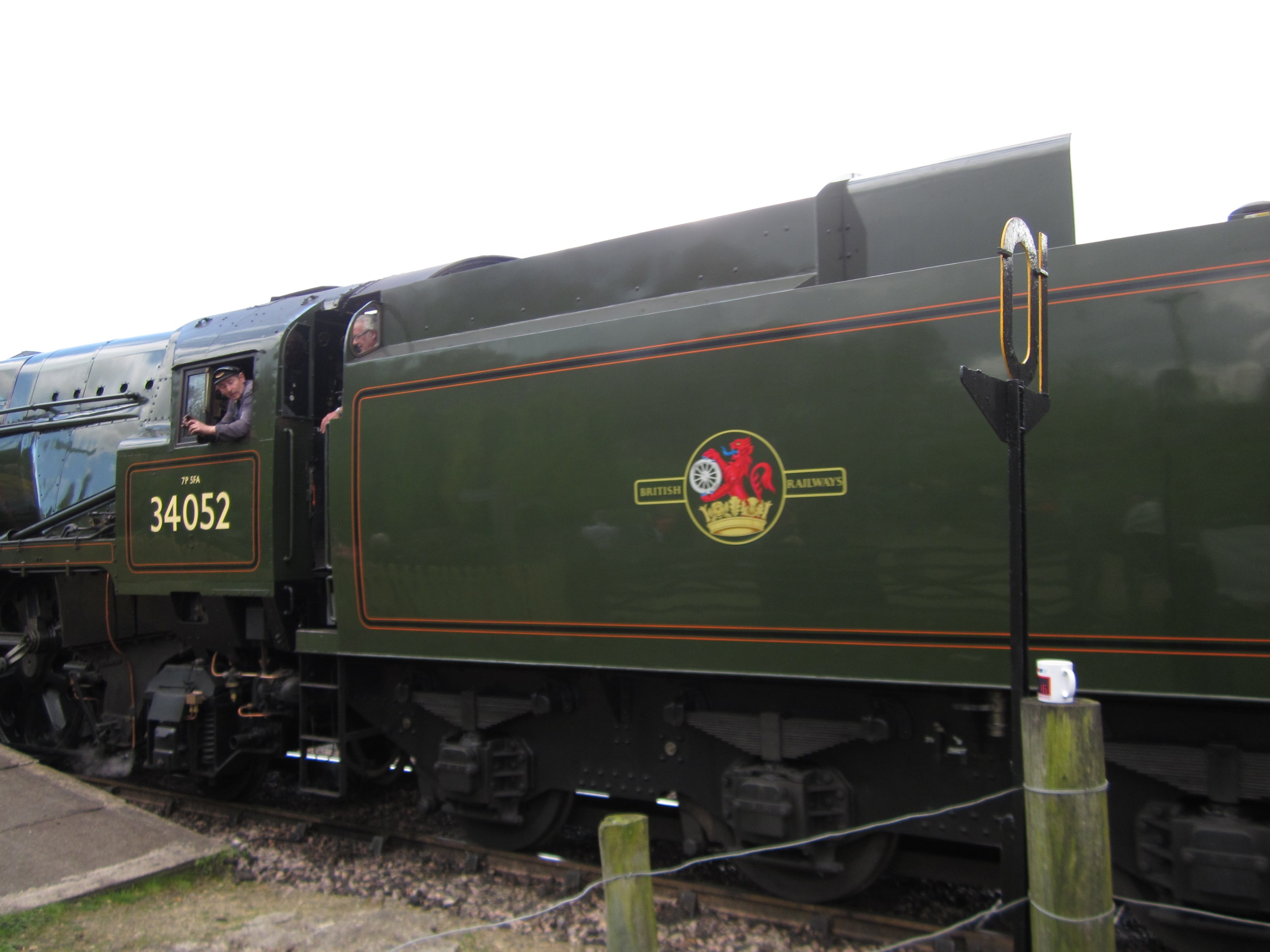
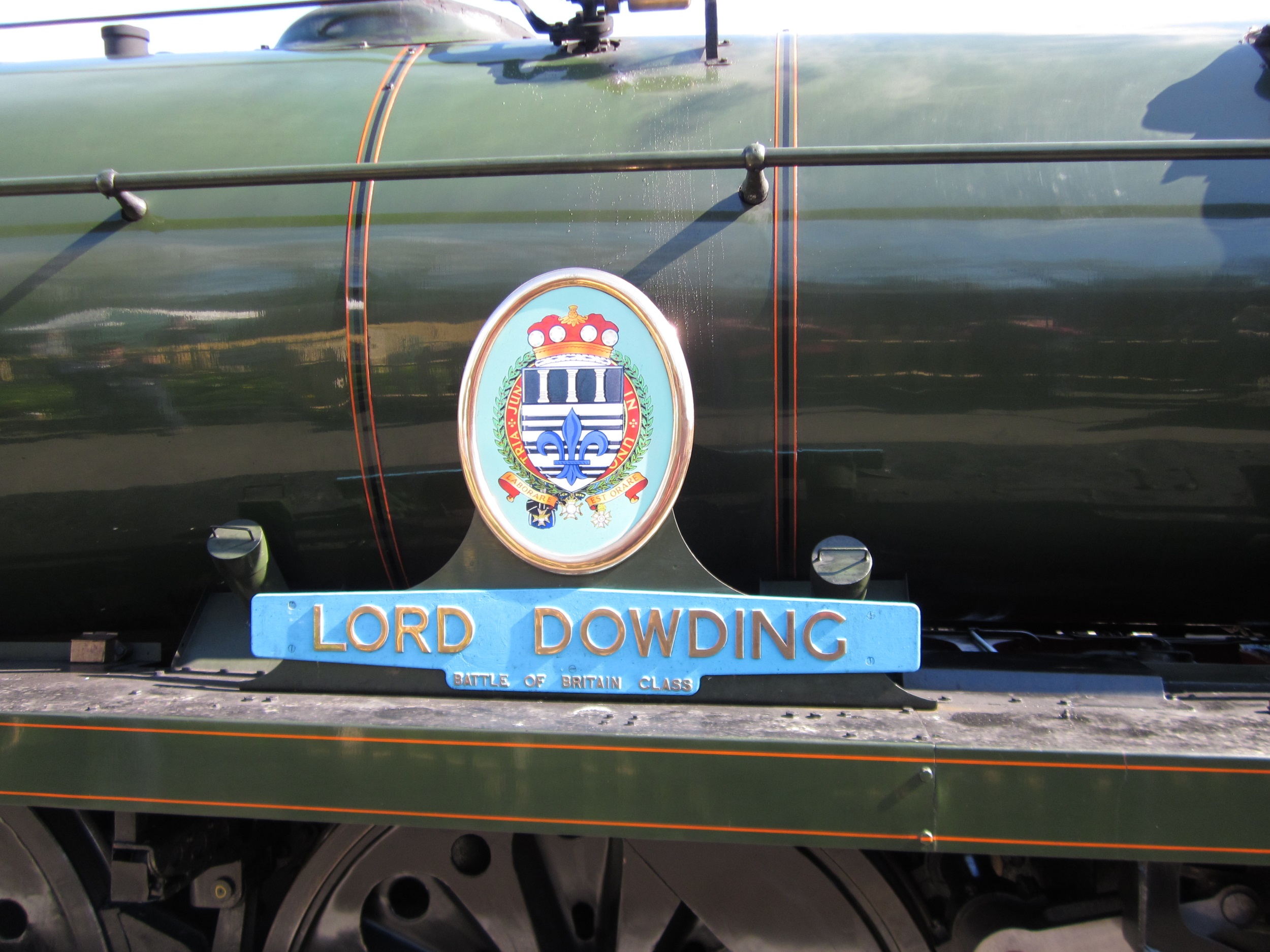
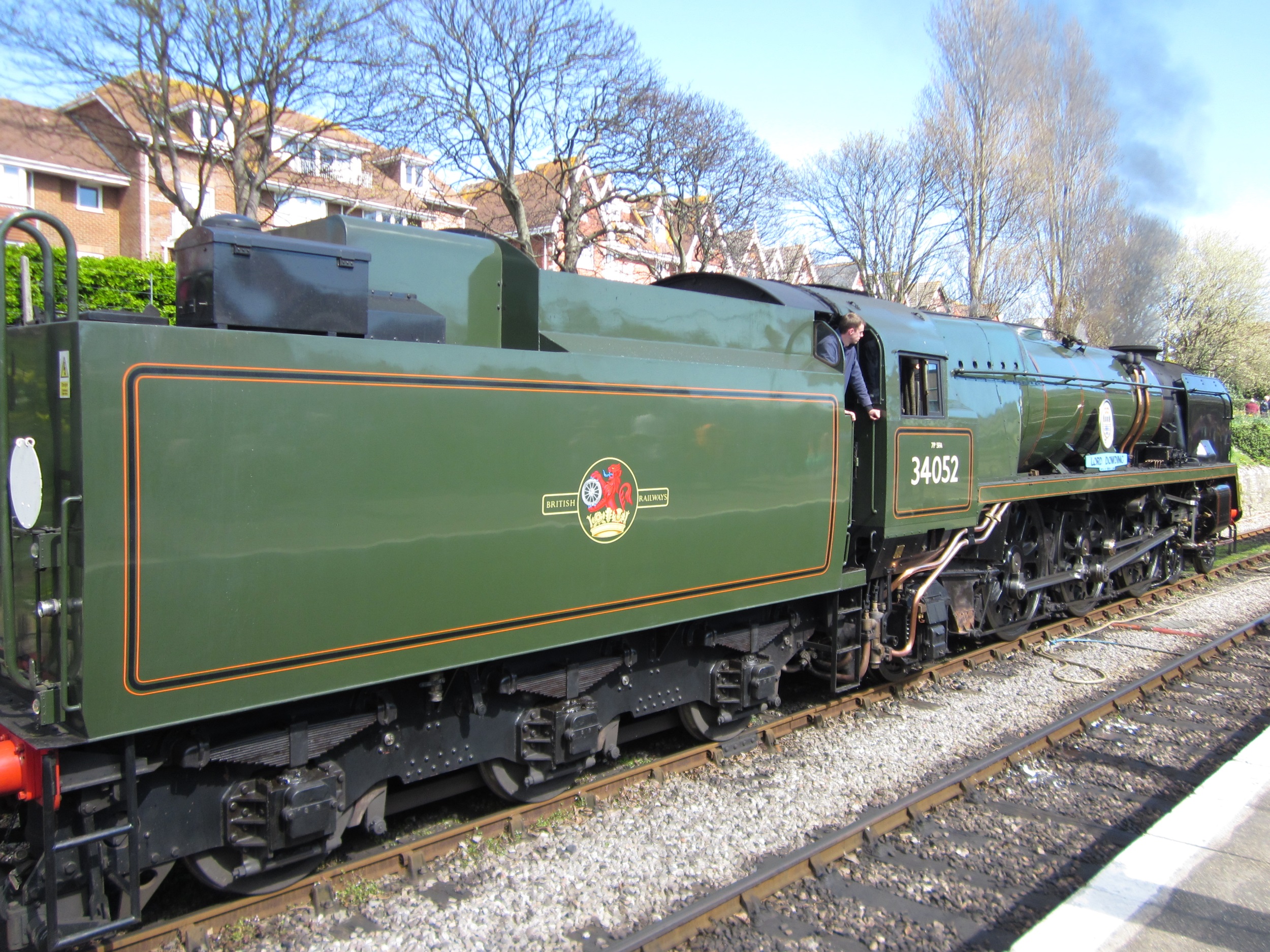
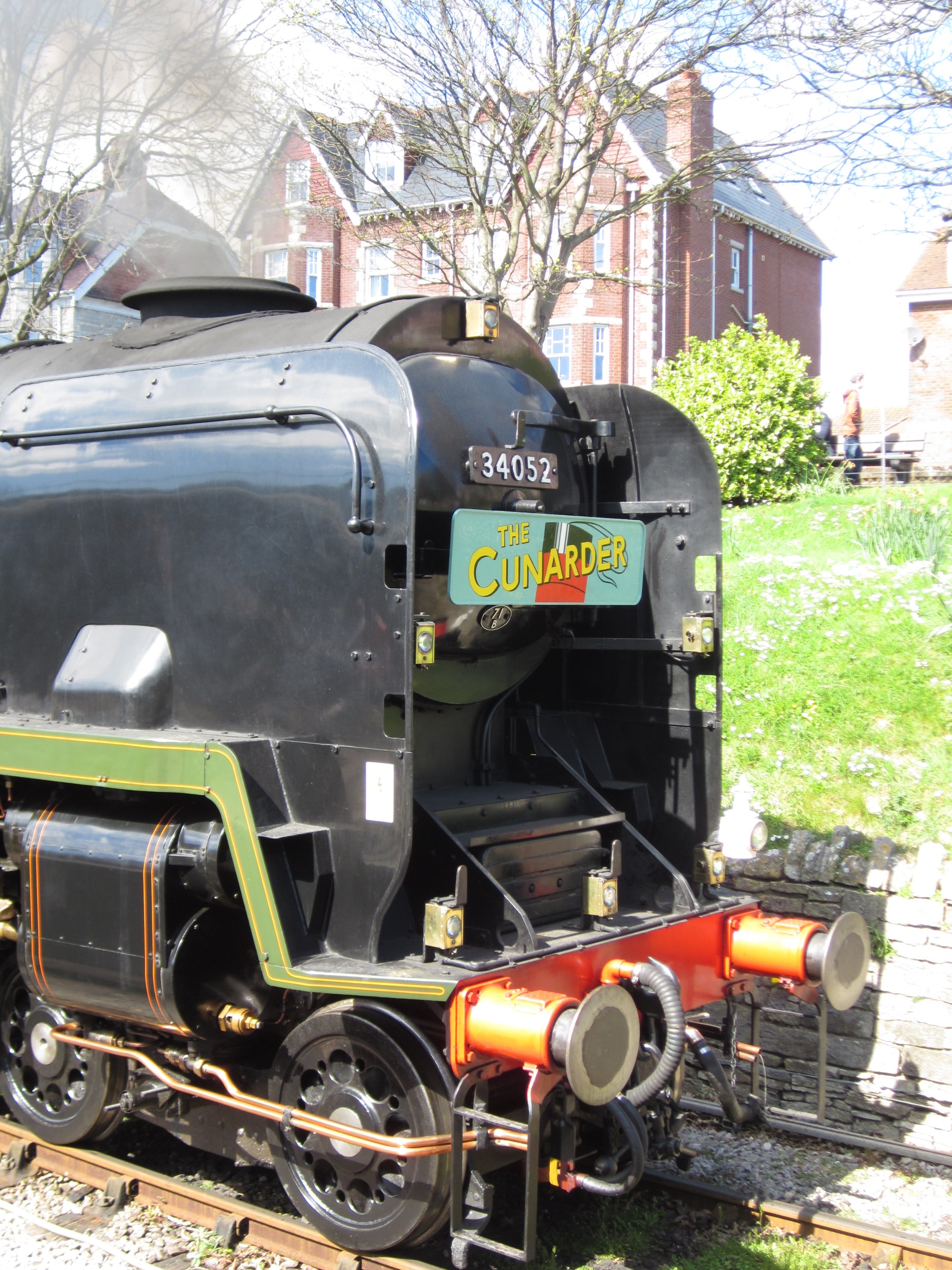
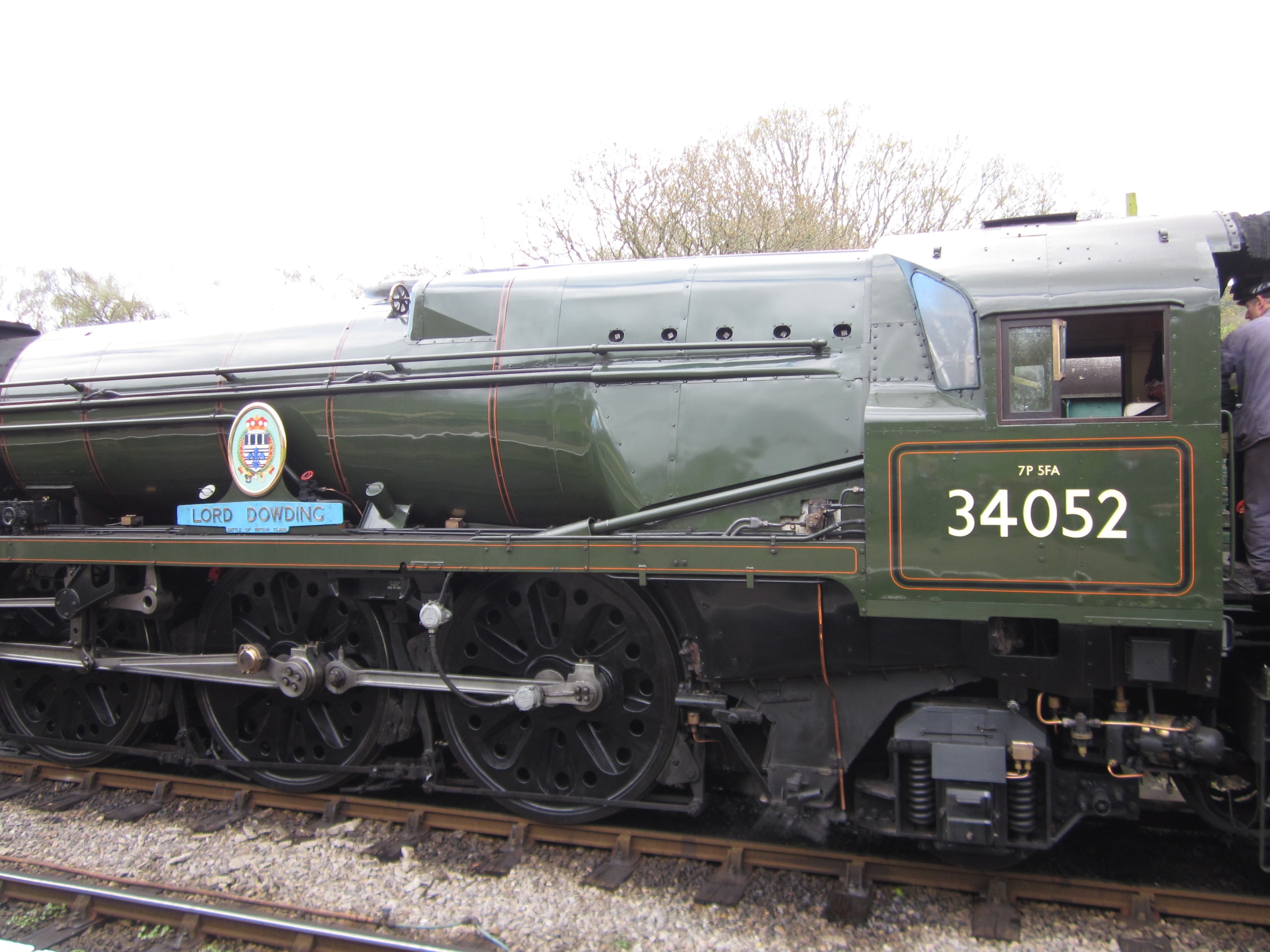
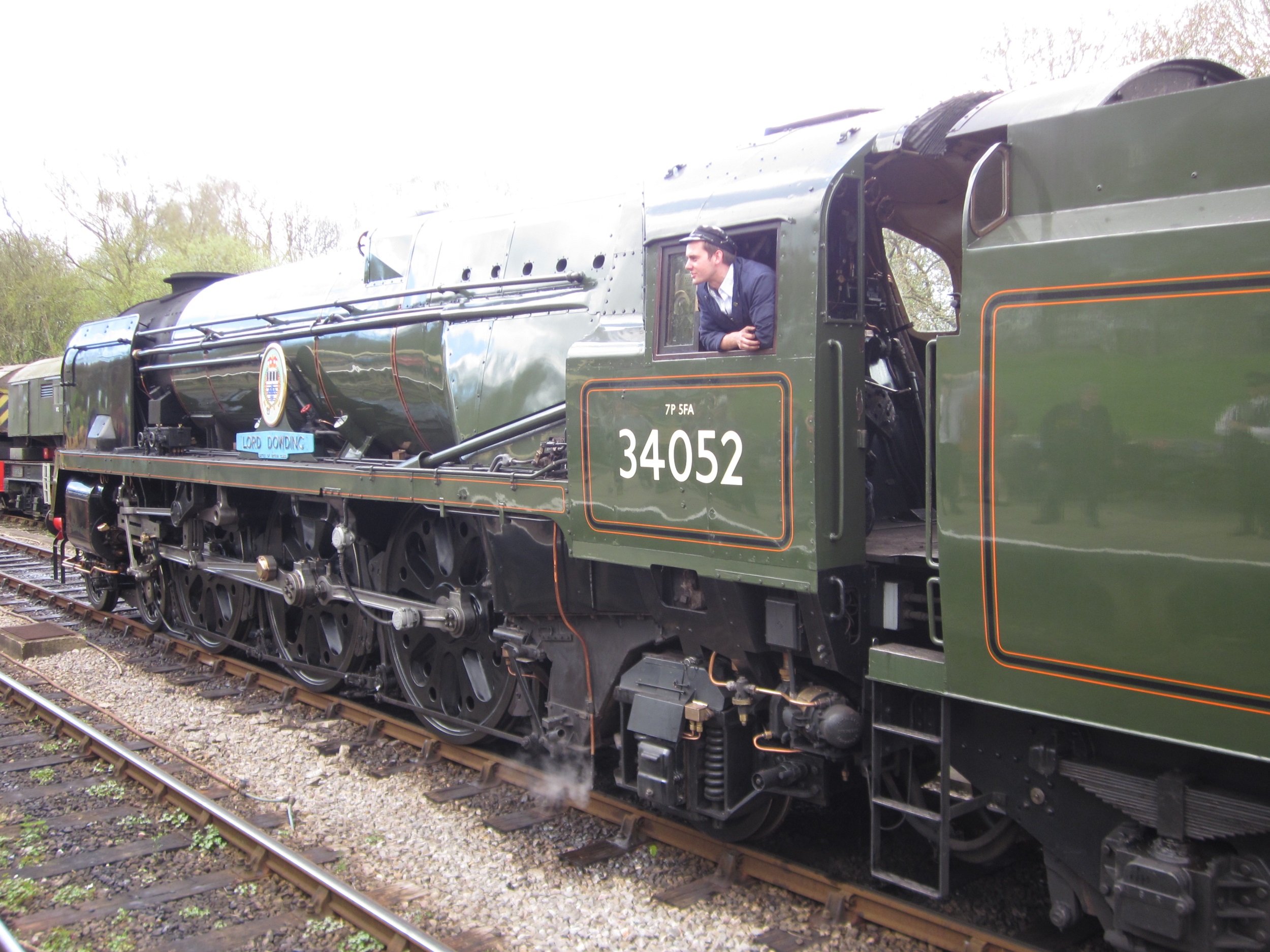
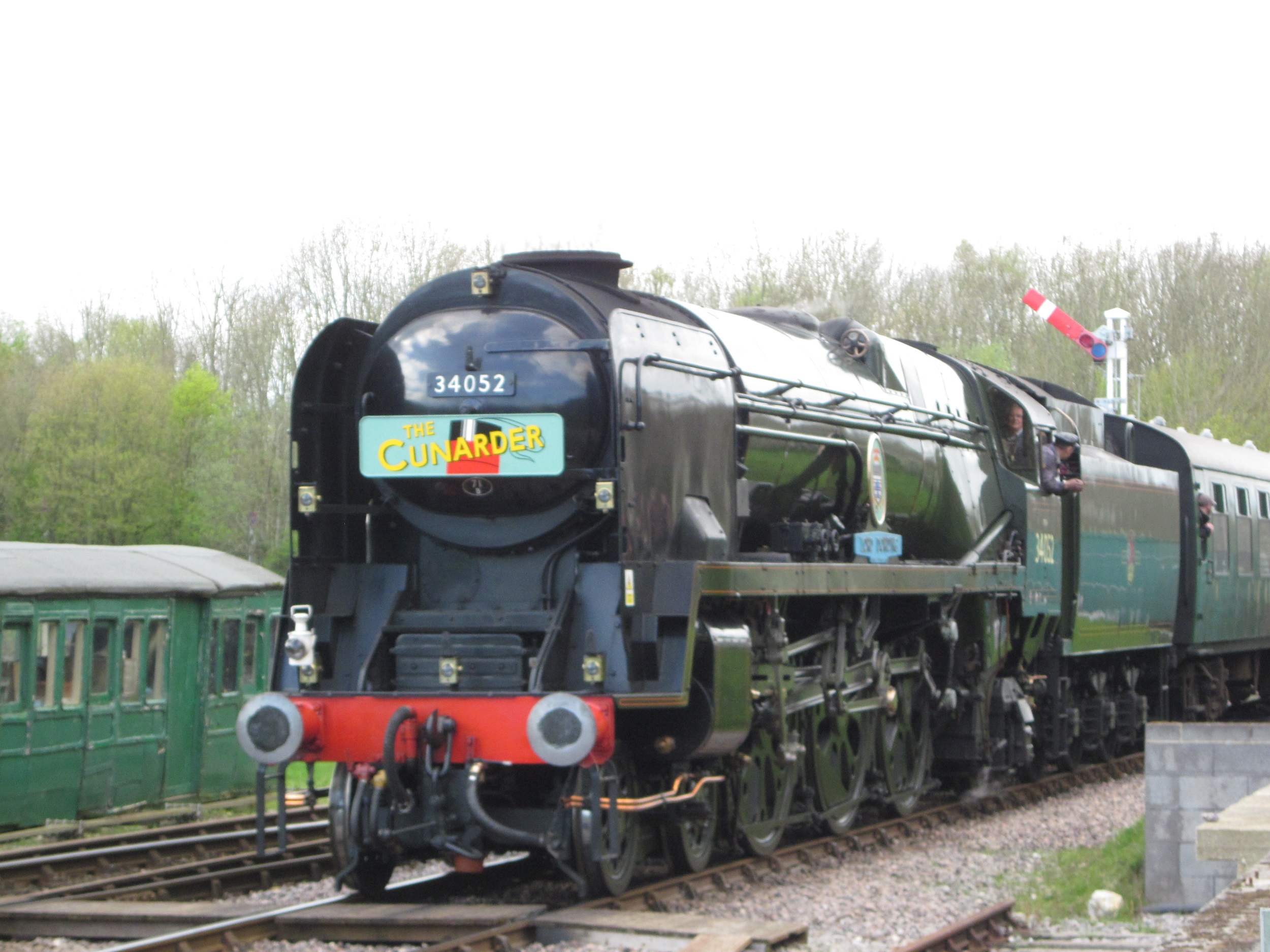
We’ll run through some of the locomotives on parade.  We start with 34052, Lord Dowding, a Battle of Britain class locomotive named after the head of RAF fighter command during the Battle of Britain in 1942.  We start at Corfe Castle, again…

So clean you can see your face in it….


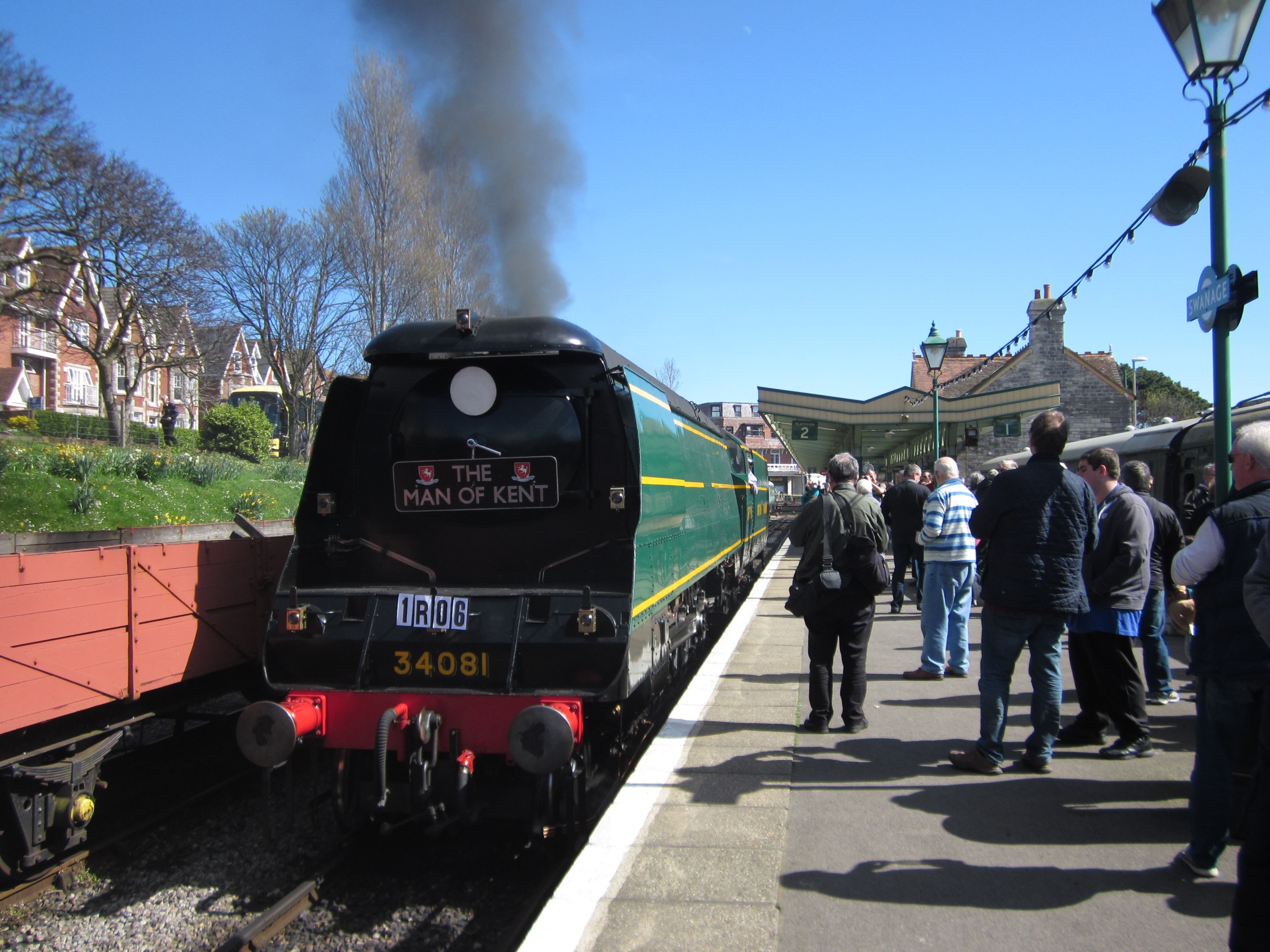
Two complete today, two photographs of un-rebuilt locomotives.  Here’s 34081, the British Railways built ’92 Squadron’, without nameplates.

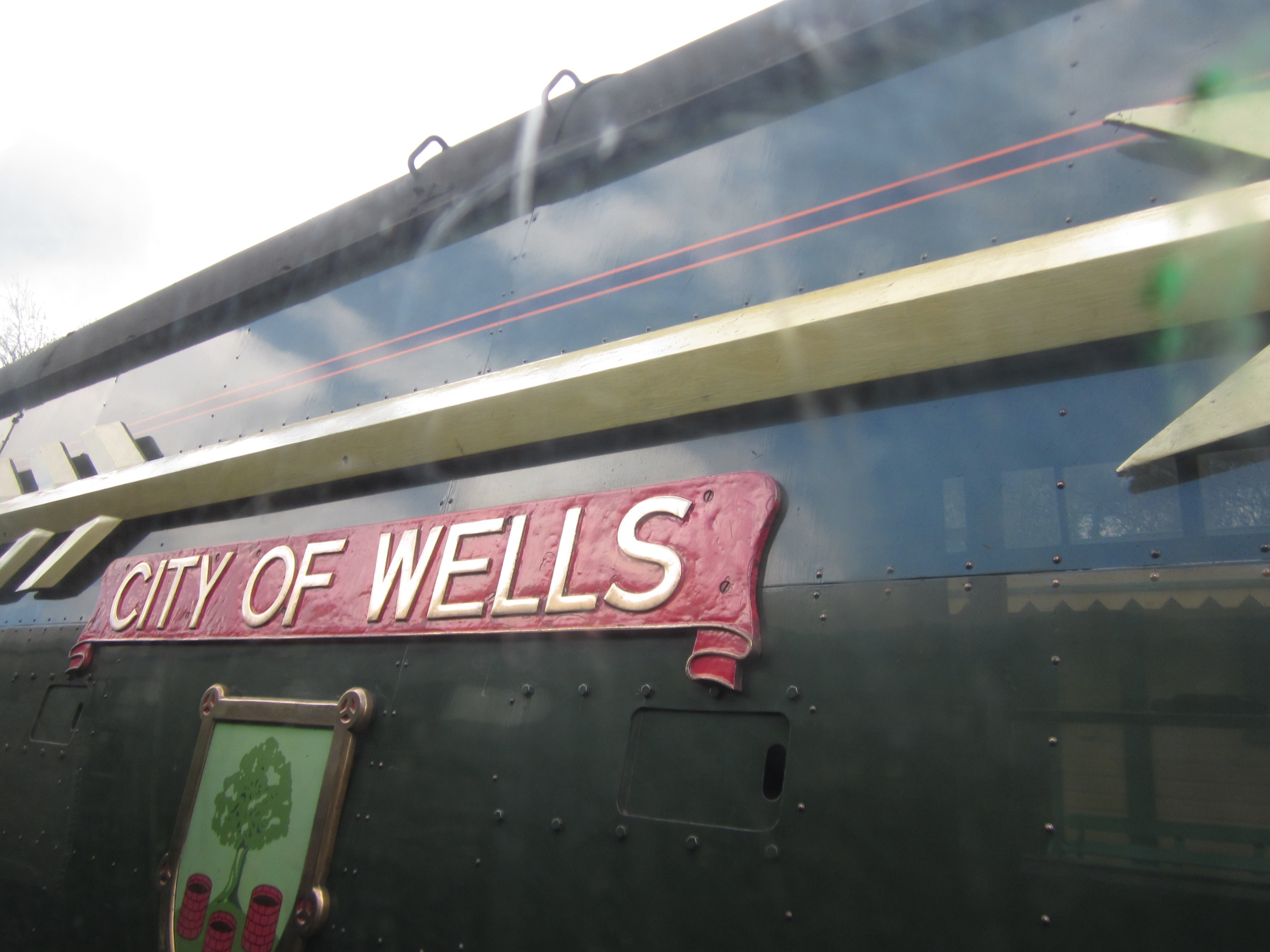
And just a nameplate and ‘Golden Arrow’ logo for 34092, City of Wells.  Naming half of this class of locomotives after Southern Railway West Country, mainly holiday, destinations was a publicity success.  And naming the other half to honour the Battle of Britain airfields and squadrons was equally astute.

More next post.


Posted in Inspiration, Out and about, Prototype | Tagged , , , | 2 Comments

A little Redhill local history

I’ll report back on the show next time.  But for now, a little local history (at least it is if you live in Redhill).  From the Surrey Mirror:

The grisly tale of the tunnel between Merstham and Coulsdon South

Anyone who regularly uses the train line between Croydon and Redhill will have noticed the tunnel between Coulsdon South and Merstham railway stations.  Your phone’s signal goes and without funny cat videos to watch for at least 30 seconds you have to entertain yourself with your own thoughts. No easy task in today’s world of instant gratification.And the chances are at some point those thoughts will have included ‘why are we going through a tunnel anyway, what are we passing underneath and how long has the tunnel been there?’

Few commuters – even if they use the Brighton Main Line every day – will know the answers.  And even fewer are likely to know the sinister history of the Merstham Tunnel, or that it was the scene of the first possible murder on a train in the UK.

The construction of the 1.04-mile-long Merstham Tunnel started in 1839 and took two years to complete.  It is there so that trains can get through the hills of the North Downs, with the tunnel being cut through chalk.  The tunnel’s construction would be a crucial part of allowing London and Brighton to be linked by a train line.
When a railway line from London to Brighton was first proposed in the 1830s no fewer than six routes were suggested, only two of which came through the Merstham Gap north of what is now Redhill.  The winning route was an unexpected victor at the end of a Parliamentary enquiry.  Even then, the line should have gone through or near Reigate rather than two miles to the east of it. According to one account, opposition from local landowners prevented it doing so, but it is more likely that the topography of the area was the cause.
The route chosen followed that of the new Brighton Road, opened in 1818 through the gap between Redstone Hill and Redhill Common.  At that time Redhill as a town did not exist. The area now occupied by the town centre was empty marshland devoid of any buildings. There were a few farms in the vicinity and a cluster of cottages but that was about it.

When the tunnel was finished, to make the public feel safe in the darkness, gas lamps were fitted to the walls which were whitewashed.  This was soon abandoned, however, after the large amount of soot emitted from the trains made it too difficult to keep bright.

The tunnel was something of an engineering marvel but in 1905 it gained notoriety for a far darker reason when it became the site of a murder mystery.  On September 24, 1905, a 22-year-old woman’s body was found mutilated inside the tunnel by a sub inspector, William Peacock.  Peacock found Mary Sophia Money shortly before 11pm, while her body was still warm, and took her to the nearest train station where police instructed him to bring it to The Feathers Inn.

Mary, a bookkeeper, did not have any identifying papers on her and the day after her brother, Robert Henry Money, a dairy farmer, had to identify her.  It was initially assumed the cause of death was suicide, as Peacock believed she had jumped from a train while it was passing through the tunnel.  However, “claw marks” were found on the walls of the tunnel which suggested there may have been a struggle.

The theory that she had been murdered was strengthened by her post-mortem, as it was discovered that a white, silk scarf had been forced down her throat.  Scratches, bruises and cuts were also discovered on her arms and face, which led doctors to believe she had been pushed off or struggled with someone while on the train.

Her last moments were then investigated by detectives as they tried to solve the murder.  On the night of her death she had bought a bag of chocolates after finishing work at about 7pm and told a friend she was going for a walk before heading to Victoria station.

It was speculated Mary was going to meet a man for a date, with many coming to the conclusion that her death was at the hands of a partner.  This theory was further strengthened after a guard at Purley Oaks Signal Box and a guard at East Croydon recalled seeing a couple fighting.  Both guards said the woman in the couple fitted Mary’s description.Following her murder, over 100 interviews were taken and a huge investigation was sparked.  But the killer could never be found and her unsolved murder is widely regarded as the first murder on a train in the country.

And the other tunnel?

You would probably have to be very observant to notice but there are actually two tunnels, almost side by side, which trains run through between Coulsdon and Merstham.

The sharing of the main line caused a great deal of friction between rail operators South Eastern Railway (SER) and the London Brighton and South Coast Railway (LB&SCR).  Eventually the LB&SCR gained Parliamentary approval to build its own independent line between Coulsdon North and Earlswood, which bypassed the SER stations of Coulsdon South, Merstham and Redhill.

This involved the construction of a second tunnel to the east of the original, and 25 feet (7.6 metres) above the level of the original. Since both routes form part of the Brighton Main Line, in order to differentiate them the former was called the “Redhill Line”, whilst the new line became known as the “Quarry Line”.  The newer tunnel, known as the Quarry Tunnel, is about 1.2 miles long and was built between 1896 and its opening on November 8, 1899.

Today fast trains that bypass Redhill and Merstham will still use the Quarry Tunnel while trains that stop at Redhill and Merstham use Merstham Tunnel.

Posted in Out and about, Prototype, Weird and wonderful | Tagged , , , | 1 Comment

ESNG meeting – 6 April 2017

Two days to the exhibition and 11 of us met up for final planning and to run  a few trains.  The layout was full of trains, some on test for Saturday.

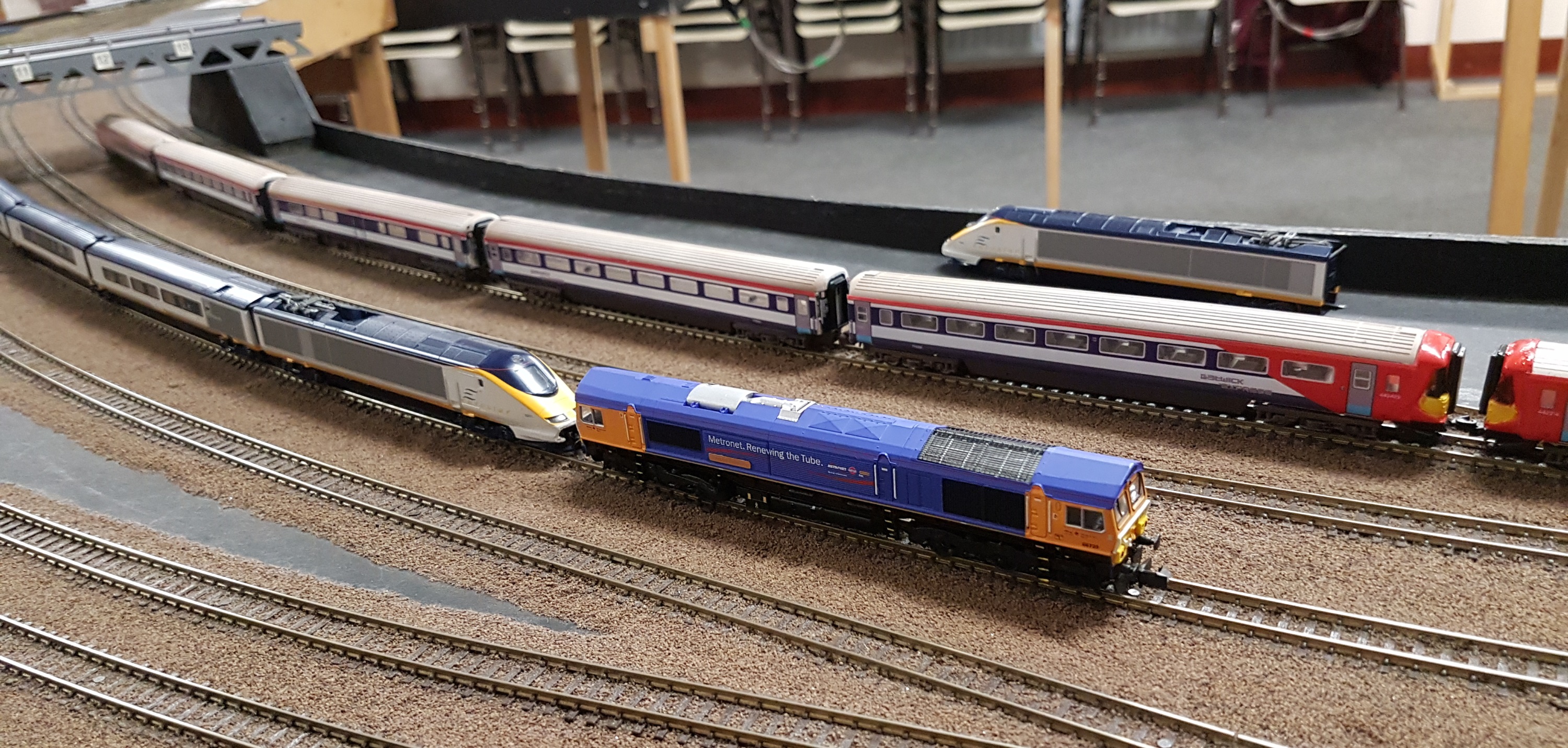
Martin’s Eurostar lost a power car with a broken coupling and had to be rescued by a ’66’.  This made an excellent rake in its own right – perhaps more interesting than the full Eurostar.  Behind is Martin’s scratch built ‘Gatwick Express’ units.  Neatly done and a colourful reminder of an interesting train.

Simon was testing his mainly kit built breakdown train….

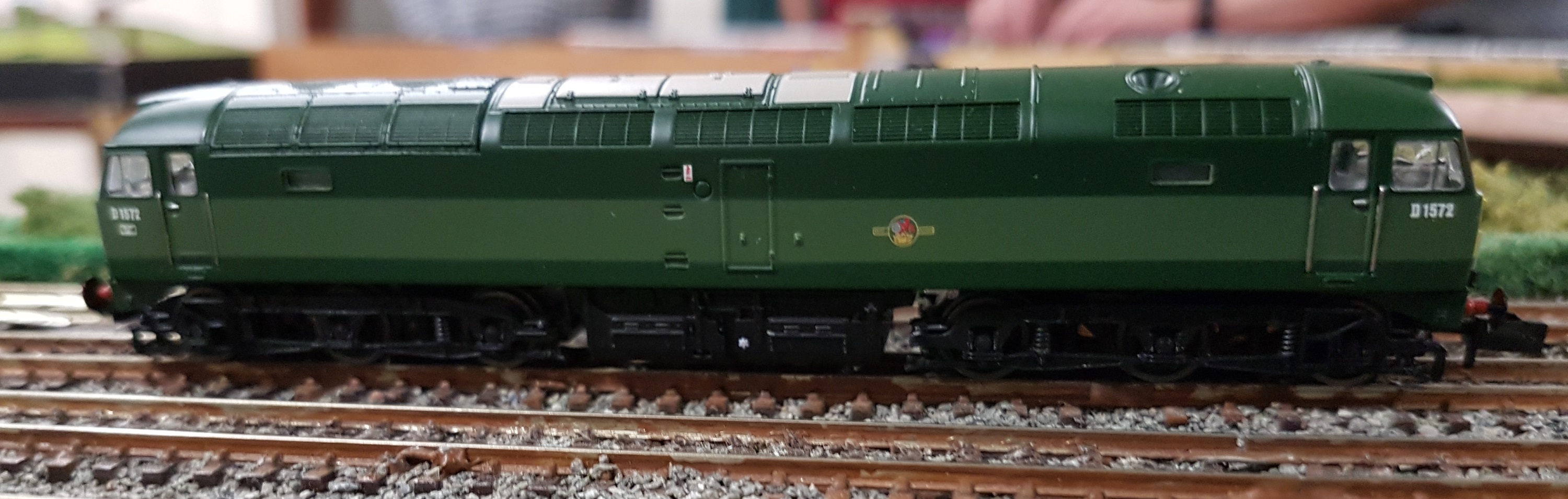
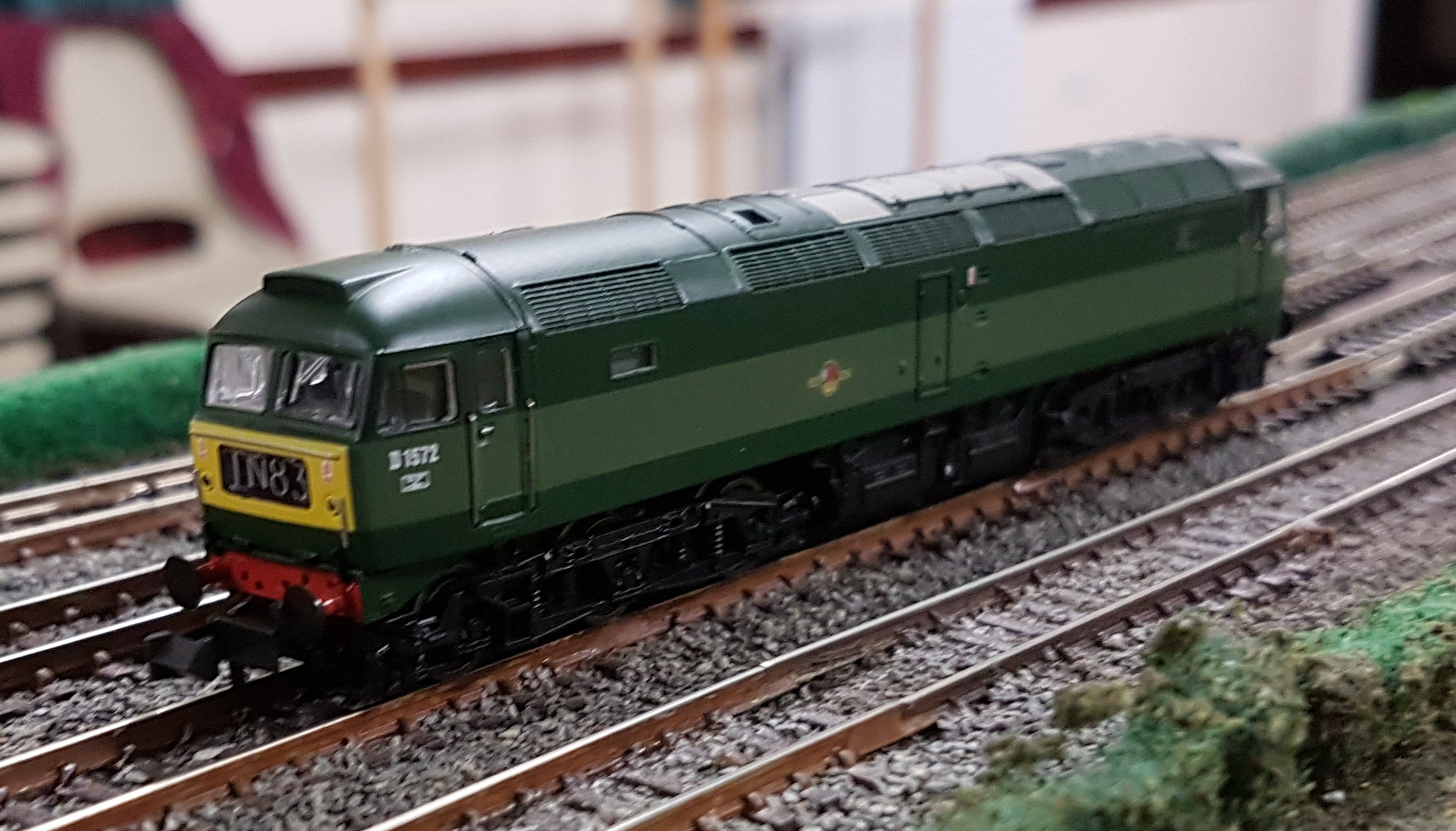
I had abandoned my ‘no more trains’ policy and bought a Bachmann Class 47 – or of this vintage a Brush Type 4 – in my favourite diesel livery.  The two tone livery always looks smart, and I remember seeing diesels like this at the London termini.

So, it’s back to the hall tomorrow afternoon to load up the cars and start the slow set up of the exhibition.  Then we’ll see who turns up on the day.  I’m not impressed that ASLEF have gone on strike again, that may stop a few people who would be coming to the show by train.  Poor display of solidarity….

Posted in ESNG, ESNG meetings | Tagged , , , | Leave a comment

ESNG exhibtion – 8 April 2017 – on Saturday

A final reminder for local readers that the ESNG 2017 show is on Saturday!

As for the show contents, here’s a quick reminder….East Surrey N Gauge are 20 this year, and totally logically are holding their 19th annual exhibition in Redhill.  Same venue as last year, but they’ve finished rebuilding the school and the free car parking is back.  Should be up to the usual standard (whatever that is!)  Details are:

Sat 8th April 2017
St Joseph’s Catholic Primary School, Linkfield Lane, Redhill, Surrey RH1 1DU

OPENING TIMES:  SAT 10am-4pm
ADMISSION:  Adults £4.00  Concessions £4.00  Children £2.00  Family £10.00
Still the N gauge show of the South. ESNG is 20 this year. We have the usual mix of N gauge layouts, including 3 modular layouts, and specialist traders. We are again at St Joseph’ School, with the benefits of all exhibits on one level, free parking (it’s back), and refreshments including real coffee!

LAYOUTS
ESNG N-Mod & N-Club (UK Modular Layout)
West Sussex N-Mod (UK Modular Layout)
Alpenbahn & N-Club (German Modular)
Santa Barbara (USA, West Coast)
Tunbridge Wells Sidings (Southern Region)
Atlantic Road (UK South London Modern Image)
Forrestone (UK Modern Image)
Oakhurst (UK Preserved Line)
Three Gates (UK Shunting Layout)
Kato Racetrack (Japan, Bullet Trains)

TRADE
BH Enterprises
Ian Grace (Rail & Military)
Invicta Model Rail
JB’s Model World
NscaleCH
ESNG Club Shop – mainly with the late ESNG President’s collection for sale
Neil & Martin’s Emporium – more second hand sales

Lots of good things to see and buy, I hope…

Posted in ESNG, ESNG meetings, Exhibitions | Tagged , , , | Leave a comment

Swanage

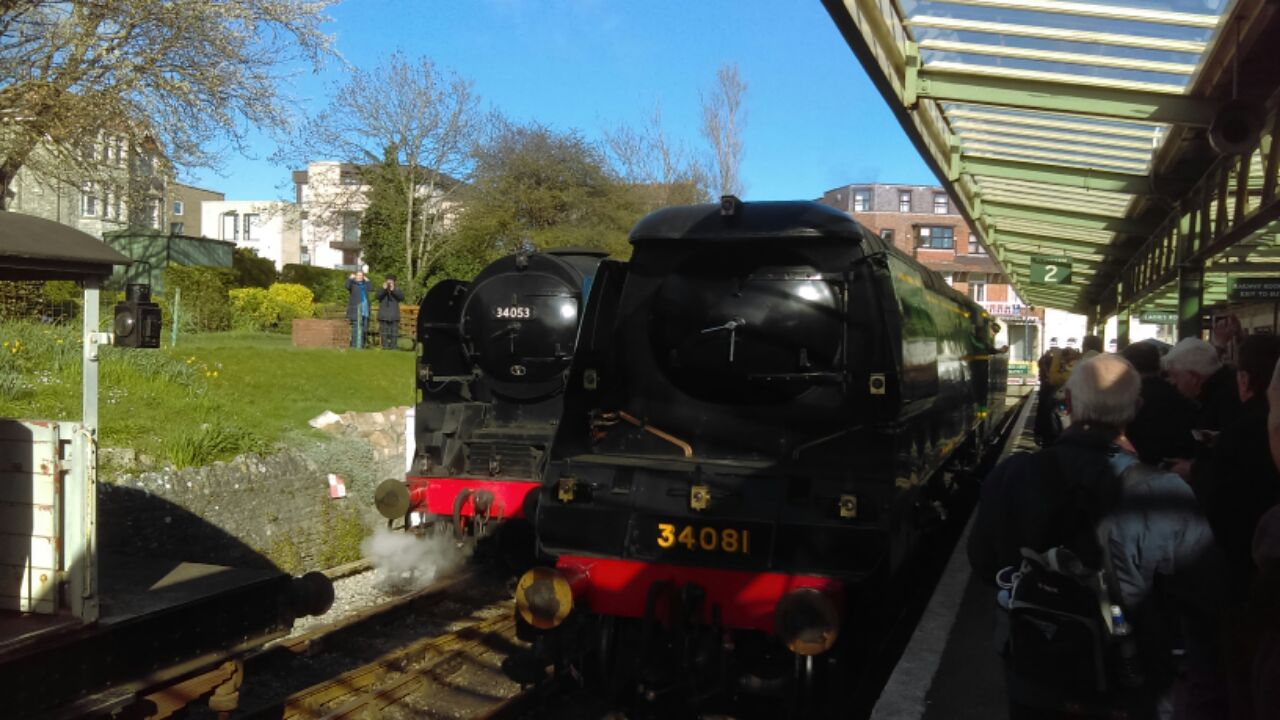
Bit hectic at the moment, so here’s a picture from Mr Dawes of Swanage in the sun, with two Bullied Pacifics in Swanage station.


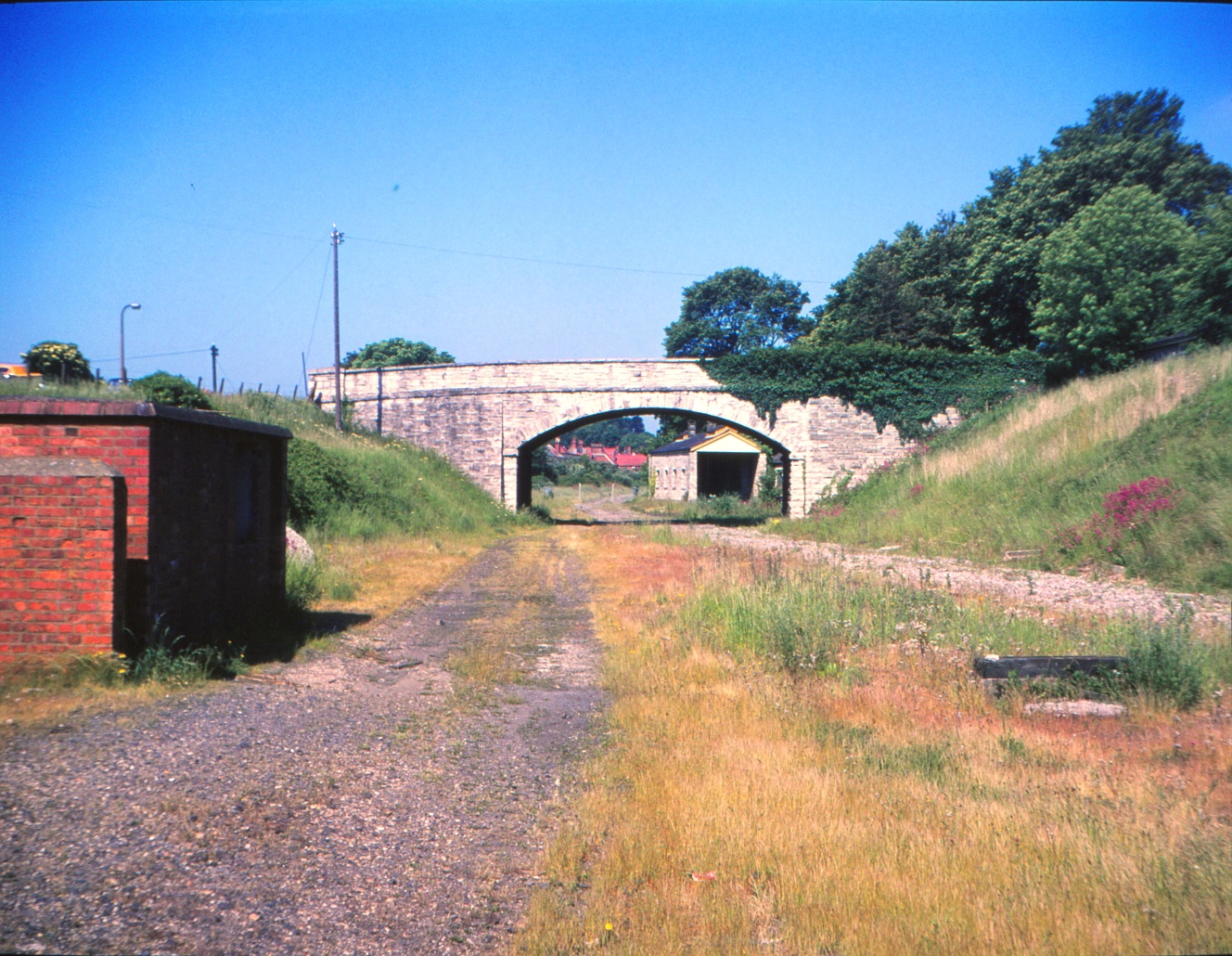
A contrast to when my father visited the station site in 1973!

But I do like the cars.  Some classic models on show.


And remember the ESNG show on Saturday 8th……

Posted in Inspiration, Out and about, Prototype | Tagged , , | Leave a comment

Odd modelling ideas #398

From the Daily Telegraph

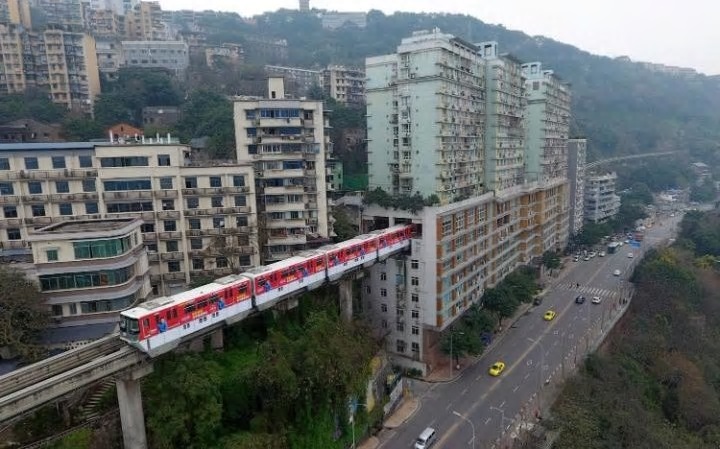
Incredible train ‘disappears’ through block of flats in China’s ‘Mountain City’

Architects and planners in a Chinese city have designed a novel way to make space for an essential train route – by building it through the centre of a block of flats.

The unusual train track passes directly through the 19-storey residential building in the “emerging mega-city” of Chongqing, located in the south-west corner of the East Asian nation.

Could make an interesting model!  But I hope this is right…

Noise reduction equipment installed at the station means the train only makes the same noise as a standard dishwasher.


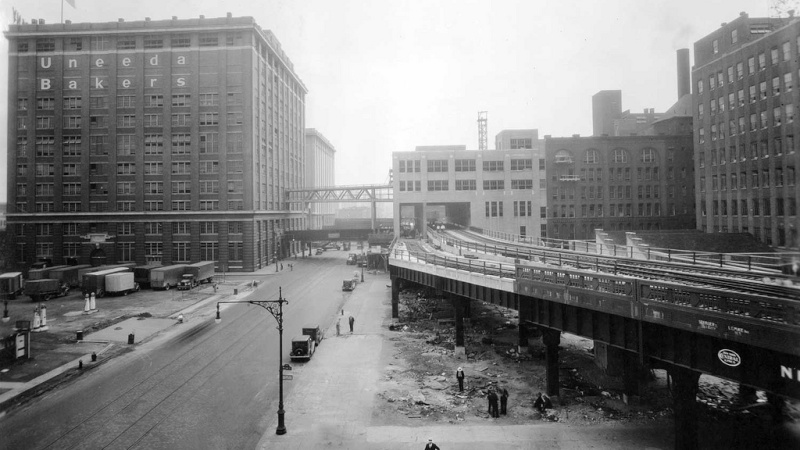
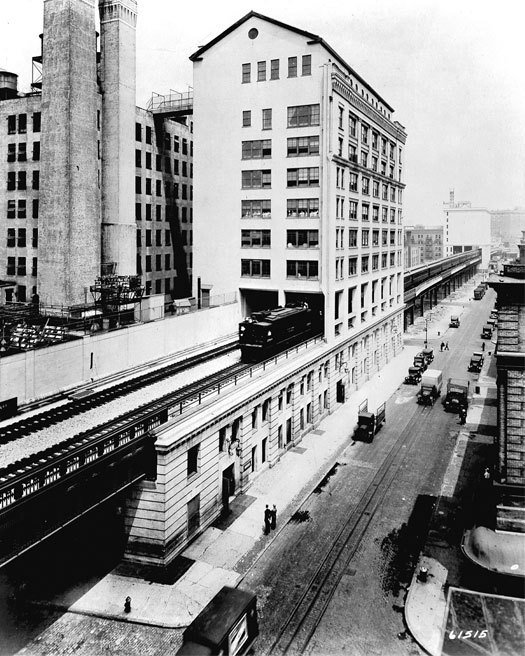
However, the NYC ‘High Line’ in New York was older and also had the line passing through warehouses and factories…..


And in view of the date…..

Posted in Hints and tips, Inspiration, Out and about, Weird and wonderful | Tagged , , , | 2 Comments

Blatant tourism interlude

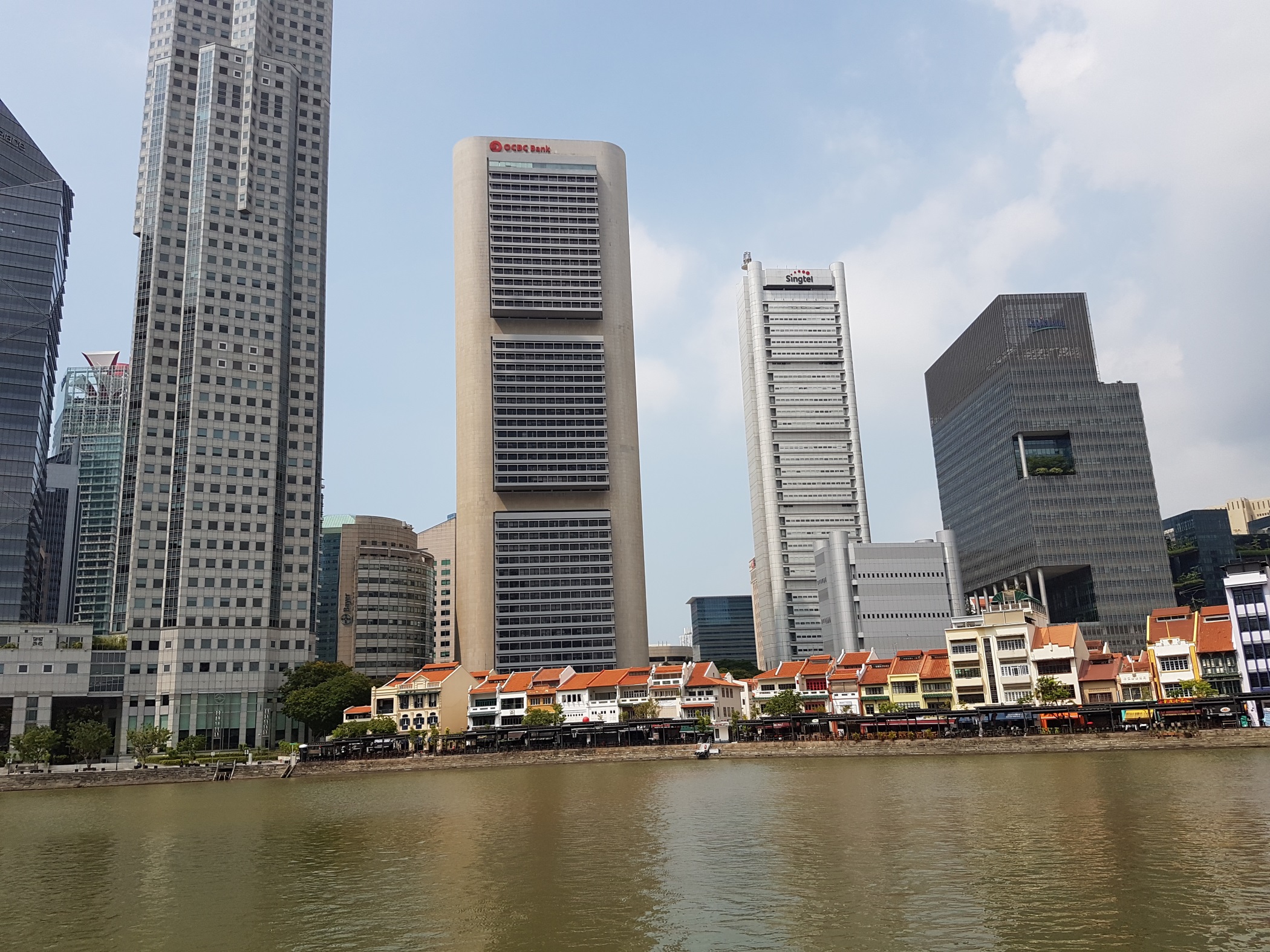
Back from Singapore last weekend, having worked for 10 days solid.  But there was time to take a few photos.  So here’s a little tourism as a diversion from the usual trains.

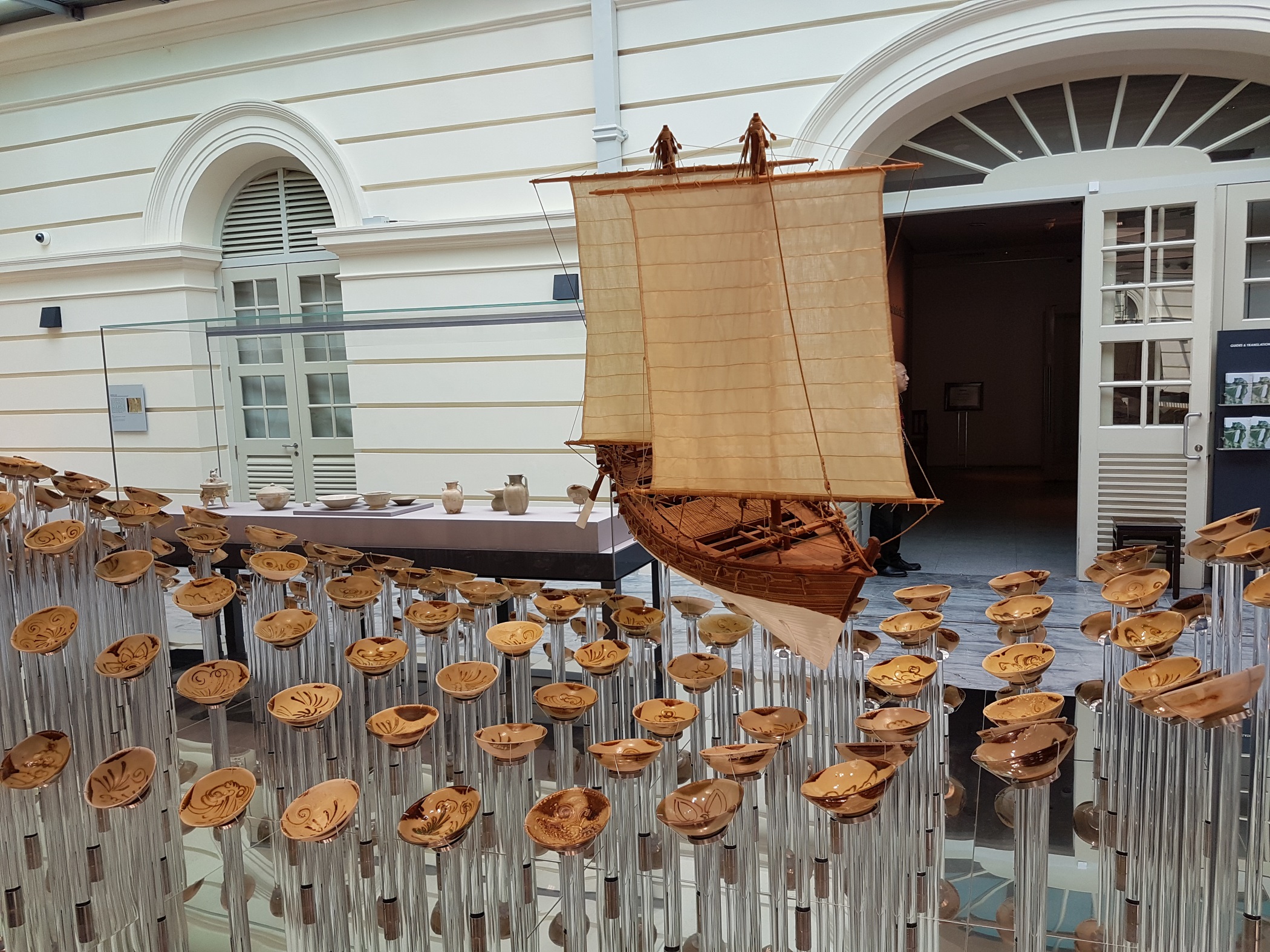
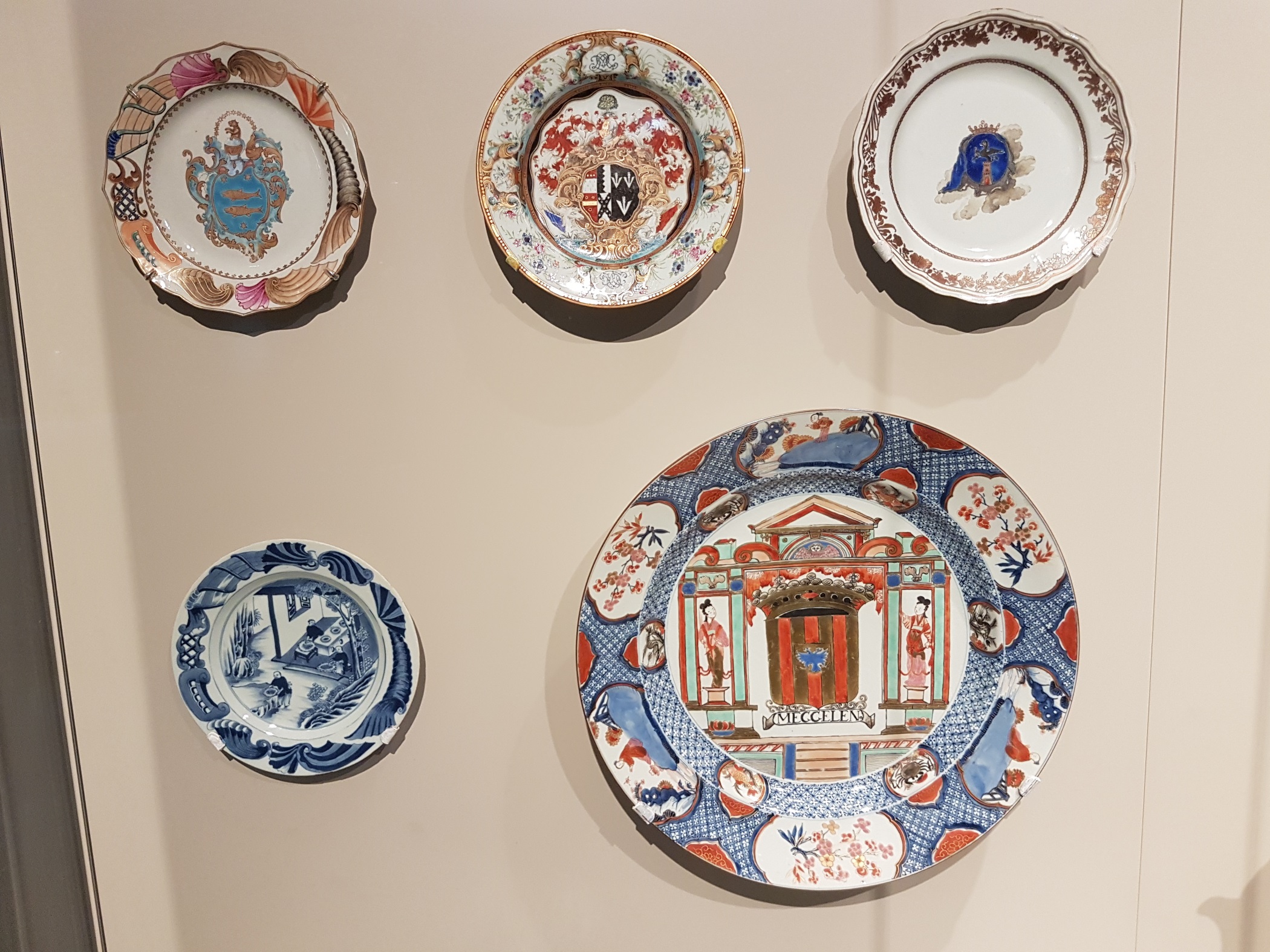
I did find time to visit the Asian Civilization Museum, and enjoy some exquisite art.  I liked the way they had presented the Chinese plates rescued intact from a shipwreck in the Persian Gulf….

And exhibits including this antique stock box, for keeping trains?

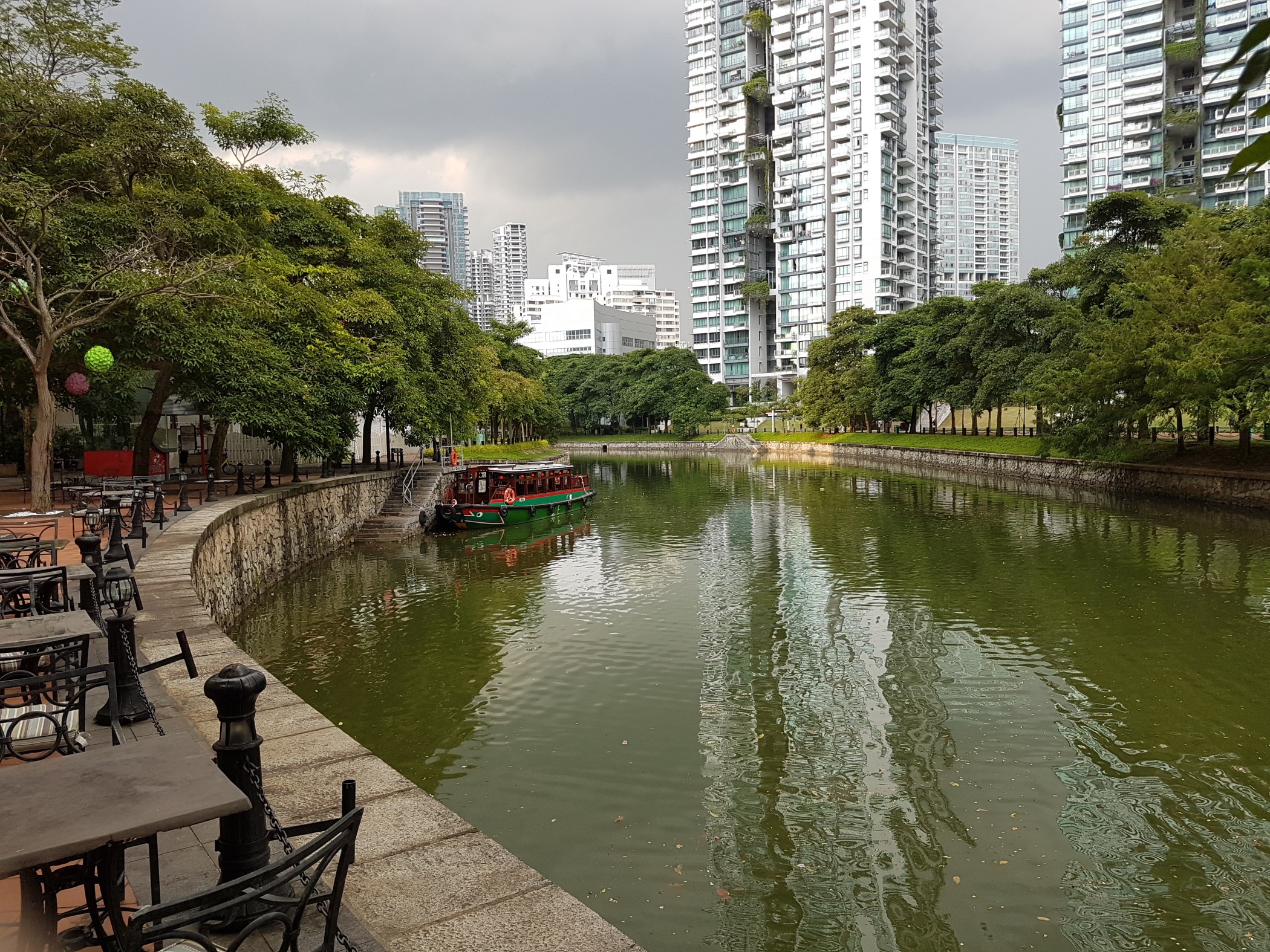
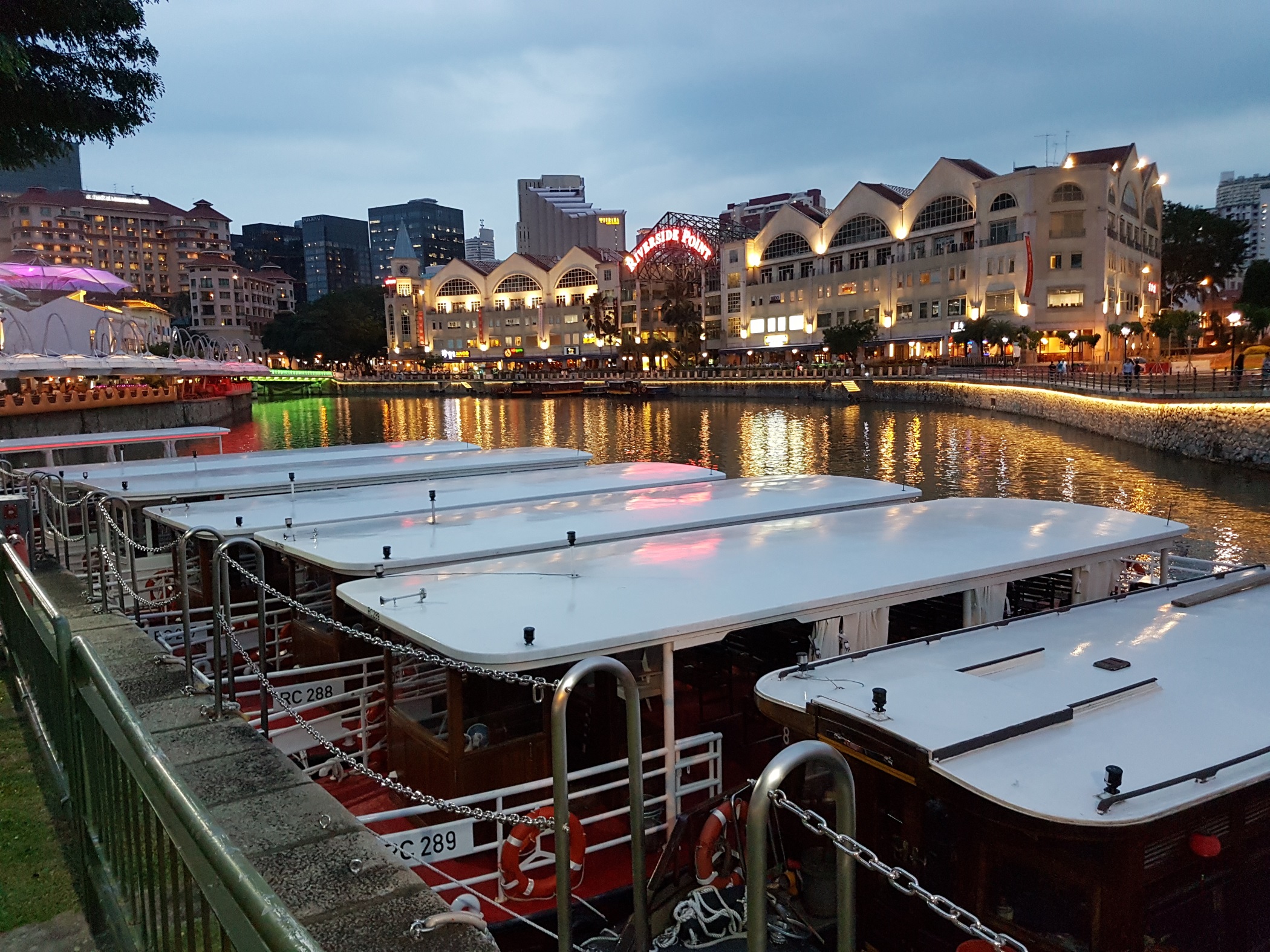
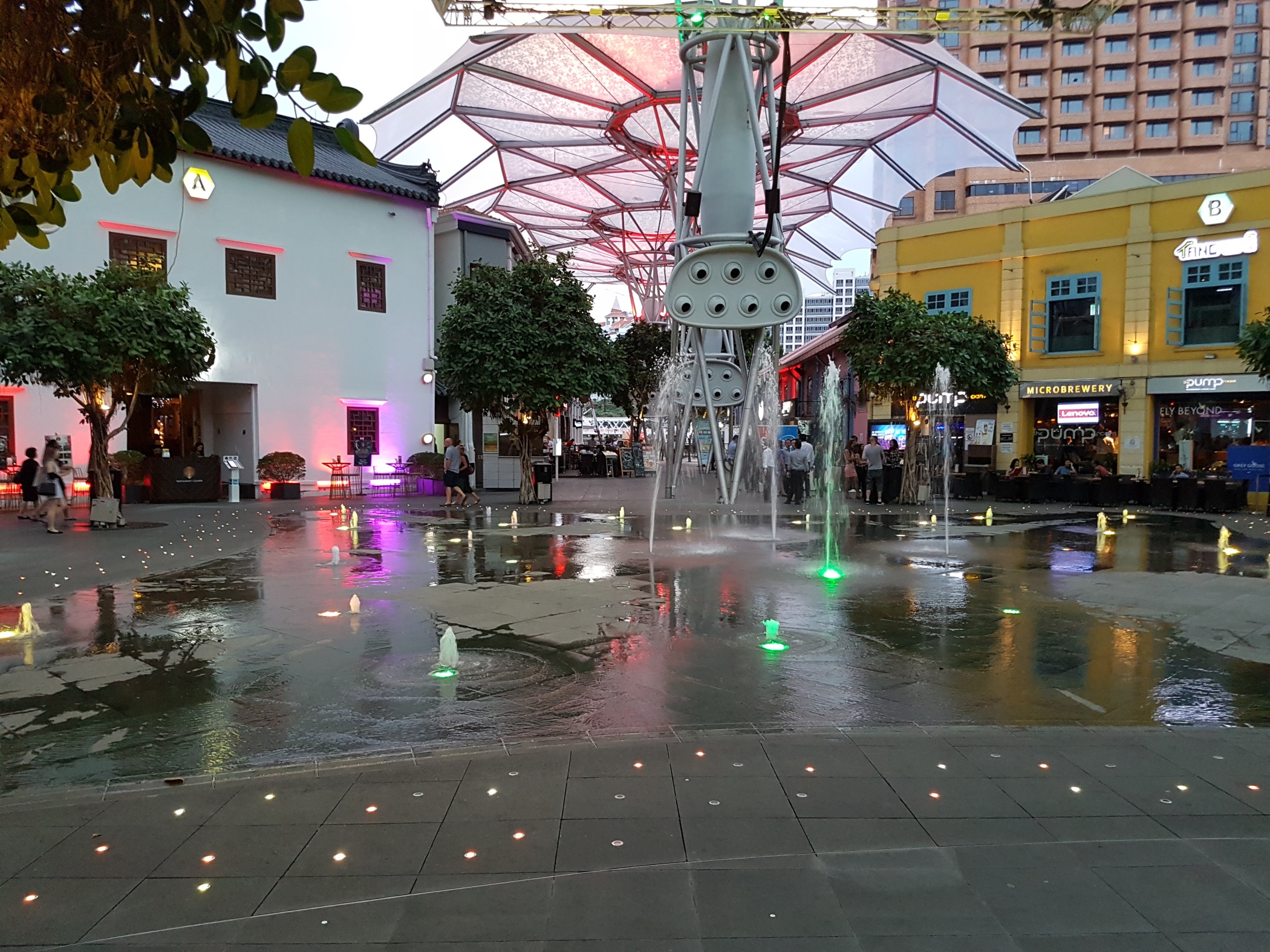
As dusk falls, the Singapore River and Clarke’s Quay light up and look very different….

Singapore may be urban, but there’s plenty of urban wildlife (of the non-human kind) to look out for.  These terrapins were sitting on a rubbish boom in the river by the hotel.

Unfortunately I only saw the otters that live in the river when I didn’t have a camera.  These creatures may be shy in the UK, but in Singapore they were  sunbathing on the river bank, watched by a dozen people just a few feet away.

The (feathered) bird life is surprisingly good, too.  Sitting next to the river having dinner, a Crested Serpent Eagle flew past.  And Collared Kingfishers are common by the river, or searching for food on the playing fields near by.  One of my favourites….

Posted in Out and about, Weird and wonderful | Tagged | Leave a comment

A question of gauge

In March 1995, ‘Back Track’ had an interesting article on the gauge of railways, with particular reference to the GWR broad gauge and the 4′ 8.5″ ‘narrow’ gauge.  Railway history is often thought of as a battle between these gauges, between Brunel’s masterpiece and the width of a Roman horse’s rear and its attached chariot.

But this does not seem to be the case:

In the totality of the applications of railways to transport both in the UK and the rest of the world, the variations in railway gauge are remarkable.

In 1983 the Industrial Railway Society published a list of National Coal Board underground flameproof locomotives that had operated since nationalisation on 1st January 1948.  In that short period of approximately 35 years, such locomotives had been supplied by outside industry to 30 different gauges, at every inch increment between 1′ 6″ and 3′ plus 3′ 6″ and many 1/2″ increments…..

The author goes on to examine how units of measure dictated gauge.  I was unaware of units such as the Castillian foot (6′ = 1672mm) and Swedish feet (4′ = 1188mm).  Britain could have used metric gauges, but it was anathema to the British government because of its revolutionary (and French) origins.

And to support the fact that there was no ‘standard’ gauge in the early years of the railways, here is a list of some gauges used – although the total mileage shown here is probably only a few hundred miles.

  • Date     Railway                                    Gauge
  • 1826     Redruth & Chasewater         4′ 0″
  • 1832     Saundersfoot                           4′ 0″
  • 1831     Garnkirk & Glasgow             4′ 6″
  • 1826     Gonkland & Kirkintilloch    4′ 6″
  • 1825     Stockton & Darlington         4′ 8″
  • 1830     Canterbury & Whitstable    4′ 8″
  • 1830     Liverpool & Manchester      4′ 8.5″
  • 1832     Leicester & Swannington    4′ 8.5″
  • 1840     London & Blackwall             5′ 0″
  • 1839     Eastern Counties                   5′ 0″
  • 1838     Arbroath & Forfar                5′ 6″
  • 1839     Ulster (Ireland)                     6′ 2″
  • 1838     Great Western                       7′ 0″
  • 1841     Bristol & Exeter                     7′ 0″

This list puts some perspective on us modeller’s arguments over HO, OO, EM and P4.  The above list has them all…..

Technically, the broad gauge was superior to the standard gauge adopted in 1846.  And Brunel would have probably won the battle if he had expanded the network northwards, rather than consolidating the railways in the south-west.

America was no better:

… in the United States it was a case of anything goes for many years in spite of the fact that the Stephenson gauge had been introduced very early on.  Most of the railways in the south-eastern states were built to the 5′ or Carolina gauge, resulting in major problems in the Civil War.  The Erie Railroad was built to a gauge of 6′ and possessed some splendid locomotives built to take full advantage of it. [See here] Over 3,000 miles were built to 4′ 10″ and there was a compromise of 4′ 9.25″ in some places to allow both 4′ 10″ and 4′ 8.5″ to use the same tracks.  Wider wheels were used, but derailments were common. When the Niagara Bridge was opened in 1855, it could accommodate trains of three gauges: 6′, 5′ 6″ (running in from Canada) and 4′ 8.5″.

And in Europe there were inexplicable variations:

France for example used 1.45m (The Est, PLM and Midi), 1.44m (the Nord, PO and Etat) as well as some 1.435m.  Rationalisation to the latter has been relatively recent.

And if history had turned out different, and very much for the worse, Brunel’s lines would have been distinctly ‘narrow’ gauge:

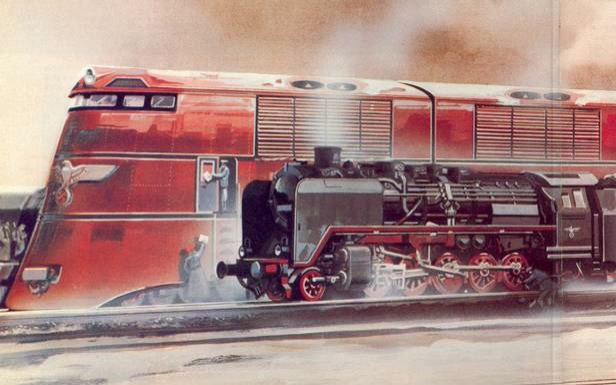
The most bizarre railway project of this century was Hitler’s Breitspurbahn, a broad gauge railway of colossal proportions.  The gauge was to be 3 metres and that would achieve speeds of 250km/hr.  Monstrous locomotives of 30,000hp were planned, weighing over 1,000 tons each.

That would be some model!  2mm scale on S4 track would be about right????

breitspurbahn1-305302-02df857082

Posted in Out and about, Prototype, Weird and wonderful | Tagged , , | Leave a comment