Odd modelling idea #999

As I return back to the UK and the depths of Redhill…..

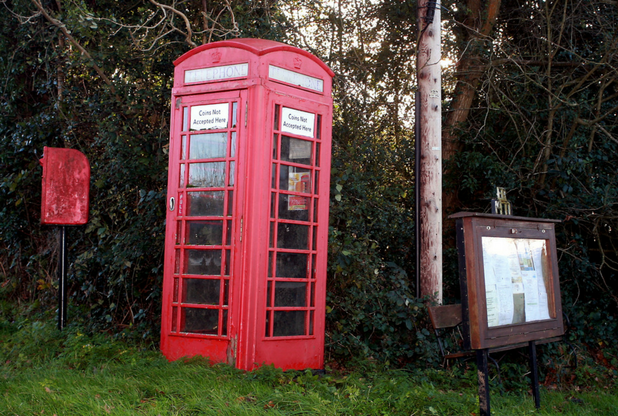
Here’s why there is a red telephone box graveyard between Merstham and Redhill

For most of us who commute by train the journey to work will be a fairly unremarkable one for the most part.

Each day we go through the same tunnels, arrive at the same platforms, pass the same homes.

Except if you travel between Merstham and Redhill your journey does have one memorable moment.

Because by the side of train line is a graveyard for red telephone boxes.

The yard is reported to stock more than 70 red telephone boxes and is one of the largest homes for the much-loved pieces of British history.  Classic red buses are also visible in the yard.

This would make an easy diorama, just needing packs and packs of little phone boxes.

For the full article in the Surrey Mirror, link here.

Posted in Hints and tips, Inspiration, Out and about, Weird and wonderful | Tagged , , , | Leave a comment

1971 – August – a pot pourri

A mixture of items from the August 1971 Railway Magazine, starting with a little deja vu. You could write a similar headline in 2016….

Across America with AMTRAK

Uncertain future of United States passenger trains rests with new national corporation.

….. Another curious (to British eyes) custom on American trains is the ritual surrounding descent from the coach at a station.  It is no use adopting the “Euston position” to be first off the train when it stops.  American station platforms being low, all coaches have vestibule steps, usually covered by a sort of manhole.  When the train stops, the conductor first lifts this cover and clips it back, then throws baggage for any passengers leaving the train onto the platform, then puts a small footstool at the bottom of the steps for alighting passengers to step onto, then wipes the hand-rails, and only then, may the passenger leaves the train….

Did they really do all that?  And I bet they no longer do so?

And from the ever-reliable letters page.

SIR – According to a “Why and Wherefore” item in your May issue, “Easton Lodge Station on the GER was provided chiefly for the use of the Earl and Countess of Warwick whose home was nearby.”  But my information is that this station was built to enable the then Prince of Wales to visit Easton Lodge without having to drive from Dunmow Station, after he had been subjected to ribald abuse by the people of Dunmow.  The then Lady Brooke, although a great beauty of her time (her husband did not succeed to the Warwick title until later), was the reverse of popular with the local people who were well aware that the Prince of Wales was her lover (she was his “Darling Daisy”) from 1889 until he ascended to the throne as King Edward VII and became as devoted to Mrs George Keppel.

Now there’s a prototype back-story for your station.

And from the “Notes and News”……

Red Star to the Isle of Wight.  Red Star express parcel services have been extended by British Railways, Southern Region, to link Waterloo and 12 other stations with Ryde, Isle of Wight.

Tunnels v. mole at Helsinki.  Choice of emblem to be used on the new Helsinki underground, Finland, due to open in 1975, has caused a political storm in the city.  Civic authorities have chosen a stylised silhouette of twin-bore tunnels, but the winning entry in a newspaper competition, a cartoon drawing of a mole, has won many supporters, and a newspaper correspondence battle is raging over which emblem should be used to decorate trains. [I think the mole lost.]

What a way to go.  Writing up the last day of steam on London Underground on June 6, the ‘City Press’ referred to the farewell run of a steam train “from Margate to Neasden Depot.”  We are indebted to Mr AC Pratt, who sent us the cutting. [For Margate, read Moorgate.]

Posted in Out and about, Prototype, Weird and wonderful | Tagged , , , | Leave a comment

Why Rome sends trains filled with rubbish to Austria

This could be another odd modelling article, but it caught my eye as I was catching up with the world news.

Rome’s rubbish is helping to power Austrian homes – and it gets to Austria by train.

Rome has been struggling to cope with a rubbish crisis and Austria has spare capacity at a waste-to-energy plant near Vienna.

So a deal has been struck. The Italians are paying Austrian company EVN to dispose of up to 70,000 tonnes of Roman household refuse this year.

The waste is transported by train through northern Italy, over the Alps and ends up at the EVN thermal waste utilisation plant at Zwentendorf on the Danube.

Up to three trains a week arrive at the Zwentendorf plant. Each carries airtight containers loaded with around 700 tonnes of Roman household waste.

The refuse is incinerated and converted into hot flue gas, which generates steam. The steam is delivered to a neighbouring power station, where it is converted into electricity, which is used to power 170,000 houses in the province of Lower Austria.

“It is not crazy,” insists Gernot Alfons, head of the EVN thermal waste plant. For him it is an environmentally friendly solution and the rubbish trains are key.

“The other alternative would be to put this rubbish into landfill, which creates a lot of methane emissions that create a lot of impact in terms of CO2 emissions.

“It is much better to transport this waste to a plant which has a high energy efficiency like ours.”

Another little modelling challenge and a ‘prototype for everything’ moment.  Read the whole article in http://www.bbc.com/news/world-europe-39641761

Posted in Hints and tips, Inspiration, Out and about, Weird and wonderful | Tagged , , , | Leave a comment

Odd modelling idea(s) #2017

In case you missed it on N Gauge Forum, I can recommend this video.  Not for the faint hearted and for some of these high altitude trips it would be wise to carry a change of underwear…..

I am sorry that I didn’t find out about the Bangkok folding market when I was working there.  It looks a fascinating sight, and how about an animated version for a model diorama?  The railcars are similar to the US Budd version.

I did however, visit the River Kwai and stayed near the Burma Railway on the river.  And one of my great adventures was two trips on Bangladesh Railways from Chittagong up to Dhaka.  Not so many roof riders on my ‘express’ but there was lots to see as we trundled through the rice fields, and the entrance to Dhaka was through slums that came within inches of the train.  Here’s another article on Bangladesh trains….

Back to the dangerous railways, perhaps there are a few potential models there, but most of them would require baseboards as high as they are long!

Posted in Hints and tips, Inspiration, Out and about, Weird and wonderful | Tagged , , , | Leave a comment

Indonesian Interlude

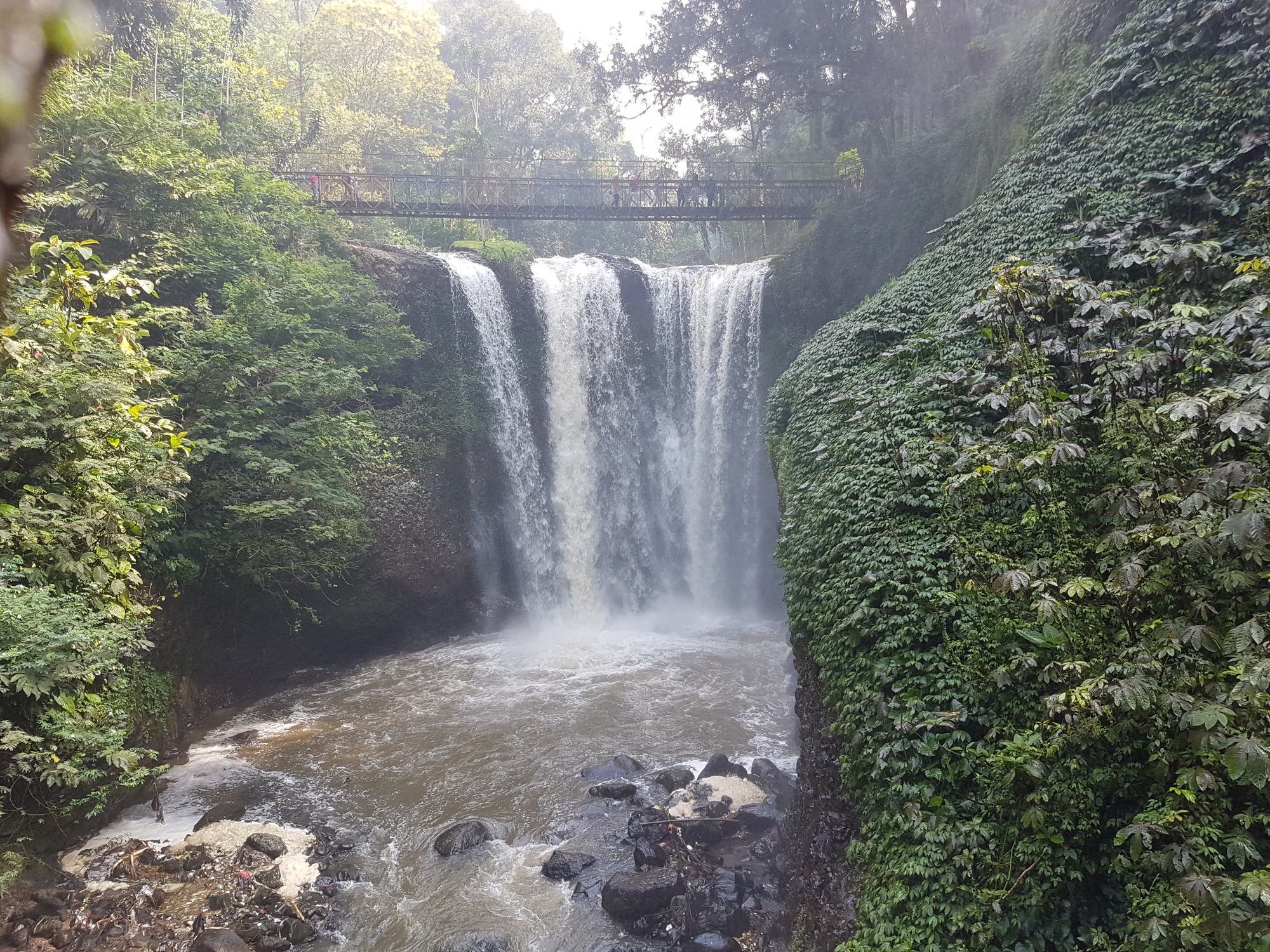
A couple of days after the ESNG show, I was catching a plane to Java, to do a 4 week input to a World Bank aid project on irrigation.  Once again, retirement is postponed, but I fancied another project in Indonesia.  Not many trains about here, just plenty of work, so here are a few of my ‘holiday’ snaps till I think of something railway orientated to write about….

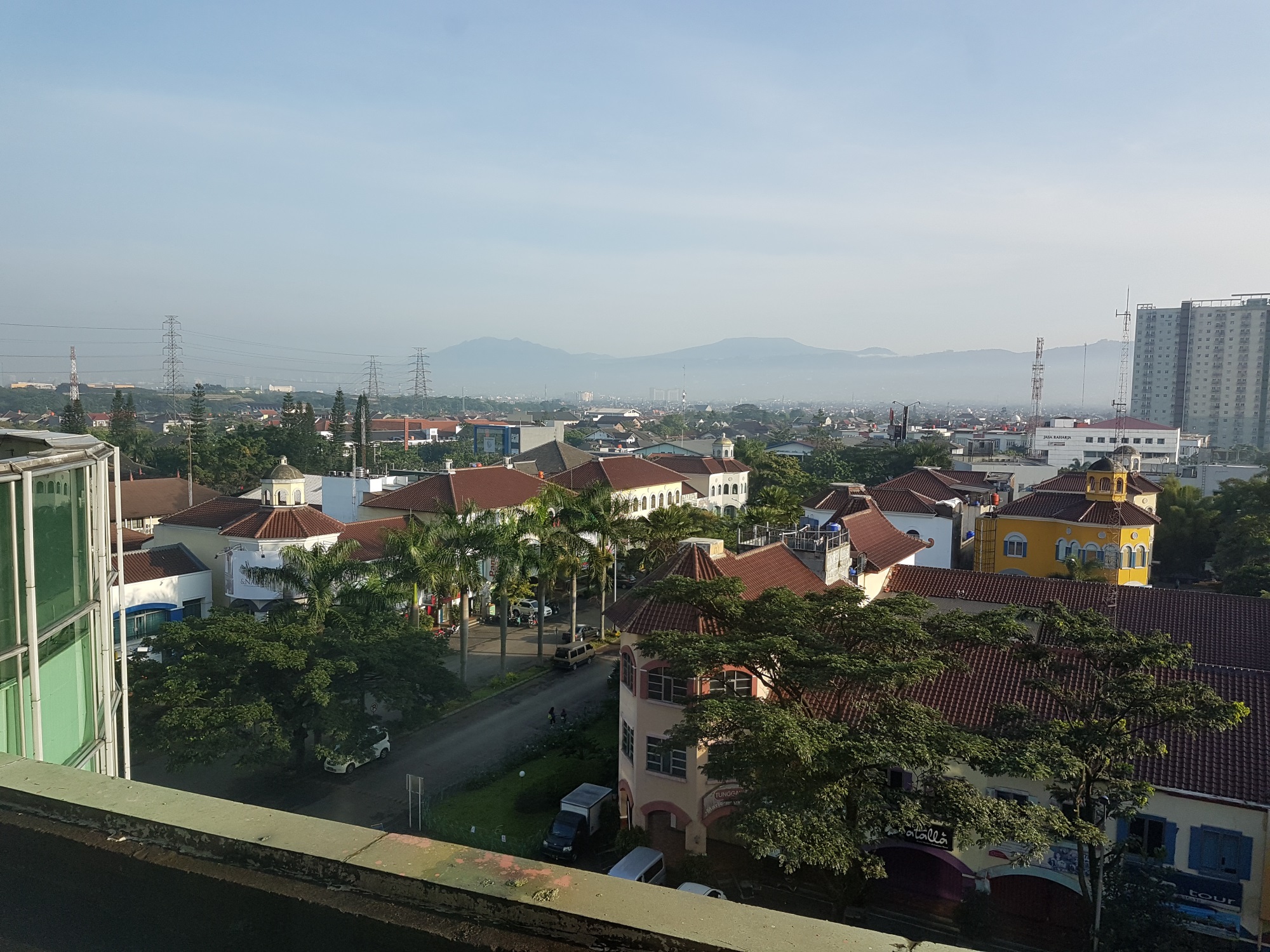
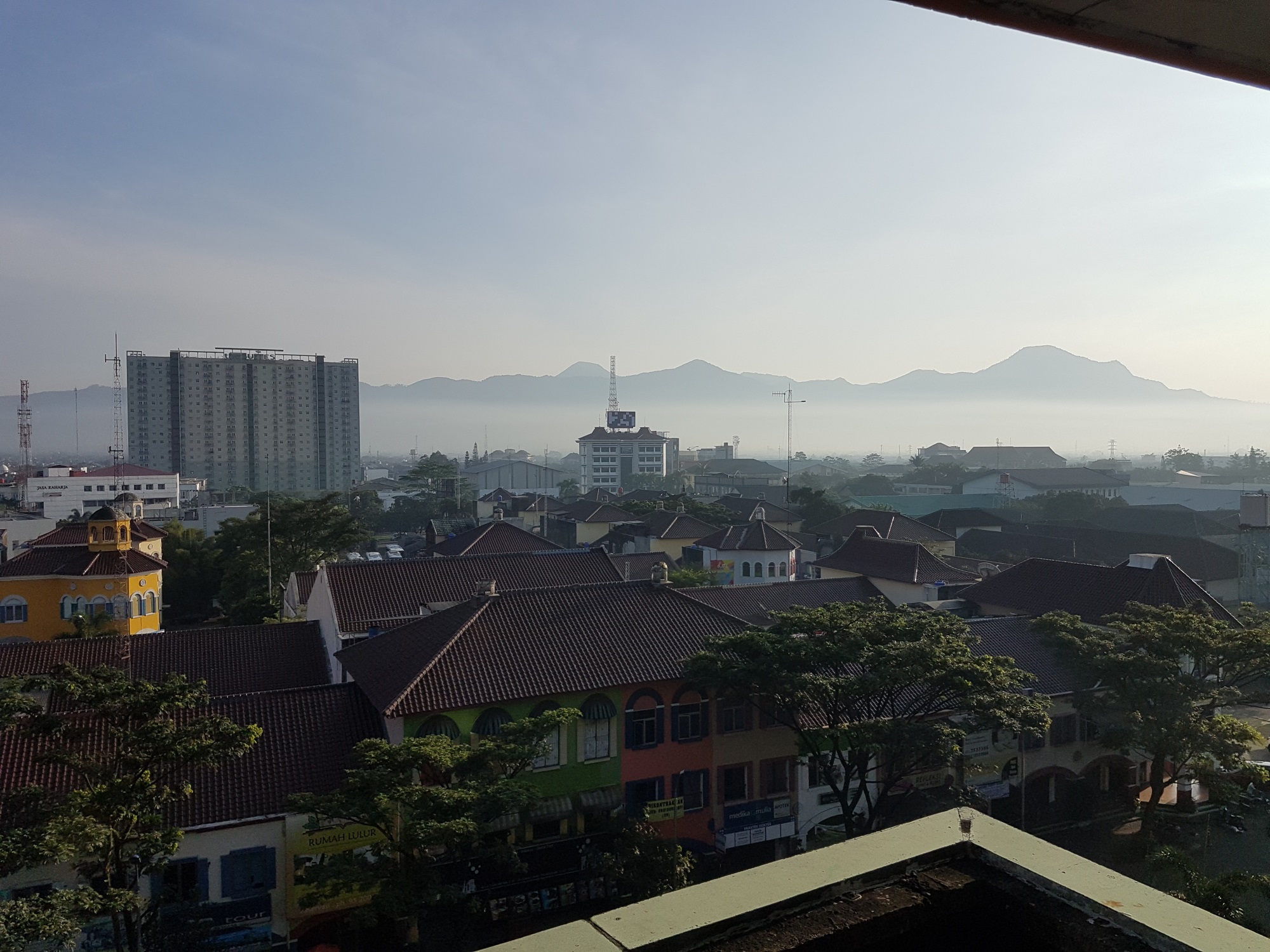
Early morning from my hotel room in Bandung, in the centre of West Java.  It’s unusually clear and you can see the mountains (but not quite the volcano behind.)  Usually the view is veiled by pollution in the morning and rain in the afternoon.

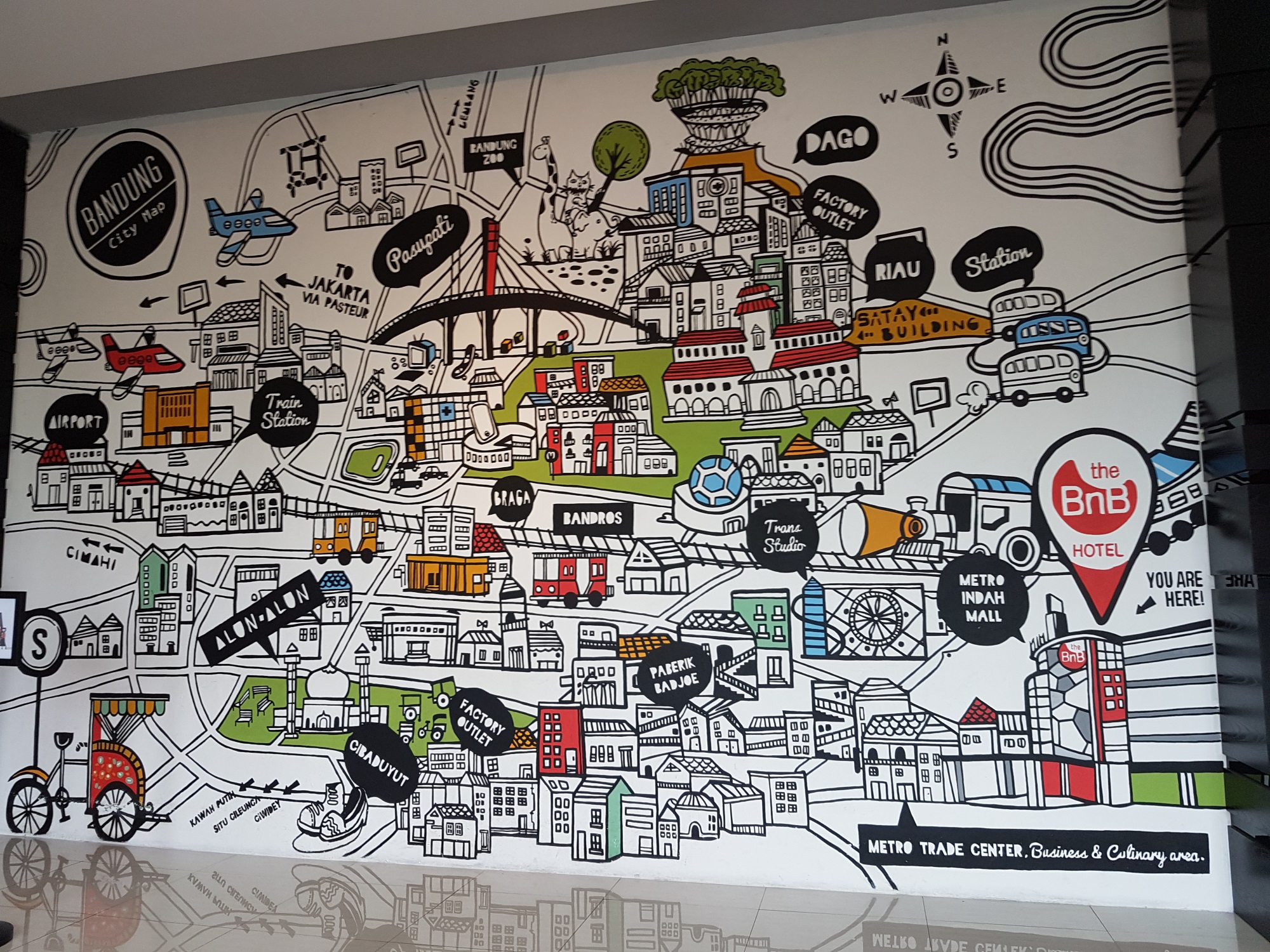
But this is where I am.  Some rather good map-making in the hotel lobby.

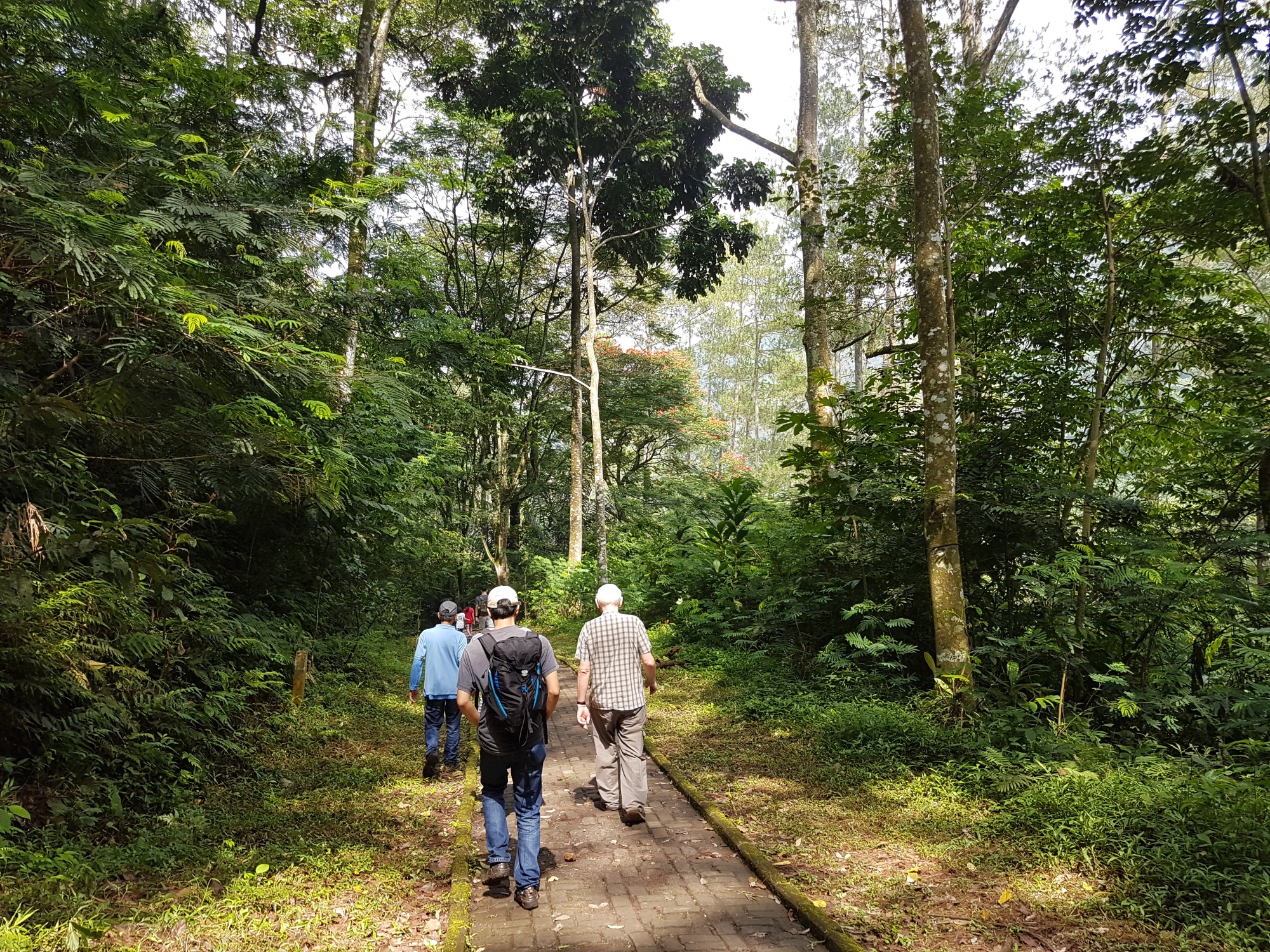
Bandung has become even more build-up than it was when I was last here 20 years ago.  (Was it really 20 years?)  But there is still an area of National Park forest in the hills to the north of the city, that made a good Saturday morning out.

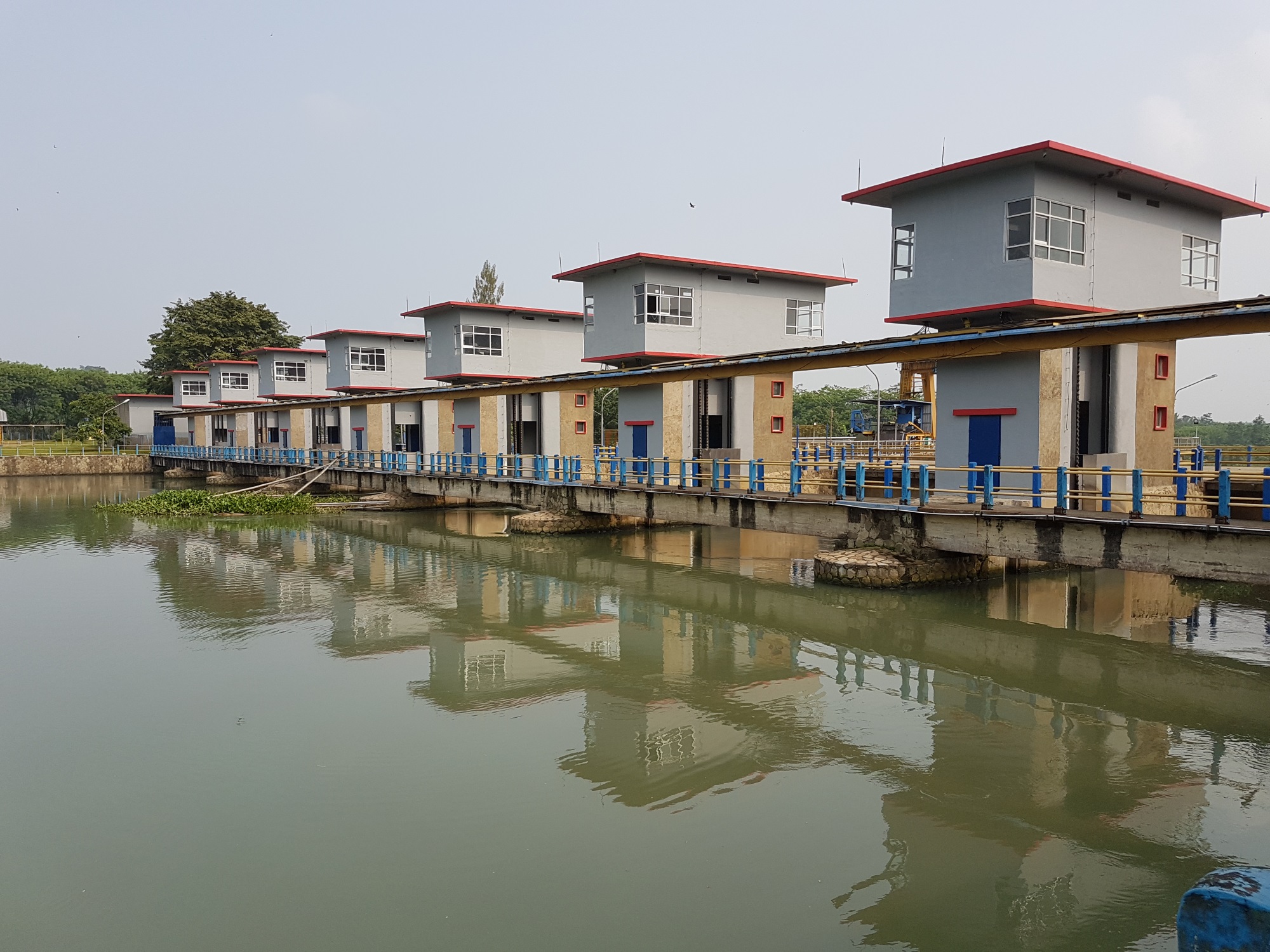
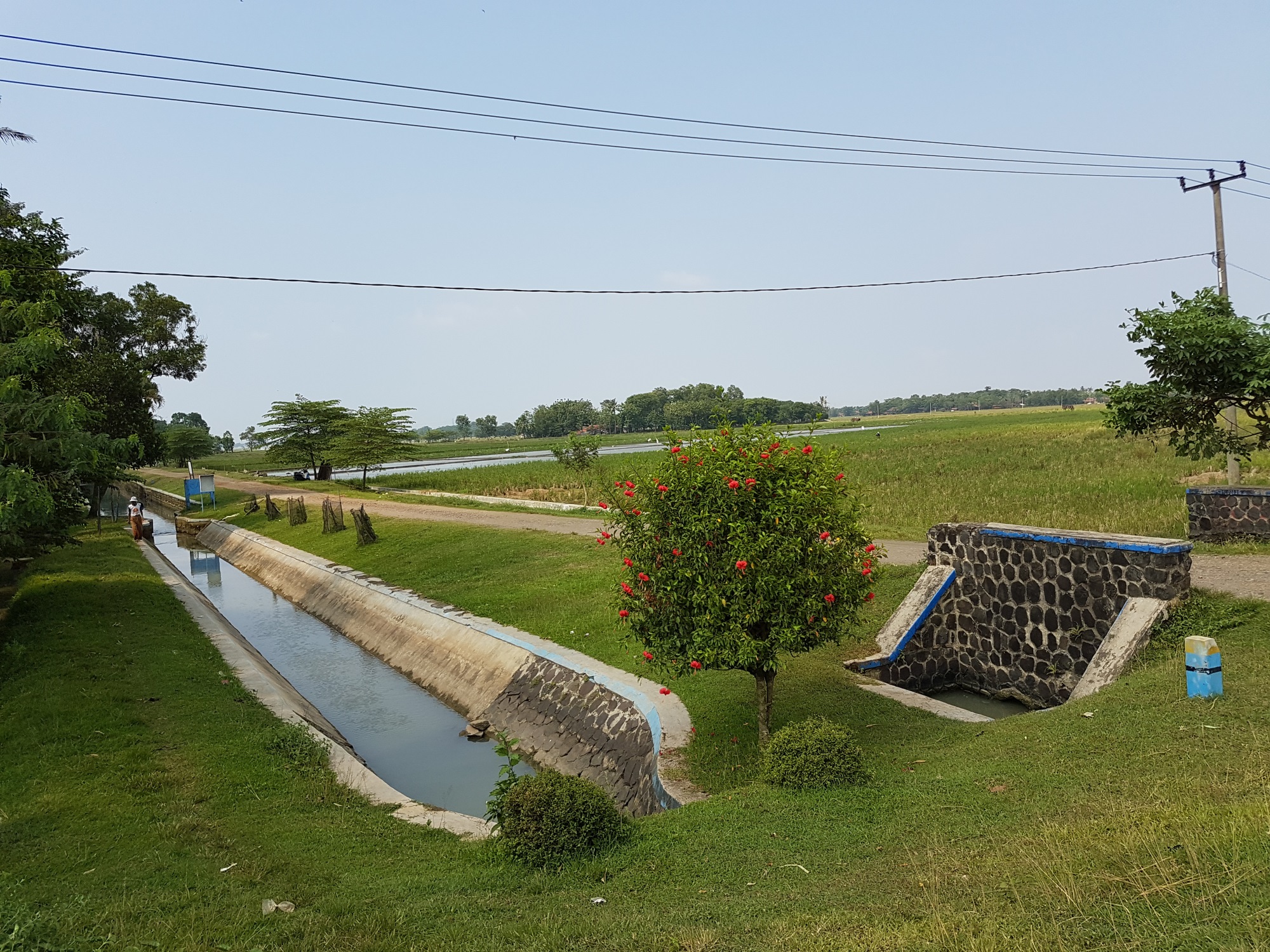
The Jatiluhur irrigation scheme is the largest in Java, and although it is suffering from agricultural land lost to industry and having villages built along its banks, our project area, the East Tarum Canal is still very attractive.

The main barrage, built 50 years ago, is still an impressive structure.

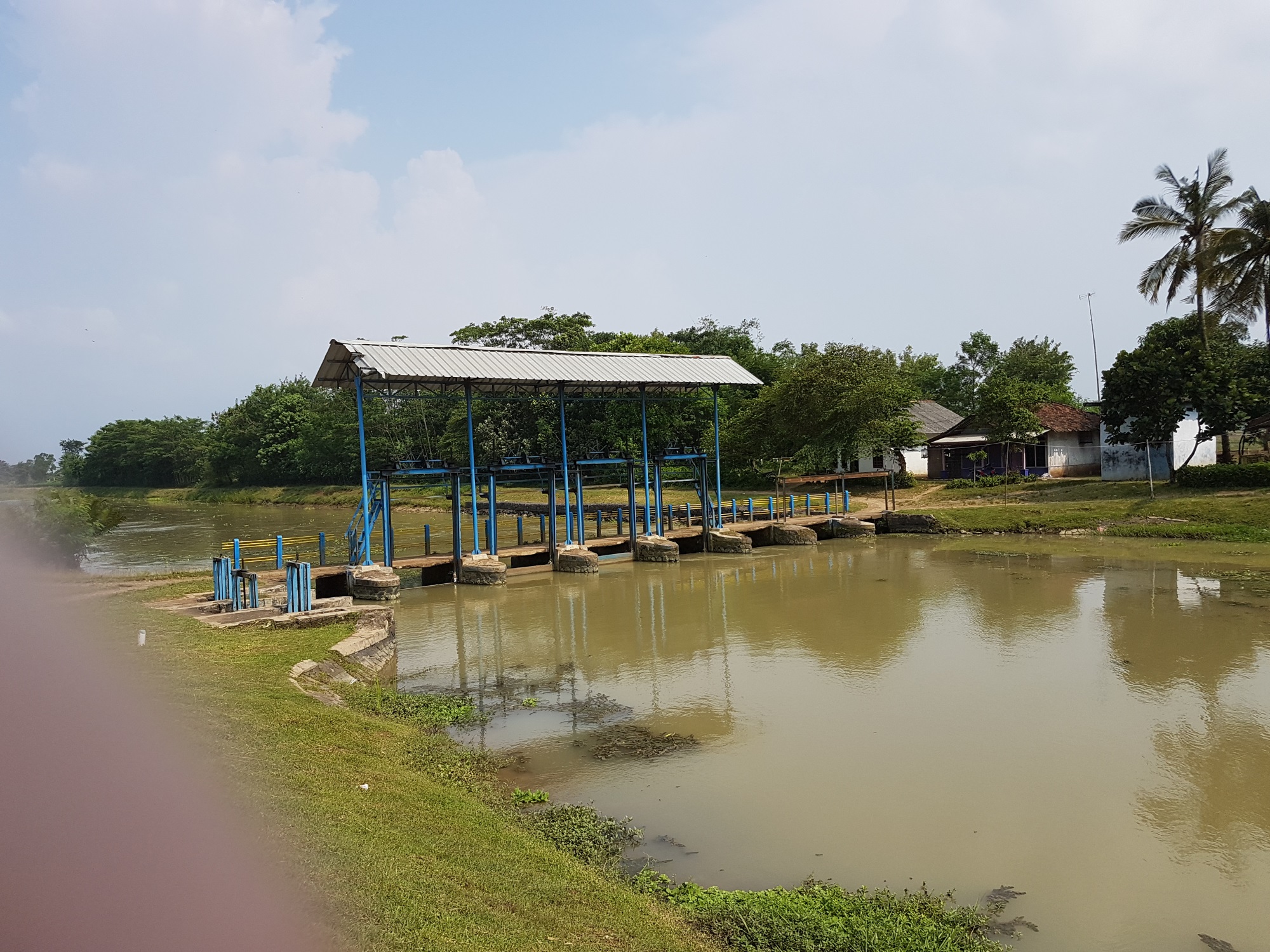
A cross-regulator on the main canal, to maintain levels for the irrigation diversion you can see on the left of the picture….

And of course, rice everywhere…..

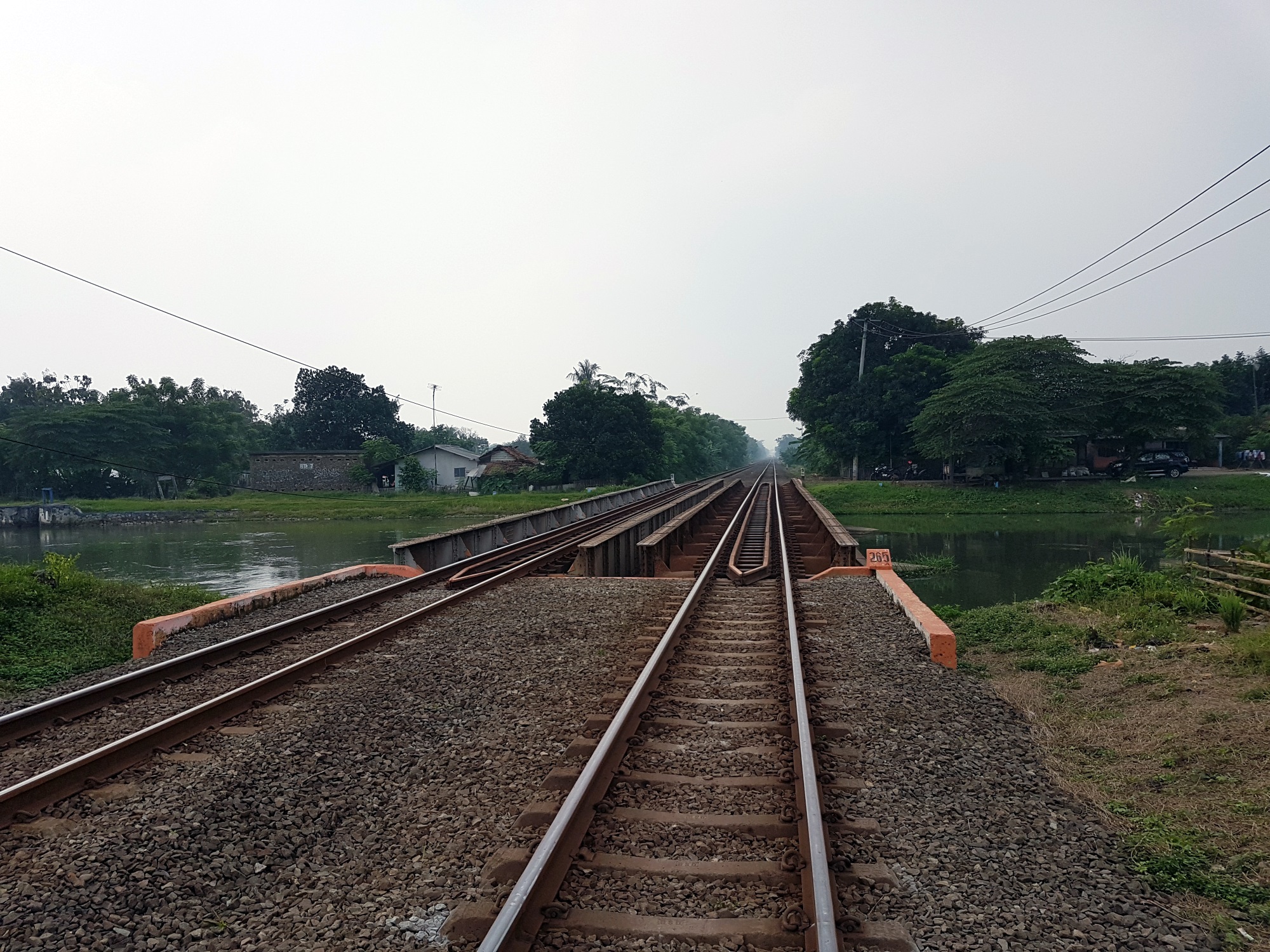
We did find this railway line, on the main north coast line from Jakarta going east.  A train passed soon after I took this, but I wasn’t quick enough with the camera!

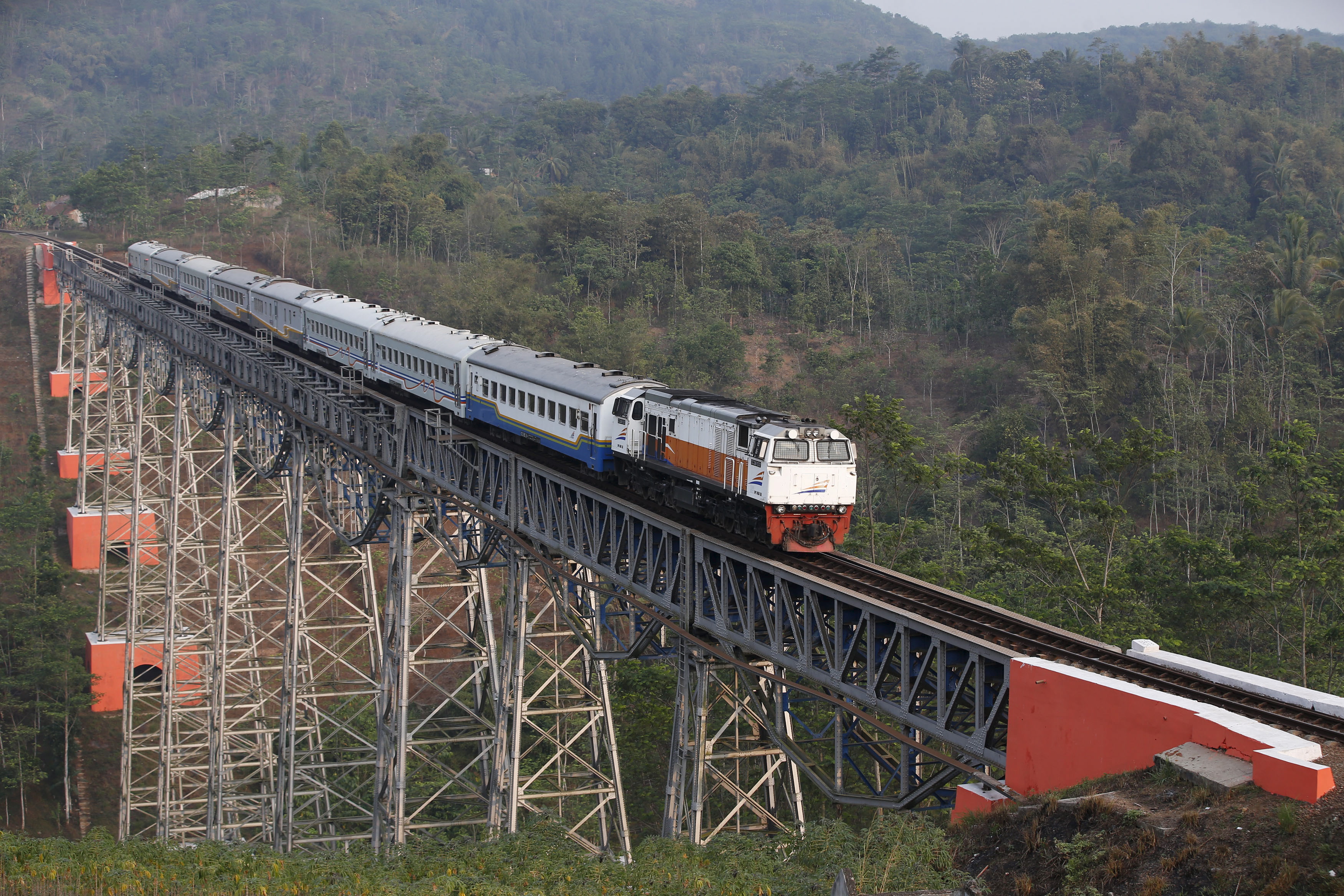
I suppose I ought to visit Bandung station this weekend, but it’s over half-an-hour by taxi – too much like hard work!!  So this stock picture will have to do.

The train journey to Jakarta is interesting through the hills, as the trains still cross a series of fine viaducts built by the Dutch.  Some of them can be seen from the Bandung-Jakarta motorway (think M25 on a bad day as you near Jakarta).

Posted in Out and about, Weird and wonderful | Tagged , | Leave a comment

Isle of Wight railways

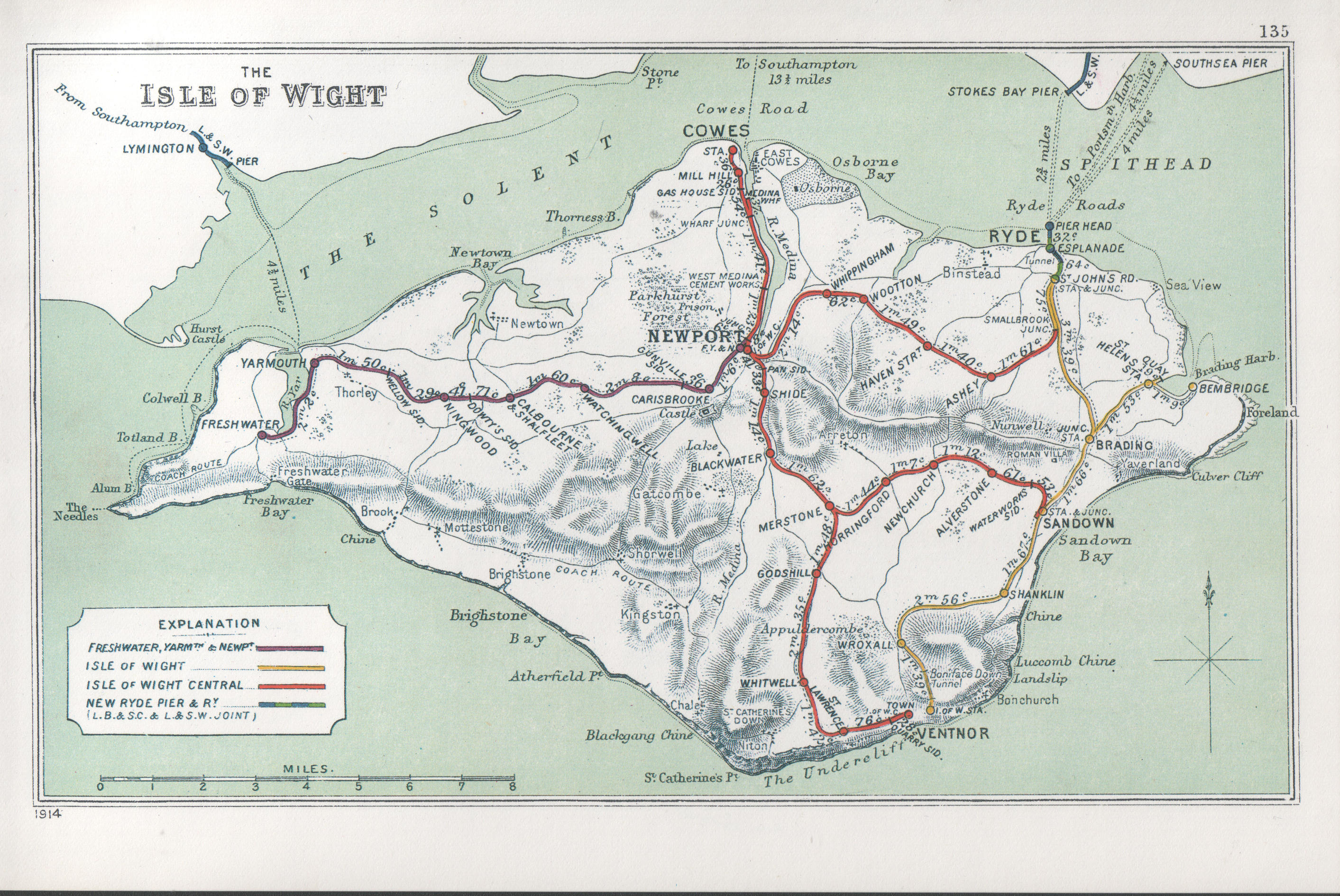
The railways of the Isle of Wight have always fascinated me.  Not least because of the concentration of lines on a small island – three companies pre-1923 before they were amalgamated under the Southern Railway.
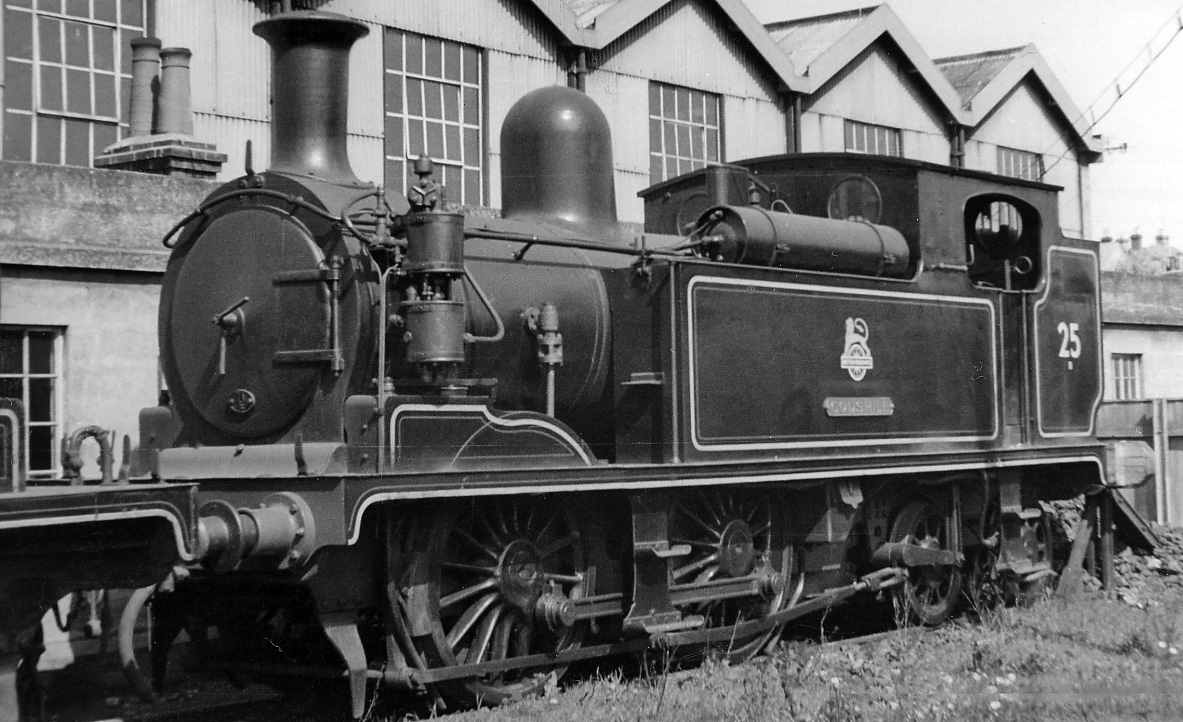
And the Isle of Wight was home to some wonderful rolling stock, being independent of the mainland, and all stock being imported by sea.  Small tank engines, like the ex-LSWR O2 0-4-4 below, time expired carriages and goods stock, generally short trains, but with the emphasis on passenger workings for the tourist trade.  What isn’t there to like?  Even today, the remaining line from Ryde to Shanklin is operated by venerable ex-London Transport tube trains.
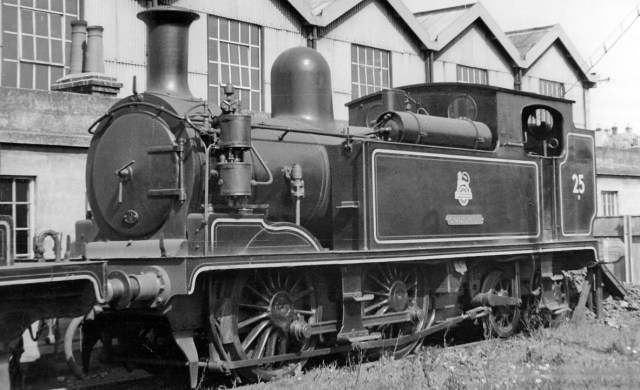
Wikipedia commons

And even if you don’t model the Southern, the concept might be applied to any railway company and an imaginary offshore island.  I believe this is how ‘Thomas’ and the ‘Isle of Sodor’ came about?

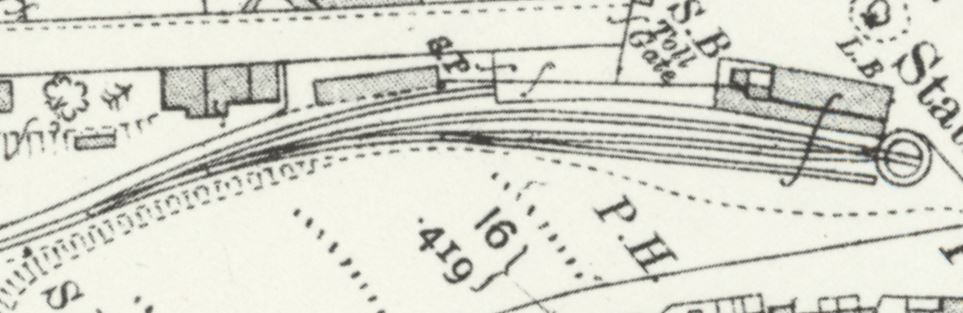
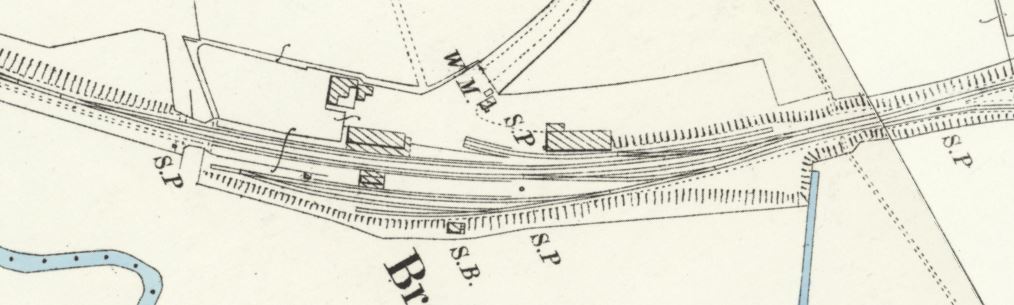
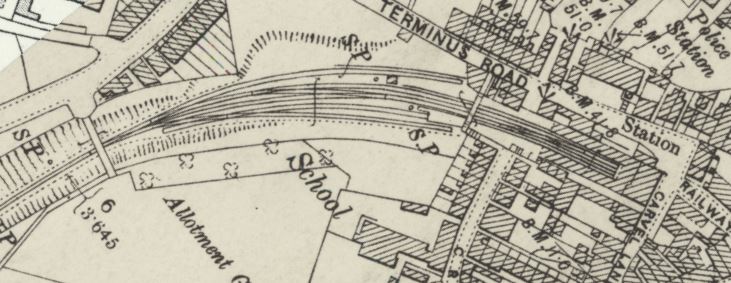
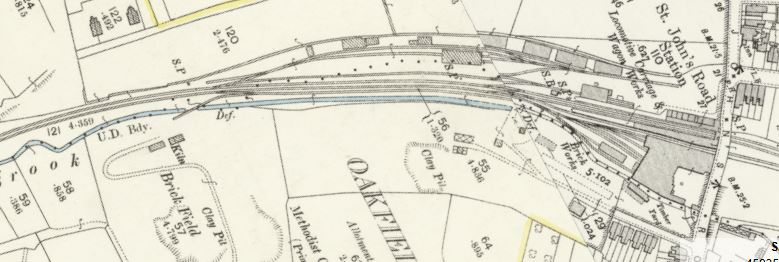
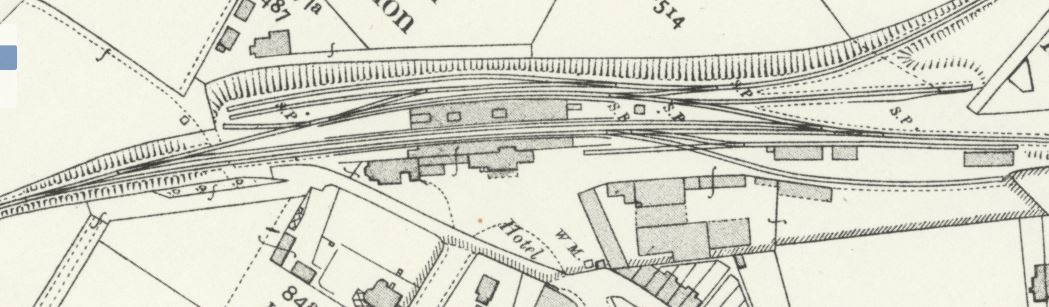
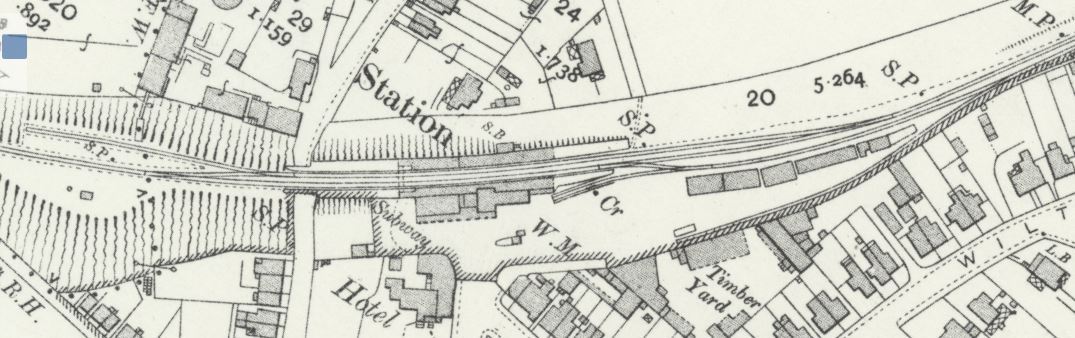
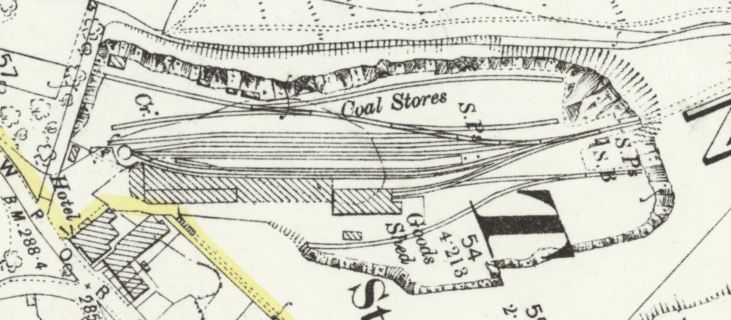
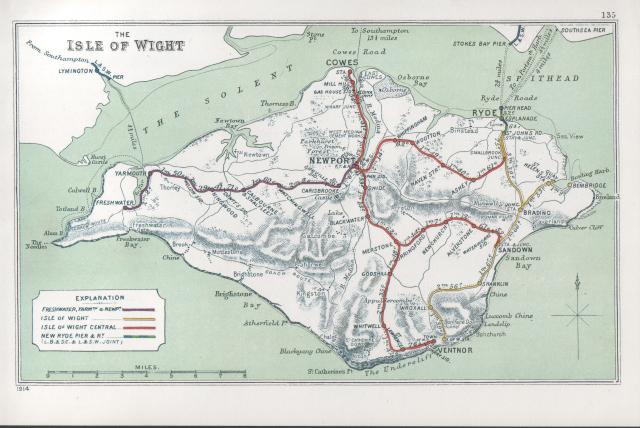
So to the station layouts.  Some of these are pretty well known, but I’ve put them together as some of the more interesting (to me) track layouts on the island.  All maps are from the National Library of Scotland under Creative Commons, and are dated around 1900.

We start with Bembridge.  One of two termini with a turntable/sector plate at the end of the line (Ventnor, below is the other), this is a simple branch line terminus.  I recall a model quite some time ago, that was build to 4mm/P4 standards.  It would compress into an interesting 2mm layout – just three points but with the turntable to make work.
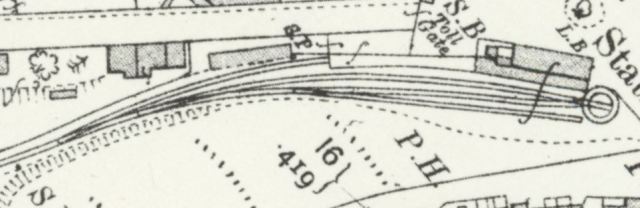
At the other end of the branch, Brading was the junction for Bembridge, the branch line exiting bottom right.  Another very buildable layout, with a separate branch platform, and limited goods facilities.
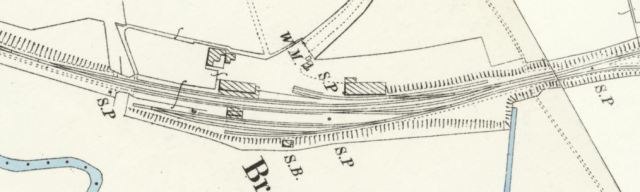
Cowes is a slightly larger terminus, but makes an attractive curved terminus.  Early drawings and photographs of the station show that the line used to end more or less at the footbridge, and the two cul-de-sac’s shown either side of the platforms were originally one road, cut by the station extension.  Cowes was a busy station, with services from the island railway hub at Newport.
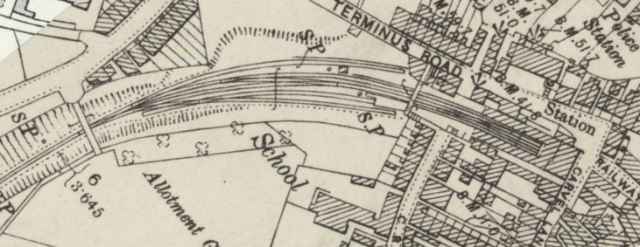
The Freshwater and Yarmouth line also ended up in Newport, and before 1923 was an independent company.  Freshwater had an interesting layout in its early days, that became more conventional later.  There is a 2mm fine scale model of the station just entering the exhibition circuit, making good use of 3D printing for the buildings.
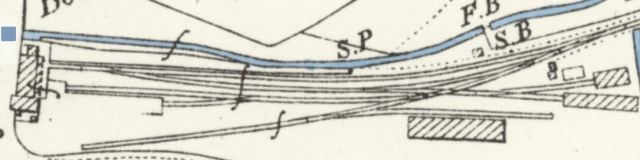
Much the same could be said about Yarmouth.  I like the ‘reverse Inglenook’ arrangement of the goods yard.  This surely has potential for a model?
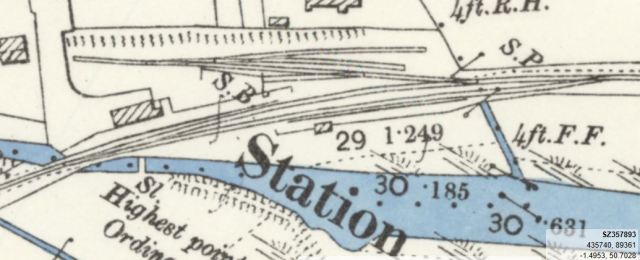
Merstone is another interesting junction, with the branch to Ventnor West bottom right.  I’d have liked to have included Ventnor West in this post, but the station hadn’t been built in 1900!  There’s a good ‘OO’ version of Merstone on the exhibition circuit, with some very nice IOW goods stock on display – mainly LBSCR and LSWR discards.

Finally, we’ll look at the ‘main line’ – still mostly in use today – between Ryde and Ventnor.  Ryde terminus was on the pier, allowing transfer from passenger ferry direct to the train.  Just down the line was Ryde St. John’s Road, one of the larger engine sheds, with Newport, on the island, and also having works facility.  This could make an interesting model with limited compression.
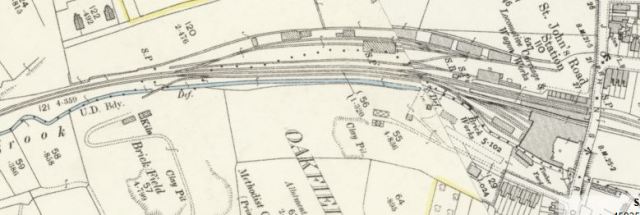
Another compact junction – the island seems to specialise in them – was Sandown.
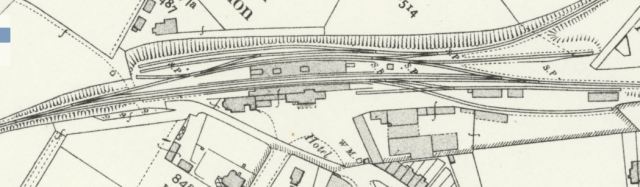
Shanklin is the current terminus of the line, and was a simple, but interesting through station.
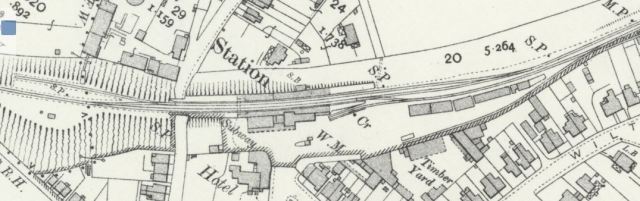
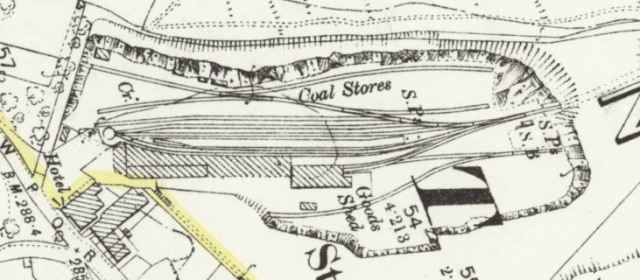
Having tunneled through the downs above Ventnor, the line emerged into a quarry-like terminus, with storage in caves by the goods yard.  The station had two platforms, one an island accessible only by a moveable ‘bridge’ across the tracks.  And another turntable/sector plate at the end of the line.  With the tunnel so close to the station, it is almost every modeller’s dream!  There was a very good 2mm fine scale model of this station completed some time ago.
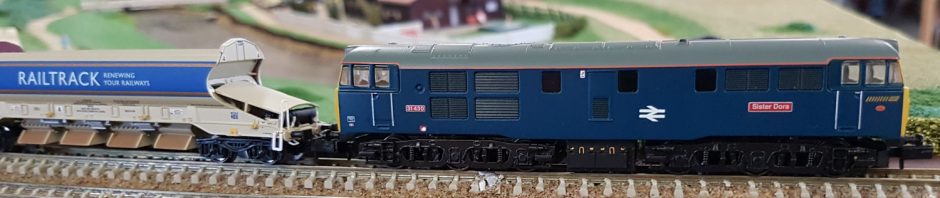
As for modelling the island in ‘N’ or 2mm?  Not easy.  Dapol have issued an island ‘Terrier’.  N-Brass do an LSWR G6 0-6-0T, that is very similar to the O2 0-4-4T’s used on the island, though the extended bunker would need to be modified.  Coaching stock was mainly ex-LBSCR and ex-SECR vehicles, and some etched sides are available.  Wagons would have to be mainly scratch-built, though generic ones might do the job.  DJM models has the distinctive ex-LSWR ‘road vans’ (brake vans) as a future release in ‘N’, but will they ever happen????
Posted in Inspiration, Layout design, Prototype | Tagged , , , | 1 Comment

1971 – July – Birdcage discomfort

Also in the July 1971 edition of Railway Magazine was an interesting article on the Oxted line of Southern Railway and BR Southern Region.  This line branched off the main Brighton line at East Croydon, wound its way through Oxted and Lingfield to East Grinstead, where the line now terminates.  In steam days the line branched at East Grinstead to Lewes and the coast (now the Bluebell heritage railway) and to Tunbridge Wells (now closed.)

This line certainly would have been electrified in the 1940’s, but such work was delayed by the 2nd world war, and the third rail only reached East Grinstead in 1987.  So in the 1960’s, it provided a bastion of steam amongst all the EMUs of East Croydon.  This got even more interesting for race days at Lingfield.  The author, D.A. Bone writes…..

Several times a year the Oxted line became more than the poor relation of the electrified services.  Lingfield Park races must have caused plenty of operating difficulties, but they provided a near paradise for the lover of Southern steam.  East Croydon resounded, as it must have done up to the Brighton Line electrification in 1933, to the sight, smell and sound of a succession of heavy steam hauled services.  The idea of Pullman cars going through Woldingham now seems a fantasy.  The pattern of services on race days did not change after nationalisation.

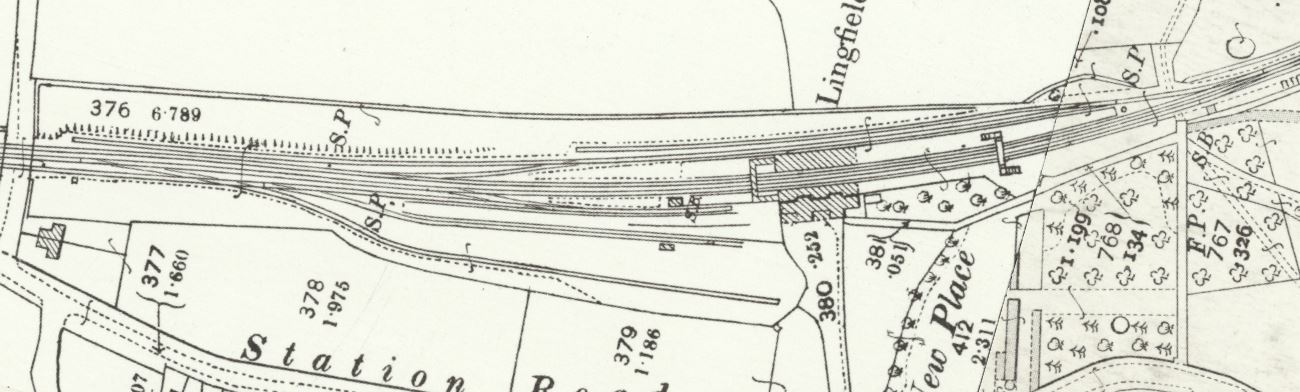
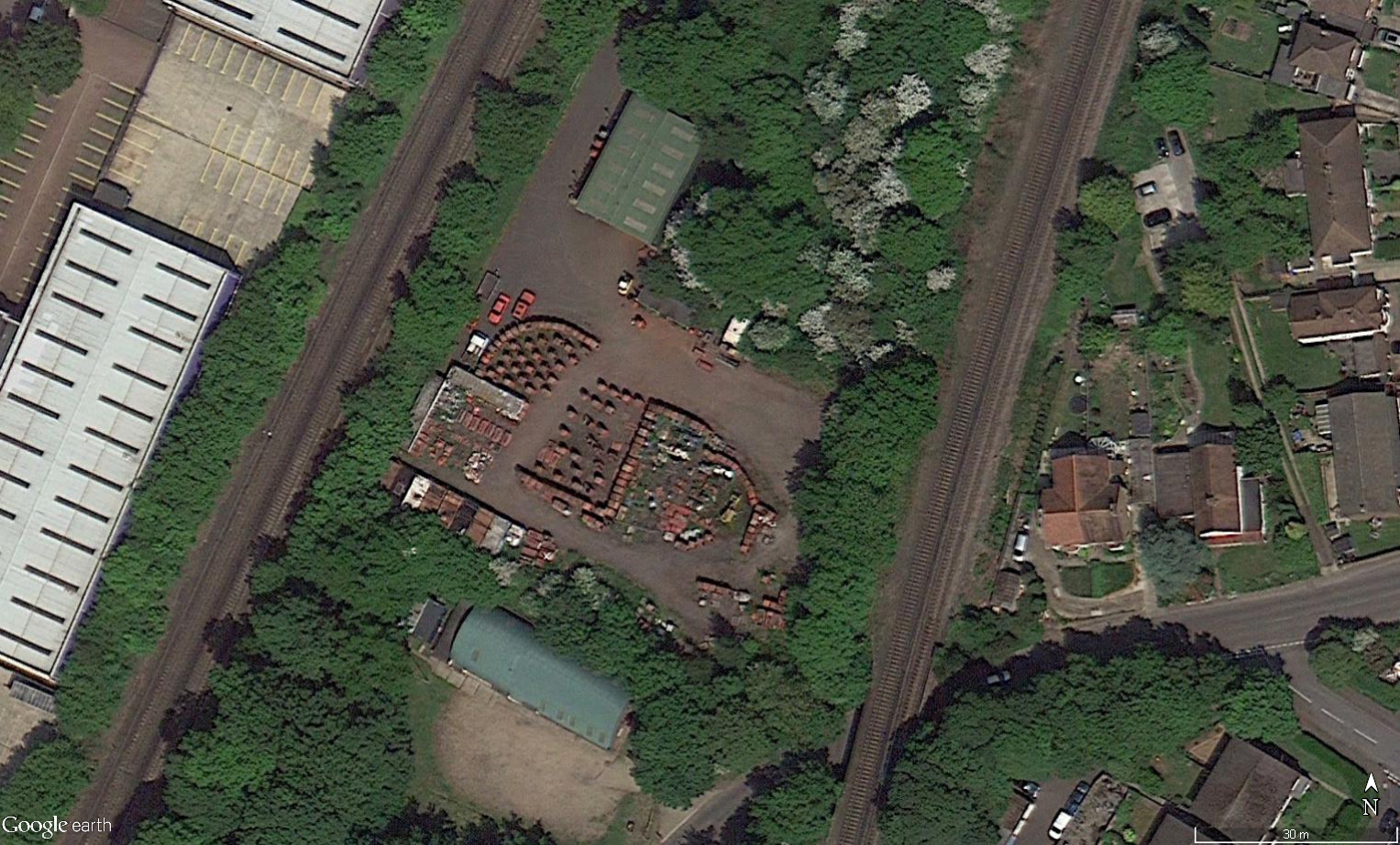
Now here’s an interesting layout idea – a racecourse line.  A chance to run EMUs or local passenger services, and then loads of express power on race days.  One could even bring in trains from other regions, allowing you to run your ‘Rule 1’ stock to the race meeting.  Perhaps someone has chartered a ‘Brighton Belle’ or a ‘Blue Pullman’ for the day??  Lingfield itself seems a small station for race traffic….
lingfield

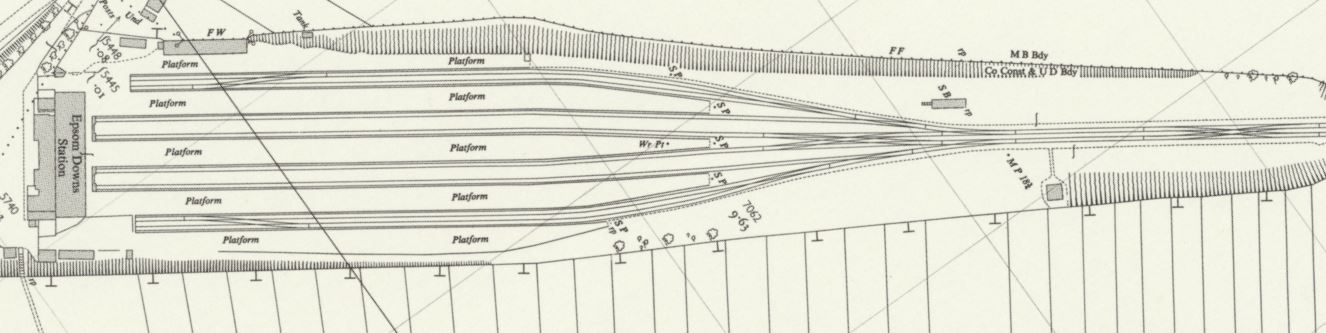
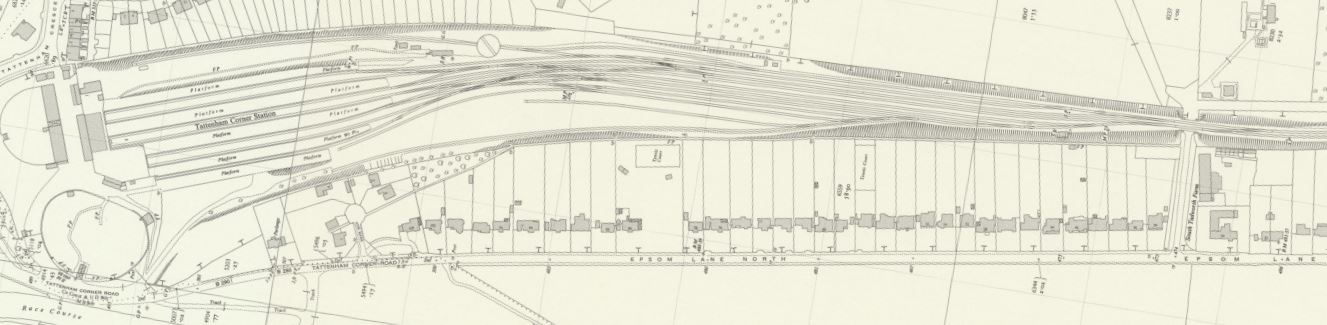
But up at Epsom, both Tattenham Corner and Epsom downs are relatively large termini.

epsomd tattenham

Perhaps too large for many layouts, but a through station on the line, retaining its goods yard, could be an interesting prototype.  Of course, if your racecourse is at the end of a tram line, like ‘Victoria Street’, you can do it all in a few feet.

This has turned into a long post, but I must mention the ‘Birdcage discomfort’.  This is not the same as waiting for the Farish model to appear!  It’s a long quote but so evocative of a certain era of UK train travel….

It would be unfair to recall all aspects of Oxted line travel in the 1944-47 period through rose-coloured spectacles.  The frequently used birdcage three-coach sets did not provide good third-class accommodation.  The standard “4-LAV” or “2-BIL” sets used on the Brighton line slow trains were infinitely better upholstered and lit.  Birdcage compartments were narrow and the strip of blue leatherette one leant back on had the minimum of padding.  Lighting in both the first and third compartments was by ceiling fixtures.  There often seemed to be water in the bottom of the glass shade that enclosed the dim bulb.  This produced rather ghastly shadows, especially when the stock was running at speed, as the water was continually shifting position.

Heating was controlled by a large brass handle, which could be put in the usual three positions, full, half and off.  It required considerable strength to move, but was at least conveniently placed below the mirror.  Each side of the mirror were sepia Edwardian scenes of Tunbridge Wells or Bexhill.  Only passengers in the middle coach of a birdcage set had access to a toilet:  the door to this had a formidable know of ribbed brass, and the word LAVATORY boldly written in gold.

The worst features of third class travel could be avoided provided you had time to choose your compartment.  The erstwhile second-class accommodation provided wider and better upholstered compartments than the original thirds.  By comparison the first class was opulent: a rich paisley design in green or dark red was the standard.  Some birdcage sets (and some push-pull services which worked Oxted-Tunbridge Wells West) had a first-class open saloon section, with heavy armchairs that swivelled.  To sit back in one of the first class compartments was to be very much isolated from the noise and sensation of travel.

Posted in Hints and tips, Inspiration, Layout design, Prototype, Uncategorized | Tagged , , , | 1 Comment

1971 – July – A polite correspondence

The letters page of the July 1971 Railway Magazine produced some interesting snippets, but most fascinating was the style.  Letter writing was still an art – no email, Fa(r)cebook or Twitter.

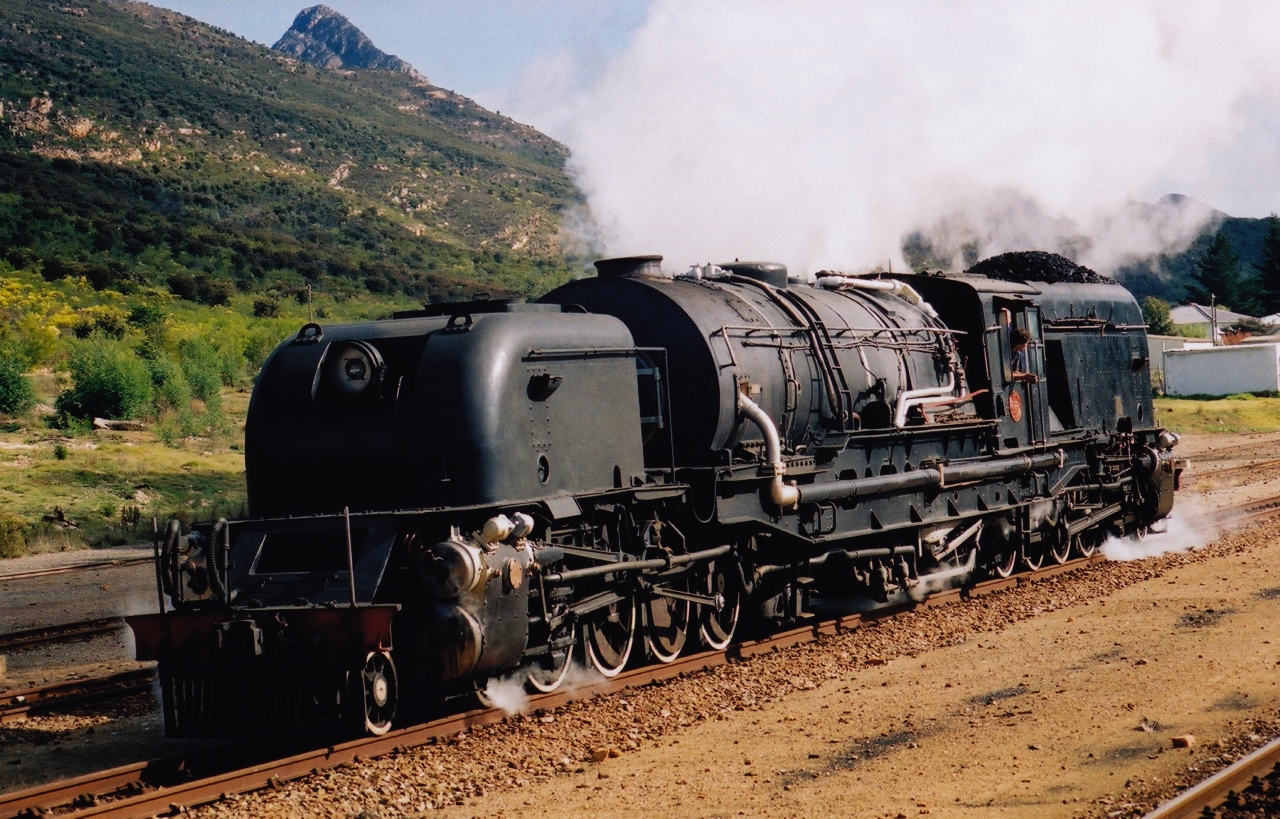
This month’s letters had an exchange of views on whether the exhaust beats of a Mallet or Garrett locomotive, with two sets of cylinders and motion, were synchronised or not.  One protagonist was the famous O.S. Nock.  We complain about the aggressive exchanges on the internet.  These extracts from two long letters show that the polite insult goes back a long way.  A.E Durrant, from Western Australia, writes….

Sir – I read with some interest Mr. O.S. Nock’s article on the subject of Garratts and Mallets, and now that the postal strike has ended am able to comment.  The idea that the two unots of a Garratt or non-compound Mallet, “get in step” and stay synchronised is utter nonsense…..

By his own words, Mr Nock’s Garratt experience is little more than vestigial, and certainly  not in line with his authority on British express train running…..  My own extensive Garratt experience started in 1955…..

In the stillness of the African dusk, supping a “sundowner” at my local pub, a Garratt would depart on the immense climb to Uplands, slowly but surely ascending the grade.  Similarly, dawn in the game park, near Athi river, wondering whether that dark shadow would materialise into a lion or just a bush, usually coincided with a main-line freight from Mombasa, with a “59” class…..

Mr Nock’s musings concerning cylinder positioning are as naïve as his attempts to justify the non-existent synchronisation phenomenon…..

O.S. Nock replies……

Sir, Mr Durrant should be a little careful in suggesting that other people are talking “utter nonsense” when the argument he is trying to sustain is in flat contradiction of the experience of senior engineers in many parts of the world who have lived their lives with Garratts.  This is the experience of men who have designed, tested and run Garratts, rising to positions of the highest responsibilities in the process – not the results of lineside and carriage tape recordings, and background music to the pleasure of a “pint at the local”!…..

I hesitate to suggest that some of those sundowners Mr Durrant enjoyed were stronger laced than he realised and contributed to the syncopated effects!  So there you are, Sir.  A “dusty” letter invites a letter that is a bit dusty in reply.

Mee-owww!  I’ve seen people defriended on Facebook, or leave a forum after an exchange like this!  There was no further correspondence on the subject in 1971.

class_gmam_4122_july_2004_7863980914

Posted in Prototype, Weird and wonderful | Tagged , , , | 1 Comment

ESNG Exhibition 2017 #4

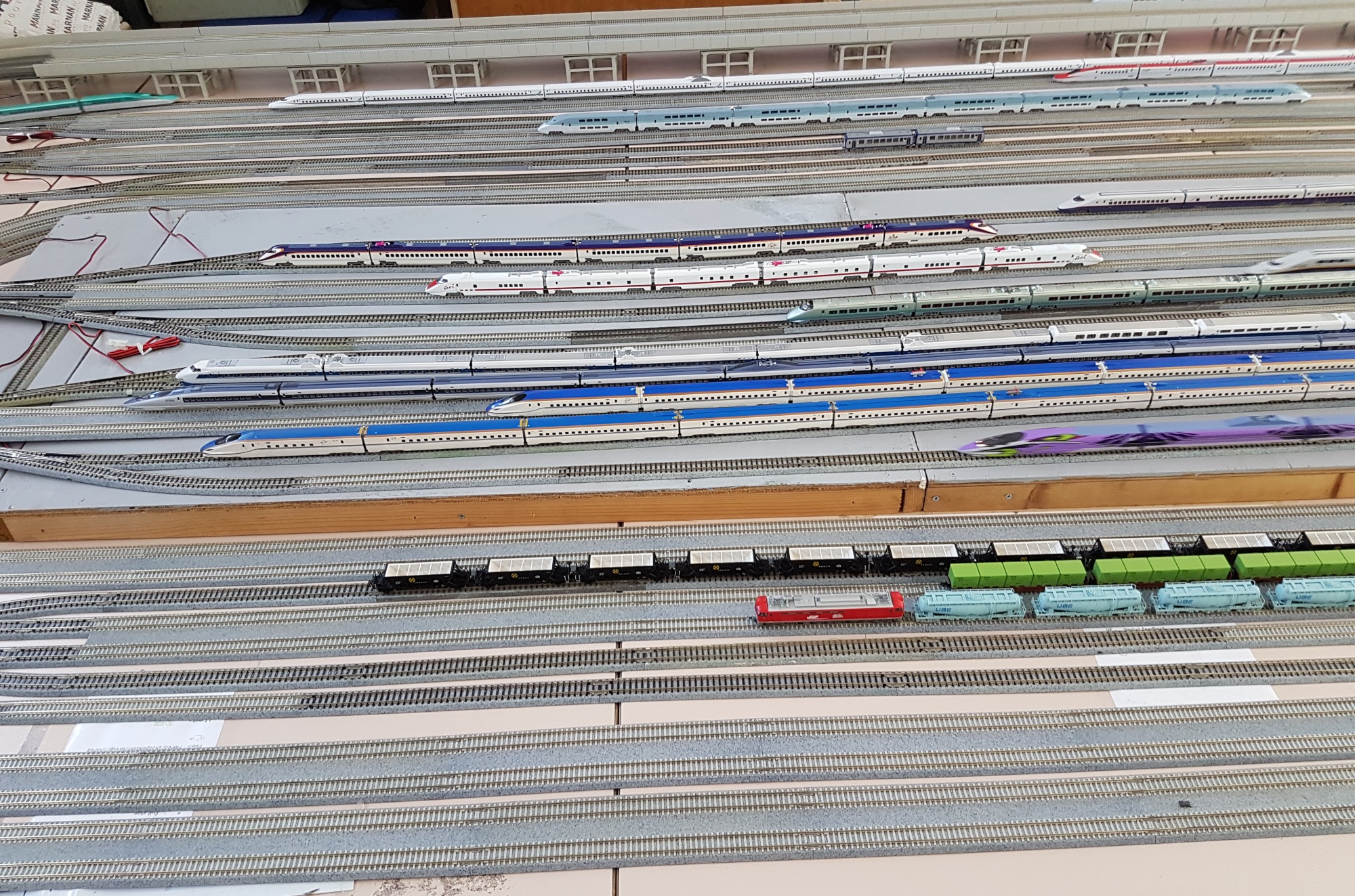
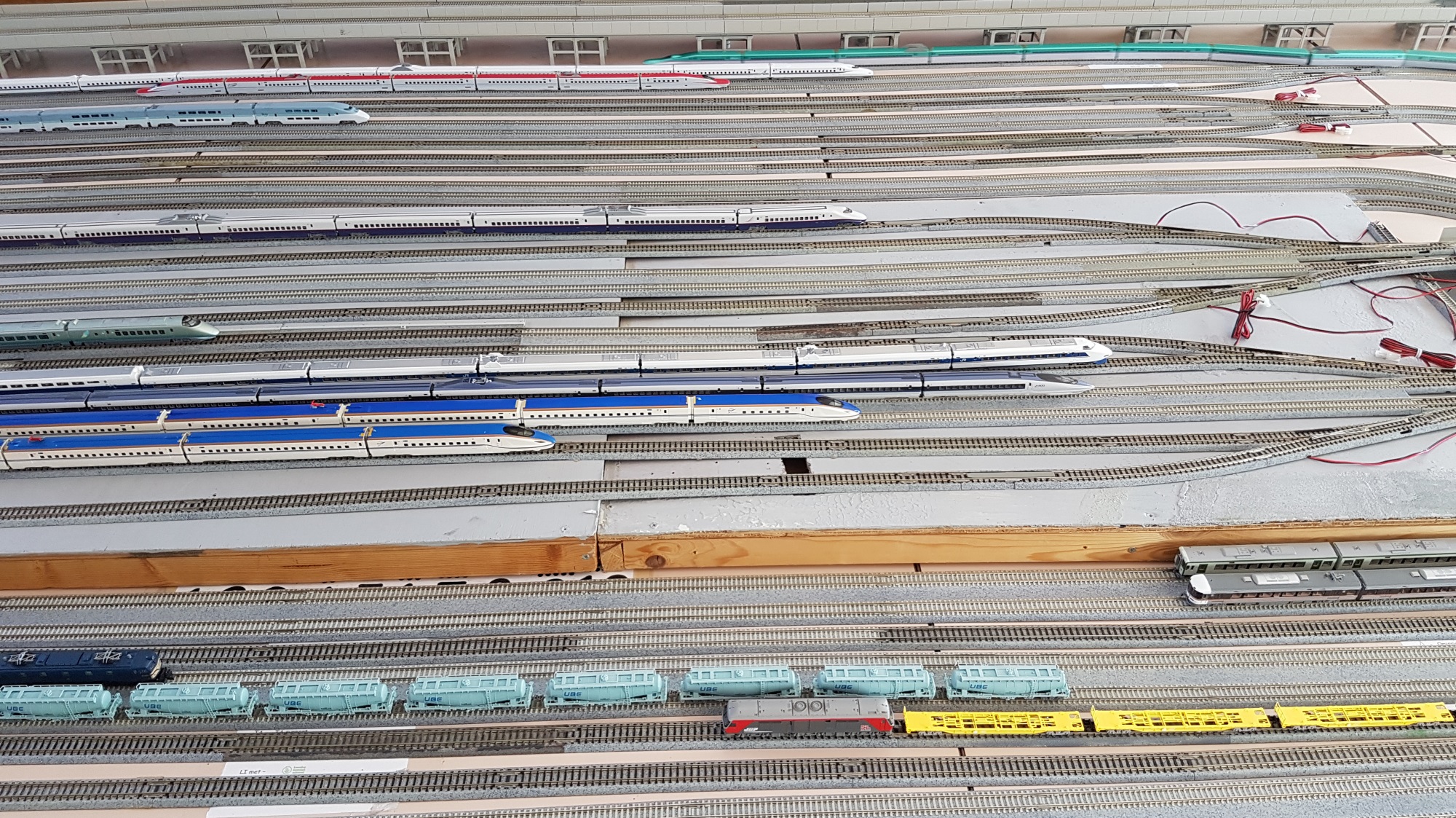
The Kato Racetrack had (I think) 14 independent circuits to run all of Paul’s bullet trains and some other trains as well.

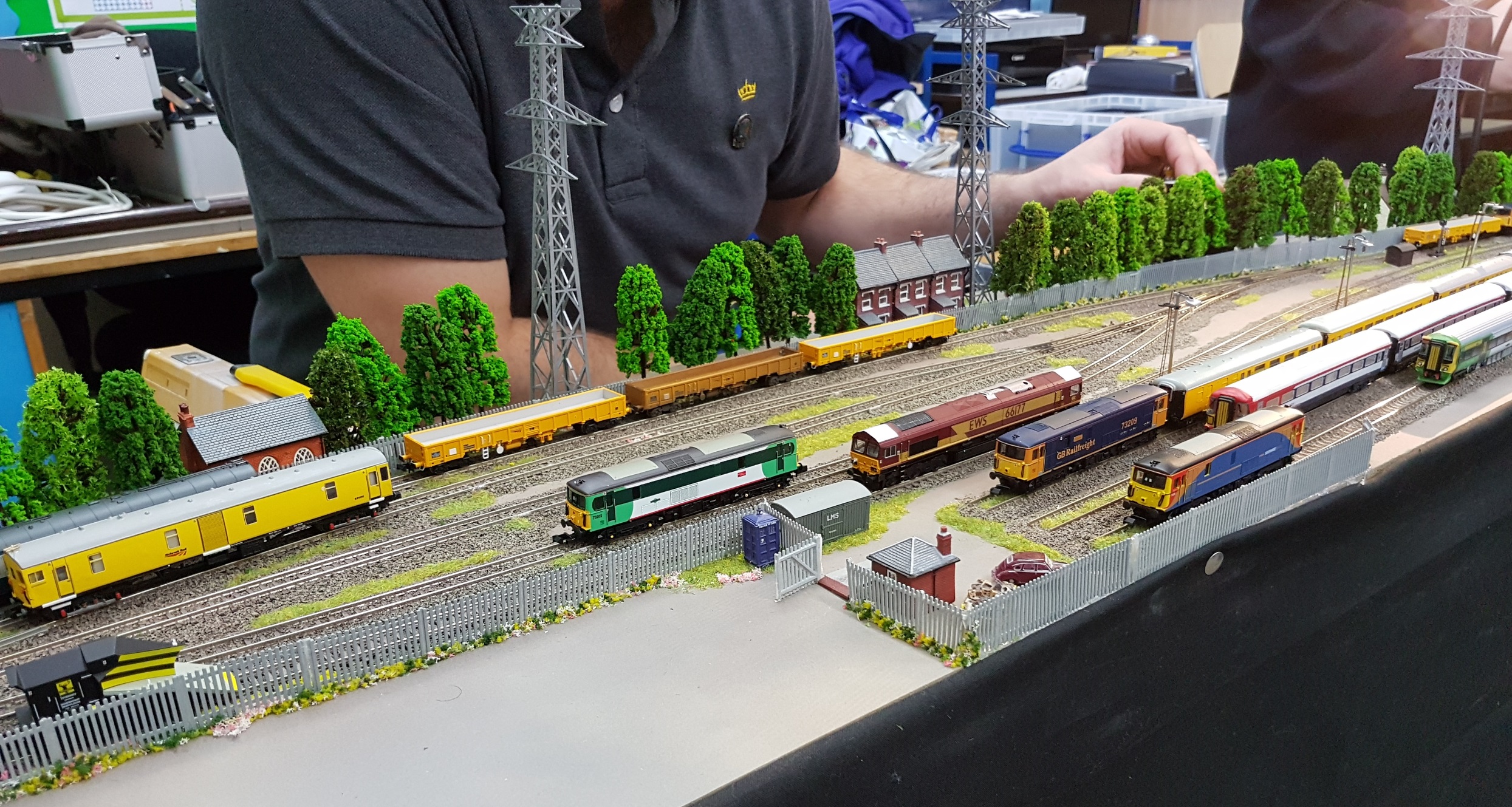
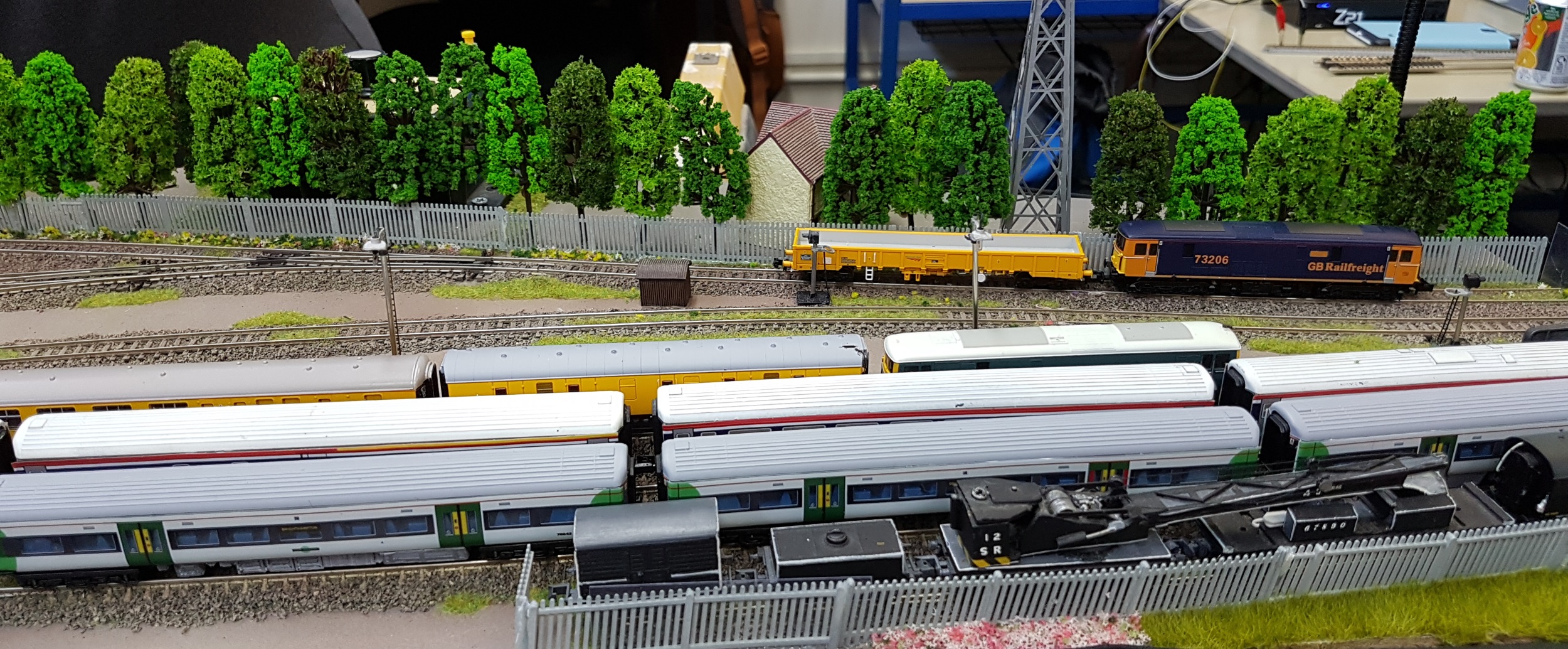
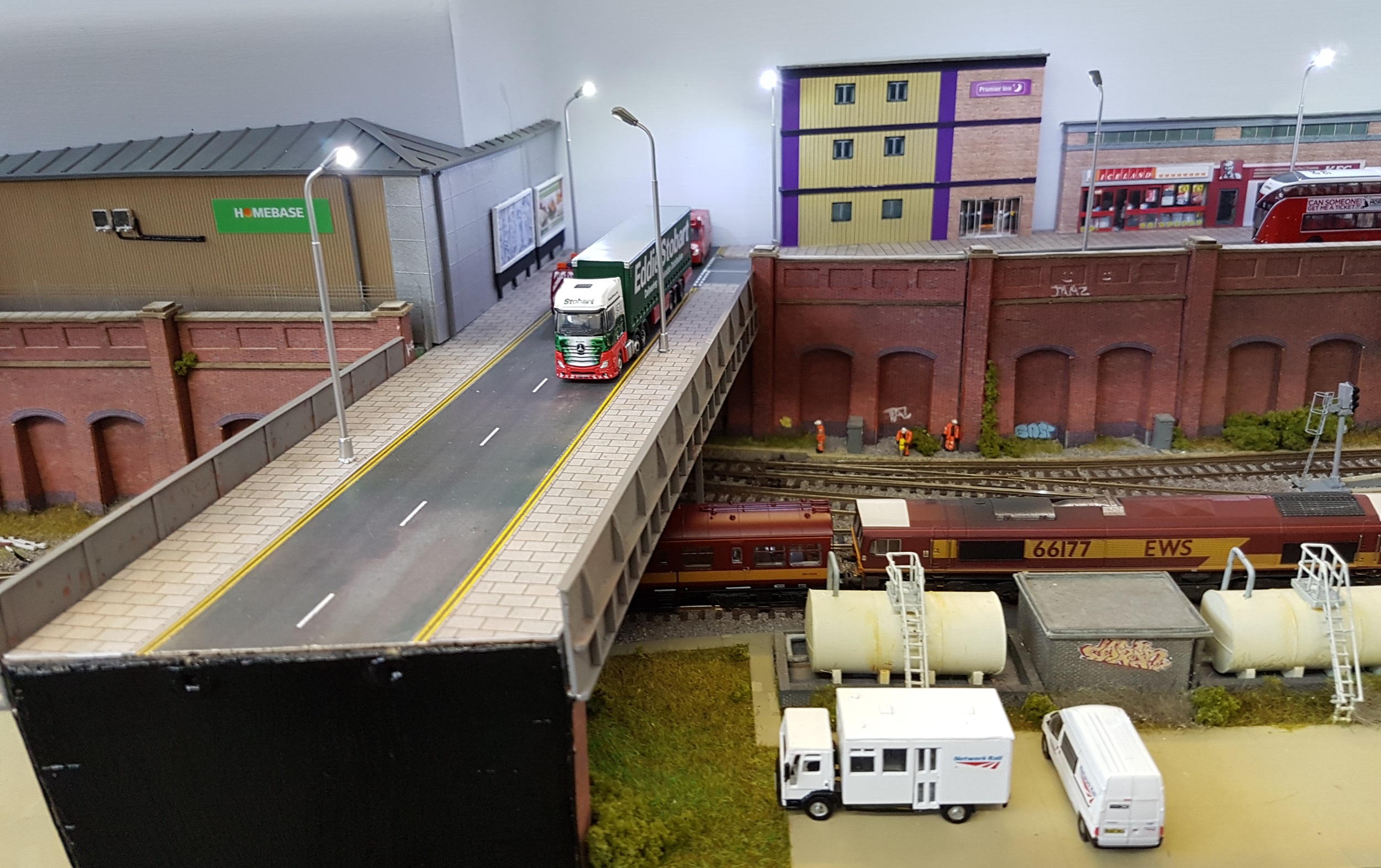
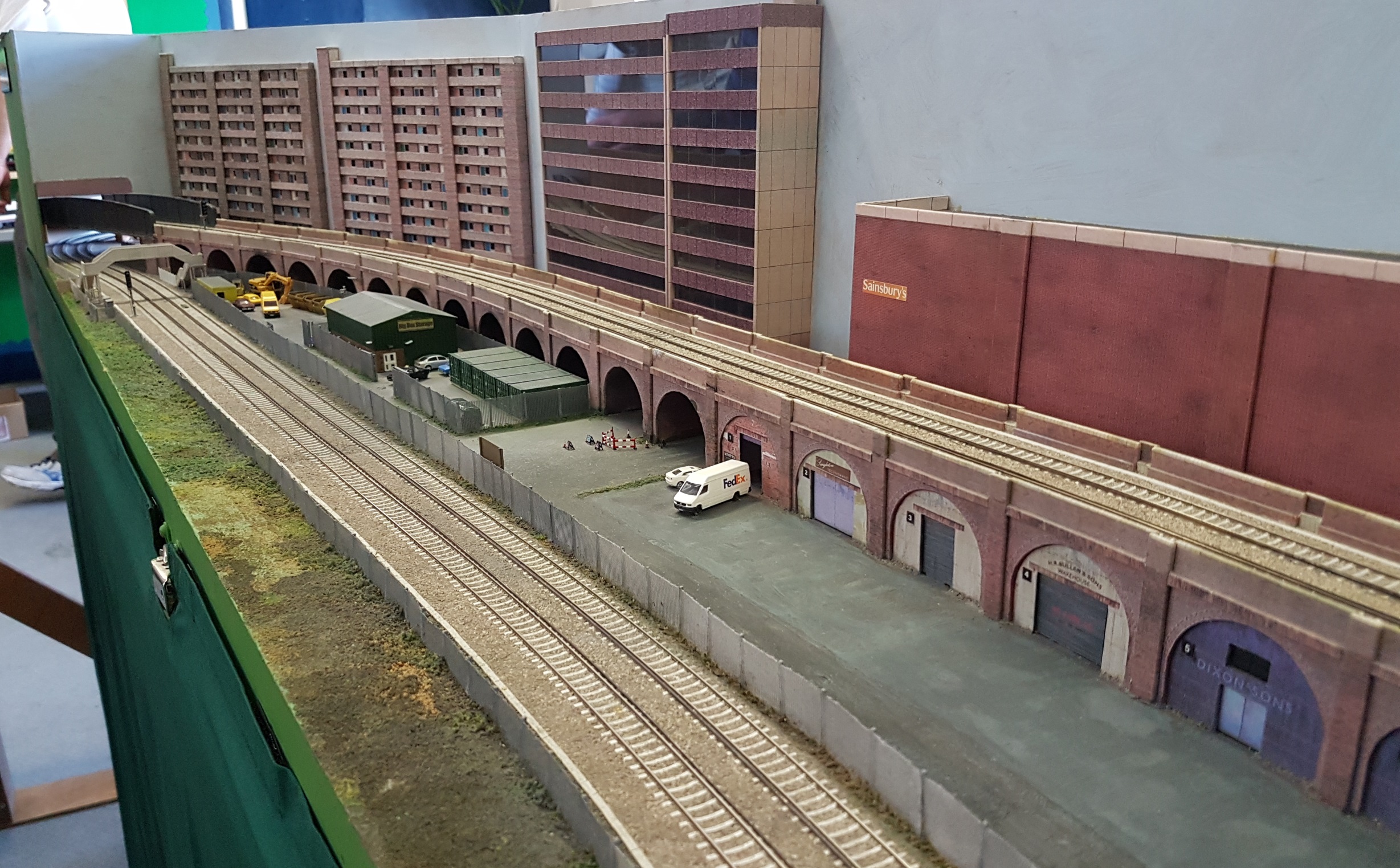
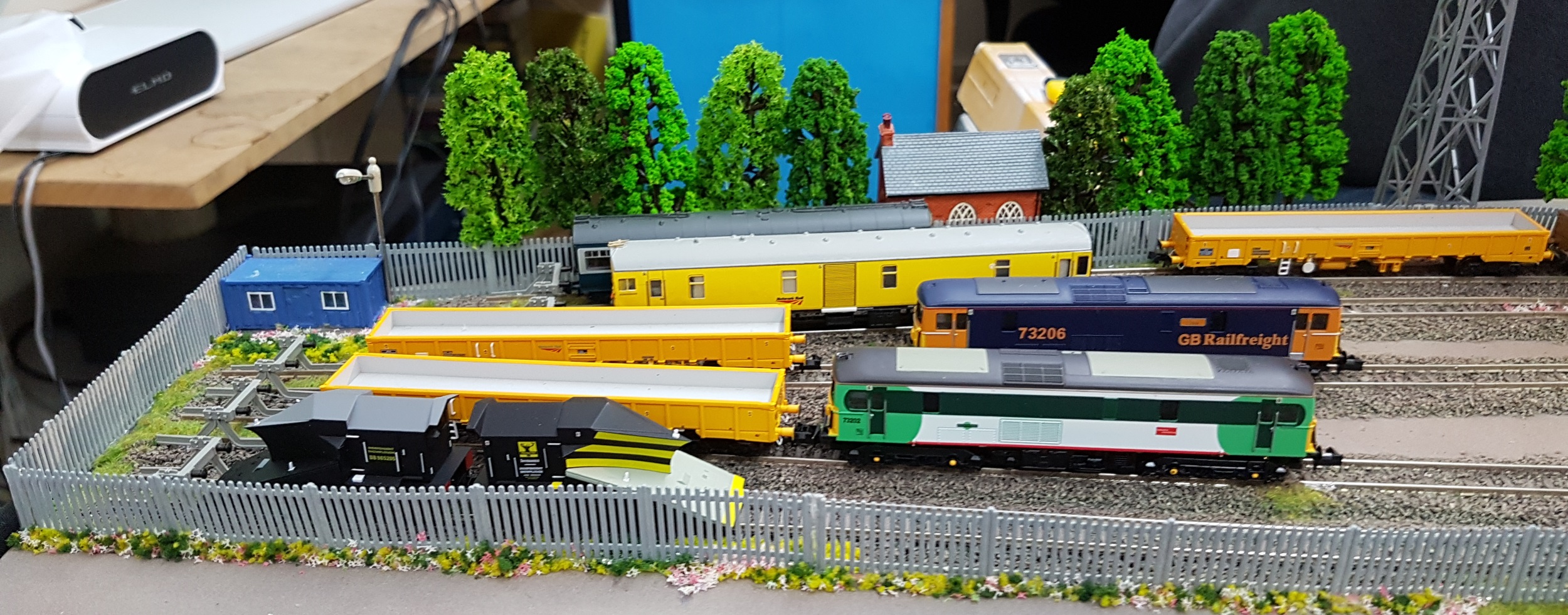
Another small shunting layout, Tunbridge Yard West  is a 4ft x 1.5ft, modern image, layout set in the early 90s as a shunting / storage yard for Network Rail, diesels with some emu storage sidings.  It is loosely based on Tunbridge Yard West and the Inglenook Sidings set up.  I liked the electric pylons in the background, though I’d probably break them if I tried to uncouple anything on the layout.

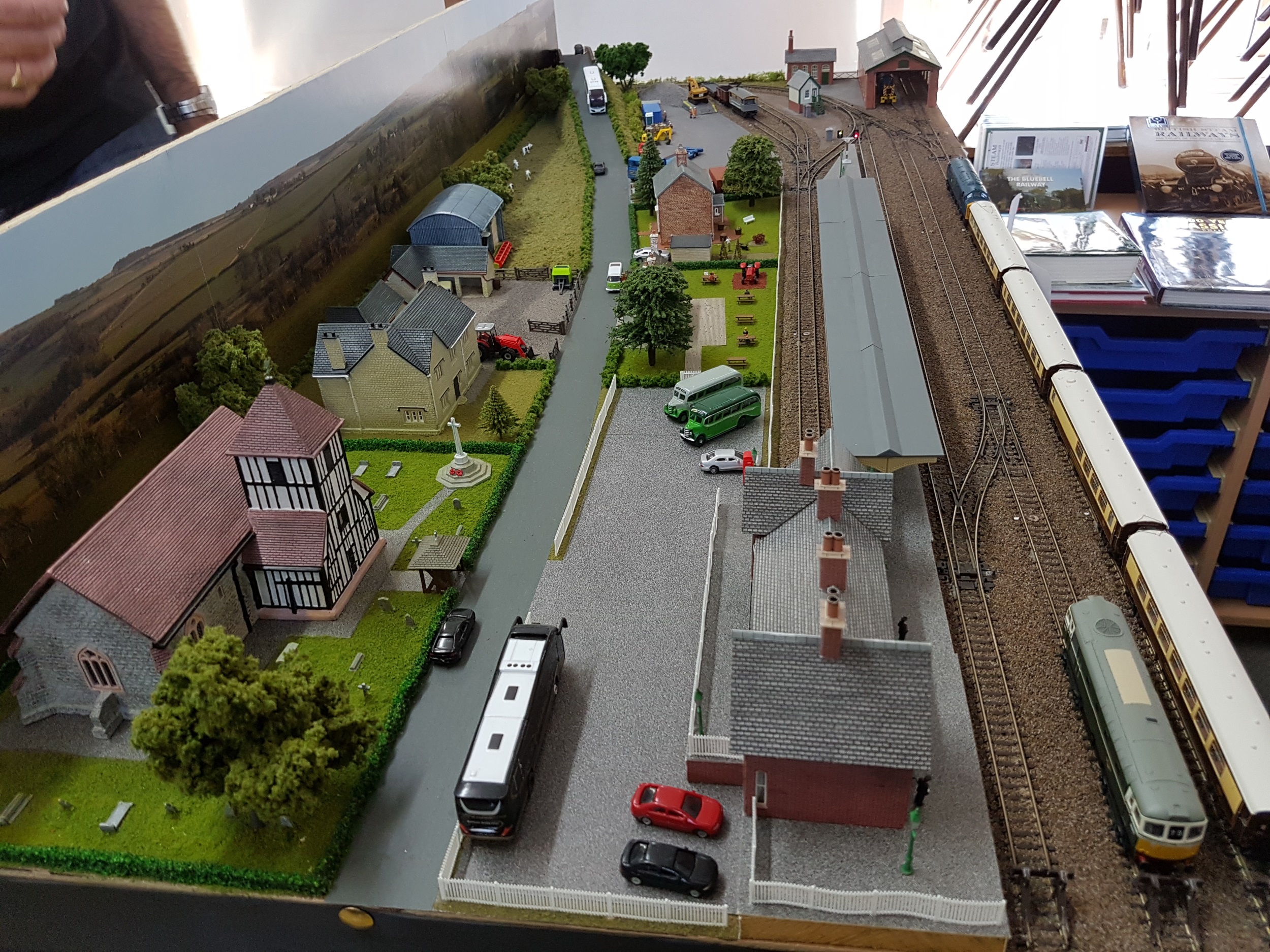
Oakhurst is a terminus station on an a ficticious preserved line. The line is home to a fleet of both steam and heritage diesels, with the mainline connection at Newbridge adding further traffic from incoming railtours.

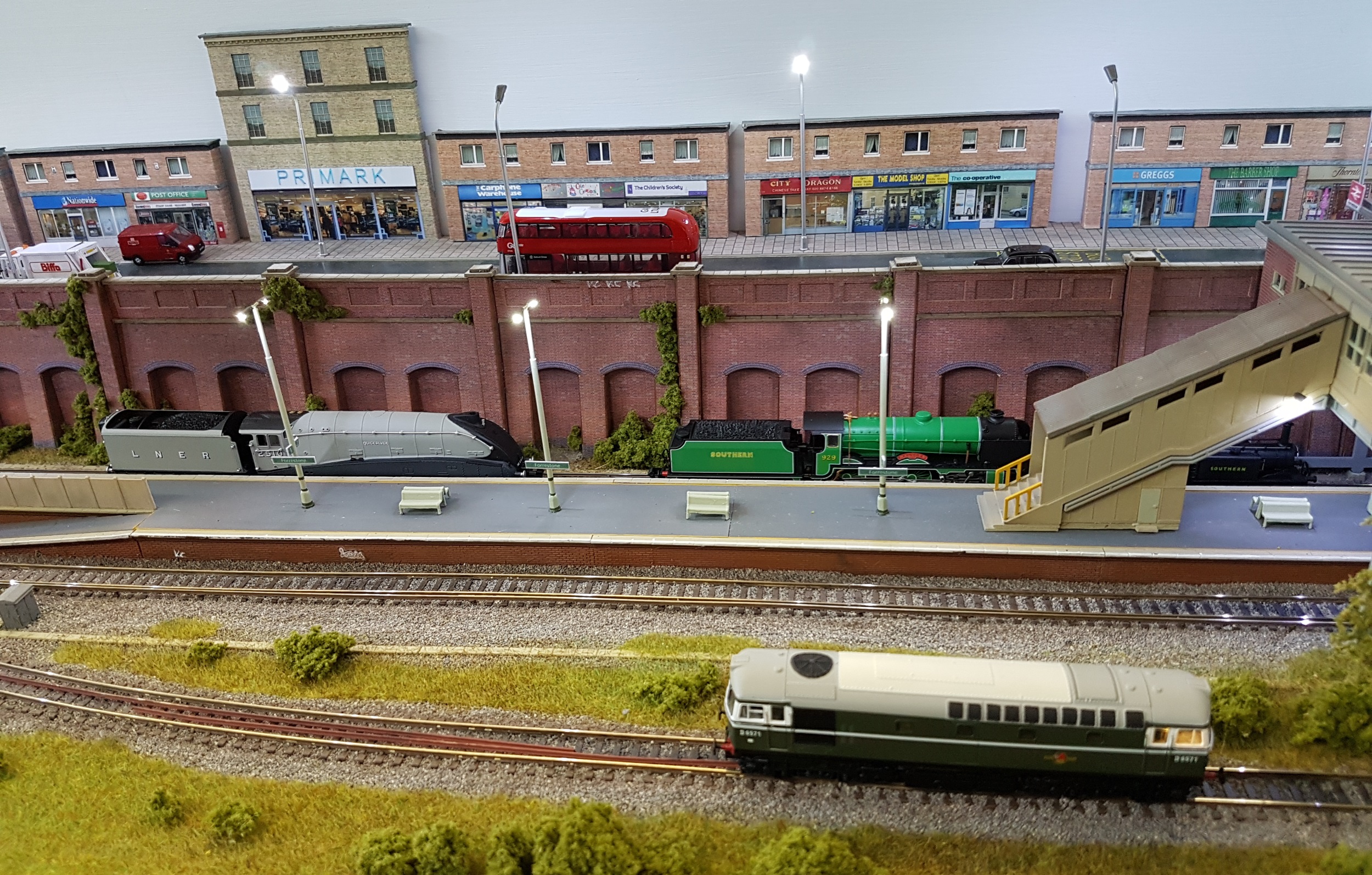
Forrestone is based on a fictional spur off a south London main line comprising two platforms and a locomotive depot for a freight company. It is run on DCC, and will be controlled by iPad and iPhone.  Looks like there is a steam gala in the bay…..

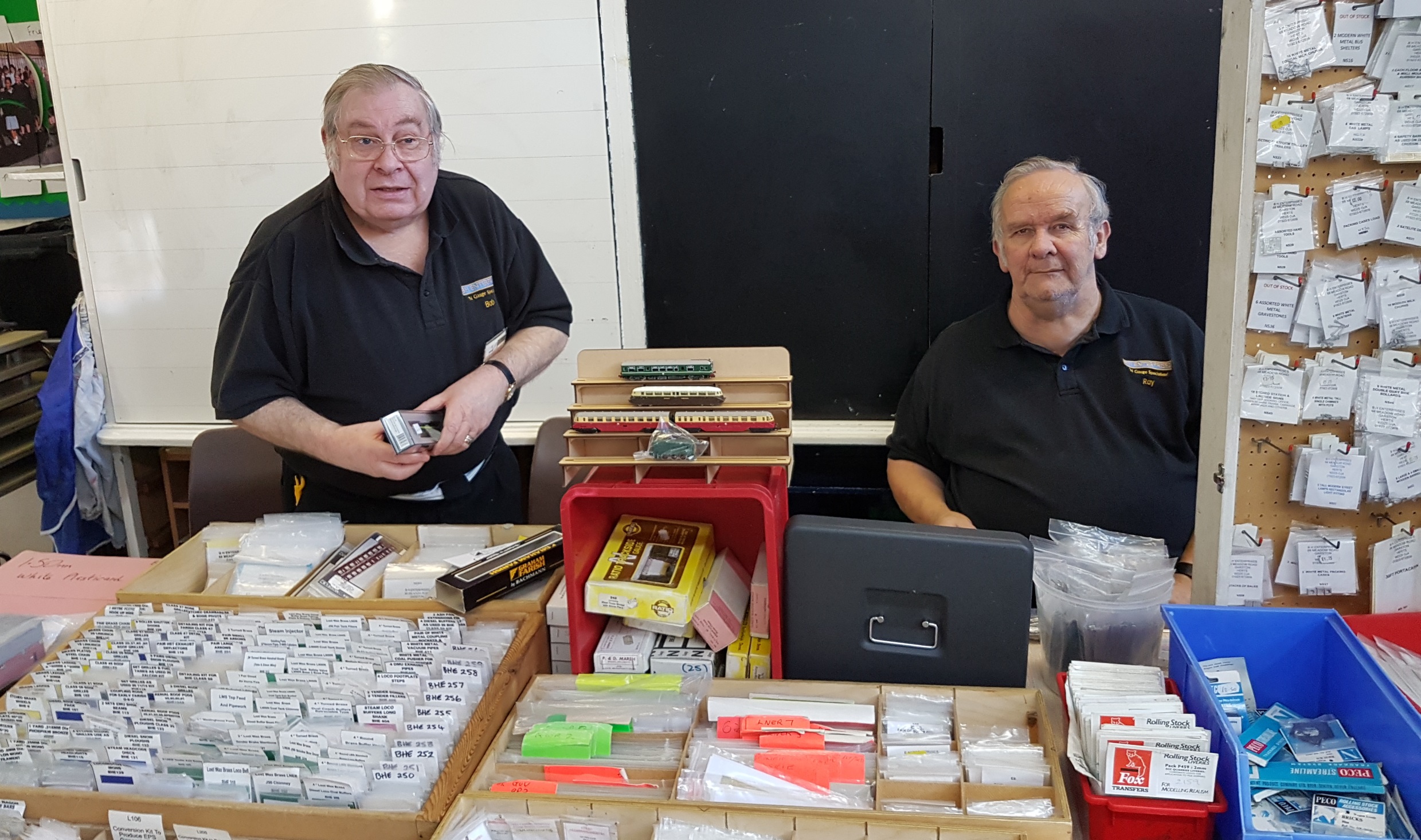
BH Enterprises had their usual spot, selling all the bits and pieces you never knew you needed!  Here’s proof positive that Bob was awake…..

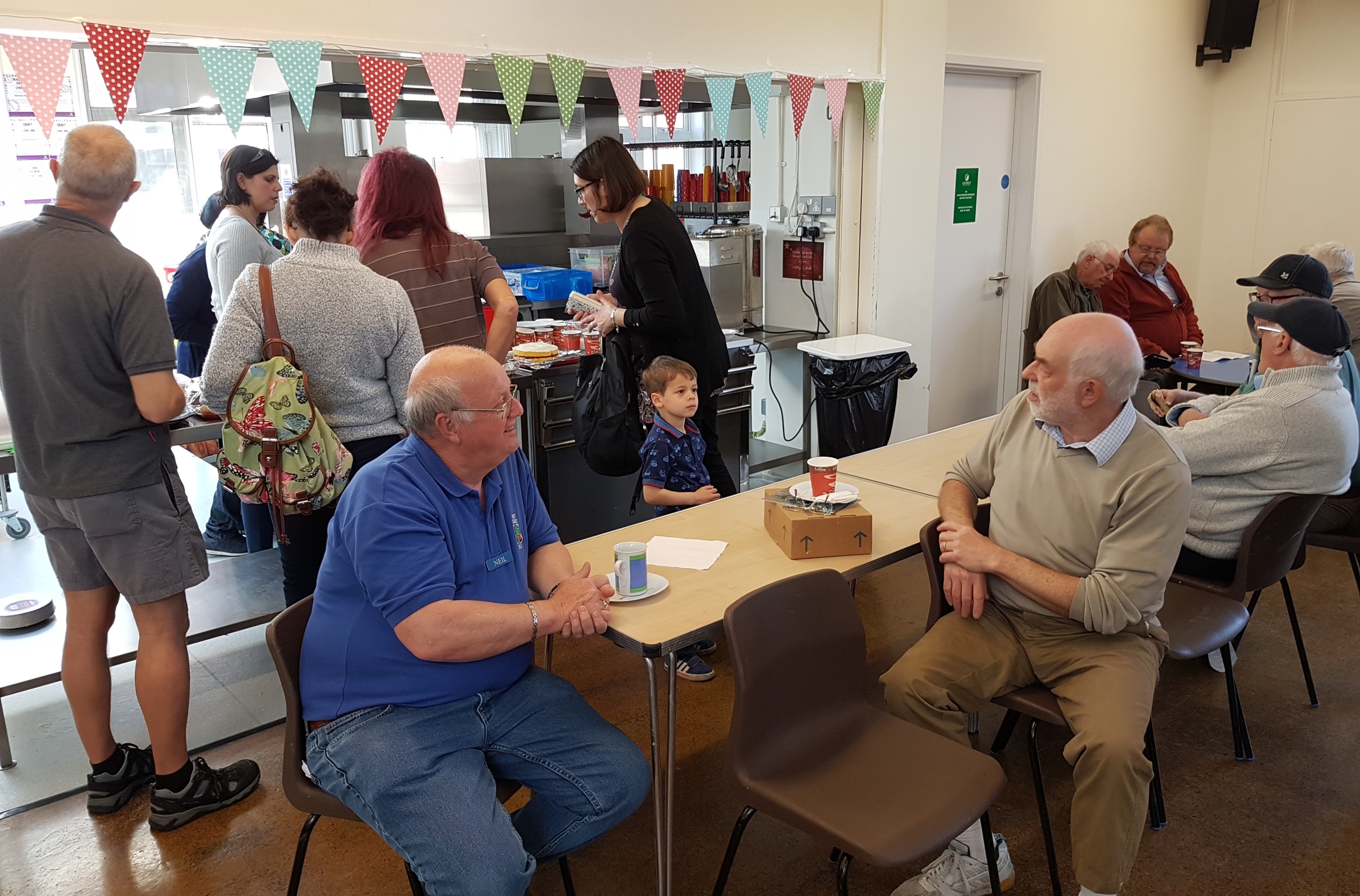
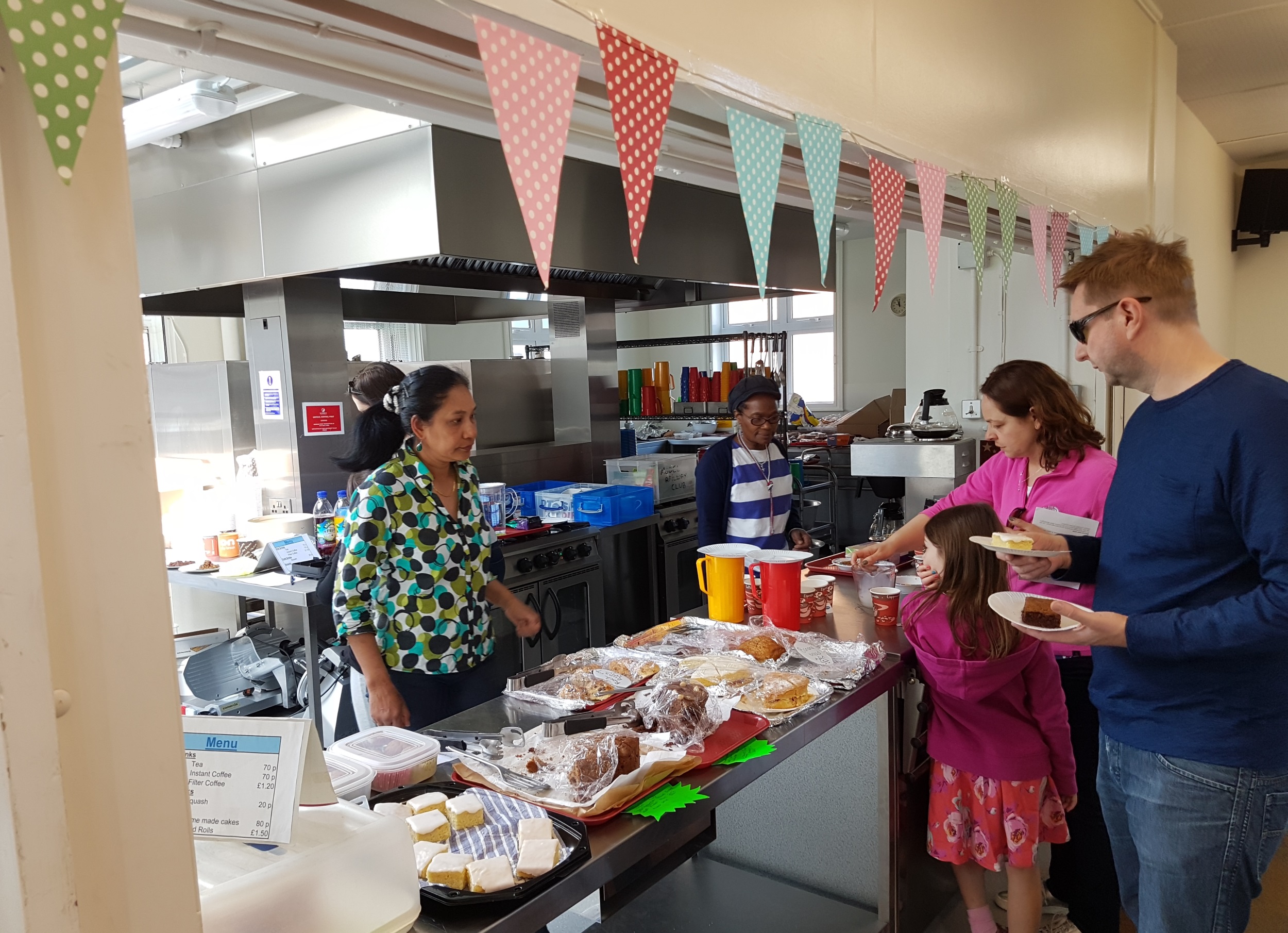
And I have to make a mention of our catering team, who fed and watered the home team and visitors throughout the day.

And finally, we packed up and retired to the Ruchita for the traditional curry.  So that’s it till next year, folks!!!

Posted in ESNG, ESNG meetings, Exhibitions, Out and about | Tagged , , , | Leave a comment

ESNG Exhibition 2017 #3

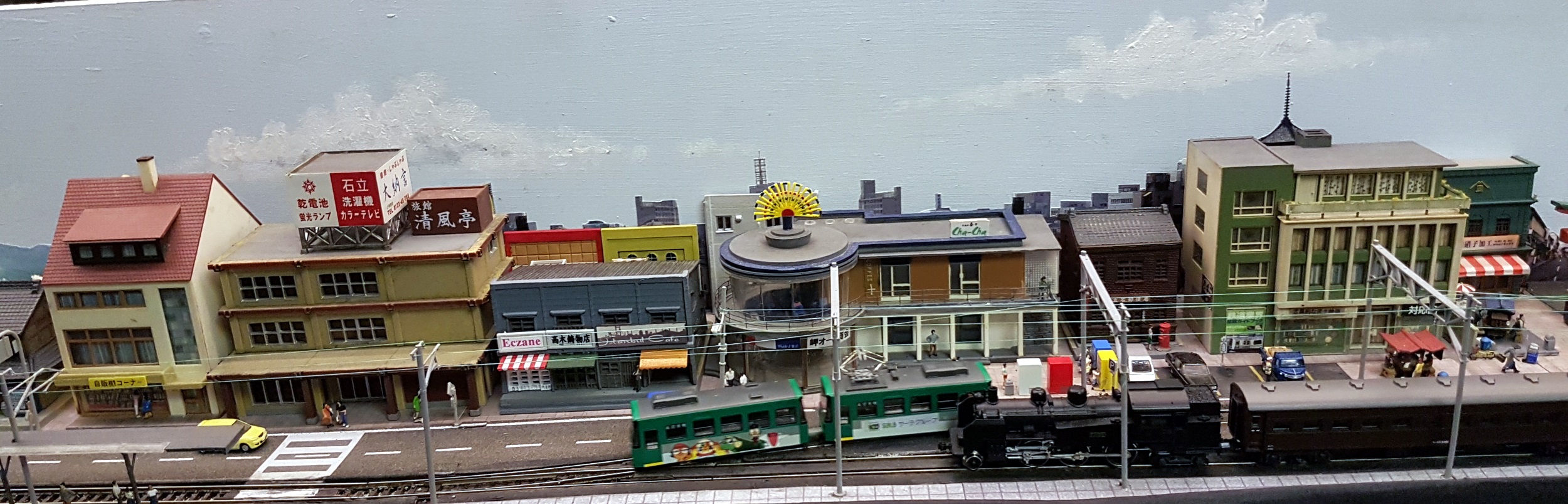
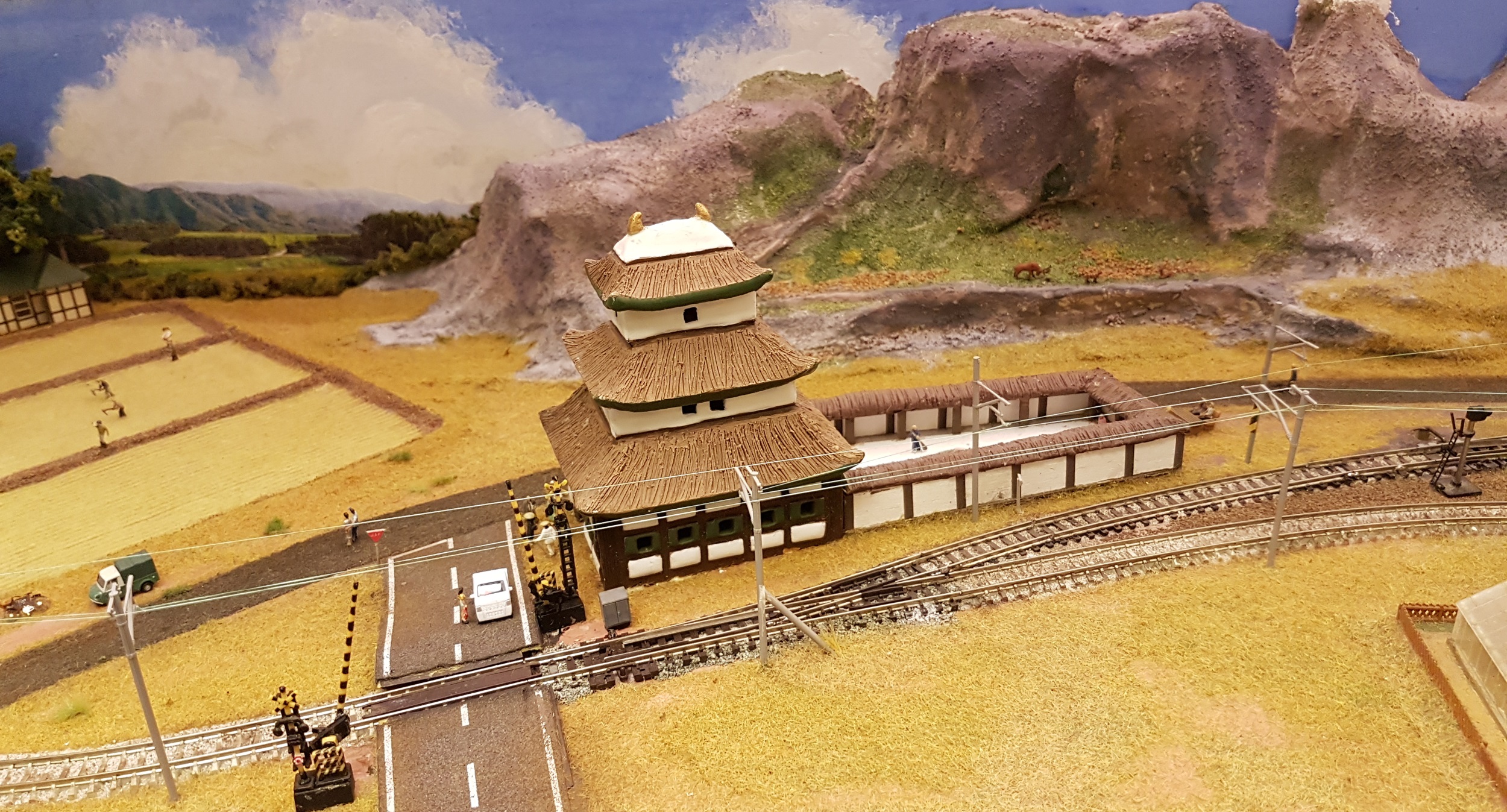
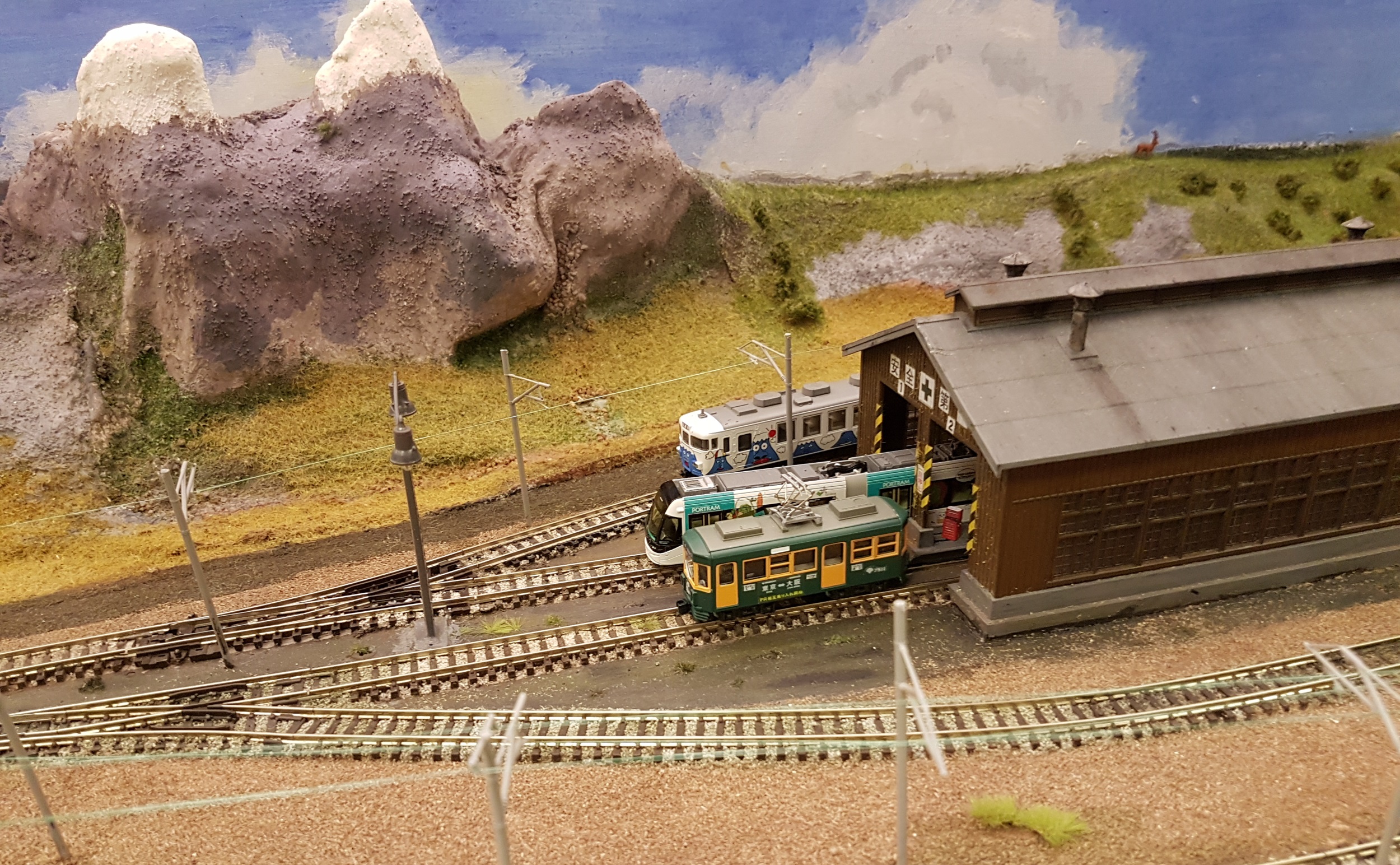
Also in the corridor was Kuritu.  It’s unusual in three ways. It’s Japanese, it’s an inter-urban railway, and it has been designed to be viewed from both sides. A simple design, but it just ‘oozes’ Japan.

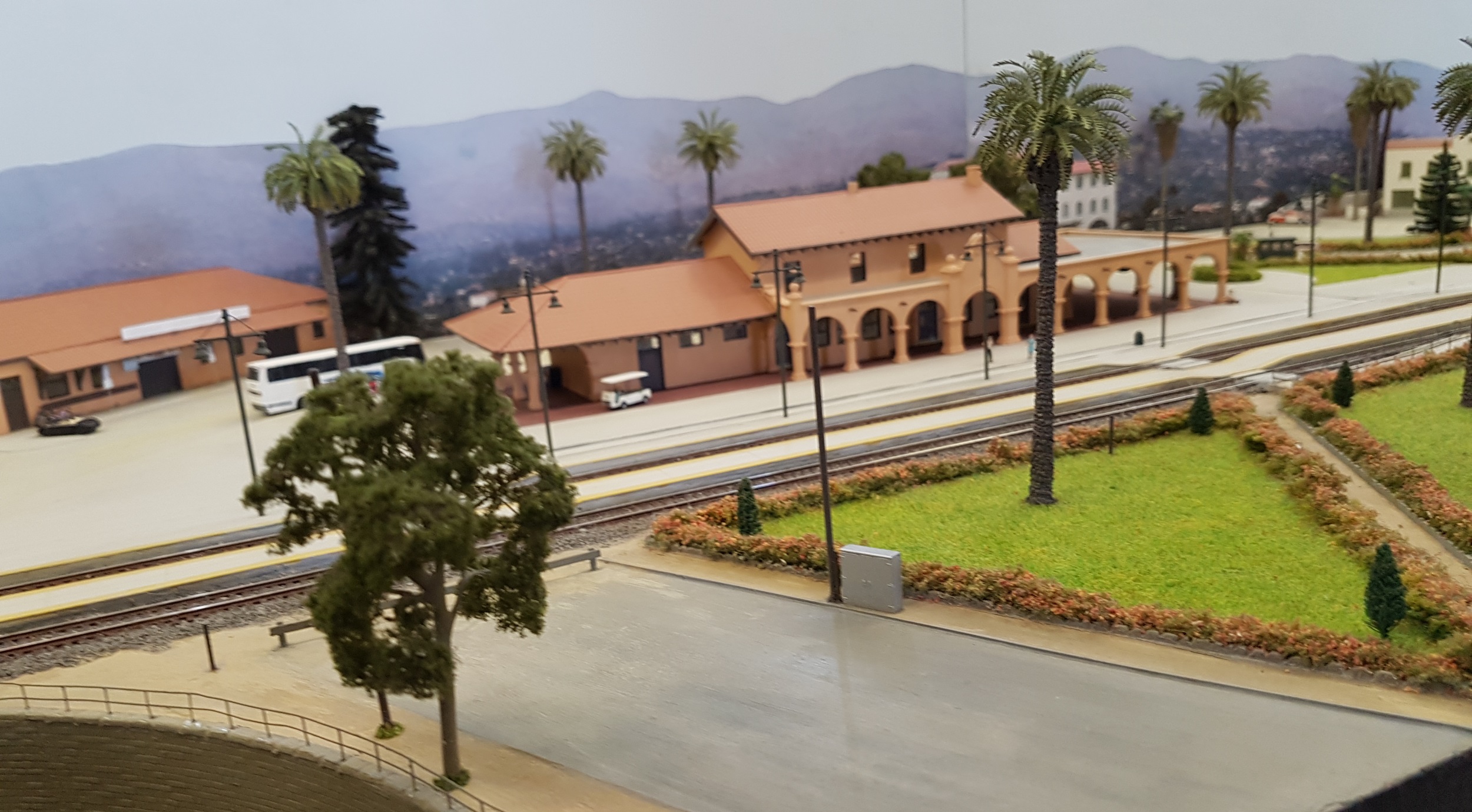
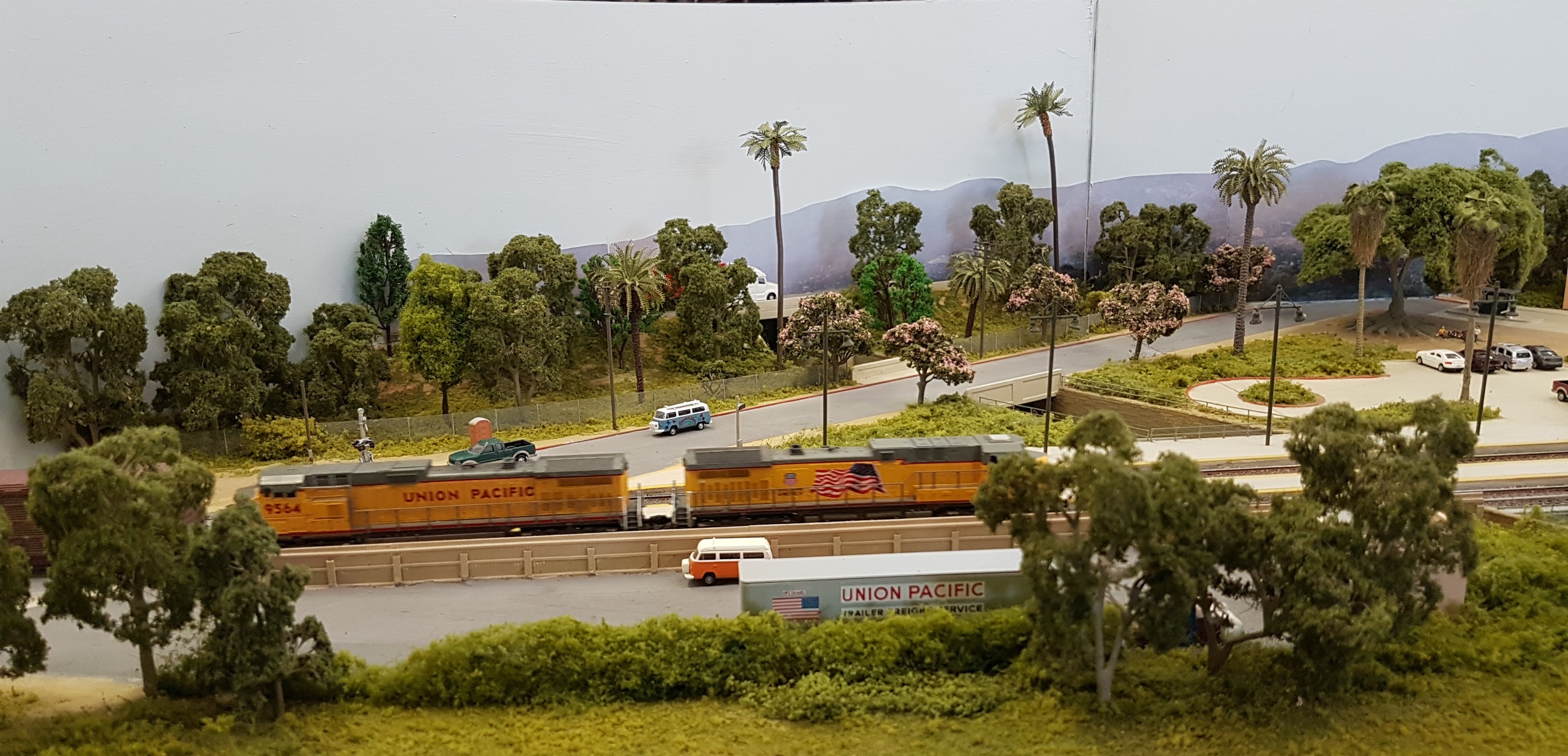
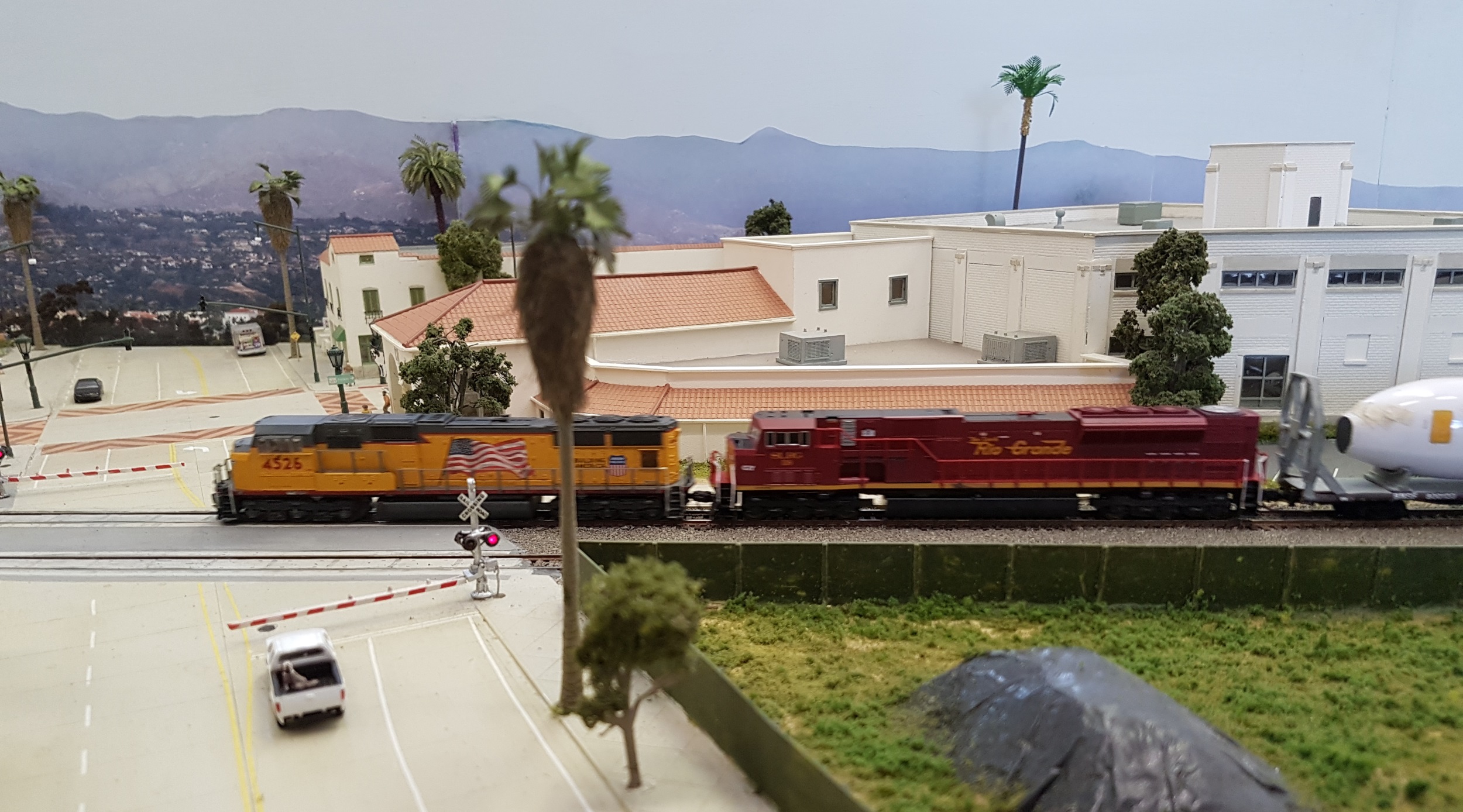
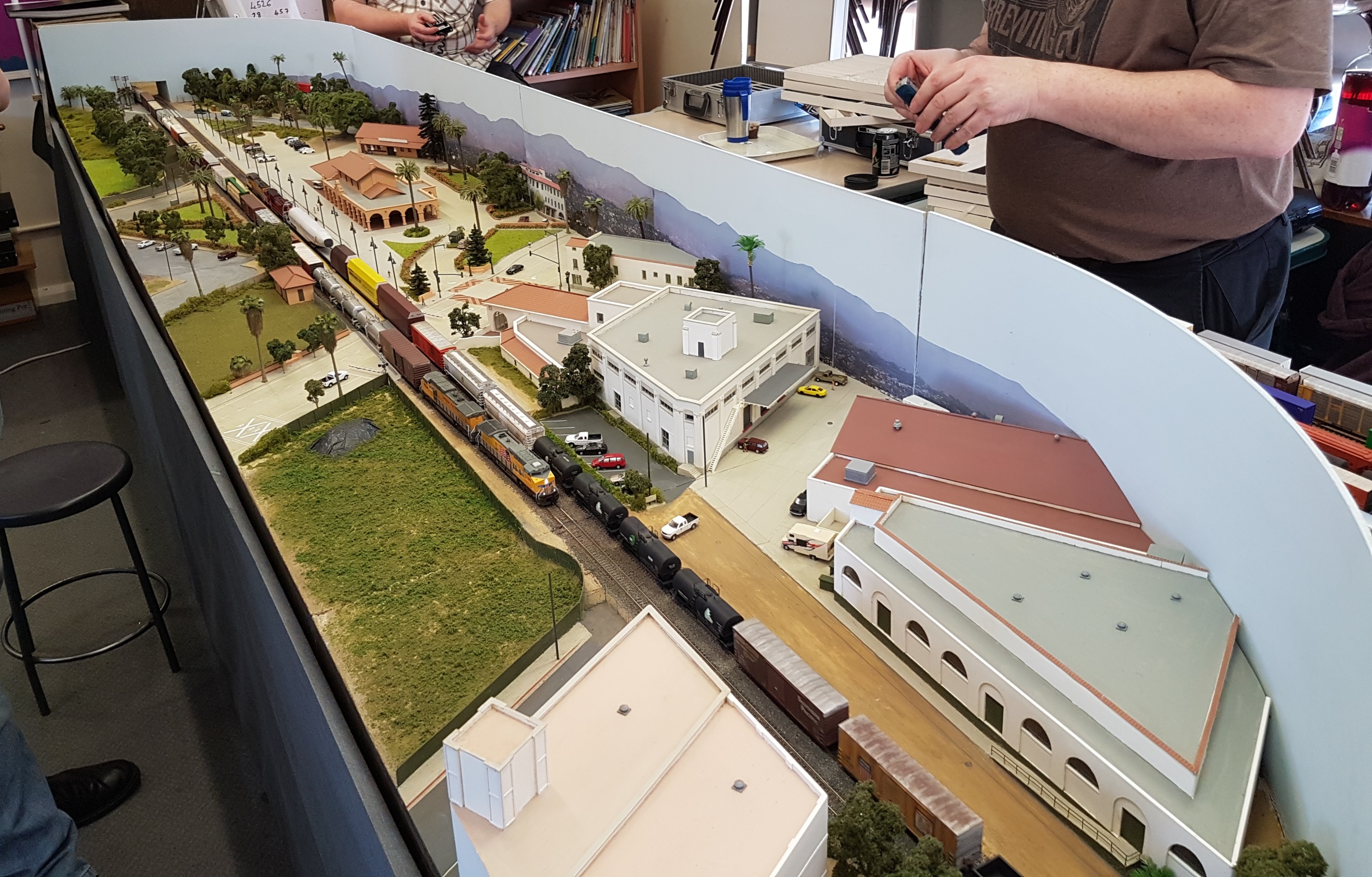
Ian Lamkin lives just up the road in Redhill, but is always booked up further in advance than my ability to arrange a show.  So it was very pleasing to get him and Santa Barbara along.  Santa Barbara is a near scale model of the area around Santa Barbara Amtrak station which is between the beach and the main downtown area. Many photographs and measurements have been taken around the station to recreate as many details as possible. The Surf Line runs from San Diego up through Los Angeles to Santa Barbara, 100 miles north of Los Angeles.

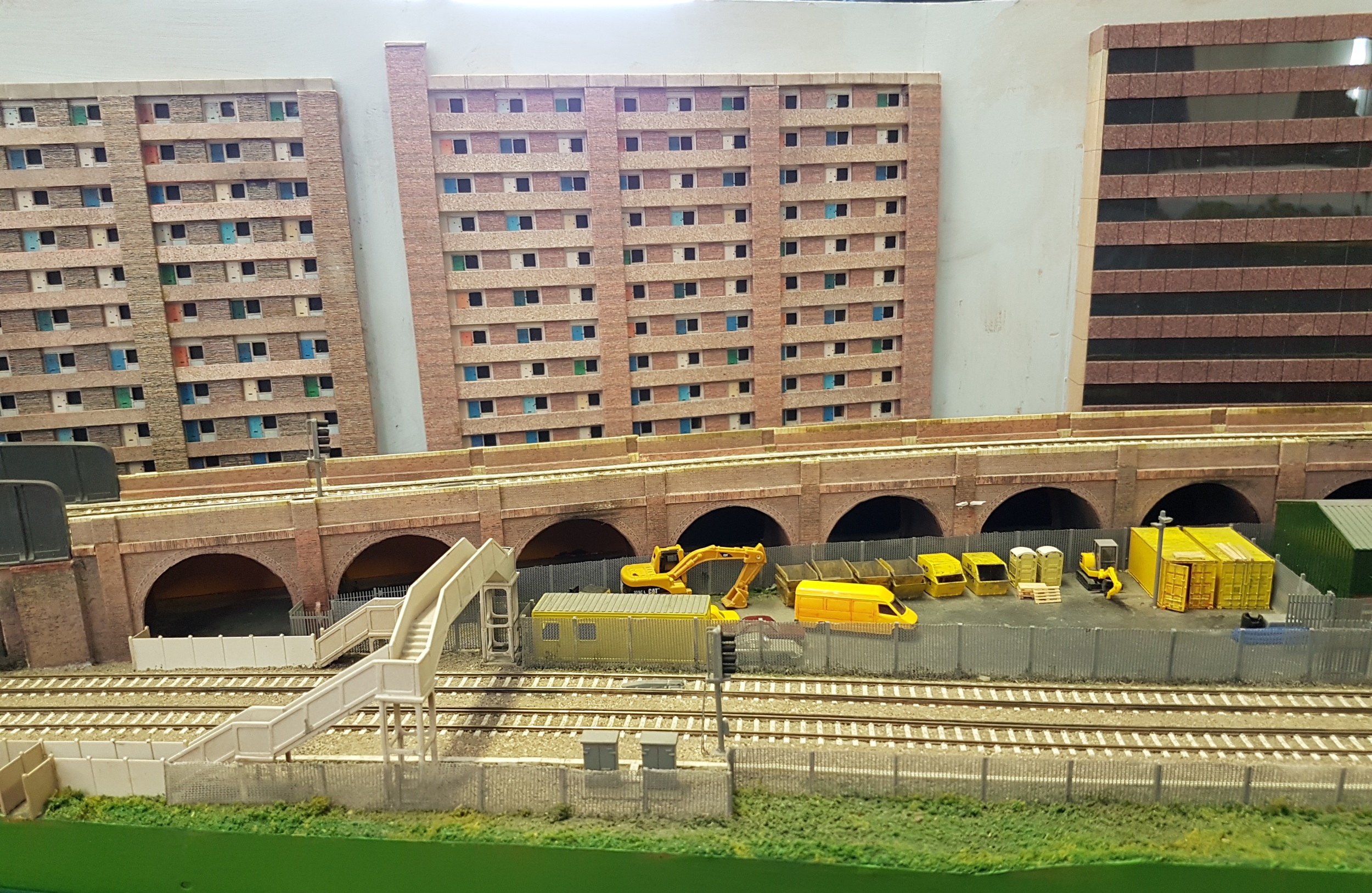
I managed to catch Atlantic Road in a train-free moment.  But it’s the summer of 1998 and trains pass above Atlantic Road, Brixton in South London. Eurostars are using Waterloo International, EWS and Freightliner are still using locos inherited from BR and slam-door EMUs are still in regular use.  I like this layout as 10 years living up the road near the Oval meant that I was familiar with the area – especially Brixton market.

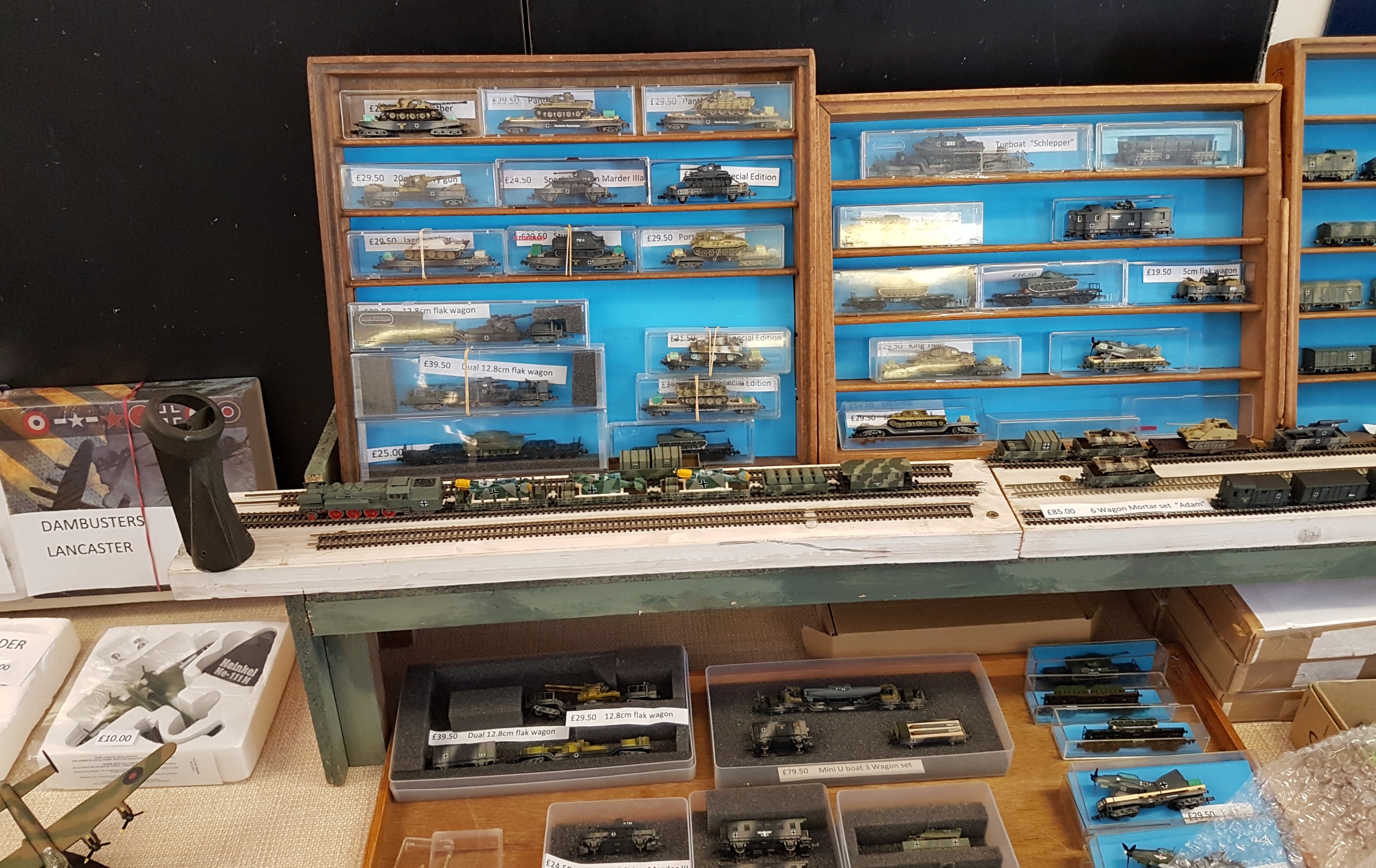
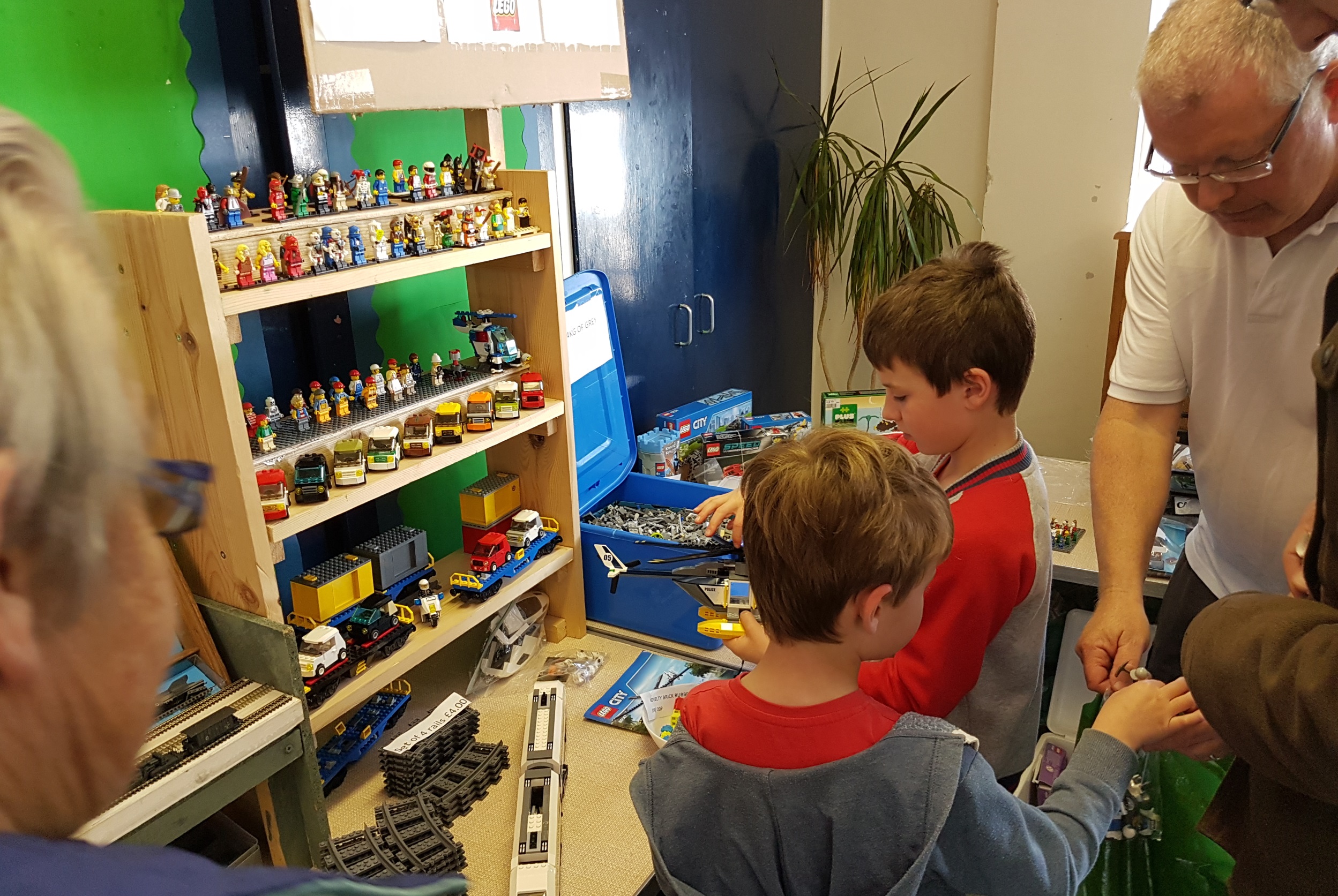
Neil Grace was selling his usual mixture of military and railway equipment.  And he has added some Lego for the younger enthusiast.

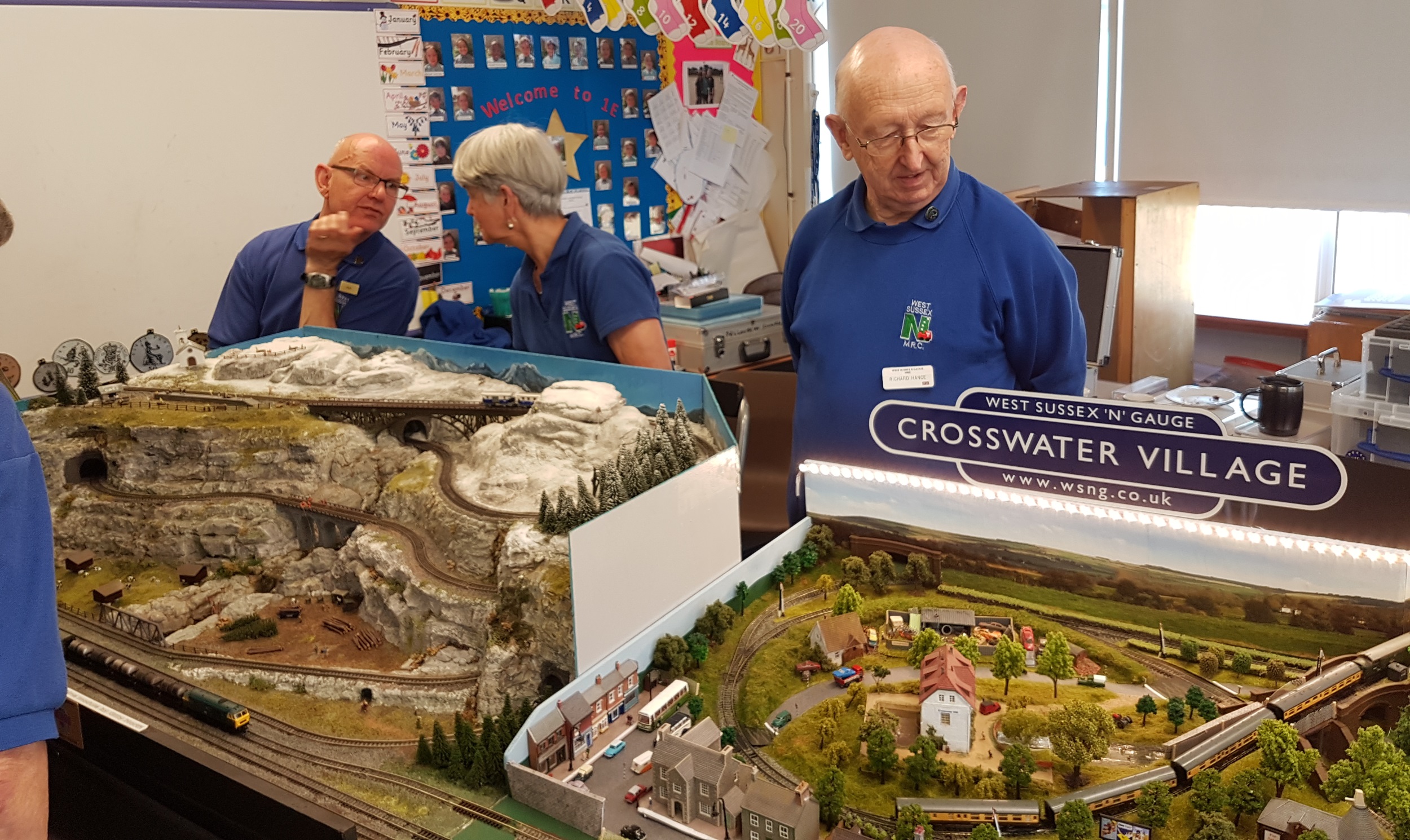
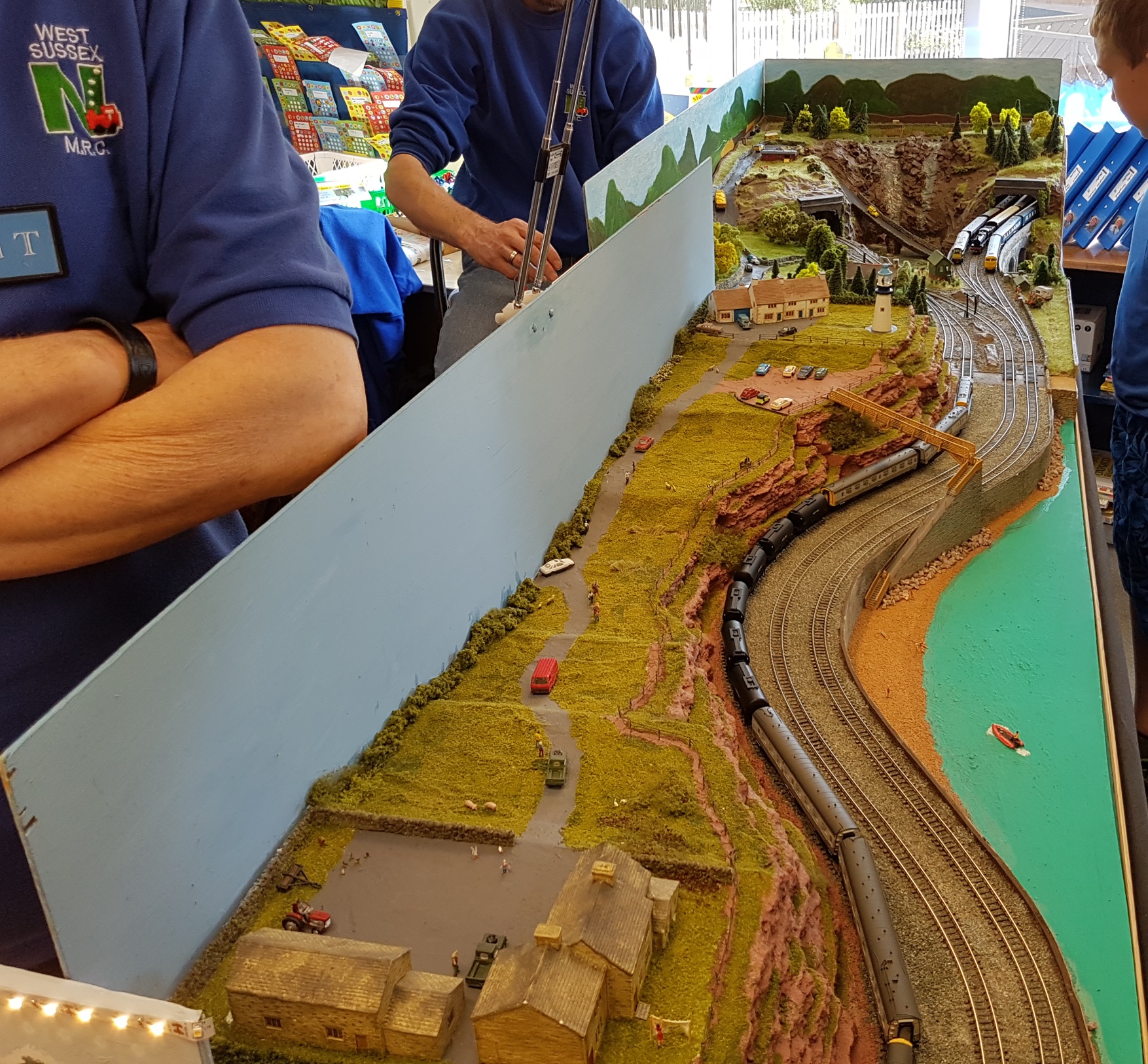
We welcomed back the West Sussex N Gauge group AGAIN, with their N-mod layout.

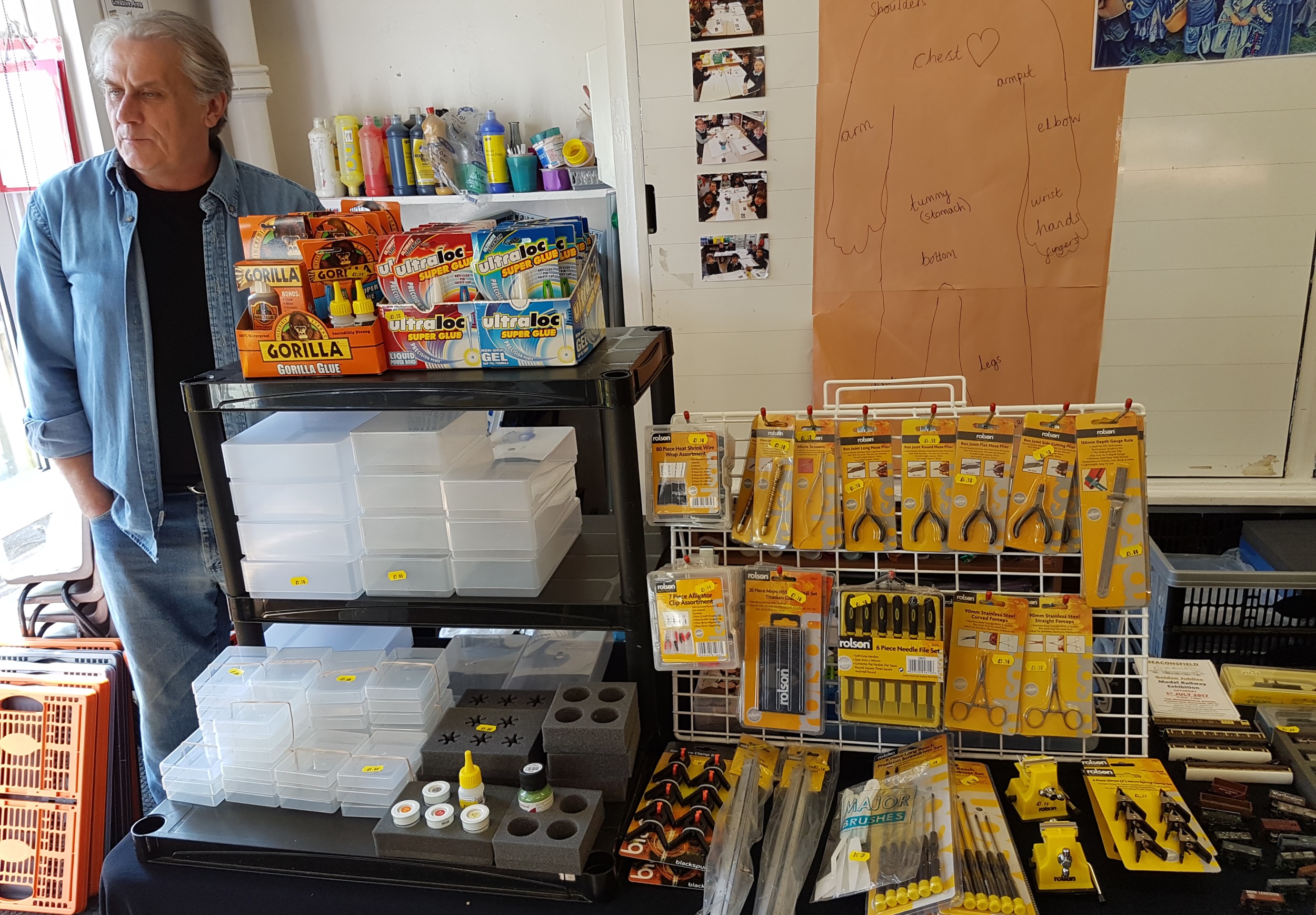
And here’s Jon the Blue-Plastic-Box man showing that he does stock other items.

One more post to go, with the rest of the layouts.

Posted in ESNG, ESNG meetings, Exhibitions, Out and about | Tagged , , , | 1 Comment